
If you’ve spent any time planning a trip to this famous island in Hiroshima Bay, you’ve almost certainly encountered two different names for the same place: Miyajima and Itsukushima. Tourist brochures say Miyajima. Official maps say Itsukushima. The shrine is called Itsukushima Shrine. And yet locals, travel guides, and train signs all say Miyajima. Which one is correct — and what’s the difference between Miyajima and Itsukushima?
The short answer: both names refer to the exact same island, and neither is wrong. Itsukushima is the island’s formal, ancient name, recorded in documents dating back more than 1,400 years. Miyajima is the affectionate common name that became widely used during the Edo period and is the name most Japanese people and visitors use today. Understanding why both names exist reveals something surprisingly beautiful about the island’s spiritual history and its enduring place in Japanese culture.
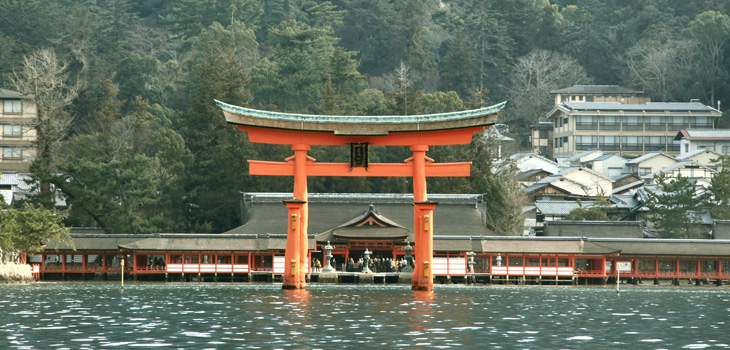
The History Behind the Two Names
Itsukushima: A Name More Than 1,400 Years Old
The name Itsukushima has been in use since at least the Asuka period — well over 1,400 years ago. It appears in historical records from 593 CE, the year Itsukushima Shrine was traditionally said to have been founded. That same era saw the rise of Prince Shotoku, one of the most influential figures in early Japanese history, which gives a sense of just how far back this name reaches.
The exact origin of the name Itsukushima is debated, but the most widely accepted explanation connects it to an old Japanese word, itsuku, meaning something close to “to purify oneself and serve the gods.” The word carries connotations of ritual cleansing, spiritual dedication, and sacred service — entirely fitting for an island that was treated, from ancient times, as a deity in its own right. In this worldview, the entire island was sacred ground, and ordinary people were not even permitted to live on it.
A second compelling theory links the name to the island’s principal deity. The main goddess enshrined at Itsukushima Shrine is Ichikishimahime-no-Mikoto, one of three sea goddesses collectively known as the Munakata goddesses. Some scholars believe the name Ichikishima gradually shifted in pronunciation over centuries to become Itsukushima — a process linguists call phonetic drift. Whether the name comes from the concept of purification or from the goddess herself, the meaning is deeply rooted in the island’s sacred identity.
Miyajima: The Edo-Period Name That Stuck
The name Miyajima — which literally means “shrine island” or “island of the shrine” — has a somewhat later and more earthly origin. While the name appears as early as the Heian period in a travel diary written by the courtier Minamoto no Michitomo, it did not become widely used until the Edo period (1603–1868).
The turning point came after the famous Battle of Itsukushima in 1555, and particularly after the Hiroshima domain placed the island under direct domain control in the early Edo period. As the shrine grew in prominence and pilgrimage culture flourished across Japan, visitors began streaming to the island in large numbers. The same era saw an enormous boom in pilgrimages to Ise Shrine, and the enthusiasm spilled over to other celebrated sacred sites — including this one. Ordinary pilgrims and travelers, enchanted by the great shrine that seemed to float on the water, began calling it simply “the island of the shrine” — Miyajima.
The name was warm, immediate, and easy to remember. It caught on naturally. To avoid confusion with other places sharing similar names, the island was often called Aki no Miyajima — “Miyajima of Aki Province,” Aki being the old regional name for what is now western Hiroshima Prefecture. That qualifier helped establish the island’s identity as a uniquely special place within the Seto Inland Sea.
How the Two Names Are Used Today
Official Maps Use Itsukushima
On official maps published by Japan’s Geospatial Information Authority — the national body responsible for accurate geographic recordkeeping — the island’s name is listed as Itsukushima. This is the administratively and geographically correct name for the island as a physical landmass. Academic publications, archaeological reports, cultural property documents, and formal historical writing also tend to use Itsukushima, reflecting a preference for the official designation in scholarly and governmental contexts.
How the Name Has Shifted in Administration and Tourism
Even within government administration, the two names have traded places over time. When the town was formally incorporated in 1889, it was named Itsukushima-cho — Itsukushima Town. But in 1950, after the Second World War, the town was renamed Miyajima-cho. Today it falls under the jurisdiction of Hatsukaichi City and carries the official address of Hatsukaichi-shi, Miyajima-cho — Miyajima Town.
In the tourism industry, Miyajima is overwhelmingly dominant. Hotels, travel agencies, tour operators, and tourist brochures almost universally use Miyajima, because it is friendlier, more familiar, and easier for visitors to remember. When a sense of historical depth or solemnity is called for, Itsukushima may be chosen instead — but in everyday tourism, Miyajima wins.
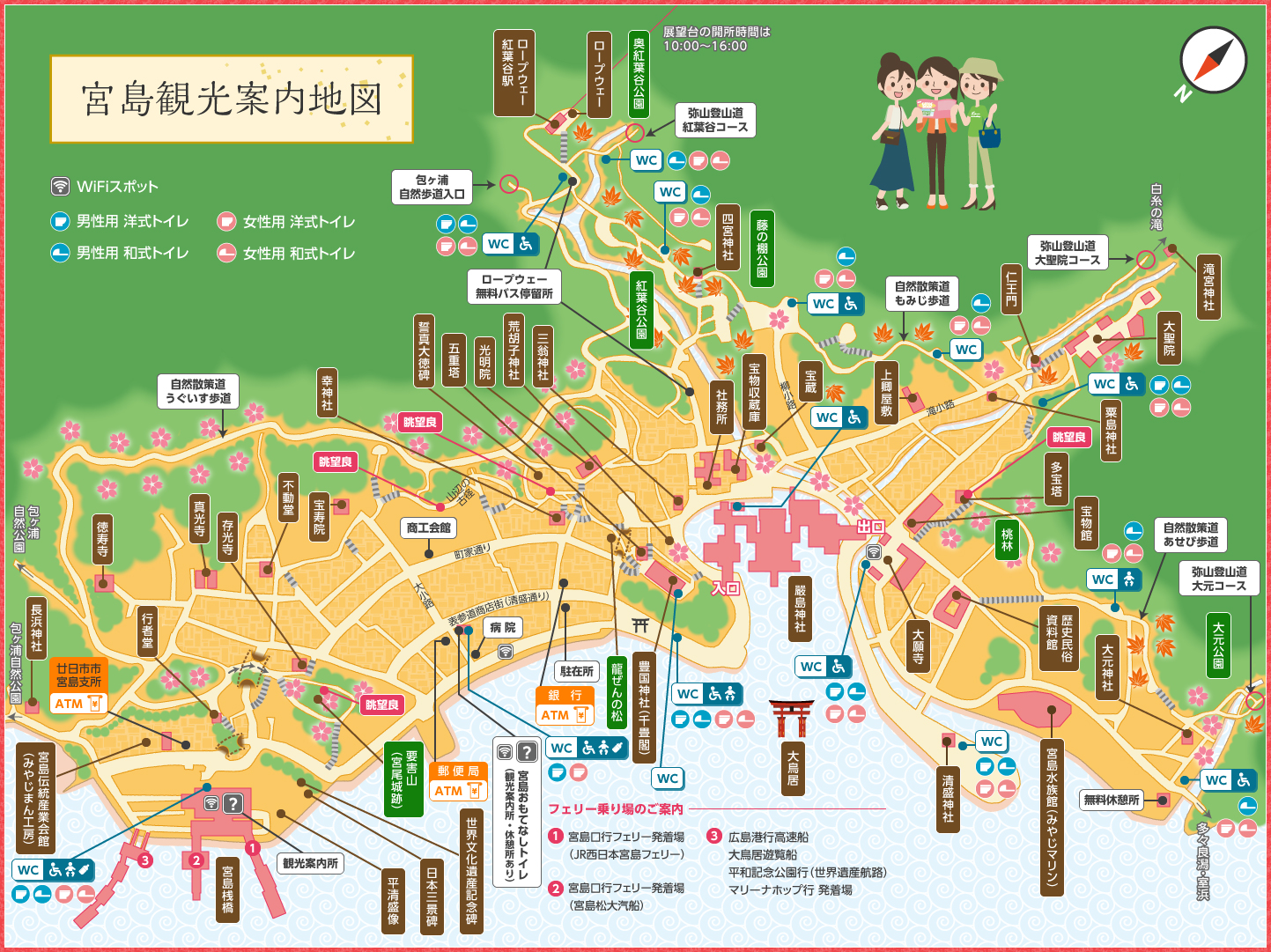
The Shrine’s Official Name: 嚴島神社
The shrine itself uses a third layer of formality. Its official written name uses traditional kanji characters — 嚴島神社 rather than the modern simplified form 厳島神社. This older orthography is used in official shrine documents and formal ceremonial contexts, reflecting the institution’s reverence for its own ancient history. In practice, both spellings are accepted and understood, but the classical form signals the shrine’s dignity and age in a way that resonates deeply for Japanese readers.
What Do Locals Actually Call It?
Ask residents of the island itself, and you’ll find both names in natural rotation. In casual conversation — at the shops, on the ferry, chatting with tourists — Miyajima is the default. Local businesses typically use Miyajima in their names: a ryokan might call itself Miyajima So-and-So Inn; a restaurant might go by Miyajima Kitchen. The familiar name gives a warm, welcoming feel.
For shrine festivals, religious ceremonies, and formal cultural occasions, however, Itsukushima is more likely to appear. Historic temples and culturally significant institutions on the island tend to use Itsukushima in contexts where they want to convey gravitas, tradition, and sacred heritage. The choice of name, in this sense, communicates something about the register of the occasion.
On the International Stage: UNESCO and Beyond
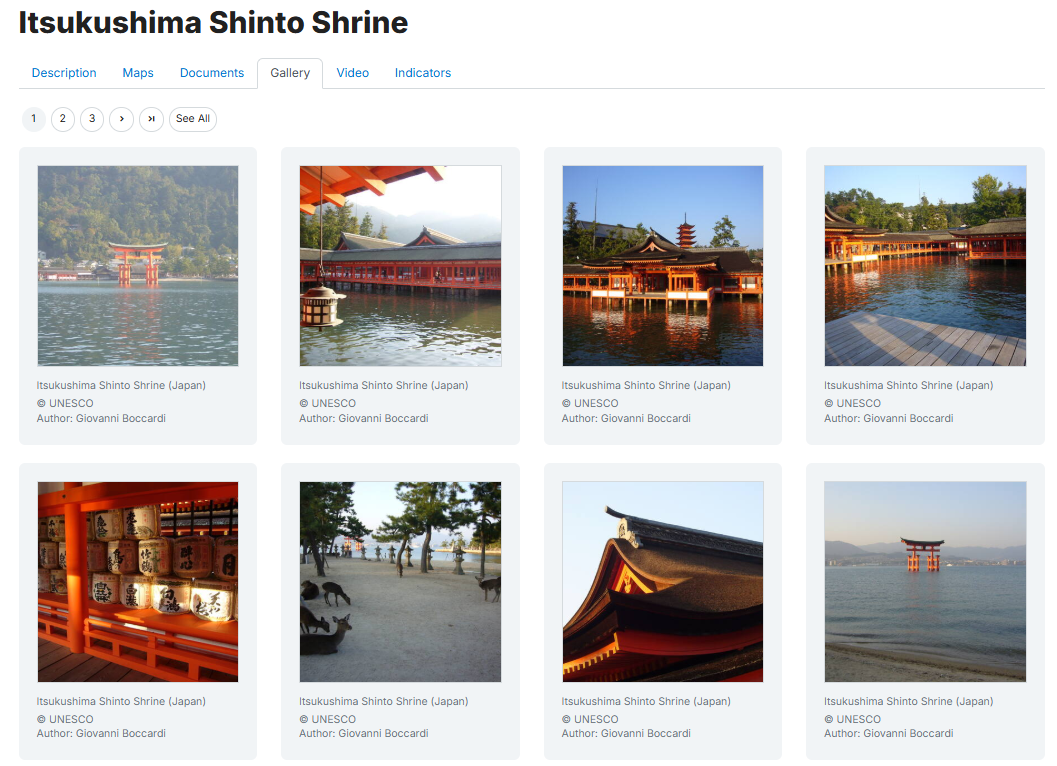
When the island’s shrine complex was inscribed on the UNESCO World Heritage List in 1996, it was registered under the name Itsukushima Shinto Shrine. Internationally, Itsukushima is therefore the formal designation recognized by UNESCO and used in academic and heritage contexts worldwide.
In practical tourism promotion, however, Miyajima remains more visible internationally as well, precisely because it is easier for non-Japanese speakers to remember and pronounce. Many multilingual visitor guides and English-language signs use both, often formatted as “Miyajima (Itsukushima)” — a small but thoughtful way of acknowledging both names at once and helping visitors connect the dots between what they’ve read and what they see on official markers.
Why Having Two Names Is Actually a Good Thing
It might seem confusing at first, but the coexistence of Miyajima and Itsukushima is actually something worth appreciating. These aren’t just two labels for the same address — they represent two different ways that people across the centuries have related to this extraordinary place.
Itsukushima carries the weight of ancient spiritual devotion. It speaks to the era when the island was considered a living deity, when ritual purification was required before setting foot on its shores, and when the name itself encoded a profound act of sacred service. Using Itsukushima is a quiet acknowledgment of that unbroken thread of reverence stretching back through the centuries.
Miyajima, by contrast, speaks to the human warmth that grew up around the sacred. Pilgrims who came from distant provinces, merchants who set up stalls to serve them, fishermen and innkeepers and travelers who made the island part of their lives — they called it Miyajima. It’s a name of belonging and affection, a name given by ordinary people to a place they loved.
Together, the two names capture something that the island itself embodies: it is a place of deep solemnity and breathtaking beauty, but also a living, welcoming destination that has drawn visitors for more than a thousand years. When you visit, you can call it either name — and both will be right.
Summary
To bring it all together: Itsukushima is the island’s official formal name, in use since at least 593 CE and recognized on government maps and UNESCO documentation. Miyajima is the beloved common name that took hold during the Edo period and is used today in tourism, everyday conversation, and most English-language travel resources. The shrine’s formal name — Itsukushima Shrine — uses the older designation, while the island’s town address uses Miyajima.
Neither name is incorrect. Both are meaningful. The difference between Miyajima and Itsukushima isn’t a source of confusion once you understand it — it’s a small window into the island’s remarkable history, and one of those details that makes visiting this place feel richer and more layered than a simple day trip from Hiroshima. Next time you see both names on a sign, you’ll know exactly why they’re both there.
References
- Dive! Hiroshima: Learn More About Miyajima
- Miyajima Tourism Association: History of Miyajima
- Wikipedia (Japanese): Itsukushima
- Wikipedia (Japanese): Itsukushima Shrine
- Miyajima Town History Editorial Committee, History of Miyajima Town: General History, Miyajima Town, 1992.
FAQ
Is Miyajima the same as Itsukushima?
Yes, they refer to exactly the same island in Hiroshima Bay. Itsukushima is the island’s official formal name, while Miyajima is the common name used in tourism and everyday speech. The famous shrine on the island is called Itsukushima Shrine, which sometimes adds to the confusion — but you’re always talking about the same place.
Which name should I use when searching for travel information?
Use Miyajima for general travel planning — ferry schedules, hotels, day trip guides, and tourist information almost always use Miyajima. Use Itsukushima when looking up the shrine specifically, its UNESCO listing, or historical and cultural information about the site.
What does the name Itsukushima mean?
The most widely accepted explanation connects it to an old Japanese word meaning “to purify oneself and serve the gods.” It reflects the island’s ancient status as sacred ground — a place so holy that ordinary habitation was once forbidden. A second theory holds that the name derives from the island’s principal goddess, Ichikishimahime-no-Mikoto, whose name may have evolved phonetically into Itsukushima over the centuries.
What does Miyajima mean?
Miyajima literally translates as “shrine island” or “island of the shrine,” a direct reference to Itsukushima Shrine. The name became popular during the Edo period as pilgrimage culture spread across Japan and visitors began referring to the island by what defined it most visibly — its magnificent floating shrine.
Why does UNESCO use Itsukushima and not Miyajima?
When the shrine complex was inscribed on the UNESCO World Heritage List in 1996, it was registered using the island’s official formal name: Itsukushima Shinto Shrine. UNESCO designations generally follow official national naming conventions, which favor Itsukushima for formal geographic and heritage documentation.
Do locals use both names?
Yes. In casual conversation and in the tourism and hospitality industries, locals predominantly say Miyajima. In formal, ceremonial, or historically significant contexts — shrine festivals, cultural events, heritage documentation — Itsukushima is more likely to appear. Both names are used naturally and interchangeably depending on the situation.
Is the official address of the island Miyajima or Itsukushima?
The current administrative address is Miyajima-cho, Hatsukaichi City — so Miyajima is used in the postal address. Interestingly, when the town was first formally incorporated in 1889, it was named Itsukushima-cho. The name was changed to Miyajima-cho in 1950, and the town later merged into Hatsukaichi City.