
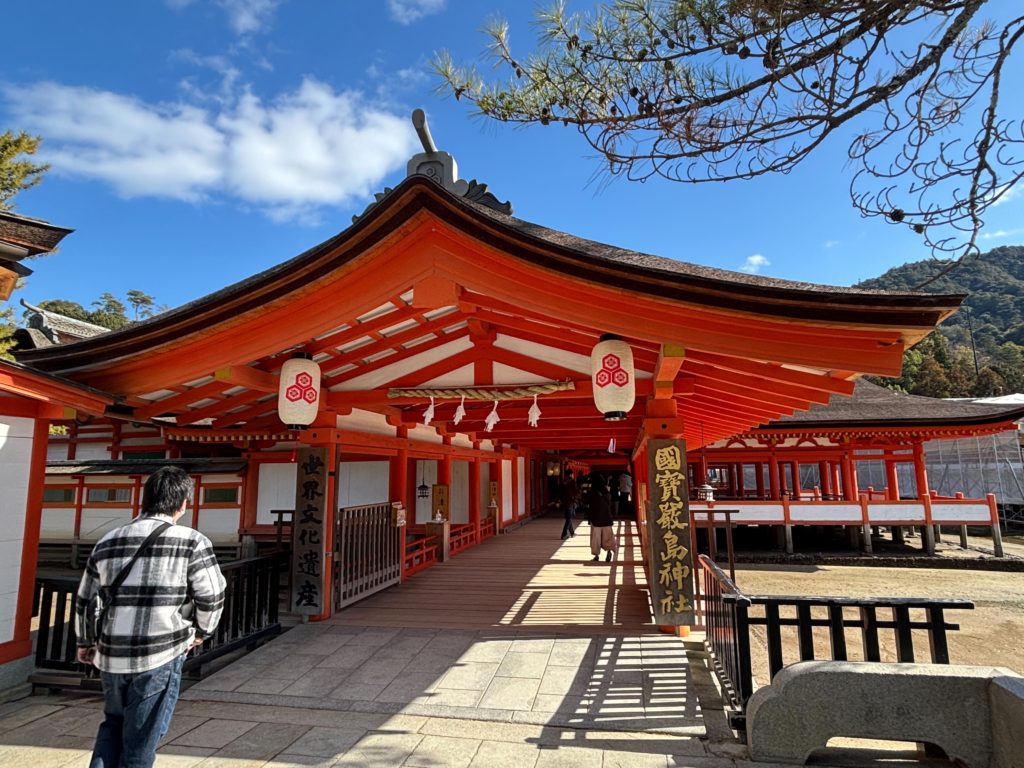
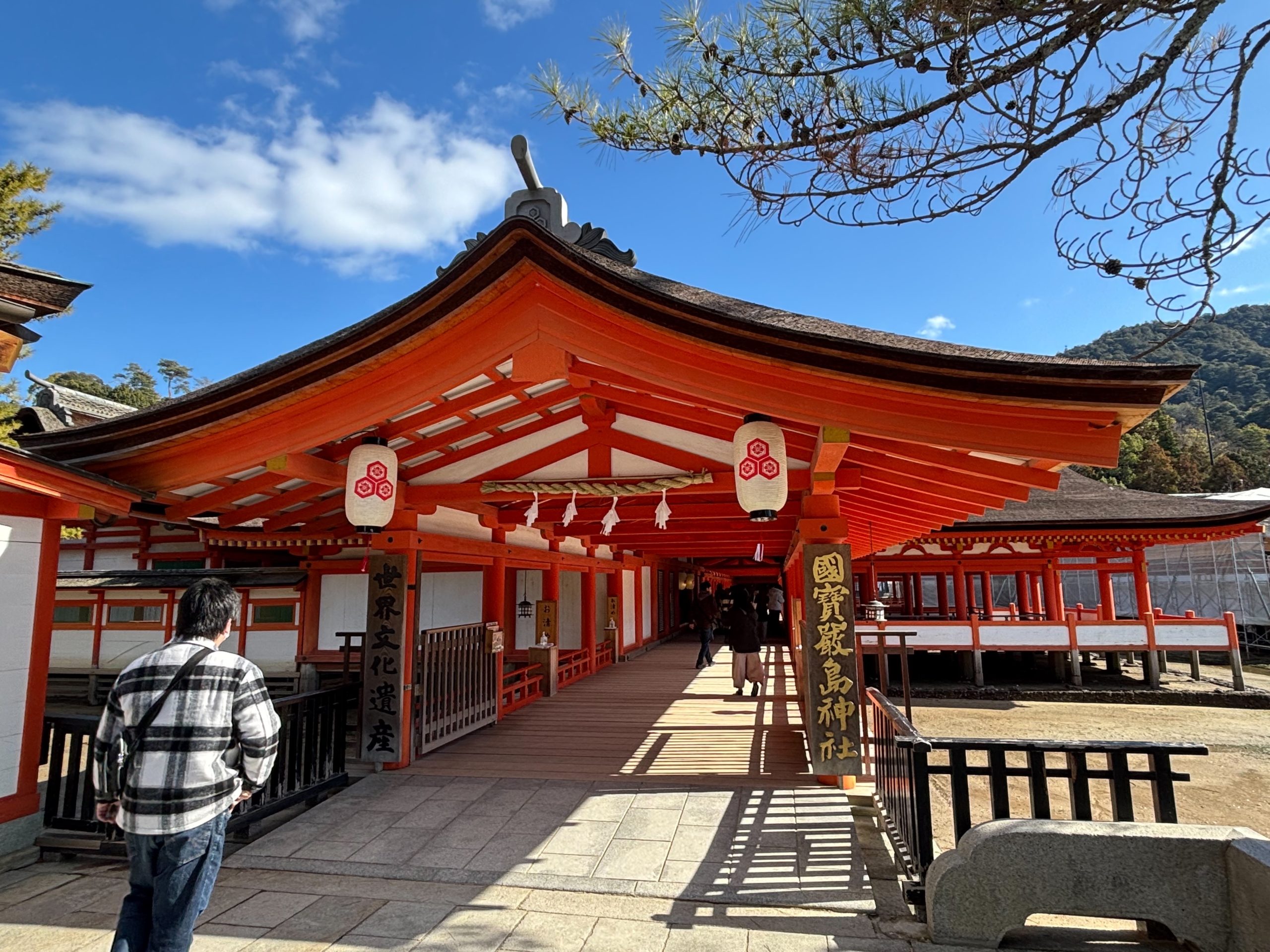
Standing at the edge of the sea on Miyajima Island, the vermilion halls and towering torii gate of Itsukushima Shrine create one of Japan’s most breathtaking sights. But what exactly earned this extraordinary place recognition as a UNESCO World Heritage Site? In December 1996, Itsukushima Shrine was officially inscribed on the UNESCO World Cultural Heritage List — and the designation covers far more than the shrine buildings alone.
The protected area encompasses 431.2 hectares, including the shrine complex, the sea in front of it, and the ancient primeval forest on Mount Misen behind it. That’s roughly 14 percent of the entire island of Miyajima, recognized as a shared treasure of all humanity. This article explores the story behind that recognition: how it happened, what values UNESCO evaluated, and how the site is protected and preserved today.
The Road to World Heritage Status
From Japan Joining the Convention to the Tentative List
The UNESCO World Heritage Convention was adopted at the UNESCO General Assembly in 1972. Its purpose was straightforward but profound: to identify cultural and natural sites of outstanding global value and ensure that if those sites ever faced the threat of damage or loss, the international community could work together to protect them.
Japan ratified the convention in 1992, and in that very same year, Itsukushima Shrine was placed on Japan’s tentative list of World Heritage candidates. The move was supported by the shrine’s long history of protection as a National Treasure and Important Cultural Property, as well as its status as one of Japan’s Three Views — a cultural designation that had made Miyajima famous across the country for centuries.
From Nomination to Official Inscription: Four Years of Evaluation
Three years after entering the tentative list, in September 1995, the Japanese government formally nominated Itsukushima Shrine for World Heritage inscription. The nomination dossier presented detailed research on the originality of the over-water shrine architecture, the historical significance of its Heian-period design, and the remarkable harmony it achieves between human construction and natural landscape.
The UNESCO World Heritage Committee carefully evaluates each nominated site, granting inscription only when a property demonstrates what the convention calls “Outstanding Universal Value.” For Itsukushima Shrine, that moment came in December 1996, at the 20th session of the World Heritage Committee, when the shrine was officially inscribed as a cultural heritage site under four evaluation criteria. It became Japan’s eighth World Heritage Site — and notably, the Hiroshima Peace Memorial (Atomic Bomb Dome) received the same recognition that same year.
If you’d like to explore the broader historical context behind the shrine’s significance, these related guides may be helpful.
Standing at the edge of the sea on Miyajima Island, watching the Great...
Miyajima — officially known as Itsukushima — is one of Japan's most sa...
The Four UNESCO Criteria Behind the Designation
Criterion (i): A Masterpiece of Human Creative Genius
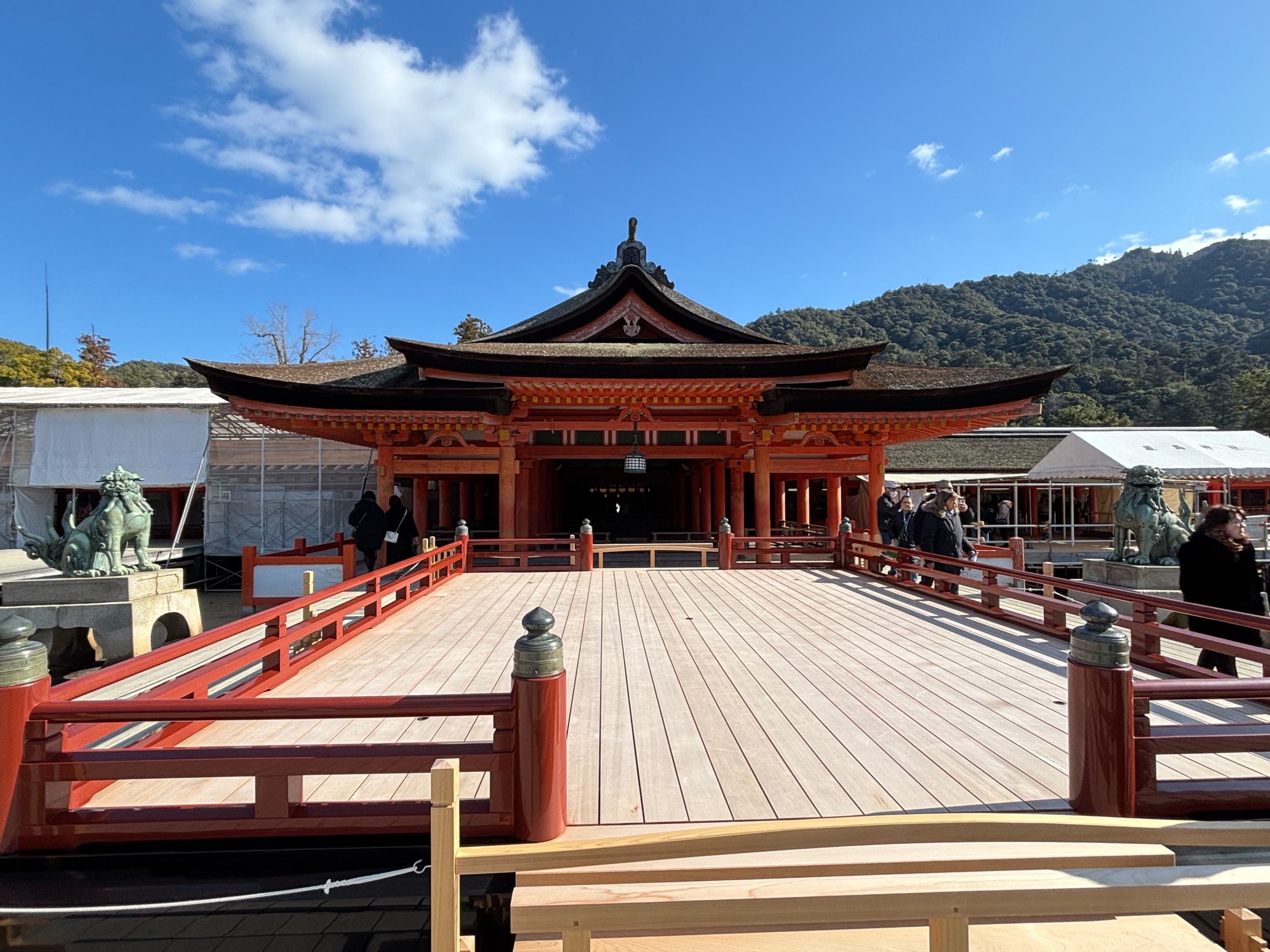
Itsukushima Shrine is unlike any other religious site in the world. Its designers applied the elegant architectural vocabulary of shinden-zukuri — the aristocratic palace style of the Heian period — to a Shinto shrine, and then placed that shrine directly over the sea. The result, conceived under the patronage of the powerful twelfth-century nobleman Taira no Kiyomori, creates a visual composition where vermilion structures appear to float against the deep green of Mount Misen.
What makes this particularly remarkable is the deliberate integration of tidal movement into the design itself. At high tide, the shrine halls seem to float on water; at low tide, the seabed is exposed and visitors can walk across the sand all the way to the Great Torii Gate. This interplay between architecture and nature — planned, not accidental — is what UNESCO recognized as a masterpiece of human creative genius.
Criterion (ii): Influence on the Development of Shrine Architecture
The design of Itsukushima Shrine represents a fusion between Heian aristocratic culture and Shinto religious practice that proved deeply influential on Japanese architecture for centuries. By adapting the residential spaces of Heian palace design to express the relationship between human worshippers and the divine, the shrine established a new architectural language for sacred space.
The shrine also served as a crossroads of cultural exchange. During the era when Taira no Kiyomori controlled maritime traffic across the Seto Inland Sea, aristocrats and courtiers traveled from the capital in Kyoto to visit Miyajima, bringing with them refined court arts including bugaku ceremonial dance and kangen court music — traditions that are still performed at the shrine today.
Criterion (iv): A Rare Surviving Example of 12th-Century Architecture
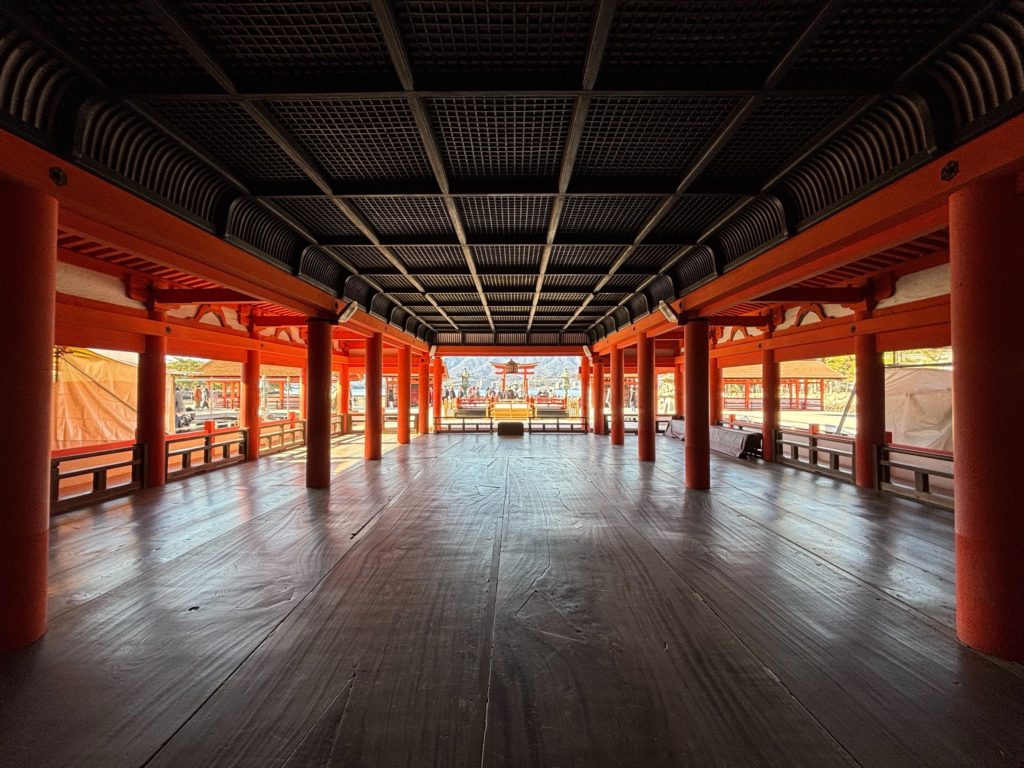
Most of the shrine buildings that stand today were reconstructed in 1241, following two fires that destroyed the original structures — first in 1207 and again in 1223. Crucially, each reconstruction was carried out in faithful accordance with the original 12th-century design. As a result, the shrine as it exists today preserves the architectural style of the late Heian and early Kamakura periods with remarkable fidelity.
The fact that these structures have survived for more than 800 years in a marine environment — exposed to seawater, salt, wind, and the constant movement of tides — while maintaining their original architectural form is considered extraordinary by global standards. Very few sites in the world can claim both this age and this degree of preservation under such challenging natural conditions.
Criterion (vi): A Window into Japanese Religious Belief
Miyajima has been considered a sacred island since ancient times. The island as a whole — and especially its highest peak, Mount Misen at 535 meters — was an object of nature worship long before any shrine was built. According to tradition, the shrine was constructed over the sea specifically to avoid placing sacred buildings directly on land that was itself considered divine.
The island also represents the long coexistence of Shinto and Buddhism that characterized Japanese religious life for most of its recorded history. Until the government-mandated separation of the two religions during the Meiji period, Buddhist temples including Daisho-in operated in close relationship with the shrine, together forming the spiritual heart of Miyajima. This layered religious heritage — nature worship, Shinto practice, and Buddhist tradition woven together — is part of what UNESCO recognized under this criterion as a site of universal significance to the understanding of Japanese religious values.
What the World Heritage Designation Actually Protects
431.2 Hectares: More Than Just the Shrine Buildings
It is worth understanding the full scope of what is protected. The World Heritage designation does not cover only the shrine halls and torii gate — it encompasses 431.2 hectares, including the marine area in front of the shrine and the primeval forest of Mount Misen behind it. This represents approximately 14 percent of the total area of Miyajima Island.
Within this protected zone, six structures are designated National Treasures: the main shrine hall (honden), the offerings hall (heiden) and worship hall (haiden), the purification hall (haraeden), the main hall and associated structures of the auxiliary Kyakujinja Shrine, and the east and west covered corridors. An additional eleven structures and three objects hold Important Cultural Property status, among them the Great Torii Gate, the Five-Story Pagoda, and the Tahoto Pagoda. The primeval forest of Mount Misen, itself a National Natural Monument, accounts for roughly 160 hectares — about 5.3 percent of the island’s total area — and remains largely untouched.
The Buffer Zone: An Entire Island Under Protection
World Heritage sites are typically surrounded by a buffer zone — a protected area that acts as a safeguard for the core heritage property. At Miyajima, the buffer zone extends to cover the entire island of Miyajima and the surrounding sea area inside the Great Torii Gate, totaling approximately 2,634 hectares.
In practical terms, this means that the whole of Miyajima Island is subject to strict restrictions on development and landscape change. Buildings cannot be constructed in ways that would detract from the heritage values; natural scenery cannot be altered carelessly. This framework has been instrumental in preventing the kind of commercial encroachment that has damaged the surroundings of other major tourist sites in Japan.
How Itsukushima Shrine Is Protected and Preserved
Japan’s Law for the Protection of Cultural Properties
Even before UNESCO recognized it, Itsukushima Shrine was already among the most strictly protected sites in Japan. Following the enactment of the Law for the Protection of Cultural Properties in 1950, the shrine’s principal buildings were designated National Treasures or Important Cultural Properties, and the island and the sea in front of it were designated Special Historic Sites and Special Places of Scenic Beauty.
Under this framework, any alteration to the buildings requires authorization from the Commissioner for Cultural Affairs, and all repair and restoration work must use traditional methods and materials. Since the UNESCO designation in 1996, Japan’s domestic legal protections have been supplemented by international monitoring under the World Heritage Convention, creating a two-layer system of oversight.
Community and Government Working Together
Protecting a World Heritage Site is not something governments can do alone. On Miyajima, the island’s residents have historically played a central role in maintaining the sacred character of the island, and that tradition of community stewardship continues today. Since the Kamakura period, the entire island has been treated as shrine property, with development historically kept to a minimum.
Today, Hiroshima Prefecture, the city of Hatsukaichi, Itsukushima Shrine, the Miyajima Tourism Association, and local residents work together on a range of preservation efforts: regular cleaning activities, architectural controls to protect the landscape, and visitor education programs to help the millions of tourists who come each year understand the importance of what they are seeing.
Ongoing Restoration: Keeping Ancient Structures Alive
The shrine buildings face a constant battle against the sea. Wooden structural elements submerged at high tide are vulnerable to rot, and regular inspection is essential. When deterioration is found, craftspeople apply a traditional repair technique called netsugui, in which the damaged base section of a wooden pillar is carefully spliced and replaced without removing the entire structure.
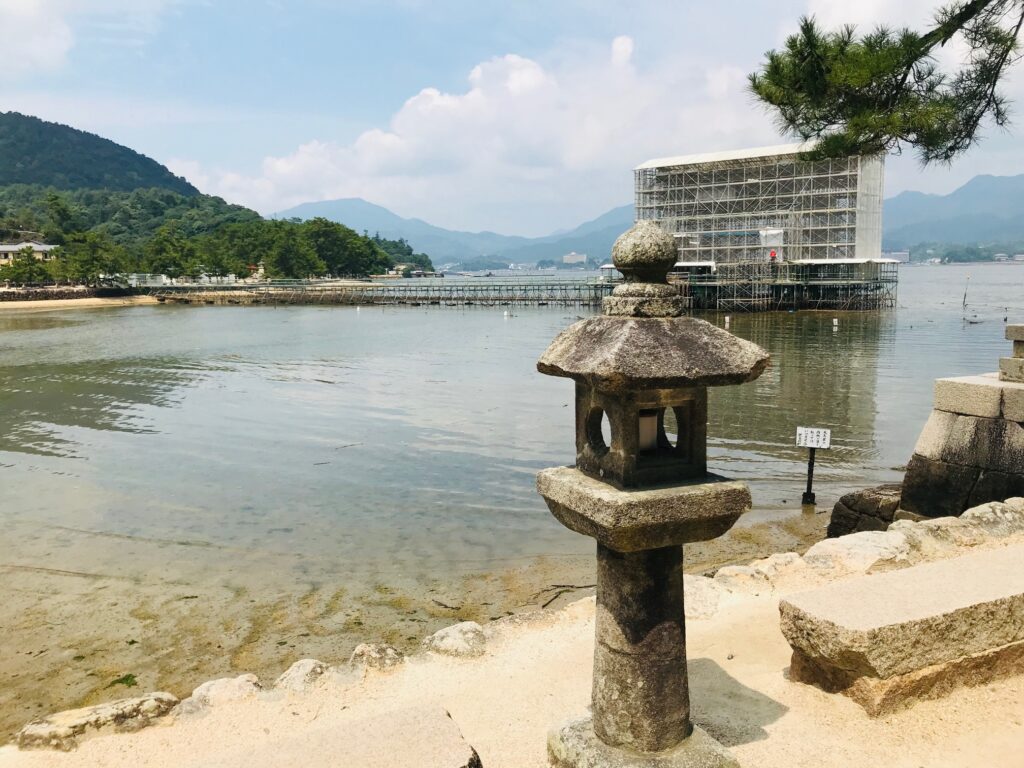
Between 2019 and 2022, the Great Torii Gate underwent a major restoration project — the most comprehensive in many decades. The work required careful research to ensure that traditional materials and construction methods were used wherever possible, and the scaffolding-wrapped torii became a familiar sight for Miyajima visitors during those years. Separately, the national forest on Miyajima has been designated a “Heritage-Contributing Forest,” ensuring a sustainable supply of hinoki cypress bark and timber for future repairs to the shrine’s traditional roof structures.
Miyajima Today: Balancing Tourism and Heritage
Nearly three decades after UNESCO inscription, Miyajima draws more than four million visitors a year, making it one of the most internationally recognized destinations in Japan. The World Heritage designation has played a significant role in that growth, particularly in drawing travelers from abroad who might not otherwise have made the journey to Hiroshima.
But high visitor numbers also bring pressure. The sheer volume of tourists can affect the shrine buildings and surrounding natural environment, and there is constant commercial demand for development that could compromise the landscape. In 2014, the Miyajima Town Planning Guidelines were established specifically to address these tensions. The plan sets concrete standards for building height, exterior colors and materials, and outdoor signage, all designed to maintain the visual character that makes Miyajima a World Heritage Site rather than just a popular resort.
The underlying challenge is one that every major heritage destination faces: how to keep a living cultural site genuinely alive — economically, socially, and spiritually — while ensuring that the qualities that make it irreplaceable are not slowly eroded. At Miyajima, that challenge is being met through a combination of legal frameworks, community commitment, and the kind of skilled craftsmanship that has been keeping these buildings standing since the twelfth century.
FAQ
When was Itsukushima Shrine designated a UNESCO World Heritage Site?
Itsukushima Shrine was officially inscribed on the UNESCO World Cultural Heritage List in December 1996, at the 20th session of the World Heritage Committee. It became Japan’s eighth World Heritage Site, and was inscribed in the same year as the Hiroshima Peace Memorial (Atomic Bomb Dome).
Does the World Heritage designation cover just the shrine buildings?
No — the protected area is much larger than the shrine itself. It encompasses 431.2 hectares, including the sea in front of the shrine and the primeval forest of Mount Misen behind it. This represents approximately 14 percent of the entire island of Miyajima. The whole island also falls within a buffer zone that restricts development and landscape changes.
Why specifically is Itsukushima Shrine considered a World Heritage Site?
UNESCO evaluated the shrine under four criteria: (i) the over-water shrine design is recognized as a masterpiece of human creative genius; (ii) it influenced the development of Japanese shrine architecture; (iv) it preserves 12th-century architectural styles with exceptional fidelity; and (vi) it represents universal values in Japanese religious belief, including the long interweaving of Shinto and Buddhist practice.
What is the buffer zone around Miyajima, and what does it mean for visitors?
The buffer zone is a protected area surrounding the core World Heritage site. For Miyajima, it covers the entire island and surrounding sea areas — roughly 2,634 additional hectares. Practically speaking, this means development on the island is strictly controlled, which is why the natural and cultural landscape of Miyajima remains largely intact compared to other heavily visited Japanese destinations.
Has the Great Torii Gate been restored recently?
Yes. From 2019 to 2022, the Great Torii Gate underwent a major restoration project. The work was carried out using traditional materials and construction methods where possible, and involved detailed investigation of the structure before any repairs were made. The torii is now fully restored and accessible to visitors.
How many visitors does Miyajima receive each year?
Before the COVID-19 pandemic, Miyajima was receiving more than four million visitors annually. The World Heritage designation has been a significant factor in that growth, contributing to strong international tourism to the Hiroshima region as a whole.
What can I do as a visitor to help protect this World Heritage Site?
Respect the basic rules that apply to all visitors: do not touch or lean against the shrine structures, carry out any waste you bring, stay within designated areas, and do not feed the deer. Beyond those basics, simply taking time to understand the history and significance of what you are seeing — rather than treating the site as just a backdrop for photos — is itself a meaningful form of engagement with its heritage.
Summary
The UNESCO World Heritage inscription of Itsukushima Shrine is a recognition of several distinct achievements layered on top of each other: the architectural originality of a shrine built over the sea, the historical significance of Heian-period design preserved across eight centuries, and the deeper cultural importance of an island that has been considered sacred in Japan since long before any buildings stood there. From Japan’s ratification of the World Heritage Convention in 1992 to the formal inscription in 1996, years of careful research and advocacy brought that recognition to fruition.
In the decades since, a multi-layered system of protection — combining Japan’s domestic cultural property laws, UNESCO’s international framework, traditional restoration craftsmanship, and active community stewardship — has kept both the physical structures and the surrounding landscape intact. The 431.2-hectare protected zone and island-wide buffer zone ensure that what is preserved is not just a collection of historic buildings but a complete cultural landscape: sea, shrine, forest, and the mountain that has always been at the heart of it all.
Visiting Itsukushima Shrine with some understanding of why it matters — not just visually, but historically and spiritually — transforms the experience. You are not simply looking at a beautiful building. You are standing in a place that has represented the sacred to Japanese people for well over a thousand years, and that the international community has agreed belongs to all of humanity.
References
- Cultural Heritage Online: Itsukushima Shrine (Agency for Cultural Affairs, Japan)
- Miyajima Tourism Association: World Cultural Heritage Registration
- Japan’s World Heritage Sites: Itsukushima Shrine
- okeikoJapan: Miyajima as a World Heritage Site
- World Heritage Navi: Itsukushima Shrine
- Miyajima Town History, General Edition. Miyajima Town History Editorial Committee, 1992.
- UNESCO World Heritage Centre: Itsukushima Shinto Shrine