
Standing at the edge of the sea on Miyajima Island, watching the Great Torii Gate rise from the water at high tide, it’s easy to feel that you’re in the presence of something extraordinary — something the world recognized officially in 1996. Itsukushima Shrine was inscribed as a UNESCO World Heritage Site on December 16 of that year, at the 20th session of the UNESCO World Heritage Committee. The decision acknowledged not just the shrine’s breathtaking over-water architecture, but the full sweep of its cultural significance: more than 1,400 years of continuous religious tradition, a seamless harmony between human creation and untouched nature, and a design concept unlike anything else on earth.
Notably, Hiroshima’s Atomic Bomb Dome was designated at almost exactly the same time, making this a landmark moment for the entire region. Together, these two sites represent Japan’s capacity to hold both profound tragedy and extraordinary beauty — destruction and creation — as part of the shared heritage of humanity.
The Road to World Heritage: How Itsukushima Shrine Earned Its Place
Japan’s Path to the World Heritage Convention
The UNESCO World Heritage Convention was adopted in 1972, with the goal of identifying and protecting cultural and natural sites of outstanding universal value to all of humanity. Japan ratified the convention in 1992, the same year Itsukushima Shrine was placed on the country’s tentative list of candidates. After careful preparation, the shrine was formally nominated in September 1995, and the final inscription followed in December 1996.
What made the case so compelling was the island’s nature as a place of worship stretching back well over a millennium. Miyajima has long been revered as a sacred island — a place where the divine is believed to dwell within the land, sea, and mountain itself. This deeply held spiritual tradition, combined with the remarkable 12th-century construction ordered by the warrior-aristocrat Taira no Kiyomori, produced a religious complex unlike anything else on the planet.
What Set Itsukushima Apart During the Review Process
The UNESCO evaluation did not simply reward the shrine’s beauty. Reviewers looked closely at whether Itsukushima represented a genuinely unique achievement — and on every count, it did.
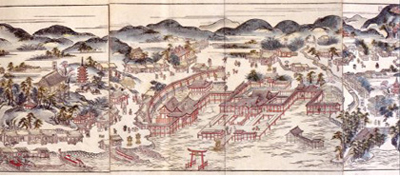
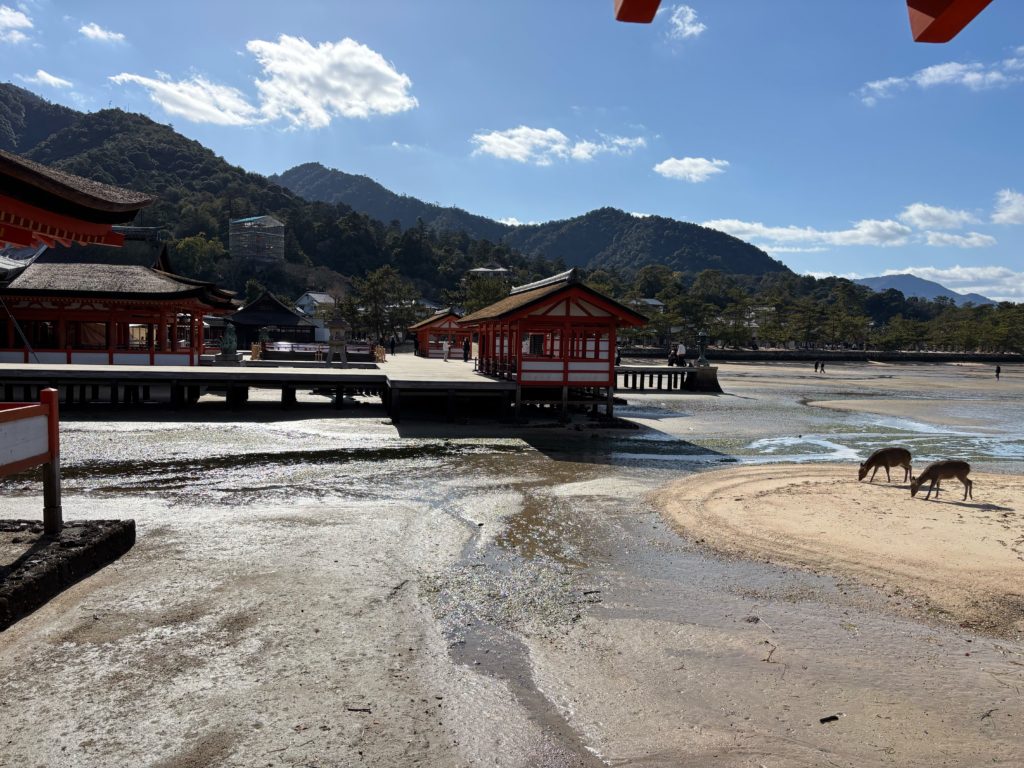
At the heart of the assessment was the creative audacity of the design itself: the aristocratic palace architecture of the Heian period, known as shinden-zukuri, was adapted and reimagined as a series of shrine buildings and covered corridors built directly over the sea. At high tide, the entire complex appears to float on the water. At low tide, visitors can walk out across the exposed seabed to the base of the Great Torii Gate. This dramatic, twice-daily transformation between land and sea is not a coincidence — it is the very soul of the shrine’s design, expressing the belief that this place exists in a realm between the human world and the divine.
Equally important was the shrine’s relationship to Mount Misen and its ancient primeval forest, which rises directly behind the complex. The interplay between built structure and untouched nature — sea, shrine, and mountain forming a single unified landscape — was recognized as something with no real parallel anywhere in the world.
The Four UNESCO Criteria That Itsukushima Shrine Satisfied
UNESCO evaluates World Heritage candidates against a set of ten criteria for cultural and natural significance. Most sites qualify under one or two. Itsukushima Shrine satisfied four — a reflection of just how layered and exceptional this place truly is.
Criterion (i): A Masterpiece of Human Creative Genius
Itsukushima Shrine was recognized as a masterpiece of human creative achievement. The vision of building an entire shrine complex over open water — where the structures rise and recede with the tides — required not just bold imagination but extraordinary engineering skill. Taira no Kiyomori’s 12th-century construction transformed the physical constraint of a shallow bay into the shrine’s defining feature, turning what might have been an obstacle into one of the most dramatic sacred landscapes ever created.
The result is a scene that has captivated travelers for centuries: at high tide, the shrine halls, corridors, and the Great Torii Gate appear to float serenely on the surface of the Seto Inland Sea, with the forested mountain rising behind. At low tide, the seabed is exposed and visitors can approach the torii on foot. This cyclical drama, playing out every single day, is a reminder that the shrine was designed not just for human eyes but as an offering to nature itself.
Criterion (ii): An Important Exchange of Human Values
The shrine also demonstrates an outstanding exchange of cultural values across time and across traditions. The blending of aristocratic court aesthetics with sacred Shinto architecture gave rise to a distinctive style that influenced Japanese religious buildings for centuries. Meanwhile, Miyajima’s status as a place of worship drew influence from both the imperial court and Buddhist traditions, resulting in a unique fusion of Shinto and Buddhist culture known as shinbutsu shūgō — a harmony of two belief systems that once coexisted on this island.
The visual legacy of that cultural exchange is still visible today. The Five-Story Pagoda, a Buddhist structure, stands prominently near the shrine grounds — a reminder that for much of Miyajima’s history, the island was home to both traditions simultaneously. This layered cultural identity, rather than any single influence, is what gives the site such depth.
Criterion (iv): A Remarkable Example of a Historic Architectural Ensemble
The shrine complex was recognized as an outstanding example of a type of architecture illustrating a significant stage in human history. The current buildings date primarily to a reconstruction completed in 1241, and they faithfully preserve the refined shinden-zukuri aesthetic of the Heian period — the golden age of Japan’s imperial aristocracy. In this sense, visiting Itsukushima Shrine is like stepping into a living document of 12th-century Japanese court culture.
The scale and quality of the complex is remarkable. Six of the shrine’s buildings have been designated National Treasures of Japan, and an additional eleven buildings and three structures hold Important Cultural Property status. Together, they represent one of the most concentrated collections of Heian and Kamakura-period architecture anywhere in the country.
Criterion (vi): Direct Connection to Living Traditions and Beliefs
Finally, Itsukushima Shrine was recognized for its direct, living connection to Shinto faith and cultural tradition. This is not a site frozen in history — it is an active place of worship where traditional rituals, music, and ceremonies have been performed continuously for more than 1,400 years.
Perhaps the most vivid expression of this living heritage is the Kangen-sai festival, held each July, in which traditional court music (gagaku) and dance are performed on boats drifting across the calm waters in front of the shrine. This ceremony, which traces its roots to the Heian period, is both a religious rite and a cultural performance of extraordinary beauty — and it continues to be held to this day, largely unchanged from its origins.
What Exactly Is Protected: The Boundaries of the World Heritage Site
The Core Zone: 431.2 Hectares
The World Heritage site encompasses a carefully defined core zone of 431.2 hectares — roughly 14% of Miyajima Island’s total area. This protected zone includes not only the shrine buildings themselves but also the sea directly in front of them and a significant portion of the ancient forest on Mount Misen behind.
One of the most distinctive aspects of the designation is that the tidal sea in front of the shrine — the very water that surrounds the Great Torii Gate at high tide — falls within the protected boundaries. This was a deliberate choice, recognizing that the tidal sea is not just a backdrop to the shrine but an essential part of its identity. Protecting the waterscape as well as the buildings reflects a genuinely holistic understanding of what makes this place special.
The Buffer Zone: The Whole Island and Beyond
Surrounding the core zone is a much larger buffer zone of 2,634.3 hectares, which covers the entire island of Itsukushima and the surrounding sea. Buffer zones are a standard feature of World Heritage designations, intended to protect the core area from development pressures and visual intrusion.
In practice, this means that the entire island of Miyajima is subject to strict landscape protection rules. Development that would alter the character of the island or damage views of the shrine and its natural surroundings is tightly controlled. This is one of the main reasons Miyajima has retained its serene, unhurried atmosphere even as visitor numbers have grown dramatically over the past three decades.
The Primeval Forest of Mount Misen
One of the most remarkable aspects of the World Heritage designation is the inclusion of Mount Misen’s ancient primeval forest as part of the protected area. This forest has remained essentially undisturbed for more than 10,000 years, and it contains a plant community found almost nowhere else on earth: a co-existence of the cool-climate conifer momi (Japanese fir) and the warm-climate tree mimizubai, two species that would not normally grow alongside each other.
The forest is also home to groves of yamaguruma, an ancient tree species sometimes called a “living fossil” because of its primitive characteristics and evolutionary lineage. The biological diversity of Mount Misen’s forest is often described as a miniature cross-section of Japan’s entire range of plant life — an extraordinary concentration of ecological richness on a single mountain.
The forest was designated a National Natural Monument in 1929 and a Special Protection District in 1957, long before the World Heritage nomination. Its scientific and ecological value had been recognized by Japanese researchers for generations. Its inclusion in the UNESCO designation gave that recognition a global dimension.

The Living Legacy: Thirty Years as a World Heritage Site
Nearly three decades have passed since the inscription in December 1996, and the designation has transformed the way Itsukushima Shrine is understood — both in Japan and around the world. The site has become more than a famous tourist destination; it is now an internationally recognized symbol of the harmony between human culture and the natural world.
World Heritage status brings with it a framework of ongoing responsibilities. The site undergoes regular monitoring by UNESCO and Japanese authorities to ensure its preservation condition remains sound. When typhoon damage occurs — as it has on several occasions — repairs are carried out with careful attention to maintaining the integrity of the original design. Every restoration project must balance practical necessity against the obligation to preserve what future generations will inherit.
Visitor numbers have grown substantially since the inscription, bringing both economic benefits for the local community and real challenges around managing the impact of tourism. Striking the right balance — welcoming visitors from around the world while ensuring the site itself is not harmed by their presence — has become one of the defining challenges of Miyajima’s stewardship in the 21st century.
What makes this challenge meaningful is the human commitment behind it. The shrine priests who maintain the buildings day by day, the researchers who monitor the primeval forest, the local guides and tourism organizations who help visitors understand what they are seeing — all of these people are active participants in protecting something that belongs, in a real sense, to all of humanity.
Closing Thoughts
The UNESCO World Heritage inscription of Itsukushima Shrine was not simply a reward for beauty, though beauty is certainly here in abundance. It was a recognition of something rarer: a place where creative vision, spiritual depth, architectural achievement, and natural wonder have come together in a way that exists nowhere else on earth — and that has been sustained, through care and commitment, for more than fourteen centuries.
When you visit Miyajima and walk through the shrine’s covered corridors above the sea, you are experiencing something that the world has formally acknowledged as irreplaceable. That is worth holding in mind. The tides will keep rising and falling around the Great Torii Gate as they always have — but the effort to keep that scene intact for the next thousand years is an ongoing human story, still being written.
References
- Agency for Cultural Affairs, Japan — Cultural Heritage Online: Itsukushima Shrine
- UNESCO World Heritage Centre: Itsukushima Shinto Shrine
- Miyajima Tourism Association: World Cultural Heritage Inscription
- Hiroshima Prefecture: Hiroshima Lab — Itsukushima Shrine Deep Dive
- Hiroshima Tourism Association — Dive! Hiroshima: Understanding Itsukushima Shrine
- Japan World Heritage Guide: Itsukushima Shrine
- Wikipedia (Japanese): Itsukushima Shrine
FAQ
When was Itsukushima Shrine designated a UNESCO World Heritage Site?
Itsukushima Shrine was officially inscribed as a UNESCO World Heritage Site on December 16, 1996, at the 20th session of the UNESCO World Heritage Committee. It was placed on Japan’s tentative list in 1992 and formally nominated in September 1995 before receiving the final designation the following year.
Why was Itsukushima Shrine chosen as a World Heritage Site?
The shrine satisfied four of UNESCO’s ten evaluation criteria — an unusually high number. It was recognized as a masterpiece of human creative genius, as a site demonstrating important cultural exchanges, as an outstanding example of Heian-period architecture, and as a place with direct connections to living religious traditions and ceremonial practices that have continued unbroken for more than 1,400 years.
What area does the World Heritage designation cover?
The core protected zone covers 431.2 hectares and includes the shrine buildings, the tidal sea in front of the shrine, and a portion of the primeval forest on Mount Misen. A much larger buffer zone of 2,634.3 hectares covers the entire island of Itsukushima and surrounding waters, protecting the broader landscape from development that could harm the site.
Is Mount Misen’s forest part of the World Heritage Site?
Yes. The ancient primeval forest of Mount Misen is included within the World Heritage boundaries. This forest, which has remained undisturbed for over 10,000 years, was valued for its extraordinary biodiversity — including plant species rarely found coexisting together — and for its scientific importance as a living record of Japan’s natural history.
Does World Heritage status affect how tourists can visit Miyajima?
The designation has not restricted general tourist access to Miyajima, and visitors are welcome to explore the shrine, its corridors, and surrounding areas freely. However, the buffer zone regulations tightly control development on the island to protect its landscape and character. Visitor impact on the environment is an ongoing concern, and local authorities continue to develop sustainable tourism policies to balance access with preservation.
What is the Kangen-sai festival, and how does it relate to the World Heritage listing?
The Kangen-sai is a traditional festival held each July in which ancient court music and dance are performed on boats in the sea in front of Itsukushima Shrine. This ceremony has been performed since the Heian period and is considered one of Japan’s most refined examples of intangible cultural heritage. Its continuity was part of why the shrine met Criterion (vi) in the World Heritage assessment, which requires a direct, living connection to traditions and beliefs of outstanding universal significance.
Is Itsukushima Shrine close to other World Heritage Sites?
Yes — and unusually so. The Hiroshima Peace Memorial (Atomic Bomb Dome) was inscribed as a World Heritage Site at almost exactly the same time as Itsukushima Shrine, in December 1996. Both sites are within easy reach of each other: Miyajima is accessible by ferry in under an hour from central Hiroshima, making it straightforward to visit both World Heritage sites in a single day trip.