
When you stand before the iconic floating torii gate at Itsukushima Shrine on Miyajima Island, it’s easy to be swept away by the beauty of it all. But behind that stunning architecture lies one of the most calculated political and economic strategies in Japanese history. Why did Taira no Kiyomori — the first warrior to rise to the rank of Grand Minister of State — choose this remote island shrine as his spiritual patron? The answer has very little to do with simple piety, and everything to do with domination of the seas.
Kiyomori’s choice of Itsukushima Shrine came down to a single, brilliant strategic calculation: whoever controlled Miyajima controlled the Seto Inland Sea — and whoever controlled the Seto Inland Sea controlled Japan’s trade with Song Dynasty China. When Kiyomori was appointed Governor of Aki Province in 1146, he recognized immediately that this island at the heart of Japan’s most important maritime corridor was the key to building an unassailable power base. By elevating Itsukushima Shrine as the spiritual protector of his clan, he fused religious authority with economic and military dominance in a way that had never been done before.

How Kiyomori Came to Miyajima: The Historical Background
Appointed Governor of Aki — A Turning Point for the Taira Clan
The moment that set everything in motion came in 1146, when Kiyomori, just 29 years old, was appointed Governor of Aki Province — the territory that includes what is now Hiroshima Prefecture and, crucially, Miyajima Island itself. To modern eyes, this might look like a routine bureaucratic posting. In reality, it was a watershed moment for the entire Taira clan.
Aki Province sat almost exactly at the geographic center of the Seto Inland Sea, the sheltered waterway that connected the capital region near modern Kyoto and Osaka with Kyushu to the southwest. For generations, the Taira clan had been involved in suppressing pirates along this corridor, beginning with Kiyomori’s father, Taira no Tadamori. Being officially appointed governor of a province that straddled this strategic highway gave Kiyomori the legal authority to extend what had previously been informal clan influence into something far more systematic.
Kiyomori wasted no time. Even while serving as governor, he made repeated visits to Itsukushima Shrine and began funding repairs to its aging structures. This was not simply devotion — it was a deliberate campaign to position himself as the protector and patron of the shrine, binding the Taira clan’s identity to this sacred place and, through it, to the entire maritime world of western Japan.
The Oracle from Mount Koya: Faith and Political Calculation
The epic war chronicle The Tale of the Heike (Heike Monogatari) offers a fascinating glimpse into the spiritual dimension of Kiyomori’s attachment to Itsukushima. According to the text, while Kiyomori was on a pilgrimage to Mount Koya — one of Japan’s most sacred Buddhist sites — an elderly monk delivered a mysterious prophecy: if Kiyomori rebuilt and expanded Itsukushima Shrine, he would rise to the very pinnacle of power.
Whether this oracle was a genuine religious experience or a piece of politically useful storytelling is impossible to say with certainty. What is historical fact is that Kiyomori responded with extraordinary commitment. He funded an initial restoration of the shrine in 1152, and then, in 1168, undertook a sweeping reconstruction that brought the complex to essentially the scale you can see reflected in the shrine today. The investment was enormous by any measure of the era.
The deeper truth, however, is that spiritual motivation and strategic calculation were not separate forces in Kiyomori’s mind — they reinforced each other. Investing in Itsukushima Shrine simultaneously demonstrated religious legitimacy, earned the loyalty of merchants and ship captains who revered the shrine’s gods, and projected the power and prestige of the Taira clan across the entire region. It was, in every sense, an extraordinarily well-targeted decision.

The Strategic Value of Miyajima for Japan-Song Trade
One of the most compelling reasons Kiyomori chose Miyajima was its position on the trade routes connecting Japan to Song Dynasty China. Before Kiyomori’s rise, what limited Sino-Japanese trade existed was largely confined to Hakata Bay in northern Kyushu — far from the capital and difficult for the court aristocracy to influence or profit from. Kiyomori had a far more ambitious vision.
Miyajima sits almost exactly at the midpoint of the sea lane running from the port of Ōwada no Tomari (present-day Kobe) all the way down to Hakata. Kiyomori recognized that by securing this midpoint and using it as a base for monitoring and facilitating maritime traffic, the Taira clan could effectively manage the flow of trade goods — and the immense wealth that came with it — along the entire length of the route.
In 1173, this strategy reached its most dramatic expression: Kiyomori successfully redirected Chinese Song vessels away from Hakata entirely, guiding them directly up through the Seto Inland Sea to dock at Ōwada no Tomari. This was a remarkable achievement that transformed Japan’s international trading posture. At the heart of this system was Itsukushima Shrine — the spiritual guarantor of safe passage through the inland sea, and the symbolic center of the entire network.
Dominating the Seto Inland Sea: Strategy and Significance
From Pirate Hunters to Masters of Maritime Commerce
The Taira clan’s rise to power along the Seto Inland Sea did not happen through simple military conquest. It evolved through a far more sophisticated transition: from suppressing pirates to effectively managing — and profiting from — maritime traffic itself. Kiyomori and his father Tadamori pioneered a model in which former pirates were not simply defeated but incorporated into an organized system of sea-lane management under Taira oversight.
Itsukushima Shrine was central to making this system work. By positioning the shrine as the divine protector of maritime safety, Kiyomori gave the entire network a sacred legitimacy that went far beyond what military force alone could have achieved. The Taira were no longer just armed strongmen controlling a waterway. They were the righteous guardians of Japan’s most important spiritual sanctuary for seafarers — an identity that commanded respect from merchants, sailors, and nobles alike.
In practical terms, this meant that regular shrine festivals and ceremonies became occasions for the maritime community to gather, exchange information, and strengthen their connections with the Taira clan. The religious calendar of Itsukushima Shrine was woven into the commercial calendar of the inland sea. It was a system of social control as elegant as anything Kiyomori accomplished through politics or warfare.
The Three Sea Goddesses and the Promise of Safe Passage
The deities enshrined at Itsukushima are the three daughters of the wind god Susanoo — Ichikishimahime, Tagirihime, and Takitsuhime — collectively known as the Munakata Three Goddesses. Long before Kiyomori’s time, these deities had been venerated as protectors of navigation and maritime safety throughout western Japan. Kiyomori’s genius was in recognizing that this existing religious infrastructure could be leveraged to serve his political ambitions.
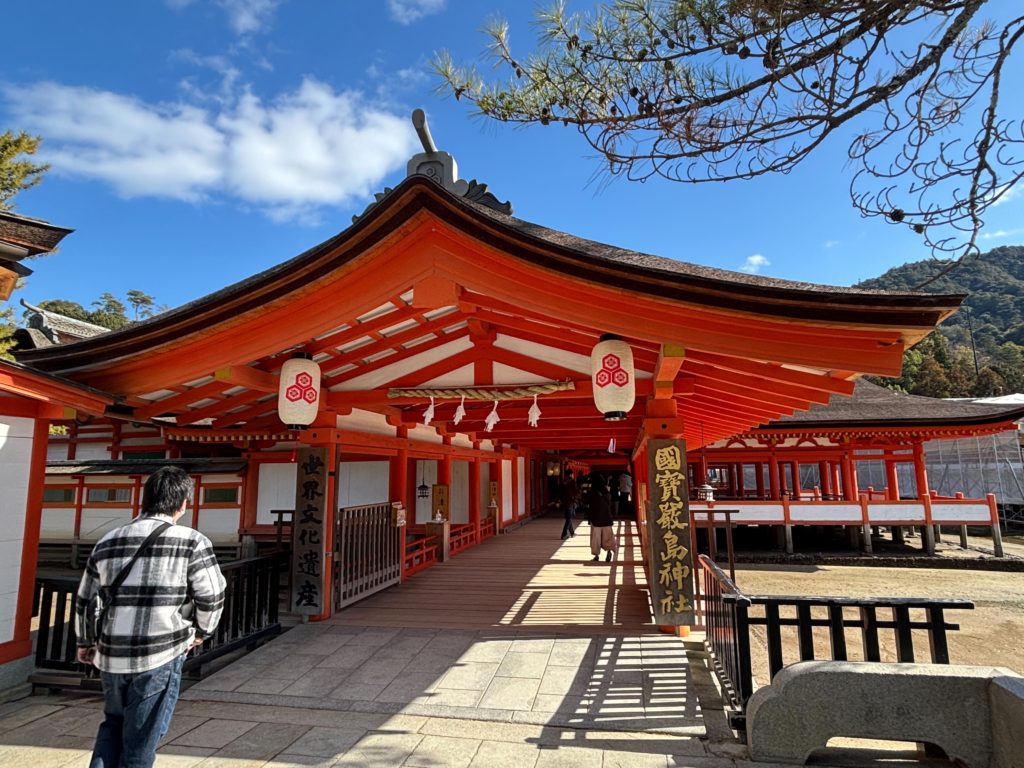
When Kiyomori rebuilt Itsukushima Shrine in 1168, he made a design choice that would prove to be one of the most iconic in Japanese architectural history: he adapted the elegant aristocratic style of Kyoto’s palace architecture — known as shinden-zukuri — to create a complex that appeared to float directly on the sea. This was not mere aesthetics. A shrine that seemed to rise from the waves was a powerful visual statement to every merchant, sailor, and diplomat who approached by boat. It signified that the gods of the sea themselves endorsed the Taira, and that safe passage through these waters came with Taira blessing.
Kiyomori also introduced bugaku — the formal court music and dance performed at Itsukushima to this day — by transferring it from Shitennoji Temple in Osaka. The grandest of the shrine’s rituals, the Kangen-sai boat festival (still celebrated each summer), was established during this period. These cultural events served as both spiritual ceremonies and vital social gatherings, drawing together everyone who depended on the inland sea for their livelihood and binding them more closely to the Taira power structure.
Miyajima and Ōwada no Tomari: Two Pillars of One System
Kiyomori’s maritime empire rested on two complementary foundations: Miyajima as the spiritual hub and Ōwada no Tomari as the commercial hub. The port of Ōwada no Tomari — which Kiyomori developed into what would eventually become the city of Kobe — handled the physical reality of international trade: the docking, offloading, and distribution of goods arriving from China. Itsukushima Shrine, meanwhile, provided the religious sanction and symbolic authority that made the whole system feel not just powerful, but legitimate and divinely approved.
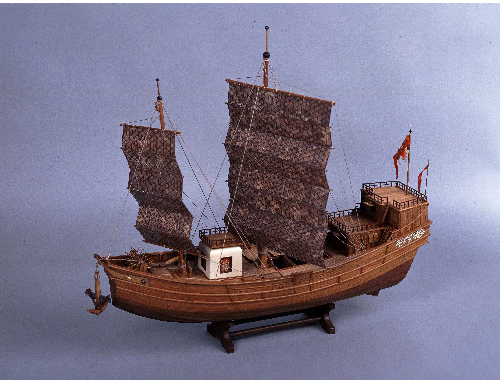
In 1173, Kiyomori completed a remarkable engineering project at Ōwada no Tomari: he constructed an artificial island called Kyōgashima in the harbor, creating facilities capable of accommodating the large-hulled Song dynasty trading vessels that had previously been too deep-drafted to navigate far up the inland sea. This engineering achievement, paired with the spiritual guarantee of safe passage that Itsukushima Shrine represented, made it finally practical for Chinese ships to travel all the way to the capital region.
The political theater Kiyomori staged around these achievements was equally impressive. On occasions when retired Emperor Go-Shirakawa and other members of the imperial family made pilgrimages to Itsukushima Shrine, Kiyomori arranged for them to be transported in actual Song dynasty vessels — a vivid display of his international connections and the prosperity his trade policies had delivered. Miyajima was the stage for these performances, and the message was unmistakable: the Taira clan stood at the center of a new, outward-looking Japan.
How Kiyomori’s Strategy Changed Japanese History
Japan’s Rise as an International Trading Power
Before Kiyomori, Japan’s engagement with continental Asia was modest, peripheral, and largely reactive. By the time of his death in 1181, Kiyomori had fundamentally repositioned Japan as an active participant in the East Asian maritime trading world, with the Seto Inland Sea — and Miyajima at its spiritual heart — serving as the engine of that engagement.
The goods and ideas that flowed through Kiyomori’s trade network extended far beyond simple merchandise. Song dynasty China was at one of the peaks of its cultural and technological achievement, and the connections Kiyomori established brought the latest advances in medicine, architecture, art, and philosophy streaming into Japan through the Seto Inland Sea corridor. The cultural flourishing of late Heian Japan cannot be fully understood without acknowledging that Kiyomori’s Miyajima-anchored trade system was one of its primary engines.
Perhaps the most transformative consequence was monetary. Kiyomori imported Song copper coins in enormous quantities — ships used them as ballast, filling their hulls with coin before loading trade goods — and actively promoted their use in domestic Japanese commerce. For the first time, Japan began developing a genuine money economy rather than relying almost entirely on rice and silk as units of exchange. The commercial revolution that this set in motion would reshape Japanese society for centuries to come.
The Foundations of Japan’s Maritime Identity
Historians often mark Kiyomori’s era as the moment Japan first transitioned from a passive recipient of continental culture to an active shaper of its own international engagement. It was Kiyomori who first demonstrated that a Japanese leader could not only manage maritime trade routes but dictate the terms on which foreign ships accessed Japanese ports — a concept entirely foreign to the court aristocracy that had dominated Japanese politics for generations.
The legacy of what Kiyomori built around Miyajima echoed through the centuries that followed. During the Kamakura period, control of the Seto Inland Sea became a critical element of Japan’s defense against the Mongol invasions. The trade missions of the Muromachi period and the great coastal shipping routes of the Edo period all developed within the framework Kiyomori had pioneered. The idea that western Japan’s inner sea was a vital national resource — one worthy of careful management and spiritual protection — was, in large part, his contribution.
The governance model Kiyomori pioneered — fusing religious authority with practical economic and military control — was also deeply influential. Subsequent warrior governments would adopt similar strategies, recognizing that the most durable power was power that could present itself as both practically indispensable and spiritually ordained. That Itsukushima Shrine continues to draw millions of visitors as a UNESCO World Heritage Site, still revered as a protector of maritime safety, is testament to how thoroughly and lastingly Kiyomori’s framework took root.
Kiyomori’s Legacy at Miyajima Today
The strategic vision that led Taira no Kiyomori to Miyajima over 870 years ago remains surprisingly relevant today — both as history and as a living presence you can feel when you visit the island. The geographic insight that made the Seto Inland Sea so valuable in the 12th century still holds: container ships and tankers now travel the same sheltered waters where Song dynasty trading vessels once made their way toward Ōwada no Tomari under Taira protection.
What Kiyomori created at Itsukushima Shrine was, at its core, a model for combining spiritual meaning with economic value — a model so well-designed that it has continued to generate both for nearly nine centuries without interruption. The shrine that draws millions of international visitors every year, the UNESCO designation that places Miyajima among humanity’s most precious cultural sites, the timeless image of a great red torii gate rising from the sea: all of it traces back, in one way or another, to the calculated brilliance of a 29-year-old governor who looked at a small island in a sheltered sea and saw the center of everything.
FAQ
Why did Taira no Kiyomori choose Itsukushima Shrine specifically over other shrines?
Itsukushima Shrine stood at the geographic center of the Seto Inland Sea — the most important maritime corridor in medieval Japan — and was already home to the Munakata Three Goddesses, long-revered protectors of seafarers. For Kiyomori’s goal of controlling Japan-Song trade routes and inland sea traffic, no other shrine offered the same combination of strategic location and pre-existing religious authority. It was the ideal foundation for a system that fused spiritual legitimacy with practical maritime dominance.
Did Kiyomori build the current Itsukushima Shrine buildings?
The buildings you see today are largely Kamakura-period reconstructions — the originals were damaged and rebuilt after the Taira clan’s fall. However, the scale, layout, and distinctive architectural character of the shrine, including its celebrated sea-floating design, faithfully reproduce the vision Kiyomori established in his 1168 reconstruction. In that sense, what you’re looking at is genuinely Kiyomori’s design, carried forward across the centuries.
How significant was Miyajima to the Taira clan’s rise to power?
It was arguably the single most important factor. Control of Miyajima and the Seto Inland Sea gave the Taira clan the revenue from Japan-Song trade, the loyalty of maritime merchants and ship captains, and the religious prestige of Japan’s most spectacular shrine. All of these combined to fund and legitimize Kiyomori’s ascent to Grand Minister of State — the pinnacle of civilian government — in 1167, a position no warrior had ever previously held.
What was the Kangen-sai festival, and does it still happen today?
The Kangen-sai is the grand boat festival of Itsukushima Shrine, featuring classical court music (kangen) performed on elaborately decorated barges that drift across the bay in front of the shrine. Kiyomori established this ceremony during the Heian period, partly as religious observance and partly as a showcase of Taira cultural refinement and power. It is still celebrated annually on the full moon of the sixth lunar month, and watching the boats drift past the floating torii at dusk is one of the most memorable experiences Miyajima offers.
What impact did Kiyomori’s trade policies have beyond religion and politics?
The economic consequences were enormous. Kiyomori imported Song copper coins in such vast quantities that they effectively introduced a money economy to Japan for the first time, replacing the older system in which rice and cloth served as the primary media of exchange. He also brought in Song-era advances in architecture, medicine, and the arts through the trade networks centered on the Seto Inland Sea. The cultural and commercial transformation of late Heian Japan was, in significant part, the fruit of Kiyomori’s Miyajima strategy.
Are there other Kiyomori-related sites worth visiting on a trip to Miyajima?
Absolutely. Beyond Itsukushima Shrine itself, visitors can see a statue of Kiyomori near the ferry terminal area on the island. The shrine’s treasure hall holds artifacts from the Heian period, including materials connected to the Taira clan’s patronage. If your interest in Kiyomori extends beyond Miyajima, the Hiroshima area has several related historical sites, and the port district of Kobe — built on the foundations of Kiyomori’s Ōwada no Tomari — preserves monuments and interpretive sites dedicated to his legacy.
Can I visit Itsukushima Shrine as a day trip from Hiroshima?
Yes — Miyajima is one of the most popular day trips from Hiroshima and is very easy to reach. From Hiroshima Station, take the JR San-yo Line to Miyajimaguchi Station and then board the short ferry to the island. The whole journey takes about 30 to 40 minutes. Given Itsukushima Shrine’s historical depth and Miyajima’s other attractions, most visitors find a full day well worthwhile.
Summary
Taira no Kiyomori’s choice of Itsukushima Shrine was not the act of a simple believer — it was one of the most strategically intelligent decisions in Japanese medieval history. From the moment of his appointment as Governor of Aki Province in 1146, Kiyomori recognized that Miyajima’s position at the heart of the Seto Inland Sea made it the key to controlling Japan’s most important maritime corridor and its growing trade with Song Dynasty China. By pouring resources into rebuilding Itsukushima Shrine and establishing it as the Taira clan’s patron, he fused religious legitimacy with economic and military dominance in a way that had no precedent.
The results speak for themselves. Kiyomori secured control of the inland sea, redirected international trade through routes he could manage, introduced a money economy to Japan through imported Song coins, and rose to the highest office in the land. The system he built — with Miyajima as its spiritual core and Ōwada no Tomari (modern Kobe) as its commercial anchor — transformed Japan’s place in the East Asian world and set the template for maritime governance that shaped the centuries that followed. And the shrine he rebuilt still stands, still draws millions of visitors from around the world, and still rises from the sea with the same transcendent beauty that Kiyomori designed it to project.
Sources and Further Reading
- HISTRIP: Taira no Kiyomori and Miyajima
- Seto Inland Sea Maritime Network Promotion Council: Maritime Route Development and Japan-Song Trade
- Wikipedia (Japanese): Japan-Song Trade
- Hiroshima Cultural Encyclopedia: The Taira Clan and Itsukushima Culture
- Miyajima Tourism Association: Itsukushima Shrine
- Touken World: Japan-Song Trade
- Japan Arts Council Digital Library: Japan-Song Trade
- The Tale of the Heike (Heike Monogatari), classical Japanese literature
Facility details, hours, and access information are subject to change. Please verify current information with official sources before your visit.