
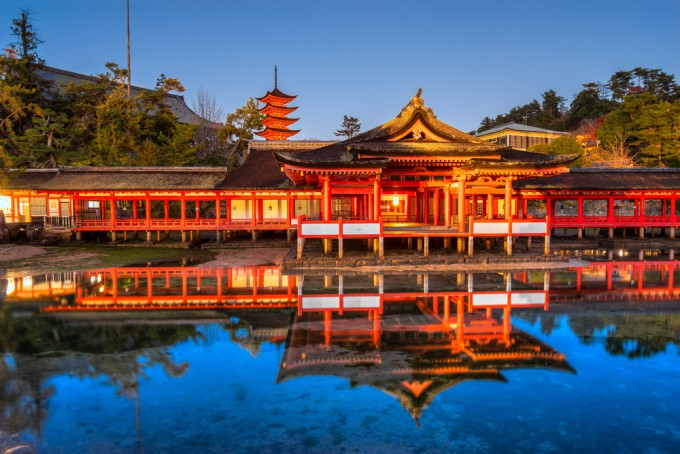
One of the most common questions visitors ask when they first see Itsukushima Shrine is: why does it look like it’s floating? Standing on Miyajima Island in Hiroshima Bay, this iconic UNESCO World Heritage shrine seems to rise straight out of the sea at high tide — its deep vermilion buildings shimmering on the surface of the water like a vision from another world. The effect is real, it is breathtaking, and it is entirely intentional.
The floating appearance of Itsukushima Shrine is the result of a precise combination of ancient architectural ingenuity and the natural rhythm of the tides. When the water level reaches 250 centimeters or higher, the sea completely fills the space beneath the shrine’s floorboards, hiding the base of the structure and creating the illusion that the entire complex is floating freely on the surface. What looks like magic is actually over 800 years of extraordinary engineering at work.
Why Itsukushima Shrine Was Built Over the Sea
A Sacred Island That Could Not Be Touched
To understand why the shrine was built over water, you first need to understand how Miyajima Island itself has been viewed throughout Japanese history. The island as a whole has been considered sacred for more than a thousand years — it was revered as a place where the gods reside, and local tradition held that digging the earth, cutting trees, or disturbing the land in any way would be an act of sacrilege against the divine.
The shrine was first established in 593 CE during the reign of Empress Suiko, though in a much simpler form. The major transformation came in 1168, during the late Heian period, when the powerful nobleman Taira no Kiyomori sponsored an extensive reconstruction that gave the shrine the sweeping, sea-level form it largely retains today. The head priest at the time, Saeki Kagahiro, resolved the challenge of building on sacred land by taking the structures out over the water entirely — honoring the island’s sanctity while creating one of the most remarkable religious complexes in Japanese history.
Heian Aristocratic Architecture Adapted for the Sea
The version of the shrine that stands today is largely the result of a reconstruction in 1241. Its architectural style is known as shinden-zukuri — the elegant, asymmetrical residential style favored by Heian-period aristocrats for their palace complexes — adapted here for an entirely marine environment. This style, characterized by interconnected buildings linked by covered corridors, is extraordinarily rare in shrine architecture anywhere in Japan.
The result is a complex that manages to feel both grand and graceful at the same time: long roofed walkways extending out over the water, side buildings positioned in careful asymmetry, the whole composition designed to be experienced from the sea as much as from the land. Seen from an approaching boat at high tide, the shrine presents exactly the view it was meant to: a vision of palatial beauty hovering between the sea and the sky.
The Engineering Behind the Floating Effect
108 Pillars on a Bedrock Foundation
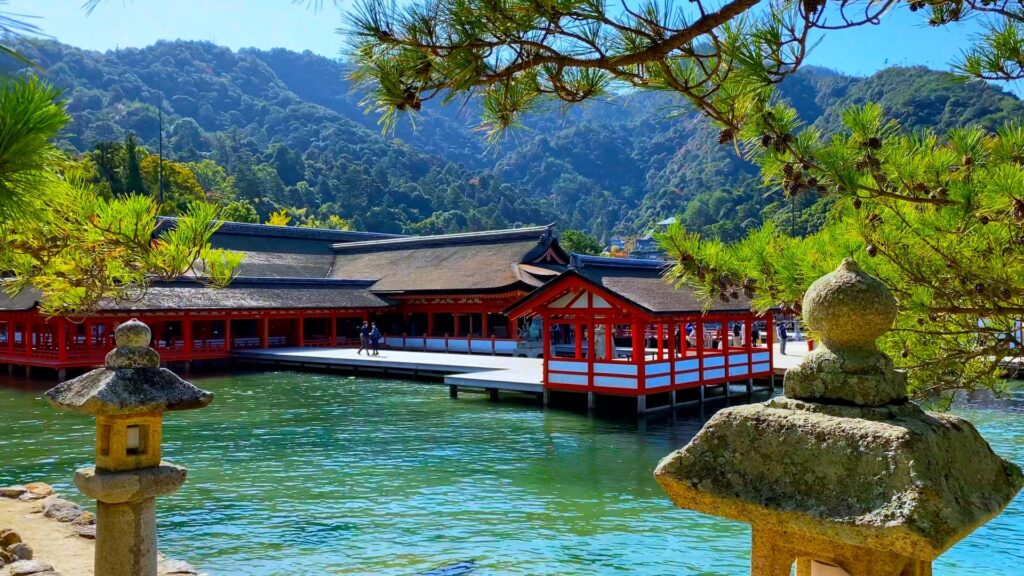
The secret to how Itsukushima Shrine has stood in the sea for over eight centuries begins deep beneath the water. The entire complex is supported by 108 pillars, each resting not on driven piles or buried footings, but on stone foundation blocks set directly on the bedrock below. According to architectural historians, the area where the shrine stands was originally part of the shoreline, and the seabed here was intentionally shaped to expose the stable bedrock layer needed to support a permanent structure.
Crucially, the pillars are not buried in the ground — they rely on their own weight and the precision of the joinery above them to maintain stability. This approach, which might seem counterintuitive by modern standards, is part of what makes the structure so resilient: it does not fight the sea so much as rest on it, quietly and firmly, in a way that has proven reliable through centuries of storms and tidal cycles.
The Gap-Board System: Letting the Sea Flow Through
One of the most ingenious features of the shrine’s design is almost invisible to most visitors: the deliberate gaps left between the floorboards of the main stage and the surrounding corridors. In Japanese architectural terminology this is called mekashi, and while it might look like a simple detail, it performs a critical structural function.
During typhoons and high-wave events, the gaps allow seawater to pass up through the floor rather than push against it as a solid surface. A sealed floor would act like a sail, catching the full force of wave pressure and creating enormous lateral stress on the columns and joints. By allowing water to pass freely through the structure, the pressure is dispersed harmlessly, and the buildings remain standing. Modern structural engineers who have studied the design describe it as a remarkably rational solution — one that has kept the shrine intact for more than 800 years without the benefit of steel or concrete.
The Tidal Science Behind the Floating Illusion
The 250-Centimeter Threshold
The famous floating appearance of Itsukushima Shrine only occurs when the tide reaches a specific height. That threshold is 250 centimeters. At that level, the sea completely fills the space beneath the shrine’s floors, submerging the base of every pillar and hiding any visible connection between the buildings and the seabed. The structures appear to sit directly on the water’s surface — an effect so seamless and so beautiful that it can be genuinely disorienting the first time you see it.
The Seto Inland Sea has a tidal range of roughly four meters, meaning the difference between the lowest and highest water levels is substantial. Conditions reach that 250-centimeter threshold on approximately ten days per month, with the best opportunities coming around the new and full moons when tidal swings are at their greatest. On those days, there are typically two high-tide windows — one in the morning and one in the evening — giving visitors two chances to see the shrine in its most dramatic form.
Reflections That Double the Beauty
The visual drama of the floating shrine is amplified by a second natural phenomenon: reflection. The vermilion buildings and white railings of the shrine, seen against the green forested hills of Miyajima, are already striking. But when the tide is high and the wind is calm, the sea surface around the shrine becomes a near-perfect mirror, and the entire complex appears doubled — the real buildings above the waterline and their inverted image below, perfectly symmetrical, glowing with the same warm color.
Early morning and late afternoon are the best times to catch this effect. The light is softer, the wind tends to be gentler, and the water is more likely to be still. On clear, windless mornings especially, the reflection is so sharp and complete that it is genuinely difficult to tell where the real shrine ends and its mirror image begins.
Cultural and Historical Significance
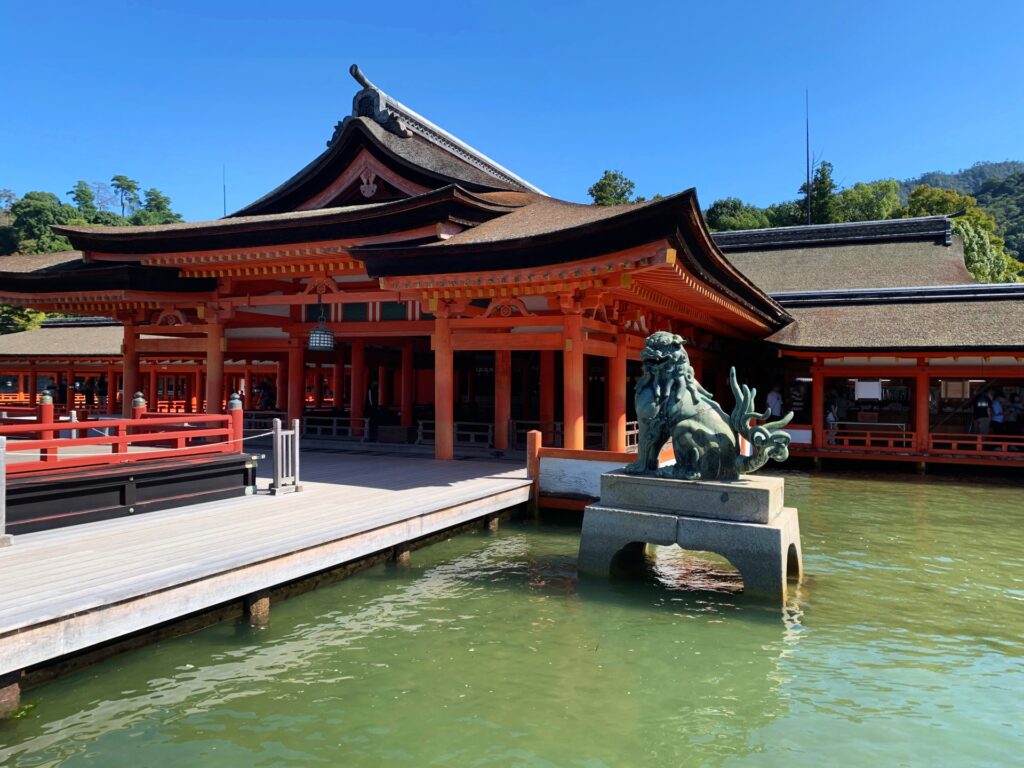
The floating effect of Itsukushima Shrine is far more than an optical curiosity. It represents something central to the Japanese aesthetic tradition: the ideal of harmony between human creation and the natural world. The architects and builders of the Heian period did not try to impose the shrine onto its environment — they designed it to belong to the sea, to move with the tides, and to reveal different aspects of itself as the water rises and falls.
When UNESCO designated Itsukushima Shrine as a World Heritage Site in 1996, the committee specifically cited the complex as a masterpiece of human creative genius — recognizing not only the beauty of the buildings themselves, but the extraordinary synthesis of architecture and landscape that makes the site unique. No other place on Earth quite like it exists: a functioning shrine of national religious importance that transforms with every tide, offering a different face to every visitor who comes at a different hour.
A Living Lesson in Sustainable Architecture
From a contemporary perspective, the engineering principles behind Itsukushima Shrine carry a surprisingly modern relevance. The design philosophy of working with natural forces rather than against them — allowing the sea to flow through the structure instead of trying to block it out — is precisely the kind of thinking that drives sustainable coastal construction today. The shrine was built without steel reinforcement, without waterproof concrete, and without modern drainage systems, and yet it has outlasted countless more robust-seeming modern structures exposed to similar marine conditions.
The ongoing maintenance of the shrine is itself a remarkable achievement. Specialist craftspeople using traditional techniques regularly inspect and repair the wooden elements, treating them with methods refined over centuries to resist saltwater corrosion. The accumulated knowledge embedded in that maintenance tradition is considered an important subject of research in the field of cultural heritage preservation worldwide.
FAQ
When is the best time to see Itsukushima Shrine appear to float?
You need the tide to be at 250 centimeters or higher. This happens on roughly ten days each month, most reliably around new and full moons when tidal swings are largest. On those days there are usually two high-tide windows — morning and evening. The Miyajima Tourism Association publishes a tide chart on its website, and checking it before your visit is strongly recommended. Early morning on a calm day offers the best chance of seeing the famous reflection effect as well.
How has the shrine survived in the sea for over 800 years without collapsing?
The structure rests on 108 pillars set on stone foundation blocks placed directly on the bedrock beneath the seabed — not buried in the ground, but held stable by their own weight and the precision of the joinery. The deliberate gaps between the floorboards, known as mekashi, allow wave pressure to pass through the structure during storms rather than pushing against it as a solid surface. Together, these two engineering features have kept the shrine standing through centuries of tidal cycles and typhoons.
Why was the shrine built over the water in the first place?
Miyajima Island as a whole has been considered a sacred place for over a thousand years. Traditional belief held that disturbing the island’s land — cutting trees, digging soil, building on the ground — would be an act of disrespect toward the divine. By constructing the shrine over the sea, the builders were able to create a permanent religious complex without touching the sacred land itself. The island is essentially considered the dwelling place of the gods, and the sea-level design reflects deep reverence for that belief.
Is the shrine ever in danger from typhoons or major storms?
The main halls — the primary shrine buildings that trace their origins to the 12th century — have never been fully submerged, even during the most severe storms on record. The structural design accommodates significant wave action without catastrophic damage to the core complex. Auxiliary structures added in later periods, such as the noh stage and some ancillary pavilions, have sustained damage in major typhoons over the centuries, but the main shrine buildings are designed to withstand a once-in-200-years high-water event.
What does the shrine look like at low tide?
At low tide — roughly 100 centimeters or below — the sea retreats and exposes the mudflat around the shrine. The Great Torii Gate, which appears to stand in open water at high tide, can actually be walked to directly across the tidal flat. You can get up close and see the full base of the gate, examine the construction details of the shrine’s pillars, and appreciate the scale of the complex in a completely different way. Both high tide and low tide offer genuinely different and worthwhile experiences, and if your schedule allows, seeing both in the same day is ideal.
Does the floating effect look different at different times of day?
Yes, noticeably. The reflection effect that makes the shrine appear to float most dramatically depends on both tide height and water surface conditions. Calm, windless mornings — especially at sunrise or in the early hours — tend to produce the clearest mirror-like reflections. Late afternoon and golden-hour light bring out the warmth in the vermilion lacquerwork beautifully. Midday visits with high sun can still be stunning, but the combination of high tide, calm water, and soft morning or evening light is the ideal scenario for photography.
Is Itsukushima Shrine a UNESCO World Heritage Site?
Yes. The shrine and the surrounding natural landscape of Miyajima Island were inscribed on the UNESCO World Heritage List in 1996. The designation specifically recognizes the site as an outstanding example of the integration of human architecture with the natural environment, and describes the ensemble of shrine buildings, forest, and sea as representing a uniquely Japanese vision of sacred landscape that has no direct equivalent anywhere else in the world.
References
- Agency for Cultural Affairs, Japan — Cultural Heritage Online: Itsukushima Shrine
- Miyajima Tourism Association — Tide Explanation
- Miyajima Tourism Association — Annual Tide Table Guide
- Itsukushima Shrine — Wikipedia (architectural structure details)
- Itsukushima Shrine Official Website — Cultural Properties and Buildings
- Miura Masayuki, Architectural History Research on Itsukushima Shrine (Society of Architectural Historians of Japan, 2005)
- Fukuyama Toshio, The Architecture of Itsukushima Shrine, Chuokoron Bijutsu Shuppan, 1988
- UNESCO World Heritage Centre — Itsukushima Shinto Shrine
Note: Tide conditions, visiting hours, and access arrangements at Itsukushima Shrine may change. Please verify current details with the Miyajima Tourism Association or the shrine directly before your visit.