Miyajima history begins over 1,400 years ago, when this sacred island in Hiroshima Bay first became a place of worship. Since ancient times, people have called it “the island that serves the gods,” drawn to the mystical sight of vermilion shrine buildings seemingly floating on the sea. But what makes Miyajima’s story so captivating isn’t just its age—it’s how this small island has been at the center of nearly every major chapter in Japanese history, from the rise and fall of powerful clans to the birth of cultural traditions that still thrive today.
Understanding Miyajima history is like reading a living textbook of Japanese culture, religion, and politics. The island’s story weaves together ancient nature worship, the golden age of the Heian aristocracy under the Taira clan, samurai battles that shaped the nation, the flourishing of folk culture during the Edo period, the dramatic changes of the Meiji Restoration when Buddhism and Shinto were forcibly separated, and finally its modern recognition as a UNESCO World Heritage Site. Every major turning point in Japan’s past has left its mark here.
In this guide, we’ll walk you through Miyajima’s complete history from the first shrine buildings erected in 593 AD to the vibrant destination it is today. Whether you’re planning your first visit to Itsukushima Shrine or you’re already enchanted by the floating torii gate, knowing the stories behind these places will transform how you experience them. We’ll explore four key perspectives: how the island developed over time, its unique cultural contributions, its religious significance, and the political and economic forces that shaped it into one of Japan’s most beloved travel destinations.
Miyajima’s Timeline: A Journey Through the Centuries
Ancient Times: Myths and the First Shrine (Before 593 AD – Asuka Period)
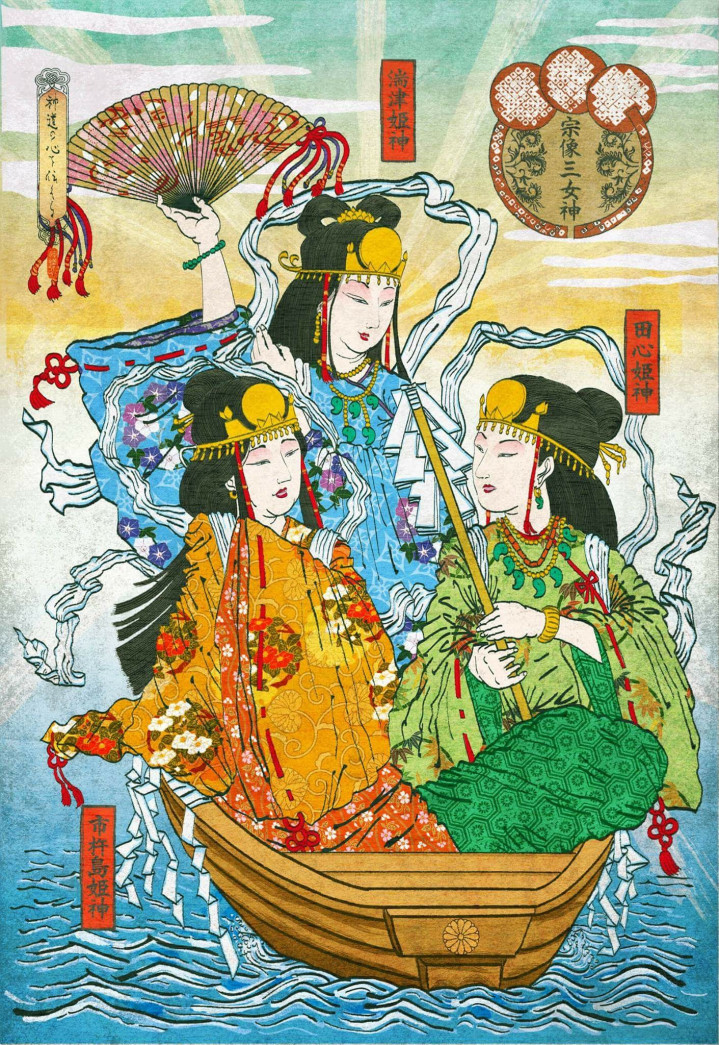
Long before anyone wrote down what happened on Miyajima, the island already held a special place in Japanese mythology. According to the Kojiki and Nihon Shoki—Japan’s oldest historical texts—three sister goddesses came to dwell here: Ichikishimahime-no-Mikoto, Tagorihime-no-Mikoto, and Tagitsuhime-no-Mikoto. These deities, known collectively as the Munakata Three Goddesses, were born from a sacred ritual between the sun goddess Amaterasu and her brother Susanoo. From the very beginning, they’ve been worshipped as protectors of those who travel by sea, making them especially important to fishing communities and sailors navigating the sometimes treacherous waters of the Seto Inland Sea.
The island’s natural landscape felt sacred all on its own. Mount Misen, rising 535 meters at the island’s heart, was covered in such dense primeval forest that sunlight barely reached the ground even at midday. Massive boulders clustered near the summit created an otherworldly atmosphere. Ancient people didn’t just worship at shrines here—they revered the entire island as divine, calling it “Itsukushima,” which literally means “island that serves the gods.”
According to shrine tradition, the actual founding of Itsukushima Shrine came in 593 AD (the first year of Empress Suiko’s reign) when a nobleman named Saeki Kuramoto received a divine message instructing him to build a shrine hall at the present location. The Saeki clan were powerful local leaders who controlled this crucial section of the Seto Inland Sea trade routes. Out of deep respect for the sacred nature of the island itself, they built the original shrine buildings out over the water rather than disturbing the holy ground.
For more details on how the shrine began and the role of the Three Goddesses, check out this article:
When you visit Itsukushima Shrine on Miyajima Island, the sight of its...
Nara and Heian Periods: When the Capital Discovered Miyajima (710-1185)
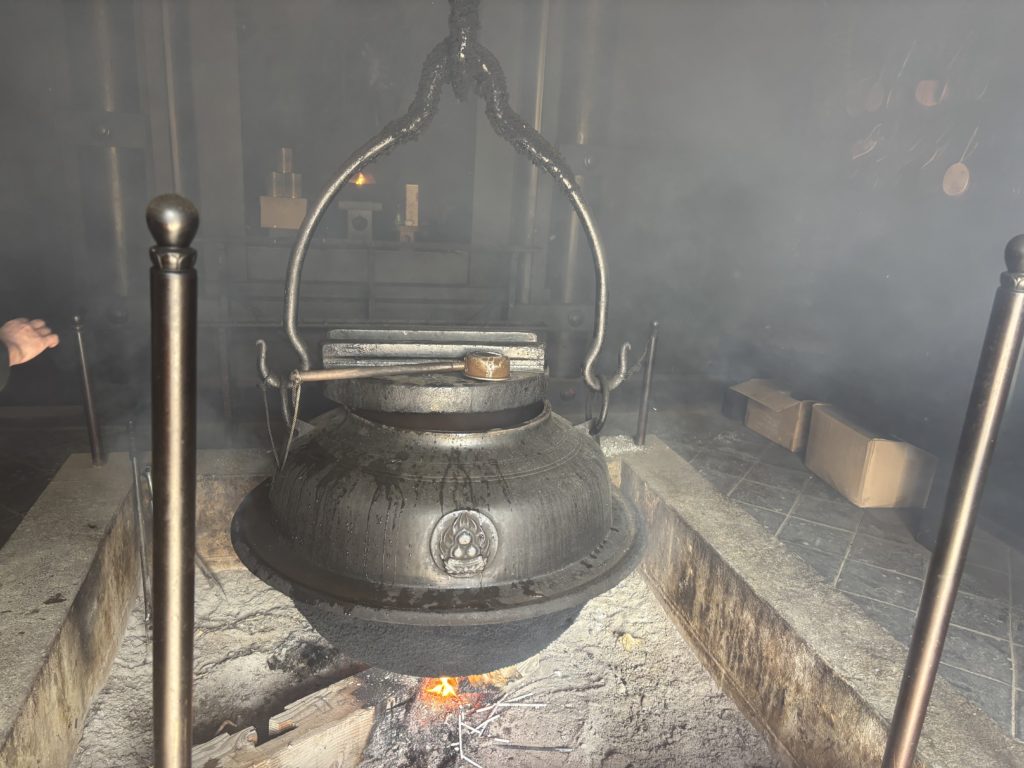
Miyajima’s story took a significant turn in 806 when one of Japan’s most famous monks arrived on its shores. Kobo Daishi (also known as Kukai), fresh from studying Buddhism in Tang Dynasty China, climbed Mount Misen and immediately recognized the mountain’s spiritual power. He established a meditation hall near the summit and performed intensive 100-day ascetic practices. The flame he kindled during those rituals—called the “Eternal Flame”—still burns today in the Misen Sacred Fire Hall, making it over 1,200 years old. Remarkably, this same flame would later be used to light the “Flame of Peace” in Hiroshima’s Peace Memorial Park, creating a powerful connection between ancient spirituality and modern hopes for peace.
Kukai’s establishment on Mount Misen marked the beginning of something unique: a blending of Shinto and Buddhism that would define Miyajima for the next thousand years. Princess Ichikishimahime became identified with Benzaiten, the Buddhist goddess of music, arts, and wisdom. The shrine’s main deity was linked to the Eleven-Faced Kannon, a Buddhist bodhisattva of compassion. This wasn’t seen as contradictory—it was simply how Japanese religion worked for most of its history, with Buddhism and Shinto enriching each other rather than competing.
By the middle of the Heian period, word of Miyajima had reached Kyoto’s aristocracy. The powerful Fujiwara family, who essentially ran the government as regents, began making pilgrimages here. Fujiwara no Michinaga—possibly the most powerful nobleman of his era—recorded his offerings to the shrine, helping to establish Miyajima as a fashionable destination for the cultural elite. Along with the aristocrats came their refined arts: gagaku court music with its elegant melodies, and bugaku court dance with its elaborate costumes and masks. These traditions took root on Miyajima and are still performed here today, giving modern visitors a window into how Heian aristocrats entertained themselves over a thousand years ago.
Late Heian Period: Taira no Kiyomori Transforms Miyajima (1146-1185)
If there’s one person who changed Miyajima more than anyone else, it’s Taira no Kiyomori. When he became Governor of Aki Province in 1146, he developed a deep personal connection to Itsukushima Shrine. But Kiyomori wasn’t just any nobleman—he was the first warrior to rise through the ranks to become Grand Minister of State, essentially the most powerful person in Japan besides the emperor. And he poured his wealth, influence, and devotion into transforming Miyajima into something extraordinary.
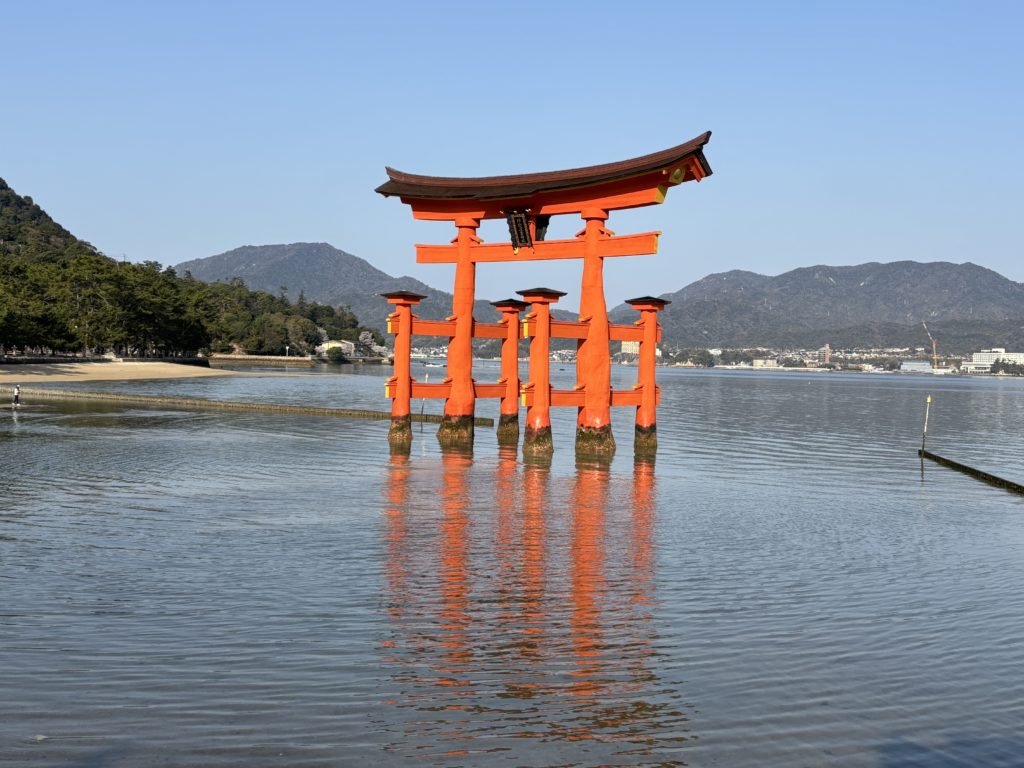
The grand reconstruction that Kiyomori completed in 1168 created the magnificent shrine complex you see today. It wasn’t just about building bigger—it was about bringing the sophisticated architectural style of Kyoto’s aristocratic mansions to this island shrine. The result is breathtaking: covered corridors that seem to float on the water at high tide, a stage for bugaku performances jutting out over the waves, and that iconic red torii gate standing in the sea. Kiyomori essentially took a respected regional shrine and elevated it to rival anything in the capital itself.
But why did Kiyomori invest so much in Miyajima? The reasons were both spiritual and practical. On a personal level, his faith was genuine and deep—this wasn’t just political theater. But he was also a brilliant strategist who understood that controlling Miyajima meant controlling the Seto Inland Sea, the main highway for trade between western Japan and the capital. It was both a demonstration of the Taira clan’s wealth and power, and a practical military stronghold that could protect their maritime interests.
The most stunning artistic achievement of this era is the Heike Nokyo, a set of 33 illuminated Buddhist sutras that Kiyomori and 31 members of his family created in 1164. These aren’t just religious texts—they’re masterpieces of art. Each scroll, stretching about 30 meters when unrolled, is decorated with gold and silver, delicate paintings, and intricate metalwork. They represent the absolute peak of Heian-period decorative arts and are now designated National Treasures, kept under the strictest conservation conditions. When you visit Miyajima, you can sometimes see these incredible works displayed in the shrine’s treasure hall.
The Taira clan’s patronage brought imperial visits too. Emperor Go-Shirakawa came in 1174, followed by Emperor Takakura in 1176. These weren’t quick courtesy calls—when an emperor traveled, it was a major event that brought the entire court. Suddenly Miyajima was being called “the Nikko of the West,” and Kyoto’s refined culture was flowing onto the island: poetry parties where aristocrats composed elegant verses, musical performances on instruments most people would never see in their lifetimes, and a general atmosphere of sophistication that must have seemed unreal on this relatively remote island.
This was Miyajima’s golden age, when it truly became “Heian-kyo on the sea”—the capital recreated in a sacred island setting. Even Kiyomori’s daughter, who became an empress dowager, made the pilgrimage. Through these aristocratic women, refined court culture—including the arts that women specialized in, like poetry and calligraphy—became part of Miyajima’s identity. Imagine courtiers in their elaborate silk robes gliding along those covered corridors while musicians played haunting melodies that drifted across the water. That’s the atmosphere Kiyomori created, and it’s why Miyajima still feels so special today.
Want to learn more about why Kiyomori chose Miyajima? Check out this detailed article:
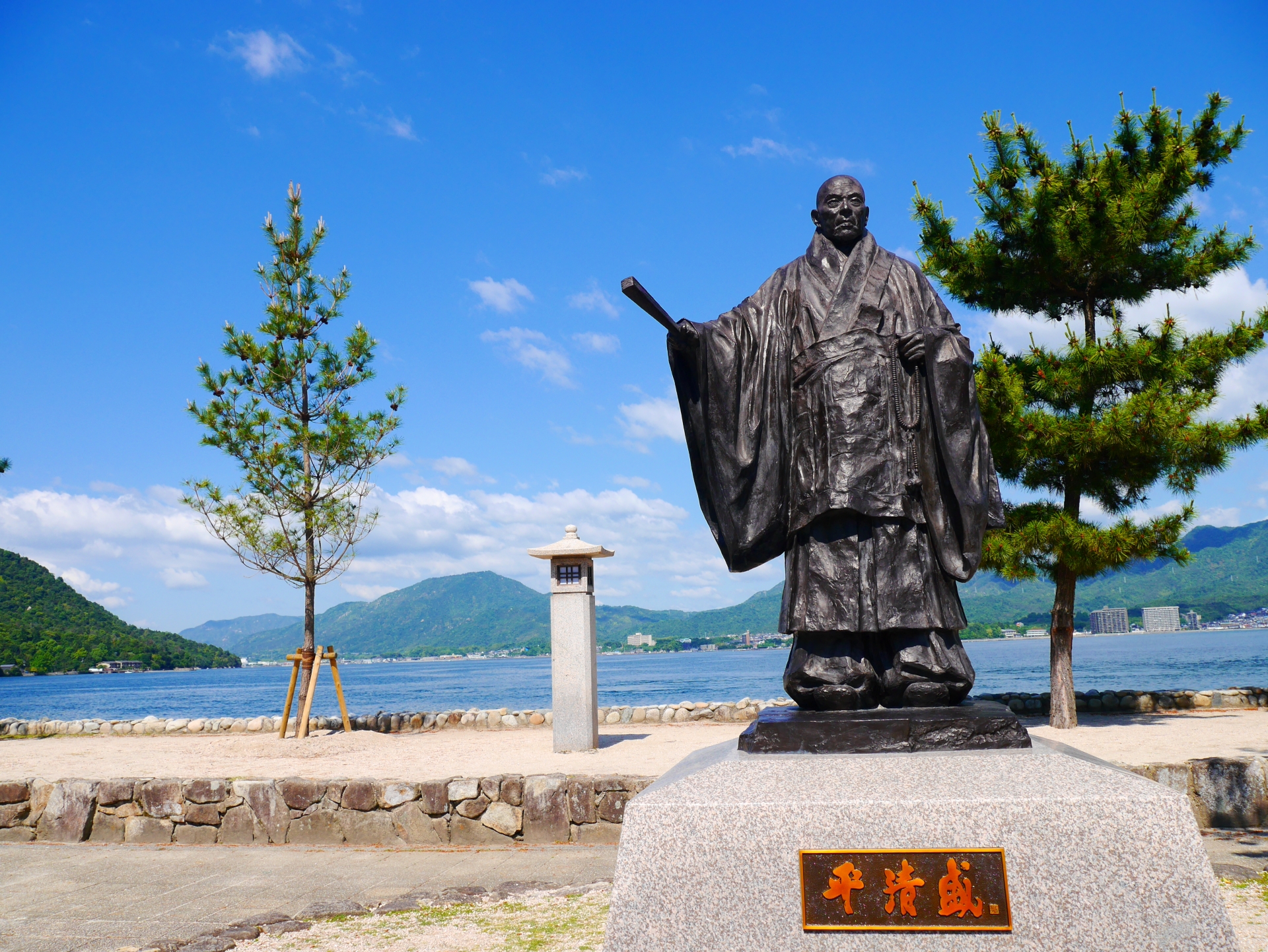
Taira no Kiyomori was the first samurai warrior to rise to the exalted...
Kamakura and Muromachi Periods: Survival Under Samurai Rule (1185-1568)
When the Taira clan fell in the brutal Genpei War, you might expect that everything they’d built would be destroyed by the victors. Remarkably, that didn’t happen. The new Kamakura Shogunate, led by Minamoto no Yoritomo—Kiyomori’s enemy—recognized that Itsukushima Shrine was too important to abandon. Yoritomo sent his own offerings to the shrine in 1192, making it clear that the new samurai government would continue protecting Miyajima. It was a savvy political move: respecting what the previous regime had built rather than erasing it helped legitimize the shogunate’s authority.
One of the most important policies from this period protected the island’s natural environment. In 1251, the shogunate issued a decree that strictly prohibited cutting trees, hunting animals, or developing land on Miyajima. The entire island was designated as sacred shrine grounds. This environmental protection—revolutionary for its time—is why the primeval forests on Mount Misen still exist in nearly pristine condition today, offering modern hikers a glimpse of what Japan’s forests looked like centuries ago.
During the Muromachi period, a new art form arrived: Noh theater. Master performers from famous schools like Kanze and Konparu came to Miyajima to stage dedication performances. The floating Noh stage you can see today, built in 1568, is actually Japan’s oldest surviving stage built out over water. Watching Noh performed here, with its slow, stylized movements and masked actors, while waves lap beneath the stage, is an experience unlike anywhere else. The addition of Noh didn’t replace the earlier gagaku and bugaku traditions—all three performance styles coexisted, creating a uniquely rich cultural scene.
The five-storied pagoda that stands near the shrine today was built in 1407 as part of a Buddhist temple complex. Its sweeping curved rooflines and elegant proportions showcase the architectural sophistication of the Muromachi period, and it’s become one of Miyajima’s most photographed landmarks alongside the floating torii gate.
Warring States Period: Battle and the Mori Clan’s Rise (1467-1600)
The most dramatic event in this period was the Battle of Itsukushima in 1555—and it’s one of the most famous battles in Japanese history. This wasn’t just a local skirmish; it fundamentally changed who controlled western Japan and demonstrated tactical brilliance that military historians still study today.
Here’s what happened: After a powerful warlord named Ouchi Yoshitaka died, his retainer Sue Harukata seized control, claiming to avenge his former master. But another retainer, Mori Motonari, rebelled against Sue’s takeover. Motonari was badly outnumbered—Sue’s forces were estimated at 20,000 to 30,000 men, while Motonari could only muster about 5,000. So he devised an audacious plan that took full advantage of Miyajima’s rugged terrain and his knowledge of the island.
Motonari built a small fort at Miyanoo on the northern part of Miyajima as bait, knowing Sue’s massive army would be tempted to capture it. While Sue’s forces landed and set up camp, confident in their numbers, Motonari waited for exactly the right moment: a violent storm just before dawn on October 1, 1555. Using the storm as cover, he secretly landed his troops at Hakoga-ura and led them on a steep mountain trail called the Hokudo path. At dawn, they burst from the forest and attacked Sue’s unsuspecting forces from behind. The result was a complete rout—Sue Harukata died in the battle, and Motonari’s victory catapulted him into power over the entire Chugoku region.
This victory wasn’t just about one battle. It established Mori Motonari as one of Japan’s most formidable warlords and his clan as major players in national politics. Motonari attributed his victory to divine protection from Itsukushima Shrine, deepening his devotion and ensuring his family continued supporting the shrine. Under Mori protection, Miyajima’s cultural traditions survived the chaos of the Warring States period intact.
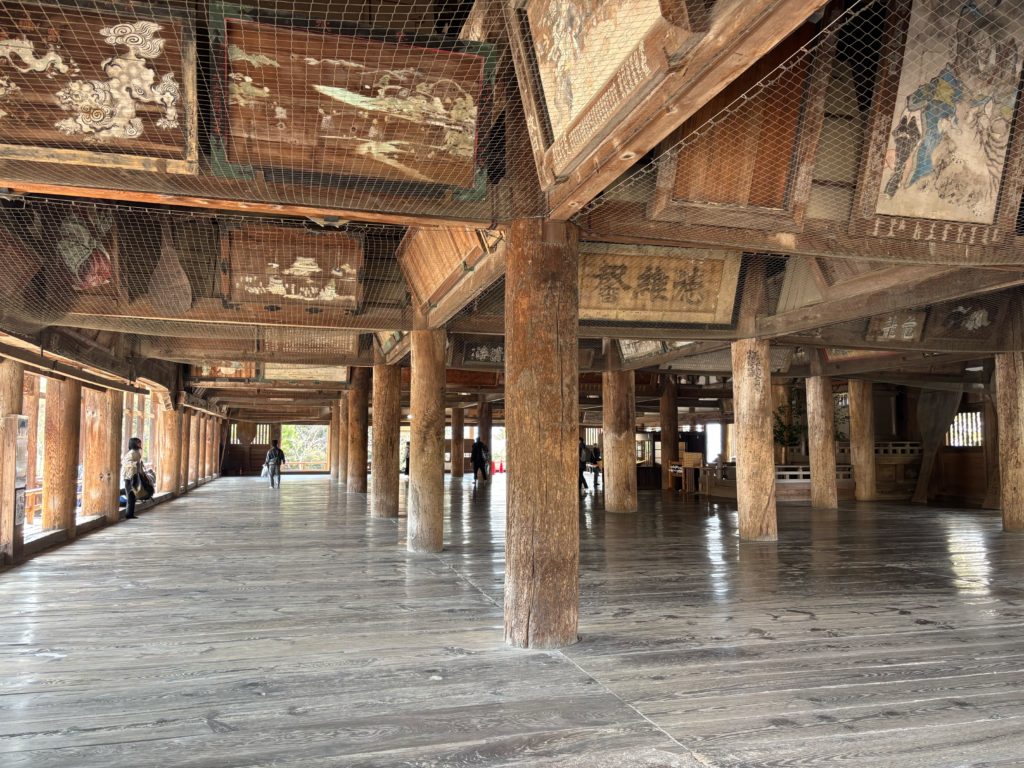
In 1587, Japan’s new ruler Toyotomi Hideyoshi visited Miyajima and ordered construction of a massive hall called the Daikyo-do (also known as Senjokaku, or “Hall of a Thousand Mats”). Hideyoshi intended it as a grand memorial to Taira no Kiyomori, linking his own rule to Miyajima’s glorious past. The scale was ambitious—large enough for 857 tatami mats. But Hideyoshi died suddenly in 1598 before the hall could be completed. Today, you can still visit this enormous unfinished building, with exposed beams and missing walls that somehow make it even more impressive, a testament to the architectural ambitions of the age.
Edo Period: Peace, Pilgrims, and Popular Culture (1600-1868)
After centuries of warfare, the Edo period brought peace—and with it, a tourism boom that transformed Miyajima. Following the decisive Battle of Sekigahara in 1600, Fukushima Masanori became the daimyo (feudal lord) of Hiroshima Domain, which included Miyajima. He designated Itsukushima Shrine as the domain’s chief protective deity and sponsored repairs to the precious Heike Nokyo scrolls in 1602. During these repairs, the famous artist Tawaraya Sotatsu created new decorative cover paintings, adding another layer of artistry to these already magnificent works.
When the Asano family took over Hiroshima Domain in 1619, they established an even more systematic approach to protecting Miyajima. Generation after generation of Asano lords treated the shrine as the spiritual heart of their domain, funding regular maintenance, supporting traditional festivals, and ensuring the priests had what they needed. Many of the buildings you see today reflect restoration work done during the Asano era, making them appreciate them on a deeper level when you visit.
One of the most beloved figures from this period was a monk named Seishin, who was active in the 1660s and 1670s. Originally a rice merchant in Hiroshima city, he became a Buddhist monk at Komyo-in temple on Miyajima and dedicated himself to improving life for the island’s residents. His contributions were remarkably practical: he invented the Miyajima rice paddle (shamoji) as a souvenir, modeling its shape on the biwa lute carried by the goddess Benzaiten. When the island faced water shortages, he dug wells—you can still see the “Seishin Well” today. He also built wooden wharves to make landing easier for the growing number of pilgrims. Locals still remember him with affection as someone who balanced spiritual devotion with practical service to the community.
By the middle of the Edo period, improved roads and growing prosperity among commoners made travel possible for ordinary people, not just the wealthy elite. Miyajima became one of Japan’s most popular pilgrimage destinations. The name “Aki no Miyajima” became famous nationwide, even appearing in popular literature like “Tokaidochu Hizakurige” (a humorous travel tale featuring two comic characters, Yaji and Kita, who visit Miyajima on their adventures). The famous printmaker Utagawa Hiroshige included Miyajima in his “Famous Places in the Sixty-odd Provinces” series, spreading images of the floating torii and shrine to art lovers across Japan.
During this era, Miyajima thrived as what’s called a “monzen-machi” or temple town—a community that grew up to serve religious visitors. Inns and guesthouses lined the streets, souvenir shops sold local crafts, and restaurants competed to serve the best local specialties. Traditional crafts like Miyajima woodcarving developed during this period, as artisans created decorative items that pilgrims could take home. Local people also refined oyster cultivation techniques, laying the foundation for the Hiroshima-style oysters that are still a must-try food when you visit Miyajima today.
Even at the very end of the Edo period, Miyajima played a role in national events. In 1866, during the turmoil leading up to the Meiji Restoration, ceasefire negotiations for the Second Choshu War were held at Daiganji Temple on the island. Representatives from the Tokugawa Shogunate, led by Katsu Kaishu (a famous naval commander), met with envoys from Choshu Domain—a historic meeting that helped shape the transition to modern Japan.
Meiji Era: Revolution and Transformation (1868-1912)
The Meiji Restoration brought the most dramatic changes Miyajima had experienced in over a thousand years. In 1868, the new Meiji government issued the Shinto-Buddhist Separation Edict, forcibly dismantling the syncretic system that had defined Japanese religion for centuries. On Miyajima, where Shinto and Buddhism had coexisted peacefully for more than 1,200 years, the impact was severe.
A government advisor sent to inspect Itsukushima Shrine actually recommended tearing down the main hall because its architectural style was “too Buddhist.” This wasn’t an empty threat—across Japan, countless temples were destroyed during this period. Local leaders, led by the chief priest of Itsukushima Shrine, mounted a desperate defense. They traveled to Tokyo to petition government officials directly, arguing that the shrine’s historical and cultural value transcended current political ideology. Their advocacy succeeded—demolition was averted. But the price was high.
All painted decorations deemed Buddhist were stripped from the shrine buildings, exposing bare wood. The elegant colored pillars and beams that had created such a refined atmosphere were reduced to plain cypress. New architectural elements associated with Shinto—like the crossed gable finials called chigi and the cylindrical roof weights called katsuogi—were added to give the shrine a more distinctly Shinto appearance. The magnificent Daikyo-do Hall had its Buddhist altar removed and was converted into Toyokuni Shrine, a Shinto facility. The five-storied pagoda, clearly Buddhist in origin, was awkwardly reclassified as belonging to Toyokuni Shrine. Major temples like Daisho-in and Daiganji were legally separated from the shrine and had to operate as independent entities.
Yet the Meiji period also brought renewal. In 1875, the current Great Torii was rebuilt—the eighth generation since the original. Standing 16.6 meters tall and constructed from massive camphor logs, it represented both the Meiji government’s technical expertise and its respect for Miyajima’s importance. The torii you see today is this 1875 structure, and it was designated an Important Cultural Property (later upgraded to National Treasure status) in 1899.
The Meiji period also saw the birth of modern cultural property protection in Japan. The Ancient Shrines and Temples Preservation Act of 1897 established the framework for protecting historical treasures. The Heike Nokyo and other precious items from Miyajima were among the first to be designated National Treasures, ensuring their preservation for future generations and establishing principles that guide conservation work even today.

Taisho and Early Showa Eras: Cultural Preservation and War (1912-1945)
During the Taisho period, protecting cultural properties became a national priority. One of the most ambitious projects was creating a faithful replica of the Heike Nokyo scrolls. Led by cultural figures and wealthy patrons, this project began in 1920 and took five and a half years to complete. The painter Chimi Tanaka poured his soul into the work, producing replicas so accurate that even experts have difficulty distinguishing them from the originals at first glance. This project was revolutionary—the idea that creating perfect replicas could protect fragile originals while still allowing study and exhibition influenced how Japan approached cultural property conservation for decades to come.
In the early Showa era, improved transportation infrastructure made Miyajima more accessible than ever. When the Miyajima Line (now operated by Hiroshima Electric Railway) opened in 1929, it suddenly became possible to make a day trip from Hiroshima city. Miyajima transformed from a pilgrimage site requiring significant commitment into a convenient excursion for both Japanese tourists and the growing number of international visitors coming to Japan.
The Pacific War years brought military activity to Miyajima due to its proximity to the massive Kure Naval Base. Training facilities and munitions production were established on the island, and many soldiers were stationed here. Yet even during wartime, local people managed to evacuate and safeguard the shrine’s most precious cultural assets, sparing them from the destruction that claimed so much of Japan’s cultural heritage during the war.
After Japan’s surrender in 1945, Miyajima became connected to peace in a profound way. The “Flame of Peace” that burns in Hiroshima’s Peace Memorial Park was lit from Mount Misen’s “Eternal Flame”—the same fire Kobo Daishi had kindled over 1,100 years earlier. This connection transformed the ancient flame into a symbol of Japan’s commitment to peace, linking Miyajima’s spiritual heritage to the hope for a world without nuclear weapons.
The Cultural Properties Protection Law enacted in 1950 established comprehensive protection for Miyajima’s treasures. The main shrine buildings were designated National Treasures and Important Cultural Properties. The entire island and surrounding waters received designation as both Special Historic Sites and Special Places of Scenic Beauty. The primeval forests on Mount Misen were designated Natural Monuments. This created an integrated preservation system that recognized Miyajima’s value from multiple perspectives—architectural, historical, scenic, and ecological.
Modern Era: World Heritage and Global Recognition (1989-Present)
The defining moment of modern Miyajima history came in December 1996 when Itsukushima Shrine was inscribed on UNESCO’s World Heritage List. This wasn’t just an honor—it was recognition that Miyajima’s cultural and historical value belonged not just to Japan but to all humanity.
The journey to World Heritage status began in 1992 when Miyajima was added to Japan’s Tentative List. The Agency for Cultural Affairs, Hiroshima Prefecture, Hatsukaichi City, and local stakeholders worked together for years to prepare the nomination documents. In September 1995, Japan formally nominated the site. At the 20th World Heritage Committee meeting in Merida, Mexico, in December 1996, Itsukushima Shrine was inscribed based on meeting four of UNESCO’s evaluation criteria—an exceptional achievement that recognized both its aesthetic beauty and its cultural significance.
World Heritage designation transformed Miyajima into a truly global destination. Annual visitor numbers now exceed 4 million, with overseas travelers from Europe, North America, and across Asia making it a priority stop on Japan itineraries. Many international visitors describe it as “the most beautiful place in Japan,” and travel publications regularly feature it in lists of must-see destinations worldwide.
But success brings challenges. The dramatic increase in visitors has created pressure on the island’s infrastructure and natural environment. Maintenance costs for the historic buildings and the Great Torii have escalated. Crowding during peak seasons can detract from the peaceful atmosphere that makes Miyajima special. Environmental impacts from increased foot traffic concern conservationists. These challenges have made sustainable tourism management one of Miyajima’s most pressing priorities.
The major restoration of the Great Torii that began in 2021 symbolizes the ongoing commitment to preservation. This was the first comprehensive overhaul in about 70 years, requiring complex scaffolding and traditional craftspeople using centuries-old techniques alongside modern technology. When the scaffolding came down in 2023 and the gate’s vivid vermilion color was revealed again, it felt like a renewal of Miyajima itself—a promise that this sacred island would continue welcoming visitors for generations to come.
Today’s Miyajima faces the challenge of honoring its past while embracing its future. Digital archiving projects preserve cultural treasures for researchers worldwide. Multilingual information helps international visitors understand what they’re seeing. Environmental management programs protect the island’s natural beauty. Through it all, Miyajima continues evolving—not abandoning its traditions but finding ways to share them meaningfully with a global audience in the 21st century.

Understanding Miyajima Through Different Lenses
The Religious Story: From Ancient Gods to Modern Faith
Miyajima’s religious history is really a microcosm of how Japanese beliefs have evolved over the centuries. Every major shift in how Japanese people understood the sacred—from primitive nature worship to organized Shinto, from Buddhism’s arrival to the forced separation of religions, and finally to today’s religious diversity—has played out on this small island.
The worship of the Munakata Three Goddesses began as something deeply practical. People whose lives depended on the sea—fishermen, sailors, merchants traveling the Inland Sea routes—needed divine protection from storms and currents. Ichikishimahime-no-Mikoto, Tagorihime-no-Mikoto, and Tagitsuhime-no-Mikoto weren’t distant, abstract deities but protective presences people could pray to when facing real dangers. This practical, heartfelt faith formed the bedrock of what would become much more complex over time.
When Buddhism arrived and merged with Shinto during the Heian period, Miyajima became a fascinating laboratory of religious syncretism. Ichikishimahime was identified with Benzaiten, a Buddhist goddess associated with music, eloquence, and wisdom—giving worshippers new reasons to pray here beyond maritime safety. The concept of honji-suijaku (the idea that Buddhist deities were the “true forms” of Shinto gods) meant that the shrine could simultaneously honor Shinto deities and serve Buddhist spiritual needs. The designation of the Eleven-Faced Kannon as the honji-butsu (fundamental Buddha) of Itsukushima, with its connection to the 33-chapter Lotus Sutra, explains why Kiyomori and his clan dedicated exactly 33 scrolls.
Kobo Daishi’s establishment on Mount Misen added yet another dimension: mountain asceticism, or shugendo. This rigorous spiritual practice, combining Buddhist teachings with ancient mountain worship and esoteric rituals, attracted monks seeking enlightenment through extreme discipline. The practices they developed on Misen continue today, though in less harsh forms. The “Eternal Flame” that Kukai lit remains central to the mountain’s spiritual identity, and many visitors today make the hike up Mount Misen partly to experience this living connection to 1,200-year-old traditions.
Today, Miyajima functions as a unique religious space where different traditions coexist without conflict. Itsukushima Shrine maintains Shinto rituals that would be recognizable to ancient worshippers. Daisho-in Temple up the hillside continues Buddhist services and practices. Ascetics still train on Mount Misen’s slopes. These three spiritual traditions—Shinto, Buddhism, and mountain asceticism—operate independently yet influence each other, creating the distinctive spiritual atmosphere that makes Miyajima feel different from other famous Japanese religious sites. For travelers interested in Japanese spirituality, this peaceful coexistence of different faiths offers fascinating insights.
The Cultural Story: An Island Museum of Japanese Arts
If you love traditional Japanese culture and performing arts, Miyajima is like a living museum where you can still experience artistic traditions that began centuries ago. From the elegant court music of the Heian period to the stylized drama of Noh theater, the defining art forms of different eras all found their way here and continue today—which is one reason culture-focused travelers consistently rank Miyajima among Japan’s most rewarding destinations.
The gagaku court music and bugaku court dance introduced during Taira no Kiyomori’s time weren’t just transplanted wholesale—they evolved into something unique to Miyajima. The Kangen Festival, where musicians perform aboard beautifully decorated boats while cruising the bay, creates a spectacle unlike anywhere else in the world. Imagine hearing the haunting melodies of ancient flutes and strings echoing across the water while the sun sets behind the torii gate. It’s the same music that Heian aristocrats heard a thousand years ago, but the setting makes it an experience you can’t have anywhere else. For researchers and serious music enthusiasts, this maritime performance tradition represents a fascinating branch in the evolution of Japanese court music.
The preservation of bugaku masks and costumes also developed in unique ways on Miyajima. The humid, salt-laden air created conservation challenges that led to innovative techniques—special wood treatments, storage methods adapted to the climate, and regular maintenance schedules that became models for other coastal heritage sites. These practical innovations enhanced rather than detracted from the artistic value, and today these costumes and masks are studied by conservators worldwide.
The architecture itself showcases brilliant innovations for building in such a challenging environment. Constructing shrine buildings that float at high tide requires flexible structures that can withstand daily tidal stress, special wood treatments to resist salt corrosion, and sophisticated underwater foundation techniques. Traditional Japanese carpenters developed solutions centuries ago that modern marine engineers still study. For visitors interested in traditional architecture, understanding these technical achievements makes walking through the shrine corridors even more impressive.
Miyajima’s craft traditions also evolved to serve pilgrims and tourists. Miyajima woodcarving (Miyajima-bori) developed during the Edo period, with artisans creating everything from religious objects to decorative items using wood from the island’s forests. The distinctive rice paddle (shamoji) invented by the monk Seishin became both a practical souvenir and a local symbol—you’ll see giant rice paddles displayed around the island. Today, buying a traditionally carved wooden paddle or trying your hand at woodcarving in a workshop connects you directly to centuries of craftsmanship. It’s one of those tactile cultural experiences that helps the history feel real rather than abstract.
The Political and Economic Story: Power, Strategy, and Prosperity
Throughout its history, Miyajima has never been just a sacred site divorced from worldly concerns. Every major political power in Japanese history understood that Miyajima represented authority, wealth, and strategic advantage. That’s why rulers from ancient clan leaders to modern governments have invested resources in protecting and developing it—and why, as a modern traveler, you’re visiting a place that embodies not just spiritual traditions but also Japan’s political evolution.
For Taira no Kiyomori, Miyajima was absolutely central to his political strategy. By the time he undertook the great renovation, he was Japan’s most powerful man, but his power base was different from traditional aristocrats—it came from controlling maritime trade routes through the Seto Inland Sea. Miyajima sits at a critical junction in those routes. Building a magnificent shrine complex here wasn’t just religious devotion (though his faith was genuine)—it was a power statement. It told everyone that the Taira clan controlled the sea, had the wealth to fund such lavish construction, and enjoyed divine favor. The architectural grandeur demonstrated political might just as clearly as any military victory. Kiyomori’s strategy brilliantly fused spiritual devotion with political calculation in a way that was sophisticated even by modern standards.
The Mori clan’s protection of Miyajima after the Battle of Itsukushima followed similar logic. By framing their victory as divine will—a narrative supported by the dramatic circumstances of the battle—they legitimized their rule over newly conquered territories. When people believed the gods favored the Mori, it made accepting Mori authority feel like accepting the natural order rather than submitting to force. This wasn’t cynical manipulation; leaders of that era genuinely believed in divine favor. But the political utility of that belief was undeniable and helped stabilize their control over the Chugoku region.
During the Edo period, the Asano clan made Miyajima central to their governance of Hiroshima Domain. The lord’s annual pilgrimage wasn’t just personal devotion—it was a carefully choreographed ritual that demonstrated the lord’s piety, brought the domain’s samurai retainers together in shared purpose, and reminded everyone of the spiritual foundation of the lord’s authority. The economic benefits of pilgrimage tourism also strengthened the domain’s finances, creating a practical incentive for protection alongside the spiritual one.
Economically, Miyajima has been valuable for over a thousand years. Its position on major sea routes made it a natural stopping point for travelers and merchants. As a pilgrimage destination, it supported networks of inns, restaurants, guides, and craftspeople producing souvenirs. The rise of tourism in the Edo period fundamentally transformed the island’s economy in ways that parallel modern tourism development—an evolution that makes Miyajima relevant to contemporary discussions about cultural heritage and sustainable tourism. Today, the economic impact of over 4 million annual visitors is enormous, generating revenue for the local community, Hiroshima Prefecture, and the national economy.
But this success creates modern challenges. How do you balance economic benefits with preservation needs? How do you accommodate growing visitor numbers without destroying the peaceful atmosphere that makes the place special? How do you prevent over-commercialization while ensuring the local community benefits economically? These aren’t simple questions, and how Miyajima navigates them will determine whether future generations can experience what you’re experiencing now. That’s why sustainable tourism practices—managing visitor flows, regulating development, protecting the environment—have become as important to Miyajima’s future as any of its historical preservation policies.
The Environmental Story: 1,400 Years of Nature and Culture
One of the most remarkable aspects of Miyajima’s story is how the belief that the entire island was sacred ultimately created one of Japan’s best-preserved natural environments. When ancient people revered the island itself as a divine entity, they were inadvertently establishing environmental protection policies that modern conservationists would applaud—and that make Miyajima’s hiking trails and coastal ecosystems such rewarding experiences for nature-loving travelers today.
The Misen Primeval Forest, protected since the Kamakura shogunate’s decree in 1251, preserves the original vegetation of the Seto Inland Sea region. This isn’t a secondary forest that grew back after logging—it’s the real thing, with trees and plant communities that have existed for centuries. The forest showcases an unusual mix of temperate species (like Japanese fir and hemlock, typically found at higher elevations or further north) alongside warm-temperate broadleaf trees, creating an ecosystem of significant scientific interest. For hikers who make the trek up Mount Misen, you’re walking through forests that few places in Japan can still offer—a window into what much of the country looked like before human development.
The famous deer of Miyajima, protected as sacred messengers of the gods for over a thousand years, illustrate both the successes and challenges of this approach. With about 600 deer now living on the island, they’re an integral part of the cultural landscape—you’ll encounter them everywhere, especially around the ferry terminal and shopping streets. But managing the balance between protecting them as culturally significant animals and addressing practical issues like crop damage, habitat pressure, and human-wildlife conflict requires constant attention. The feeding issue is particularly complex: while visitors love interacting with deer, improper feeding changes their behavior and diet in ways that can harm both deer and people. The ongoing efforts to manage these issues thoughtfully rather than simply removing the deer show Miyajima’s commitment to maintaining historical traditions while adapting to modern realities.
The marine environment tells an equally fascinating story. For over 1,400 years, people have been building and maintaining structures in the tidal zone—the shrine corridors, the torii gate, various smaller structures. This has created a unique ecosystem where human-made elements interact with natural tidal patterns, seagrass beds, and fish populations. The result is an environment that’s neither purely natural nor purely artificial but something in between, shaped by centuries of human presence without being destroyed by it. Marine biologists find it fascinating; for visitors, the sight of the shrine seemingly floating at high tide represents this remarkable integration of culture and nature in a way few places can match.
Modern conservation efforts focus on maintaining this balance as visitor numbers grow. Traffic management keeps cars from overwhelming the island. Waste management systems prevent pollution. Water quality monitoring protects both marine ecosystems and the shrine’s wooden foundations. Trail maintenance on Mount Misen prevents erosion while keeping the forest accessible. These aren’t glamorous topics, but they’re absolutely essential to ensuring that Miyajima remains beautiful and ecologically healthy for future generations. When you visit, the fact that the place still feels relatively uncrowded and pristine despite welcoming millions of people annually is a testament to these often-invisible conservation efforts.
The Deeper Meaning: What Miyajima’s Story Teaches Us
After exploring 1,400 years of Miyajima history, one theme emerges again and again: this place has survived not through rigid preservation but through adaptive evolution. Each generation respected what came before while adding something new, creating layers of meaning that reward curious visitors willing to look deeper.
Taira no Kiyomori’s renovation perfectly illustrates this principle. He didn’t demolish the ancient shrine to build something entirely new. Instead, he enhanced and expanded it, importing architectural principles from Kyoto’s aristocratic mansions, introducing court performing arts, and elevating the shrine’s status—all while preserving the fundamental shrine layout and the ancient deities worshipped there. He found a way to be both conservative and innovative, traditional and transformative. This “preserve while developing” model has guided every subsequent generation, showing that respecting heritage doesn’t mean freezing it in time.
The introduction of Noh theater during the Muromachi period followed the same template. Rather than replacing the earlier gagaku and bugaku traditions, Noh was added alongside them. Today, when you watch Noh performed on that 450-year-old floating stage while gagaku music is performed at the shrine’s main hall during festivals, you’re experiencing the result of that cultural tolerance—a richness that comes from addition rather than replacement. This approach to cultural development—keeping what works while embracing appropriate innovations—offers lessons far beyond Miyajima.
The Asano clan’s Edo-period policies show the same wisdom. They protected the Heike and Mori legacies while fostering new developments like temple town commercial culture and popular pilgrimage tourism. They understood that a living cultural site needs to serve contemporary needs while honoring its past. That’s why Miyajima evolved from an elite aristocratic destination into something more democratic and accessible—eventually becoming the international travel destination you’re visiting today.
The Meiji separation of Shinto and Buddhism was Miyajima’s greatest crisis, threatening the very foundation of its religious identity. The demand to strip away Buddhist elements from a site where Buddhism and Shinto had peacefully coexisted for over a millennium was traumatic. Yet through determined local advocacy, the worst outcomes—complete demolition—were avoided. While much was lost (the painted decorations, the integrated religious system), the essential architectural heritage survived. The crisis shows both the vulnerability of cultural properties to political ideology and the importance of local voices in heritage protection—lessons that remain relevant today.
The Showa-era cultural property system put Miyajima’s value into a modern legal framework, with multiple levels of designation (National Treasure, Important Cultural Property, Special Historic Site, Special Place of Scenic Beauty, Natural Monument) recognizing its multifaceted significance. This comprehensive approach—treating cultural heritage as simultaneously architectural, historical, aesthetic, and environmental—represented a sophisticated understanding that influenced heritage protection worldwide. When UNESCO created its World Heritage system decades later, it drew partly on these kinds of integrated conservation approaches.
The Heisei-era World Heritage inscription brought international recognition—and international responsibility. Modern Miyajima grapples with challenges previous generations never faced: how to balance preservation with mass tourism, how to maintain authenticity while providing modern amenities, how to benefit economically from heritage without exploiting it, and how to share Japanese culture meaningfully with international visitors who may lack cultural context. There are no easy answers, but Miyajima’s long history of adaptive preservation provides guidance.
The fundamental lesson is this: cultural continuity requires creative development. Heritage doesn’t survive through preservation alone—it survives when each generation finds ways to keep it relevant without destroying its essence. That’s the real story of Miyajima’s 1,400 years: not unchanging preservation but thoughtful evolution, not rigid protection but living heritage. Understanding this transforms Miyajima from a beautiful historic site you visit into a living example of how cultures can honor their past while embracing their future—a model that matters as much today as ever.
Frequently Asked Questions About Miyajima History
When did Miyajima become known as the “Island of the Gods”?
Miyajima has been revered as sacred since prehistoric times, with roots in ancient mountain worship centered on Mount Misen. The name “Itsukushima” literally means “island that serves the gods,” and this reverence existed long before the shrine was formally founded in 593 AD. Early people viewed the entire island as a divine entity (goshintai), which is why the shrine buildings were constructed out over the water rather than on the sacred land itself. This belief system eventually led to environmental protection policies that preserved the island’s natural beauty for over a thousand years.
Why did Taira no Kiyomori place such importance on Itsukushima Shrine?
Kiyomori’s devotion came from both genuine faith and strategic brilliance. On a spiritual level, his devotion to Itsukushima Shrine was deeply personal and sincere—he regularly made pilgrimages and dedicated the magnificent Heike Nokyo sutras praying for his clan’s prosperity. But he was also a sophisticated political thinker who understood that Miyajima’s location made it symbolically crucial. Controlling Miyajima demonstrated the Taira clan’s command of the Seto Inland Sea trade routes and provided a spiritual guardian for his naval forces. The shrine renovation was simultaneously an expression of personal faith and a brilliant political statement that combined spiritual authority with displays of wealth and power.
What impact did the Battle of Itsukushima have on Japanese history?
It fundamentally reshaped western Japan’s power structure and established the Mori clan as major players in national politics. Mori Motonari’s tactical victory despite being outnumbered five-to-one allowed him to inherit control of the Ouchi clan’s territories and eventually rule eight provinces across the Chugoku region. The battle also became a celebrated example of how terrain knowledge, timing, and surprise could overcome numerical superiority—principles that influenced samurai tactics for generations. For Miyajima itself, the Mori clan’s attribution of victory to divine favor ensured continued protection and patronage during the chaotic Warring States period.
How was Miyajima affected by the Meiji Restoration’s separation of Shinto and Buddhism?
The impact was profound and traumatic, fundamentally altering religious practices that had existed for over 1,200 years. The government ordered removal of all Buddhist elements: painted decorations were stripped away, Buddhist statues and implements were confiscated, and structures were modified to appear more distinctly Shinto (adding crossed gable finials and roof weights). The Daikyo-do Hall was converted from a Buddhist memorial to Toyokuni Shrine. Major temples like Daisho-in and Daiganji were legally separated from the shrine complex. Most shocking, a government advisor initially recommended complete demolition of the main hall for being “too Buddhist in style.” Only determined local advocacy, including a petition to high government officials by the chief priest, prevented destruction and preserved the architectural heritage, though much of the religious complexity was lost.
What are the four UNESCO criteria that earned Miyajima World Heritage status?
Miyajima met four of UNESCO’s six cultural criteria—an exceptional achievement. Criterion i recognized it as a masterpiece of human creative genius, particularly the innovative concept of building a shrine complex over the sea. Criterion ii acknowledged it as evidence of cultural exchange, showcasing the fusion of Shinto, Buddhist, and aristocratic court culture. Criterion iv designated it as an outstanding example of a significant stage in human history, specifically embodying the aesthetic and religious ideals of Japan’s Heian period. Criterion vi recognized its association with ideas of outstanding universal significance, particularly its expression of the Japanese spiritual relationship with nature. Meeting all four criteria established Miyajima’s value not just to Japan but to all humanity.
Why is the Heike Nokyo such an important cultural asset?
The Heike Nokyo represents the absolute pinnacle of Heian period decorative arts. These 33 scrolls of Buddhist sutras, created in 1164 by Taira no Kiyomori and 31 members of his family, showcase the most sophisticated artistic techniques of their era: lavish gold and silver leaf, exquisite cover paintings (later enhanced by the master artist Tawaraya Sotatsu), intricate metal fittings, and elegant calligraphy. Each scroll stretches about 30 meters when unrolled. Beyond their artistic achievement, they’re historical documents recording the Taira clan at the height of their power. Their designation as National Treasures means they’re preserved under the strictest conservation conditions, though replicas allow researchers and visitors to appreciate their beauty without endangering the originals.
Why was the shrine built on the sea instead of on land?
The entire island was considered so sacred that disturbing the land itself was forbidden. In the ancient belief system, Miyajima was literally “the island that serves the gods”—not just a place where gods were worshipped, but sacred ground in itself. Cutting trees, digging earth, or constructing buildings on the island would have been seen as desecrating holy ground. Building the shrine out over the water solved this problem while creating the iconic floating appearance that makes Itsukushima Shrine unique. This also explains why there are no cemeteries on the island (the dead were taken elsewhere for burial) and why strict environmental protections existed long before modern conservation concepts developed. For visitors today, understanding this context makes the architectural choice feel less like an aesthetic decision and more like a profound expression of religious reverence.
What keeps the Great Torii standing in the sea without falling over?
The torii’s stability comes from brilliant engineering combining massive weight with sophisticated foundation design. The current eighth-generation torii, rebuilt in 1875, uses two enormous camphor tree trunks as its main pillars, with the entire structure weighing approximately 60 tons. Rather than being anchored into the seabed, the torii essentially stands through its own weight. Foundation stones are carefully placed deep in the seabed to distribute this weight evenly. Traditional timber joinery techniques, refined over centuries, allow slight flexibility that helps the structure withstand storms and tides. Regular inspection and maintenance repair damage before it becomes critical. The design has proven so effective that this torii has stood for nearly 150 years in one of the most challenging environments imaginable for a wooden structure.
How long have deer lived on Miyajima?
Deer have been protected as divine messengers since ancient times, though precise dating is difficult. In Shinto tradition, deer serve as messengers between humans and gods, and Miyajima’s deer have been honored accordingly for well over a thousand years. Today, approximately 600 deer live freely on the island. While their presence adds to Miyajima’s charm and they’re genuinely beloved, managing the relationship between deer and humans requires careful attention. Issues like improper feeding by visitors, crop damage to local gardens, and ecosystem impacts need ongoing management. Recent education efforts focus on teaching visitors appropriate ways to coexist with deer—essentially maintaining the centuries-old tradition of protection while adapting to modern tourism realities.
When was the current shrine building constructed?
The main hall you see today dates primarily to the early Edo period, though it incorporates elements and techniques from earlier periods. After Taira no Kiyomori’s great construction in the 12th century, fires and typhoons required repeated rebuilding over the centuries. The current configuration was largely established during major repairs undertaken by the Asano clan in 1619 (Genna 5). However, as living wooden architecture, the shrine follows traditional Japanese practice where individual components are periodically replaced using historical techniques rather than the entire structure being rebuilt at once. This means some timbers might be centuries old while others are much newer—all maintained using the same traditional methods. Understanding this helps visitors appreciate that you’re not visiting a museum piece frozen in time but rather a living structure maintained through continuous care.
How has Miyajima’s natural environment been protected throughout history?
The entire island has been treated as shrine property and sacred ground since ancient times, with formal legal protection dating to 1251 when the Kamakura Shogunate banned logging, hunting, and agricultural development. Because the island itself was considered a divine entity, these restrictions weren’t just environmental policies—they were religious obligations. This sacred status preserved the Misen Primeval Forest largely intact through centuries when much of Japan was being cleared for agriculture and timber. Modern legal protection came in 1929 when the forest was designated a Natural Monument, followed by various Special Historic Site and Special Place of Scenic Beauty designations. Today, World Heritage status brings additional protection as part of the buffer zone. For visitors, the result is a remarkably preserved natural environment that gives you a sense of what Japan’s landscapes looked like before modern development.
What is the most important annual event at Miyajima?
The Kangen-sai Festival holds pride of place as the most historically significant and culturally important annual ritual. Held on the 17th day of the sixth lunar month (now typically in July), this festival was transplanted from Kyoto by Taira no Kiyomori himself, bringing court culture to Miyajima. The ceremony features three beautifully decorated boats carrying musicians who perform gagaku court music while cruising the bay, recreating the elegant boat parties that Heian aristocrats enjoyed over 800 years ago. It’s counted among Japan’s Three Great Boat Festivals and represents a living connection to Miyajima’s golden age. For visitors, witnessing the Kangen-sai offers a rare opportunity to experience traditional court arts in their historical context, making it worth planning your trip around if possible.
Final Thoughts: Miyajima’s Living History
Miyajima’s 1,400-year story isn’t just a sequence of dates and events—it’s a living narrative that continues today. What makes this island so special is how it has evolved with each era while preserving its essential character. From ancient nature worship through aristocratic patronage, samurai protection, popular pilgrimage, and finally international recognition, Miyajima has welcomed each change while maintaining the spiritual core that makes it feel sacred.
The key insight for modern visitors is that Miyajima achieves harmony between preservation and evolution. Generation after generation of leaders and local residents have respected inherited traditions while finding ways to add new meaning and adapt to changing times. This created the remarkable multilayered cultural landscape you experience today—where ancient rituals coexist with modern conservation, where traditional crafts serve contemporary visitors, where timeless spirituality meets global tourism. Understanding this balance enriches every moment of your visit.
Equally important, Miyajima isn’t a museum where culture is frozen for display. The traditions you encounter here are living heritage. Priests still perform rituals that date back over a millennium. Traditional performing arts are passed from master to student. Craftspeople maintain skills refined over generations. Repair techniques preserve buildings using methods developed centuries ago. When you witness these traditions during your visit, you’re not watching reenactments—you’re experiencing cultural practices that have never stopped.
As a UNESCO World Heritage Site, Miyajima carries responsibility beyond Japan’s borders. The island shares the distinctive beauty and profound significance of Japanese culture with the entire world. International tourism has brought remarkable opportunities—global recognition, economic vitality, cross-cultural exchange—but also serious challenges. Issues like managing visitor numbers sustainably, preventing over-commercialization, protecting fragile environments and structures, and maintaining authenticity while accommodating modern expectations require thoughtful solutions that balance multiple competing interests.
Looking forward, Miyajima’s historical experience offers valuable lessons for heritage sites worldwide. The island demonstrates that cultural continuity comes not from rigid preservation but from respectful evolution. In our rapidly globalizing world, Miyajima shows how sites can maintain deep local distinctiveness while embracing universal values, how they can honor specific cultural traditions while welcoming diverse visitors, and how they can preserve irreplaceable heritage while adapting to contemporary needs. These aren’t easy balances to strike, but Miyajima’s 1,400-year journey of adaptive preservation provides a roadmap.
When you walk through Itsukushima Shrine’s covered corridors or climb Mount Misen’s forest trails, you’re not just seeing beautiful places—you’re witnessing the results of centuries of careful stewardship. Every wooden beam, every ritual performed, every ancient tree represents countless individual decisions by people throughout history to protect and pass forward what they valued. Your visit connects you to that long chain of appreciation and care. And in a way, by visiting thoughtfully and supporting Miyajima’s preservation, you become part of that chain yourself, helping ensure these remarkable places and traditions continue for future generations to discover and cherish.
References and Sources
- Agency for Cultural Affairs: World Heritage “Itsukushima Shrine”
- National Designated Cultural Properties Database: Itsukushima Shrine
- Itsukushima Shrine Official Website: History
- Miyajima Tourism Association: World Cultural Heritage Registration
- Miyajima Tourism Association: Mt. Misen
- UNESCO World Heritage Centre: Itsukushima Shinto Shrine
- Hatsukaichi City Board of Education: Cultural Properties Division
- Miyajima Ropeway: Historical Exploration of Miyajima and Mt. Misen
- Miyajima Town History Editorial Committee, “Miyajima Town History: General History Edition,” Miyajima Town, 1992
- Fukuyama Toshio, “Architecture of Itsukushima Shrine,” Chuokoron Bijutsu Shuppan, 1988
- Nishi Kazuo, “Architectural Historical Study of Itsukushima Shrine,” Chuokoron Bijutsu Shuppan, 2005
- Komatsu Shigemi, “Study of Heike Nokyo,” Kodansha, 1996
- Gomi Fumihiko, “Miyajima and Itsukushima Shrine,” Yoshikawa Kobunkan, 2010