
Few battlefields in Japanese history are as unexpected as the sacred island of Miyajima. Why would one of the Sengoku period’s most decisive clashes unfold on the grounds of a revered Shinto shrine? The answer lies in one of history’s most brilliant acts of military cunning.
The Battle of Itsukushima erupted on October 1, 1555, as the climax of a fierce power struggle between warlord Mori Motonari and the ambitious Sue Harukata. Rooted in a violent succession crisis within the powerful Ouchi clan, this battle permanently reshaped the political map of western Japan — and made Mori Motonari a legend of the Sengoku age.
The Historical Background: How the Battle of Itsukushima Came to Be
The Collapse of the Ouchi Clan
The seeds of the Battle of Itsukushima were sown in 1551, with an event known in Japanese history as the Daineiji Incident. Ouchi Yoshitaka — one of the most powerful lords in the Chugoku region, covering much of western Honshu — was forced to his death by his own retainer, Sue Takafusa, who would later take the name Sue Harukata. This coup handed Sue effective control over the Ouchi clan’s vast territories.
Ouchi Yoshitaka was known more as a patron of culture and the arts than as a military commander. After the death of his heir, he grew increasingly disengaged from politics, and his relationship with hawkish generals like Sue deteriorated badly. After eliminating his master, Sue installed a puppet lord from the Otomo clan of Buzen Province to serve as the nominal head of the Ouchi family, while he himself held the real power behind the scenes.
Mori Motonari Breaks with Sue Harukata
For Mori Motonari, a regional lord from Aki Province (present-day Hiroshima Prefecture), the death of Ouchi Yoshitaka was deeply personal. He had served the Ouchi for years, and his eldest son Takamoto’s wife was an adopted daughter of Yoshitaka — the two clans were bound by marriage. The betrayal by Sue Harukata was not something Motonari could simply accept.
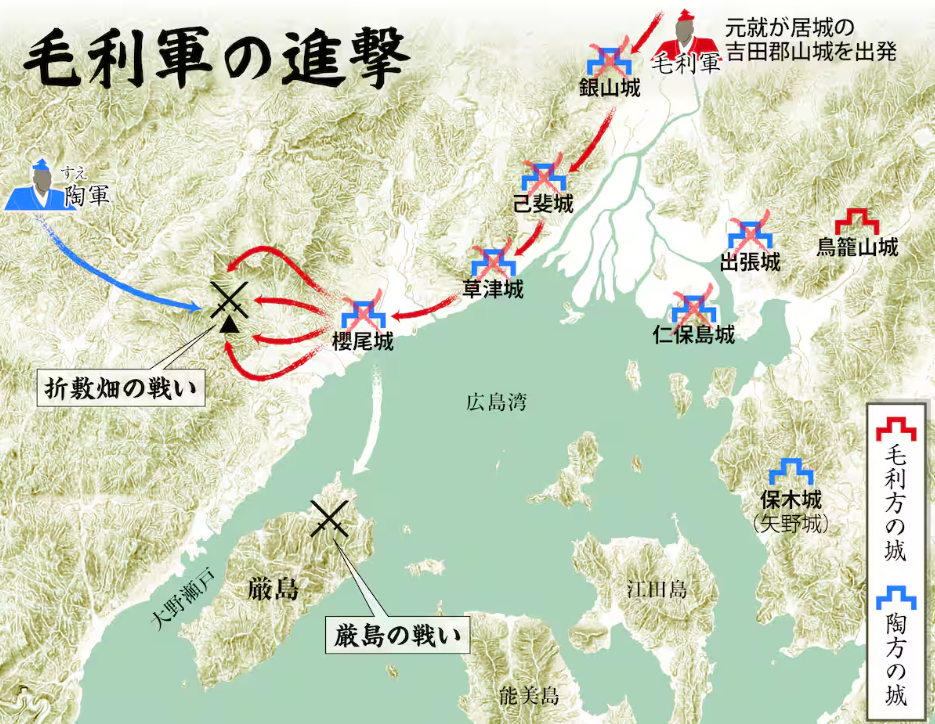
At first, Motonari maintained an outward appearance of cooperation with Sue. But in May 1554, when Yoshimi Masayori of Iwami Province rose up in revolt against the Sue clan, Motonari seized his moment. He openly aligned with the rebellion, broke decisively from Sue, and quickly captured four castles including Sakurao Castle. He then extended his control all the way to Miyajima itself. By this point, the break between the two sides was complete and irreversible.
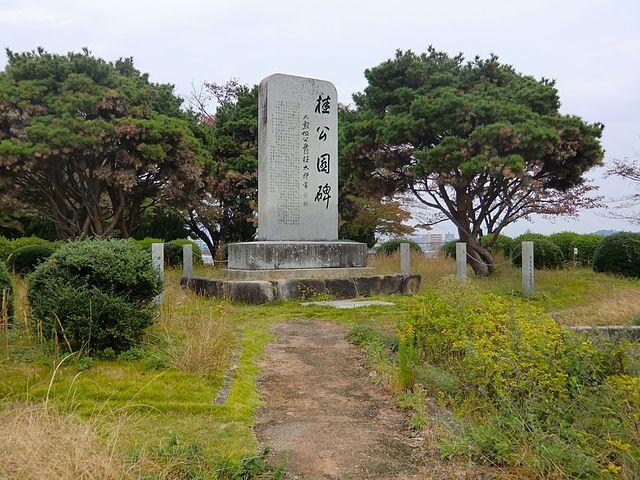
The Battle of Oshikibata: A Preview of Things to Come
In 1554, Sue Harukata ordered his commander Miyagawa Fusanaga to crush Mori Motonari. What followed — known as the Battle of Oshikibata — became the opening act of a much larger drama. Miyagawa advanced with a force of around 7,000 soldiers. Motonari, commanding only about 3,000, divided his men into several units and launched a coordinated surprise attack. He won a complete victory in a single day.
The stunning outcome elevated Motonari’s reputation across the region and sharpened the antagonism with Sue Harukata considerably. For Sue, Motonari had become an obstacle that could no longer be ignored. For Motonari, the victory bought time — but he knew that Sue’s overwhelming military resources would eventually have to be faced head-on. He began devising the strategy that would define his legacy.
The Strategy and Tactics Behind the Battle
Luring Sue Harukata to Miyajima
Motonari’s fundamental problem was simple: Sue Harukata had far more troops. Facing that army in an open battle on flat ground would mean near-certain defeat. So Motonari chose to reshape the battlefield itself.
He constructed a small fort called Miyao Castle on Miyajima and made it an obvious, tempting target for Sue’s forces. At the same time, he had trusted retainers quietly circulate the suggestion that attacking Miyajima would deliver a decisive blow against the Mori. The bait was deliberately set.
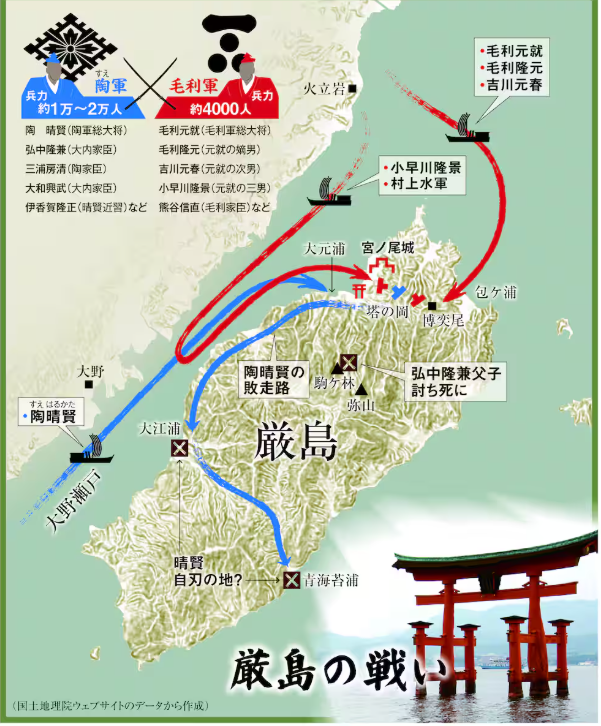
Miyajima’s geography made it the perfect trap. The island is mountainous with little flat land, making it extremely difficult for a large army to maneuver effectively. As an island, supply lines and escape routes are naturally restricted. And yet Sue Harukata — confident in his naval power — took the bait. In September 1555, he sailed to Miyajima with a fleet of 500 ships and an estimated force of around 20,000 men.
The Elimination of Era Fusahide: Psychological Warfare at Its Finest
One of Motonari’s most calculating moves took place months before a single sword was drawn on Miyajima. He first attempted to recruit Sue’s most capable senior general, Era Fusahide, as a double agent — a plan that failed. Rather than abandoning the effort, Motonari pivoted and began spreading carefully crafted rumors that Era was secretly plotting a betrayal against Sue.
The disinformation worked. Consumed by suspicion, Sue Harukata ordered Era’s execution on March 16, 1555. By his own hand, Sue had eliminated one of his most battle-tested and strategically astute commanders — a man who knew Aki Province and the Mori intimately. The internal damage to Sue’s forces was significant, and their cohesion suffered as distrust spread through the ranks.
The Murakami Pirates and Naval Supremacy
No account of the Battle of Itsukushima is complete without the Murakami navy — the formidable seafaring clans who dominated the Seto Inland Sea. Motonari understood that an island battle would be won or lost on the water, so he worked to secure the alliance of all three branches of the Murakami: the Kurushima, Noshima, and Innoshima clans.
The key to securing their loyalty was partly a family connection: Kobayakawa Takakage, Motonari’s third son, had given an adopted daughter in marriage into the Kurushima Murakami family, creating a bond of kinship. With the Murakami navy on his side, Motonari gained maritime superiority around Miyajima. The pirates blockaded the waters around the island, cutting off Sue’s retreat and supporting the Mori landing force. In a battle fought on and around an island, control of the sea was everything.
The Aftermath and Historical Significance
The Battle of Itsukushima had consequences that stretched far beyond a single military victory. Sue Harukata, trapped on the island with his retreat cut off, took his own life at Oue Beach. The Ouchi clan’s power collapsed rapidly in the aftermath, and Mori Motonari used his victory as a springboard for the next phase of his campaigns.
Over the following decades, Motonari went on to defeat the Amago clan as well, ultimately bringing all ten provinces of the Chugoku region under his control. The Ouchi, who had been one of the dominant powers of western Japan, were finished. The entire political structure of the region had been remade.
The Battle of Itsukushima is also celebrated as a masterclass in strategic thinking. Motonari’s combination of psychological manipulation, geographic cunning, naval alliance-building, and enemy intelligence operations — all in service of overcoming a force many times larger than his own — earned it a place among what historians call Japan’s “Three Great Surprise Attacks of the Sengoku Period,” alongside the Battles of Kawagoe and Okehazama. His famous maxim, loosely translated as “the side with more schemes wins; the side with fewer schemes loses,” remains quoted in Japanese military history and even modern business literature.
What the Battle of Itsukushima Means Today
The legacy of the Battle of Itsukushima reaches well beyond military history. Motonari’s famous words — that victory belongs to the side that plans the most — continue to resonate in Japanese culture, appearing in discussions of leadership, crisis management, and strategic thinking centuries after his death.
Perhaps less well known is what Motonari did after the battle was over. Deeply aware that fighting on the sacred grounds of Itsukushima Shrine had desecrated a holy site, he ordered a thorough ritual purification of the island. Shrine buildings and walkways were washed clean with seawater, and the bloodied soil was carried off the island entirely. It was an act that reflected both his spiritual sensibility and his political instincts — a gesture of respect toward the gods whose island he had turned into a battlefield.
Today, Miyajima is a UNESCO World Heritage Site, and visitors can walk the very ground where this extraordinary confrontation unfolded. Historical markers and guides from the Miyajima Tourism Association make it possible to trace the movements of both armies across the island — connecting one of Japan’s most beloved travel destinations to one of its most dramatic chapters of history.
FAQ
What was the direct cause of the Battle of Itsukushima?
The most immediate cause was the power vacuum created by the death of Ouchi Yoshitaka in 1551. When Sue Harukata overthrew his own lord, Mori Motonari — who was bound to the Ouchi by marriage — refused to accept Sue’s authority. This refusal eventually escalated into open military conflict over control of the Chugoku region.
Why did Mori Motonari choose Miyajima as the battlefield?
Miyajima’s geography was ideal for Motonari’s strategy. As an island, it severely limited the ability of a large army to maneuver, neutralizing Sue’s numerical advantage. With the Murakami navy blocking escape routes by sea, Sue’s force was effectively trapped once it landed. Motonari engineered the entire situation to force a fight on terrain that favored his smaller, more flexible army.
Who were the Murakami pirates, and why did they side with Mori?
The Murakami were powerful seafaring clans who controlled much of the Seto Inland Sea. Motonari secured their alliance partly through a family marriage connection — his son Kobayakawa Takakage had given an adopted daughter to the head of the Kurushima Murakami clan. Their shared strategic interest in controlling the inland sea also made cooperation mutually beneficial.
How did the elimination of Era Fusahide affect the battle?
It was one of the most consequential acts of deception in the entire campaign. Motonari fabricated rumors that Era — Sue Harukata’s most capable general — was plotting treason. Sue believed the disinformation and had Era killed. In doing so, he removed his own best military mind ahead of the most important battle of his career, and shattered the trust within his senior command.
Is the Battle of Itsukushima considered significant in Japanese history?
Very much so. It is counted among the “Three Great Surprise Attacks of the Sengoku Period,” alongside the Battles of Kawagoe and Okehazama. The battle demonstrated how intelligence, deception, and strategic positioning could defeat a vastly superior force — a lesson that resonated throughout the rest of the Sengoku era and beyond.
Can visitors see historical sites related to the battle on Miyajima today?
Yes. Several sites connected to the battle survive on the island. Sue Harukata’s main camp was located at Tou-no-oka, near the Five-Story Pagoda. The cove of Tsutsumigaura is traditionally identified as the Mori landing site, and the ruins of Miyao Castle can also be explored. Information boards placed around the island by the Miyajima Tourism Association explain the battle’s key events and locations in detail.
What happened to the Ouchi clan after the battle?
The Ouchi clan effectively collapsed. Sue Harukata’s death left the puppet lord he had installed without any real military backing, and the clan’s dominance in western Japan came to a rapid end. Mori Motonari absorbed the Ouchi territories and continued expanding his power, eventually controlling all ten provinces of the Chugoku region.
References
- Wikipedia: Battle of Itsukushima
- Wikipedia: Daineiji Incident
- Wikipedia: Mori Motonari
- Wikipedia: Ouchi Yoshitaka
- Wikipedia: Murakami Navy
- Wikipedia: Battle of Oshikibata
- Sengoku History: Battle of Itsukushima (1555)
- Sengoku History: The Daineiji Incident (1551)
- Sengoku History: Battle of Oshikibata (1554)
- Rekishijin: The Naval Surprise Attack at Itsukushima
- Busho Japan: How Mori Motonari’s Surprise Attack Defeated Sue Harukata
- Owada Tetsuo, Mori Motonari, Chuo Koron Shinsha, 2002
- Kawamura Shoichi, The Battle of Itsukushima, Yosensha, 2018
- Yamada Kuniaki, Crisis Management of the Sengoku Warlords, Kadokawa Sensho, 2009
Note: Historical site access, tourism association information, and island facilities may be subject to change. We recommend verifying details with the Miyajima Tourism Association or local visitor centers before your visit.