
When you first glimpse Itsukushima Shrine’s famous vermilion corridors appearing to float on the Seto Inland Sea, you’re witnessing one of Japan’s most remarkable architectural achievements. But why was Miyajima shrine built over water in the first place? The answer lies in ancient beliefs that made the entire island too sacred for ordinary human structures—and in the visionary ambition of a powerful medieval warlord who transformed those beliefs into stunning reality.
This unique over-water design wasn’t just about aesthetics. It was a profound expression of reverence for Miyajima as an “island where the gods dwell,” combined with Taira no Kiyomori’s grand vision for a maritime shrine unlike anything Japan had ever seen. Today, nearly a millennium later, this architectural masterpiece continues to captivate millions of visitors each year and stands as one of Hiroshima’s most iconic landmarks.
Why Build a Shrine on the Sea? Tracing Its History
Miyajima: Sacred Since Ancient Times—An Entire Island Devoted to the Gods
The reason Itsukushima Shrine stands above the sea is deeply rooted in centuries of devotion to Miyajima that stretches back to ancient times. The name “Itsukushima” itself translates to “island devoted to the gods,” revealing the fundamental belief that the entire island was a sanctified realm where deities resided.
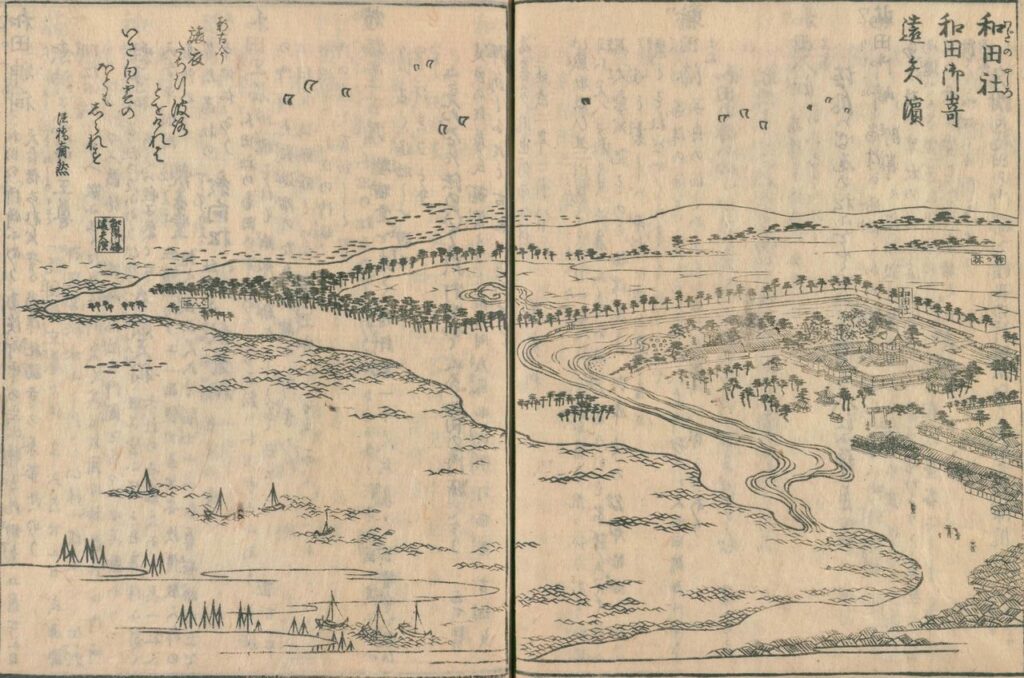
Long before the Heian period began in 794, Miyajima was venerated as the dwelling place of powerful deities who safeguarded navigation throughout the Seto Inland Sea. People considered the very act of setting foot on this holy ground to be an awe-inspiring and potentially sacrilegious act. This led to the remarkable custom of worshiping from boats anchored offshore or from the opposite shore across the water. Pilgrims would bow toward the island from a respectful distance, never daring to disturb the sacred earth itself.
This profound reverence became the spiritual foundation for building a shrine that not only faced the sea but actually floated upon it. By constructing over the water rather than on land, worshipers could approach the deities without violating the sanctity of the island’s soil. Archaeological research has uncovered distinctive ritual sites throughout ancient Miyajima, suggesting the entire island functioned as one vast, interconnected sanctuary. Its geography—a mountainous island completely encircled by water—naturally emphasized its separation from the everyday world and reinforced its character as a divine domain set apart from human concerns.
The Magnificent Sea Shrine Built by Taira no Kiyomori
While smaller shrine structures had existed on Miyajima for centuries, the striking “floating” layout of today’s Itsukushima Shrine was magnificently rebuilt on a grand scale by Taira no Kiyomori in 1168 (the 3rd year of the Ninan era) during the late Heian period. Visiting Miyajima in his role as Governor of Aki Province, Kiyomori was deeply moved by the island’s mystical beauty and the enduring faith of its people. He resolved to create a great shrine complex worthy of the deities and the island itself, while simultaneously praying for the prosperity and protection of his powerful Taira clan.
But Kiyomori’s ambitious plan went far beyond mere shrine construction. He envisioned Miyajima as a strategic maritime hub overlooking the vital shipping lanes of the Seto Inland Sea. The Taira clan relied heavily on maritime trade and naval power, and they looked to the Itsukushima deities—revered as patrons of safe sea travel—to secure their control of these crucial routes. The over-water sanctuary became both a symbol of Taira maritime dominance and a beacon of spiritual protection for sailors navigating these waters.
Drawing inspiration from Kyoto’s elegant shinden-zukuri palace architectural style and adapting it brilliantly to a marine setting, Kiyomori created the dreamlike scenery in which the shrine appears to float gracefully at high tide. This was truly a groundbreaking concept in world architecture—an ideal sacred space that bridged the realm of the gods with human society while respecting the boundary between them. The result was so stunning that it seemed to belong more to myth than reality.
Visitors today can still witness the famous “floating torii gate” rising majestically from the sea, its vermilion pillars perfectly reflected in the calm waters at high tide. This iconic image has become the defining symbol of Miyajima and remains an absolute highlight for anyone planning a day trip from Hiroshima or a deeper exploration of the Seto Inland Sea region.
Architectural Techniques and Structural Features of the Floating Shrine
Unique Construction Methods Adapted to Tidal Forces
The most remarkable feature of Itsukushima Shrine’s marine design is its ingenious engineering to withstand the dramatic tidal shifts that characterize the Seto Inland Sea. This region experiences a tidal range of roughly 4 meters (about 13 feet)—conditions that would quickly overwhelm and destroy ordinary wooden buildings not specifically designed for such extreme fluctuations.
The shrine’s foundation relies on massive pillars made from naturally decay-resistant camphor wood, driven deep into the seabed to create a stable base. These pillars are engineered to absorb and distribute the immense pressure created by changing tides, waves, and storm surges. Essential to the overall structural integrity are horizontal “nuki” through-beams that tie the pillars together into a unified framework, allowing the entire building to flex and move as one cohesive unit rather than fighting against the sea’s tremendous force.
In what might seem counterintuitive to modern builders, the floorboards are deliberately laid with intentional gaps between them. This allows seawater to escape freely when high waves surge in during storms, creating a natural “drainage” system that dramatically reduces destructive hydrostatic pressure that could tear the structure apart. Similarly, roof tiles are fastened using special methods developed specifically to cope with the strong coastal winds that sweep across the exposed island, significantly enhancing the shrine’s resilience to typhoons and dangerous storm surges.
Harmony of the Corridor Architecture and the Maritime Landscape
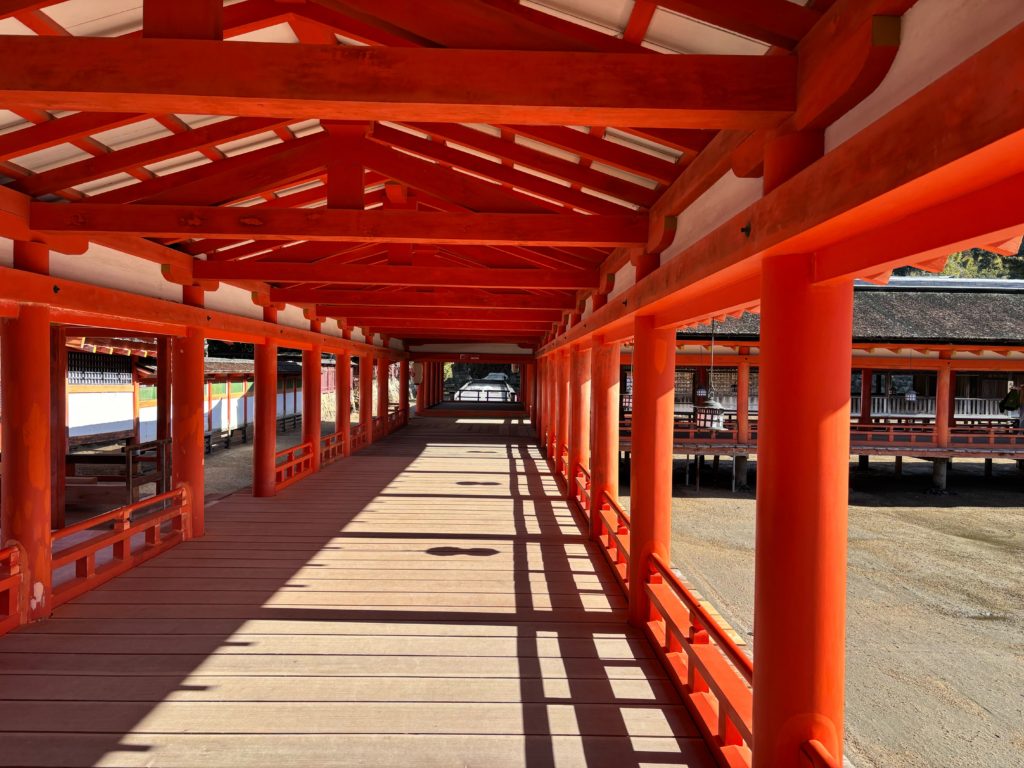
The shrine’s famous long corridors were designed specifically to celebrate and work with the unique over-water setting. Stretching approximately 280 meters (about 920 feet) in total length and symmetrically arranged around the main hall like outstretched arms, they form one of the most striking architectural scenes in all of Japan when viewed at high tide—like brilliant vermilion bridges floating impossibly on the sea surface.
Their height above the water was carefully calculated against historical tide charts and sea level data, ensuring that visitors can walk comfortably along them even during high tide periods. At low tide, an entirely different experience emerges: multiple worship routes open up, allowing you to walk beneath or between buildings on the exposed seabed and approach the grand torii gate directly from the shore on foot. This vivid “dual worship experience”—dramatically different at high tide versus low tide—is a signature characteristic of a shrine built above the sea and represents a major highlight for travelers who time their visit to experience both perspectives.
The choice of building materials reflects centuries of accumulated wisdom about coastal construction. Camphor, cypress, and cedar were specifically selected for their exceptional resistance to salt air corrosion and direct seawater contact, ensuring long-term structural integrity with regular maintenance. The distinctive vermilion-lacquered pillars and copper roof (which develops a beautiful green patina over time) contrast magnificently with the deep blue sea and sky, creating the otherworldly landscape that Japanese poets and travelers have often compared to the mythical “Dragon Palace” (Ryugu-jo) floating beneath the waves in folklore.
Cultural Impact and Historical Significance of Maritime Worship
Itsukushima Shrine’s over-water design represented a revolutionary departure in Japan’s long tradition of religious architecture. Whereas most shrines were built on mountains, in sacred forests, or on carefully selected plots of land, this remarkable complex created an entirely new type of sanctified space within the dynamic and ever-changing environment of the sea itself. It challenged conventional thinking about where sacred architecture could and should exist.
The practice of maritime worship at Itsukushima also profoundly shaped aristocratic culture during the Heian era. Pilgrimages undertaken by Kiyomori and members of the Taira clan evolved from simple acts of devotion into refined cultural occasions featuring elegant court music (gagaku) and classical poetry recited on boats as they approached the shrine. The famous dedication of richly decorated and illuminated Buddhist sutras, known historically as the “Taira Family Sutra Offerings” (Heike Nokyo), highlights the shrine’s unique maritime cultural identity and the sophisticated aesthetic sensibilities of its patrons.
From the medieval period onward, Itsukushima’s innovative model inspired shrine-building practices across Japan, particularly for waterside and over-water sanctuaries in coastal regions. Devotion to the Itsukushima deities as protectors of seafarers and maritime commerce spread nationwide through networks of merchants and sailors, leading to the establishment of numerous branch shrines along the Seto Inland Sea coast and beyond, from Kyushu to the Kanto region.
The shrine’s sophisticated marine construction techniques and maintenance traditions were carefully preserved under the protection of the powerful Mori clan during the turbulent Warring States period (Sengoku jidai), and later by the Asano domain throughout the more peaceful Edo period. Although the Meiji Restoration’s official policy of separating Shinto and Buddhism (shinbutsu bunri) affected religious practice and administration across Japan, Itsukushima Shrine’s essential structure and spiritual character endured intact.
In 1996, Itsukushima Shrine and its surrounding cultural landscape were formally inscribed as a UNESCO World Heritage Site, with international recognition of their universal value to human civilization. From the perspective of modern architecture and engineering, the shrine’s time-tested approach offers enduring lessons in resilience against natural disasters, environmentally sensitive building methods that work with nature rather than against it, and a sustainable repair and renewal culture that has been continuously refined over more than eight centuries.

The Enduring Value of Maritime Architecture in the Modern Era
Today, as our world confronts the challenges of climate change, rising sea levels, and increasingly powerful storms, the value and relevance of Itsukushima Shrine’s over-water design philosophy has become more important than ever. The shrine is actively studied by architects, engineers, and urban planners as a proven historical model for building in harmony with the ocean and adapting to dynamic coastal environments.
Particularly noteworthy are the shrine’s environmental sensitivity and demonstrated long-term sustainability. The architecture exemplifies what modern designers call “symbiotic design”—construction that avoids damaging fragile marine ecosystems and can even create beneficial habitat for fish, shellfish, and seaweed beneath and around the structures. The unbroken tradition of periodic repairs, component replacements, and cyclical renewals (a practice central to Japanese temple and shrine maintenance) offers invaluable practical insights for sustainable construction methods and effective cultural heritage conservation in our contemporary world.
The cultural and spiritual rewards of experiencing Itsukushima Shrine are just as significant as its architectural lessons. As the scenery transforms dramatically with the rhythm of the tides—from a floating palace at high tide to an accessible walkable shrine at low tide—visitors gain a visceral understanding of how human creativity and natural forces can not only coexist but actually enhance one another. This is a profound idea that modern society, with its tendency toward environmental domination and control, often forgets or overlooks.
Welcoming more than 4 million visitors annually from around the world, Itsukushima Shrine remains one of Japan’s most beloved and photographed sights. It stands as an essential highlight for travelers exploring the cultural and historical treasures of Miyajima and the greater Hiroshima region, offering an unforgettable glimpse into how faith, ingenuity, and respect for nature combined to create something truly extraordinary.
Summary
Itsukushima Shrine was built over the sea because the entire island of Miyajima was revered as sacred ground too holy for ordinary human structures. This ancient belief, combined with Taira no Kiyomori’s visionary ambition in the 12th century, resulted in the transformation of simple coastal worship into a magnificent maritime architectural complex that has no parallel in the world.
Engineered with remarkable sophistication to work harmoniously with powerful tidal forces, the “floating” shrine stands as a milestone in religious architecture and a cornerstone of Japan travel experiences. From the internationally famous floating torii gate to the elegant corridors that seem to hover above the water, every element tells a story of human ingenuity adapting to and respecting natural forces.
Born from deep devotion to a holy island and refined through nearly a millennium of careful preservation, this maritime masterpiece has endured to become a UNESCO World Heritage landmark shared by all humanity. Its profound example—coexisting gracefully with the sea, embracing rather than fighting natural forces, and protecting a beautiful sanctuary through sustainable practices—continues to offer timeless wisdom and inspiration for travelers, architects, environmentalists, and communities around the world seeking to build a more harmonious relationship with our coastal environments.
References and Sources
- Agency for Cultural Affairs, Cultural Heritage Online: Itsukushima Shrine (World Heritage Site)
- Agency for Cultural Affairs, National Cultural Properties Database: Itsukushima Shrine Main Hall, Offering Hall, and Worship Hall
- Miyajima Tourism Association: World Cultural Heritage Registration
- Miyajima Tourism Association: Itsukushima Shrine
- Itsukushima Shrine Official Website (National Treasure & World Heritage)
- Hiroshima Cultural Encyclopedia: Foundation of Hiroshima “Heishi and Itsukushima Culture”
- Hatsukaichi City Official Tourism Website “Hatsutabi”: World Heritage “Itsukushima Shrine”
- Wikipedia: Itsukushima Shrine (Japanese)
- Miyajima Town History Compilation Committee, “Miyajima Town History: General History Edition,” Miyajima Town, 1992
- Fukuyama Toshio, “Architecture of Itsukushima Shrine,” Chuokoron-Bijutsu Shuppan, 1988