
Standing at the water’s edge in Miyajima, gazing up at the vermilion-lacquered torii gate rising from the sea, visitors from around the world ask the same question: “How does the Miyajima torii gate stay upright without toppling over?” It’s one of the most iconic images of Japan—the famous floating torii gate of Itsukushima Shrine—yet behind its serene beauty lies a remarkable engineering story that has captivated travelers for generations.
Here’s the surprising answer: the Great Torii isn’t anchored to the seabed at all. It stands entirely by its own immense weight—an astonishing 60 tons. Completed in 1875 during the Meiji period, this architectural masterpiece embodies centuries of traditional Japanese construction wisdom that has survived countless typhoons and earthquakes. The techniques used here continue to inspire modern engineers and offer valuable lessons in sustainable, resilient design.

Why the Miyajima Torii Gate Doesn’t Fall: The Engineering Explained
An Astonishing Weight-Balance Design
The primary reason the Great Torii at Itsukushima Shrine remains standing is its overwhelming weight. Rising approximately 16.6 meters (about 54 feet) above the water—roughly the height of a five-story building—the current gate is a massive timber structure weighing about 60 tons. To put that in perspective, that’s equivalent to about twelve full-grown African elephants. But this impressive mass isn’t simply the combined weight of its wooden components—every ounce is carefully distributed to maintain perfect stability.
The ingenious secret lies hidden inside the top horizontal crossbeams, known as the shimaki and kasagi. Unlike the solid beams found in typical torii gates throughout Japan, these beams are hollow, box-shaped structures. Inside them, master craftsmen packed approximately 7 tons of stones—each roughly the size of a human head—that serve as strategic counterweights. This brilliant design lowers the structure’s center of gravity dramatically and effectively dampens the sway caused by wind and waves, allowing this “floating” torii to stand firm even when the tide rises and seawater surrounds its base.
The Ancient Senbon-kui Pile Foundation Method
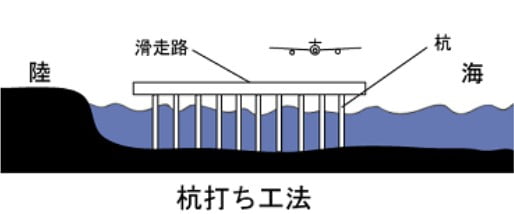
Supporting a 60-ton structure on the soft, sandy seabed of Hiroshima Bay presents enormous engineering challenges. You can’t simply place something this heavy on loose sand and expect it to remain stable. That’s why ancient Japanese builders developed a sophisticated technique called the “senbon-kui” method—literally meaning “thousand-pile” foundation. This isn’t just a poetic name; it describes the actual construction process used beneath the Miyajima torii gate.
Under each of the gate’s main pillars and supporting side pillars, between 30 and 100 pine wood piles are densely driven into the seabed to a depth of approximately 50 centimeters (about 20 inches). These piles work together to distribute the enormous load across a much wider area, preventing the gate from sinking into the sandy bottom. Think of it like snowshoes spreading your weight across soft snow—the principle is fundamentally the same.
In modern times, a 45-centimeter-thick (18-inch) concrete slab was laid over these pine piles, providing an even more robust foundation. On top of this slab, workers placed a 24-centimeter-thick (9.5-inch) layer of granite paving stones. The Great Torii rests entirely on this carefully engineered foundation, held in place solely by its own weight. It’s not embedded or fastened to the ground in any way—it’s essentially just “placed” there—yet it achieves remarkable stability that has lasted for nearly 150 years.
The Unique Structural Features of the Ryobu Torii Design
A Six-Pillar, Load-Distributing System
The Great Torii at Itsukushima Shrine uses a distinctive architectural form known as the Ryobu torii style. Rather than the simple two-pillar design (called Myojin-style) that you’ll see at approximately 90% of shrines across Japan, this gate features a more complex six-pillar system. The structure consists of two massive main pillars, each flanked by a pair of smaller supporting pillars—six pillars working together as one integrated unit.
This configuration isn’t just for visual grandeur. It serves a critical engineering function by distributing the load more efficiently across multiple points and dramatically increasing the structure’s stability compared to simpler torii designs. The main pillars and their supporting side pillars are connected using massive through-bolts at both the top and bottom sections, which are then tightened and secured with traditional wedges. This joinery system allows all six pillars to function as a single, cohesive unit, creating exceptional resistance to the lateral forces from wind, waves, and even seismic activity. Given that the gate stands in a marine environment exposed to storms and typhoons, this choice of the Ryobu style clearly prioritizes structural stability above all else.
The Superior Material Properties of Ancient Camphor Wood
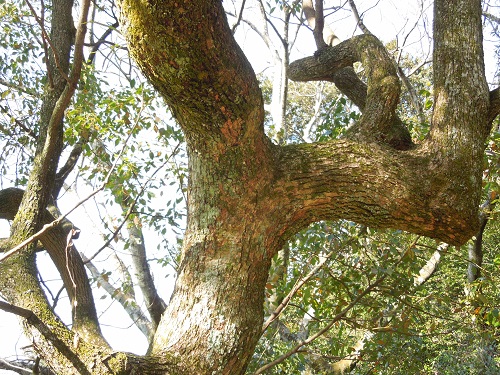
The choice of building material for the main pillars is equally fascinating. These massive columns are carved from natural camphor wood (kusunoki in Japanese) harvested from trees approximately 500 years old—some of the most prized timber in all of Japan. Finding camphor trees large enough for such a project is extraordinarily difficult, which speaks to the cultural and historical importance of this structure.
For the current ninth-generation gate, craftsmen sourced the eastern pillar from ancient camphor forests in Miyazaki Prefecture on the southern island of Kyushu, while the western pillar came from Kagawa Prefecture on the island of Shikoku. During major repairs conducted in 1950, additional sections were grafted using camphor wood from Fukuoka and Saga Prefectures. Each piece was carefully selected and fitted to ensure structural integrity would be maintained for generations.
Why camphor? This particular wood species possesses exceptional properties that make it ideal for marine construction. It has a relatively high specific gravity (meaning it’s dense and heavy), outstanding natural resistance to decay, and built-in insect-repelling properties thanks to the aromatic oils it contains. These characteristics are absolutely vital for a structure that spends much of its time partially submerged in the seawater of Hiroshima Bay. The beautiful vermilion surface coating, called komyotan, serves dual purposes—it creates the iconic aesthetic that draws visitors from around the world to Miyajima, while also providing practical protection with its anti-corrosion and anti-rot properties that help the wood endure the harsh marine environment year after year.
How the Gate Survives Natural Disasters: A Historical Perspective
The true test of any structure comes when nature unleashes its full force. Since its reconstruction in 1875, this ninth-generation gate has weathered numerous typhoons, earthquakes, and severe storms that regularly sweep through the Seto Inland Sea. During Typhoon No. 19 in 1991—one of the most destructive storms to hit the region—Itsukushima Shrine itself sustained serious damage to several buildings. Yet remarkably, the Great Torii stood firm throughout the ordeal, testament to the brilliance of its design.
This exceptional disaster resilience comes from multiple factors working in harmony. The structure’s sheer mass provides inherent stability—it’s simply too heavy to be easily moved by wind or waves. The low center of gravity created by those hidden stone counterweights means the gate is bottom-heavy and resistant to tipping. Additionally, the marine environment itself offers unexpected benefits: the low-oxygen conditions in seawater actually slow the decay process within the submerged sections of the pillars, acting as a natural preservative.
That said, the ocean environment does present its own unique challenges. Marine organisms—including shipworms (wood-boring mollusks), various wood-boring insects, and encrusting barnacles—are persistent enemies that cause cumulative damage over time. Without regular maintenance and monitoring, even the mighty camphor wood would eventually succumb to these biological threats.
During the comprehensive restoration conducted from 2019 to 2022—the first major work in approximately 70 years—inspection teams made some startling discoveries. Hidden voids measuring 40 to 50 centimeters (16-20 inches) in diameter and extending up to 4 meters (13 feet) deep were found within the main pillars. Damage from termites and decay-causing fungi had created these hollow spaces that threatened the structural integrity. Skilled craftsmen carefully repaired these areas with precisely fitted wood infills, installed modern seismic reinforcement to meet current safety standards, completely replaced the traditional cypress bark roofing, and meticulously repainted the entire structure. Thanks to this painstaking restoration work, visitors to Miyajima today can continue to appreciate both the visual beauty and the engineering strength of this iconic floating torii gate for decades to come.
Ancient Architectural Wisdom Relevant to Modern Engineering
The construction techniques embodied in the Miyajima torii gate represent the pinnacle of traditional Japanese timber architecture, refined and perfected over centuries since the Heian period (794-1185 CE). What’s remarkable is how many of these ancient principles align with modern engineering concepts that we’re only now beginning to fully appreciate and understand.
The senbon-kui foundation method, for instance, essentially anticipates the pile foundation and ground improvement principles that civil engineers routinely use today for stabilizing structures on soft soil. The weight-balance and counterweight approach mirrors the tuned mass damper systems that modern high-rise buildings employ to reduce sway during earthquakes and high winds. Even the concept of base isolation—allowing controlled movement between a structure and its foundation—finds echoes in the gate’s design philosophy.
Perhaps most fascinating is the fundamental principle of “standing by its own weight” without rigid fixation to the ground. Modern building design typically assumes fixed foundations, where the structure and base act as one unified element. The problem with this approach is that when subjected to extreme forces, the entire system can fail catastrophically as a single unit. The Great Torii, by contrast, allows for controlled play and micro-movements between the structure and its base. This flexibility—this willingness to move slightly rather than resist absolutely—achieves remarkable long-term stability through accommodation rather than rigidity. This concept is deeply rooted in traditional Japanese wooden architecture and represents a philosophical approach to building that emphasizes harmony with natural forces rather than attempting to dominate them.
Looking toward the future, the Miyajima Millennium Committee has taken on the responsibility of cultivating camphor trees specifically to ensure that suitable timber will be available for future repairs and eventual reconstruction. Their “Forest of Eternity” project, established within the national forest surrounding Itsukushima Shrine, represents a beautiful integration of cultural heritage preservation and sustainable resource management. These trees, planted today, won’t be ready for harvest for several hundred years—but they ensure that the Great Torii of Itsukushima Shrine will remain a must-see attraction in Miyajima for countless generations of travelers yet to come.
Frequently Asked Questions About the Miyajima Torii Gate
Why doesn’t the Great Torii fall over even though it isn’t anchored to the ground?
The Great Torii stands independently thanks to its enormous weight of approximately 60 tons combined with a remarkably low center of gravity. This low center of gravity is achieved by placing roughly 7 tons of stone counterweights inside the hollow upper crossbeams. Additionally, the structure rests on a foundation reinforced using the ancient thousand-pile (senbon-kui) method, which distributes the weight across dozens of pine piles driven into the seabed. Together, these elements provide exceptional stability without requiring the gate to be embedded or fastened down.
Why is camphor wood used instead of other types of wood?
Camphor wood (kusunoki) offers ideal properties for a marine environment: high specific gravity (density), exceptional resistance to decay, and natural insect-repelling characteristics due to aromatic oils in the wood. These qualities make it one of the very few timber species capable of withstanding long-term exposure to the seawater, salt air, and marine organisms found in Hiroshima Bay around Miyajima. The wood’s natural durability, combined with the protective vermilion lacquer coating, allows the structure to last for generations.
What exactly is the Senbon-kui technique?
Senbon-kui (literally “thousand piles”) is an ancient Japanese ground-reinforcement method designed for weak or unstable seabeds. The technique involves driving between 30 and 100 pine wood piles densely into the sandy bottom beneath each major pillar. A concrete slab and granite paving stones are then laid on top of these piles. This system effectively distributes the enormous weight across a much larger area, preventing sinking and providing a stable foundation. It can be considered an early form of the pile foundation and ground improvement methods commonly used in modern civil engineering and construction.
Is there any real concern that the gate might collapse during typhoons or earthquakes?
The current Great Torii has successfully withstood numerous severe typhoons and earthquakes over approximately 150 years since its reconstruction in 1875, demonstrating remarkable resilience. During the comprehensive restoration completed in 2022, modern seismic reinforcement was added to further enhance the structure’s earthquake resistance while preserving its traditional appearance. Ongoing maintenance programs and regular inspections help identify and address any emerging issues before they threaten the structure’s safety. While no structure is completely immune to natural disasters, the gate’s proven track record and modern reinforcements provide substantial protection.
What is the meaning and significance behind the vermilion color?
The striking vermilion coating, called komyotan, serves both aesthetic and practical purposes. Visually, the bright red color holds spiritual significance in Japanese culture, representing vitality and protection against evil. Practically, the lacquer coating provides crucial anti-corrosion and anti-rot protection for the wood underneath, helping it resist the damaging effects of seawater, salt spray, and weathering. This exemplifies traditional Japanese craftsmanship at its finest—creating something beautiful that also serves essential functional purposes, blending artistry with engineering.
Which generation is the current Great Torii, and how old is it?
Counting from the first gate traditionally associated with the powerful warlord Taira no Kiyomori in the 12th century, the current structure is the ninth generation of the Great Torii. It was rebuilt in 1875 (year 8 of the Meiji period) and has stood for nearly 150 years. The structure most recently underwent a major comprehensive restoration between 2019 and 2022—the first such extensive conservation work in approximately 70 years. This latest restoration has ensured the gate will continue to stand proudly as Miyajima’s most recognizable landmark for many decades to come.
Summary: Engineering Marvel of Miyajima
The Great Torii of Itsukushima Shrine continues to stand as one of Japan’s most photographed landmarks, and for good reason. What appears to be a simple, elegant structure actually relies on remarkably sophisticated engineering principles refined over centuries. Its approximately 60-ton mass working in concert with a precisely calculated low center of gravity, the ingenious senbon-kui ground reinforcement system, the superior durability of carefully selected ancient camphor wood, and the load-distributing six-pillar Ryobu configuration—all of these elements reflect the refined techniques of Japan’s master builders and temple carpenters. These traditional methods continue to inform and inspire modern engineering approaches to this day.
Having endured for approximately 150 years in one of the harshest construction environments imaginable—constantly subjected to tides, waves, salt water, typhoons, and earthquakes—the “floating” torii gate of Miyajima truly represents the pinnacle of traditional Japanese construction wisdom and sustainable craftsmanship. When you visit Miyajima and Itsukushima Shrine, take time to appreciate not only the gate’s beautiful silhouette as it rises from the water at high tide, but also the centuries of engineering ingenuity and cultural dedication that keep this iconic symbol of Hiroshima standing tall. It’s a testament to what humans can achieve when they work in harmony with natural forces rather than against them.
References and Sources
- Miyajima Tourism Association: The Great Torii Gate
- Itsukushima Shrine Official Website: Construction Status and Plans
- Masuoka Corporation: Itsukushima Shrine Great Torii Major Restoration Project
- Hiroshima Tourism Association – Dive! Hiroshima: Miyajima Itsukushima Shrine Great Torii Renovation Completed
- Wikipedia: Itsukushima Shrine Great Torii (Japanese)
- Japan’s World Heritage: Itsukushima Shrine
- Hatsukaichi Own Media: Is the Torii Gate of Itsukushima Shrine Floating?