
Many visitors to Miyajima are instantly charmed by the deer that wander along the approach to Itsukushima Shrine. Their calm, almost otherworldly presence naturally raises the question: why have deer long been regarded as divine messengers in Japan?
Miyajima’s deer have been entwined with the island’s sacred identity since ancient times, protected by a cultural belief that forbids the shedding of blood. Thought to have lived here for roughly 6,000 years—well before Itsukushima Shrine was established—these wild deer have coexisted with people on this sacred island. While Miyajima lacks an explicit “divine deer” legend like that of Kasuga Taisha in Nara, the island itself has been venerated as holy, and the deer were cherished as special beings within that broader faith.

The Historical Background of Miyajima’s Deer and the Divine Messenger Belief
Ancient to Medieval Periods: The Island’s Sacredness and Deer Survival
The roots of Miyajima’s “divine messenger” belief lie in a unique tradition that regarded the entire island as sacred. Deer are believed to have inhabited Miyajima since it separated from Honshu during the Jomon Transgression about 6,000 years ago. Because deer are strong swimmers, some likely crossed the strait to reach the island as well.
Even before Taira no Kiyomori built the present Itsukushima Shrine in the Heian period, Miyajima was known as a “sacred island.” That sanctity became central to the deer’s protection. Customs that strictly avoided blood-related impurity took root here—for example, refraining from crossing to the mainland during childbirth or going out during menstruation—and, by the same logic, killing deer was shunned as an act involving bloodshed.
The Senshushō, compiled in the Kamakura period, already notes the island’s abundant deer. The poet-monk Saigyō, who visited roughly 820 years ago, also recorded them in his travel writings, indicating that by medieval times, humans and deer had established a pattern of coexistence on Miyajima.
Edo Period: Tourism Development and the Establishment of Deer’s Cultural Status
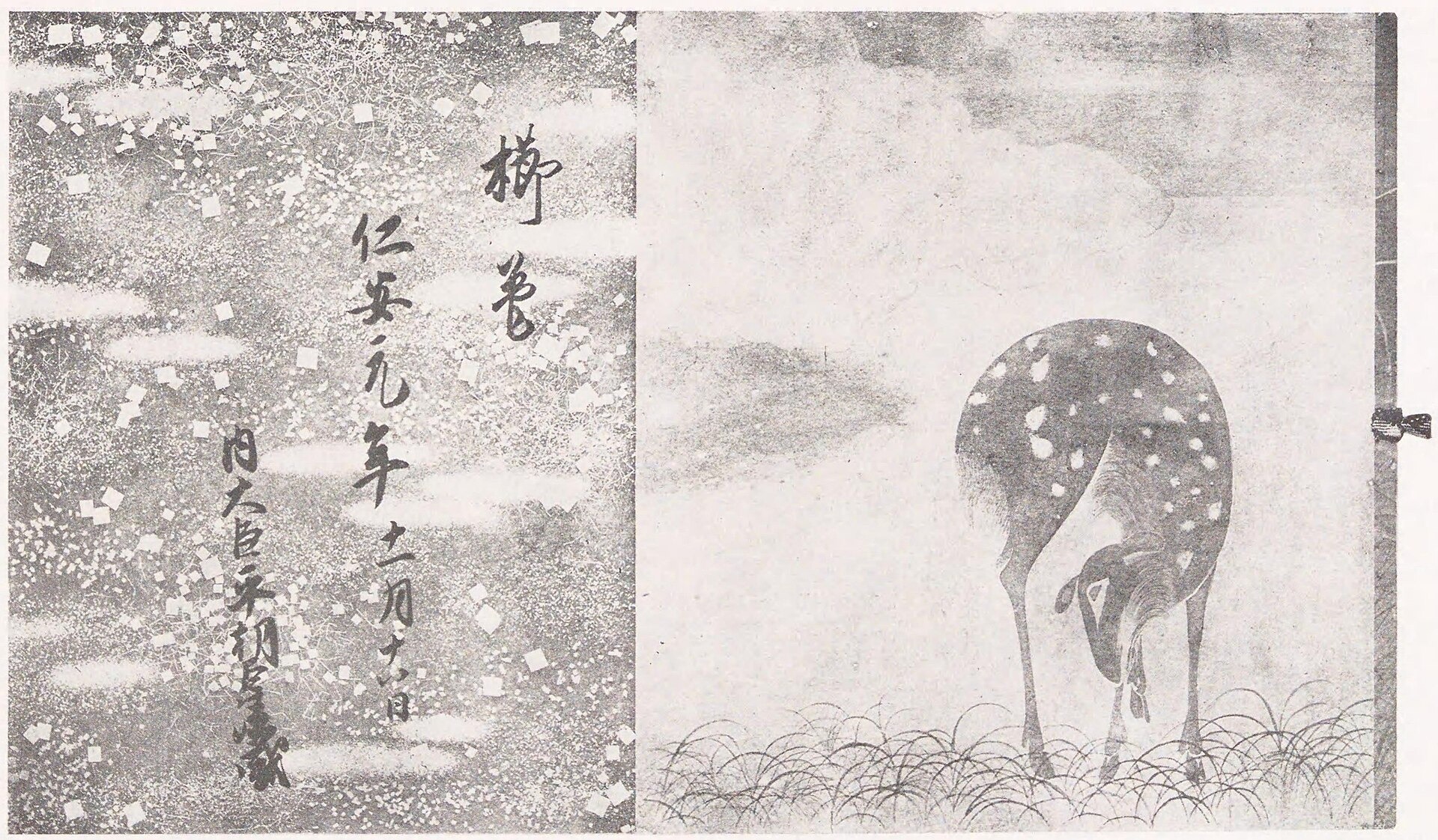
During the Edo period, Miyajima blossomed as a leisure and pilgrimage destination, welcoming scholars, monks, and travelers. Deer appear in nearly every diary and illustrated map from this era. Fukushima Masanori’s poem—“In early spring, hearing the deer’s call for the first time, I know the island’s blessings are ever abundant”—captures how their presence symbolized the island’s prosperity.
In 1715 (Shōtoku 5), Jōshin, a monk of Itsukushima Kōmyō-in, chose the deer as one of the “Eight Views of Itsukushima.” Practical systems to coexist with deer were also developed, including “deer gates” (shikado) to keep them out of private homes and “deer troughs” (shakuo) where leftovers were set out as feed.
The Meiji Era Onward: The Beginning of Legal Protection
The early Meiji period brought upheaval through the separation of Shinto and Buddhism and the haibutsu kishaku movement. Yet by 1879 (Meiji 12), Hiroshima Prefecture designated the entire island a hunting-ban zone to protect the deer, marking the start of formal legal protection.
After World War II, the deer population dipped sharply. In 1949 (Shōwa 24), the former Miyajima Town enacted a Deer Protection Ordinance prohibiting the killing or injuring of deer and restricting the keeping of dogs, with penalties for violations. These protections continue today under Hatsukaichi City.
Characteristics and Cultural Background of Deer-Inhabited Miyajima
Miyajima and Nara Deer: What Are the Fundamental Differences?
Many travelers ask how Miyajima’s deer differ from Nara’s. The biggest distinction is that Miyajima lacks a specific myth like the sacred deer of Kasuga Taisha. The Munakata Three Goddesses, enshrined at Itsukushima Shrine, do not have designated animal messengers.
That said, Miyajima’s deer are by no means less sacred. Their uniqueness lies in being protected by a holistic belief that treats the entire island as holy. Recent DNA research has also confirmed that Miyajima’s deer and Nara’s deer belong to different genetic lineages, showing they evolved independently and are valuable in their own right.
Adaptation and Characteristics as Wild Animals
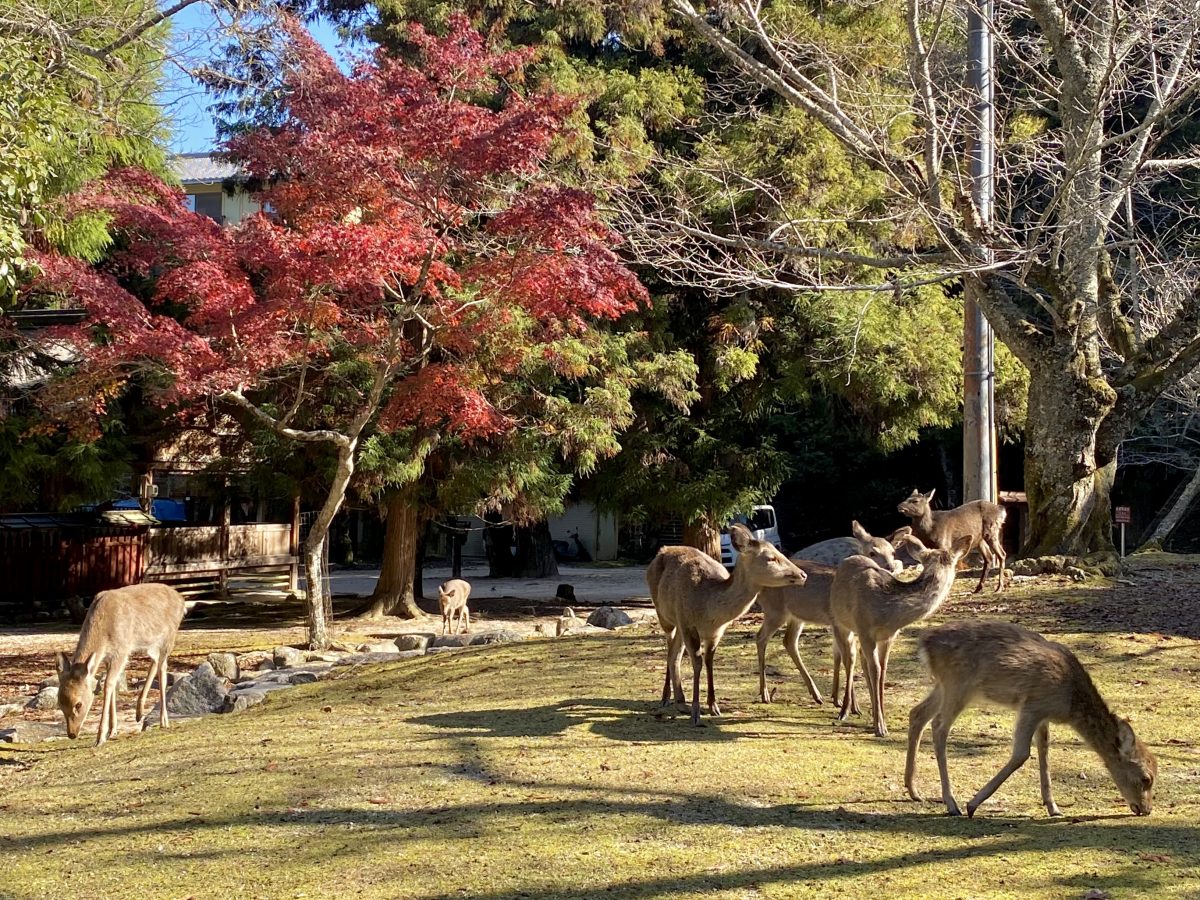
Today, roughly 500 deer live on Miyajima, with about 200 frequenting the town area. Compared with mainland deer, they are smaller and mature more slowly. This is thought to be an adaptive strategy suited to the island’s limited resources, not a sign of poor nutrition.
Miyajima’s deer even show a local behavior known as the “deer commute.” They follow a predictable daily rhythm: descending into town in the morning to forage, then retreating to the mountains at night. This pattern reflects a long history of human–wildlife coexistence on the island.
Impact and Historical Significance of Deer Protection on the Sacred Island
A Unique Coexistence System Born from the Aversion to Impurity
At the heart of Miyajima’s protection ethos is a Shinto-informed avoidance of impurity associated with blood. On an island dedicated to the gods, acts involving bloodshed were taboo—creating, in effect, a sanctuary for deer. This is a culturally grounded protection system, distinct from modern animal welfare frameworks alone.
Because agriculture was never practiced on Miyajima, the usual conflicts over crop damage did not occur. Instead, tourist feeding caused numbers to swell, and by the Edo period, the “deer paradise” familiar to visitors today had already taken shape.
Contemporary Challenges and Conservation Management Efforts
Today, Miyajima follows the “Miyajima Regional Deer Conservation Management Plan,” taking a scientific approach to protect wildlife while ensuring a positive visitor experience at Itsukushima Shrine and across the island. Strict no-feeding rules and improved waste management help return the deer to a more natural state. After deer crackers stopped being sold in 2007, the population temporarily declined but has since stabilized at a sustainable level. Rather than simple population control, Miyajima’s model integrates traditional religious respect with modern conservation science—an approach increasingly noted in discussions of wildlife conservation in Japan.
The Value of Deer-Human Coexistence Passed Down to the Modern Era
Miyajima’s long relationship with deer offers timely lessons for wildlife protection and ecosystem conservation worldwide. Originating in religious values and evolving into evidence-based management, this sustained coexistence shows how cultural heritage and science can work together for sustainable tourism and nature stewardship.
The practices refined on Miyajima—keeping a respectful distance from wildlife in tourist areas, addressing feeding, and earning local community support—are now referenced as strategies for similar destinations. Even today, the deer, often called messengers of the gods, embody harmony between people and nature and continue to teach us how to share sacred places responsibly.
Frequently Asked Questions
Why are Miyajima’s deer called messengers of the gods?
This belief stems from Miyajima itself being a sacred island. Because of a tradition that avoids blood-related impurity, killing deer was forbidden. Although there is no specific deer deity myth as in Nara, the island’s sanctity led people to protect the deer, and they came to be regarded as divine messengers.
How do the deer of Nara differ from those of Miyajima?
DNA analyses show the two populations are genetically distinct lineages. Miyajima’s deer are also smaller and exhibit ecological traits adapted to island life. Unlike Nara, where deer crackers are sold, feeding deer on Miyajima is strictly prohibited.
Why is feeding the deer on Miyajima prohibited?
Feeding human food causes deer to lose the ability to tell trash from food, leading them to ingest plastic bags and other harmful items. Overhabituation to people also increases traffic risks. Current management aims to keep them as truly wild animals.
Is it safe to touch the deer on Miyajima?
They are wild animals, so we do not recommend touching them. Deer can carry ticks and other pathogens, and extra caution is needed around antlered males and females with fawns. Enjoy watching from a safe distance for a respectful, memorable visit.
Where do Miyajima’s deer spend the night?
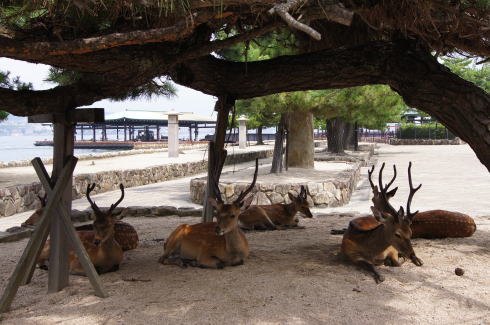
About 70% of the deer sleep in the mountains. Locals call their daily pattern the “deer commute”: they come down to the town area in the morning to forage and return to the mountains in the evening.
What is the current population of deer on Miyajima?
There are currently about 500 deer on the island, with around 200 near the town area. After deer senbei sales ended in 2007, numbers dipped, then stabilized at a sustainable level under today’s conservation plan.
Summary
Miyajima’s deer are treated as divine messengers because of a centuries-old belief that the entire island is sacred and that bloodshed brings impurity. Having roamed here for roughly 6,000 years—even before Itsukushima Shrine—they’ve been protected through the Edo period’s tourism boom and into today’s science-based conservation. Their presence is both culturally meaningful and biologically important.
Genetically distinct from Nara’s deer, Miyajima’s herd has adapted uniquely to island life. With a population of around 500, strict no-feeding rules and careful management help maintain a healthy balance between wildlife and visitors. As emblematic messengers of the gods, the deer continue to symbolize harmony between people and nature and offer lasting lessons for sustainable travel in Japan.
References and Sources
- Miyajima Tourist Association: Deer and Raccoon Dogs
- Wikipedia: Deer of Miyajima
- Hiroshima Prefecture: About Deer in the Miyajima Area
- Hakataya Momiji Manju: Frequently Asked Questions from Tourists about Miyajima Deer
- Tabetainjya: Adorable Miyajima Deer Collection
- Miyajima Town History Compilation Committee, “Miyajima Town History: General History Edition,” Miyajima Town, 1992
- “Senjusho” (compiled in the Kamakura period)