
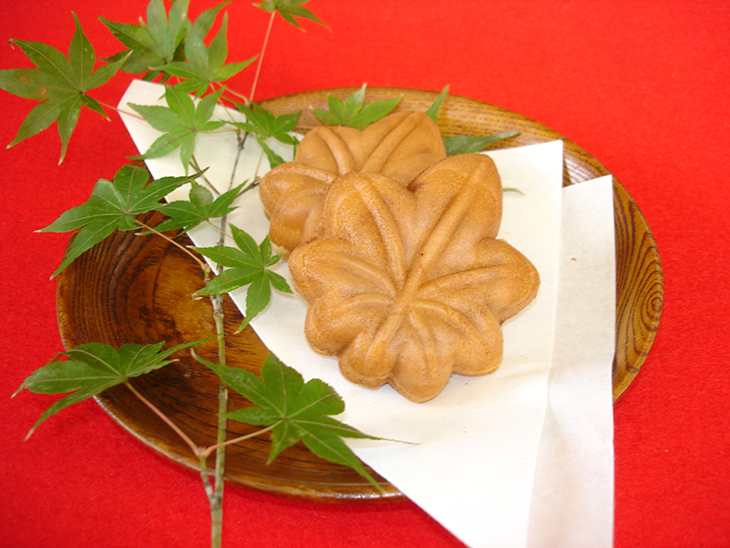
The “Momiji Manju” remains a must-try for anyone wondering what to eat in Miyajima. Its graceful maple leaf shape and gentle sweetness have made it one of Hiroshima’s most famous local sweets. But do you know how this charming confection started—and why it became a symbol of Miyajima and Hiroshima?
Momiji Manju was created in 1906 (Meiji 39) by Miyajima confectioner Tsunekichi Takatsu. Commissioned by the proprietress of the long-established inn Iwaso, he perfected it as a “Maple Leaf-Shaped Baked Manju.” There is even a colorful anecdote involving Japan’s first Prime Minister, Hirobumi Ito. Over nearly 120 years, momiji manju has grown from a Miyajima specialty into a Hiroshima icon and, ultimately, a nationally beloved Japanese sweet. This article explores its history from birth to the present day for travelers interested in authentic local food in Japan.
The Historical Background of Momiji Manju’s Birth
Miyajima and the Development of Tourism in the Meiji Era
By the late Meiji period, when momiji manju was born, Miyajima was already a leading destination in Japan, drawing crowds eager to visit Itsukushima Shrine and admire the autumn foliage. With tourism booming year by year, demand surged for quality lodging and memorable souvenirs.
At the heart of this growth was the historic inn Iwaso, founded in 1854 (Ansei 1). Situated at the entrance to Momijidani Park, Iwaso became a prestigious retreat for royalty, government leaders, and literary figures. Notable guests included Natsume Soseki, Hirobumi Ito, and the Crown Prince of the Korean Empire.
Eiko, the fourth-generation proprietress of Iwaso, nurtured a wish: “I want to serve our guests tea sweets they can only experience at Iwaso.” At upscale inns of the time, offering distinctive seasonal wagashi was a hallmark of hospitality—her ambition reflected the era’s refined expectations.
The Request to Wagashi Craftsman Tsunekichi Takatsu
The wagashi supplier to Iwaso was Tsunekichi Takatsu, a skilled confectioner working in Miyajima. Trusted for his technique and ingenuity in the late Meiji era, he was the ideal artisan to take on a special commission.
Around 1906 (Meiji 39), proprietress Eiko approached Takatsu with a request: “Could you create a confection worthy of the name Momijidani to serve to our important guests?” Inspired by Momijidani—one of Miyajima’s most scenic spots—she wanted a sweet that felt truly local, something you could only taste here.
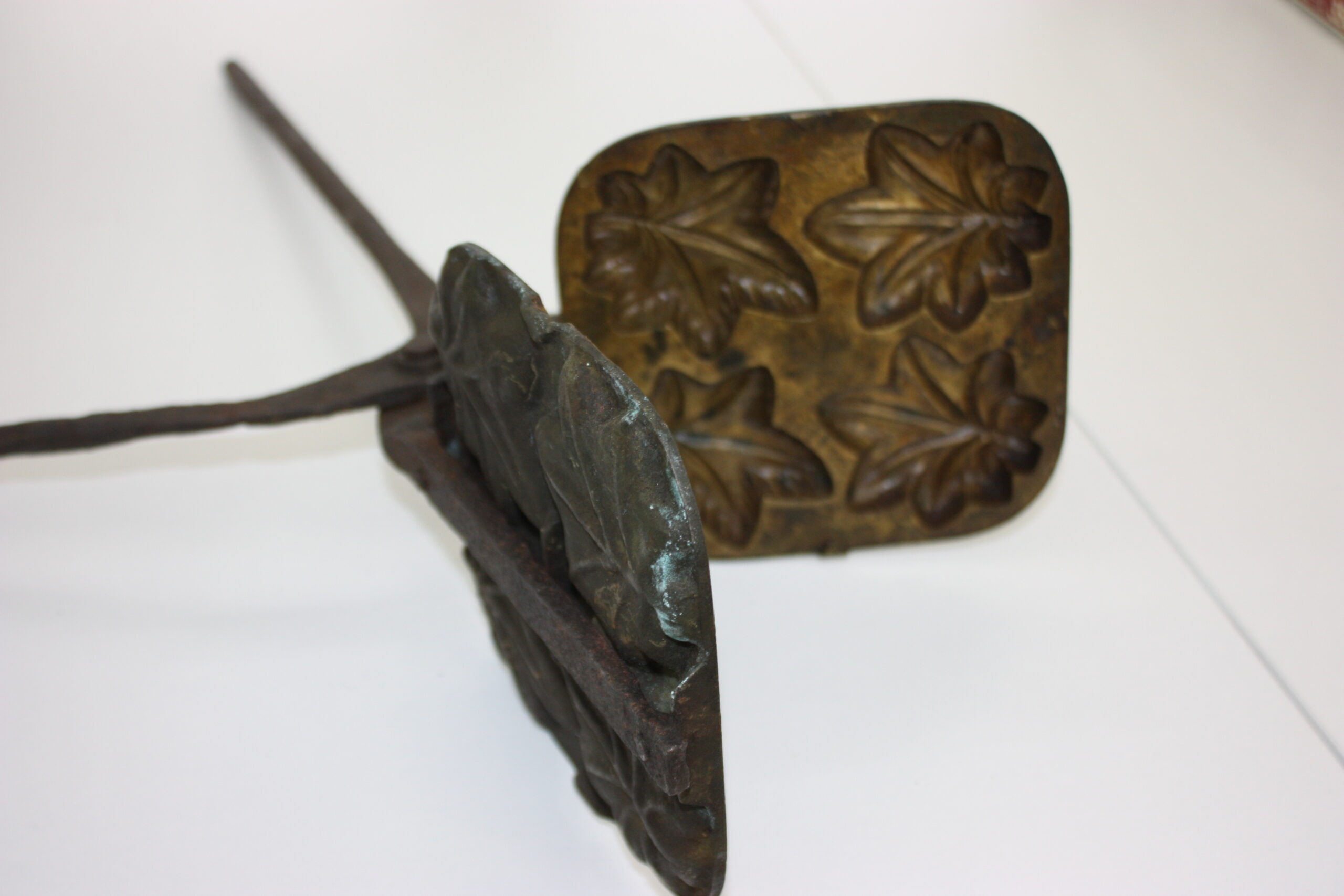
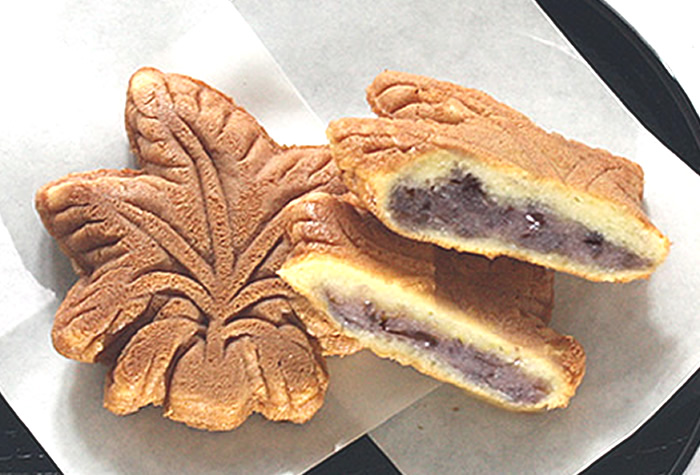
Accepting the challenge, Takatsu developed a new confection through meticulous trial and error. He created a castella-style sponge using fashionable Nagasaki honey, domestic eggs, and milk, then wrapped it around high-quality smooth red bean paste. Most crucially, he crafted a beautiful baking mold that faithfully captured the delicate shape and veins of a maple leaf.
The Completion and Trademark Registration of the “Maple Leaf-Shaped Baked Manju”
Takatsu’s efforts culminated in the “Maple Leaf-Shaped Baked Manju,” the direct prototype of today’s momiji manju. Guests at Iwaso loved its elegant leaf design, down to the veins, and its harmony of a castella-like sponge with smooth, gently sweet bean paste.
Confident in his creation, Takatsu registered the trademark “Momiji Manju” on July 18, 1910 (Meiji 43). The original trademark certificate is still carefully preserved by his grandson. Together with the early baking molds, it stands as invaluable historical evidence of momiji manju’s birth.
Interestingly, the earliest molds differed a bit from those used today. One elaborate design was described as “a leaf with seven notches and a short petiole, depicting two deer,” linking the confection artistically to Miyajima’s famous deer.
Connection to Hirobumi Ito and Cultural Background
The First Prime Minister, Hirobumi Ito’s Love for Miyajima
A famous anecdote about Japan’s first Prime Minister, Hirobumi Ito, is often linked to the birth of momiji manju. Ito loved Miyajima, especially the view from the summit of Mount Misen, once remarking, “The true value of one of Japan’s Three Great Views lies in the vista from its peak.”
He frequently stayed at Iwaso. One story goes that while resting at a teahouse in Momijidani, he saw the hands of a girl serving tea and joked, “How lovely—hands like maple leaves. They’d surely be delicious if roasted and eaten.”
A waiter reportedly relayed this quip to the Iwaso proprietress, inspiring the idea for a maple-leaf-shaped sweet. While one of several theories, the tale aligns with Ito’s personality and the era’s culture, making it a widely cited origin story.
Meiji-Era Tourism Culture and the Role of Souvenir Sweets
During the Meiji era, tourism in Japan changed dramatically. Expanding rail networks made long-distance travel easier, and unique local souvenirs became a key part of the visitor experience and local economies.
Within this context, momiji manju emerged as a pioneering souvenir sweet. Using the region’s natural beauty—autumn leaves—as its motif and offering a taste available only locally was an inspired idea that still resonates with modern destination marketing.
It also blended a Western-influenced castella sponge with traditional Japanese sweet bean paste, embodying the Meiji spirit of enlightenment and innovation in confectionery.
The Evolution into a Local Specialty and Technological Innovation
Spread and Establishment of the Recipe in the Taisho and Early Showa Periods
Not long after its creation, momiji manju was firmly established as a Miyajima specialty and became a favorite souvenir for visitors. Because Tsunekichi Takatsu did not monopolize production, other confectioners began making their own versions, each refining quality with unique techniques.
From the Taisho era through early Showa, production methods grew more sophisticated. Shops developed signature approaches to ingredient selection, batter formulation, and baking control, creating subtle differences in flavor and texture.
At the time, production was entirely manual. Artisans pressed each mold by hand and carefully managed the heat—an artisanal method still preserved by certain traditional shops today.
Postwar Recovery and the Introduction of Mechanization
After World War II, momiji manju production reached a turning point. In the 1960s, a Hiroshima-based manufacturer developed a “Momiji Manju Baking Machine,” enabling consistent mass production. The machine rotated a series of molds to bake efficiently while maintaining quality. Modern machines are typically gas-heated, with high-capacity models producing up to 2,500 pieces per hour.
This mechanization increased supply, stabilized prices, and helped momiji manju spread beyond Miyajima to represent Hiroshima Prefecture as a whole.
The Nationwide Boom and Diversification in the Late Showa Era
In the late Showa period, a pop-culture moment propelled momiji manju to national fame: the comedy duo B&B’s Yoshichi Shimada popularized the catchphrase “Momiji manju!” on television, sparking a surge in recognition.
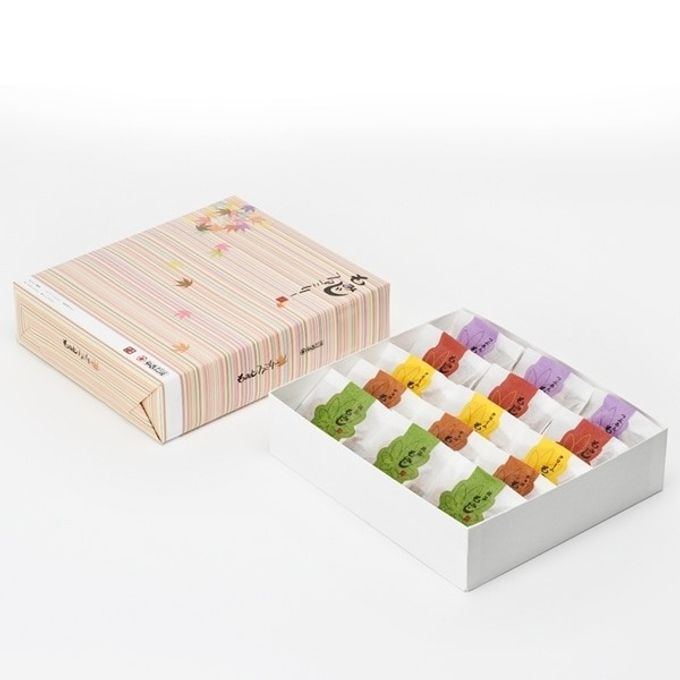
Around the same time, new flavors expanded beyond classic smooth red bean paste to include coarse red bean, matcha, cheese, chocolate, and more. Entering the Heisei era, even the dough evolved, giving rise to varieties like “Nama Momiji” (soft, fresh-style) and “Age Momiji” (crispy, fried-style). For travelers today, this diversity makes momiji manju one of the most fun—and delicious—local foods to try in Hiroshima.
The Value of Momiji Manju Culture Passed Down to the Present Day
Today, momiji manju is more than a souvenir—it’s a proud part of Hiroshima’s cultural identity. In a 2009 Asahi Shimbun survey asking “What is Japan’s best manju?”, it ranked number one nationwide and continues to place highly in national souvenir rankings.
Many makers and shops operate on Miyajima and across Hiroshima Prefecture, each highlighting their own character. The original shop, Takatsudo, was revived in 2009 by Hiroaki Kato, the grandson of Tsunekichi Takatsu, and continues to hand-bake and sell the “Original Momiji Manju” using Meiji-era molds.
On Miyajima, hands-on baking experiences let travelers make their own momiji manju—an unforgettable activity that transforms this sweet from something you “buy” into something you can “make and taste” fresh.
With nearly 120 years of history, momiji manju preserves tradition while evolving with the times. It remains a beloved confection cherished by locals and visitors alike.
Frequently Asked Questions
When were Momiji Manju first created?
They were created in 1906 (Meiji 39) by confectioner Tsunekichi Takatsu as “Momiji-gata Yaki Manju” (Maple Leaf-Shaped Baked Manju). It was trademarked in 1910 (Meiji 43), giving it a history approaching 120 years.
Who first created Momiji Manju?
Tsunekichi Takatsu, a Miyajima confectioner, created it at the request of the Iwaso Ryokan proprietress. He developed it as a sweet worthy of Momijidani (Maple Valley) and perfected it as the “maple leaf-shaped baked manju.”
Was Hirobumi Ito involved in the creation of Momiji Manju?
Not directly, but an anecdote that inspired the idea remains. One theory says Ito joked about “lovely hands like maple leaves” after seeing a teahouse girl serving tea in Momijidani, which sparked the maple-leaf concept.
Can you still eat the original Momiji Manju today?
Yes. It was revived as Takatsudo in 2009 and is sold near Miyajimaguchi. The founder’s descendant hand-bakes them using Meiji-era molds so you can taste the “Original Momiji Manju” based on the historic recipe.
Why can multiple manufacturers sell under the same name?
Because Tsunekichi Takatsu did not seek an exclusive monopoly. As a result, many makers now produce “Momiji Manju” under that name, each competing with unique flavors and methods.
Is there a difference between handmade and machine-made?
Handmade versions often feature a distinctly moist, delicate texture. While mechanization advanced in the 1960s, traditional shops like Takatsudo still hand-bake today, offering a flavor and mouthfeel different from machine-made versions.
What made Momiji Manju famous nationwide?
A major catalyst was the TV catchphrase “Momiji manju!” by B&B’s Yoshichi Shimada in the late Showa period. The opening of the Sanyo Shinkansen, which boosted tourism to Hiroshima, also helped spread its popularity.
Summary
The historical origin of momiji manju traces back to 1906 (Meiji 39), when confectioner Tsunekichi Takatsu created the “maple leaf-shaped baked manju” at the request of Iwaso’s proprietress. Tied to a memorable anecdote involving Prime Minister Hirobumi Ito, it began as a pioneering tourist souvenir inspired by Miyajima’s autumn leaves.
Through the Taisho and Showa eras, it became firmly established as a Miyajima specialty. Postwar mechanization enabled mass production, making it a renowned sweet across Hiroshima Prefecture. Television in the late Showa period propelled it to national fame, and today it remains one of Japan’s representative confections. Because Takatsu did not monopolize production, many makers still produce momiji manju, each with their own touch. Preserving tradition while adapting to the times, momiji manju stands as a successful blend of regional culture and tourism—and a delicious answer to “what to eat in Miyajima” for travelers from around the world.
References & Sources
- Miyajima Tourism Association: Momiji Manju
- Wikipedia: Momiji Manju
- Original Momiji Manju Shop Takatsudo: Origin of Momiji Manju
- Wikipedia: Iwaso
- Miyajima Tourism Association: Miyajima and Its Connection to Hirobumi Ito
- Original Momiji Manju Hakata-ya
- Cake.jp Magazine: Top 5 Popular Momiji Manju Specialty Shops
- Trivia Notebook: Hiroshima’s Momiji Manju Was Born Thanks to Ito Hirobumi