
When you visit Itsukushima Shrine, the sight of its “floating” torii gate and elegant shrine halls is unforgettable. But understanding the “Munakata Three Goddesses” enshrined here adds a deeper layer to your Miyajima pilgrimage and enriches your connection to this sacred island in Hiroshima.
The Munakata Three Goddesses are Ichikishimahime-no-Mikoto, Tagorihime-no-Mikoto, and Tagitsuhime-no-Mikoto—ancient sea deities venerated for safe voyages, prosperity, and the flourishing of arts and crafts. Since Itsukushima Shrine’s founding in 593 AD under Empress Suiko, these three goddesses have been worshipped as the shrine’s principal deities, drawing devotion for their wide-ranging blessings on travel, culture, and daily life.
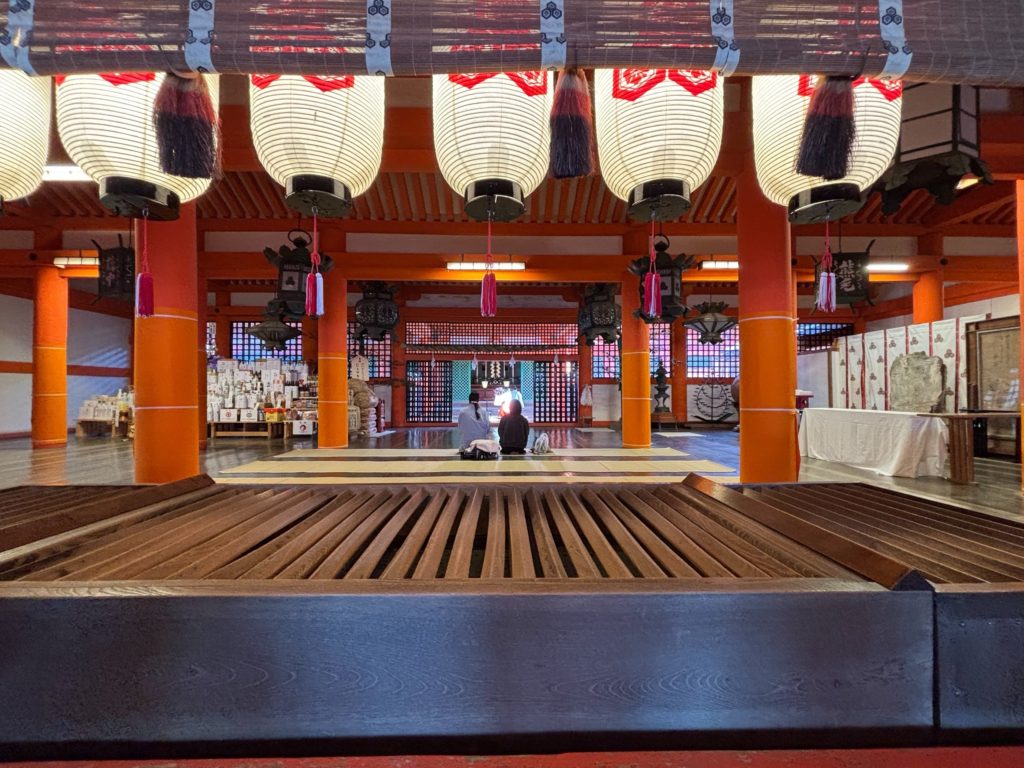
The Mythological Origin and Nature of the Munakata Three Goddesses
Birth Through the Oath of Amaterasu Omikami and Susanoo-no-Mikoto
In Japan’s ancient myths, the Munakata Three Goddesses are born from a solemn oath between the sun goddess Amaterasu Omikami and her brother Susanoo-no-Mikoto. Amaterasu took Susanoo’s sword, Totsuka-no-Tsurugi, bit it, and from the mist of her exhaled breath the three goddesses came into being.
This oath scene occurs when Susanoo ascends to the heavenly realm and Amaterasu tests his true intentions. From early times, the three goddesses have been revered as protectors of maritime routes, watching over traffic across the seas between Japan, the continent, and the ancient Korean Peninsula—an origin that underpins their enduring identity as sea deities.
The Roles and Divine Virtues of Each of the Three Goddesses
Tagorihime-no-Mikoto is the eldest, enshrined at Okitsu-miya on Okinoshima. Long honored as a guardian of the open sea, she receives prayers for ocean navigation and far-ranging voyages.
Tagitsuhime-no-Mikoto is the second daughter, enshrined at Nakatsu-miya on Oshima Island. Associated with flowing waters, she protects rivers and waterfalls and is venerated for safety on rapids and resilience against water-related disasters.
Ichikishimahime-no-Mikoto, the youngest, is enshrined at Hetsu-miya on the mainland in Munakata City. Widely revered for the arts and learning—music, poetry, and craftsmanship—she is believed to bless creativity and artistic talent.
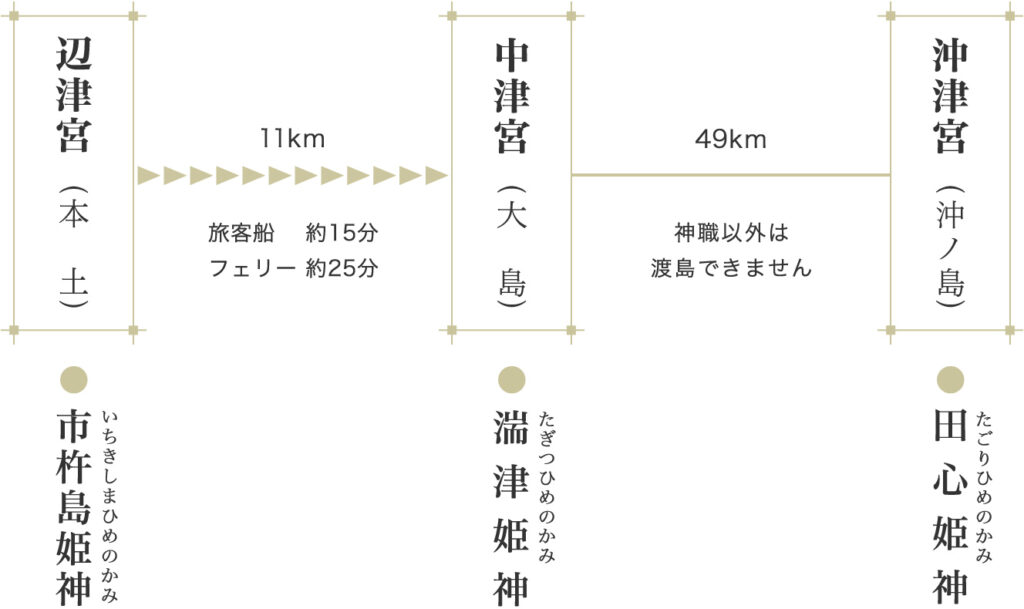
Characteristics of the Three Goddesses Worship at Itsukushima Shrine
Their Enshrinement at Miyajima and the Relationship with Munakata Taisha
The three goddesses worshipped at Itsukushima Shrine on Miyajima—Ichikishimahime-no-Mikoto, Tagorihime-no-Mikoto, and Tagitsuhime-no-Mikoto—are collectively known as the Munakata Three Goddesses. As political and economic power shifted from Kyushu to the Yamato region, their worship spread far beyond Chikuzen (northern Fukuoka) and took root on Miyajima.
The Nihon Sandai Jitsuroku (compiled in 901 AD) already mentions six shrines, including “Itsukishima Munakata Kosen-gami, Itsukushima Shrine in Hatsukaichi City,” indicating that branch shrines of Munakata Taisha had disseminated early across the archipelago.
At Itsukushima Shrine, the three goddesses are honored not only as deities of the sea and transportation but also of wealth, fortune, and the arts. This preserves the faith tradition connected to Munakata Taisha while reflecting Miyajima’s own unique development as a cultural and maritime hub.
Development of Worship During the Era of Taira no Kiyomori
Devotion to the Three Goddesses flourished in the late Heian period under Taira no Kiyomori. By subduing pirates in the Seto Inland Sea, organizing shipping, and amassing wealth through trade with Song China, Kiyomori rose swiftly in power. He prayed at Itsukushima—strategically located on the Seto Inland Sea route—for safe voyages for overseas trading ships.
Through his patronage, the goddesses’ virtues expanded. On Miyajima they came to be venerated not only for maritime safety but also for prosperity in the arts and commerce, a tradition that continues today alongside the island’s role as a gateway for travelers to Hiroshima and the Seto Inland Sea.
Syncretism with Benzaiten during the Shinto-Buddhist Syncretism Era
During the era of shinbutsu-shugo (Shinto-Buddhist syncretism), Ichikishimahime-no-Mikoto was identified with the Buddhist goddess Benzaiten. Itsukushima Shrine formed a complex with the adjacent Daiganji Temple, and Benzaiten was worshipped there until the Meiji Separation of Shinto and Buddhism, after which she came to be enshrined at Daiganji.
This fusion helped the faith spread widely. The identification of Ichikishimahime with Benzaiten emphasized blessings for the arts, skill, and wealth. Today, Daiganji Temple is counted among Japan’s “Three Great Benzaiten Shrines,” making it a meaningful stop for visitors interested in culture and spirituality on Miyajima.
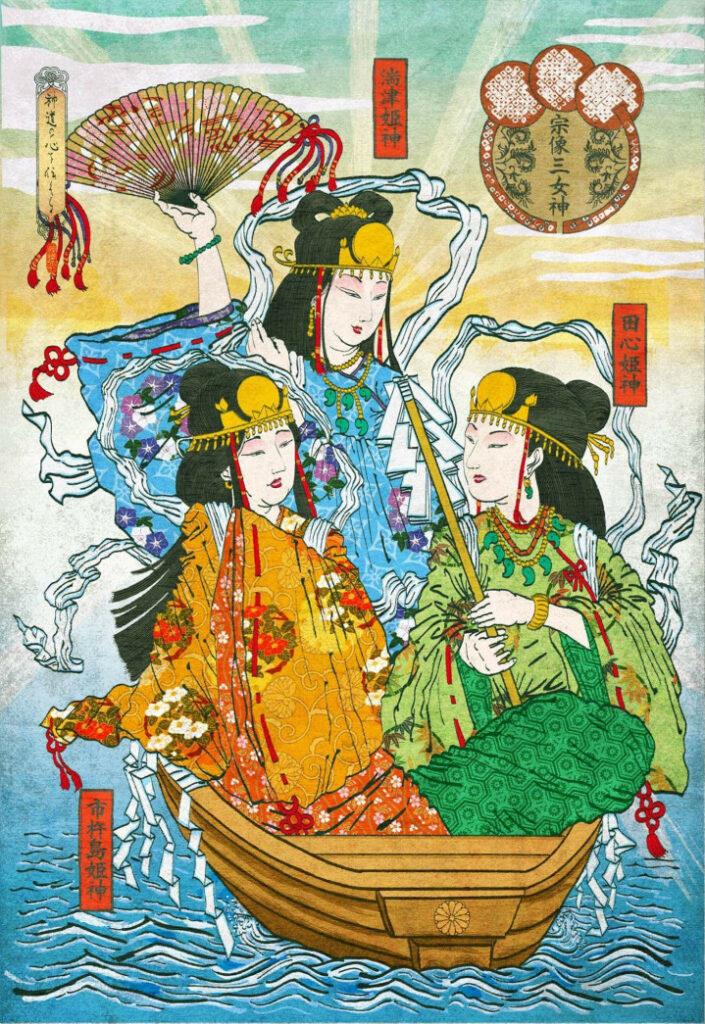
The Value of the Three Goddesses Faith Passed Down to the Present Day
At Itsukushima Shrine today, the faith in the Three Goddesses preserves the ancient tradition of sea deity worship while embracing meanings suited to the modern era. A popular understanding holds that the goddesses favored Miyajima as a place of peace and rest, blessing the Ono Strait with abundant nature—an idea that beautifully aligns with Miyajima’s welcoming atmosphere for pilgrims and international travelers alike.
The Main Hall enshrines the Three Goddesses along with thirty other deities. Measuring 8 ken (about 14.4 m) across the front, 9 ken (about 17.4 m) at the rear, and 4 ken (about 7.3 m) deep, its floor area is said to be roughly twice that of Izumo Taisha. The solemn rites performed here testify to more than 1,400 years of continuous devotion on this World Heritage island.
Frequently Asked Questions
Why are the Munakata Three Goddesses called Sea Goddesses?
In Japanese mythology, they are born as protectors of maritime safety. From ancient times they safeguarded sea routes to the continent and the Korean Peninsula, guiding sailors and ensuring the smooth flow of travel and trade.
What is the difference between the three goddesses at Itsukushima Shrine and Munakata Taisha?
Munakata Taisha enshrines the three goddesses separately across three sites (Okinoshima, Oshima, and the mainland), while Itsukushima Shrine enshrines all three together in a single main hall. On Miyajima, their roles related to the arts and craftsmanship are especially emphasized.
Why is Ichikishimahime particularly famous?
Ichikishimahime is the only one of the three identified with Benzaiten, which made her widely revered as a patron of music, the arts, and fortune. She is also frequently enshrined independently, further raising her profile.
What benefits can one gain from worshipping the Three Goddesses?
Safe voyages and safe travel are foundational, but today people also pray for creativity, mastery of arts and skills, business prosperity, and academic success—making them meaningful deities for students, artists, and travelers to Hiroshima and Miyajima.
When did the Three Goddesses come to Miyajima?
Their worship on Miyajima dates to the shrine’s founding in 593 AD under Empress Suiko, a time when political power shifted from Kyushu to the Yamato region and the Munakata faith spread along Japan’s key maritime routes.
Summary
Rooted in Japanese mythology as sea deities, the Munakata Three Goddesses—Ichikishimahime-no-Mikoto, Tagorihime-no-Mikoto, and Tagitsuhime-no-Mikoto—have been venerated at Itsukushima Shrine for more than 1,400 years. Their worship, enriched in the time of Taira no Kiyomori and deepened through syncretism with Benzaiten, extends from maritime safety to culture and prosperity. Today, as the principal deities of the UNESCO World Heritage site Itsukushima Shrine, they continue to welcome visitors from around the world, linking ancient sea-faring faith with modern Miyajima travel.
References and Sources
- Munakata Taisha Official Website: History and Origins
- Wikipedia: Munakata Sanjojin (Three Munakata Goddesses)
- Wikipedia: Itsukushima Shrine
- Wikipedia: Ichikishimahime
- World Heritage “Sacred Island of Okinoshima and Associated Sites”: Munakata Three Goddesses and Succession of Faith
- Japanese Mythology and History: What are the Munakata Three Goddesses? Their Birth, Names, Roles and Divine Blessings
- Japanese Mythology and History: Who is Ichikishimahime? One of the Munakata Three Goddesses, Deity of Itsukushima Shrine
- Miyajima Tourism Association: Daigan-ji Temple
- Wikipedia: Daigan-ji Temple (Hatsukaichi City)
- Miyajima Tourism Association: Itsukushima Benzaiten Grand Festival
- Miyajima Town History Compilation Committee, “Miyajima Town History: General History Edition,” Miyajima Town, 1992