
If you’re looking for the ultimate Miyajima street food experience, age momiji is the snack you shouldn’t miss. Sold at Kouyoudou Nibanya along the island’s famous Omotesando Shopping Street, age momiji is a crispy, golden deep-fried version of Miyajima’s iconic momiji manju — a maple leaf-shaped sweet filled with red bean paste, cream, cheese, and more. One bite of the warm, lightly battered exterior giving way to a soft, flavorful filling is enough to understand why this treat has become the defining street snack of Miyajima.
As a local mom who visited with my two daughters (ages 8 and 6), I can tell you it genuinely surprised all of us. My older daughter summed it up perfectly: “It’s like momiji manju turned into tempura!” She was right — and they both loved it. I’ve put together everything you need to know before you go, including the best flavors to try, how to avoid the crowds, what to do about the deer, and family-friendly tips you won’t find on most travel sites.
What Is Age Momiji? Miyajima’s Most Famous Street Food
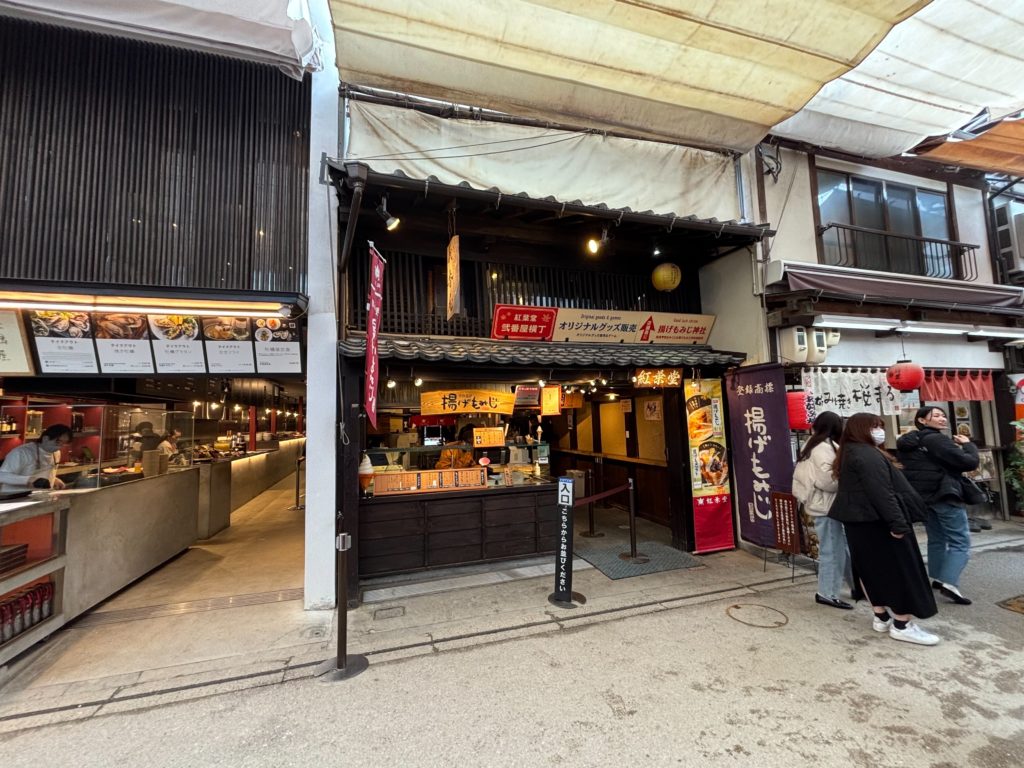
Momiji manju — the soft, maple leaf-shaped cakes filled with sweet bean paste or cream — have been Miyajima’s signature souvenir for over a century. Age momiji takes that beloved confection one step further: the manju is skewered on a bamboo stick, battered, and deep-fried to order, resulting in a warm, crisp exterior that wraps around the sweet filling inside.
The result is something that tastes almost nothing like the original. The batter adds a gentle crunch and a faint savory note reminiscent of light tempura, and the filling — particularly the cream-based varieties — melts slightly from the heat, creating a texture closer to a warm filled doughnut than anything you’d expect from a traditional Japanese sweet. My husband tasted it and said, “This is genuinely a new kind of dessert.” He was not wrong.
Age momiji is a registered trademark of Kouyoudou, one of Miyajima’s most established confectionery companies, and sales began on January 1, 2002. Today it’s considered the symbol of eating while strolling (tabearuki) on Miyajima, and the shop has been recognized on Tabelog’s prestigious “Japanese Sweets & Desserts WEST Top 100” list for 2023. The fact that the crispy-fresh experience can only be had on the island — it doesn’t travel well — is part of what makes it worth the trip.
As a local tip: age momiji is at its absolute crispiest right when the shop opens. If you visit first thing in the morning, you’ll catch the best texture of the entire day.
Kouyoudou Nibanya sits in the central stretch of the Omotesando Shopping Street, making it a natural stop before or after visiting Itsukushima Shrine. If you haven’t planned your shrine visit yet, our guide to Itsukushima Shrine covers everything you need to know.
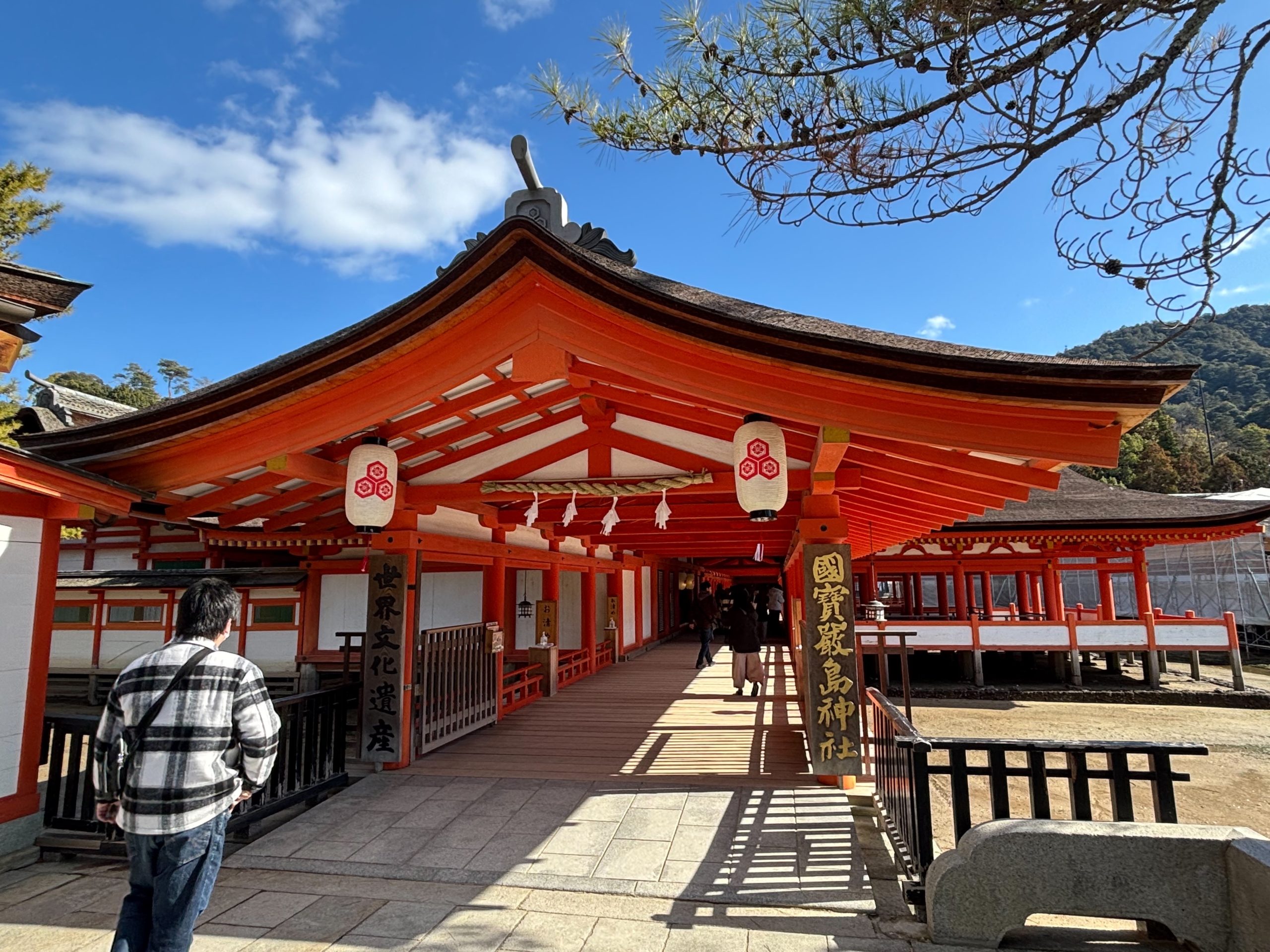
Itsukushima Shrine sits at the edge of the sea on Miyajima Island, jus...
Trying the Seto Inland Sea Lemon Flavor
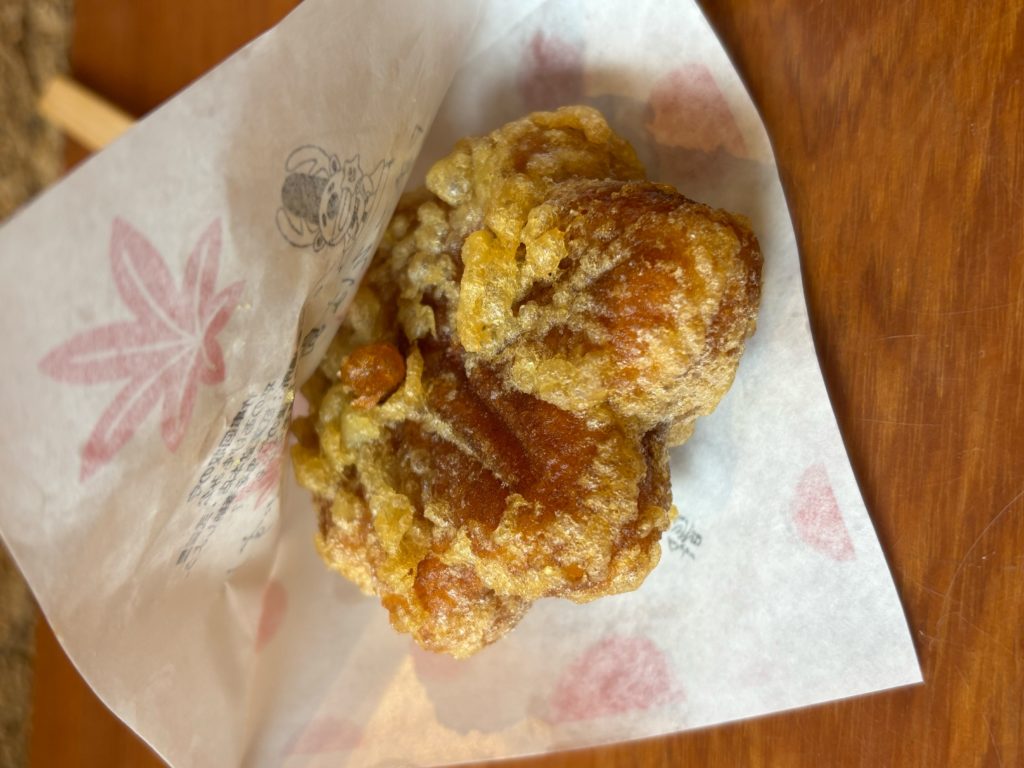
Of all the flavors on the menu, the Seto Inland Sea Lemon (200 yen) is the one I keep recommending to first-time visitors. Served hot on a bamboo skewer, it looks golden and smells wonderful the moment you pick it up. The skewer design isn’t just for presentation — it makes the snack genuinely easy to eat while walking, which matters on a busy island path.
The lemon filling has a bright, citrusy tang that cuts through the richness of the fried batter beautifully. It’s sweet, but not heavy. The warm temperature amplifies the lemon fragrance in a way that makes it feel almost refreshing, which is quite a feat for a deep-fried treat. My older daughter declared it “fresh and delicious,” while my younger one was fully absorbed by the crunch: “The outside is all crackly and weird — I love it.”
If you’ve ever thought “it’s just fried manju, how different can it be?” — I promise the answer will surprise you. The moment the filling starts releasing warmth from the inside, you realize you’re eating something genuinely new. It’s not a momiji manju that was fried. It’s a new category of snack that happens to share the same shape.
One important thing to know about eating on Miyajima: the island’s deer are bold and curious, and they will approach anyone carrying food or anything that looks like food packaging. Keep your snacks close and your bags zipped. If you’re traveling with children, a small pinwheel from a 100-yen shop (daiso) works surprisingly well — the deer tend to hesitate when they see the spinning motion. I tried it with my younger daughter and it genuinely worked.
One more note for those who remember feeding the deer in the past: deer crackers (shika senbei) have been discontinued since 2019 as a measure to protect the deer’s health. Please don’t attempt to feed them.
The Omotesando Shopping Street where Nibanya is located is the heart of Miyajima’s eating-while-walking culture. If you’re planning to grab soft-serve ice cream after your age momiji, the street tends to thin out after 5:00 PM, making late afternoon a pleasant time to continue snacking. For a full introduction to the street itself, our guide to Omotesando Shopping Street is a helpful read.
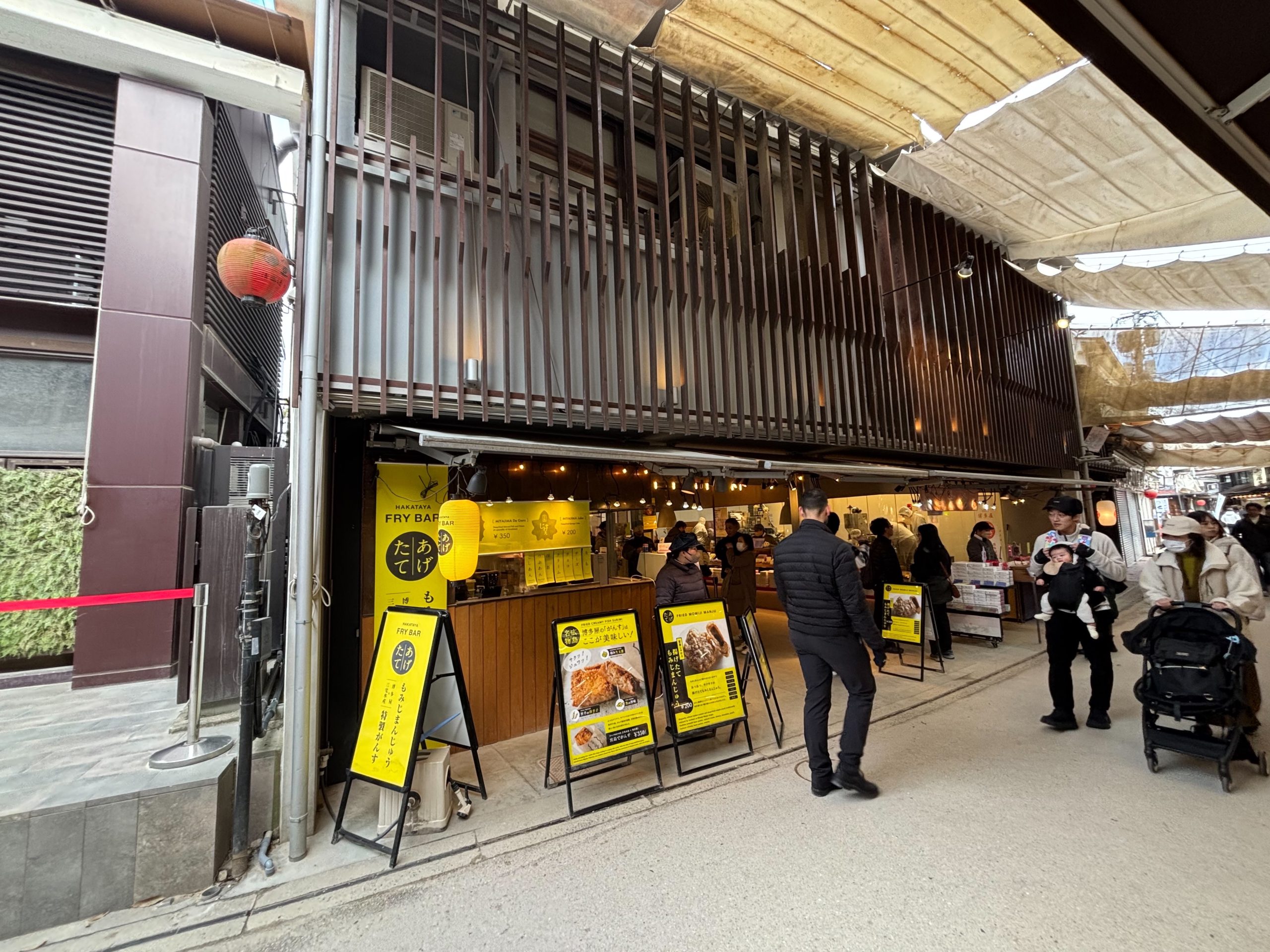
Miyajima's main shopping street — known locally as Omotesando — is a l...
Note: Information is subject to change. Please check the shop’s official channels for the latest details before your visit.
The Story Behind Age Momiji
Kouyoudou’s age momiji is not just a clever take on a classic snack — it’s a carefully developed product that’s been refined over more than two decades. The batter is designed to stay light rather than greasy, and the result is what regulars describe as “crispy without being heavy.” The balance between the fragrant fried exterior and the delicate sweetness of the filling took time to perfect, and it shows.
The Seto Inland Sea Lemon variety in particular plays off one of the region’s most celebrated local ingredients — citrus from the islands of the Seto Inland Sea, which is famous throughout Japan for its quality. The bright acidity gives the snack a regional identity that connects it to the broader landscape of the Hiroshima area.
Launched on the first day of 2002, age momiji has since become so central to the Miyajima experience that it’s effectively impossible to imagine the island’s food culture without it. The fact that it’s a registered trademark — meaning you can only get the authentic version at Kouyoudou locations — adds to the sense that trying it is a genuinely place-specific experience. You cannot replicate it at home, and you cannot buy it anywhere else.
Flavors and Prices
The menu currently includes eight flavors, ranging from classic to creative: red bean (anko), cream, cheese, rare cheese, Seto Inland Sea Lemon, and a few additional seasonal or specialty options. Each skewer is stamped at the base to identify the flavor, which makes ordering multiple sticks and sharing them easy — no confusion at the table.
Prices range from 200 to 250 yen per skewer (roughly $1.50–$2.00 USD), which makes them genuinely affordable as a snack. Because each piece is fried quickly to order, wait times are short even during busy periods — typically two to three minutes. You’re rarely standing in line long enough for it to disrupt your sightseeing rhythm.
Nibanya also offers an exclusive item called the Age Momiji Soft — a combination of a freshly fried age momiji served alongside soft-serve ice cream. The contrast between the hot, crispy exterior and the cold, creamy softness creates an unexpectedly satisfying combination. The lemon variety works especially well here, as its acidity sharpens against the sweetness of the ice cream. The cheese flavor adds a pleasant salty note. It’s a slightly indulgent choice, but one that tends to produce happy reactions.
When visiting as a family, the easy approach is to order one of each flavor you’re curious about and share. My daughters picked lemon and cream, I chose cheese, and we traded bites around a table — a completely natural way to experience the full range without ordering the entire menu.
Getting There: Access and Location
Kouyoudou Nibanya is located in the central section of the Omotesando Shopping Street, approximately an eight-minute walk from the Miyajima ferry pier. It’s also about eight minutes on foot from Itsukushima Shrine, and roughly two minutes from the “Omotenashi Toilet” facilities on the shopping street — a useful landmark if you’re navigating for the first time.
The shop is easy to spot even on a first visit. Look for the red age momiji banner flags out front, and the official character mascot “Taira no Agemomi-kou” displayed near the entrance. If you’re ever in doubt about which direction to head, the red banners are visible from a good distance along the street.
To reach Miyajima from the mainland, take the regular ferry from Miyajimaguchi (宮島口) on the Hiroshima side. The crossing takes about ten minutes and runs frequently throughout the day. Once on the island, all main attractions including Nibanya are accessible on foot.
Hours are generally 9:30 AM to 5:30 PM, though this varies by season (closing around 5:00 PM during quieter periods). During peak seasons — Golden Week, summer fireworks, and autumn foliage weekends — popular flavors can sell out before closing time, so an earlier visit is advisable.
For families with nursing infants: there is a dedicated nursing room on the second floor of the Miyajima Tourist Information Center, located along the Omotesando. For Wi-Fi, the “Visit Hiroshima Tourist Hotspot” network is the fastest connection on the shopping street if you want to upload photos while you’re there.
Inside the Shop: Seating and the Age Momiji Shrine
Unlike many street food stalls where you’re expected to eat entirely on the move, Nibanya operates in a relaxed food court format with approximately 50 seats — around 25 indoors and 25 on an outdoor terrace. Self-service hot tea and cold water are available at no charge, making it a natural rest stop if your feet need a break mid-stroll.
The most unexpected feature inside the shop is the Age Momiji Shrine — a small dedicated shrine at the back of the dining area where guests return their finished bamboo skewers as an offering. The shrine is dedicated to the idea that returning your skewer will bring good fortune and lift your spirits (a play on the Japanese word ageru, which means both “to fry” and “to elevate”). It’s a lighthearted piece of shop theater that doubles as a memorable photo opportunity and a tidy solution to skewer disposal.
My daughters were puzzled at first — “We’re giving our sticks to a shrine?” — but once they tried it, they were delighted. There’s something unexpectedly fun about closing out a snack with a small ritual. Whether the fortune-lifting effect is real or not, the walk back to the ferry did feel lighter than usual.
Crowd Tips and the Best Time to Visit
Miyajima draws significant crowds during major holidays and special events: New Year’s, Golden Week, the summer fireworks festival, and autumn foliage weekends are all noticeably busy. During these periods, Nibanya can develop a queue and may limit which flavors are available.
The good news is that the preparation is fast — orders are typically filled within two to three minutes — so even when there’s a line, it moves quickly. Still, if you’d prefer a more relaxed experience, the best strategy is to arrive either right at opening or during the mid-afternoon lull between roughly 2:00 PM and 4:00 PM on weekdays, which locals consider the quietest window of the day.
A practical tip for efficient ordering: check the flavor stamps on the skewer bases before you commit, decide your full order upfront, buy all skewers at once, and then settle into a seat to taste them side by side. Starting with lemon and finishing with cheese — letting the salt cut through the sweetness — is a sequence I’d recommend.
Eating outdoors on the benches is lovely, but keep your bags closed and your food away from the edge of the table. The deer on Miyajima are accustomed to tourists and will investigate anything that smells interesting. A small pinwheel is a surprisingly effective deterrent if you have children with you.
Allergy and Calorie Information
Age momiji contains three of Japan’s eight designated major allergens: eggs, wheat, and dairy. Anyone with allergies to these ingredients should take note before ordering.
For reference, approximate calorie counts per skewer are as follows: red bean (anko) around 96 kcal, cream around 92 kcal, cheese around 101 kcal, Seto Inland Sea Lemon around 92 kcal, and rare cheese around 101 kcal. These are modest portions that fit easily into a day of active sightseeing without feeling indulgent.
Always confirm allergen information at the counter on the day of your visit, as formulations can change. If you’re traveling with children who have known food allergies, check with staff before purchasing.
Other Kouyoudou Locations on Miyajima
If Nibanya is crowded when you arrive, Kouyoudou operates several other locations on the island, including the Honten (main store), a seafront store along Kaigandori, and a branch inside the Etto tourist facility. Each location has its own atmosphere and seating situation, so it’s worth checking whichever is most convenient for where you are in your sightseeing loop.
Nibanya’s combination of indoor seating, self-serve drinks, and the age momiji shrine experience makes it the most complete visit, but the other branches can be practical alternatives when the main queue is long.
For a fun comparison while you’re on the island: the Yamadaya shop on Omotesando offers freshly baked (not fried) momiji manju on their second floor. Trying one of each — oven-baked versus deep-fried — is a surprisingly illuminating way to understand just how different the two experiences are. The baked version is soft and delicate; the fried version is crispy and warm. Both are excellent, and the contrast between them is part of what makes Miyajima’s sweets scene so interesting.
If you’re planning a full day on the island with children, the Miyajima Aquarium (Miyajimarin) nearby is a popular complement to the sightseeing and eating circuit. Our guide to Miyajimarin has everything families need to plan that visit.

Miyajima Aquarium — officially known as Miyajima Marine, or Miyaji Mar...
And if you’d like to understand the deeper cultural and historical context of Miyajima as a UNESCO World Heritage Site — which gives everything here, including the age momiji, its remarkable sense of place — our guide to the World Heritage Site background is worth reading before or after your visit.
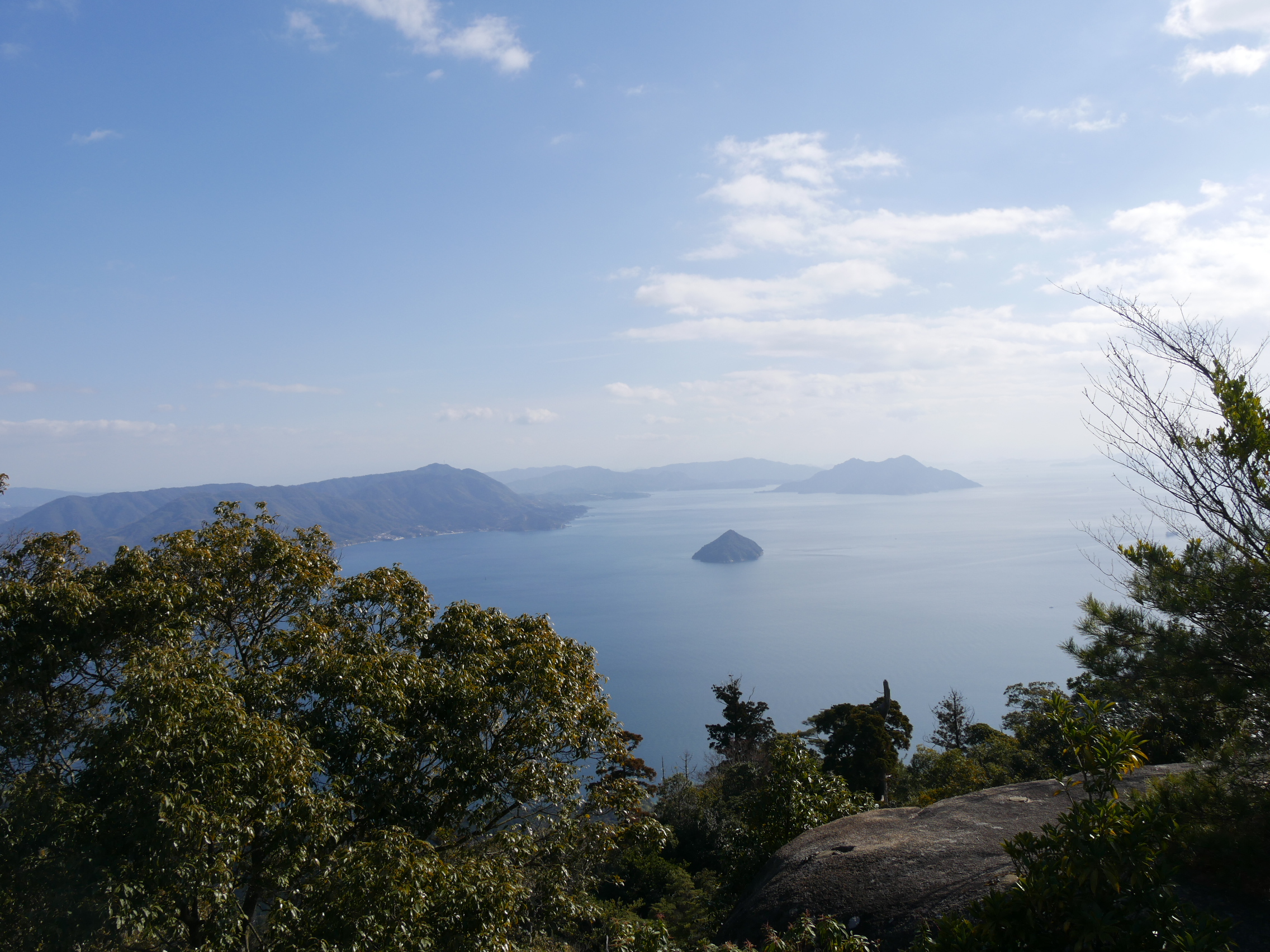
Rising dramatically from the sea off the coast of Hiroshima, Itsukushi...
FAQ
How long is the wait at Kouyoudou Nibanya?
During busy periods, there is often a queue, but because each skewer is fried quickly, the line moves fast — most visitors receive their order within a few minutes of reaching the counter. If you want to avoid any wait at all, arriving right at opening time (around 9:30 AM) is the best strategy, and the snack will be at its crispiest then too.
Which flavor should I try first?
For first-timers, the Seto Inland Sea Lemon or the classic red bean (anko) are the best starting points. The lemon’s citrusy brightness makes the fried exterior really stand out, while the anko version gives you the most traditional pairing. If you’re adventurous, the cheese flavor offers a savory twist that surprises most people in a very pleasant way.
Is age momiji suitable for children?
Absolutely. The snacks are small, easy to hold on a skewer, and the flavors are all mild and sweet. The food court format means there are seats and self-serve drinks available, which makes the stop comfortable for families. Just be mindful of the deer when eating outdoors — a small pinwheel from a 100-yen shop is a practical and surprisingly effective deterrent.
What payment methods are accepted?
It’s advisable to have cash available, as small food stalls in Japan — including those on Miyajima — don’t always accept cards or IC payment. Payment options can change, so check the posted information at the counter when you arrive.
Can I take age momiji home as a souvenir?
Not really — at least not in the way that makes it worth it. The crispy texture that defines the experience is at its best immediately after frying. Within an hour, the batter softens and the magic largely disappears. Part of what makes age momiji special is that it’s genuinely a “you had to be there” food, and that’s actually one of the best reasons to visit Miyajima in person.
Is there an English menu or English-speaking staff?
The shop is located in one of Miyajima’s busiest tourist areas and is well accustomed to international visitors. The flavor stamps on each skewer make it easy to identify what you’re ordering even without a common language. Pointing at the display or a photo is a perfectly workable approach, and staff are generally helpful and patient with visitors.
Are there seasonal or limited-time flavors?
During peak travel seasons and special events, some flavors may be offered in limited quantities or sell out early. The best way to know what’s available on the day you visit is to check the menu board when you arrive. Coming earlier in the day gives you the widest selection.