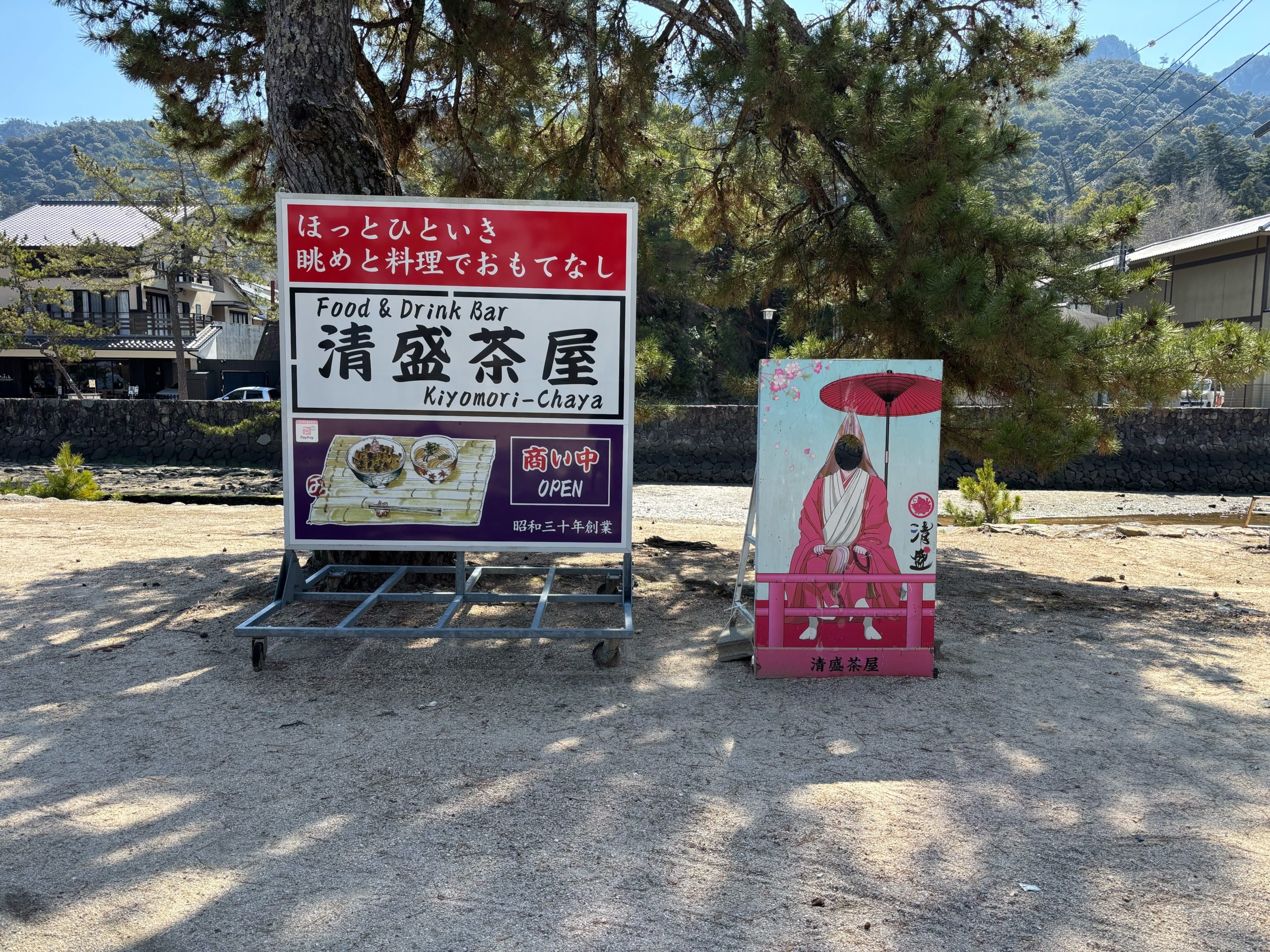
If you’re looking for the best anago rice in Miyajima, Kiyomori Chaya is a hidden gem worth the short walk past Itsukushima Shrine. This family-run restaurant has been serving conger eel rice and handcrafted udon since 1955, tucked into a pine grove along the seashore near Kiyomori Shrine — far from the crowds of the main shopping street. The combination of a secret-recipe eel sauce, deeply flavored Seto Inland Sea broth, and a peaceful ocean view makes it one of the most memorable meals you can have on the island.
I visited for the first time last month with my two daughters (ages 8 and 6), and the experience won us over immediately. The kids rushed to the terrace the moment they spotted the ocean, and eating lunch with a sea breeze and a view of the water felt like a genuinely special moment — not just a meal stop between sightseeing. As a local mom who grew up in Hiroshima, I’m already planning to come back. That said, restaurant details can change, so always check the official information before your visit.
A Peaceful Oceanside Setting Away from the Crowds
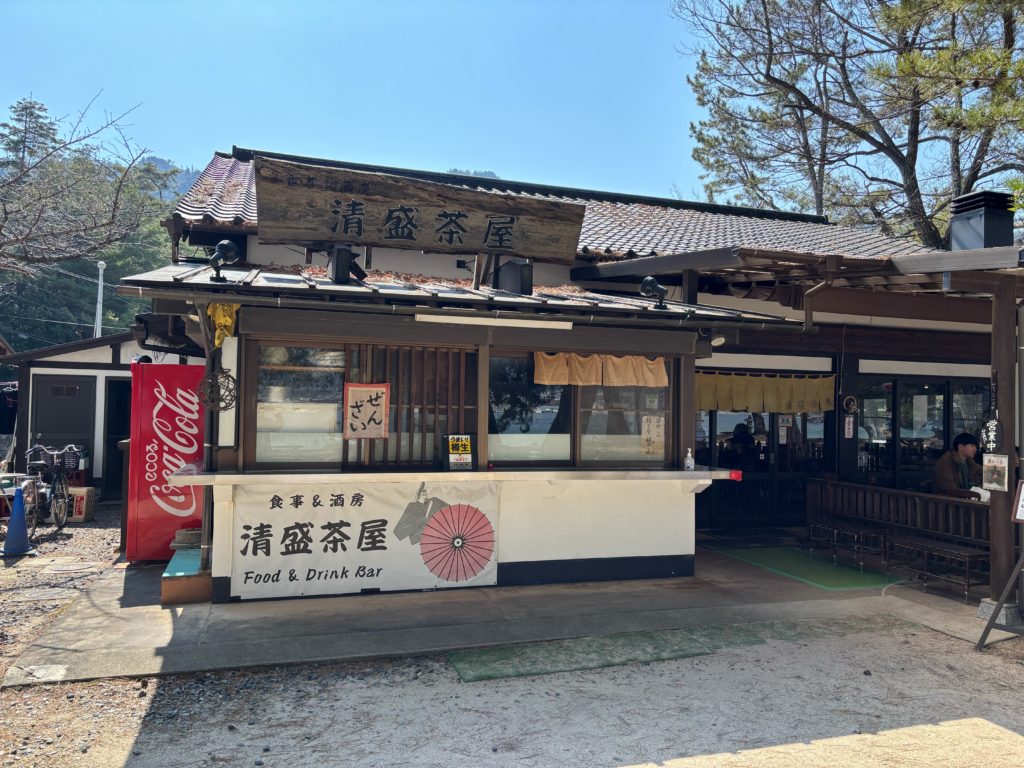
Kiyomori Chaya has stood in its pine-shaded spot on the Miyajima waterfront since 1955 — three generations of the same family have run it through the decades. It sits just past Itsukushima Shrine, slightly off the well-worn tourist path, where the sound of waves replaces the bustle of souvenir shops. If you need a quiet place to exhale after a morning of sightseeing, this is exactly that kind of restaurant.
The open terrace faces the sea, so you can feel the ocean breeze while you eat. Inside, the space is warm and unhurried — wood-toned furnishings, soft natural light, and a wood-burning stove that becomes the cozy heart of the room in winter. Sitting here with a view toward the Great Torii gate feels like more than just lunch; it becomes part of the Miyajima experience itself.
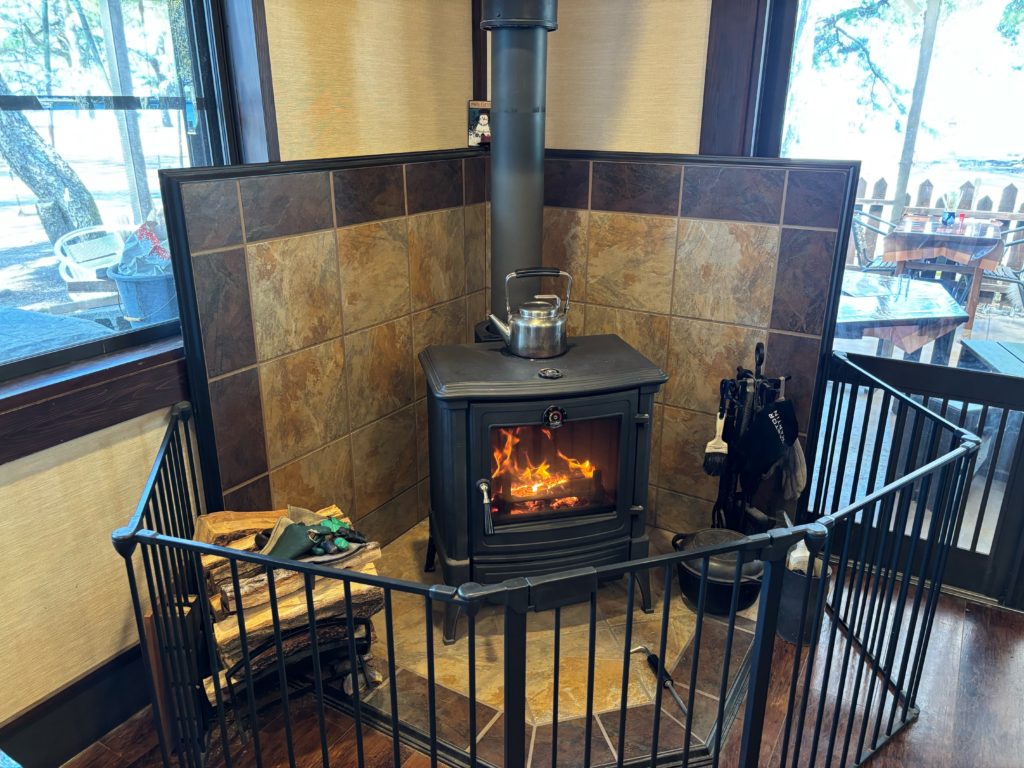
My older daughter was fascinated watching the stove flames flicker, and my younger one settled right in and relaxed — always a good sign with kids. The restaurant welcomes families with young children at all ages, including infants, and baby chairs are available. Payment is by electronic money (e-money); credit cards are not accepted, so come prepared with a compatible payment method or cash. Diaper-changing facilities are available at public restrooms throughout Miyajima, and there is a nursing room on the second floor of the Miyajima Tourist Information Center on Omotesando shopping street if you need it.
If you’re heading here after your Itsukushima Shrine visit, the coastal walk from the shrine to the restaurant is itself a lovely part of the trip.
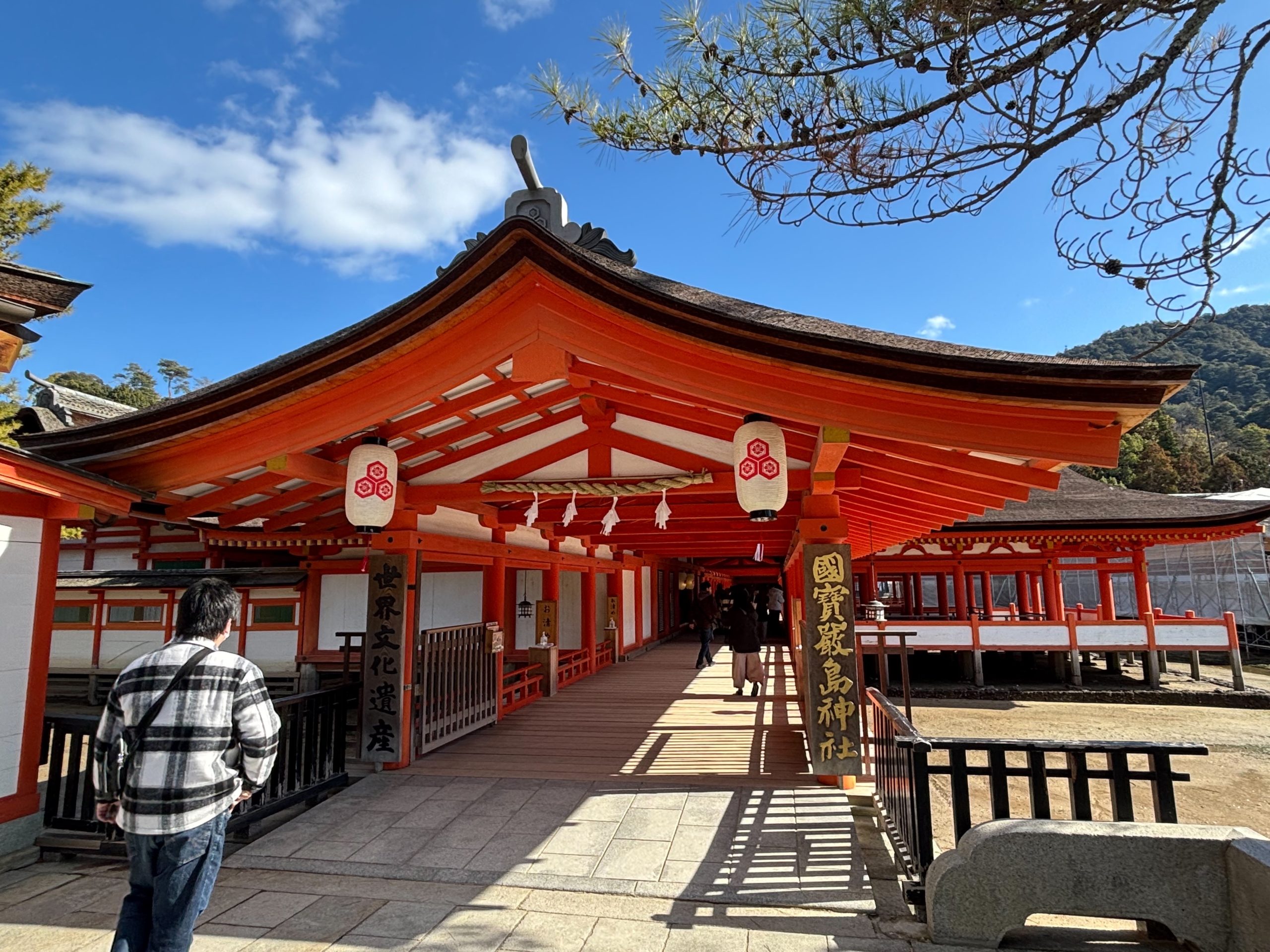
Itsukushima Shrine sits at the edge of the sea on Miyajima Island, jus...
The restaurant is open from 10:30 to 17:00. To avoid peak crowds, aim for right at opening or in the early afternoon. Local knowledge suggests weekdays between 2:00 PM and 4:00 PM are the quietest windows. After 5:00 PM, visits may be arranged by prior reservation for both meals and drinks — contact the restaurant directly to confirm availability. The terrace is pet-friendly, with shade and large fans that keep it comfortable even in summer. Large groups and solo travelers alike will find something here for their pace.
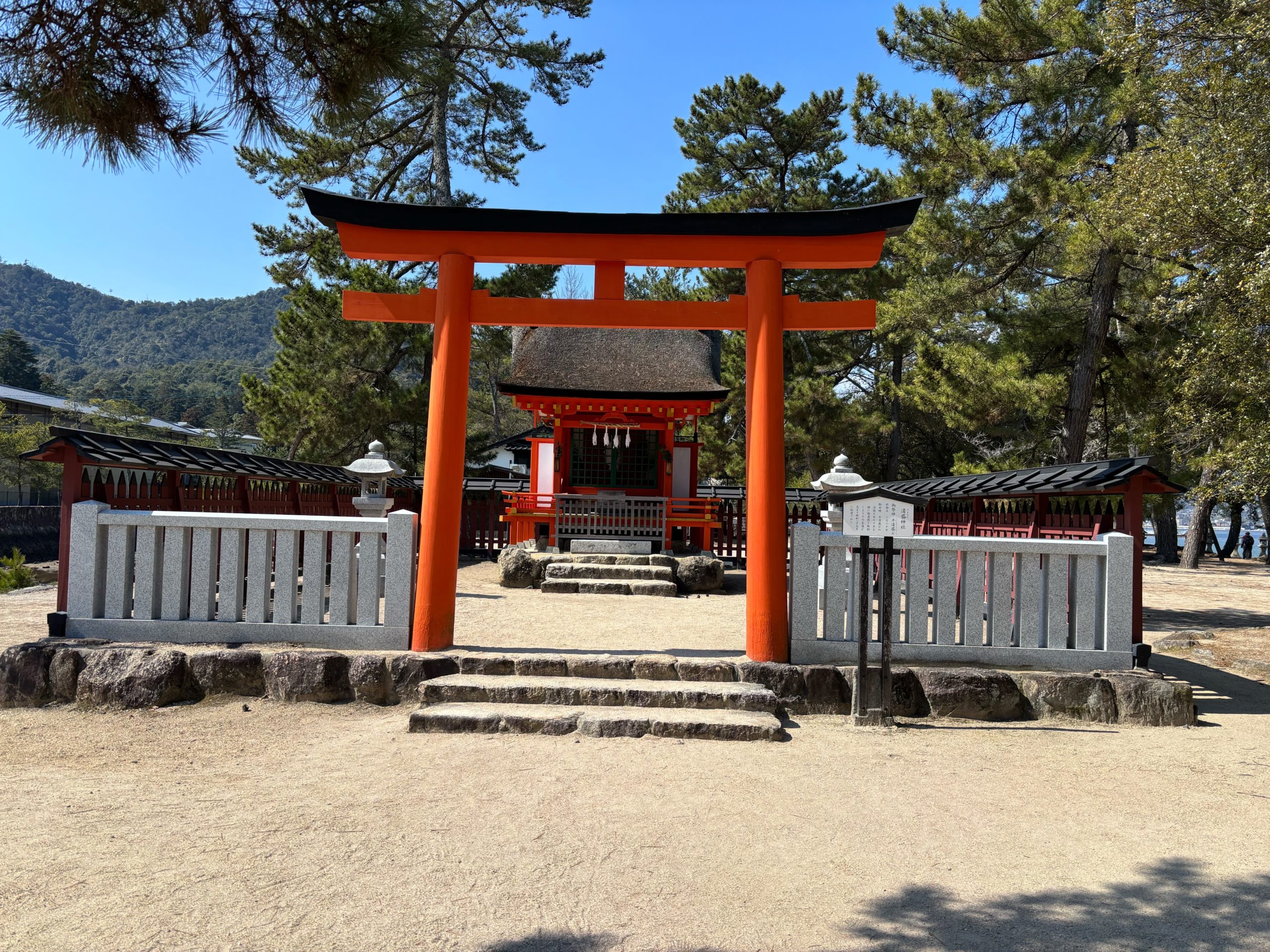
To get here from the Miyajima ferry pier, follow the path toward Itsukushima Shrine, continue past the shrine, and keep going along the coast until you pass Kiyomori Shrine. The restaurant is tucked just beyond it. The address is Miyajima-cho, Hatsukaichi City, Hiroshima Prefecture (官有無番地). It falls naturally along the route to Miyajima Aquarium, making it easy to work into your sightseeing day.
The walk to Kiyomori Chaya goes right past Miyajima Aquarium, where stroller rentals are available free of charge — a useful detail if you’re traveling with small children.
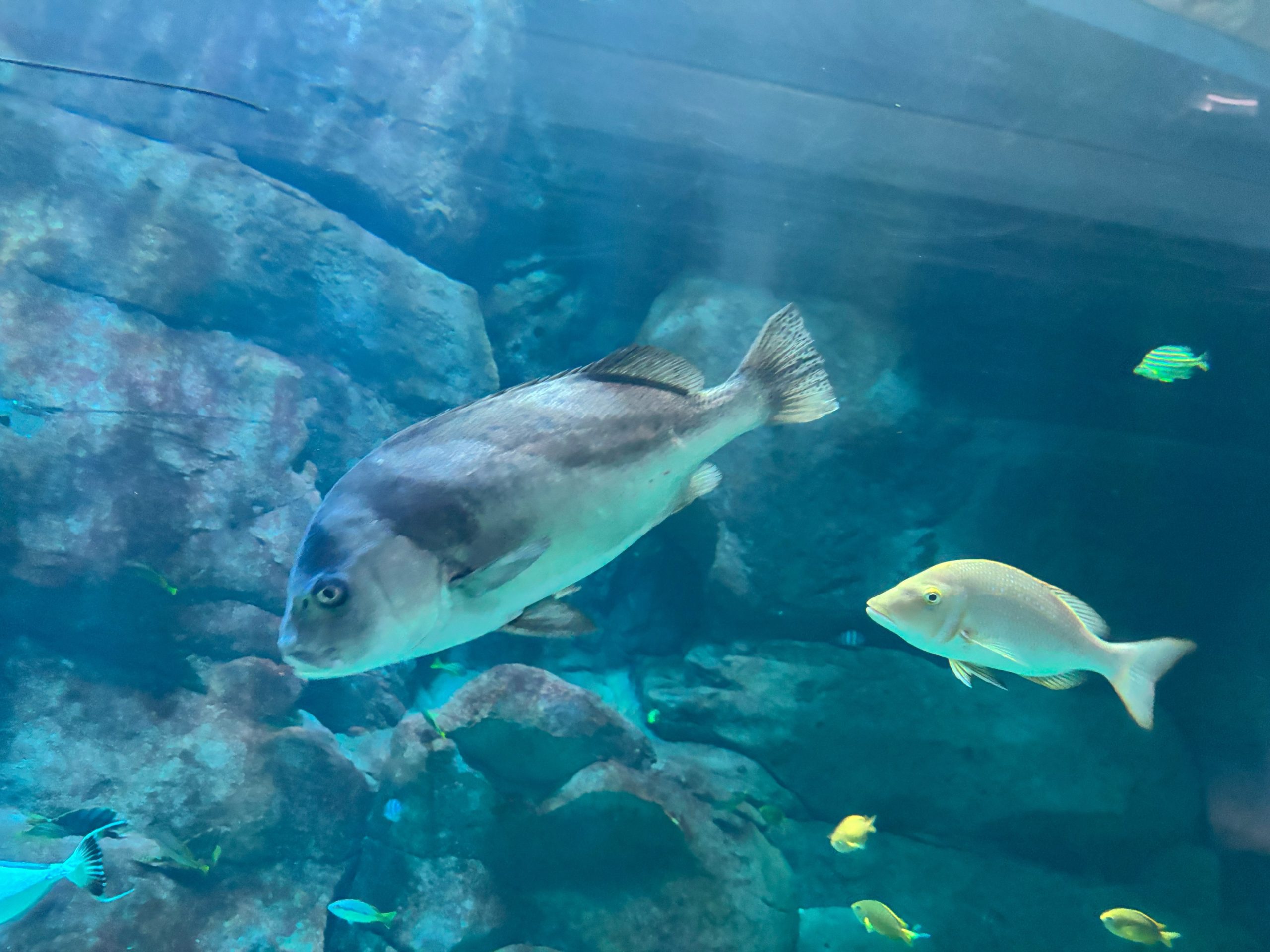
Miyajima Aquarium — officially known as Miyajima Marine, or Miyaji Mar...
Phone: 0829-44-0757. For those who prefer to confirm hours or make reservations before visiting, calling ahead is the most reliable option.
What to Order: Anago Rice, Udon, and the Kiyomori Set
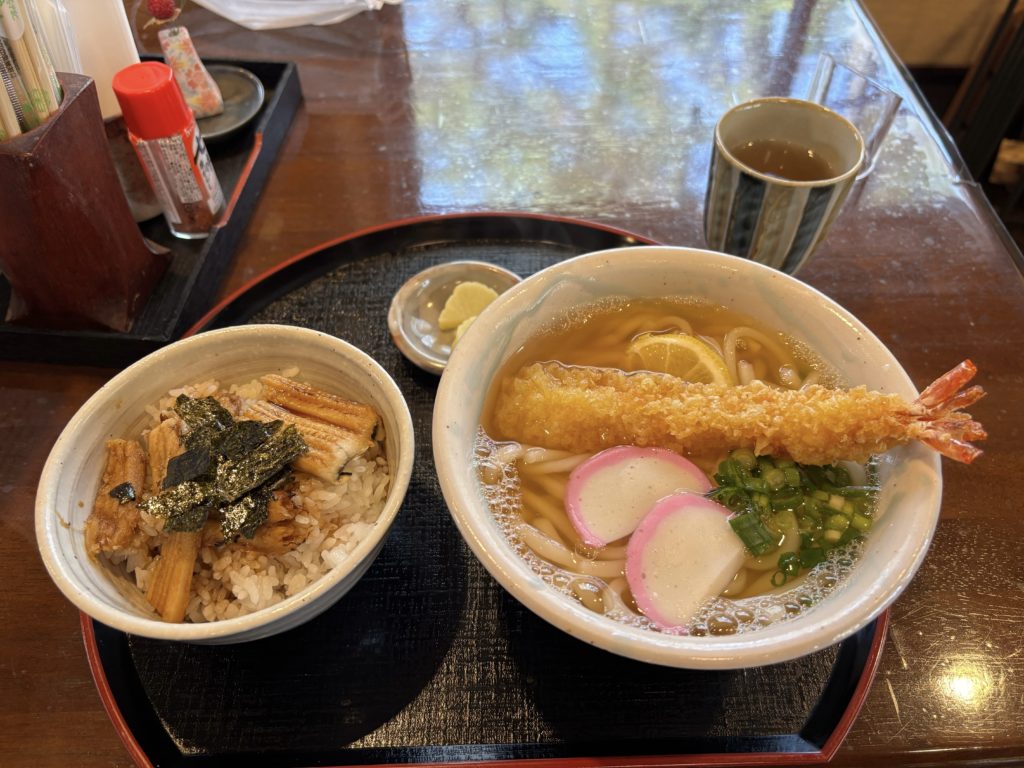
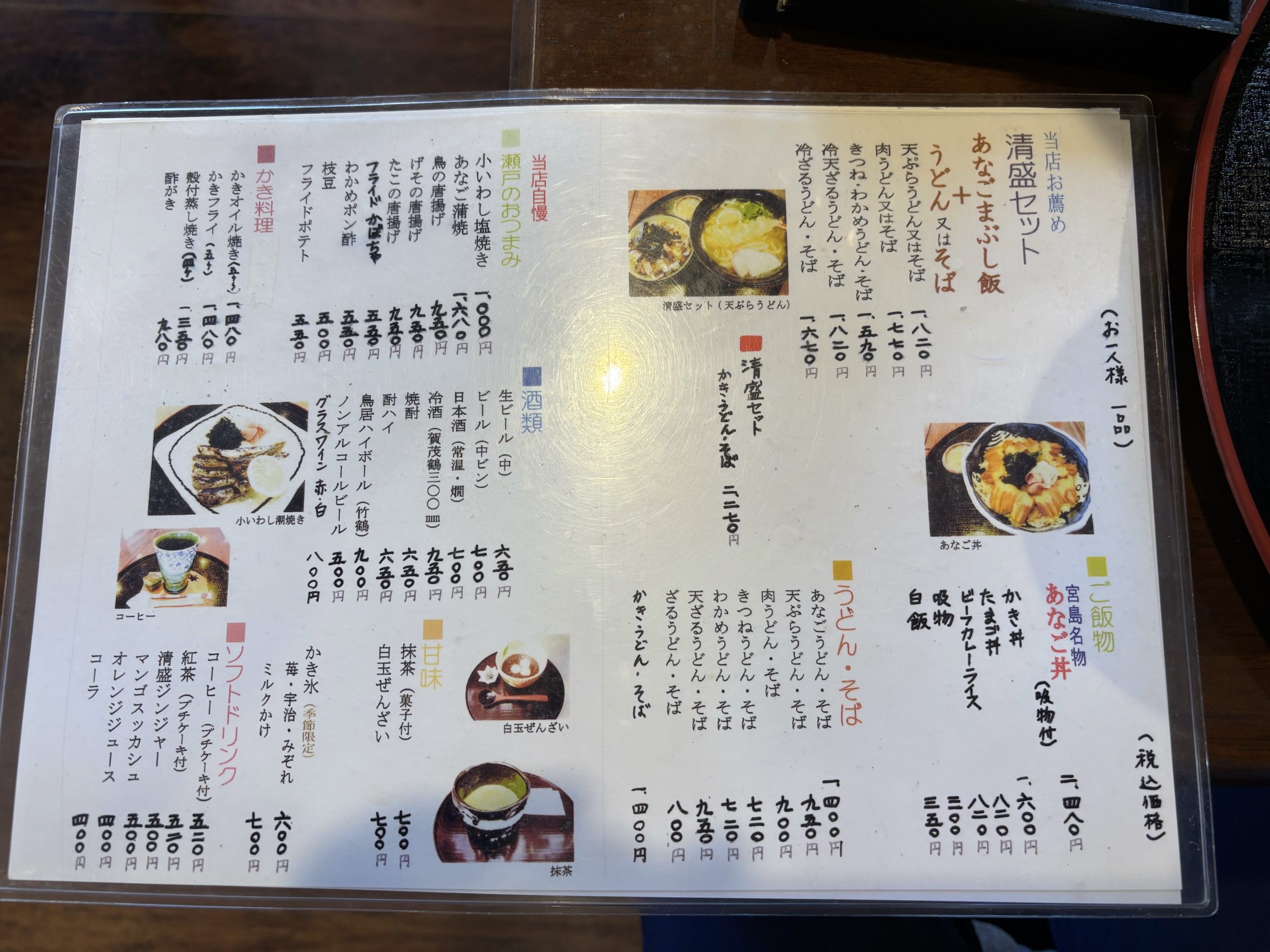
The menu is more substantial than it might look from the outside. The two stars are the anago donburi (conger eel rice bowl) made with the restaurant’s secret house sauce, and the udon and soba noodles built on a broth made from Seto Inland Sea dried sardines — a coastal ingredient that gives the soup a clean, deep umami flavor unlike anything mass-produced.
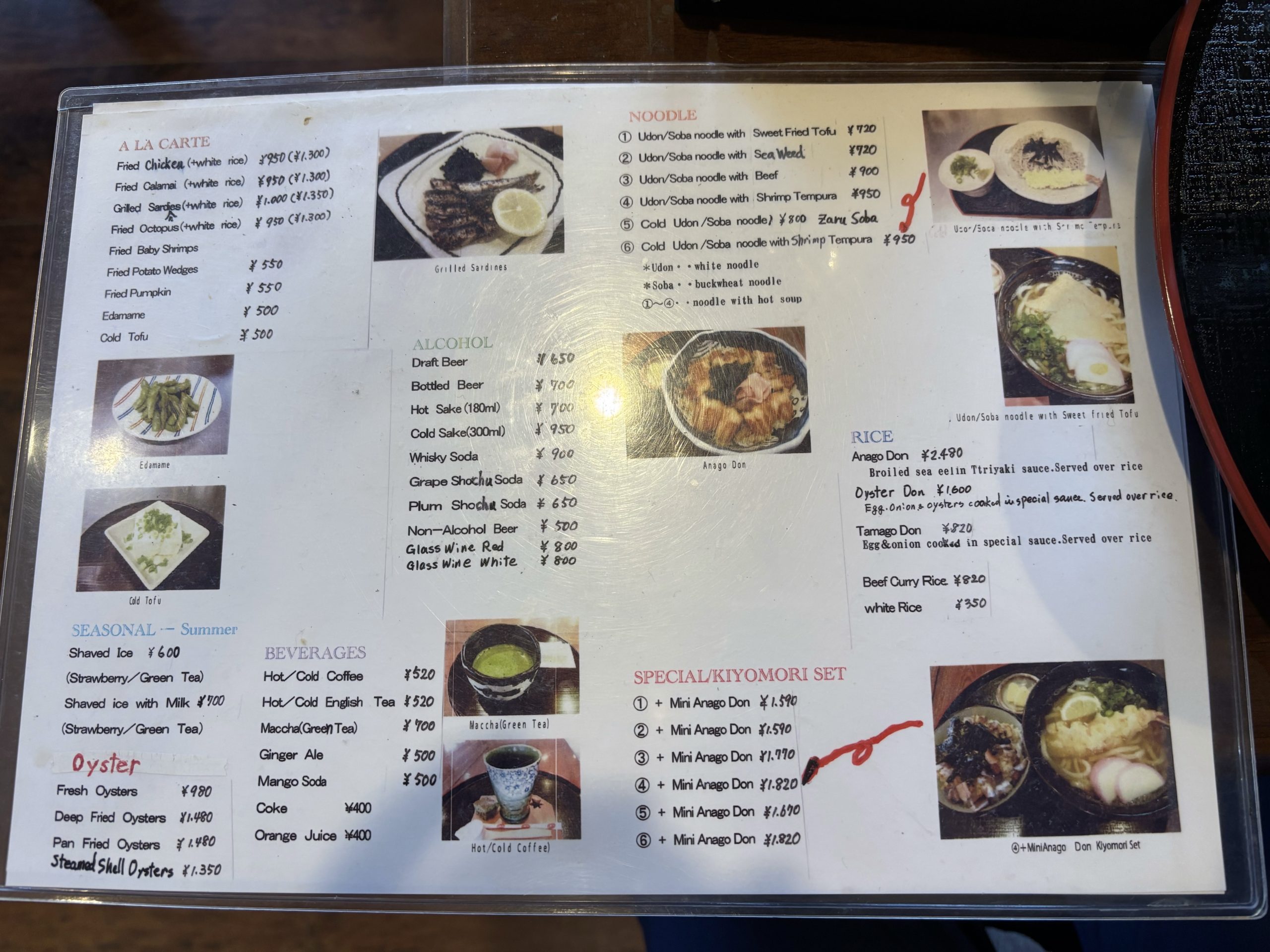
The best way to enjoy both at once is the Kiyomori Set, which pairs a half-portion anago rice bowl with your choice of udon or soba. Noodle options include tempura udon, meat udon, wakame seaweed udon, kitsune (sweet fried tofu) udon, oyster udon, and cold zaru noodles — plenty of variety depending on the season and your appetite. I ordered the anago rice with tempura udon for 1,820 yen, and it was genuinely filling — my daughters and I shared it comfortably.
The broth was unlike any udon I’ve had before: clear, deeply flavored, not salty, with a complexity that lingers. The shrimp tempura was large, perfectly crisp, and fresh — my older daughter immediately claimed it as her favorite part. The anago eel itself was tender and soft, dressed in a light, understated sauce that doesn’t overpower the delicate flavor of the fish. The rice was cooked just right, and everything came together beautifully. My younger daughter finished her share and declared it delicious, which is high praise.
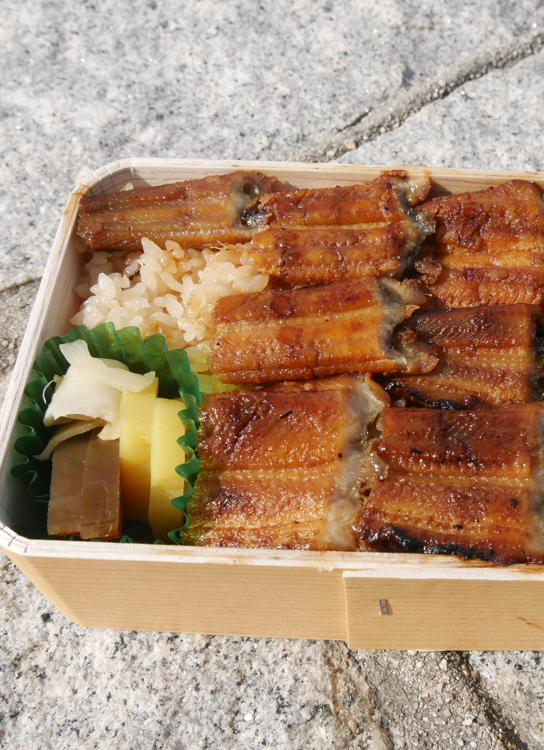
Beyond the set, the menu also features small sardine salt-grilled (ko-iwashi no shioyaki) — a local specialty you won’t easily find elsewhere in the same style — as well as anago kabayaki (glazed eel), beef curry rice, and Japanese sweets. In winter, the menu expands to include oyster dishes: vinegared oysters, fried oyster, and shell-steamed oysters. The oyster udon is also available in season and has a strong local following. I had my eye on it this visit but decided to save it for a winter return trip, when oysters are at their peak.
Dishes can also be ordered individually for smaller appetites, so there’s no pressure to order a full set. For families sharing food, though, the set offers excellent value.
A note for locals: while Ueno is the most widely known anago rice destination on Miyajima, Fujitaya has a loyal following among Hiroshima residents, and Kiyomori Chaya holds its own with a distinctly different preparation worth trying on its merits — not as a substitute, but as its own experience.
For a broader overview of anago rice options across the island, our guide to Miyajima conger eel rice covers the history and the key restaurants worth knowing.
Miyajima Island is famous for its floating torii gate and ancient shri...
Inside the Restaurant
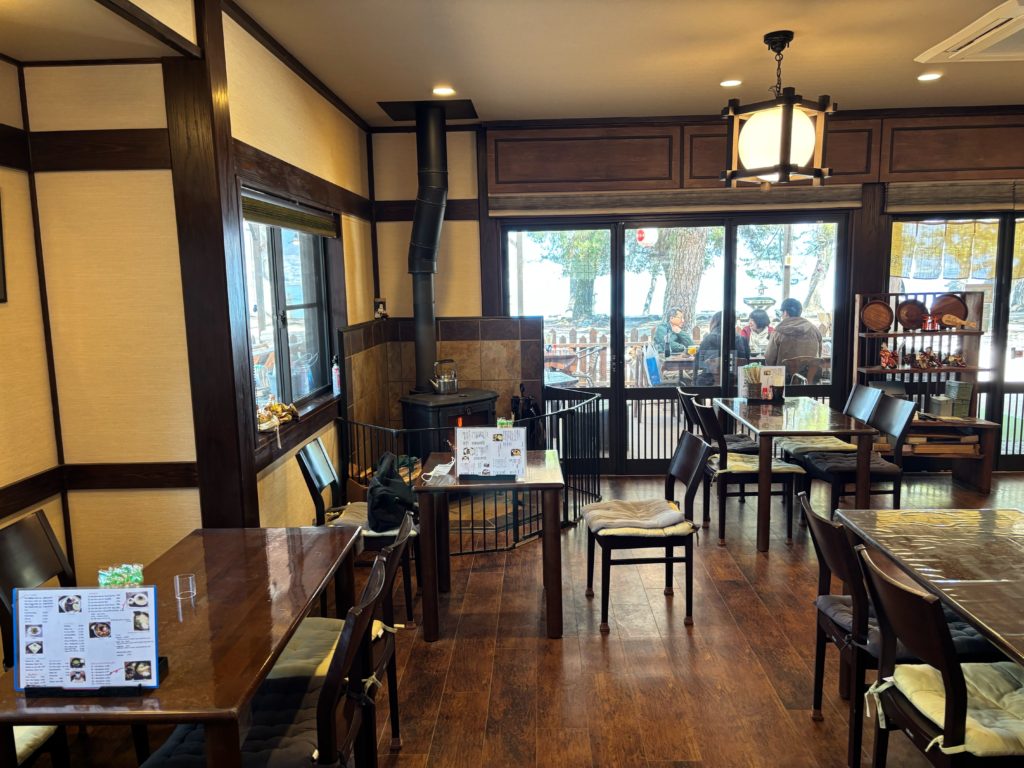
The interior is built around natural wood tones, with simple, comfortable seating that invites you to slow down. What stands out immediately — especially in autumn and winter — is the wood-burning stove in the center of the room. It’s unusual for a restaurant in Japan, and it creates an atmosphere that feels almost like stepping into someone’s home. The glow of the fire is visible from most seats, and the warmth it radiates is both physical and atmospheric.
The restaurant has been tied to this stretch of coastline for seventy years, and you can feel that history in the space. The pine trees just outside the windows have protected this shoreline for generations, and their presence turns what could be an ordinary lunch stop into something that feels rooted in the island’s character. Step just a short distance from the busy center of Miyajima and the sensory experience shifts completely: the smell of tea, the salt in the air, the sound of the tide.
Baby chairs are sturdy and well-maintained. The staff were warm and attentive with my daughters, which made the whole meal feel relaxed rather than stressful. Families with young children should feel genuinely comfortable here.
Coffee with a Sea View

After the meal, we ordered a coffee (520 yen), which came with a small Japanese sweet — a nice touch that fits the atmosphere. The tableware is simple and Japanese in style: ceramic cups, wooden coasters, wooden spoons. It arrives piping hot and pairs perfectly with the view from the terrace. My husband summed it up well: “Coffee with the ocean in front of you just hits differently.” If you have time after eating, staying for a coffee here is absolutely worth it.
The terrace is also where the restaurant feels most like a destination in itself. Whether you’re traveling as a couple, with friends, solo, or with a pet in tow, sitting outside with the Seto Inland Sea in front of you makes the extra ten-minute walk from the shrine more than worthwhile.
Please note that all menu items, prices, and operating details are subject to change. Always check current information through the restaurant’s official channels before your visit.


FAQ
Where exactly is Kiyomori Chaya located on Miyajima?
The restaurant is on the coastal path past Itsukushima Shrine, just beyond Kiyomori Shrine, along the route to Miyajima Aquarium. From the Miyajima ferry pier, follow the main path toward Itsukushima Shrine, continue through the shrine area, and keep walking along the shoreline. The address is Miyajima-cho, Hatsukaichi City, Hiroshima Prefecture. The walk is pleasant — the coastal scenery changes nicely on the way back, too.
What are the opening hours, and can I visit in the evening?
Standard hours are 10:30 AM to 5:00 PM. Evening visits after 5:00 PM may be possible by advance reservation for both meals and drinks. Contact the restaurant directly at 0829-44-0757 to arrange. For the least crowding, weekday afternoons between 2:00 PM and 4:00 PM tend to be the quietest window.
What is the must-order dish at Kiyomori Chaya?
The Kiyomori Set — a half-portion anago (conger eel) rice bowl paired with your choice of udon or soba — is the signature order. It lets you enjoy both the house anago rice and the exceptional Seto Inland Sea sardine broth in one sitting. The small grilled sardine (ko-iwashi no shioyaki) is also a local specialty not commonly found elsewhere and worth adding if available. In winter, the oyster udon has a strong following among repeat visitors.
Is Kiyomori Chaya good for families with young children?
Yes. The restaurant accepts guests of all ages including infants, and baby chairs are available. The staff are friendly with children, and the relaxed pace of the restaurant makes it a comfortable environment. Diaper changing stations are available at public restrooms across the island. A nursing room for mothers is located on the second floor of the Miyajima Tourist Information Center on the Omotesando shopping street.
Can I bring my pet?
Yes, the terrace is pet-friendly. The outdoor seating area has shade and large fans to keep it comfortable in warm weather, making it workable even on hot summer days. Confirm the latest seating policies when you visit, as arrangements may vary.
What payment methods are accepted?
Electronic money (e-money) is accepted. Credit cards are generally not available, so plan to pay with e-money or cash. It is worth confirming the current payment options when you arrive or by calling ahead.
Is there a good time to visit to avoid long waits?
Arriving right at opening (10:30 AM) or in the early afternoon tends to mean shorter waits. On weekdays, the 2:00–4:00 PM window is typically the least busy. During busy tourist seasons or on weekends, arriving early is the safer strategy. Since the restaurant is a short walk past the main Itsukushima Shrine area, it naturally sees fewer walk-in visitors than places on the main shopping street.
How does Kiyomori Chaya compare to other anago rice restaurants on Miyajima?
Miyajima has several well-regarded anago rice restaurants, each with its own style. Kiyomori Chaya stands out for its quiet, oceanside location, its combination of eel rice and udon in a single set, and its 70-year family history. It is particularly well suited to travelers who want a full meal — rather than just a rice box — in a peaceful setting away from the main tourist crowds. For a broader comparison of the island’s anago rice options, see our dedicated guide.
The Omotesando shopping street offers a completely different dining and shopping atmosphere if you want to contrast the two sides of Miyajima’s food scene.
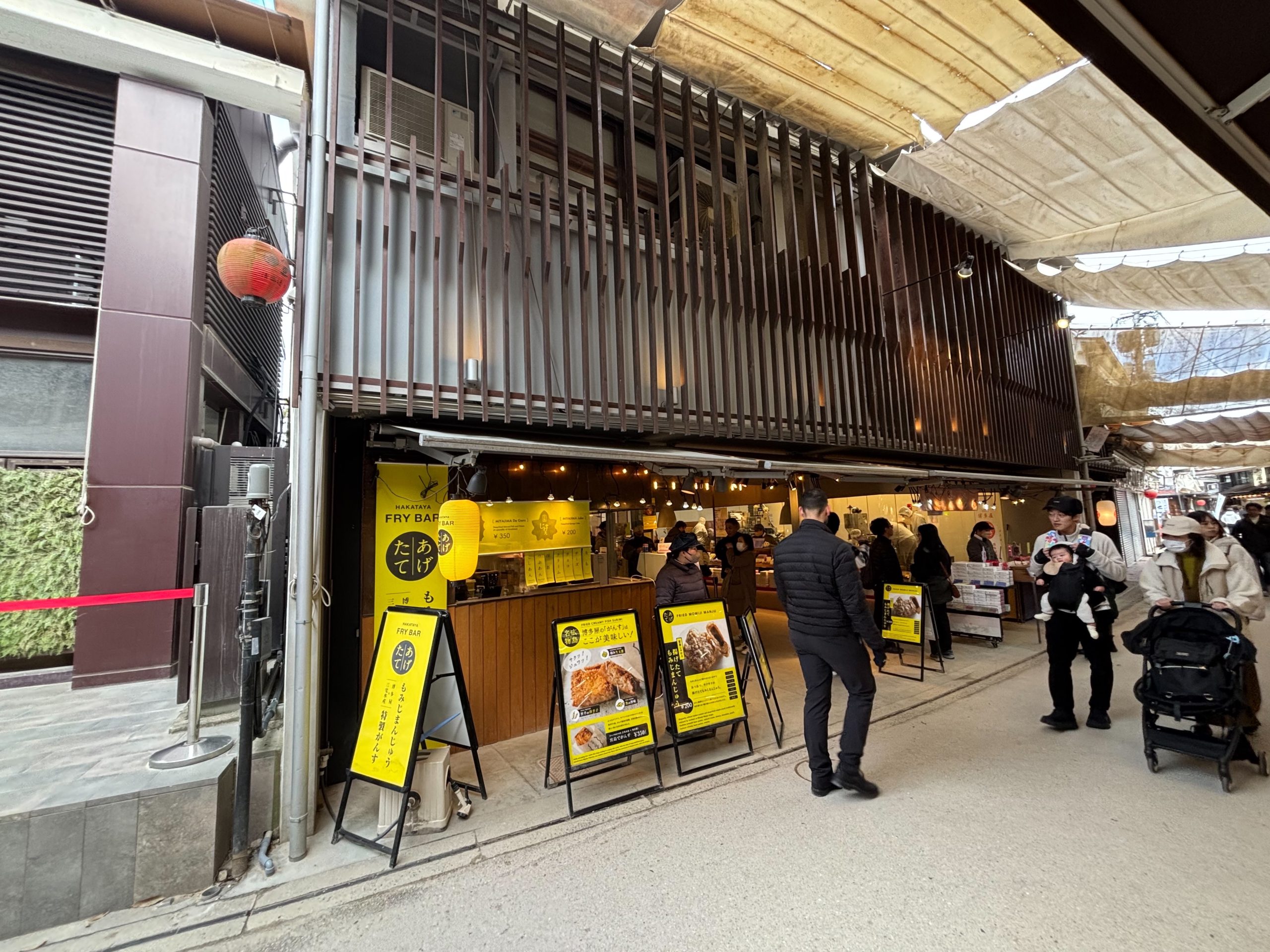
Miyajima's main shopping street — known locally as Omotesando — is a l...
Summary
For anago rice in Miyajima with something extra — a genuine ocean view, a 70-year family recipe, and a calm that’s hard to find on a busy island day — Kiyomori Chaya delivers. The Kiyomori Set, combining a half-portion conger eel rice bowl with a carefully crafted sardine broth udon, is one of those meals that makes a trip feel complete rather than just checked off.
As a Hiroshima local visiting with two young kids, I found the whole experience thoughtful: baby chairs, a pet-friendly terrace, electronic payment for ease, and staff who genuinely made us feel welcome. The woodsy interior with its flickering stove in winter, or the open terrace with a sea breeze in summer — both versions of this restaurant are worth seeking out.
It is one of those places that rewards travelers who walk a little further than the main shrine path. The Miyajima that exists past the crowds — quieter, older, more genuinely rooted in the island — is well represented here. If you are planning a Miyajima day trip, add Kiyomori Chaya to your route. You won’t regret the detour.
To deepen your understanding of why Miyajima has been a sacred and significant destination for over a thousand years, our guide to the island’s World Heritage history provides the broader context.
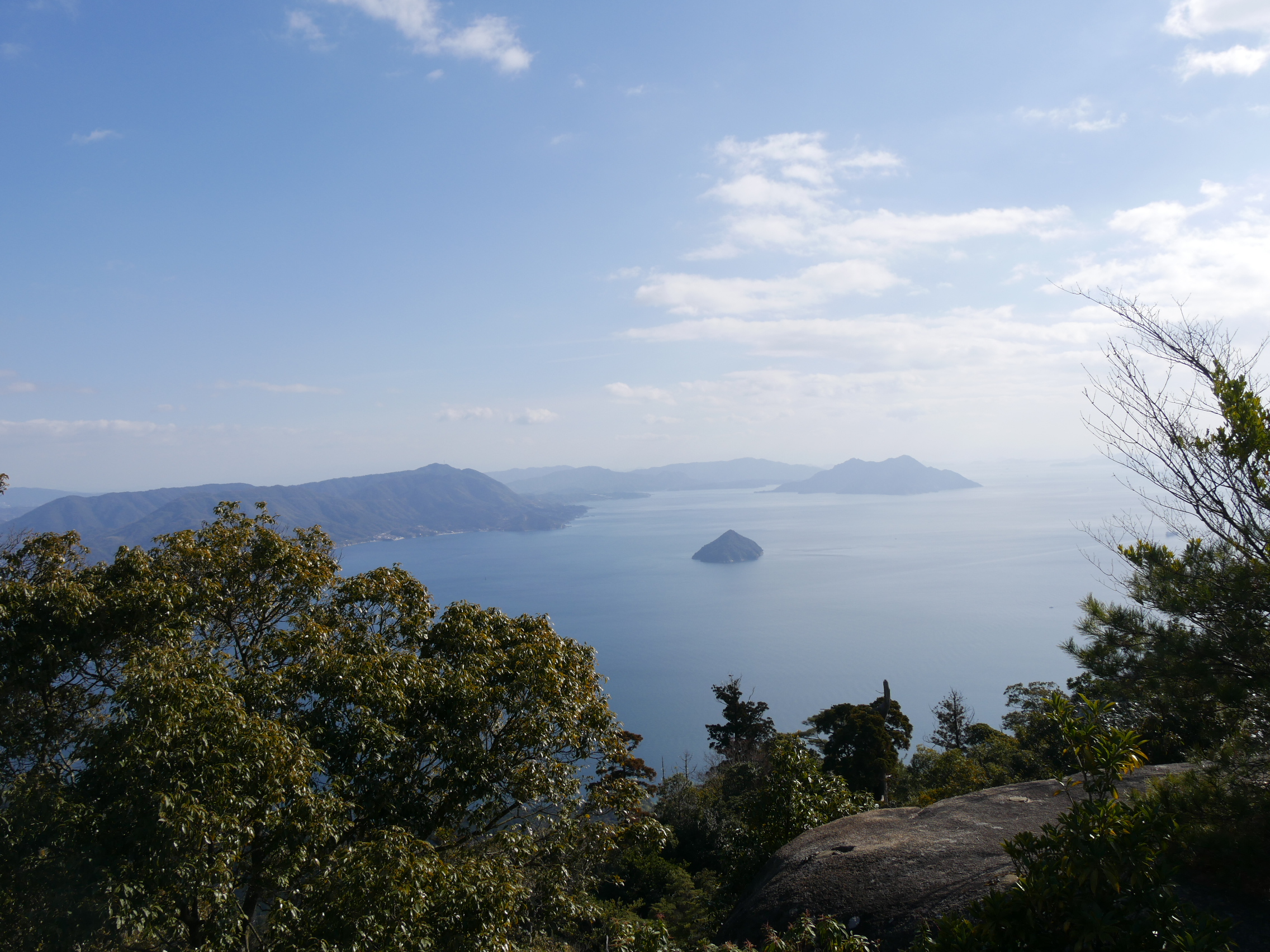
Rising dramatically from the sea off the coast of Hiroshima, Itsukushi...