
Mato-chan: Miyajima’s Beloved Okonomiyaki Destination
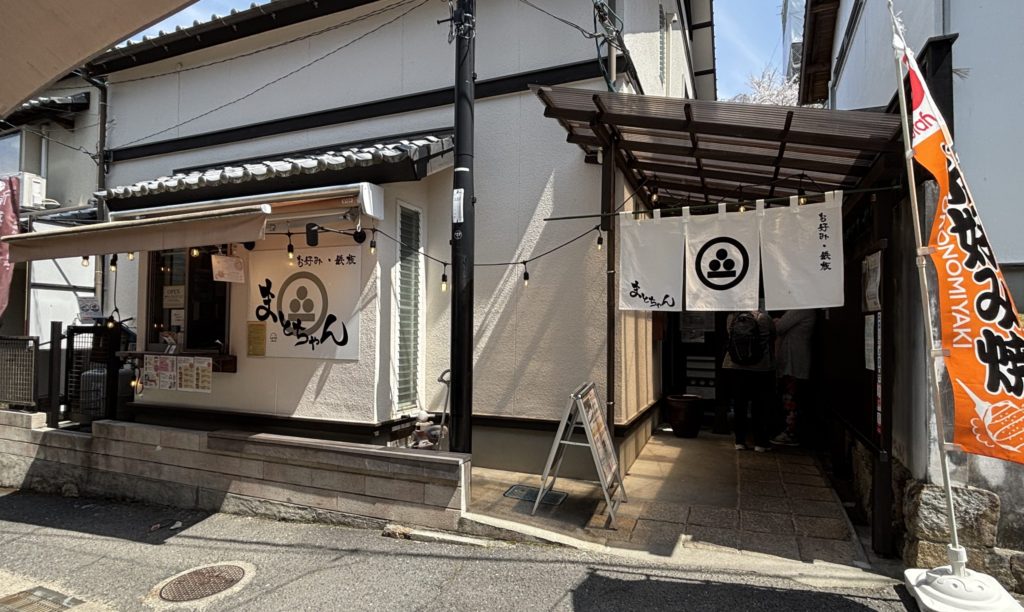
If you’re searching for authentic Miyajima okonomiyaki, Mato-chan is a local favorite that delivers the real deal. Located about a 16-minute walk from Miyajima Ferry Pier and just one minute from Itsukushima Shrine’s exit, this hidden gem serves up Hiroshima-style okonomiyaki that keeps both locals and visitors coming back for more. I brought my family here last month to celebrate my youngest daughter’s birthday, and even on a regular weekday, the place was packed—always a good sign when you’re looking for where to eat in Miyajima.
Since taking over in 2017, second-generation owner Kaori Matoba has honored the restaurant’s original flavors while adding her own creative seasonal touches. From the Itsukushima Shrine exit, head toward Miyaji Marine for about 2-3 minutes. You’ll spot a narrow lane just past the History and Ethnology Museum—look for the “Ageoko” street food sign, and you’ve found it. The restaurant itself is housed in a beautifully renovated traditional Japanese home that’s over 20 years old. Step inside and you’re greeted by warm wood interiors that create a calm, welcoming atmosphere—the kind of place where you can truly relax and enjoy your meal. It’s become one of my family’s go-to spots for exactly this reason.
What sets Mato-chan apart is their commitment to premium ingredients, especially their oysters. They source exclusively from “Gokusen-O,” an elite oyster brand that represents just 0.3% of Hiroshima Prefecture’s total oyster production. While okonomiyaki is the star here, you can enjoy these exceptional Miyajima oysters prepared in various ways—from butter-grilled to sizzling oyster ajillo. It’s an authentic taste of local Japanese cuisine that feels genuinely special. Among Miyajima locals, there’s often debate about whether “Yakigaki no Hayashi” or “Kakiya” serves the best oysters, but Mato-chan’s oyster quality easily holds its own against both.
After exploring the sacred grounds of Itsukushima Shrine, refueling with Miyajima okonomiyaki nearby is the perfect way to continue your day.
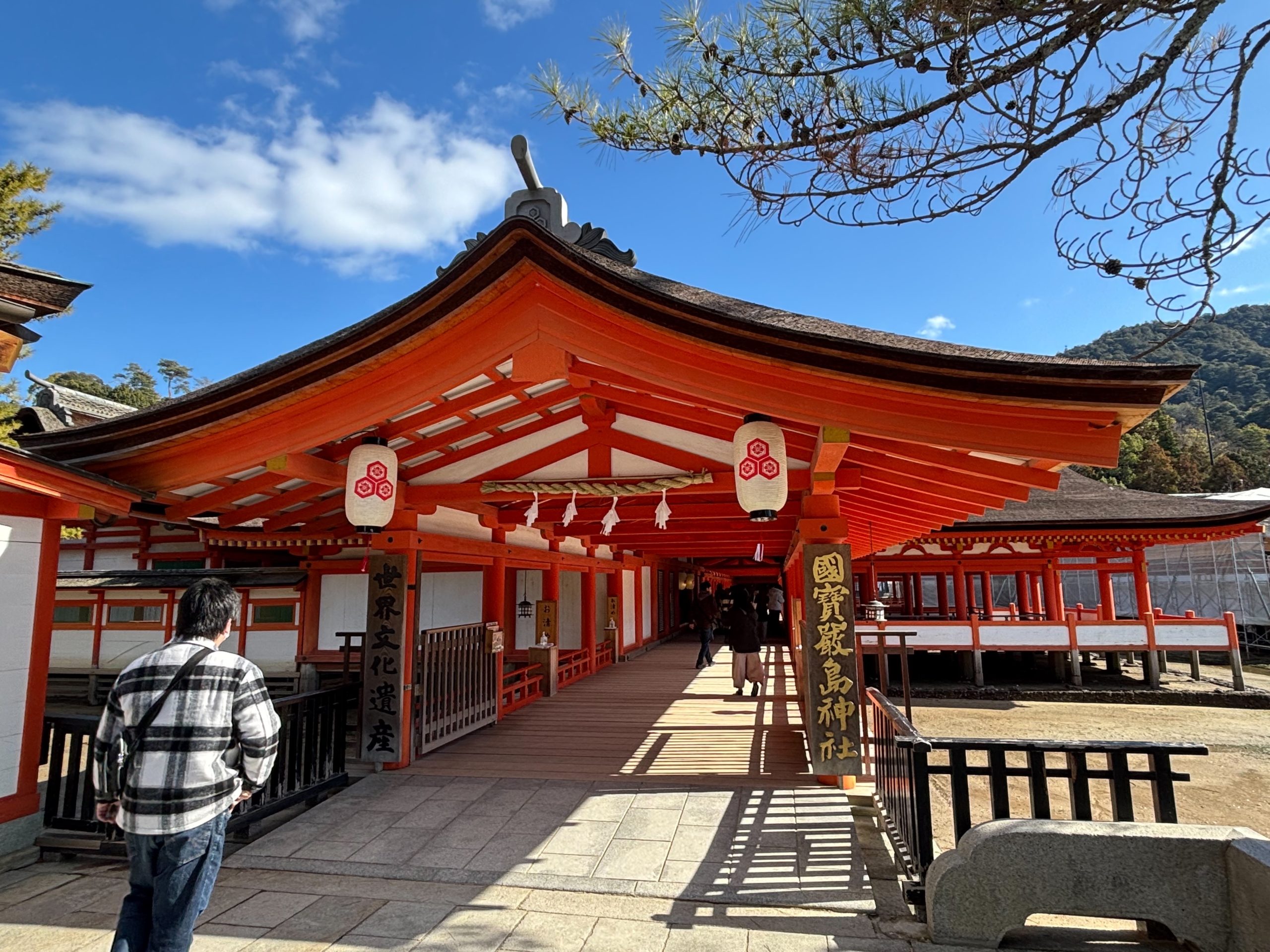
When you think of Miyajima, the first image that comes to mind is Itsu...
Restaurant Atmosphere and Dining Experience
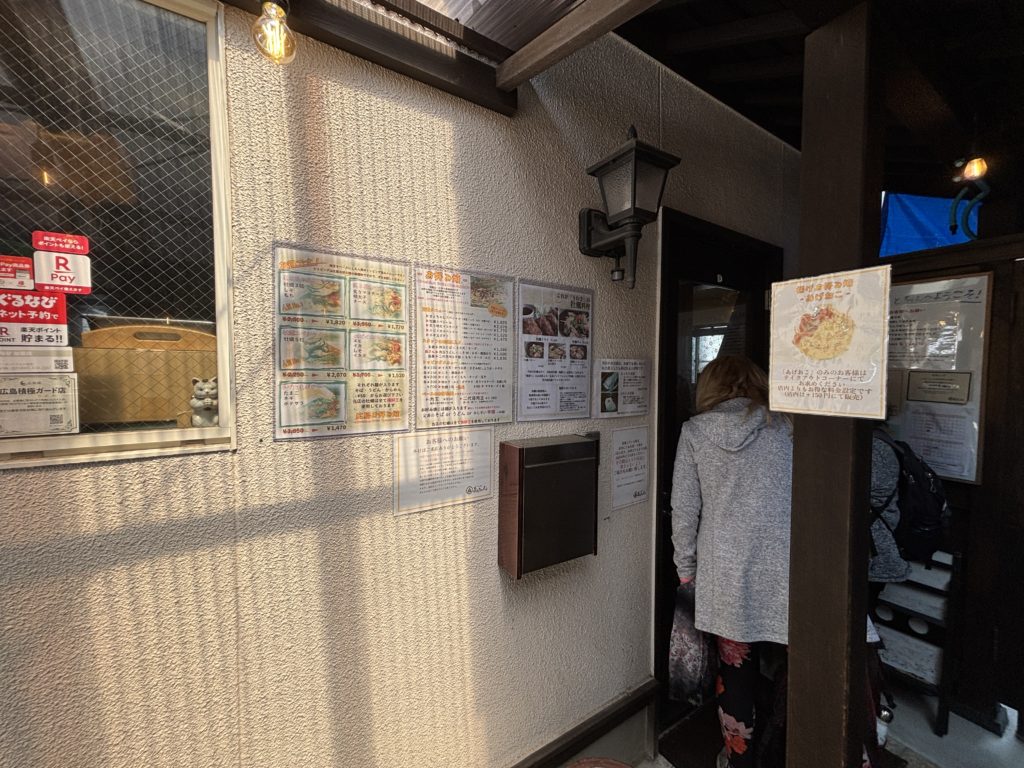
Mato-chan occupies a lovingly restored traditional house that’s more than two decades old, giving it an authentic neighborhood feel that’s increasingly rare in tourist areas. The restaurant is especially popular during lunch hours, and you’ll often see a queue forming outside—a sure sign you’re onto something good. If you’re visiting during peak times, I’d recommend building in some extra time for your meal. As someone who lives nearby, I’ve learned that weekday afternoons between 2-4 PM are your best bet for avoiding the crowds and getting a table quickly.
Inside, the space accommodates about 20-24 guests across counter seating and traditional wooden tables. The entire restaurant is non-smoking, and complimentary Wi-Fi is available for guests. Families traveling with children will appreciate the thoughtful amenities: child seats and kids’ tableware are provided, strollers and wheelchairs can be easily accommodated, and you’re welcome to bring your own baby food. When it comes to payment, they accept cash, all major credit cards, transportation IC cards, and various QR code payment services—pretty much every payment method you might need as a traveler.
The staff takes hygiene seriously here, which is especially reassuring for visitors. They regularly disinfect the interior and cooking equipment, maintain good ventilation throughout the dining area, wear masks during food preparation, and space tables appropriately so everyone can dine comfortably and safely.
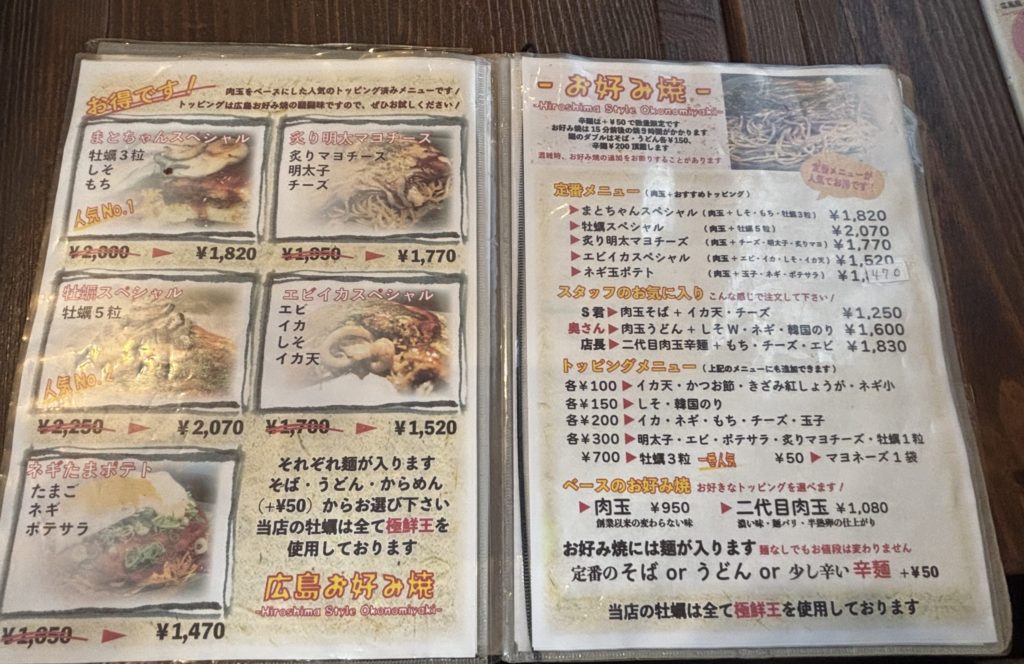
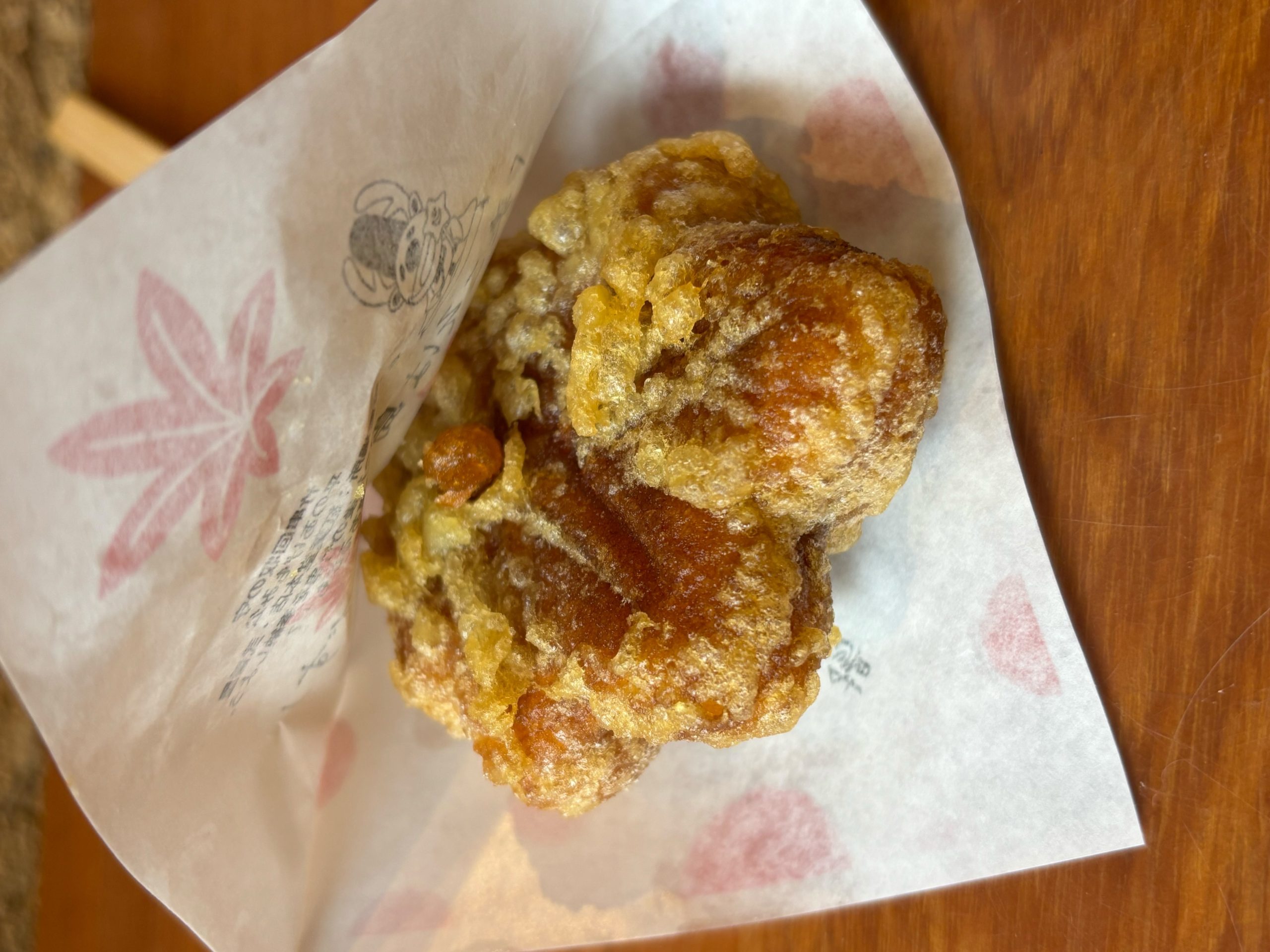
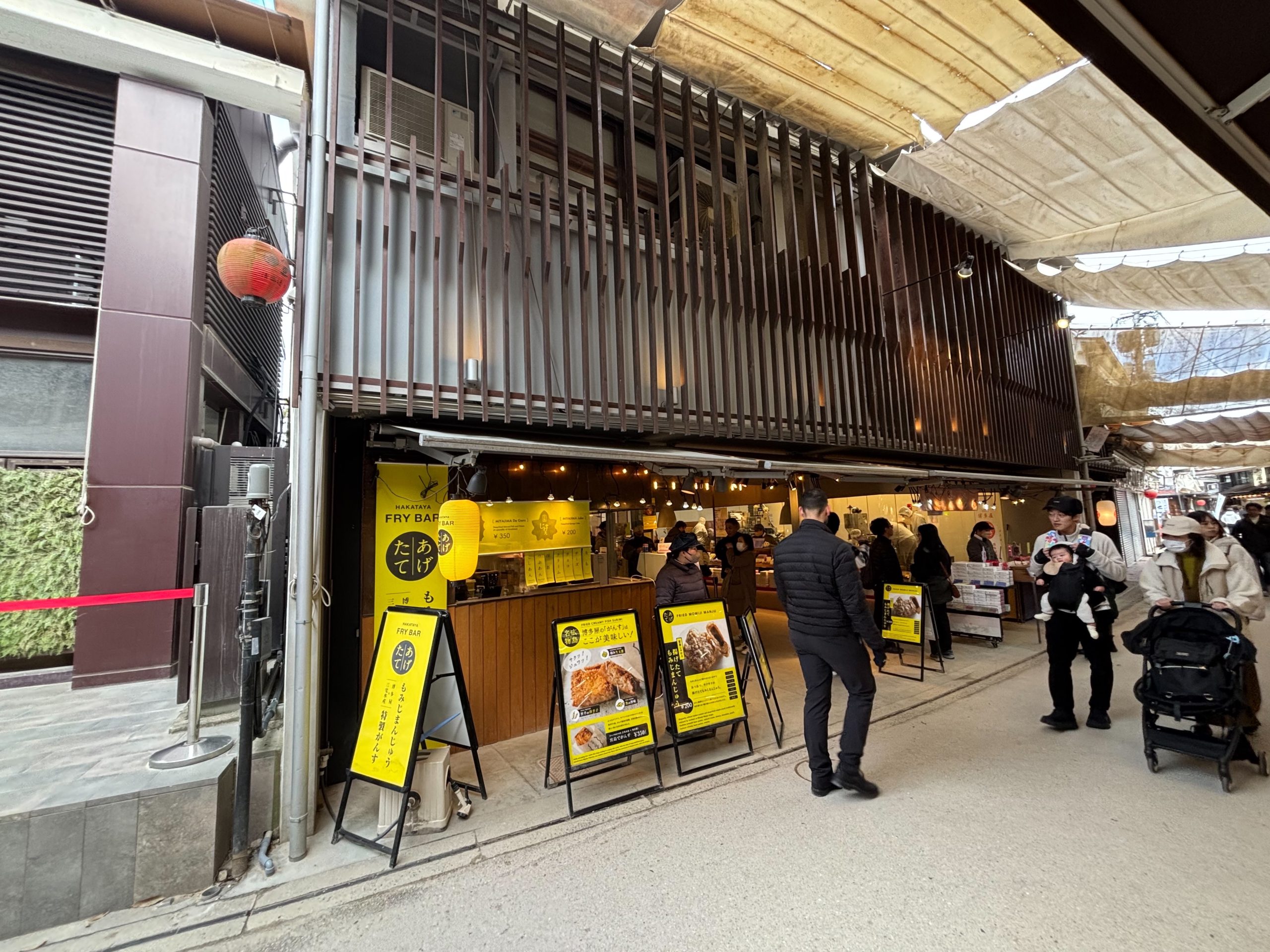
The topping selection at Mato-chan is impressively diverse, starting with their premium oysters and extending to shrimp, squid, and mentaiko (spicy cod roe). While dining in gives you the full experience of watching your okonomiyaki cook on the teppan griddle, Mato-chan has also jumped on Miyajima’s newest street food trend with their “Ageoko”—bite-sized fried okonomiyaki balls perfect for takeout. These crispy-on-the-outside, fluffy-on-the-inside treats have even been featured on Japanese television and come in four flavors including Oyster Ball, Cheese Ball, and Soba Ball. They’re ideal for snacking as you explore the island. My eldest daughter declared them even better than the famous agemomiji fried momiji manju!
Speaking of Miyajima street food, if you haven’t tried freshly fried agemomiji in the morning, you’re missing out. The crispiness when they’re just out of the fryer is on another level—an unforgettable snack as you stroll through town.
Planning your Miyajima food adventure and wondering what unique treats...
The Shrimp and Squid Special: A Seafood Lover’s Dream
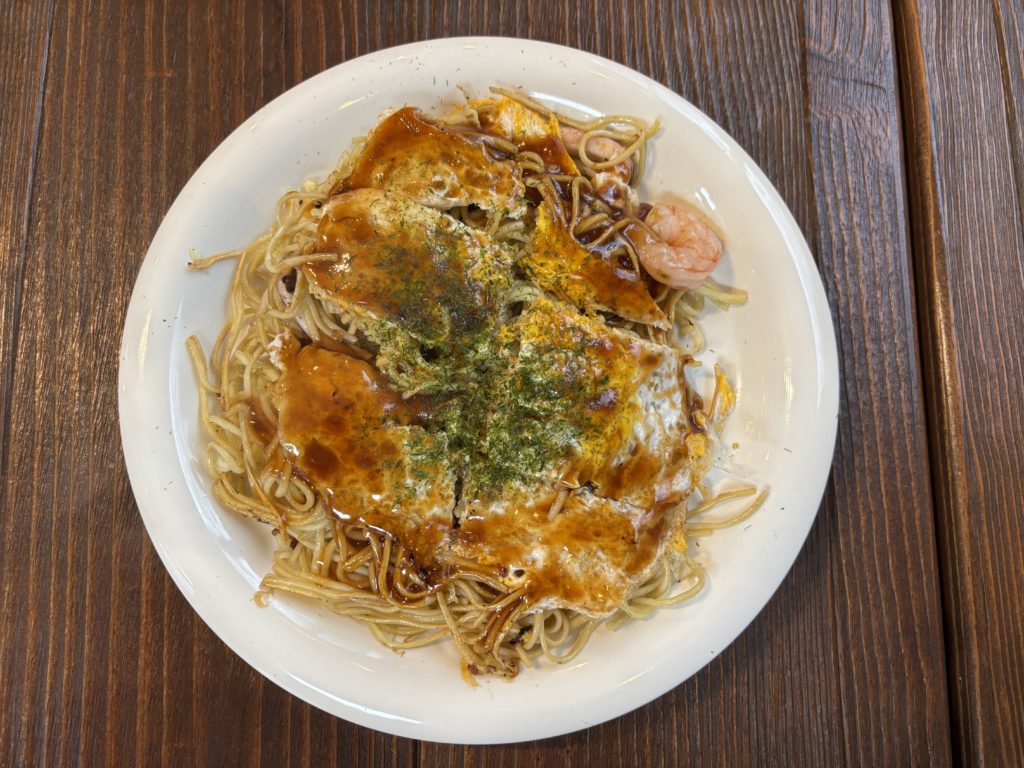
Shrimp and Squid Special (¥1,520)
I ordered the “Shrimp and Squid Special,” and it’s everything a seafood-focused okonomiyaki should be. This generous creation is loaded with shrimp, squid, fresh shiso leaves, and crispy squid tempura bits that add wonderful texture. The noodles are steamed to perfection—well-seasoned and slightly firm—which pairs beautifully with the tender, thinly-sliced cabbage that’s been cooked until just tender. Everything comes together under a generous coating of classic Otafuku sauce, delivering that comforting, savory Hiroshima flavor profile that locals grow up with. The standard portion size is satisfying without being overwhelming, and the aromatic shiso leaves add an addictive herbal note that elevates the entire dish. My husband couldn’t stop raving about how delicious it was—high praise from someone who’s eaten a lot of okonomiyaki over the years.
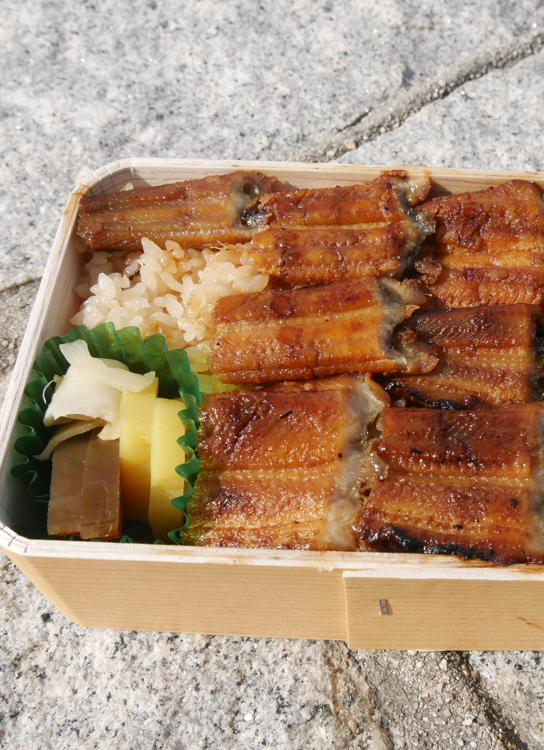
Beyond the standard Chinese-style noodles, you can opt for “Spicy Noodles” that are kneaded with chili paste. Don’t worry—they’re not intensely hot, but rather offer a pleasant umami-forward heat that adds complexity without overwhelming the other flavors. Another unique menu item worth trying is the “Miyajima-style Rice Okonomiyaki,” which cleverly swaps out noodles for conger eel rice. This is a creative nod to Hiroshima’s beloved local specialty, anago (conger eel), which is traditionally enjoyed as grilled anago rice, or anago-meshi. It’s an excellent choice if you’re curious about how locals enjoy conger eel in Hiroshima cuisine. That said, I personally think you should experience traditional anago rice on its own too—it’s that good!
Miyajima is renowned for its anago rice, and here’s a local secret: while tourists often flock to “Ueno,” locals tend to prefer “Fujitaya.” Both restaurants are excellent, but Fujitaya holds a special place in the hearts of those who live here.
When you visit Hiroshima's enchanting island of Miyajima, one dish sta...
The menu extends well beyond okonomiyaki, offering a variety of small plates and sides that are perfect for sharing, especially during dinner service. Options include the “Oyster Special” with five premium oysters (¥2,070), the “Mato-chan Special” featuring three oysters, shiso, and mochi (¥1,820), Hiroshima-style aged chicken karaage, scallion gansu, and house-made tofu dishes. These make excellent accompaniments if you’re settling in for a leisurely evening meal.
Noodle Quality ★★★☆☆
Portion Size ★★★☆☆
Local Popularity ★★★★☆
Topping Generosity ★★☆☆☆
Frequently Asked Questions About Mato-chan
Q1. What are Mato-chan’s business hours?
A. The restaurant is open Monday and Wednesday through Sunday, including holidays, from 11:00 AM to 4:00 PM (last order at 3:00 PM). On Fridays, Saturdays, Sundays, and days before holidays, they also offer dinner service from 5:00 PM to 9:00 PM (last order at 8:00 PM). The restaurant is closed on Tuesdays.
Q2. What payment methods does Mato-chan accept?
A. They accept cash, all major credit cards, transportation IC cards (like Suica and ICOCA), iD, QUICPay, and various QR code payment services including PayPay and LINE Pay.
Q3. Is Mato-chan family-friendly for traveling with children?
A. Absolutely. The restaurant provides children’s chairs and tableware, can accommodate strollers, and welcomes families who bring their own baby food. For parents traveling with small children, it’s worth noting that there’s a nursing room on the second floor of the Miyajima Tourist Information Center on Omotesando Shopping Street, so you can explore the island with peace of mind.
After filling up on delicious food along Omotesando Shopping Street, my family’s tradition is to end with soft-serve ice cream. Pro tip: visit after 5 PM and you won’t have to wait in line!
Wondering what to eat in Miyajima? The answer lies along Omotesando Sh...
Q4. How can I avoid the crowds at Mato-chan?
A. Your best strategy is to visit early on weekdays or arrive right when dinner service begins. As one of Miyajima’s popular dining spots, lunch service typically involves waiting in line. Here’s a local insider tip: weekday afternoons between 2-4 PM are consistently the quietest times—perfect if you prefer a more relaxed dining experience without the rush.
Q5. Does Mato-chan offer takeout?
A. Yes, they offer takeout for their okonomiyaki, including their signature Ageoko fried okonomiyaki balls—perfect for enjoying as you explore the island.
Q6. Are there special menu items only available during dinner service?
A. Yes, the evening menu features unique dishes that aren’t available during lunch, including items like “Serious Yakisoba” and “Ramen Made by Someone Else” (a playful menu name that’s worth asking about!).
Final Thoughts on Mato-chan
During my weekday lunch visit, the popularity was immediately evident—we waited about an hour for a table, followed by another 20 minutes for our food to arrive. That might sound daunting, but many first-time visitors become instant regulars after their first bite, so the wait tends to feel worthwhile. One thoughtful detail I particularly appreciate: every seat comes equipped with its own hot plate and spatula, allowing you to keep your okonomiyaki sizzling hot throughout your meal. If you’re sensitive to intense heat, you can always request a regular plate instead—the staff is happy to accommodate.
With five counter seats and five table seats, the restaurant works well whether you’re dining solo, as a couple, or with a small group of friends.
When planning your Miyajima dining itinerary, definitely add Mato-chan to your list. Whether you’re here for authentic Hiroshima-style okonomiyaki, premium Miyajima oysters, or the trendy Ageoko street food, you’ll get a genuine taste of local flavors that capture what makes Miyajima’s food scene so special. Just like my family has become regulars over the years, I have a feeling you’ll find yourself planning your next visit before you even finish your meal.
If you’re in the mood for delicious artisan bread during your island visit, check out Shimauma Pan—it’s a local favorite and hidden gem that pairs perfectly with a relaxed Miyajima morning.
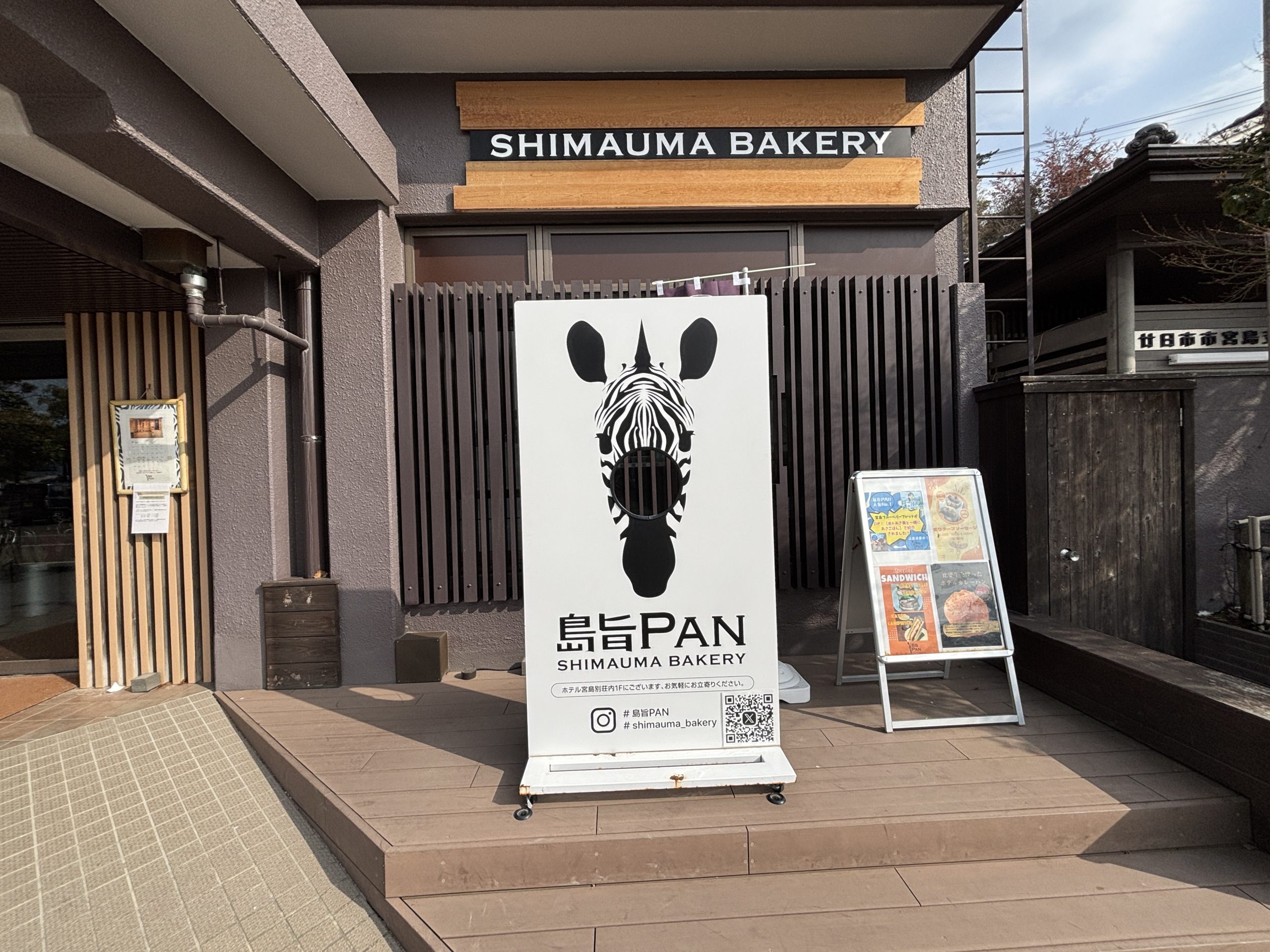
Looking for a great Miyajima bakery to start your day? Just a one-minu...
When discussing long-established Miyajima restaurants, Miyatoyo is an absolute must-visit. Their traditional flavors, carefully passed down through generations, offer an experience you should have at least once during your time on the island.

Discover hand-baked Miyajima momiji manju at Miyatoyo Main Store. Try signature cheese, Belgian chocolate, and classic red bean flavors since 1984.