
Taira no Kiyomori, the first warrior to rise to the rank of Grand Minister of State in the late Heian period. Why did he single out Itsukushima Shrine on Miyajima from countless shrines, devote himself to its worship, and build the foundation of his power there? The answer, often asked by visitors to Miyajima today, lies in clear, rational strategy. Appointed Governor of Aki Province in 1146, Kiyomori recognized Miyajima’s position at a choke point on the Seto Inland Sea’s shipping routes. By venerating Itsukushima Shrine as the guardian deity of the Taira clan, he consolidated control over the region. It was a highly calculated choice that fused religious faith in safe sea voyages with the hard economics of securing trade profits.

Historical Background Leading to Taira no Kiyomori’s Selection of Miyajima
Appointment as Governor of Aki and the Opportunity for Expansion into the Seto Inland Sea
The turning point that bound Taira no Kiyomori to Miyajima came in Kyuan 2 (1146), when he was just 29. This was more than a routine provincial post. It marked the Taira clan’s full entry into the maritime world of the Seto Inland Sea.
Aki Province sits almost at the center of the Seto Inland Sea, a crucial maritime crossroads linking Honshu, Shikoku, and Kyushu. For the Taira, who had already been active there since the days of his father Taira no Tadamori through pirate-suppression campaigns, gaining formal control was the culmination of a long-held goal. Kiyomori seized the moment and began moving to dominate the entire Seto Inland Sea.
Importantly, he didn’t treat the governorship as a mere administrative post. While Governor of Aki, Kiyomori made repeated pilgrimages to Itsukushima Shrine and sponsored extensive repairs and construction. This was more than piety: it was a political act that legitimized his regional authority through religious prestige—an approach visitors can still sense in the shrine’s grand setting today.
Religious Experiences and Political Decisions Recorded in the ‘Heike Monogatari’
The Tale of the Heike preserves a striking episode explaining Kiyomori’s deep reverence for Itsukushima. When he visited Mount Koya, an elderly monk is said to have revealed a prophecy: “If you build Itsukushima Shrine, you will surely attain the highest rank.”
Whether this experience happened exactly as told is uncertain, but historically Kiyomori did launch major works at the shrine in line with this “divine message.” He initiated a restoration in 1152 (Ninpei 2), followed by a sweeping reconstruction in 1168 (Nin’an 3) that set the shrine’s present scale.
Behind the religious motive, however, lay pragmatic political and economic calculations. Investing in Itsukushima Shrine simultaneously achieved multiple aims: establishing a regional spiritual center, winning merchants’ and shipowners’ trust through prayers for maritime safety, and amplifying the Taira clan’s prestige—a smart blend of faith and statecraft that shaped Miyajima’s history.

Miyajima’s Strategic Value as a Hub for Japan-Song Trade
One key reason Kiyomori chose Miyajima was its value for Japan-Song trade. Traditionally, commerce with China centered on Dazaifu and Hakata in Kyushu. Kiyomori imagined a bolder vision: develop trade within the Seto Inland Sea, closer to Kyoto and the political heartland.
Miyajima, positioned on the Seto Inland Sea’s main thoroughfare, served as a vital relay along the maritime route from Ōwatadabaru (present-day Kobe Port area) to Hakata. As Kiyomori deepened the Oto Strait and improved harbors across the region, Song vessels could safely penetrate far into the Inland Sea. Miyajima then became an ideal base of oversight and management.
By 1173 (Jōan 3), Kiyomori succeeded in redirecting Song ships to bypass Hakata entirely and sail directly to Ōwatadabaru. This groundbreaking shift rested on elevating Itsukushima as guardian of maritime traffic and building a system that guaranteed navigational safety across the Seto Inland Sea. Miyajima was both the spiritual anchor and practical control center of that system—an insight that still fascinates history-minded travelers to Hiroshima and Miyajima.
Characteristics and Strategic Significance of Establishing Control Over the Seto Inland Sea
Transition from Pirate Suppression to Maritime Traffic Management
The Taira expansion into the Seto Inland Sea did not begin as simple conquest. It began with restoring order by suppressing and then organizing pirates. Tadamori and Kiyomori shifted from the old model of “crush pirates by force” to a more modern approach: “organize maritime actors to manage the sea-lanes.”
Itsukushima Shrine on Miyajima was central to this transition. By positioning the shrine as guardian of maritime traffic, the Taira became more than military rulers—they became legitimate protectors of seaborne order, backed by religious authority. Pilgrimages to Itsukushima built trust with merchants and shipowners, and regular festivals and rites knit together a community of seafarers. Through this faith-and-network model, the Taira established an information web across the Inland Sea and achieved efficient, stable maritime management.
The Munakata Three Goddesses Faith and Maritime Traffic Security
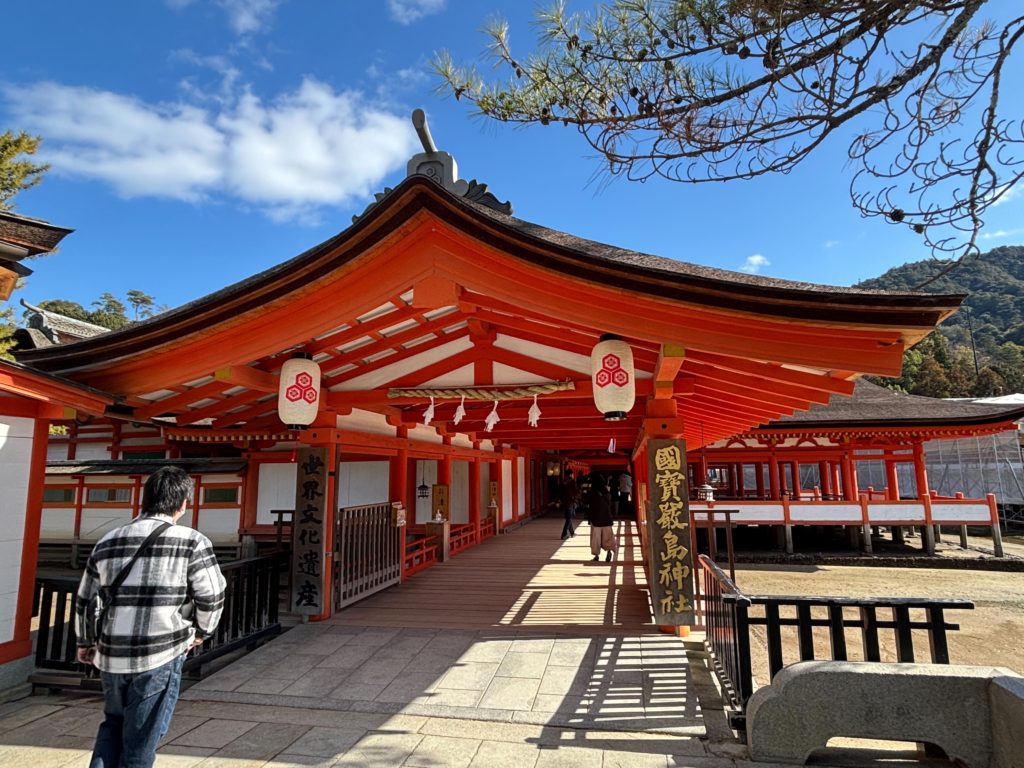
The Munakata Three Goddesses—Ichikishimahime-no-Mikoto, Tagohime-no-Mikoto, and Tatsuhime-no-Mikoto—have long been revered as deities of seafaring and safe navigation. Choosing this cult foundation was a pragmatic move by Kiyomori: he leveraged existing belief to underpin a new maritime order. In rebuilding Itsukushima, he adopted a unique “floating shrine” style that incorporates Kyoto’s shinden-zukuri palace architecture. Appearing to float on the sea, the shrine stunned merchants arriving by boat and reinforced trust in the Taira’s protection and authority.
Kiyomori also transferred court music and dance from Shitennō-ji in Osaka and established magnificent rituals such as the Gangen Festival. These events were not just religious—they became social and commercial hubs for all who worked the Seto Inland Sea routes, strengthening the Taira-centered economic network.
The Development of Ōwatadabaru and the Collaborative System with Miyajima
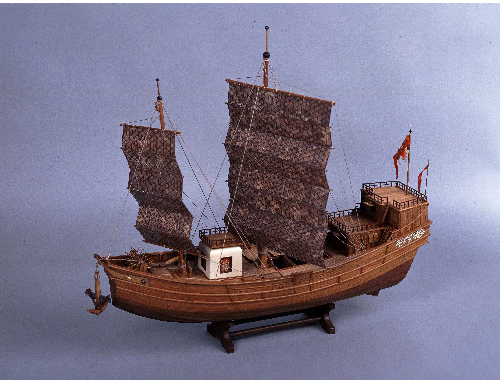
Within Kiyomori’s maritime strategy, Miyajima and Ōwatadabaru worked like two wheels of a cart. Ōwatadabaru functioned as the physical port hub handling Japan-Song trade, while Miyajima served as the spiritual and ceremonial center, jointly ensuring safe passage and commercial prosperity.
In 1173, Kiyomori built the artificial island of Kyōga-shima at Ōwatadabaru and equipped it so large Song ships could dock directly. In tandem, the buildings of Itsukushima Shrine on Miyajima were completed, and a majestic approach from the sea was established so that dignitaries and merchants alike could arrive in awe.
When the imperial family and nobles, including Emperor Go-Shirakawa, visited Itsukushima, Kiyomori even provided Tang (Song) ships from Ōwatadomari as their transport. This was more than VIP service—it was political theater showcasing the success of Japan-Song trade and the Taira’s international stature. Miyajima, as the stage for these spectacles, greatly boosted the clan’s prestige.
The Impact and Significance of Kiyomori’s Choice of Miyajima on History
Enhancing Japan’s Status as an International Trade Hub
Kiyomori’s Miyajima strategy raised Japan’s international profile. Previously, Japan-China trade was modest and peripheral in Kyushu. By shifting full-scale trade to the Seto Inland Sea near the capital, he placed Japan at the center of the East Asian maritime network. Medical knowledge, architectural techniques, and artworks from Song China spread nationwide via Miyajima, accelerating the internationalization of late Heian culture. Especially important was the rise of Japan’s first truly monetized economy, driven by an influx of Song copper coins. Song ships used coins as ballast across their hulls; Kiyomori took advantage of this to import vast quantities and circulate them domestically. The Taira trade system—with Miyajima as its spiritual pillar—became the hub of this monetary revolution.
Formation of Japan’s Foundation as a Maritime Nation
Kiyomori’s choice of Miyajima—and the maritime system he built—was a turning point that laid the foundations for Japan as a maritime nation. For the first time, Japan moved beyond passively absorbing continental culture and instead actively managed sea-lanes and led international trade.
The Taira maritime order centered on Miyajima resonated in later eras. In the Kamakura period, control of the Seto Inland Sea was crucial to national defense during the Mongol invasions. From the Muromachi period’s Japan-Ming trade to the Edo-period Kitamaebune routes, the waters around Miyajima remained a core artery of Japanese maritime traffic.
Furthermore, Kiyomori’s governance model—blending religious authority with practical control—was adopted by later samurai regimes. That Itsukushima Shrine is still revered as the “guardian deity of the sea” today speaks to the lasting power of the system he forged.
The Value of Kiyomori’s Strategic Legacy Passed Down to the Present Day
The strategic decision by Taira no Kiyomori to elevate Miyajima still offers insight today. His method—leveraging geography, aligning with existing cultural and religious foundations, and planning long-term with an international outlook—has universal value for regional development and international cooperation. The fact that Itsukushima Shrine now welcomes millions of worshippers and travelers each year as one of Japan’s most iconic cultural sites proves that Kiyomori’s model of integrating spiritual and economic value remains effective eight centuries on.
That the Seto Inland Sea remains a vital maritime corridor also vindicates his geographic intuition. Where Song-dynasty ships once sailed, container vessels and tankers pass today—and Miyajima continues to symbolize safe passage for people in Japan and around the world.
Frequently Asked Questions
Why did Taira no Kiyomori choose Itsukushima Shrine over other shrines?
Itsukushima stands at a strategic point on the Seto Inland Sea’s shipping route and enshrines the Munakata Three Goddesses, protectors of maritime traffic. It was the optimal choice—geographically and religiously—for Kiyomori’s Japan-Song trade strategy and his bid for maritime supremacy.
How much did Kiyomori spend on building Itsukushima Shrine?
The exact figure is unknown, but the grand project of 1168 that set the shrine’s current scale required enormous private investment. A large portion of profits from Japan-Song trade appears to have been plowed back into the shrine, underscoring its strategic importance.
How much did the choice of Miyajima contribute to the Heike clan’s prosperity?
It was the single most critical foundation of Heike prosperity. Control of the Seto Inland Sea and profits from Japan-Song trade propelled Kiyomori to Grand Minister of State and enabled the Heike to amass such power that it was said one was “not human if not of the clan.”
Were there rulers before Kiyomori who also valued Miyajima?
Itsukushima Shrine dates to the reign of Empress Suiko (593), but none prior to Kiyomori applied such a systematic strategic approach. He was the first to build a political-economic system that maximized Miyajima’s geographic and religious strengths.
Are any buildings from Kiyomori’s era still present at the current Itsukushima Shrine?
The current complex was rebuilt in the Kamakura period, but it faithfully preserves the scale and design language established by Kiyomori. The floating-shrine layout and shinden-zukuri elements remain a precious legacy conveying the 12th-century vision to modern visitors.
What can modern times learn from Kiyomori’s Miyajima strategy?
It offers useful lessons for regional development and tourism policy: leverage geography, seek harmony with culture and religion, and plan long-term with an international perspective. Starting with his appointment as Governor of Aki (1146), Kiyomori combined Miyajima’s geographic advantages with the religious authority of Itsukushima to build a maritime control system for the Taira.
The strategy worked. Kiyomori secured the Seto Inland Sea and amassed wealth through Japan-Song trade. The development of Ōwatadabaru, excavation of the Oto Channel, and grand reconstruction of Itsukushima were all integral parts of a comprehensive maritime strategy with Miyajima as its spiritual stronghold. His choice remains historically significant as the moment Japan first actively managed maritime traffic and led international trade.
References & Sources
- HISTRIP: Miyajima, a place even Taira no Kiyomori revered
- Setouchi Sea Route Network Promotion Council: Setouchi Shipping Route Development and Japan-Song Dynasty Trade
- Wikipedia: Japan-Song Trade
- Hiroshima Cultural Encyclopedia: The Taira Clan and Itsukushima Culture
- Miyajima Tourism Association: Itsukushima Shrine
- Touken World: Japan-Song Dynasty Trade
- Digital Library of Japanese Culture: Japan-Song Trade
- The Tale of the Heike (Classical Literature)