
Standing in the sea just off the shore of Miyajima Island, the great vermilion torii gate of Itsukushima Shrine is one of Japan’s most iconic sights. Visitors who see it for the first time almost always ask the same question: how does something that enormous stay upright in the ocean? The answer turns out to be a fascinating story of ancient engineering — one that still impresses structural engineers today.
The Miyajima floating torii gate is not anchored into the seabed. It stands entirely under its own weight — roughly 60 metric tons of camphor wood, balanced with extraordinary precision. Since its current form was erected in 1875, it has survived typhoons, earthquakes, and a century and a half of tidal exposure. Here is how it works.

The Engineering Behind a Gate That Stands on Its Own
60 Tons of Carefully Calculated Balance
At roughly 16.6 meters tall, the Great Torii Gate is an imposing structure. But its stability doesn’t come simply from being large and heavy — it comes from the way that weight is distributed. The designers deliberately concentrated mass at the top of the gate to lower the overall center of gravity, making the entire structure far more resistant to lateral forces like wind and waves.
The most important detail is hidden inside the two horizontal crossbeams at the top of the gate, known as the shimagi and kasagi. Unlike those on a typical Japanese torii, these crossbeams are hollow box structures, and their interiors are packed with stones roughly the size of a human head — approximately 7 metric tons of ballast in total. This weight acts like a counterbalance, keeping the gate grounded even when wind or waves push against it from the side.
The Thousand-Pile Foundation Beneath the Sea
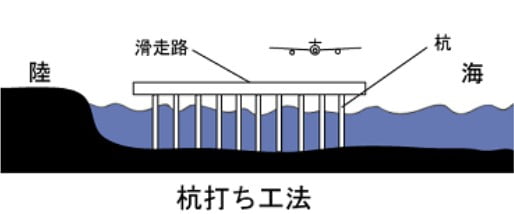
Balancing a 60-ton gate on soft tidal sand requires more than a clever crossbeam design. Beneath each of the gate’s main pillars and secondary pillars, ancient builders used a technique called senbongui — literally, “thousand-pile method” — to stabilize the seabed itself.
Between 30 and 100 pine stakes were driven densely into the soft seafloor beneath each pillar base, to a depth of about 50 centimeters. Over the centuries, this compressed timber foundation has been reinforced further: today, the pine stakes sit beneath a 45-centimeter concrete base, which is in turn topped with a layer of granite slabs 24 centimeters thick. The torii gate then rests directly on top of this platform — not bolted or embedded, simply placed. The phrase Japanese engineers use is telling: it is essentially “just sitting there,” held in place by its own immense weight on a very solid platform.
The Six-Pillar Design: Why This Torii Is Different
A Structural Style Built for Stability
Look carefully at the Great Torii Gate and you will notice it has more legs than a typical Japanese gate. Most torii gates across Japan use just two main pillars — a style called myojin torii, which accounts for about 90% of all torii gates in the country. The Itsukushima gate uses a much rarer style called ryobu torii, or “double torii,” which adds two flanking support pillars on both the front and back of each main pillar, for a total of six pillars.
This design distributes the load of the heavy crossbeams across a wider base, dramatically improving the gate’s resistance to lateral stress. The six pillars are also joined together by horizontal crosspieces at two heights, locked in place with wooden wedges, which binds them into a single unified structure. The result is far more rigid than any two-pillar gate could be — exactly what you need when typhoon-force winds are pushing against a 16-meter wooden arch standing in the open sea.
Why Camphor Wood? The Material Science Behind the Gate
The main pillars of the current Great Torii Gate are made from single natural camphor trees — kusunoki in Japanese — each around 500 years old at the time they were felled. The eastern pillar came from Miyazaki Prefecture and the western pillar from Kagawa Prefecture. During a repair in 1950, the bases of both pillars were reinforced with additional camphor timber sourced from Fukuoka and Saga Prefectures.
Camphor was not chosen for its beauty alone. It has three properties that make it almost uniquely suited to a gate standing permanently in tidal saltwater: it is denser than most other Japanese timber, it is highly resistant to rot, and it naturally repels wood-boring insects. In a marine environment where almost any other species of wood would deteriorate within decades, camphor provides durability that can span centuries.
The vivid red coating on the wood also serves a practical function beyond its visual impact. The pigment used — a traditional compound called komyotan — acts as both a rust inhibitor and a wood preservative, protecting the surface from corrosion and biological decay. When you see that brilliant vermilion color, you are looking at centuries-old protective technology as much as you are looking at a decorative choice.
Surviving Typhoons, Earthquakes, and 150 Years of the Sea
The current ninth-generation torii gate has been standing since 1875 — through the Meiji, Taisho, Showa, Heisei, and Reiwa eras, through wars, typhoons, and earthquakes. When Typhoon No. 19 struck in 1991 and caused significant damage to Itsukushima Shrine’s corridors and structures, the Great Torii Gate held firm. That kind of real-world track record speaks louder than any engineering diagram.
Part of the gate’s durability comes from an unexpected environmental advantage: the oxygen-depleted conditions around submerged wood actually slow the biological processes that cause decay. But life in the sea brings its own hazards. Shipworms bore through submerged timber, wood-boring beetles attack above the waterline, and barnacles colonize any available surface. These threats can never be fully eliminated — only managed through regular maintenance and periodic repair.
The most revealing moment came during the major restoration project that ran from 2019 to 2022, the first comprehensive overhaul in about 70 years. When workers examined the pillars closely, they found cavities inside the wood up to 40–50 centimeters in diameter and 4 meters deep — damage from termites and rot fungi that was completely invisible from the outside. The restoration involved filling those voids, reinforcing the structure against earthquakes, replacing the cypress-bark roof cladding, and repainting the entire gate. The work was completed in December 2022, and the gate emerged looking essentially as it did in 1875.
Ancient Wisdom That Still Works Today
The techniques used to build and maintain the Miyajima floating torii gate are not simply historical curiosities — they reflect engineering principles that remain relevant today. The thousand-pile foundation method anticipates modern pile-driving techniques used to stabilize buildings on weak soil. The concept of stabilizing a tall structure through distributed weight rather than rigid anchoring echoes ideas found in contemporary earthquake-resistant architecture, where “flexible” structures are sometimes safer than rigidly fixed ones.
The logic of letting the gate “float” freely on its foundation — rather than anchoring it to bedrock — is particularly striking. A rigidly anchored structure transmits seismic energy directly through its joints, which can cause catastrophic failure. A structure that sits freely can absorb and redirect those forces, trading a little movement for a lot of resilience. Traditional Japanese wooden architecture has embraced this “flexible structure” philosophy for over a thousand years, and the Great Torii Gate is one of its most dramatic demonstrations.
There is also a remarkable forward-looking element to how the torii gate is maintained. A community group called the Miyajima Millennium Committee has been cultivating camphor trees on the island specifically to supply timber for future restorations. A grove called the Yukyuu no Mori — “Forest of Eternity” — has been established within the national forest of Miyajima to ensure that when the next generation of repairs is needed, the right material will be ready. It is an act of intergenerational stewardship that connects the ancient shrine to a sustainable future.
FAQ
Why doesn’t the Great Torii Gate fall over if it isn’t anchored into the ground?
The gate relies entirely on its own weight for stability — roughly 60 metric tons in total. The crossbeams at the top contain about 7 metric tons of stone ballast, which lowers the center of gravity and resists tipping. The gate rests on a reinforced pile foundation on the seafloor and has stood this way for about 150 years.
How many pillars does the Miyajima torii gate have?
Six. The gate uses a style called ryobu torii, with two main pillars flanked by two additional support pillars on each side. This six-pillar design is much rarer than the standard two-pillar torii and provides significantly more structural stability.
What kind of wood is the gate made from, and why?
The main pillars are made from camphor wood — kusunoki — harvested from trees that were approximately 500 years old. Camphor is denser, more rot-resistant, and more insect-resistant than most other Japanese timber, making it ideal for a structure exposed to seawater year-round.
Was the torii gate recently restored?
Yes. A major restoration project ran from 2019 to 2022 — the first comprehensive overhaul in about 70 years. Workers discovered and repaired hidden internal cavities caused by termites and rot, reinforced the structure against earthquakes, replaced roof cladding, and repainted the entire gate. It was unveiled in its restored state in December 2022.
Is the torii gate visible at all times, or only at high tide?
The gate is visible at all times, but it looks different depending on the tide. At high tide, it appears to float on the water’s surface — the iconic “floating torii” effect. At low tide, you can actually walk out across the exposed tidal flat and stand directly beneath it. Both experiences are worth seeing.
Which generation of the torii gate is the current one?
The current gate is the ninth generation, rebuilt in 1875 during the Meiji era. The tradition of a large torii gate at this site dates back to the era of Taira no Kiyomori in the 12th century, though the earlier structures were smaller and built differently.
What does the red color of the torii gate signify?
The red pigment — a traditional compound called komyotan — serves both a cultural and a practical function. In Shinto tradition, red is a color associated with sacred spaces and divine protection. Practically, the compound also acts as a wood preservative and rust inhibitor, helping protect the timber from decay and corrosion in its marine environment.
References
- Miyajima Tourism Association: Great Torii Gate
- Itsukushima Shrine Official Site: Construction and Repair
- Masuoka Group: Major Restoration of the Itsukushima Shrine Great Torii Gate
- Hiroshima Tourism Federation, Dive! Hiroshima: Completion of the Itsukushima Great Torii Renovation
- Wikipedia (Japanese): Itsukushima Shrine Great Torii Gate
- Japan World Heritage Sites: Itsukushima Shrine
- Hatsukaichi Owned Media: Is the Itsukushima Shrine Torii Really Floating?
Facility details, operating conditions, and access information are subject to change. Please verify current details directly with the relevant venues before your visit.