
Why is Miyajima cherished by people worldwide and recognized as a heritage site worthy of protection? Many travelers who gaze at its iconic floating shrine and vermilion torii gate ask exactly this.
Itsukushima Shrine earned UNESCO World Heritage status thanks to its one-of-a-kind “floating” shrine architecture, its deep cultural lineage reaching back to the Heian period, and a perfectly harmonized landscape with Mount Misen’s primeval forest. On December 16, 1996, it was officially inscribed at the 20th session of the UNESCO World Heritage Committee, together with Hiroshima’s Atomic Bomb Dome. This dual inscription highlighted to the world both Japan’s cultural richness and its powerful natural and historical landscapes.
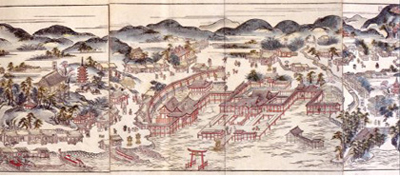
Reflecting on the Historical Path to World Heritage Registration
The World Heritage Convention and Japan’s Efforts
The World Heritage Convention was adopted at the UNESCO General Conference in 1972 to safeguard humanity’s most valuable cultural and natural sites. Japan ratified the convention in 1992. Itsukushima Shrine was placed on the Tentative List the same year and formally nominated in September 1995.
Miyajima has long been revered as an island where the gods are enshrined—its entire shoreline, mountains, and forests regarded as sacred. This distinctive worship of nature, combined with grand-scale construction initiated by the 12th-century warlord Taira no Kiyomori, created a sea-based shrine complex unlike anything else in the world.
Uniqueness Recognized in the Registration Review
Itsukushima Shrine’s significance goes far beyond architectural beauty. Reviewers valued the seamless unity of its wooden pavilions built over the sea, the untouched Misen forest rising behind them, and the unbroken continuity of worship maintained for over 1,400 years.
Especially notable is the originality of applying Heian-period shinden-zukuri (aristocratic residence style) to maritime shrine architecture. Adapting elegant courtly design to buildings connected by corridors over open water was a bold, world-first concept—and remains a defining feature of this World Heritage site.
The Four Evaluation Criteria Fulfilled by Itsukushima Shrine
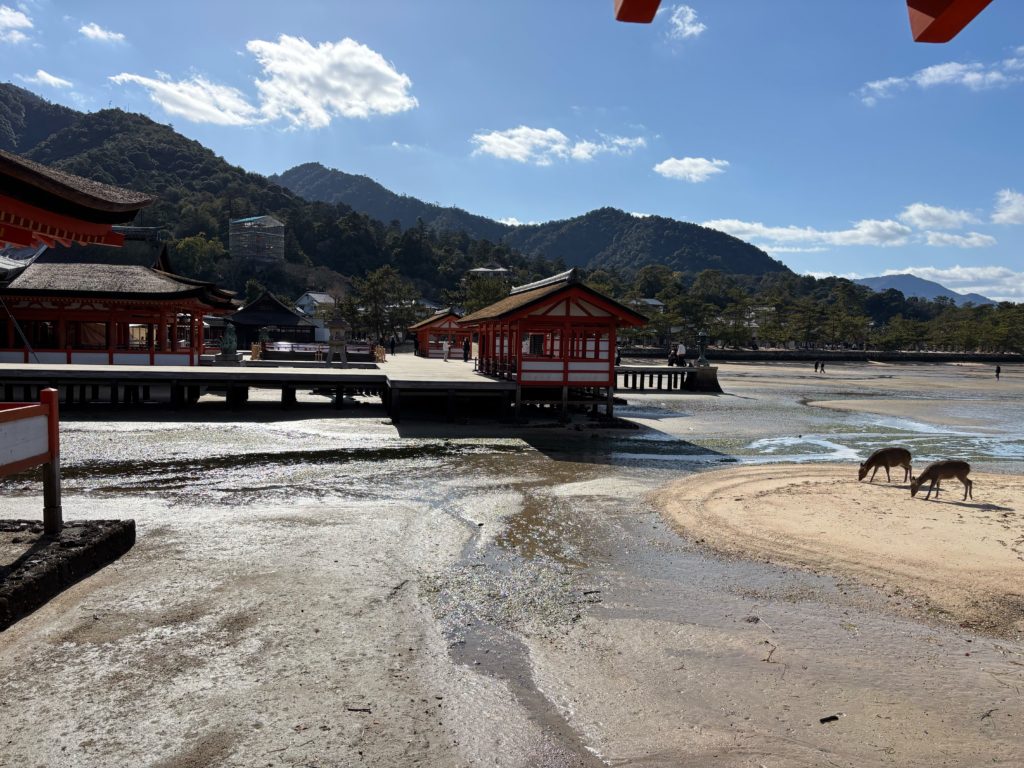
Criterion (i): A Masterpiece of Human Creative Genius
Itsukushima Shrine is celebrated as a “masterpiece of human creative genius.” The setting—where refined structures rise directly from the sea and blend with the natural scenery behind—crystallizes human creativity at the highest level. Built to its current plan in the 12th century under Taira no Kiyomori, the shrine turned a challenging coastal environment into a dramatic advantage.
At high tide the buildings seem to float, and at low tide you can walk across the sand flats toward the great torii gate. This tidal theater is one of the most unforgettable experiences in Miyajima and a must-see for visitors to Hiroshima.
Criterion (ii): Demonstration of Cultural Exchange
The site exemplifies “the interchange of human values” that influenced architecture, planning, and landscape design. Enshrining Mount Misen as its sacred object, Itsukushima integrates mountain and sea into a single ritual landscape—an approach that helped shape a unique strand of Japanese shrine architecture.
As court culture from the capital flowed into Miyajima, it fostered Shinto-Buddhist syncretism. You can still see traces of this cultural exchange today, such as the elegant five-story pagoda near the shrine precincts.
Criterion (iv): Architecture Illustrating Significant Historical Stages
The current buildings—reconstructed in 1241—faithfully preserve Heian-period shinden-zukuri style, transmitting the aesthetics and construction techniques of that era into the present. The complex, which includes 6 National Treasures and 11 buildings plus 3 structures designated as Important Cultural Properties, stands as a priceless record of Japanese architecture at its peak from the Heian to Kamakura periods.
Criterion (vi): Association with religion, tradition, and art
As a sacred Shinto site, Itsukushima Shrine is “directly associated with events, living traditions, ideas, beliefs, and artistic works of outstanding universal significance.” The faith sustained here for over 1,400 years has profoundly shaped Japan’s spiritual culture.
Traditional events, including the Gankō Festival in July, carry forward the refined court arts of gagaku (imperial court music) and bugaku (court dance) from the Heian period—an intangible cultural heritage that adds depth to any visit.
World Heritage Registration Area and Protection System
431.2 Hectares of Core Zone
The registered World Heritage core area spans 431.2 hectares, covering the shrine buildings, the waters in front of the complex, and the primeval forest of Mount Misen behind. This equals roughly 14% of Miyajima’s total area, protecting not only architecture but also the broader natural setting that gives the “floating shrine” its meaning.
The boundary extends across the waters within the great torii gate, so the intertidal zone itself is part of the World Heritage property. This unusual boundary reflects the shrine’s defining characteristic: its buildings are literally set on the sea.
Buffer Zone Protecting the Entire Island
World Heritage properties use a “buffer zone” to safeguard the core. On Miyajima, the entire island of Itsukushima and surrounding waters form this buffer, ensuring landscape protection over a vast 2,634.3-hectare area.
This framework protects the whole island’s natural environment and cultural scenery as one integrated landscape. It also provides the tools to manage tourism and development so the same beauty can be passed down for the next 1,000 years.
The Special Value of the Primitive Forest on Mt. Misen
The primeval forest on Mount Misen is also part of the inscription. Largely undisturbed for over 10,000 years, it features rare vegetation communities where temperate conifers coexist with southern alpine species such as the Japanese alpine flower (Mimosa japonica).
Ancient groves of Yama-guruma—often called “living fossils”—and exceptional plant diversity symbolize the combined cultural and natural value of Miyajima. Recognized as a Natural Monument in 1929 and a Special Protection Area in 1957, the forest’s scientific importance has been acknowledged for generations.

The Value of a World Heritage Site Passed Down to the Present Day
Almost three decades after inscription, Itsukushima Shrine has become more than a famous place to visit in Hiroshima. As a shared treasure of humanity, it attracts global attention and serves as a model for harmony between culture and nature—an inspiration for researchers, conservationists, and travelers alike.
International recognition complements Japan’s traditional cultural property protections. Regular monitoring checks the shrine’s condition, and carefully planned restoration methods address typhoon damage and age-related wear without compromising World Heritage values.
At the same time, rising awareness has brought more visitors from Japan and abroad, boosting the local economy. The ongoing challenge is sustainable tourism—welcoming people to experience Miyajima’s beauty while minimizing impact on the floating shrine and Mount Misen’s ecosystems.
Equally vital are the everyday efforts of local residents and stakeholders. Priests maintain the shrine buildings, botanists study the primeval forest, and the tourism association provides guidance—all working together to protect this irreplaceable landscape.
Summary
Itsukushima Shrine’s World Heritage inscription recognizes its unparalleled “floating shrine” architecture, continuous cultural traditions dating back to the Heian period, and a landscape in harmony with Mount Misen’s primeval forest. Meeting four UNESCO criteria and inscribing a broad 431.2-hectare core area, it is a rare example where cultural and natural values are deeply intertwined.
Nearly 30 years on from December 1996, that value shines undimmed and continues to be handed down to future generations. As travelers, we share the responsibility to cherish Miyajima not just as a beautiful sightseeing spot, but as a precious World Heritage site belonging to everyone.
World Heritage status is not an endpoint but the start of a renewed commitment. To ensure this astonishing landscape and living culture endure for the next 1,000 years, conservation and careful travel practices continue today.
References and Sources
- Agency for Cultural Affairs – Cultural Heritage Online: Itsukushima Shrine
- UNESCO World Heritage Centre: Itsukushima Shinto Shrine
- Miyajima Tourism Association: World Cultural Heritage Registration
- Hiroshima Prefecture: Itsukushima Shrine – Thorough Analysis Hiroshima Lab
- Hiroshima Tourism Association – Dive! Hiroshima: Deep Dive into Itsukushima Shrine
- Japan’s World Heritage: Itsukushima Shrine
- Wikipedia: Itsukushima Shrine (Japanese)