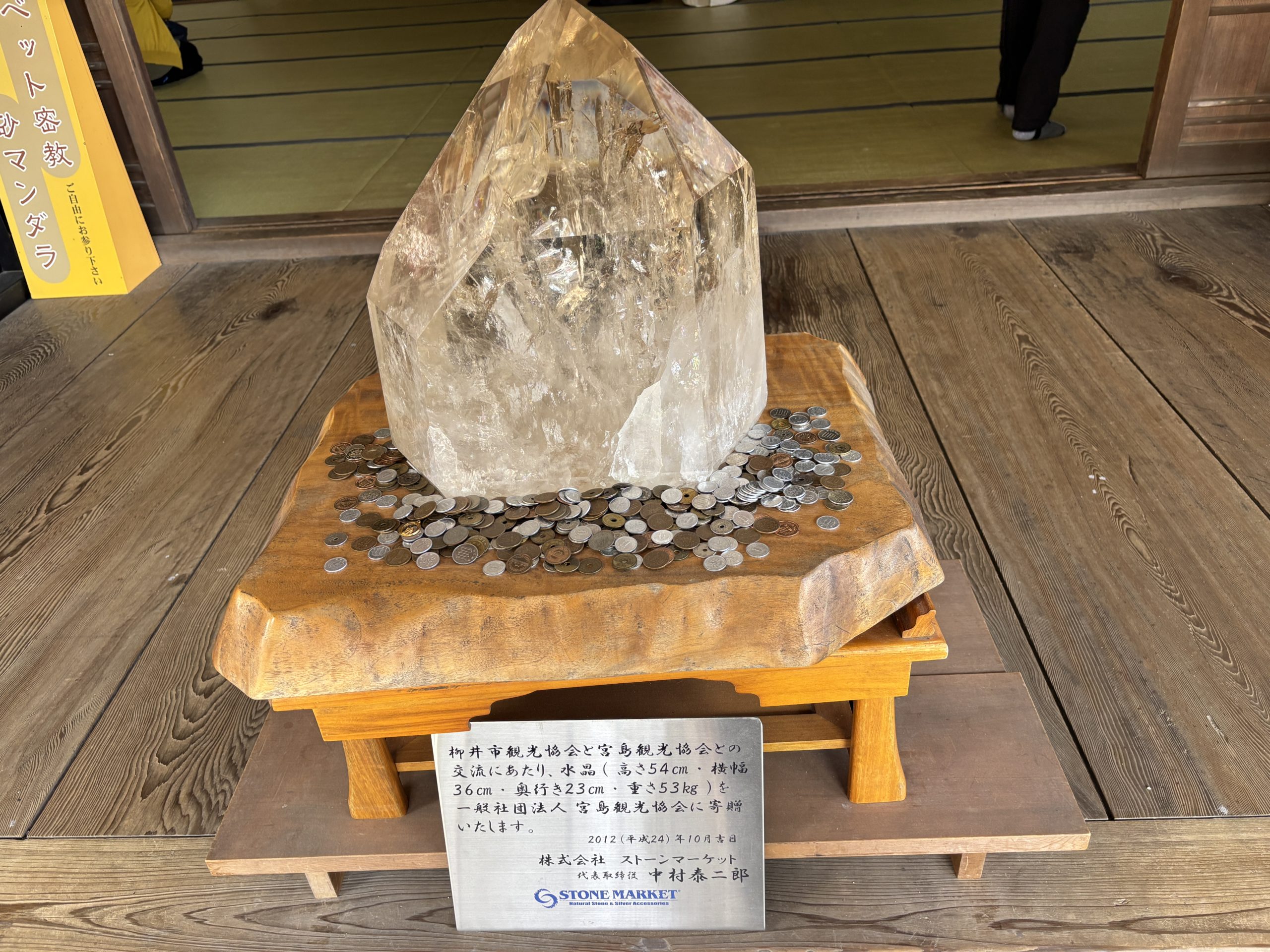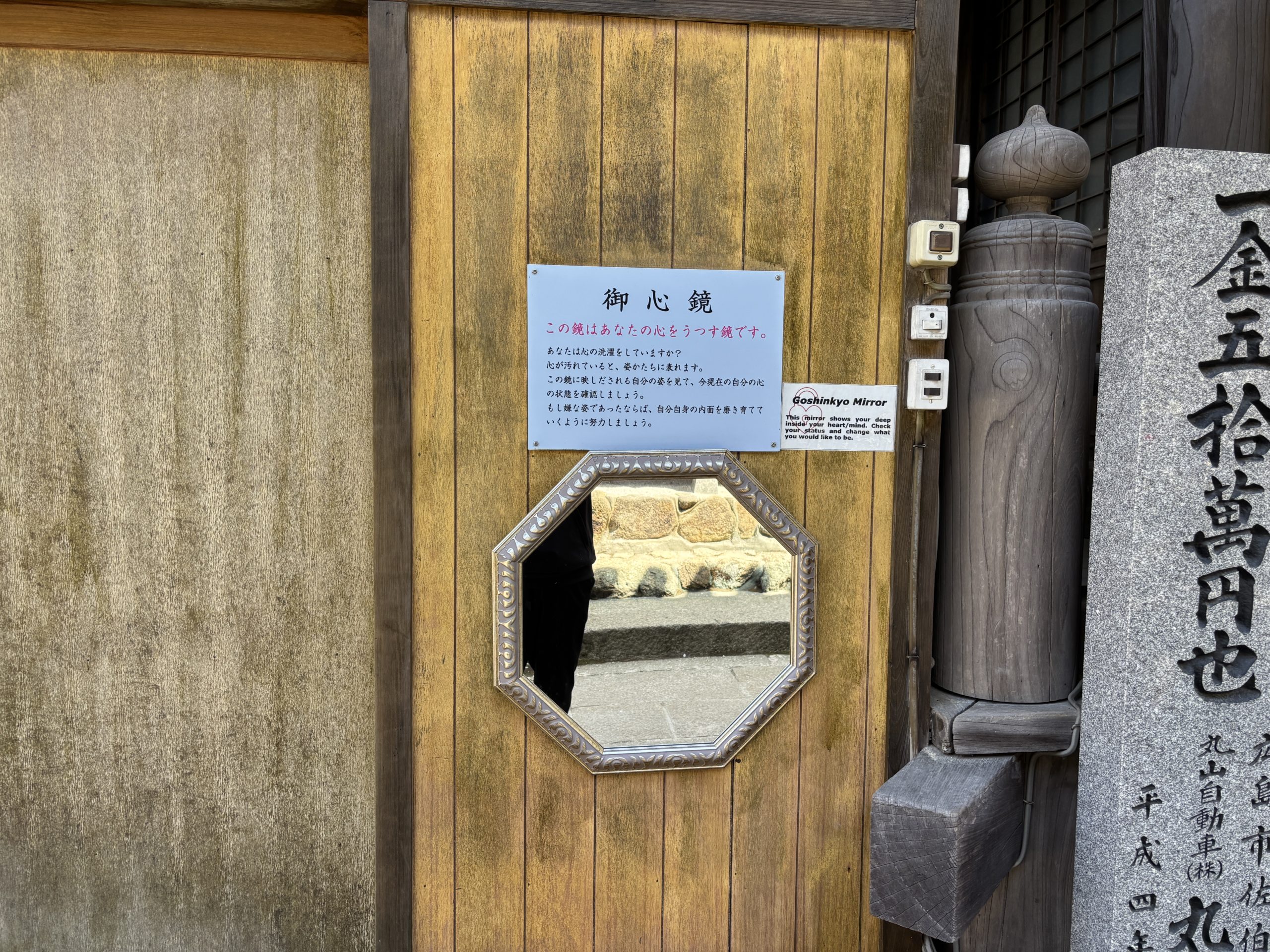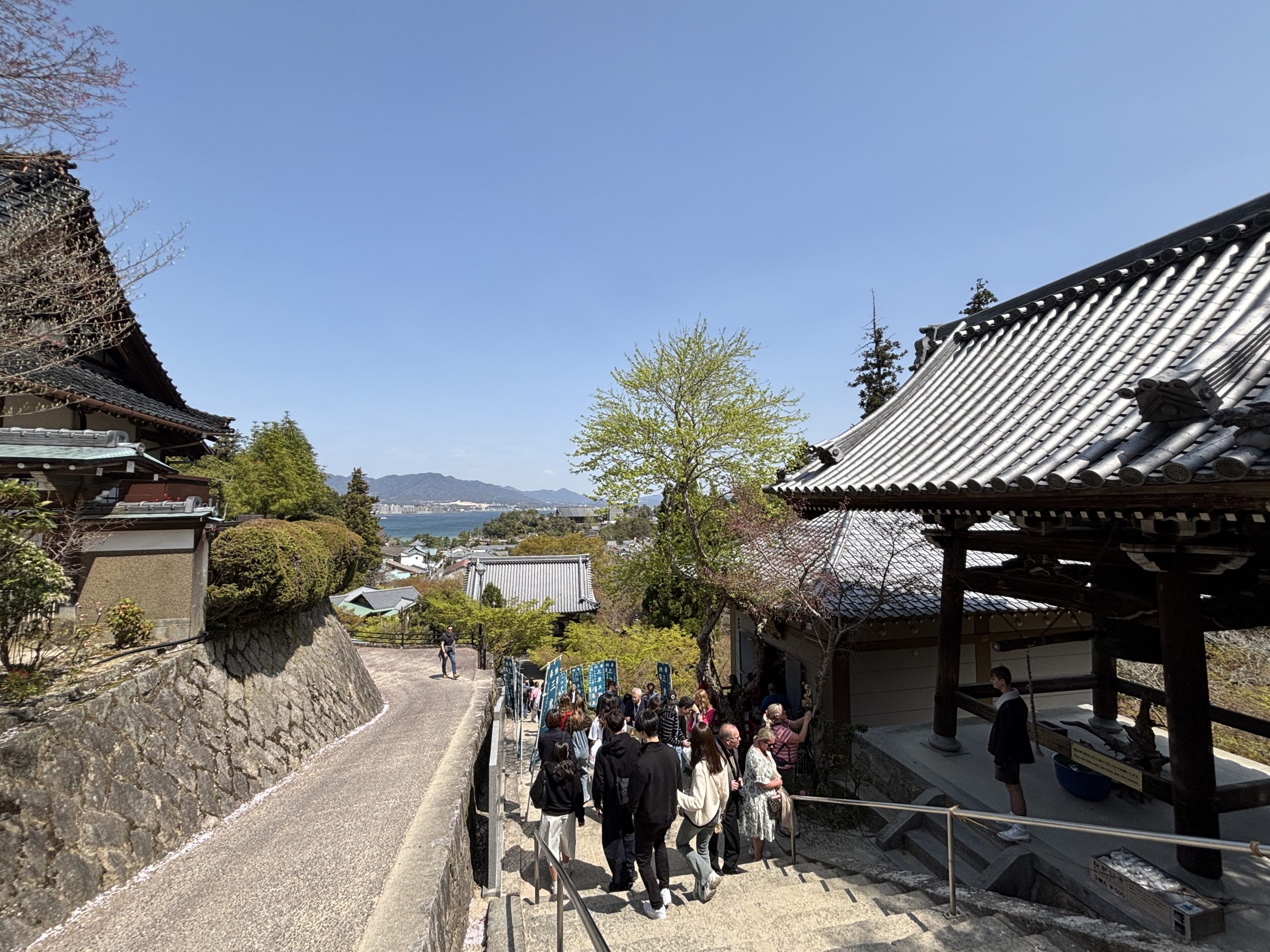
Tucked into the forested hillside at the foot of Mount Misen, Daishoin Temple is Miyajima Island’s oldest and most spiritually significant Buddhist site. Founded in 806 by the revered monk Kobo Daishi, this sprawling complex has been a place of prayer and pilgrimage for over 1,200 years — and for good reason. Unlike many temples that reward quiet contemplation alone, Daishoin is wonderfully interactive: spinning prayer wheels, walking a pitch-dark meditation corridor, treading over glowing embers, and meeting stone Jizo statues dressed in hand-knitted caps are all part of the experience here. Whether you’re traveling with kids or coming as a solo pilgrim, Daishoin has a way of drawing you in and staying with you long after you leave.
Daishoin Temple: Miyajima’s Oldest Sacred Site

Daishoin Temple stands on a hill in Miyajimacho, Hatsukaichi City, Hiroshima Prefecture, and serves as the head temple of the Omuro branch of Shingon Buddhism. It takes about 25 to 30 minutes on foot from the Miyajima ferry pier, walking through the Omotesando shopping arcade, or just 5 to 10 minutes from the exit of Itsukushima Shrine — making it a natural next stop after visiting the shrine.
Locals affectionately refer to the steep stone stairway leading up to the temple as goreshisan — a nod to the roughly 504 steps it takes to climb all the way up. It is a bit of a workout, but the scenery along the way and the atmosphere that greets you at the top make it entirely worth the effort. I visit with my family three or four times a year, and it never gets old. The quiet, the greenery, the incense in the air — there’s a calm here that’s genuinely hard to find anywhere else on the island.
History and Origins of Daishoin Temple
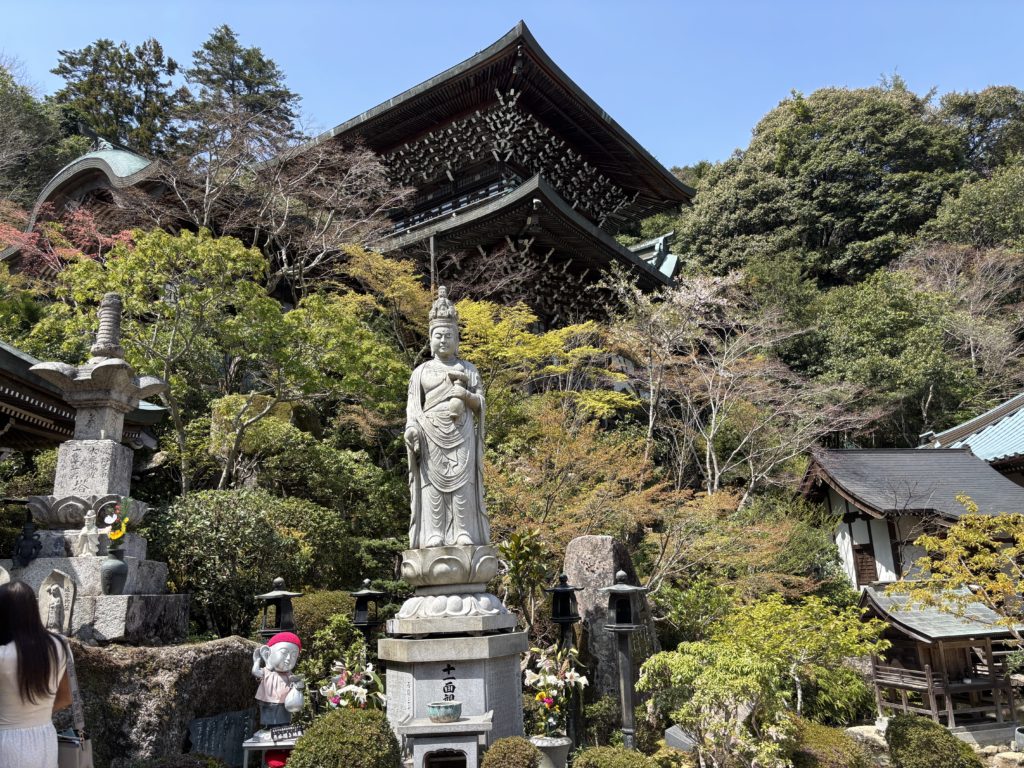
Daishoin was founded in 806 by Kobo Daishi — the monk also known as Kukai — who is one of the most revered figures in Japanese Buddhism and the founder of Shingon Buddhism. From its earliest days, the temple held a position of great influence: during the reign of Emperor Toba, it was designated an imperial prayer site, and when Emperor Meiji visited Miyajima, Daishoin served as his temporary imperial residence.
Before the Meiji-era separation of Buddhism and Shinto, Daishoin functioned as the betto-ji — the administrative temple — of Itsukushima Shrine, meaning it effectively oversaw religious affairs for the entire island. It once held twelve sub-temples within its grounds, and its ties to Ninnaji Temple in Kyoto ran deep: members of the imperial household served as head priests, and Prince Ninjo, the 20th abbot of Ninnaji, stayed at Daishoin during his time on Miyajima. The warlord Toyotomi Hideyoshi also left his mark here, reportedly offering prayers to the temple’s fierce deity Namikiri Fudo Myo-o before hosting a famous tea ceremony at the nearby Senjokaku pavilion.
Today, the ancient traditions of shinbutsu-shugo — the blending of Shinto and Buddhist practice — are kept alive through ceremonies like the Tamatori Ennensai and the Chinka-sai fire festival, which connect the temple to Itsukushima Shrine’s seasonal calendar.
Spiritual Power and Sacred Objects
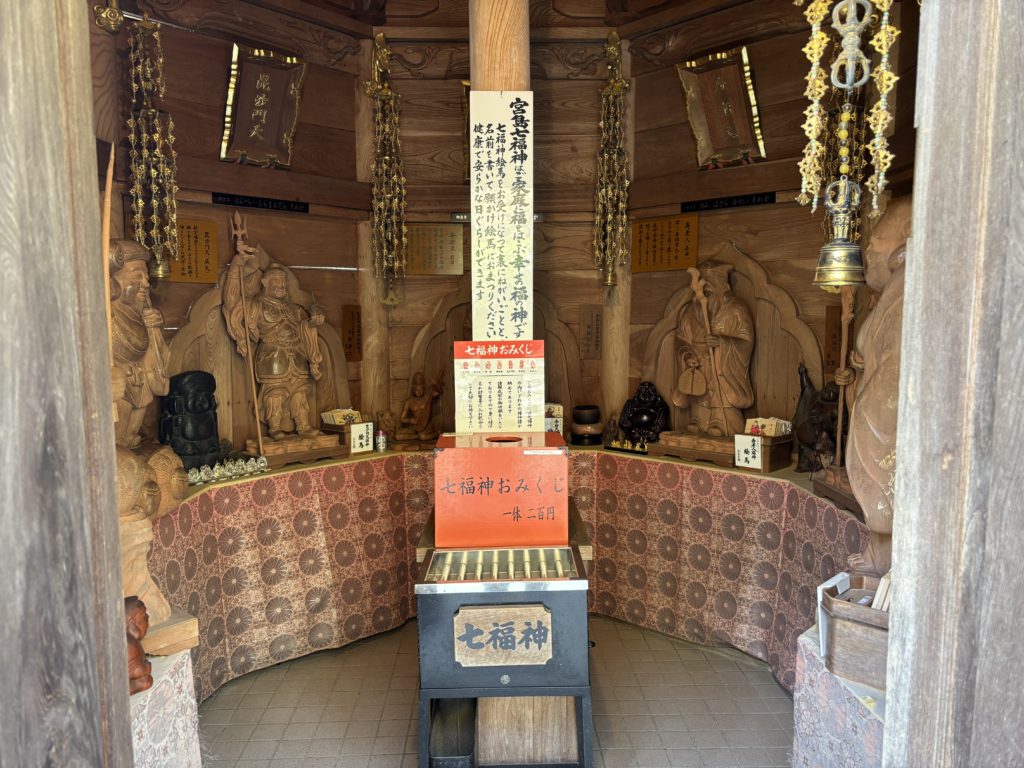
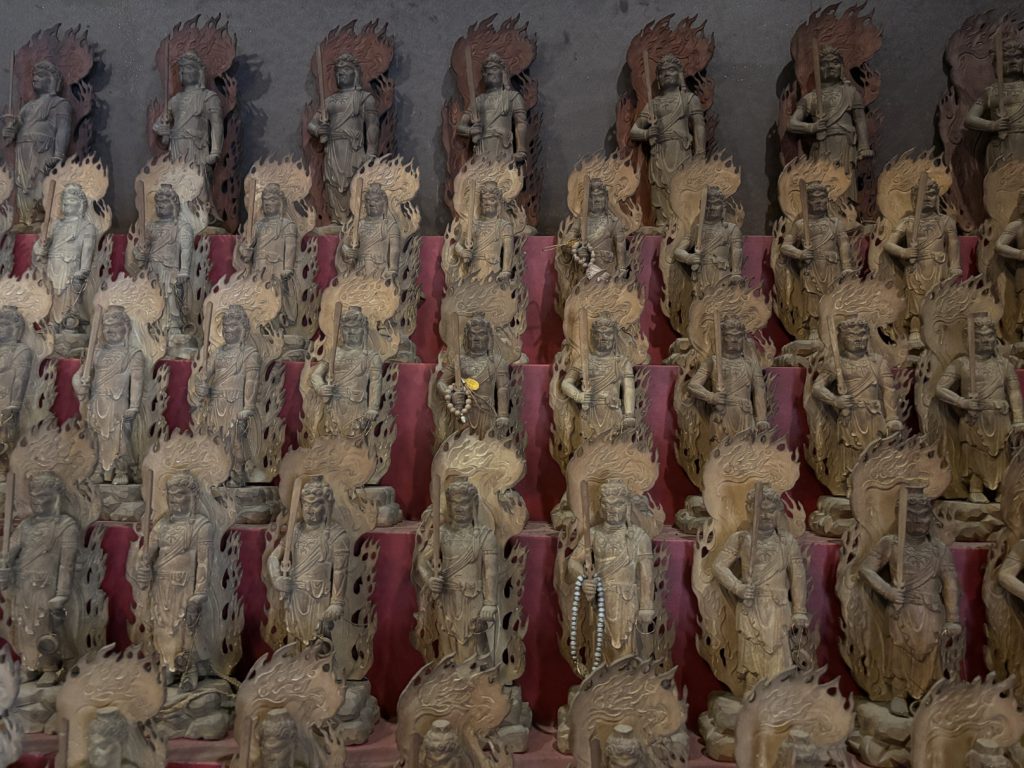
Daishoin is home to an impressive array of deities, including Kobo Daishi himself, the Three Demon Gods (Sanki Daigongen), the fierce Namikiri Fudo Myo-o, the eleven-faced Kannon Bodhisattva, and the full pantheon of Shichi Fukujin — the Seven Lucky Gods. The temple is counted among Japan’s top three temples for yakuyoke kaiun (warding off misfortune and inviting good fortune), drawing pilgrims from across the country.
One of the highlights of any visit is the Osunadoi Hall, which holds sand collected from all 88 sacred sites of the Shikoku Pilgrimage and all 33 sites of the Chugoku Kannon Circuit. Walking over this sand is believed to carry the same spiritual merit as completing both pilgrimages in full — a remarkable shortcut for those who cannot undertake the journeys themselves. Beneath the Kannon Hall, a narrow, pitch-black passageway called the Kaidan-meguri awaits those brave enough to try it: you feel your way along the wall in total darkness, and the moment you emerge into the light, there is a genuine sense of renewal. My kids were scared going in, but proudly declared they’d done it on the way out.
The Eternal Flame That Burns Since 806

Up on the slopes of Mount Misen, within a hall managed by Daishoin, burns a flame that has not been extinguished in over 1,200 years. Known as the Kiezu no Hi — the Undying Fire — it is said to have been lit by Kobo Daishi himself in 806 and has continued burning ever since. What makes this flame particularly moving for visitors from Hiroshima and beyond is its direct connection to history: this same flame served as the original source of the Flame of Peace at Hiroshima Peace Memorial Park, making it a thread that runs from ancient prayer through to one of the most powerful symbols of peace in the modern world.
Local tradition holds that water boiled over this sacred flame in the great iron kettle nearby has healing properties and can be drunk free of charge by visitors. Standing before a fire that has burned continuously for twelve centuries, through wars, storms, and the passage of dynasties, is an experience that is genuinely hard to put into words.
If you plan to visit Mount Misen, the Daishoin Trail that begins behind the temple (roughly 90 minutes to the summit) passes the Eternal Flame Hall and the Sanki-do along the way — a far more atmospheric approach than arriving directly by ropeway.
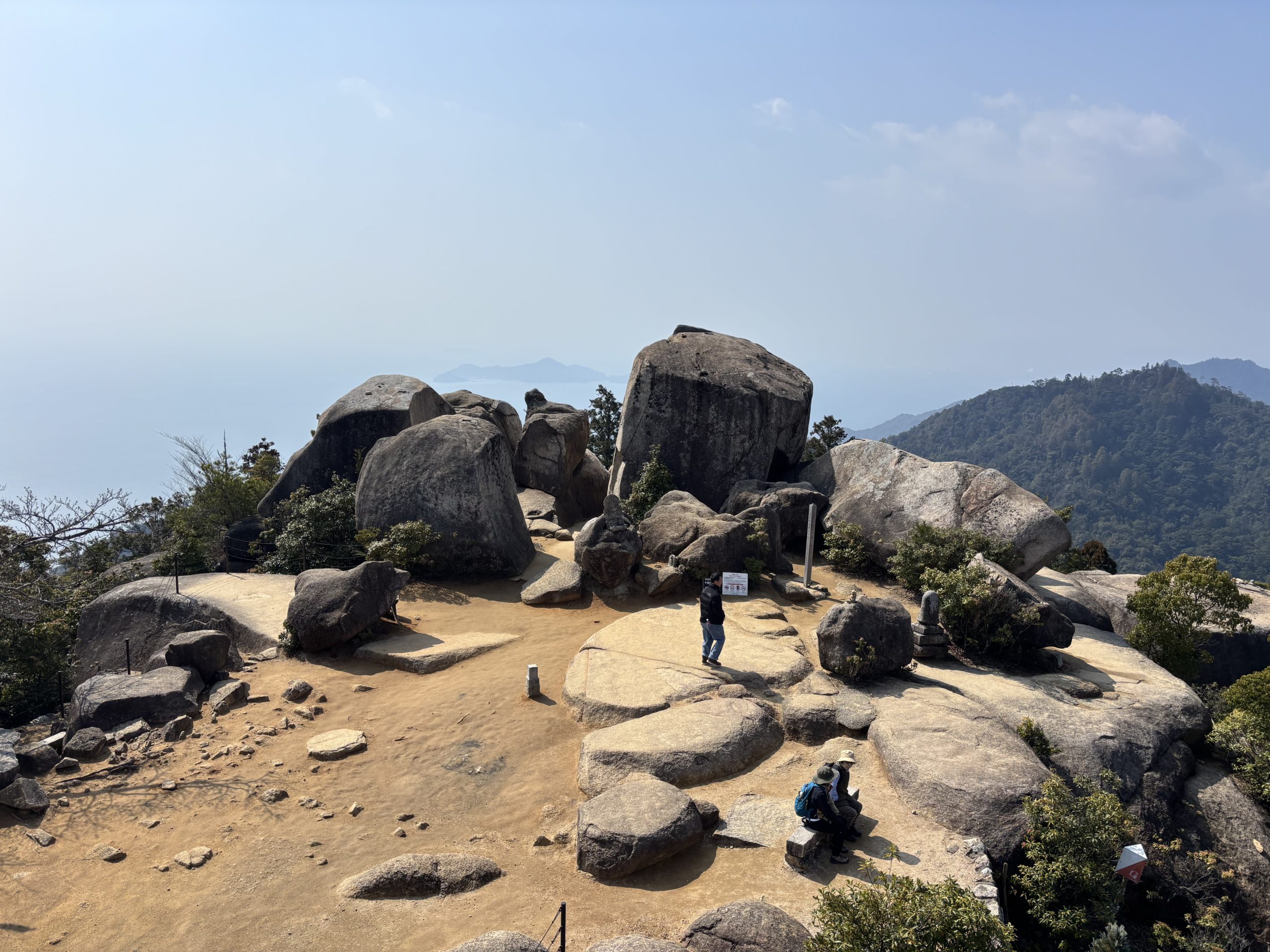
Rising 535 meters above Miyajima Island, Mount Misen is the sacred pea...
Climbing the Gate Stairs: What to Expect at the Entrance
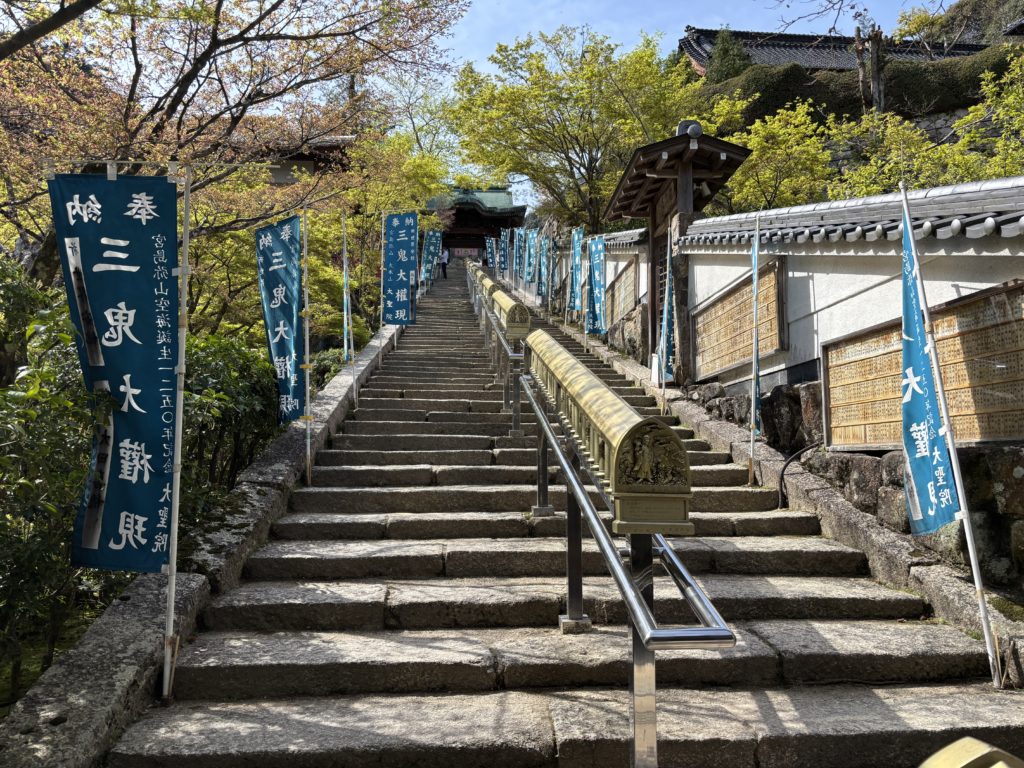
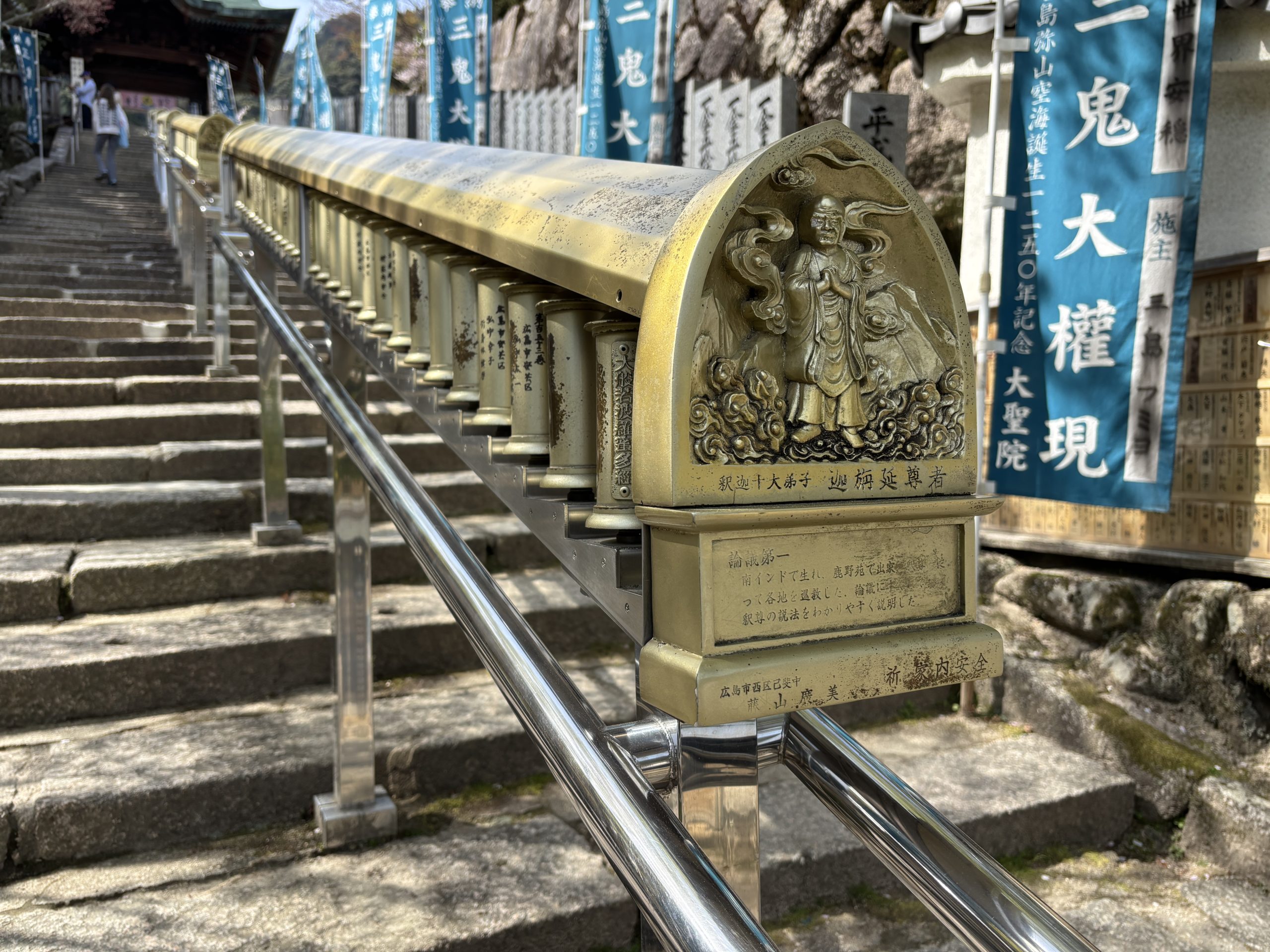
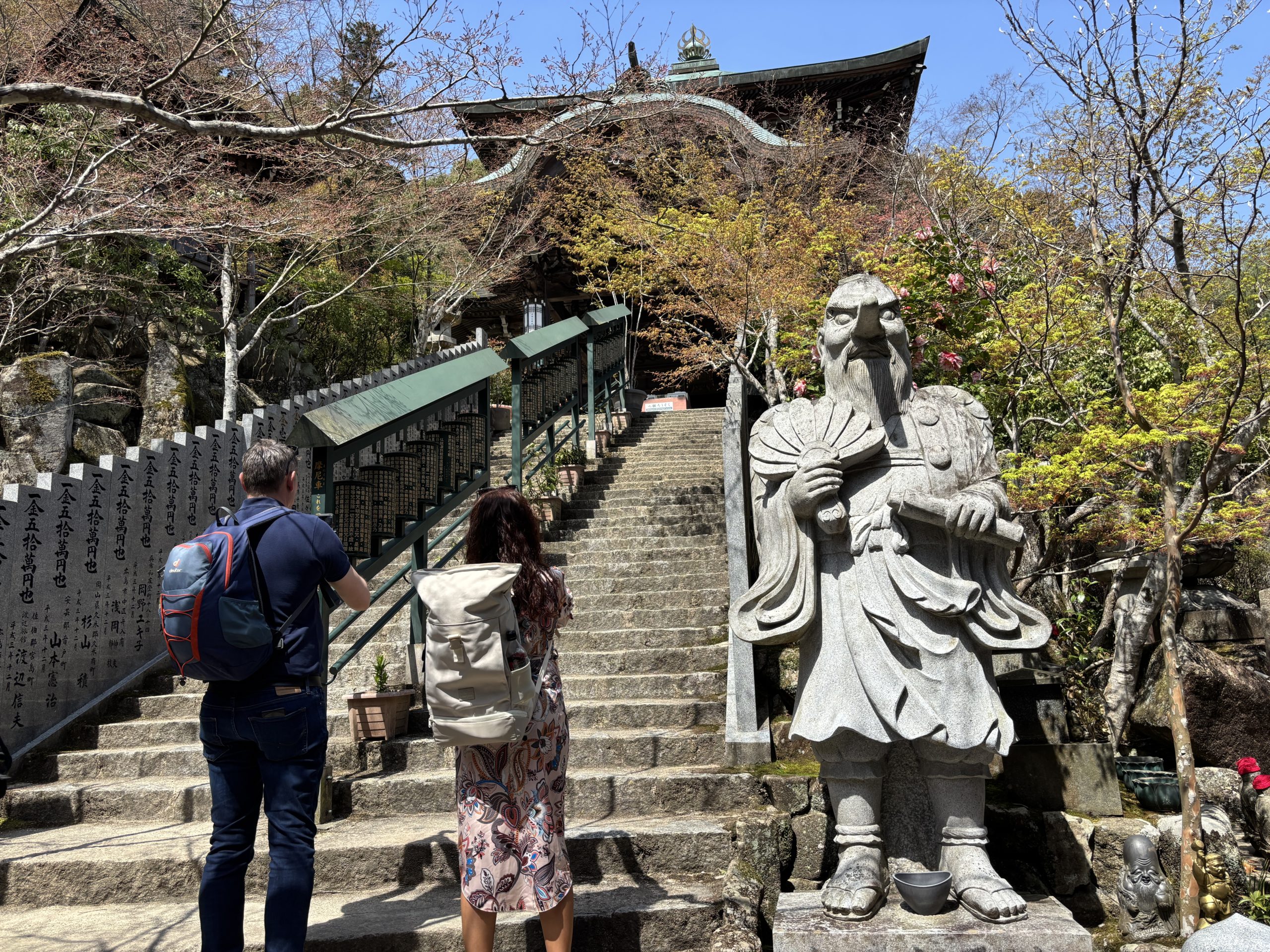
The stone stairway that leads up through the Nio-mon gate is one of the most memorable parts of any Daishoin visit. Along the handrail, you’ll find a long row of mani wheels — cylindrical prayer wheels that you spin as you climb. Each rotation is said to carry the merit of reading one full volume of the Maha Prajna Sutra, so by the time you reach the top, you’ll have accumulated quite a bit of spiritual credit. My kids love spinning every single one on the way up, narrating each one with an enthusiastic “garaaa!”
Look up as you pass through the Nio-mon gate itself: the ceiling is carved with an enormous, dramatically detailed dragon, and the flanking guardian statues — known as Kongo Rikishi, believed to date from the Muromachi period — keep watch with formidable expressions said to drive away evil. Scattered along the steps, you’ll also notice small stone receptacles called negai-dama (wishing balls): toss a coin into one to make a wish. They’ve become something of a social media moment, so don’t skip them.
If you are visiting with a stroller or wheelchair, a slope route runs around the side of the main staircase. Staff at the reception area can direct you — just ask when you arrive. The route gives access to the Daishi-do, Mani-den, and Chokugan-do without needing to navigate the stairs.

In spring, the route up to the temple is lined with cherry blossoms, and the grounds feel almost impossibly beautiful. Among locals, the area around the Tahoto pagoda is considered one of the island’s best-kept cherry blossom secrets. The blossoms typically peak in early April, which conveniently coincides with the temple’s Hana Matsuri festival — more on that below.
April 8: Hana Matsuri — Celebrating the Buddha’s Birthday

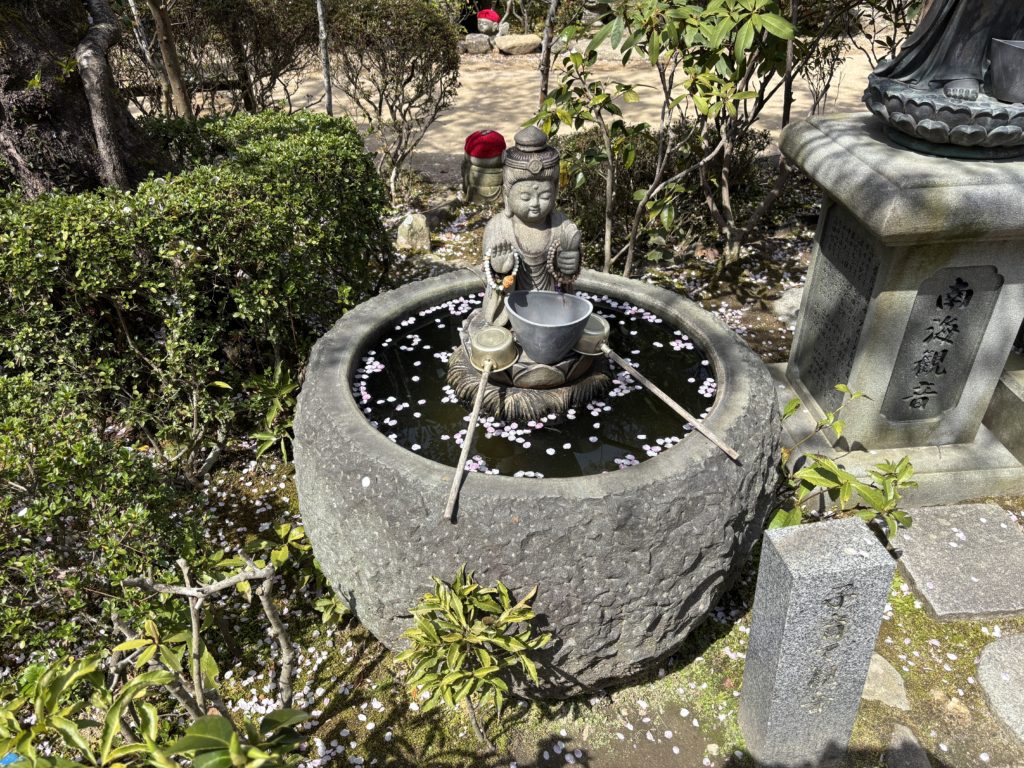
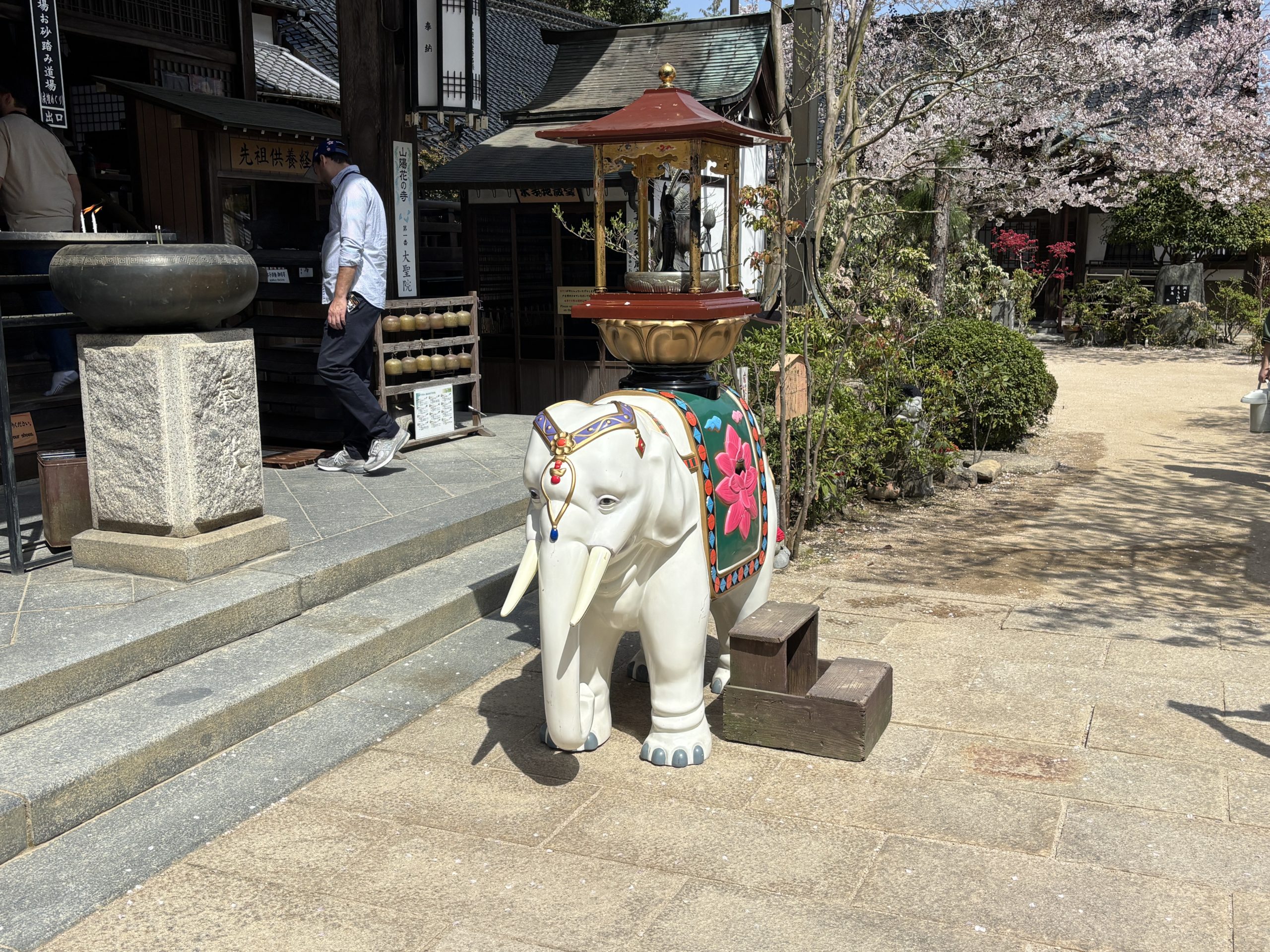
Every year on April 8th, Buddhist temples across Japan celebrate Hana Matsuri — the birthday of Shakyamuni Buddha. At Daishoin, the ceremony centers on a beautifully decorated statue of the infant Buddha standing atop a small elephant. Visitors pour ama-cha (sweet hydrangea tea) over the statue as an offering, a custom that dates back centuries. The ceremony begins at 11:00 AM in front of the temple and is open to all visitors — no registration required.
With the cherry blossoms typically still in bloom on April 8th and the festive atmosphere of the ceremony, it’s one of the loveliest days of the year to visit Daishoin. Last year I brought my daughters, and the younger one was completely transfixed by the elephant statue — she talked about it for weeks.
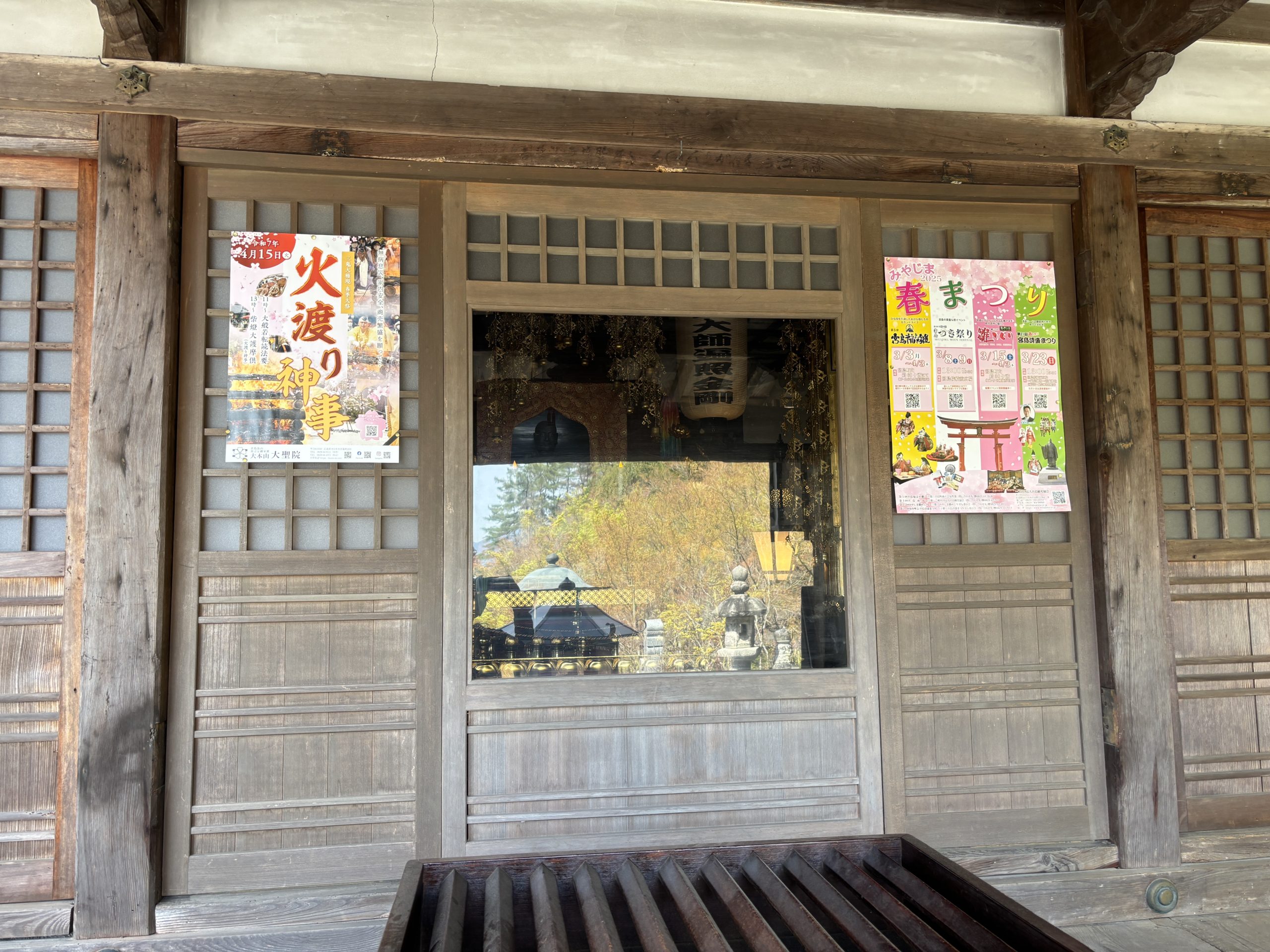
Just a week later, on April 15th, comes one of the most dramatic events on Miyajima’s calendar: the Hiwatari-shiki, or Fire Walking Ceremony. This ancient Shingon Buddhist ritual involves walking barefoot over a bed of smoldering cypress branches while chanting prayers for wishes to be fulfilled. The procession goes in order of rank — head priest, monks, mountain ascetics, and then open to lay participants — and anyone who wishes to walk can join. It is equal parts solemn and spectacular, and watching it even as a bystander is an unforgettable experience.
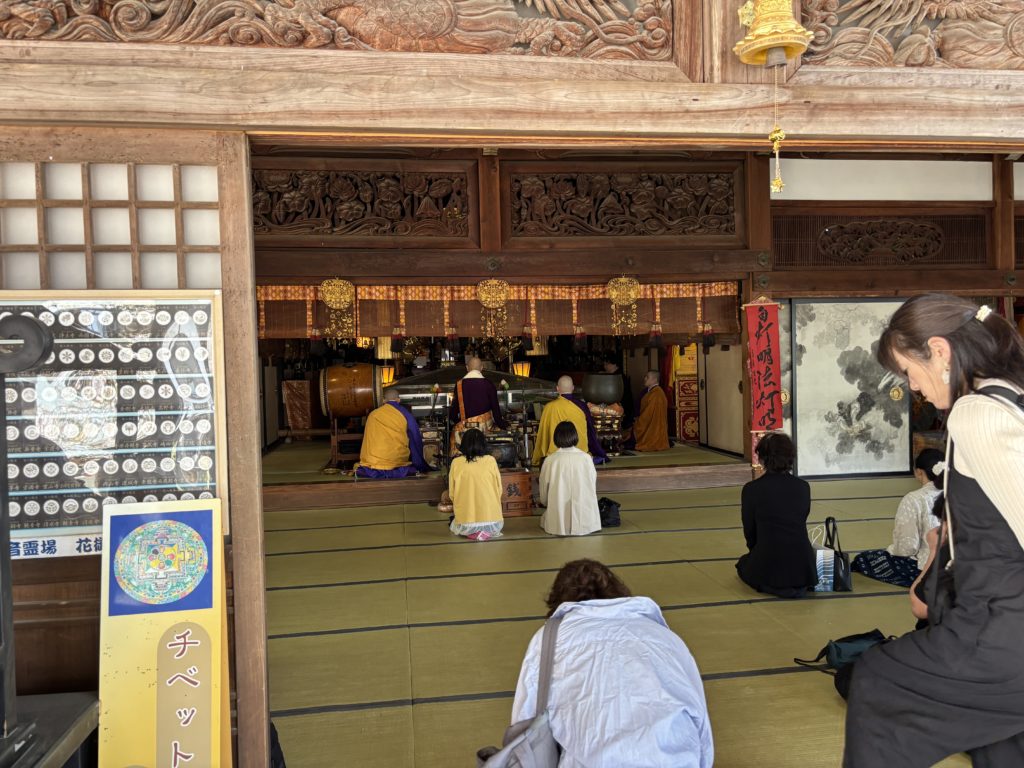
During festivals and regular prayer services, visitors are welcome to enter the Kannon Hall and join the monks in chanting the Heart Sutra. Crib sheets with the full sutra text are available to borrow — so don’t be put off if you’ve never heard it before. Even following along in phonetic syllables is considered perfectly welcome.
Exploring the Temple Grounds
Daishoin’s grounds are far more expansive than they first appear, and wandering without a fixed route is genuinely one of the pleasures of visiting. The atmosphere shifts as you move between halls — some solemn and incense-heavy, others surprisingly playful, with stone Jizo statues wearing hand-knitted hats, a Jizo said to listen to your grievances (愚痴聞き地蔵), and prayer wheels of every size. Below is an overview of the main areas worth seeking out.
Onari-mon Gate
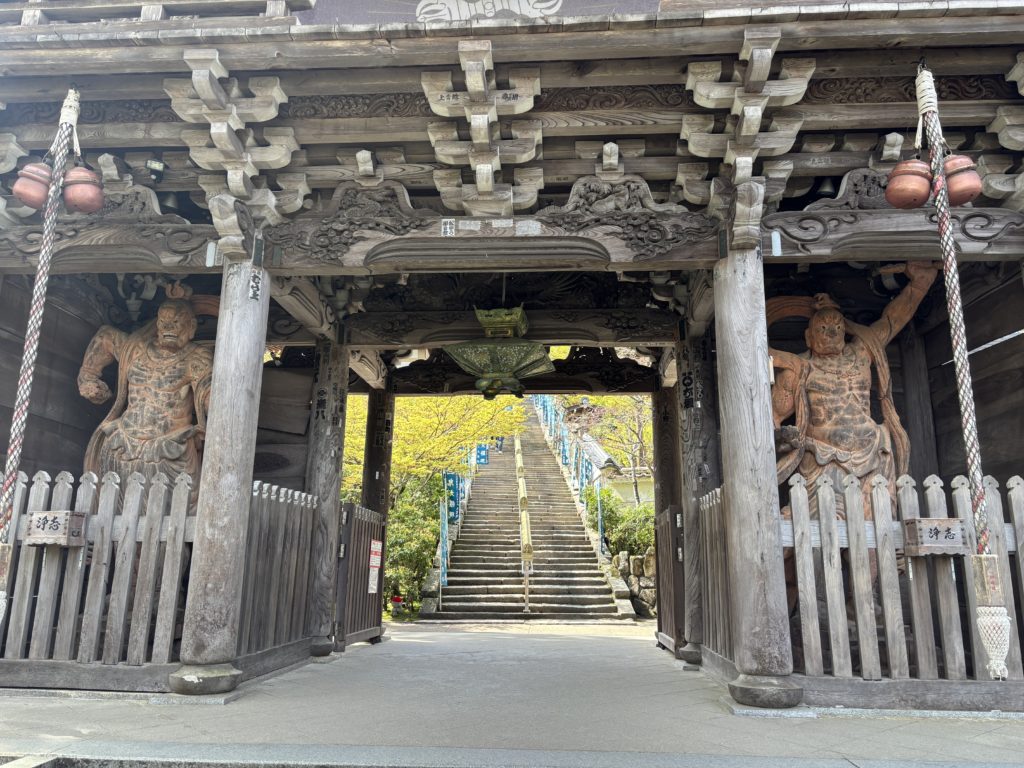
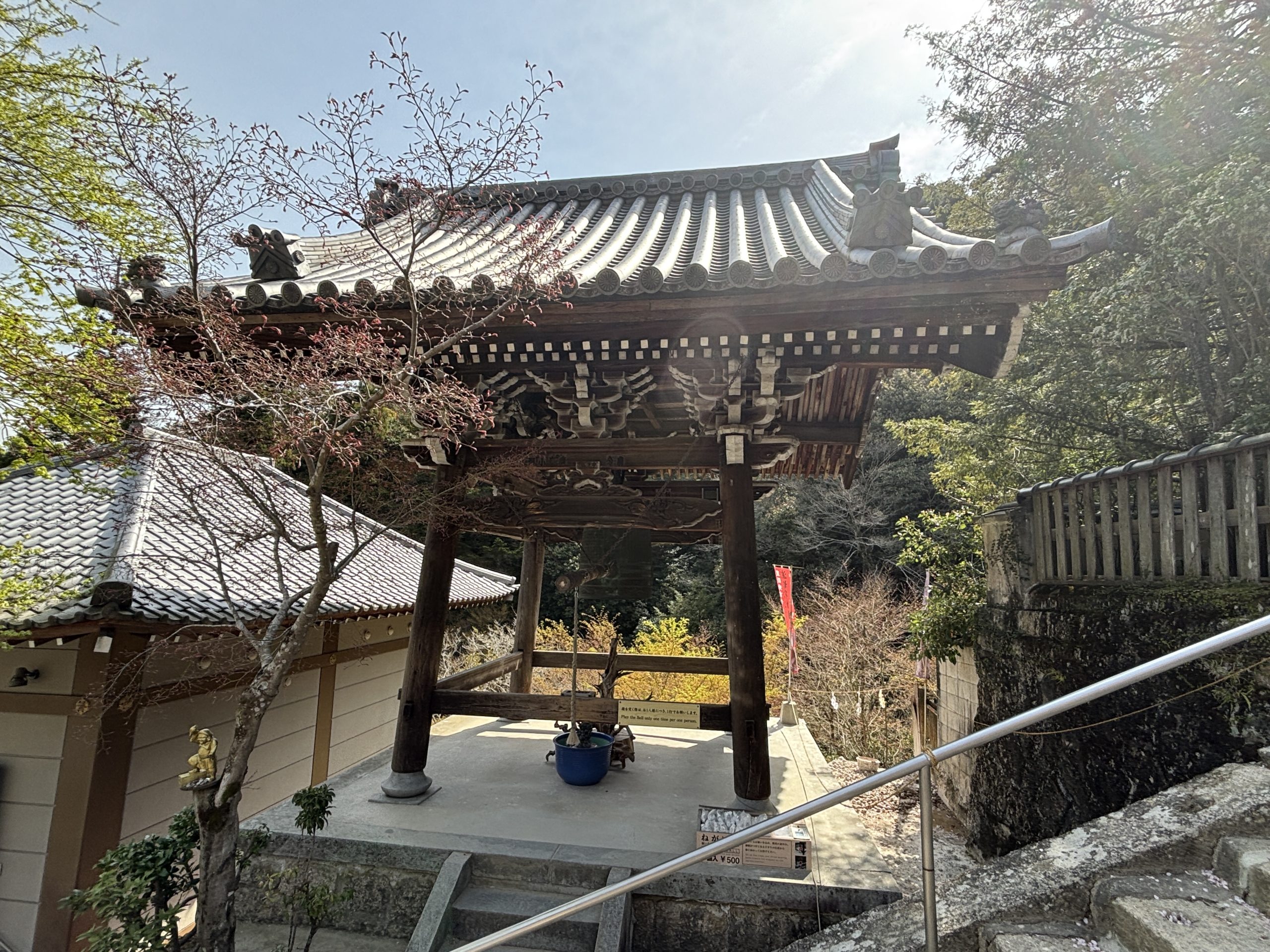
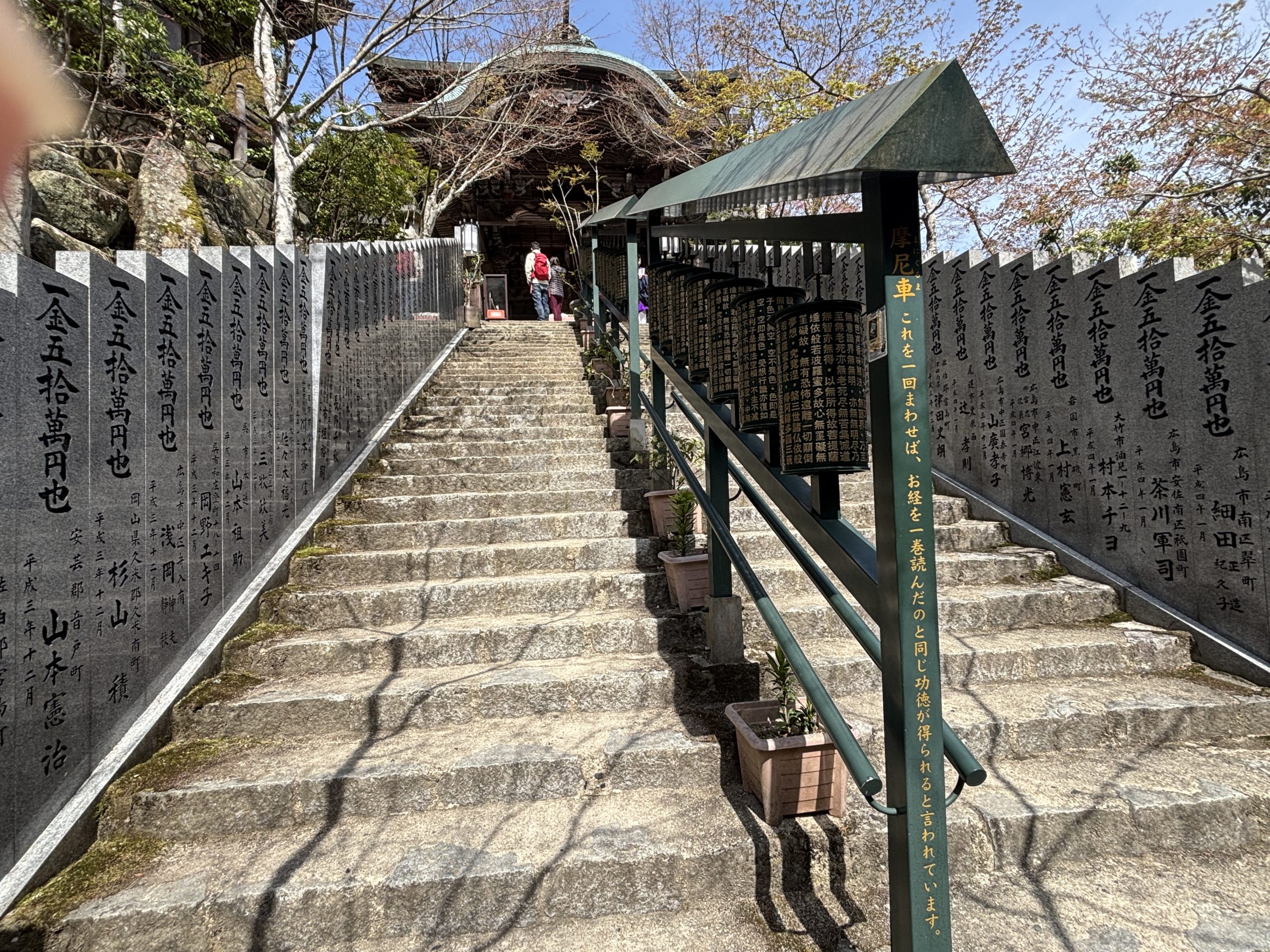
The Onari-mon was originally constructed for use by high-ranking guests — shoguns and emperors — but today it stands open to all visitors. The approach through this gate is lined with trees and offers a tranquil, forest-corridor feeling that makes the climb feel almost meditative rather than tiring. If you’re visiting with children, this is a good spot to build in a rest stop before continuing up.
Mani-den Hall
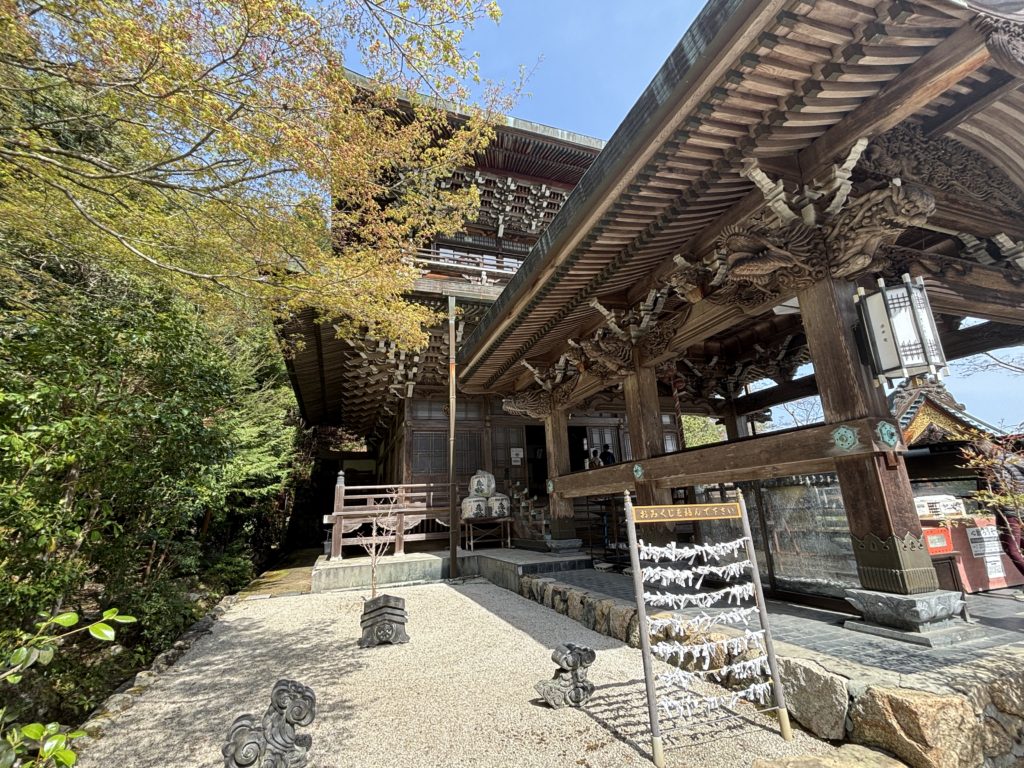
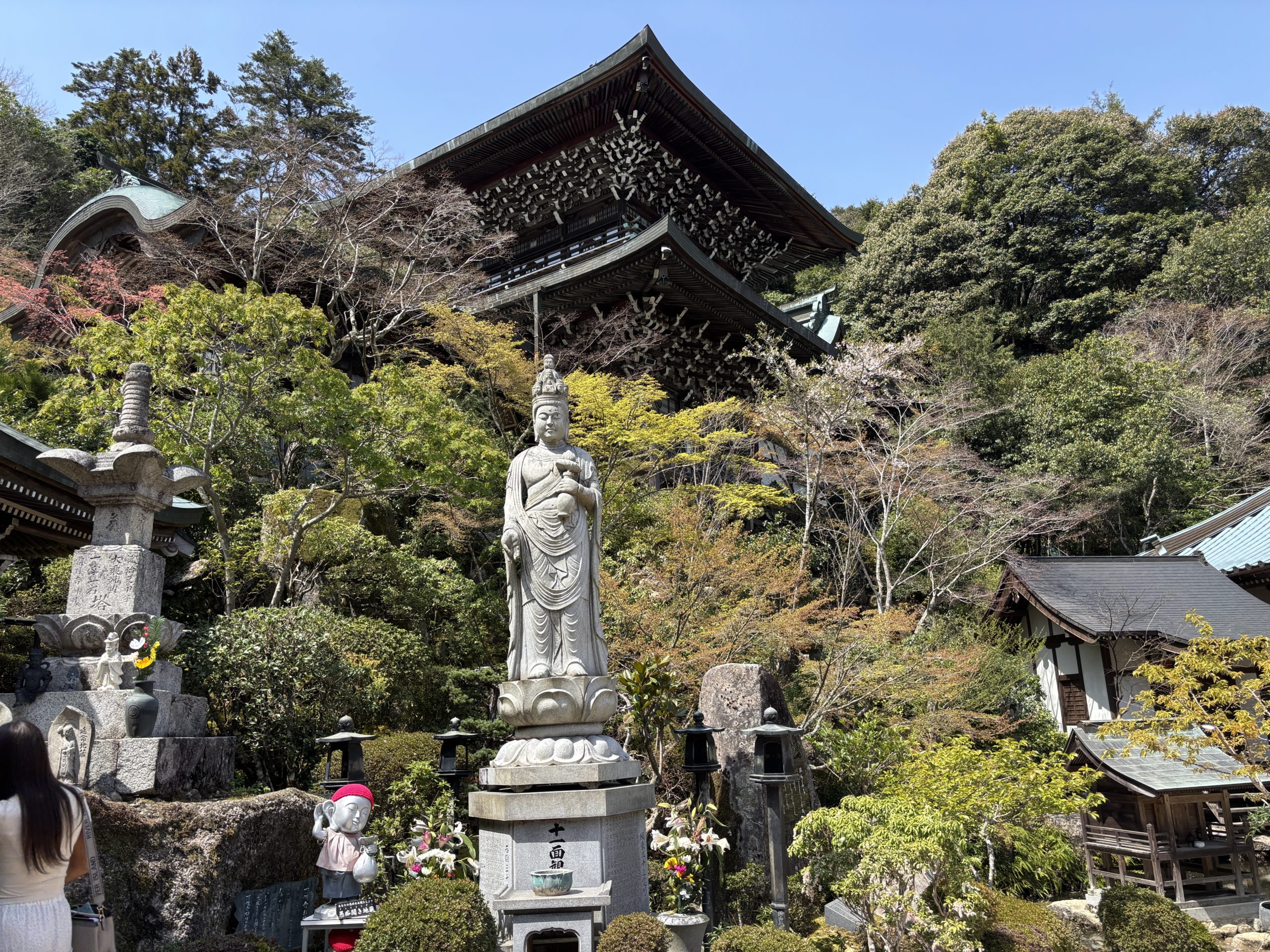
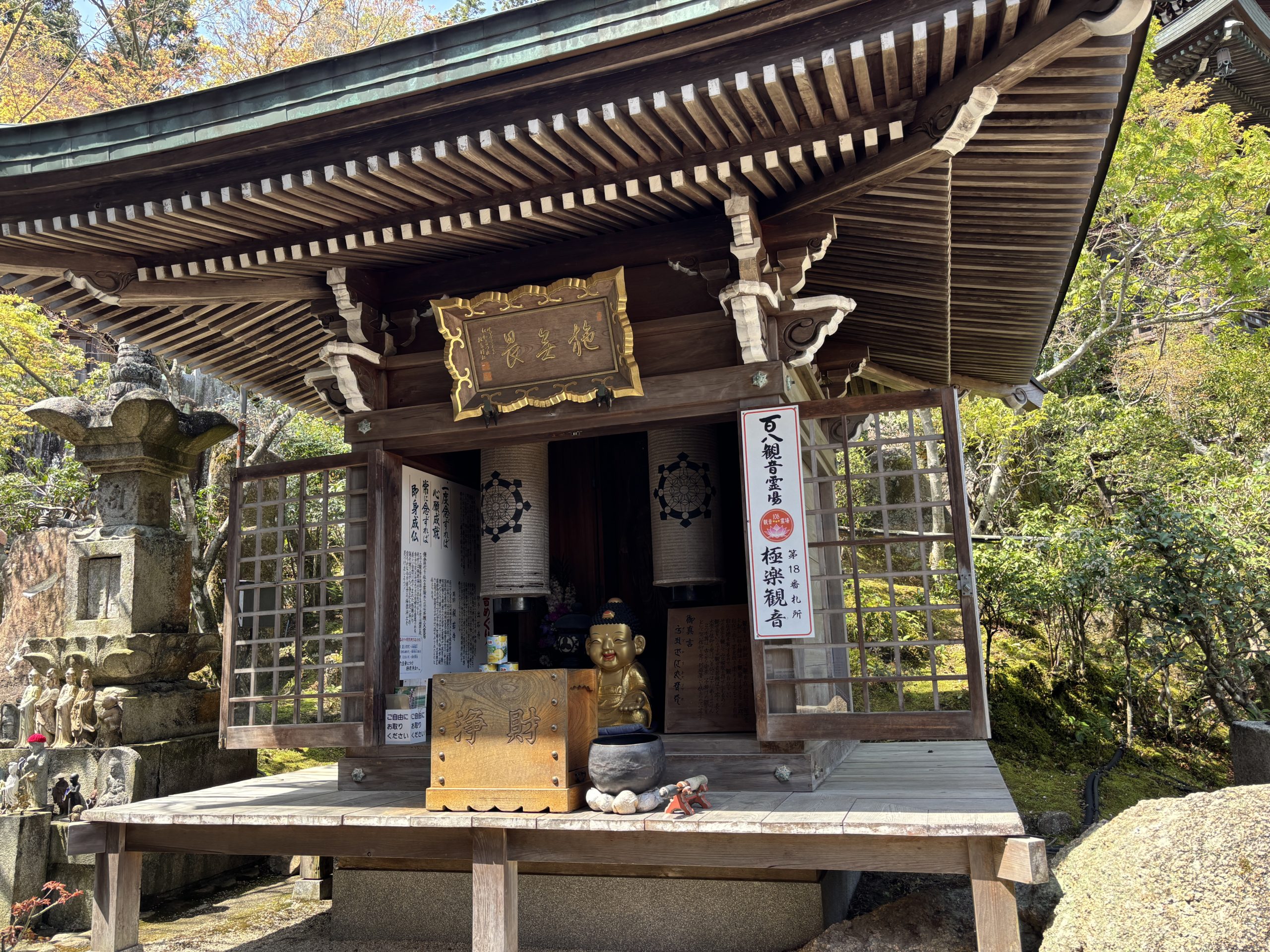
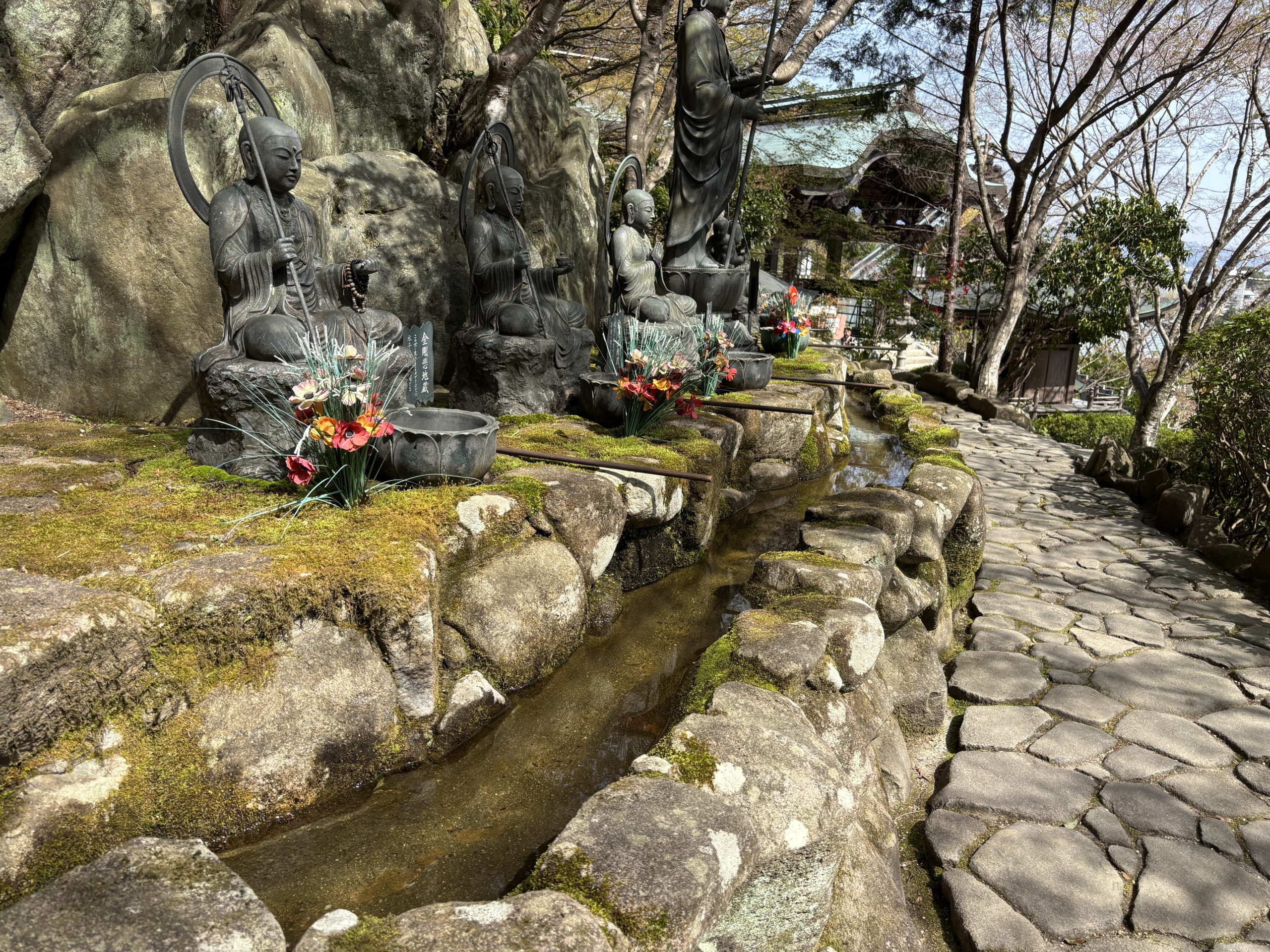
The Mani-den sits at the heart of the temple complex and houses the Three Demon Gods, collectively known as Sanki Daigongen — the guardian deities of Mount Misen. Unusually, these deities are venerated using Shinto-style worship (two bows, two claps, one bow) rather than Buddhist prayer, which is a rare example of the centuries-old blending of Japan’s two great religious traditions. The hall is particularly beautiful on a clear day, when the light filters through the surrounding trees and plays across the weathered wood of the structure.
Hakkaku Manpuku-do (Eight-Sided Hall of Good Fortune)
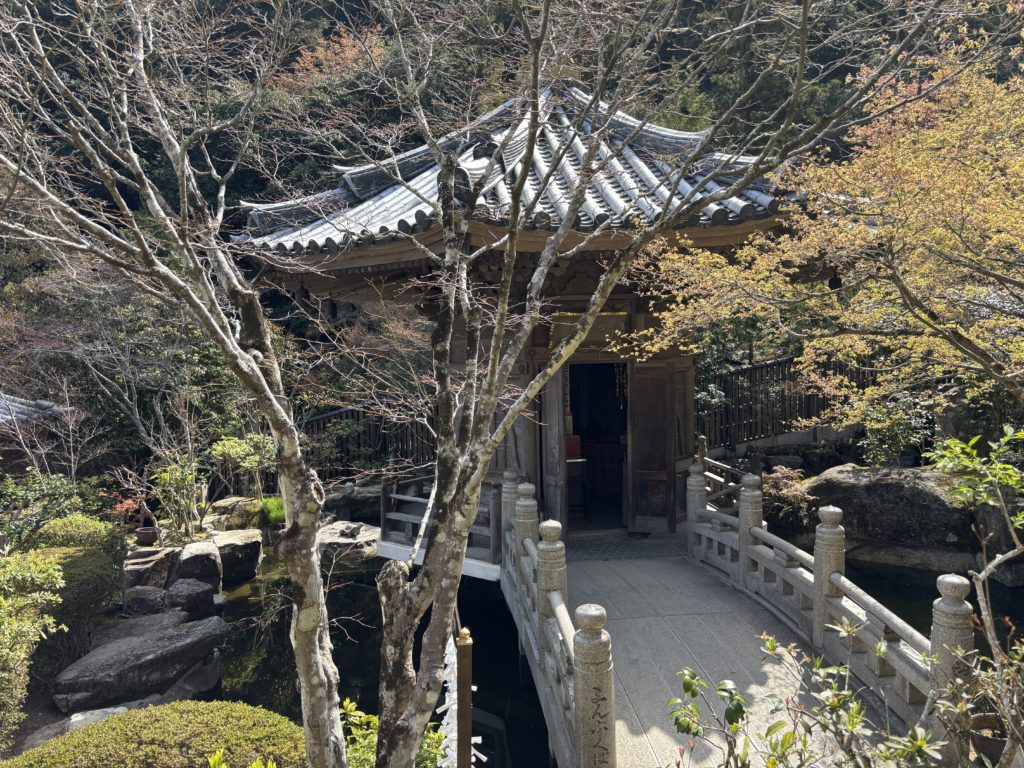
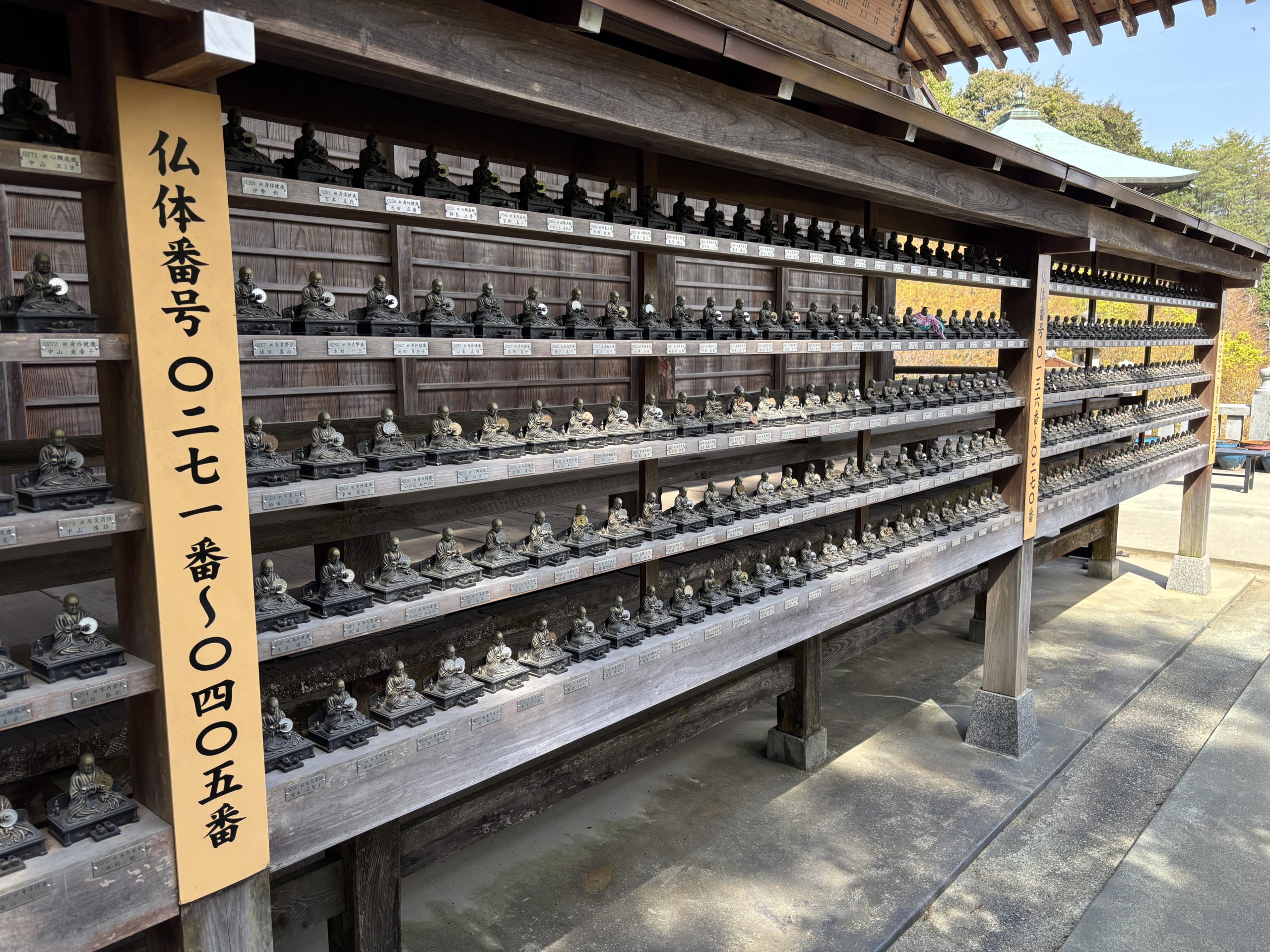
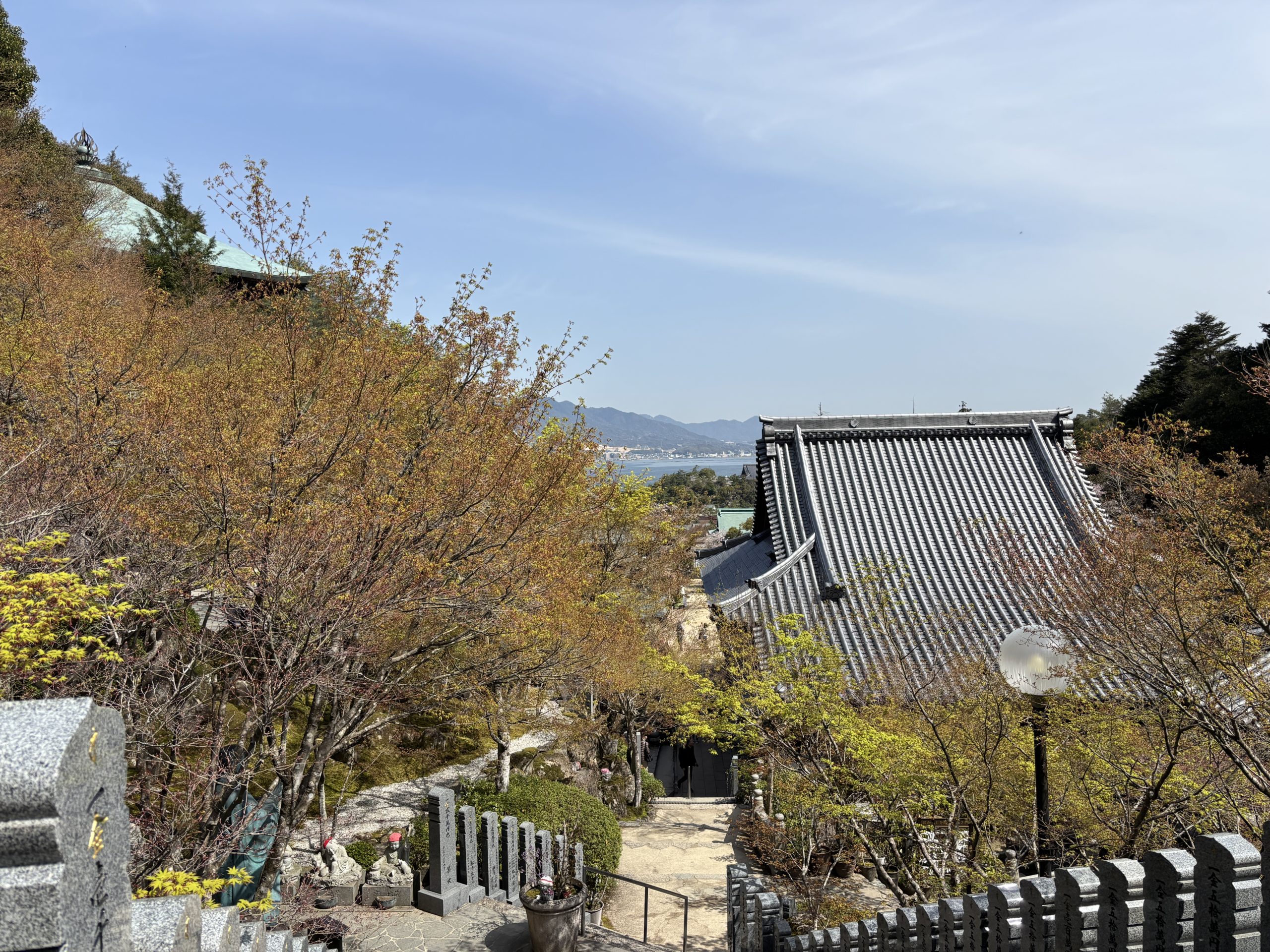
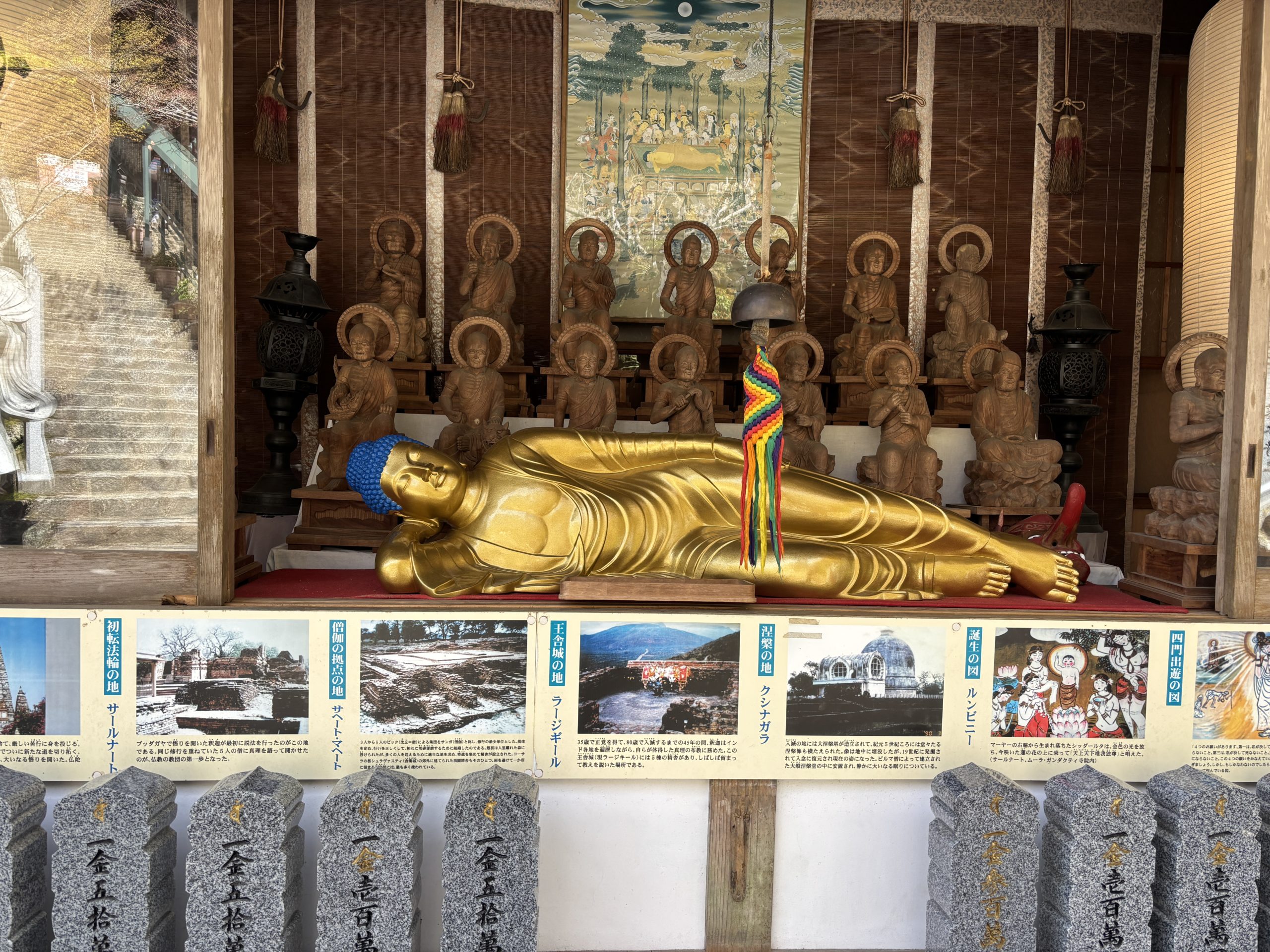
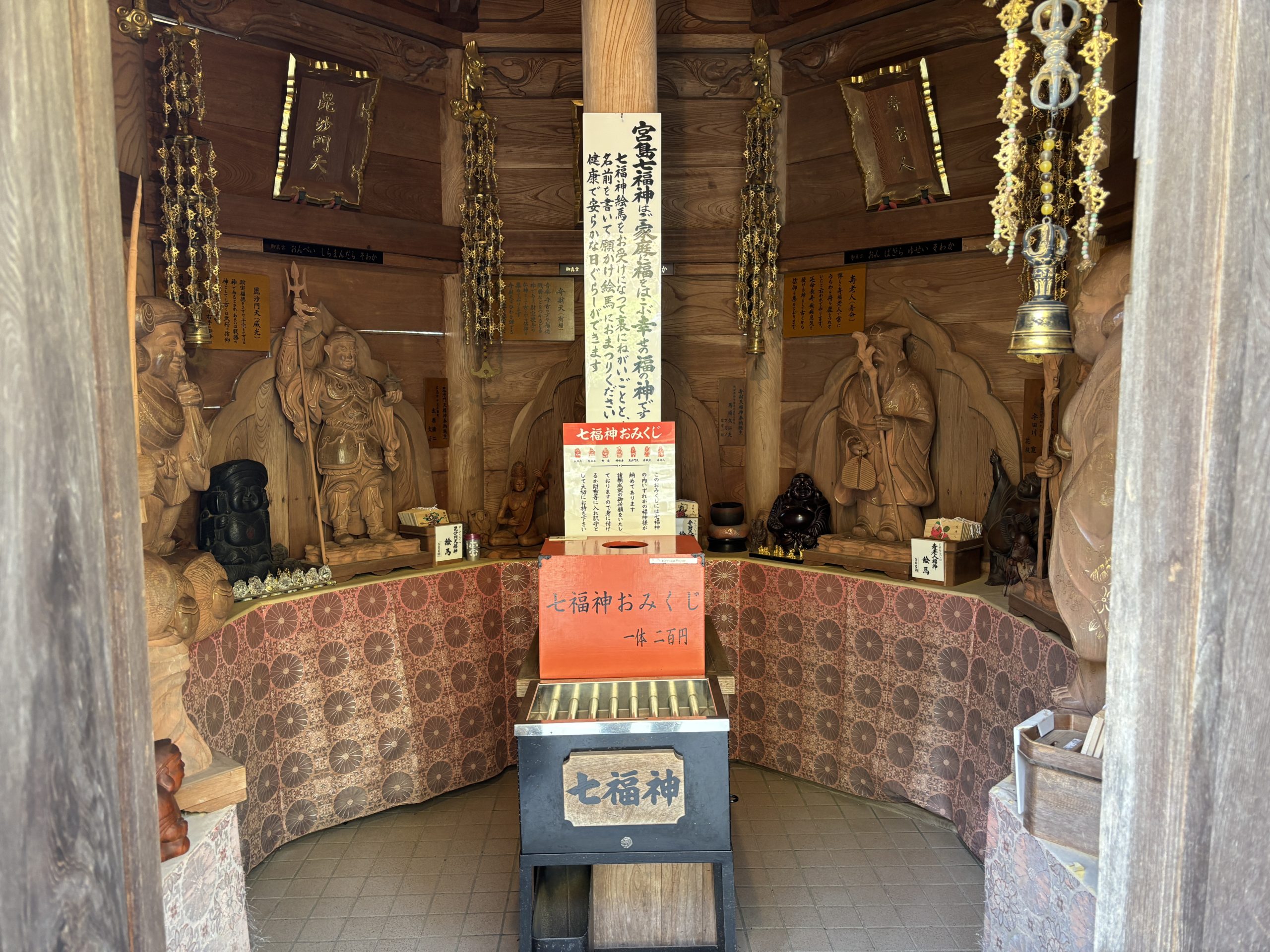
Located behind the Chokugan-do hall, this distinctive octagonal structure enshrines all seven of the Shichi Fukujin — Japan’s Seven Lucky Gods: Daikokuten, Bishamonten, Ebisu, Jurojin, Fukurokuju, Benzaiten, and Hotei. Together they are known as the Miyajima Shichi Fukujin and are said to bring good fortune to the household. This is one of our family’s favorite spots on the grounds — something about the gentle, round-faced expressions of the statues makes the hall feel unusually warm and welcoming.
Daishi-do Hall
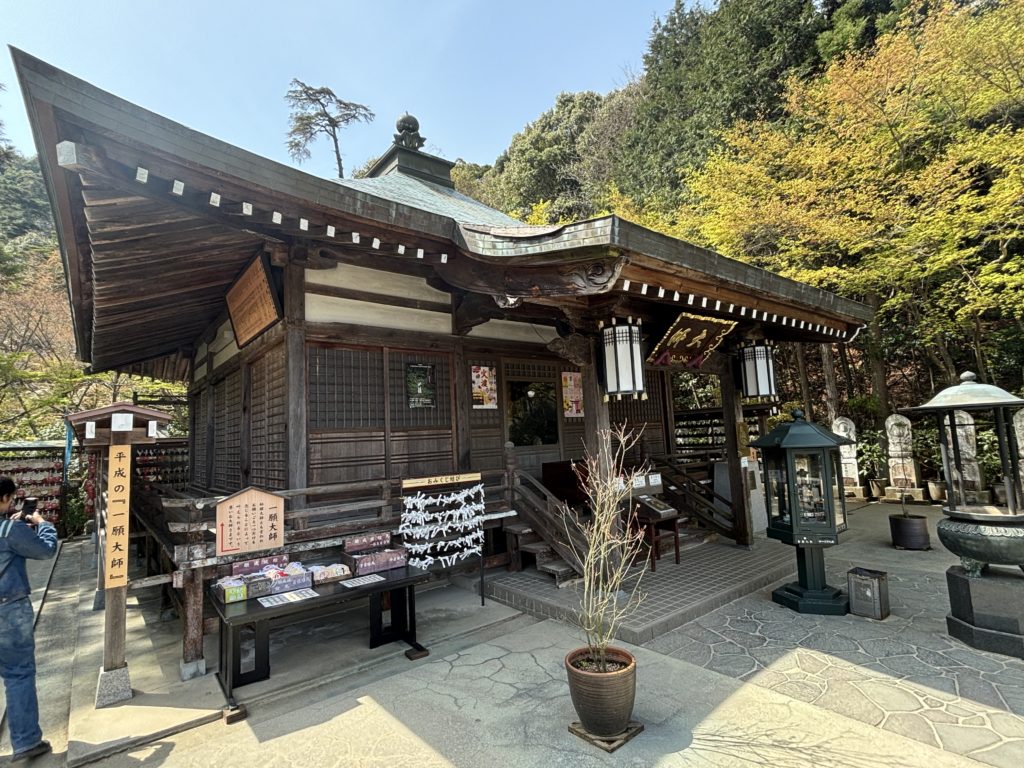
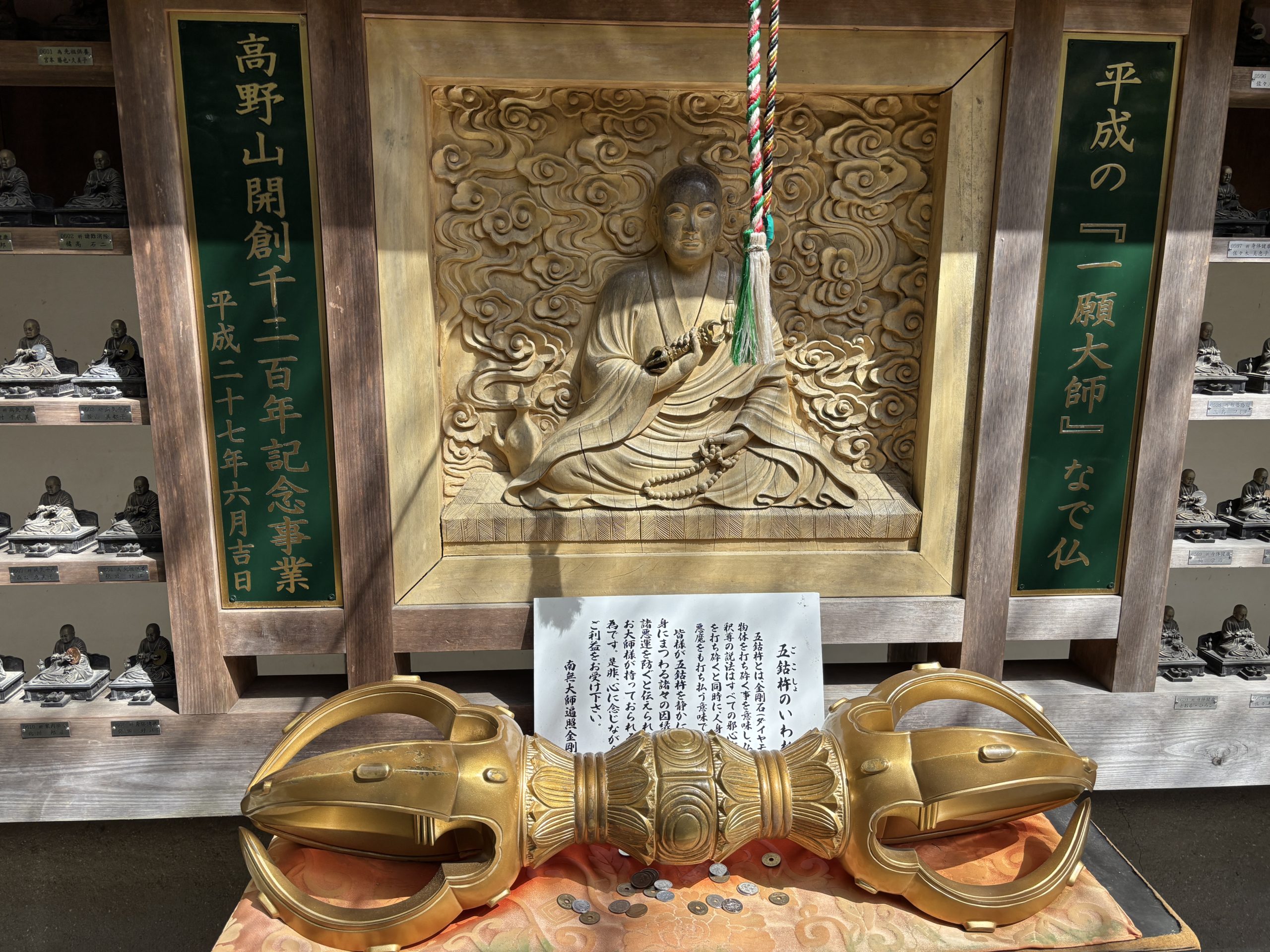
The Daishi-do is the oldest building in the main temple compound and enshrines Kobo Daishi himself. Behind it stands the Ichigan Daishi — a statue said to grant a single wish to those who pray sincerely. Ema votive plaques in a variety of designs are sold nearby, and it’s worth taking a moment here even if wish-making isn’t usually your thing. Beneath the Daishi-do, the Henjo Cave (Hensho-kutsu) replicates the Shikoku 88-temple pilgrimage in miniature — walking through it is believed to carry the same merit as making the full journey to Shikoku.

Kannon-do Hall
The large hall on the right-hand side as you approach the top of the main stone stairway is the Kannon-do, which houses the eleven-faced Kannon Bodhisattva — originally the honji-butsu, or Buddhist counterpart deity, of Itsukushima Shrine. The hall is open for visitors to enter and, during prayer services, to participate in sutra chanting. Sweet tea is served here during the Hana Matsuri celebration in April.



Goshuin Temple Stamps and Amulets
Daishoin is a popular stop for goshuin collectors — the decorative red-ink stamps that serve as proof of pilgrimage and are treasured as keepsakes of temple visits. The temple typically offers three to four different designs at any given time, with the Namikiri Fudo Myo-o seal being the most sought-after standard option. Seasonal kirie goshuin (intricate cut-paper stamps) featuring cherry blossoms in spring and maple leaves in autumn are issued in limited quantities and have become quite popular. Weekend and holiday mornings tend to sell out, so arriving early is strongly recommended if these are on your list.
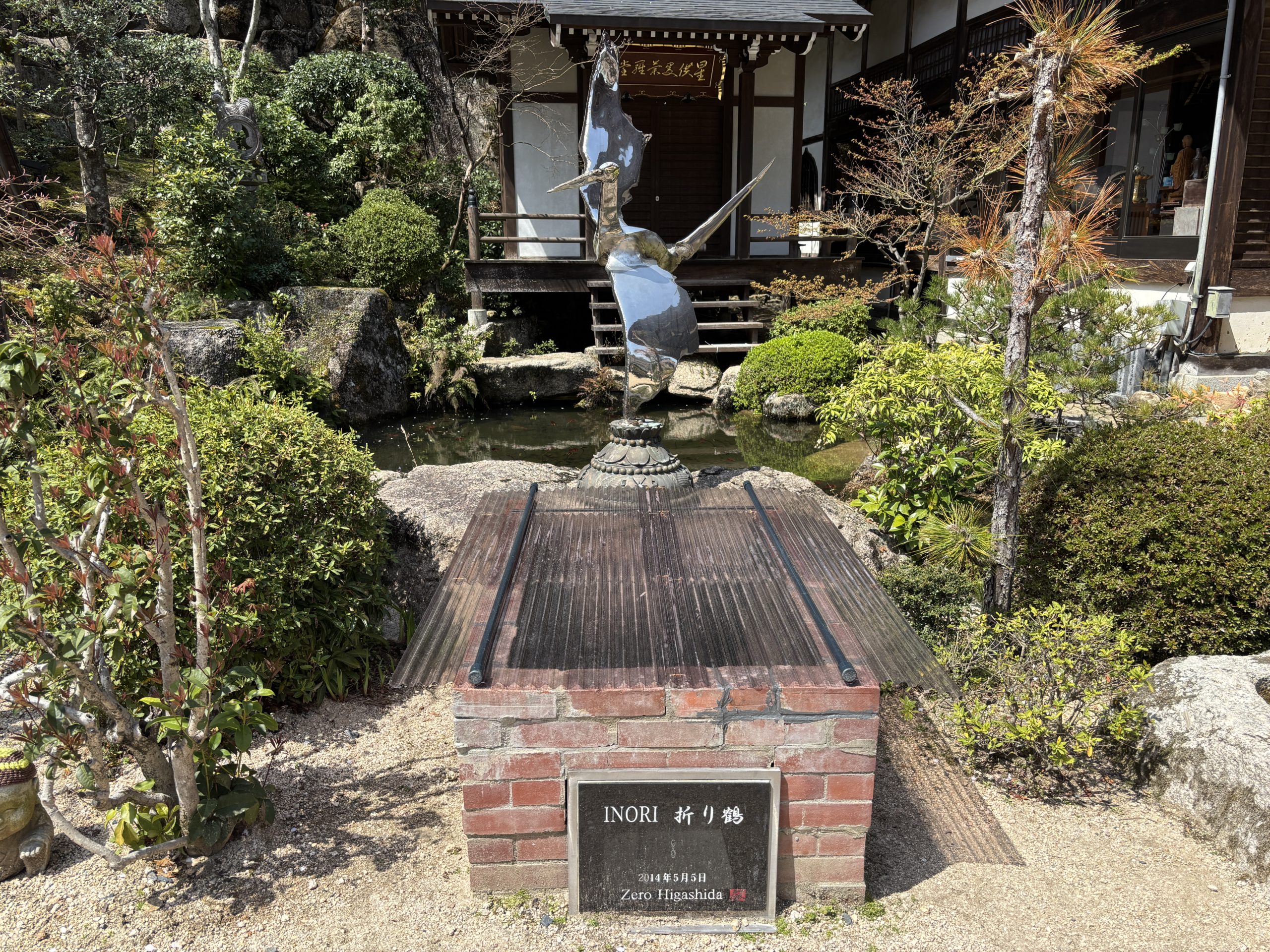
Beyond stamps, the temple’s amulet counter stocks some genuinely distinctive items: mamori-suna (protective sand pouches for safe travel), fire-walking talismans, and the charming Sanki mikuji fortune-telling charms in the shape of the Three Demon Gods. The shop also carries origami crane lamps made using ash from Hiroshima peace cranes as glaze material — a beautiful and meaningful souvenir that connects the temple’s sacred flame tradition to Hiroshima’s story of peace.
Experiences and Annual Events
For those who want to go deeper than a standard sightseeing visit, Daishoin offers a range of participatory experiences throughout the year. A small-group guided tour called Deep Miyajima (reservation required, approximately 90 minutes) takes visitors behind the scenes of the temple’s daily practice. Regular scheduled programs include:
- Zazen and esoteric meditation — every Saturday from 7:00 AM, free by donation
- Sutra copying and Buddha painting (shakyou / shabutsu) — daily 9:00 AM–3:00 PM, ¥1,000
- Prayer bead making workshop — weekends and public holidays only, ¥1,500
All of the above operate on a limited-capacity basis, and advance reservation via the temple’s official website is recommended. Beyond the April events described above, the seasonal calendar continues with evening illuminations of the autumn foliage in mid-to-late November (tentatively 5:30–8:00 PM), and a winter meditation program under the stars. Mid-June is hydrangea season, and locals consider Daishoin to be the best spot on the entire island for them — a secret worth acting on if you happen to be visiting in June.
After exploring Daishoin, the nearby Senjokaku pavilion is a natural next stop. This massive open-air hall was built on the orders of Toyotomi Hideyoshi and offers sweeping views over the shrine complex. It’s said that hidden beneath the floorboards, if you know where to look, are graffiti markings left by Edo-period visitors.
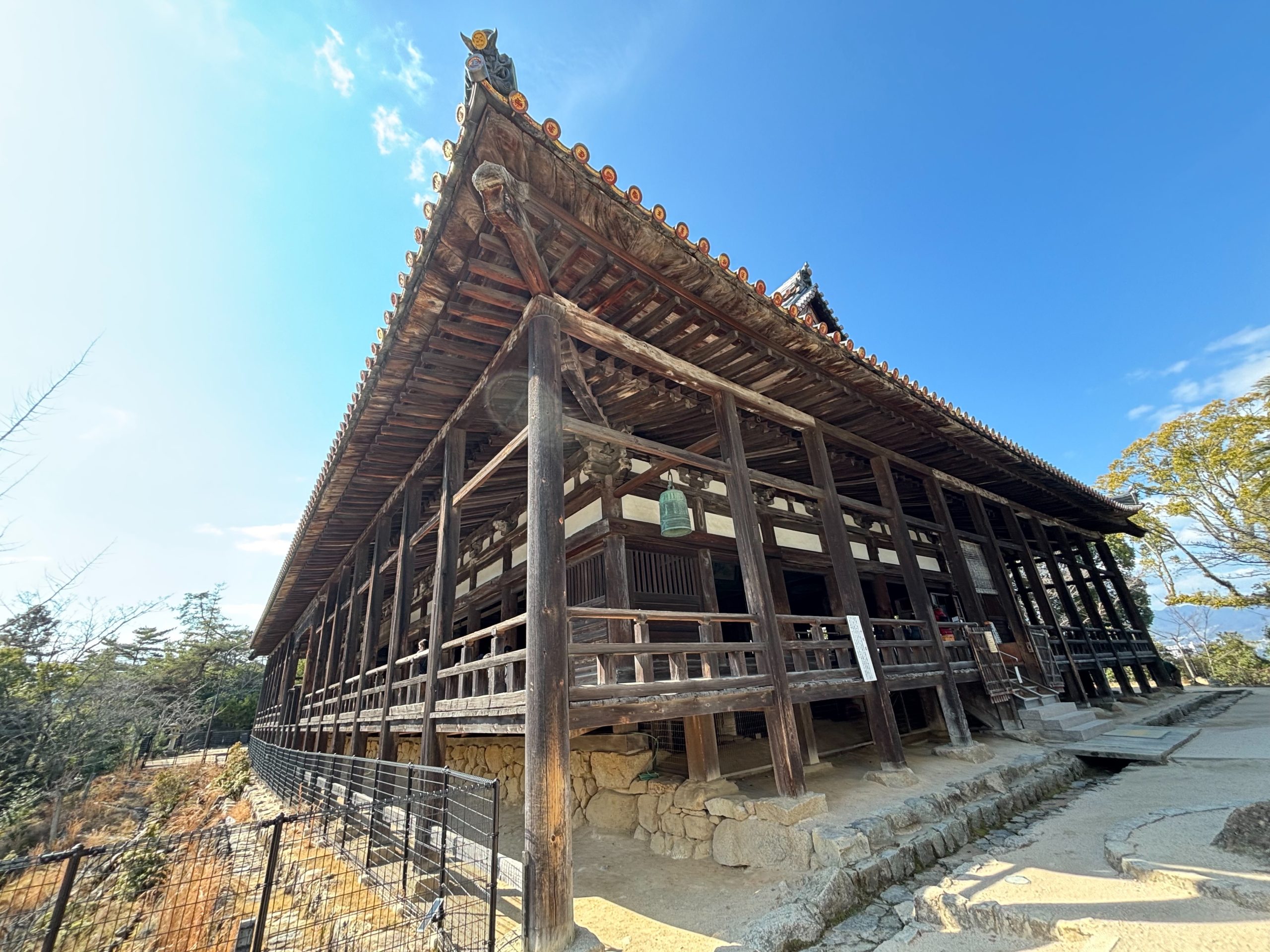
Senjokaku: Miyajima's Hauntingly Beautiful Unfinished Hall Perched on...
Getting There: Access and Route Planning
From the Miyajima ferry pier, Daishoin is about a 25-minute walk, passing through the Omotesando Shopping Street. If you’re coming directly from Itsukushima Shrine, the temple is only 5 to 10 minutes away on foot from the shrine’s exit — making the two an easy pairing. The stone stairs can be steep, but the path is well-maintained and clearly signed.
If you are planning to hike Mount Misen, consider taking the Daishoin Trail from the temple grounds rather than riding straight up by ropeway. The trail takes roughly 90 minutes to the summit and passes the Eternal Flame Hall, the Sanki-do, and several other small sacred sites along the way. It’s by far the most atmospheric approach to the mountain.
A few timing tips worth knowing: weekdays between 2:00 and 4:00 PM are generally the quietest period for visiting the temple grounds. During the fall foliage season (mid-to-late November) and major public holidays, the area becomes significantly more crowded after 11:00 AM. If you can time your visit around those peak windows, you’ll have a much more peaceful experience.
One local tip for the ferry crossing: the JR ferry from Miyajimaguchi takes a route that passes closer to the Great Torii Gate, making it the better choice for the outbound journey if you want that iconic view from the water.
There is no dedicated parking at Daishoin. The nearest option is the municipal parking lot near the Miyajimaguchi ferry terminal (260 spaces, approximately ¥300 per hour), a two-minute walk from the pier.
For full details on how to reach Miyajima from Hiroshima, our ferry guide covers everything you need to know about routes, timing, and IC card use.
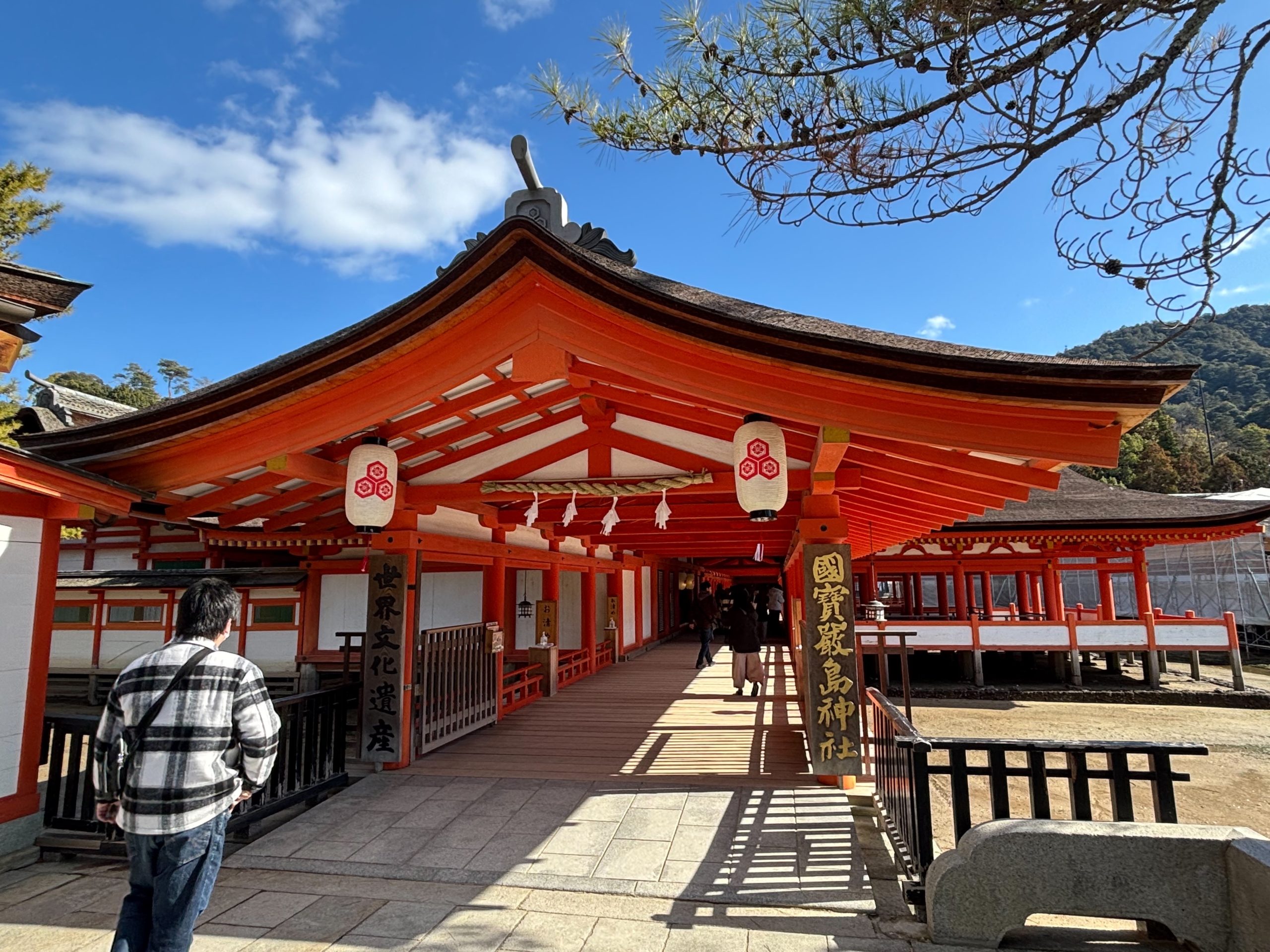
Itsukushima Shrine sits at the edge of the sea on Miyajima Island, jus...
Accessibility and Family Travel Tips
While the stone stairways are a defining feature of Daishoin, most of the major halls — including the Daishi-do, Mani-den, and Chokugan-do — can be reached via an alternative slope route that runs around the side of the staircase. Staff at the entrance are happy to direct wheelchair users and visitors with limited mobility; just ask at the reception area on arrival. A multi-purpose restroom with baby-changing facilities is located in the rest area beside the Chokugan-do hall.
Strollers are manageable on the slope route, but the main stone stairs require a carrier. Free wheelchair loans are available at the Miyajima ferry terminal (first-come, first-served), which can be helpful for older visitors or anyone with mobility concerns.
For families, Daishoin has a genuinely high fun factor for children: the mani wheels to spin, the darkness of the Kaidan-meguri, the wish-ball tossing on the stairs, and the many expressive statues in varying sizes and styles (including some famously wearing hand-knitted hats). Small dogs and pets carried in bags or travel crates are welcome throughout the grounds.
For families with young children, the Miyajima Aquarium is also just a short walk away — sea lion shows, penguin feeding, and touch tanks make it a reliable crowd-pleaser after a temple visit.
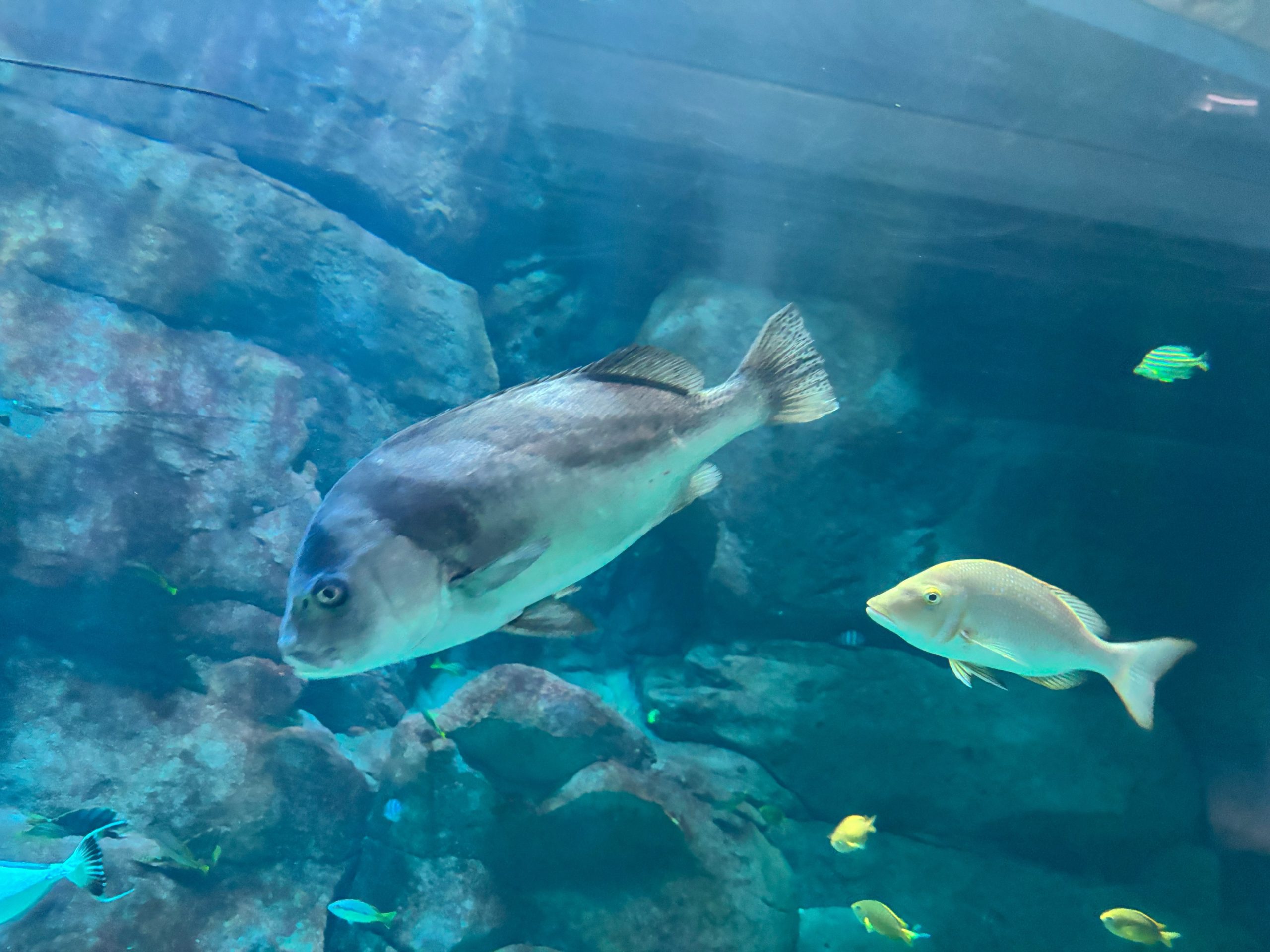
Miyajima Aquarium — officially known as Miyajima Marine, or Miyaji Mar...
Seasonal Highlights
Daishoin is worth visiting in any season, but each time of year offers something different. Cherry blossoms typically peak in early April, with the area around the temple gate turning a soft pink that frames the stone steps beautifully. The Tahoto pagoda nearby is a local favorite for blossom viewing. Hydrangeas in mid-June make Daishoin arguably the prettiest spot on the island. The autumn foliage season in mid-to-late November brings evening illuminations that cast a warm orange glow across the Mani-den’s wooden corridors — one of the more magical things I’ve seen on Miyajima. In winter, light snowfall occasionally settles on the temple rooftops and stone lanterns, giving the grounds a strikingly quiet, austere quality that feels completely unlike the busy summer months.
Before leaving the island, a walk along the Omotesando Shopping Street for street food and snacks is pretty much obligatory. Momiji manju fresh from the fryer, age momiji, and seasonal treats make the shopping arcade a beloved final stop for most Miyajima visitors — our family never manages to skip it.
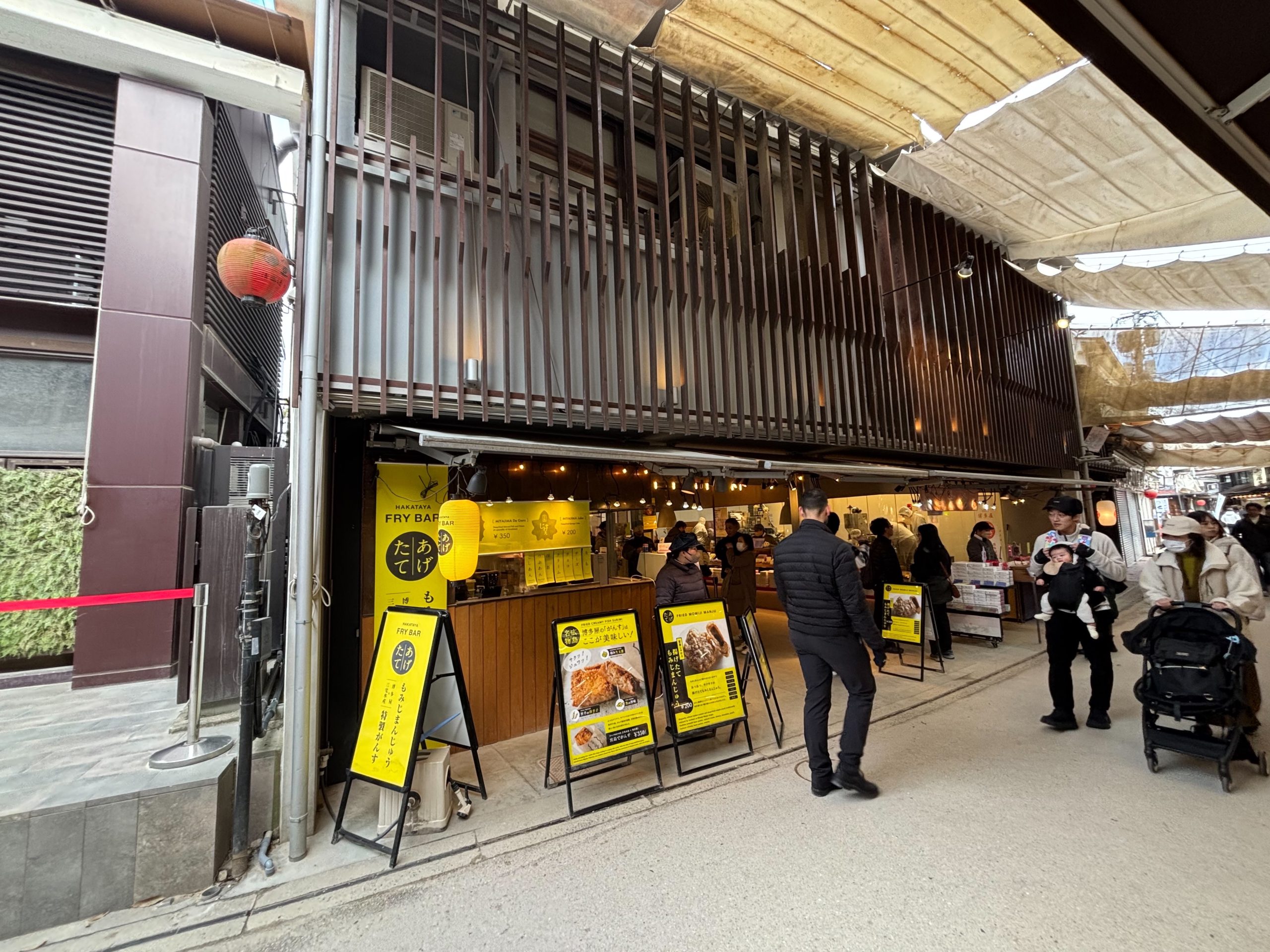
Miyajima's main shopping street — known locally as Omotesando — is a l...
And if you haven’t yet visited Itsukushima Shrine itself, the iconic floating torii gate and the UNESCO-listed shrine buildings are just a short walk from Daishoin — well worth combining into a single afternoon.
While you’re nearby, the Five-Story Pagoda is also worth a look: a beautifully proportioned 27-meter vermilion tower that makes for one of the most photographed views on the island.

Rising above the rooftops of Miyajima Island, the vermilion Five-Story...
FAQ
Is there an admission fee to enter Daishoin Temple?
No, general admission to the temple grounds is completely free. Participatory experiences such as sutra copying (¥1,000) and prayer bead making (¥1,500) carry separate fees, and specialized guided tours require advance booking.
What time does the temple open, and when can I collect a goshuin stamp?
The temple grounds are open throughout the day. The goshuin stamp office is generally open from 8:30 AM to 4:30 PM. Seasonal limited-edition stamps (particularly the cut-paper kirie goshuin) sell out quickly on weekends and holidays, so arriving in the morning is strongly recommended if those are your goal.
Can visitors participate in the fire walking ceremony?
Yes — the Hiwatari-shiki fire walking ceremony on April 15th is open to members of the public. Pick up a numbered ticket at the on-site registration desk by around noon on the day, sign the required declaration form, and you’ll be cleared to walk barefoot over the fire bed. No prior experience or preparation is needed.
How long should I budget for a visit to Daishoin?
A focused visit to the main halls takes about 40 minutes. If you want to explore the full grounds, try the Kaidan-meguri dark corridor walk, and take your time at each hall, allow 1.5 to 2 hours. Combined with a ropeway trip up Mount Misen and back, budget roughly 4 hours in total.
Is Daishoin accessible for visitors with strollers or wheelchairs?
The main staircase is steep, but an alternative slope route provides access to most of the key halls. Inform staff at the reception area when you arrive and they will guide you to the accessible path. For strollers, a baby carrier is the more practical option for the staircase sections.
What is the best time of day to visit to avoid crowds?
Weekdays between 2:00 and 4:00 PM are consistently the quietest window. During autumn foliage season and long public holiday weekends, the area becomes significantly busier after 11:00 AM, so an early morning start is recommended during those peak periods.
Are pets allowed at Daishoin Temple?
Small dogs and other pets are welcome throughout the temple grounds as long as they are carried in arms or in a travel bag or crate. Larger dogs on leashes are not permitted in the main worship areas.
Is there parking near Daishoin Temple?
There is no dedicated parking at the temple itself. The nearest convenient option is the municipal parking lot near the Miyajimaguchi ferry terminal (approximately 260 spaces, around ¥300 per hour), a two-minute walk from the ferry pier.
Can I visit Daishoin on a rainy day?
Absolutely. The halls are close together, so moving between them with an umbrella is easy. Several of the most atmospheric experiences — including the Kaidan-meguri corridor walk and the Henjo Cave pilgrimage route — are fully indoors, making rainy days a surprisingly good time to go deep into the temple’s interior spaces.
Wrapping Up
Daishoin Temple is one of those places on Miyajima that rewards visitors who take their time. The grounds are expansive, the atmosphere is layered, and practically every corner has something surprising or beautiful in it. While Itsukushima Shrine is rightly famous, Daishoin offers something different — a living, breathing temple where festivals, ceremonies, and daily practice continue much as they have for over a thousand years. Whether you’re spinning prayer wheels with a five-year-old, chanting sutras with monks, or simply sitting quietly with the incense and the view, it’s the kind of place that stays with you.
Note: Facility details, event schedules, and operating hours are subject to change. Please verify the latest information through the temple’s official website or local tourism resources before your visit.