Momiji manju (もみじ饅頭) is a small sponge cake shaped like a Japanese maple leaf, baked in an iron mold and filled with sweet red bean paste. It was created on Miyajima in 1906 by the confectioner Takatsu Tsunesuke and is now Hiroshima’s best-known souvenir. Today’s fillings include smooth and chunky bean paste, custard cream, cheese, chocolate and matcha; one cake costs about ¥80–150, and boxes of ten start at around ¥1,000. Age momiji (揚げもみじ, also written agemomiji) is the same cake on a bamboo skewer, dipped in batter and deep-fried to order. It is a registered trademark of Kouyoudou (also spelled Momijido), on sale since 2002, and costs ¥250 a skewer.
Boxed momiji manju are sold at almost every shop on Omotesando, Miyajima’s main shopping street, and at Miyajimaguchi. Age momiji is sold only at Kouyoudou’s shops on the island; the main one is Kouyoudou Nibanya on Omotesando (9:30–17:30, about 8 minutes’ walk from the ferry pier). This page explains what the two sweets are, the flavors and prices, where the name comes from, and where to buy them.
| Momiji manju | Age momiji | |
|---|---|---|
| What it is | Baked maple-leaf sponge cake with a filling | The same cake, skewered, battered and deep-fried |
| Since | 1906, Miyajima (Takatsu Tsunesuke) | 2002, Kouyoudou (registered trademark) |
| Fillings | Smooth and chunky bean paste, cream, cheese, chocolate, matcha and seasonal flavors | Bean paste, cream, cheese, rare cheese, Seto Inland Sea lemon and others |
| Price | About ¥80–150 each; boxes of ten from about ¥1,000 | ¥250 per skewer |
| Where to buy | Shops along Omotesando, Miyajimaguchi | Kouyoudou shops on Miyajima only |
| Take home? | Yes, boxed | No; best within minutes of frying |
What is momiji manju?
Momiji means the Japanese maple and its red autumn leaves; manju is a filled Japanese cake. You will also see it written as momijimanju, momiji manjū or momiji-manju; it is a sweet, not a meat dish. Momiji manju is a wagashi (Japanese confection) with a soft, castella-like sponge made from flour, eggs, sugar and honey, wrapped around a mild, sweet filling. The classic filling is smooth red bean paste (koshian); chunky bean paste (tsubuan), custard cream, cheese, chocolate and matcha are now standard, and many shops add seasonal flavors.
The cakes keep for several days, travel well and are sold individually or in boxes, which is why they became the island’s standard souvenir.
Where the name comes from: Momijidani and the 1906 original
Around 1906, the proprietress of Iwaso, a long-established inn at the entrance to Momijidani (the “maple valley” park behind Itsukushima Shrine), asked the local confectioner Takatsu Tsunesuke for a tea sweet that could only be had at her inn and that captured the maple valley. He made a sponge cake with honey, eggs and milk around a bean-paste filling, baked in an iron mold shaped like a maple leaf, and called it “maple-shaped baked manju.” In 1910 he registered the name “Momiji Manju” as a trademark.
A popular story links the idea to Ito Hirobumi, Japan’s first Prime Minister, who often stayed at Iwaso: at a teahouse in Momijidani he is said to have joked that a young attendant’s hands were as pretty as maple leaves and looked good enough to eat. The story is hard to verify, but it has been told for over a century. Takatsu did not keep the cake to himself, and other confectioners on the island began making their own versions, which is how momiji manju became Miyajima’s and then Hiroshima’s signature sweet.
What is age momiji? Kouyoudou’s deep-fried version
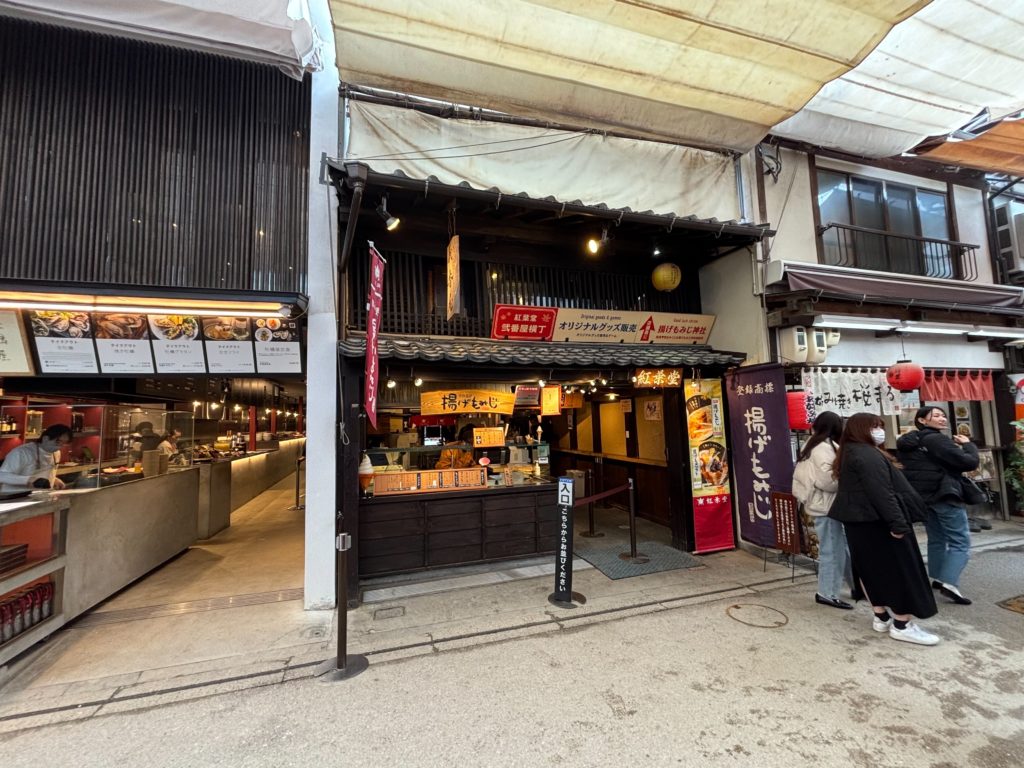
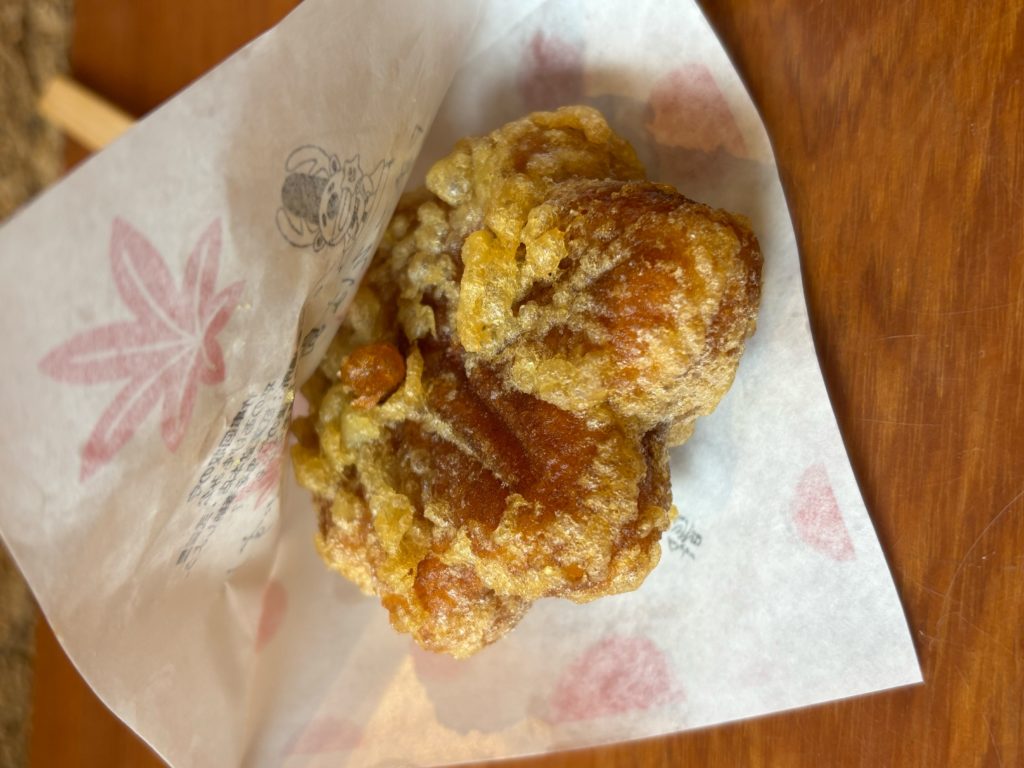
Age momiji takes a momiji manju, puts it on a bamboo skewer, coats it in a light batter and deep-fries it to order. The outside turns crisp and lightly savory, like tempura, and the filling warms and softens; the cream fillings melt slightly. It tastes closer to a warm filled doughnut than to the original cake.
Kouyoudou, a Miyajima confectioner founded in 1912, launched age momiji on January 1, 2002, and holds the trademark, so the original is only sold at its own shops. It has become the island’s best-known street food, and Kouyoudou Nibanya was listed in Tabelog’s “Japanese Sweets & Desserts WEST Top 100” for 2023. The cakes are crispest right after the shop opens.
Flavors and prices
| Age momiji flavor | Approx. calories |
|---|---|
| Red bean paste (anko) | 96 kcal |
| Cream | 92 kcal |
| Cheese | 101 kcal |
| Rare cheese | 101 kcal |
| Seto Inland Sea lemon | 92 kcal |
Kouyoudou’s menu has five flavors at ¥250 a skewer; the base of each skewer is stamped with its flavor, so you can share without mixing them up. Seto Inland Sea lemon uses the region’s citrus and is the lightest; red bean paste is the classic pairing; cheese is the savory option. Nibanya also sells the Age Momiji Soft, a freshly fried skewer served with soft-serve ice cream. Orders are fried in two or three minutes.
Age momiji contains egg, wheat and milk. Ask at the counter on the day if you have allergies, as recipes can change.
Where to buy
Kouyoudou Nibanya: hours, access and seating
Nibanya is in the middle of Omotesando, about 8 minutes on foot from the ferry pier and about 8 minutes from Itsukushima Shrine; look for the red age momiji banners. It is open from 9:30 to 17:30, closing around 17:00 in quieter seasons, and popular flavors can sell out on busy days such as Golden Week, the summer fireworks and autumn-leaf weekends.
Unlike most street-food stalls, Nibanya has about 50 seats, half indoors and half on a terrace, with free self-service tea and water. At the back is a small “Age Momiji Shrine” where you leave your finished skewer as an offering, a pun on ageru, which means both “to fry” and “to raise” your luck.
Other Kouyoudou shops, and where to buy boxed momiji manju
If Nibanya has a long queue, Kouyoudou also sells age momiji at its main shop, at a seafront shop on Kaigandori and inside the Etto facility. For baked momiji manju, nearly every confectioner on Omotesando sells them, and several shops bake them fresh in front of you. Our guide to momiji manju shops lists each maker on Miyajima and at Miyajimaguchi with its flavors.
Tips: crowds and deer
The quietest times are right at opening and on weekday afternoons between about 14:00 and 16:00. Decide your whole order before you reach the counter. When you eat outdoors, keep bags closed and food close: Miyajima’s deer approach anyone holding food or paper. Please don’t feed them; deer crackers have not been sold on the island since 2007, to protect the deer’s health.
FAQ
What does momiji manju taste like, and which flavor should I try first?
The cake is soft and lightly sweet, like castella, with a mild filling. Start with the classic smooth red bean paste for a baked one, and with Seto Inland Sea lemon or red bean for age momiji.
What does “momiji” mean?
It is the Japanese word for the maple tree and its red autumn leaves. The cake is named after Momijidani, the maple valley on Miyajima, and is shaped like a maple leaf.
Can I take momiji manju or age momiji home?
Momiji manju, yes: boxed cakes keep for several days and are sold at shops across the island and at Miyajimaguchi. Age momiji, no: the batter softens within an hour, so eat it on the spot.
How long is the wait at Kouyoudou Nibanya?
Even with a queue, skewers are fried in two or three minutes, so the line moves quickly. Arrive at opening, around 9:30, for no wait and the crispiest batter.
Is there an English menu, and can I pay by card?
The flavor stamps on each skewer and the menu photos make ordering easy without Japanese. Bring cash in case, as small food shops on Miyajima do not always take cards; check the payment signs at the counter.
Nearby
- Omotesando shopping street — more street food and souvenirs.
- Itsukushima Shrine — about 8 minutes on foot from Nibanya.
- Anago meshi (conger eel rice) — the island’s signature lunch.
Prices, flavors and hours may change. Please check at the shop before your visit.