
Tucked away along the peaceful lanes near Itsukushima Shrine, Tea House Okimitsu is one of those special places that makes you feel like you’ve discovered a secret. This Miyajima cafe breathes new life into a traditional Japanese house that’s stood for over a century, offering travelers a genuinely restful pause from sightseeing. From their signature fluffy anago (conger eel) rice and aromatic green tea soba to the crowd-favorite warabi mochi and other handmade Japanese sweets, this is the perfect spot to slow down and savor something delicious in an authentic setting.
Whether you’re searching for the best Miyajima cafe for a family break, a quiet corner for a solo travel moment, or a charming spot for a low-key date away from the crowds, Tea House Okimitsu delivers. It’s also an ideal rainy-day refuge where the warmth of the old wooden beams and the comfort of handmade treats soothe both body and soul. For travelers wondering what to eat in Miyajima beyond the famous oysters and momiji manju, this spot beautifully showcases local Japanese cuisine in a setting that feels worlds away from typical tourist restaurants.
I visited for the first time last month with my eldest daughter (third grade) and youngest daughter (kindergarten), and we all fell in love with the place. The kids wandered through the shop wide-eyed, exclaiming “This old house cafe is so cool!” It reminded me yet again why traditional Japanese architecture holds such timeless appeal. Whether you’re planning a family trip, a girls’ getaway, or some peaceful solo travel time, this cafe offers something special—a chance to experience Miyajima’s quieter, more contemplative side.
A Century-Old Traditional House Transformed
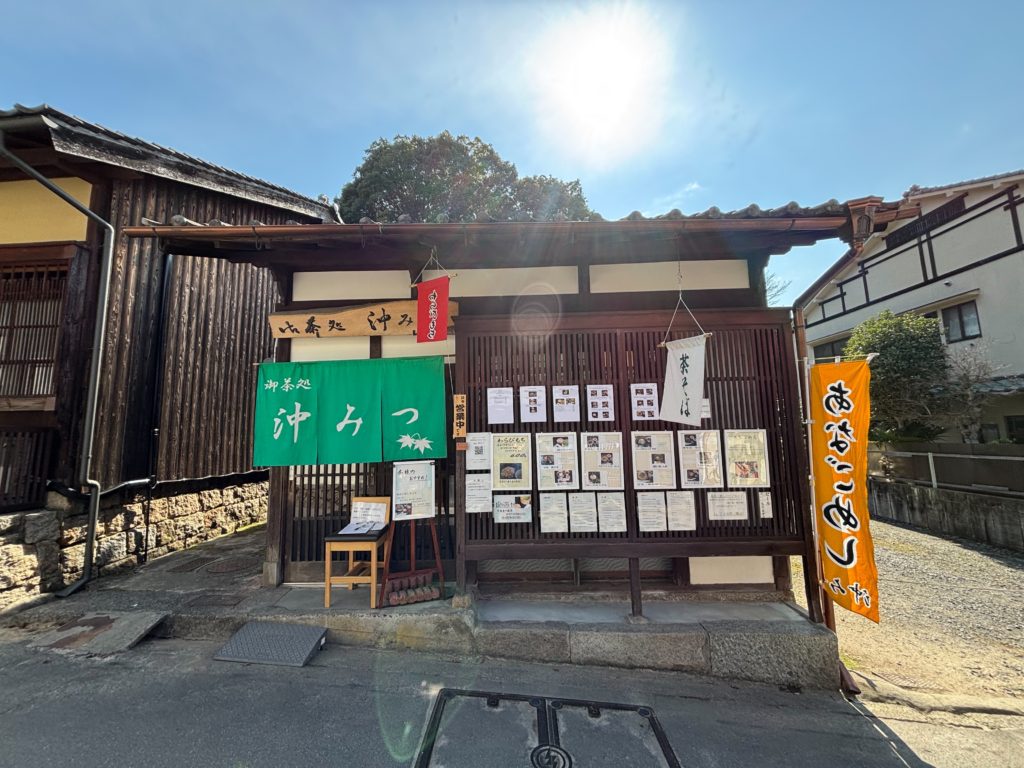
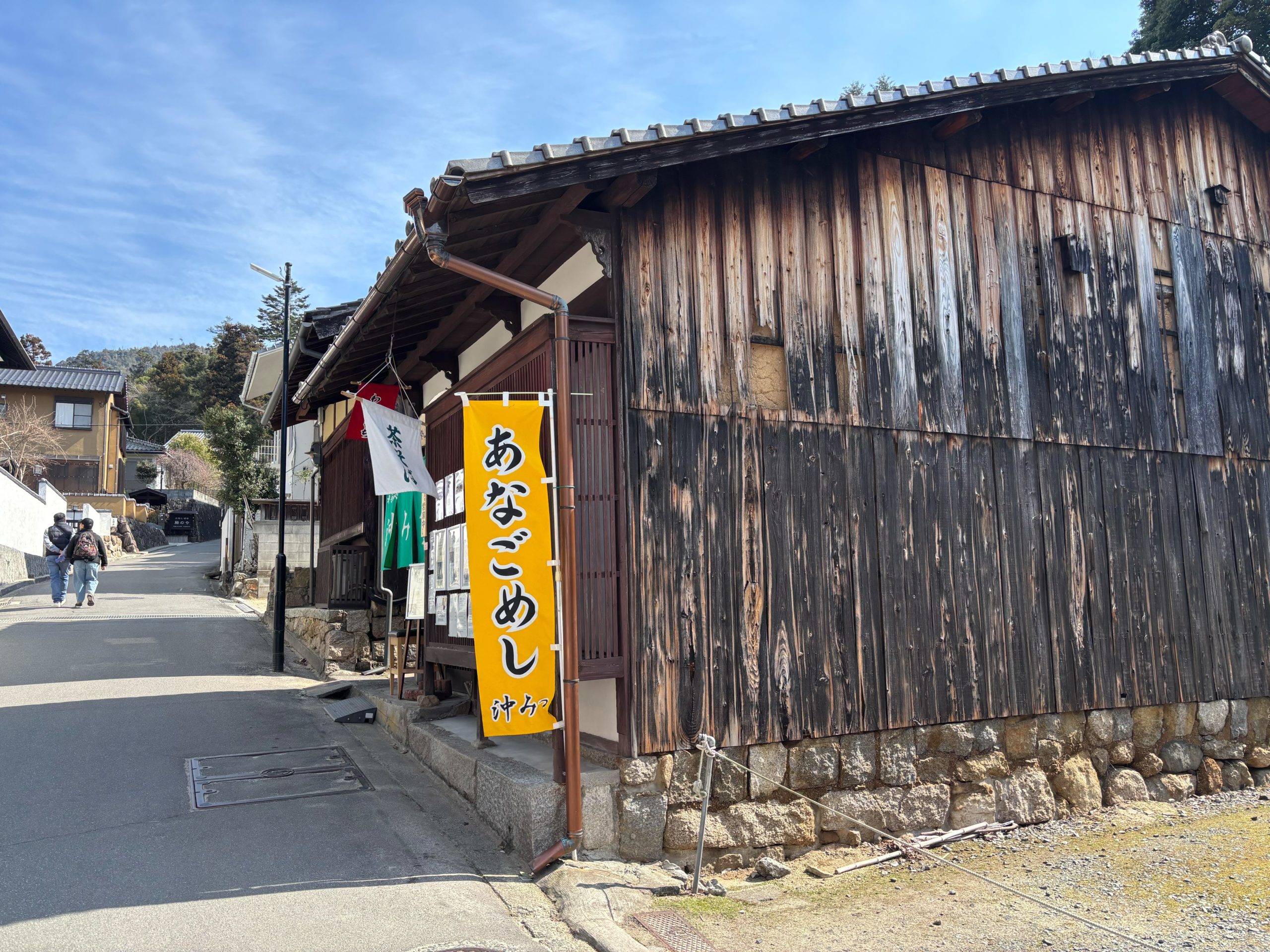
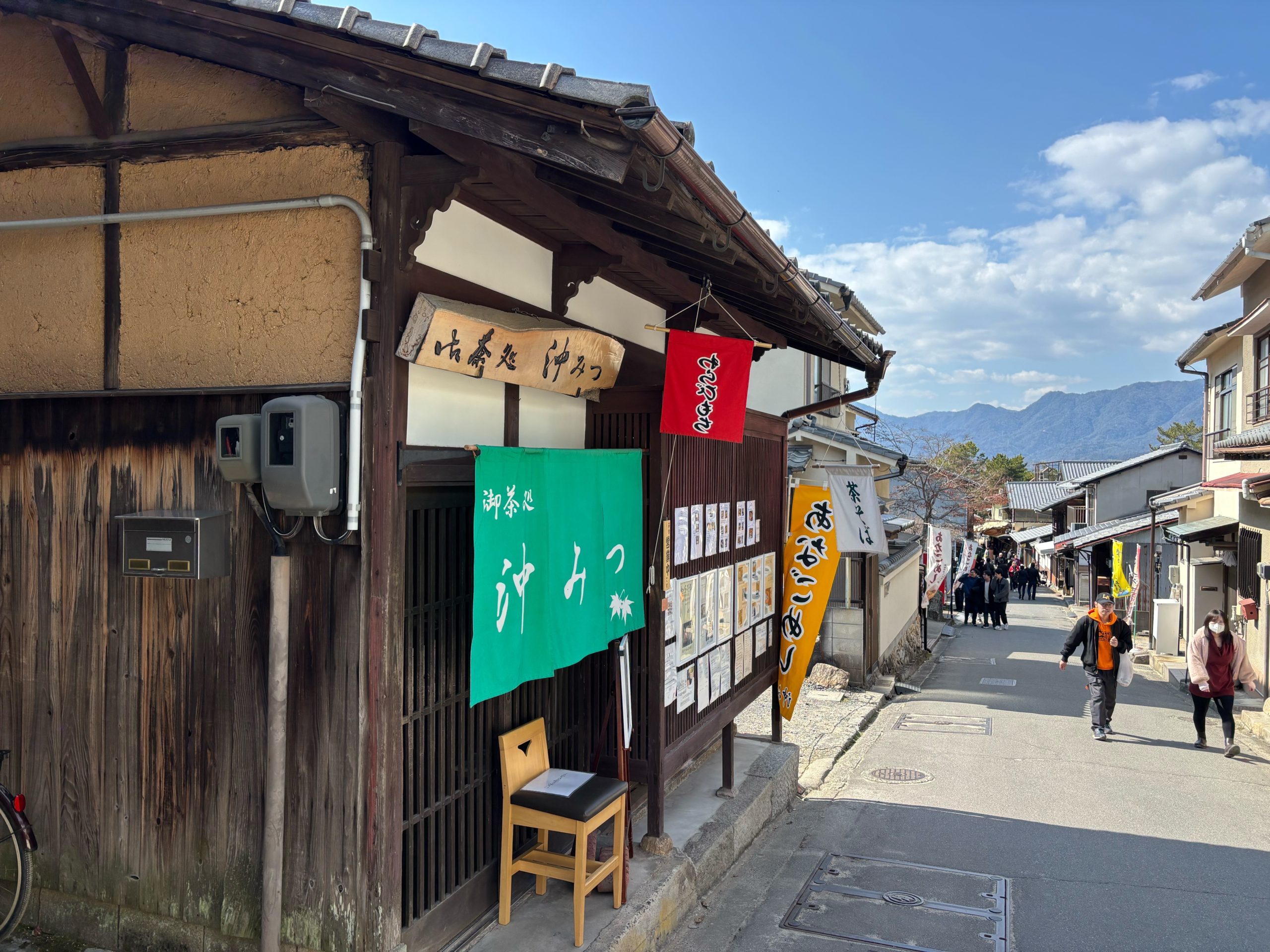
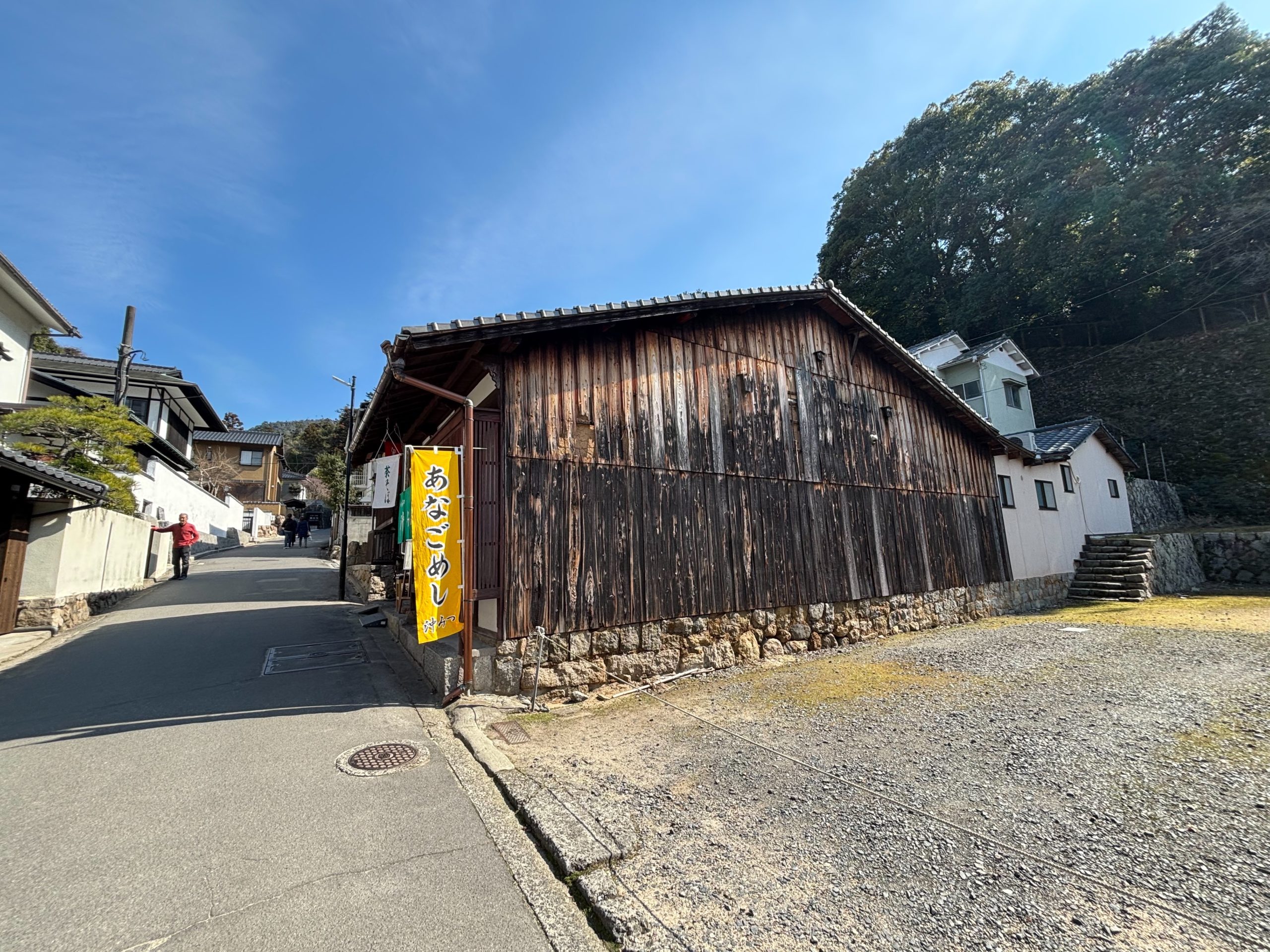
Finding Tea House Okimitsu is part of the adventure. From Itsukushima Shrine, cross the elegant curved bridge and enter Takikoji Lane. Turn left at the intersection and head toward Fujinotana Park—about 200 meters ahead on your right, you’ll spot the distinctive green noren curtain marking the entrance to this century-old folk house. This is your gateway to experiencing some of the island’s best handmade cuisine, from the delicate, fluffy anago rice that Hiroshima is famous for to the pleasantly springy green tea soba noodles.
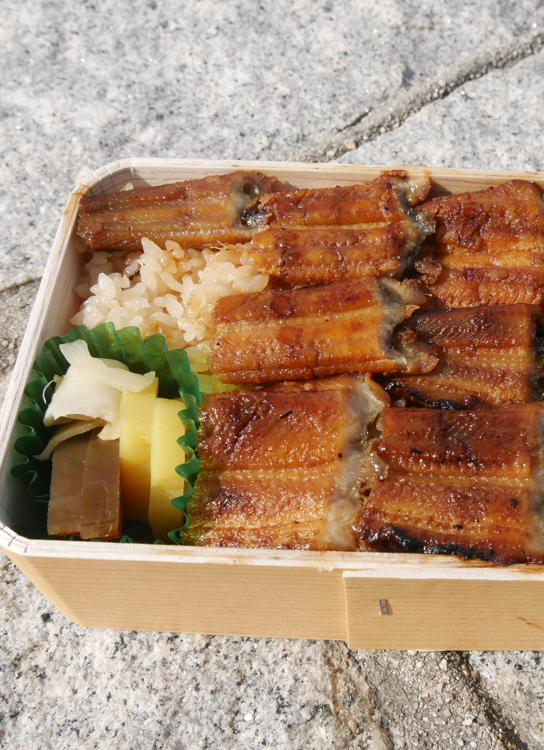
For those unfamiliar, anago—saltwater conger eel—is a beloved Hiroshima specialty that’s lighter and more delicate than freshwater unagi (eel). It’s one of the must-try dishes when you’re exploring what to eat in Miyajima, and Tea House Okimitsu prepares it beautifully. The anago here is steamed to tender perfection and layered over fragrant rice with a house-made sauce that strikes just the right balance of savory and sweet.
When our family first stepped inside, we all paused and collectively whispered, “What a wonderful place this is!” There’s something deeply moving about these preserved spaces—they connect you to the island’s long history in a way that modern buildings simply can’t. The building itself is recognized as a traditional structure, adding an extra layer of cultural significance to your visit. Nestled within Miyajima’s charming streetscape, this quietly elegant cafe feels like a secret worth sharing.
The location couldn’t be more convenient—just a 7-minute walk from Itsukushima Shrine. Taking a break at this traditional folk house cafe after worship has become our family’s standard routine when we’re sightseeing with the kids. It gives everyone a chance to rest their feet, enjoy something delicious, and soak in that peaceful atmosphere that makes Miyajima so special.
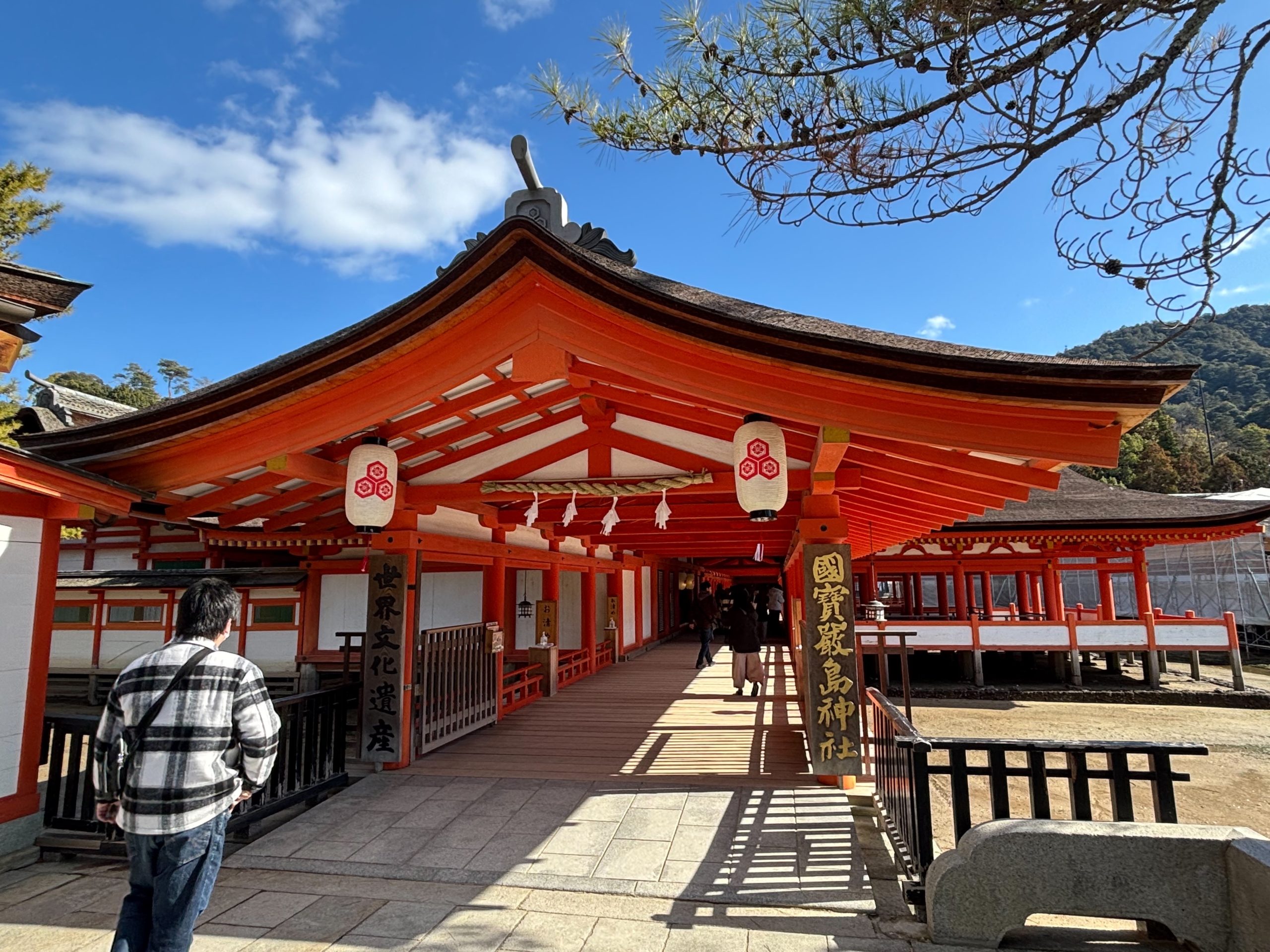
When you think of Miyajima, the first image that comes to mind is Itsu...
The interior showcases carefully preserved elements—reclaimed beams, traditional fittings, and architectural details that harmonize perfectly with Miyajima’s historic townscape. Everything feels calm and authentic, never showy or overdone. Owner Mitsuo Oki established the cafe in 2006, thoughtfully preserving the character of the old folk house while centering the experience around handmade sweets and comfort food. Though it’s close to Itsukushima Shrine, the location feels tucked away from the main tourist flow, which is exactly why it’s so popular with travelers who want to enjoy their sweets at an easy, unhurried pace.
Here’s a local tip: weekdays from 2:00 PM to 4:00 PM are typically the quietest hours. Visiting during this window allows you to more deeply appreciate the tranquility of the old house without the bustle. The silence becomes almost meditative—you can hear the gentle creak of the floorboards, the quiet conversations, and nothing else. If you’re creating a list of traditional Miyajima cafes, Japanese sweets spots, or authentic dining experiences, this should be right at the top.
Personal reflection: The moment you step through that green noren, the scent of aged wood wraps around you like a welcome. Despite being in the heart of a tourist area, the space instantly makes you exhale all that accumulated sightseeing tension. Sipping tea here felt less like a break and more like “another form of worship”—it heightened my sense of what makes Miyajima sacred. This is a place where tranquility and warmth meet, somewhere you’ll find yourself planning to return to before you’ve even left.
Stepping Into Pure Japanese-Style Comfort
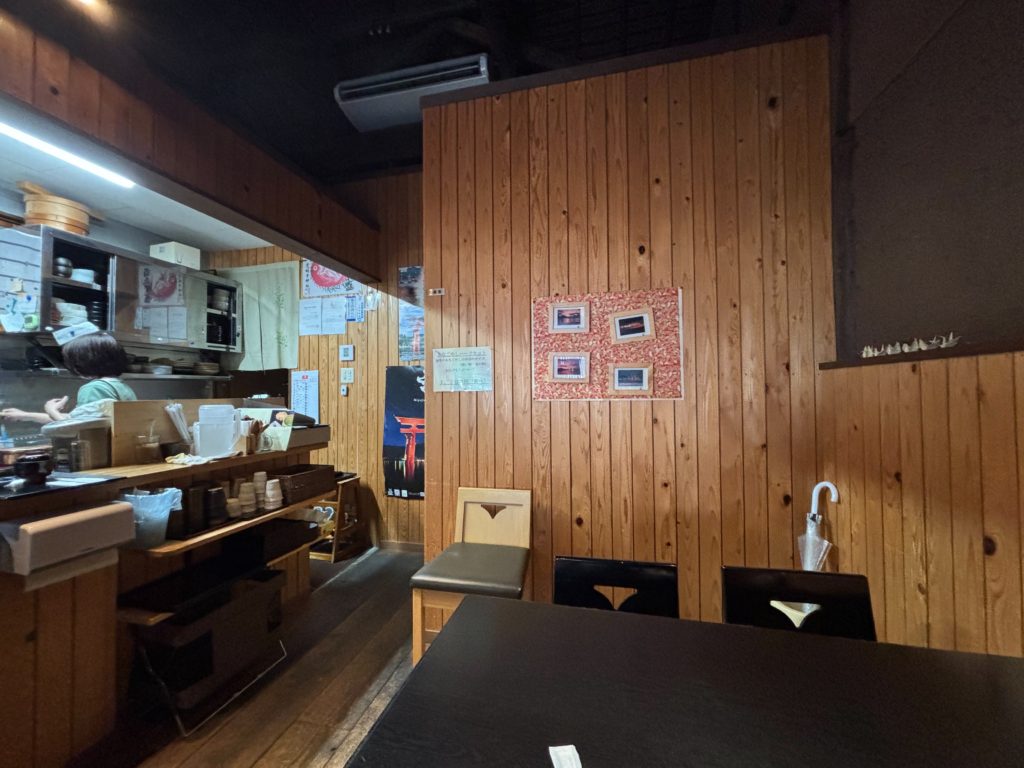
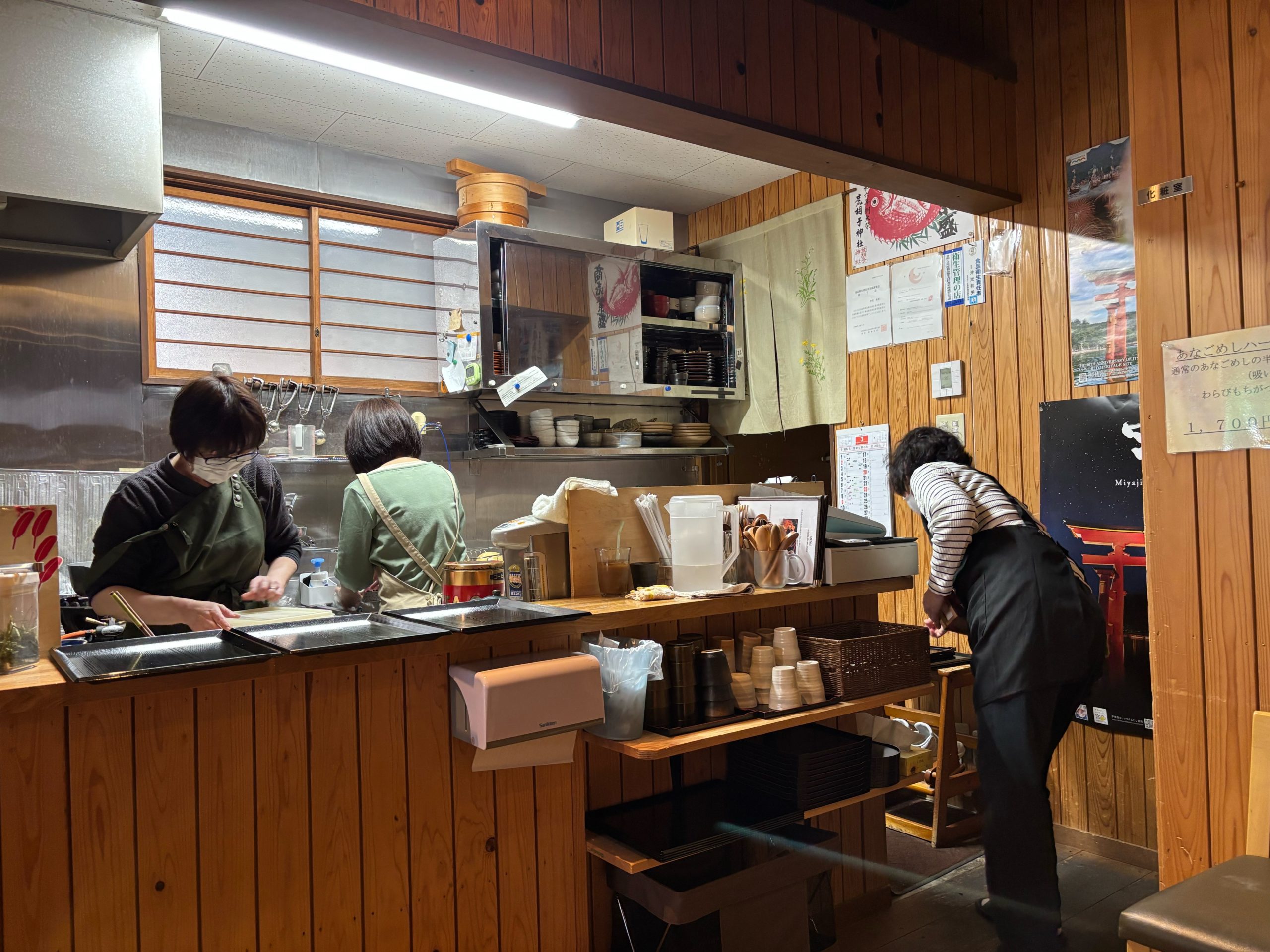
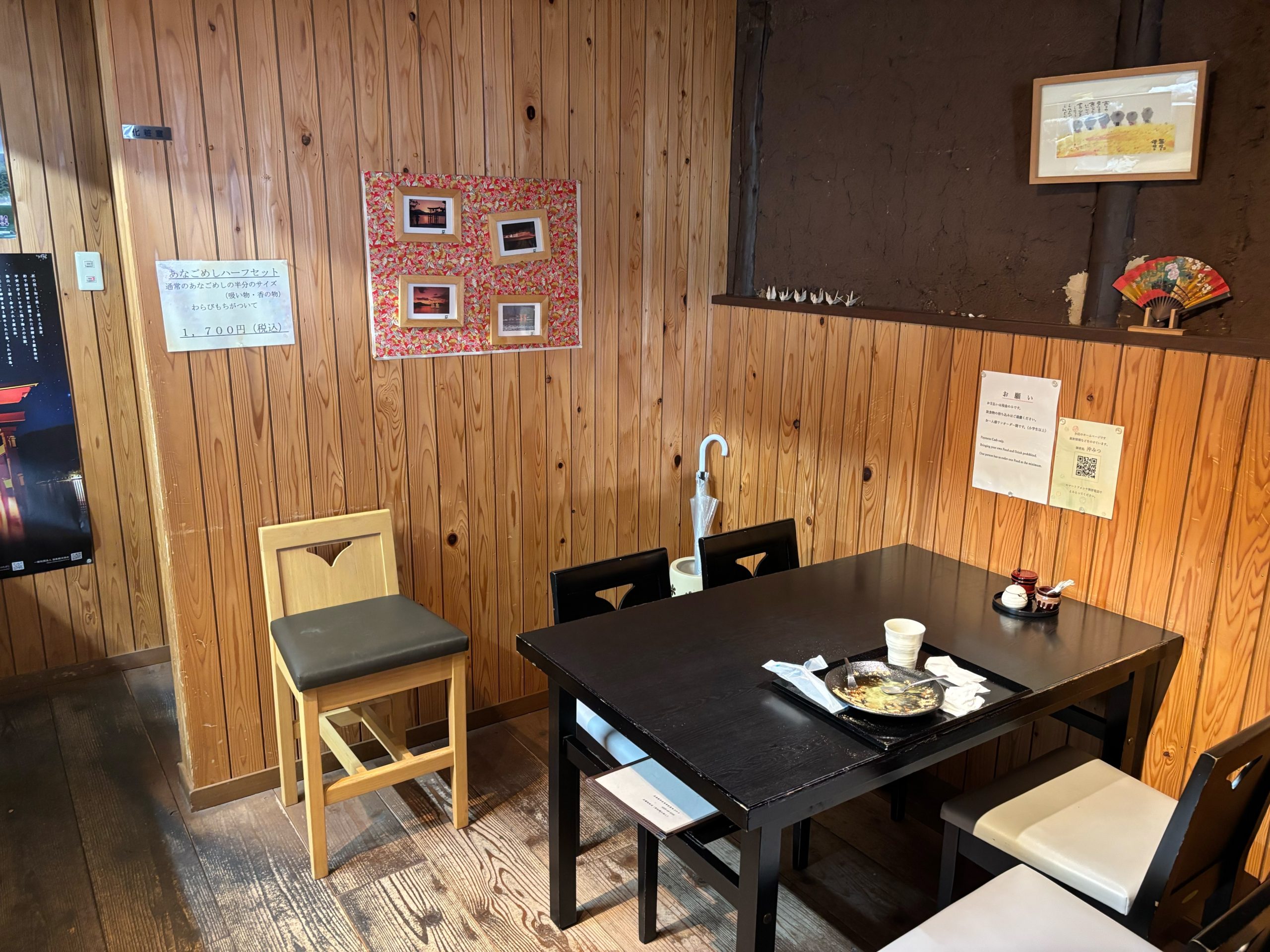
The interior design is beautifully simple—warm wood-grain tables, exposed beams overhead, and carefully curated displays of Japanese accessories that add visual interest without clutter. Time seems to genuinely slow down in this soothing atmosphere. I visited on a Sunday when it was fairly lively, but I still managed to snag a seat without waiting. My anticipation for those sweets only grew as I settled in and looked around.
My eldest daughter stared up at the ceiling beams with fascination, observing “It’s like being in grandma’s really old house!” (which I took as high praise from a third-grader). Meanwhile, my youngest was captivated by the delicate Japanese accessories displayed throughout the space, pointing and exclaiming “So pretty! Look at that one!” The seating is all tables—no traditional floor seating to worry about—with a total capacity of about 18 seats. This intimate scale means the staff can provide attentive service and you never feel rushed or lost in a crowd.
One thing I appreciate as a parent: Miyajima is generally quite family-friendly, and Tea House Okimitsu is no exception. Strollers can often be accommodated depending on the day’s crowd level, and the staff is welcoming toward families with young children. On rainy days, it’s an especially wonderful place to warm up during your sightseeing and watch the steam curl up from your teacup while listening to the rain outside.
Quick tip for parents with infants: If you need to breastfeed or change a diaper, there’s a nursing room on the second floor of the Miyajima Tourist Information Center along Omotesando Shopping Street. It’s about a 5-minute walk from Tea House Okimitsu, so it’s good to know about for peace of mind during your visit.
The local approach is to enjoy the cafe in combination with exploring Omotesando Shopping Street. The perfect Miyajima itinerary often includes a relaxing break at this traditional house cafe followed by souvenir shopping along the bustling shopping street—it gives you a nice rhythm of quiet contemplation followed by lively exploration.
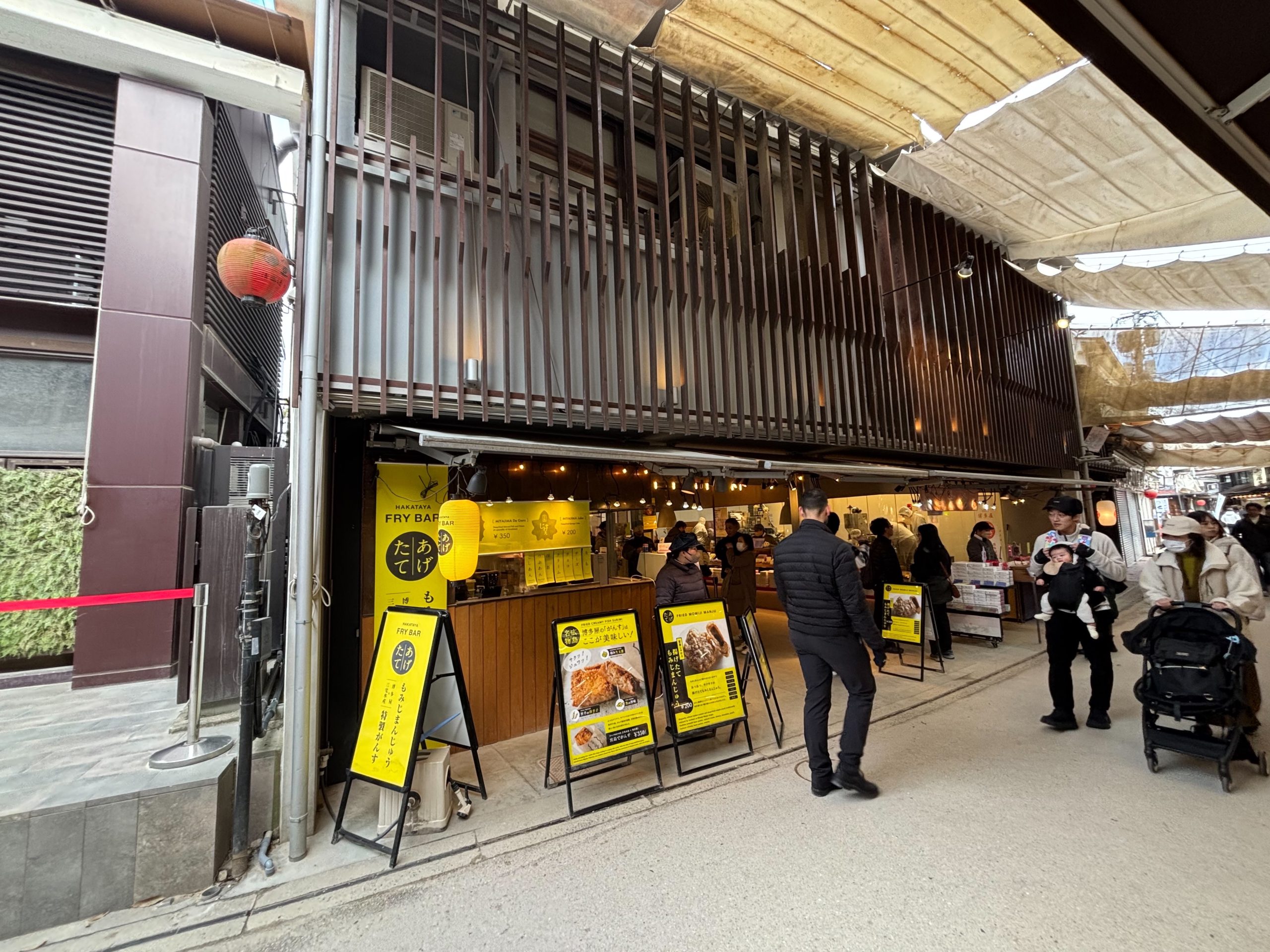
Wondering what to eat in Miyajima? The answer lies along Omotesando Sh...
Personal reflection: This cafe pleasantly shatters the assumption that tourist areas are inherently “restless” or inauthentic. As I sat quietly admiring the small decorative pieces scattered throughout the space, I felt time itself downshift. The comfort of the space alone seems to make the sweets taste even better—or maybe that’s just the magic of slowing down.
The Dessert Platter I’d Been Dreaming About
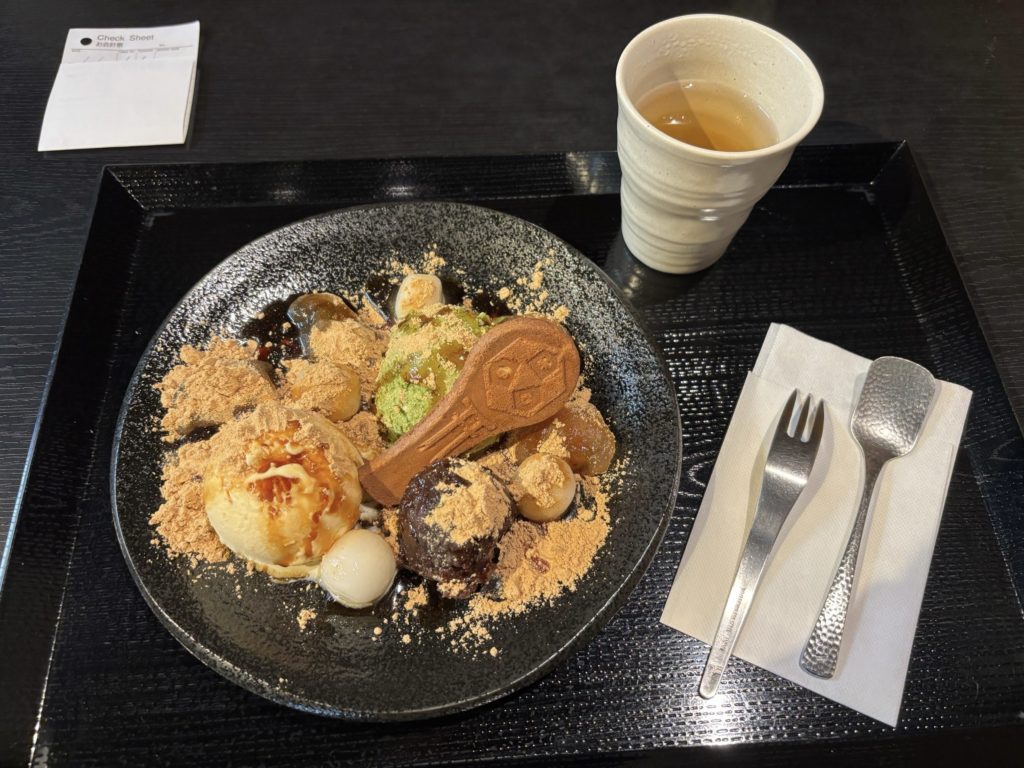
I ordered the dessert platter (¥1,100), and it exceeded every expectation.
While the warabi mochi is undoubtedly the most popular sweet at Tea House Okimitsu, I chose this platter specifically because it’s an all-star lineup that lets you sample everything. It arrives as a gorgeous arrangement: two generous scoops of ice cream, delicate shiratama dumplings (sweet rice balls), the famous warabi mochi, anko dumplings (sweet red bean), and toppings of black sugar syrup and kinako (roasted soybean flour). It’s a perfectly indulgent dish that could easily be called the pinnacle of Miyajima sweets experiences.
When it arrived at our table, my children’s eyes went wide. “Wow!” they both breathed. My youngest was practically bouncing in her seat, saying “I want to try everything!” This breathtakingly beautiful presentation—honestly, calling it the crown jewel of Miyajima desserts isn’t an exaggeration. It’s Instagram-worthy, sure, but more importantly, it tastes as incredible as it looks.
The warabi mochi has a wonderful, tender bounce that’s almost impossible to describe—imagine a cloud with just enough structure to hold its shape, but so soft it practically dissolves on your tongue. The clean sweetness pairs beautifully with the rich black sugar syrup and the nutty fragrance of kinako. There’s even a shamoji-shaped rice cracker (shamoji being the traditional rice paddle used at shrines) that adds a satisfying crunch—it’s so good that I found myself using it to scoop up bites of ice cream too. The red bean paste has a bright, uplifting sweetness that makes travel fatigue simply vanish. And they include warm tea with the platter, which is a lovely touch!
We shared the platter as a family, and it sparked the most delightful conversation. My husband kept marveling at “the incredible texture of the warabi mochi,” my eldest daughter was fascinated by “the interesting combination of ice cream and rice crackers,” and my youngest couldn’t stop praising “how sweet and yummy the black sugar syrup is!” Everyone had different favorite elements, which made the whole experience feel even more special.
A note about the “Assorted Sweets” platter: the contents may vary slightly depending on the season and what’s available. Sometimes you’ll find momiji manju included, other times a different traditional wagashi (Japanese confection). Regardless of the specific lineup, the signature warabi mochi is always there, known for its legendary “melt-in-your-mouth” texture enhanced by fragrant black sugar syrup and toasted kinako. If you’re searching specifically for warabi mochi in Miyajima or the best Japanese sweets on the island, this cafe deserves a prominent place on your itinerary.
Personal reflection: This dessert platter feels like a tiny universe on a single dish—each bite takes you up a gentle staircase of subtle sweetness, and somehow it never gets boring right up until the very last spoonful. The lingering finish of the warabi mochi is especially memorable, and ending with that warm tea left me in a state of perfect contentment. This is the kind of food experience that stays with you long after you leave the island.
Please come savor these exquisite handmade treats in a cafe wrapped in the quiet charm of a century-old folk house. You won’t regret it.
As always, information is subject to change. Please check the shop’s official website or contact them directly for the latest details before your visit.
Location & Atmosphere
Pass through the impressive Karamon Gate of Itsukushima Shrine, then follow the narrow path that runs alongside a gentle stream heading upstream. Bear toward Momijidani along the residential streets, and you’ll find Tea House Okimitsu sitting peacefully in a quiet corner just off the main tourist flow. Nearby, Wisteria Trellis Park (Fujinotana Park) brings seasonal color that sometimes peeks through the cafe’s windows, adding another layer of beauty to your visit.
If the shrine path feels crowded or overwhelming—which it often can during peak season—come here to take a deep, quiet breath and reset. Consider this your secret cafe in Miyajima, a place to add much-needed breathing room to even the most packed itinerary. The transition from the bustling shrine grounds to this tranquil corner happens remarkably quickly, almost like passing through an invisible curtain.
When you actually walk the route from Itsukushima Shrine to Fujinotana Park, you’ll find it becomes a pleasant little neighborhood stroll. While the Tahoto Pagoda area is known among locals as a hidden cherry blossom viewing spot, Fujinotana Park also offers lovely seasonal flowers—wisteria in late spring, of course, but also other blooms throughout the year. The walk itself becomes part of the experience rather than just a means to an end.
Personal reflection: I love catching the faint scent of the sea on the breeze as I walk this route, and there’s often the quiet presence of Miyajima’s famous deer wandering nearby. Just a few minutes of walking lowers the volume of the scenery, allowing the sweet aromas and peaceful atmosphere of the cafe to take center stage in your mind.
Menu: Food Options
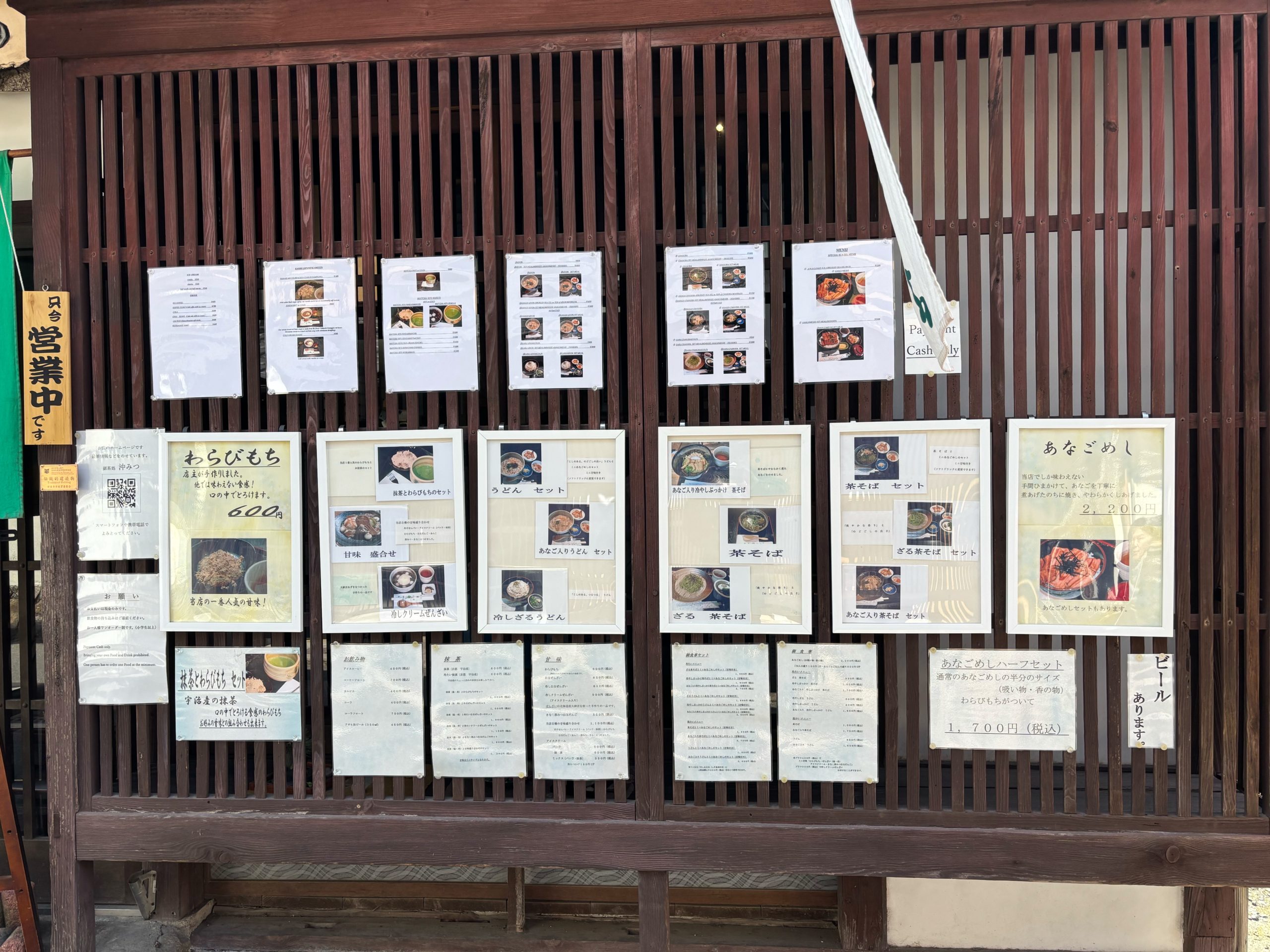
All prices include tax. Both the tea soba and udon can be served either hot or cold, depending on your preference and the weather. The menu board outside lists several tempting options: “Limited Edition Conger Eel Rice,” “Conger Eel Rice (¥2,200),” “Conger Eel Tea Soba (¥1,750),” “Tea Soba (¥1,000),” “Udon (¥850),” and “Conger Eel Udon (¥1,650).”
The star of the food menu is definitely the anago rice. The fluffy, gently steamed conger eel is layered over fragrant rice and finished with the cafe’s house-made sauce, delivering a deeply satisfying comfort that feels uniquely Miyajima. If you’re wondering what to eat in Miyajima beyond the famous oysters, this anago rice—sometimes grilled, sometimes steamed depending on the preparation—is a local favorite that beautifully showcases Hiroshima’s conger eel tradition. The eel is remarkably tender, almost melting in your mouth, and the sauce adds just the right amount of umami depth without overwhelming the delicate flavor of the fish.
Many menu combinations let you enjoy both Miyajima anago rice and Miyajima green tea soba in a single meal, which is perfect when you need a hearty, satisfying refuel during a long day of sightseeing. The green tea soba has a subtle earthy flavor and pleasant texture that contrasts beautifully with the richness of the anago.
An insider note: among Hiroshima locals, there’s friendly debate about the island’s best anago rice. Many prefer “Fujitaya” over “Ueno,” but Tea House Okimitsu has carved out its own loyal following with its distinctive preparation and homey atmosphere. Part of the joy of visiting Miyajima is trying different versions and discovering your own favorite.
There are many other excellent conger eel rice shops scattered throughout Miyajima, and comparing them is honestly one of the great pleasures of exploring the island’s food scene. Each shop brings its own approach to this local specialty.
When you visit Hiroshima's enchanting island of Miyajima, one dish sta...
Personal reflection: The tenderness of the anago and the lingering umami of the sauce felt like they restored my travel energy from the ground up. And the chilled tea soba on a warm day? That was the perfect reward after hours of shrine-hopping and climbing stairs.
Menu: Sweets & Beverages
The undisputed champion of the sweets menu is “Warabi Mochi (¥600).” It practically melts in your mouth, with black sugar syrup and kinako enhancing the aroma and adding layers of flavor complexity. But the Japanese sweets lineup extends far beyond just the warabi mochi. You’ll find “Handmade Shiratama Zenzai with Dainagon Azuki Beans (¥650)”—a traditional warm sweet red bean soup with rice dumplings—along with its chilled summer version “Chilled Shiratama Zenzai (¥650).” For something more indulgent, try the “Chilled Cream Zenzai (¥900),” which adds a luxurious dairy element to the traditional format.
Other options include “Kinako Black Sugar Syrup Shiratama Dango (¥550)”—sweet rice dumplings dusted with soybean flour—the “Assorted Sweets Platter (¥1,100)” I described earlier, and simple but high-quality “Ice Cream (from ¥500).” They also offer rich Uji matcha green tea, which pairs beautifully with any of the desserts, cutting through the sweetness with its pleasant bitterness. This place is highly recommended if you’re seeking authentic handmade sweets or looking for a genuine tea experience in Miyajima.
A quick tip if you’re on a momiji manju (Miyajima’s famous maple-leaf-shaped cakes) mission: after you finish your sweets here, you can enjoy freshly baked momiji manju on the second floor of Yamadaya nearby. And for something completely different, Koyodo’s fried momiji manju are crispiest and best first thing in the morning when they come straight from the fryer.
Personal reflection: The warabi mochi is so impossibly soft it feels almost drinkable—like trying to eat a sweet cloud. Paired with the slight pleasant bitterness of quality matcha, the sweetness really sings, and suddenly you find yourself in that dangerous “just one more bite” loop where the plate empties faster than you intended.
Set Menus: The Best of Everything
The most popular set menu is the “Tea Soba Set (¥1,950),” which cleverly combines tea soba noodles, a mini anago rice bowl, and a sweet (often the famous warabi mochi). It’s designed to let you “try a little of everything,” which makes it absolutely perfect for girls’ trips or solo travelers who want to sample multiple menu highlights without over-ordering.
My husband ordered this set during our family visit, and he was thoroughly satisfied. “I feel like I got a really good deal being able to taste everything,” he said between bites, clearly pleased with his strategic menu choice. The shop also occasionally offers an “Anago Rice and Warabi Mochi Set,” which some reviews mention being priced around ¥2,500. Since the specific contents and prices of sets may vary by season and availability, I’d recommend checking the details on the day of your visit or asking the staff for current options.
Personal reflection: Set menus are truly a traveler’s best friend—they turn the potential paralysis of “what should I order?” into a happy kind of anticipation where you know you’re going to try several good things. No decision regret, just pleasant discovery.
Getting There: Access Information
Tea House Okimitsu is located about a 15-minute walk from Miyajima Pier (where the ferries arrive), or roughly a 7-minute walk from the exit of Itsukushima Shrine if you’re coming directly from there. For reference, the cafe sits approximately 2.4 kilometers from Hiroden Miyajimaguchi Station on the mainland—though of course you’d take the ferry across rather than trying to walk on water!
The walking route from Takikoji Lane toward Fujinotana Park is straightforward and easy to follow, and honestly, the stroll through the quieter residential streets is part of the pleasure. You get to see a different side of Miyajima beyond the main tourist corridor. If you tend to get turned around easily, just look for the distinctive “green noren curtain” and the traditional Japanese house exterior—they’re quite recognizable once you know what you’re looking for.
A family travel tip: if you’re visiting with children, the free rest area at Momijidani Park is a little-known gem worth knowing about. It’s air-conditioned, making it invaluable for breaks on sweltering summer days or when little legs get tired. Factor it into your walking route if needed.
Personal reflection: The walk along the small stream after leaving Itsukushima Shrine becomes a lovely little promenade rather than just “getting somewhere.” By the time you arrive at the cafe, your anticipation for those sweets has grown naturally, and stepping through that green curtain feels like a small reward for the pleasant journey.
Business Hours & Days Off
Tea House Okimitsu operates from 10:00 AM to 4:30 PM, with last orders accepted at 3:30 PM. Be aware that closing time may come earlier than posted if popular items sell out—this is handmade food, after all, and there’s only so much they can prepare each day. The regular weekly closing day is Tuesday, though the shop often opens during peak tourist seasons even on Tuesdays to accommodate visitor demand.
Since cafe hours in Miyajima can shift seasonally, I’d recommend visiting earlier in the day on busy weekends and holidays if you have your heart set on trying specific menu items. Popular dishes like the anago rice can sell out, especially during lunch hours.
A tip for families with children: visiting during the early morning hours (right when they open at 10:00 AM) gives you the quietest, most comfortable experience. The atmosphere of the traditional house in those peaceful morning hours is especially wonderful, with soft light filtering through and fewer crowds to navigate.
Personal reflection: My travel motto is “sweet treats early”—get to the good cafes and bakeries in the morning when everything is freshest and the atmosphere is calmest. The morning light inside this cafe is particularly lovely, making everything feel a bit more magical.
Reservations & Payment Details
Phone reservations are not accepted at this time—seating is handled on a walk-in, first-come-first-served basis. Payment is cash only, so be sure to have yen on hand. The cafe does not accept credit cards or electronic payment methods like Suica or PayPay.
If you’re concerned about encountering crowds at this popular Miyajima cafe, the best strategy is avoiding the lunch peak hours between noon and 2:00 PM. Come either earlier or later than that window, and you’ll typically find things much smoother. Also be aware that some menu items (particularly the fresh sweets) are not available for takeout—they’re meant to be enjoyed fresh in the shop where you can appreciate their optimal texture.
Since it’s strictly cash only, I strongly recommend preparing small bills in advance if possible. Our family didn’t realize this on our first visit and had to hurriedly get change from a nearby shop, which added unnecessary stress to what should have been a relaxing break. Learn from our rookie mistake!
Personal reflection: Carrying a reasonable amount of cash really does keep travel simpler, especially at smaller traditional establishments like this. And honestly, even if you do end up waiting in line for a few minutes, it gives you time to admire the beautiful folk house exterior and build anticipation—there are worse ways to spend time in Miyajima.
Shop Details & Capacity
The seating is all Western-style tables (no floor seating), with a total capacity of 18 seats. Because of the compact, intimate space, you may occasionally be asked if you’d be willing to share a table during busy periods—this is common at small cafes in Japan and considered perfectly normal. The cozy size makes it comfortable for Miyajima dates or girls’ trips, and it also suits solo travelers seeking a quiet, contemplative experience beautifully.
After you’ve lingered over the sweet aftertaste of your desserts at this charming cafe, you’ll find it pairs naturally with exploring nearby Miyajima sightseeing spots. The location really is ideal for creating a natural flow through your day rather than feeling like you’re backtracking or going out of your way.
For families with children, the intimate 18-seat scale is actually reassuring rather than limiting. The staff can easily keep an eye on the whole space, and there’s an atmosphere that’s relaxed enough to tolerate children being a little vocal or fidgety—something we parents deeply appreciate when traveling.
A popular combination, especially for families, is pairing Tea House Okimitsu with a visit to the Miyajima Aquarium. The aquarium offers free stroller rentals, so you can easily enjoy a natural flow from the traditional house cafe experience to learning about sea life—it’s a nice mix of cultural and educational experiences that keeps kids engaged.

Located at the gateway to the World Heritage island of Miyajima, the M...
Personal reflection: The seats do fill up quickly during peak hours, I won’t lie. But somehow, getting a table just as one opens up feels like you’re using up a tiny bit of your travel luck—and in the best possible way. It adds to the sense that you’ve discovered something special.
What Visitors Say: Reputation & Reviews
Japanese sweets enthusiasts consistently rave that the warabi mochi here “melts in your mouth” and the black sugar syrup “has a wonderful, complex aroma.” These aren’t empty compliments—the texture really is extraordinary, and the quality of the ingredients shines through.
For the anago rice, customer feedback ranges from glowing praise like “incredibly tender” and “the sauce is perfectly balanced” to occasional comments that it “could use a bit more sauce”—a useful reminder that seasoning preferences are always subjective. What reads as “perfect” to one person might seem slightly underseasoned to another, and that’s perfectly okay. Overall, though, the consistent theme in reviews is appreciation for the “authentic old-house atmosphere combined with genuine handmade quality,” and many visitors explicitly bookmark it for a return visit on their next Miyajima trip.
Our family also unanimously agreed “We definitely want to come back here,” and we’re already planning to stop by during our next Miyajima adventure. It’s joined that short list of places we genuinely look forward to revisiting rather than feeling like “we’ve checked that box.”
Personal reflection: I have this habit of reading reviews while I’m actually eating something, and it sharpens your own awareness of what you’re tasting. It becomes this small, meditative moment where you rediscover your personal “favorites” and preferences. Tea House Okimitsu definitely earned a spot on my mental list of places that exceed the hype.
Frequently Asked Questions
Can I get warabi mochi to go?
The cafe primarily serves warabi mochi for dine-in so you can enjoy that incredible soft, melt-in-your-mouth texture at its absolute peak. When you actually try it, you’ll understand immediately why this policy makes sense—the texture really is that delicate and special, best appreciated fresh.
Is the Assorted Sweets platter always the same?
The exact contents may change slightly depending on the season and ingredient availability. Sometimes it includes momiji manju, other times a different traditional wagashi confection. Whatever combination they’re serving that day will be delicious, so I’d recommend thinking of it as a pleasant daily surprise rather than expecting specific items. The famous warabi mochi is always included, though.
Can I make a reservation?
Reservations are not accepted at this time. Seating is first-come, first-served based on availability when you arrive. Weekday mornings and early afternoons (avoiding the lunch rush) are your best bet for getting in without a wait.
Is it easy to visit with young children?
The cafe only has table seating (no floor seating to worry about), and the atmosphere is relatively calm and family-friendly. During particularly busy times, they may ask for your cooperation in sharing table space with other parties. Based on our family’s experience, the staff was warm and welcoming with our children, never making us feel rushed or unwelcome despite the kids’ occasional bursts of enthusiasm.
Are allergen ingredients clearly listed?
Information about allergens is available at the counter and on the menu. If you have specific concerns or severe allergies, please don’t hesitate to ask a staff member when you’re ordering—they’re accustomed to such questions and happy to help.
Any tips for avoiding crowds?
The cafe tends to be noticeably quieter right when they open at 10:00 AM and again around 3:00 PM in the afternoon. During peak tourist seasons (particularly autumn for fall foliage and spring for cherry blossoms), arriving early is your best strategy. As a local tip: weekdays from 2:00 PM to 4:00 PM are statistically the quietest hours if your schedule allows that window.
What are the nearest tourist attractions?
Itsukushima Shrine and Fujinotana Park are both within comfortable walking distance, making this an ideal spot for a sweet break during your exploration of the area. The cafe is also perfectly positioned for a rejuvenating stop either before or after tackling the hike up Mount Misen—reward yourself with sweets before the climb, or celebrate your descent with well-earned dessert.
I especially recommend building in a stop here before or after climbing Mount Misen. Recharge your energy at this traditional house cafe, then go enjoy the mountain trails and spectacular views from the summit. Or reverse the order and treat yourself after the physical effort—both approaches work beautifully.
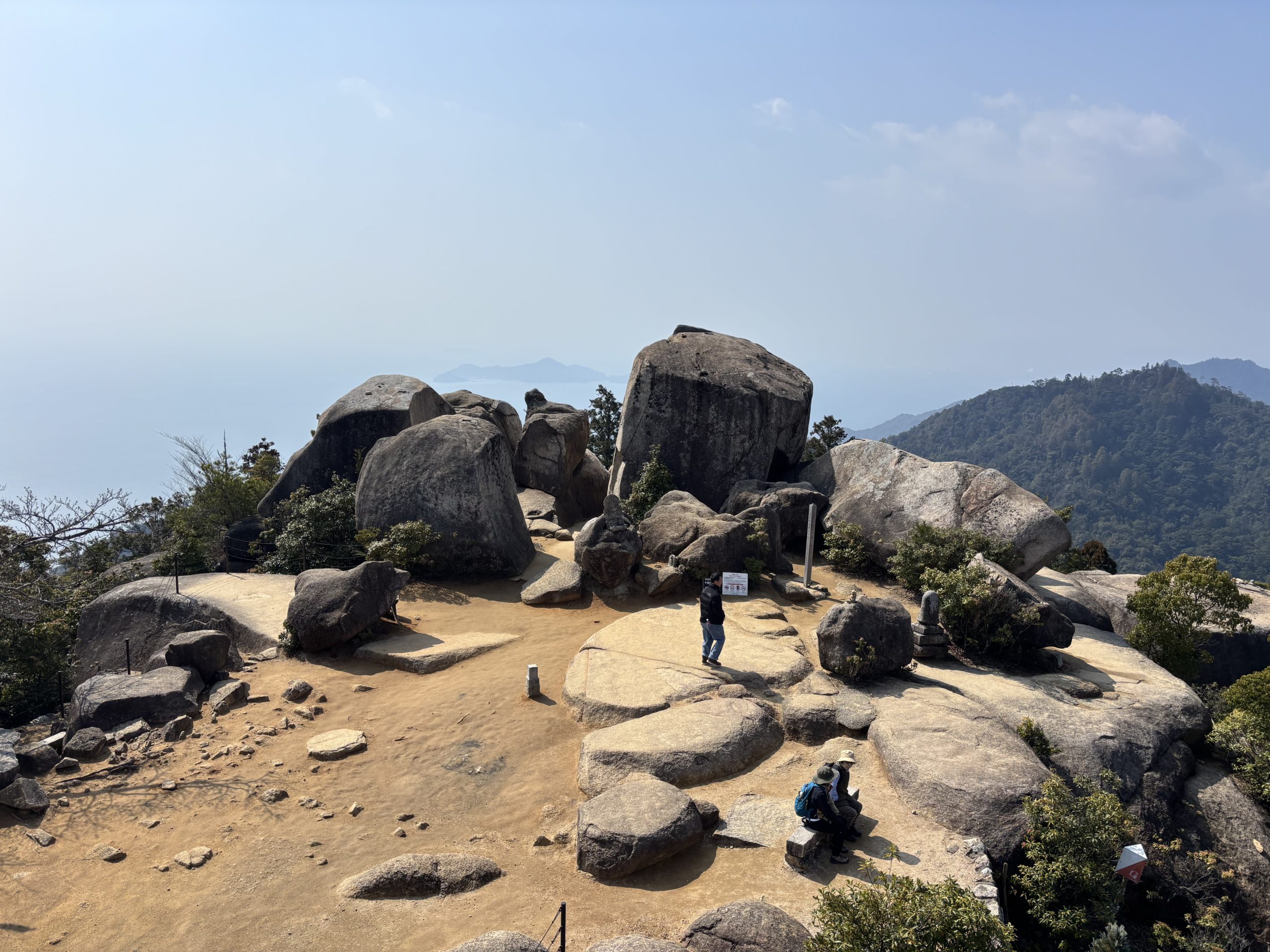
The definitive one-day guide to "Mt. Misen sightseeing." Rising behind...
What payment methods do you accept?
Cash only, unfortunately. Credit cards, debit cards, and all forms of electronic payment (Suica, PayPay, etc.) are not accepted. Please make sure you have sufficient yen in hand before your visit.
Final Thoughts
Tea House Okimitsu is a hidden-gem cafe in Miyajima that offers far more than just good food—it provides a window into the island’s quieter, more contemplative side. Tucked down a peaceful lane near Itsukushima Shrine and housed in a traditional Japanese home over 100 years old, it serves beautifully prepared fluffy anago rice, aromatic green tea soba noodles, and exceptional Japanese sweets centered around the justly famous warabi mochi.
The operations are refreshingly simple: cash only, no reservations, and a genuine commitment to handmade quality over mass production. If you’re building an itinerary and wondering what to eat in Miyajima beyond the tourist standbys, definitely add a “sweet break” here. You’ll experience historic ambiance and truly artisanal flavors that reflect the island’s cultural heritage.
As a Hiroshima mom and someone who visits Miyajima regularly, Tea House Okimitsu gave my family a wonderful opportunity to rediscover the charm of traditional Japanese architecture through fresh eyes—seeing my children’s genuine excitement about the old house was unexpectedly moving. While the famous major sightseeing spots absolutely deserve their popularity, spending relaxed time at hidden cafes like this creates a different kind of travel memory. The kind that lingers. The kind that makes you think “I want to go back.”
This is a cafe that made our entire family feel that way. I have a feeling it will do the same for you.
If you want to deepen your understanding of Miyajima’s history and cultural significance, I’d encourage exploring the background of the entire UNESCO World Heritage site. Traditional house cafes like Tea House Okimitsu are themselves part of the living culture that’s been nurtured throughout Miyajima’s centuries-long history—they’re not just places to eat, but connections to something larger and more meaningful.
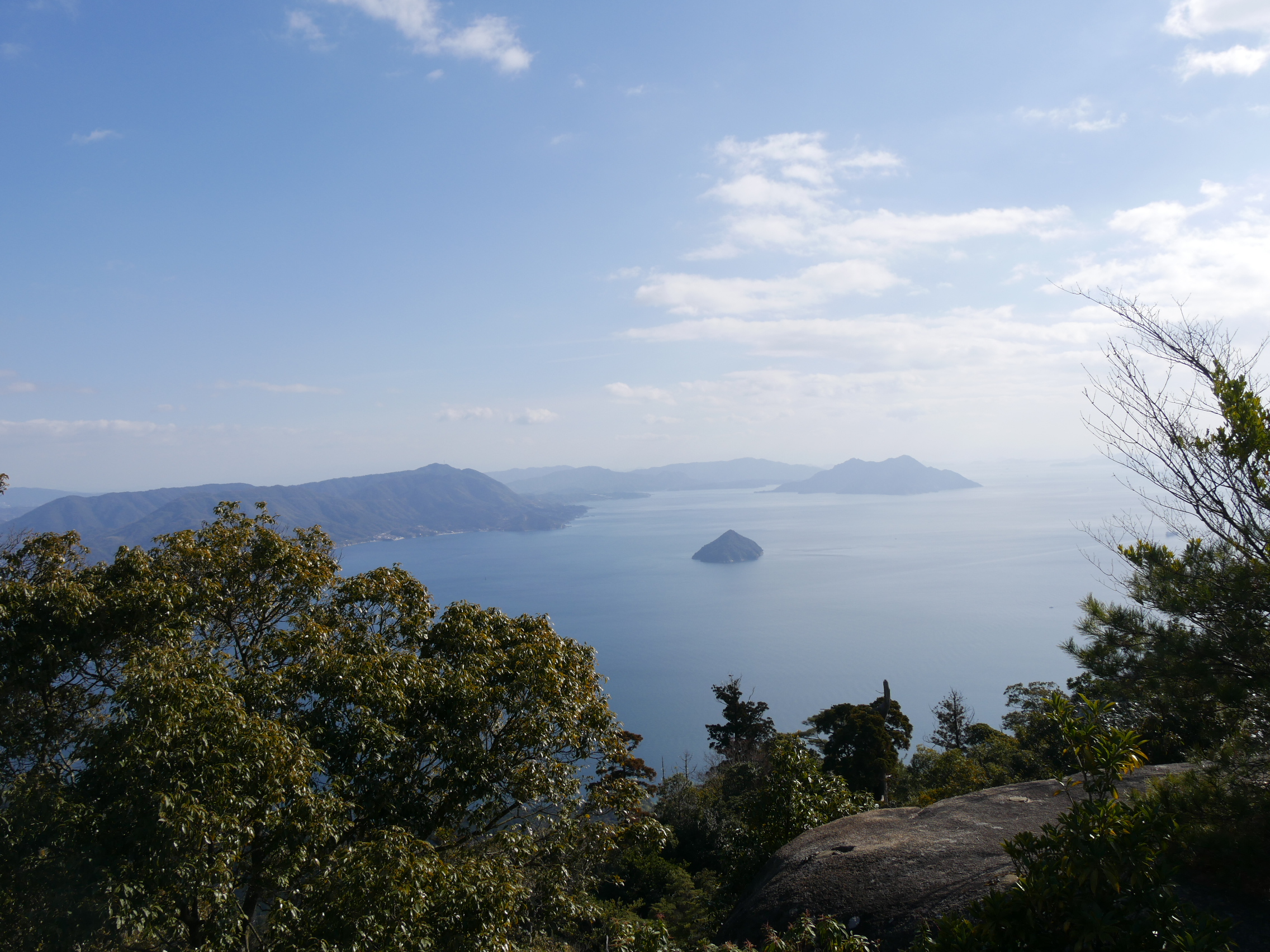
Miyajima is one of those rare places where Japan's ancient history and...