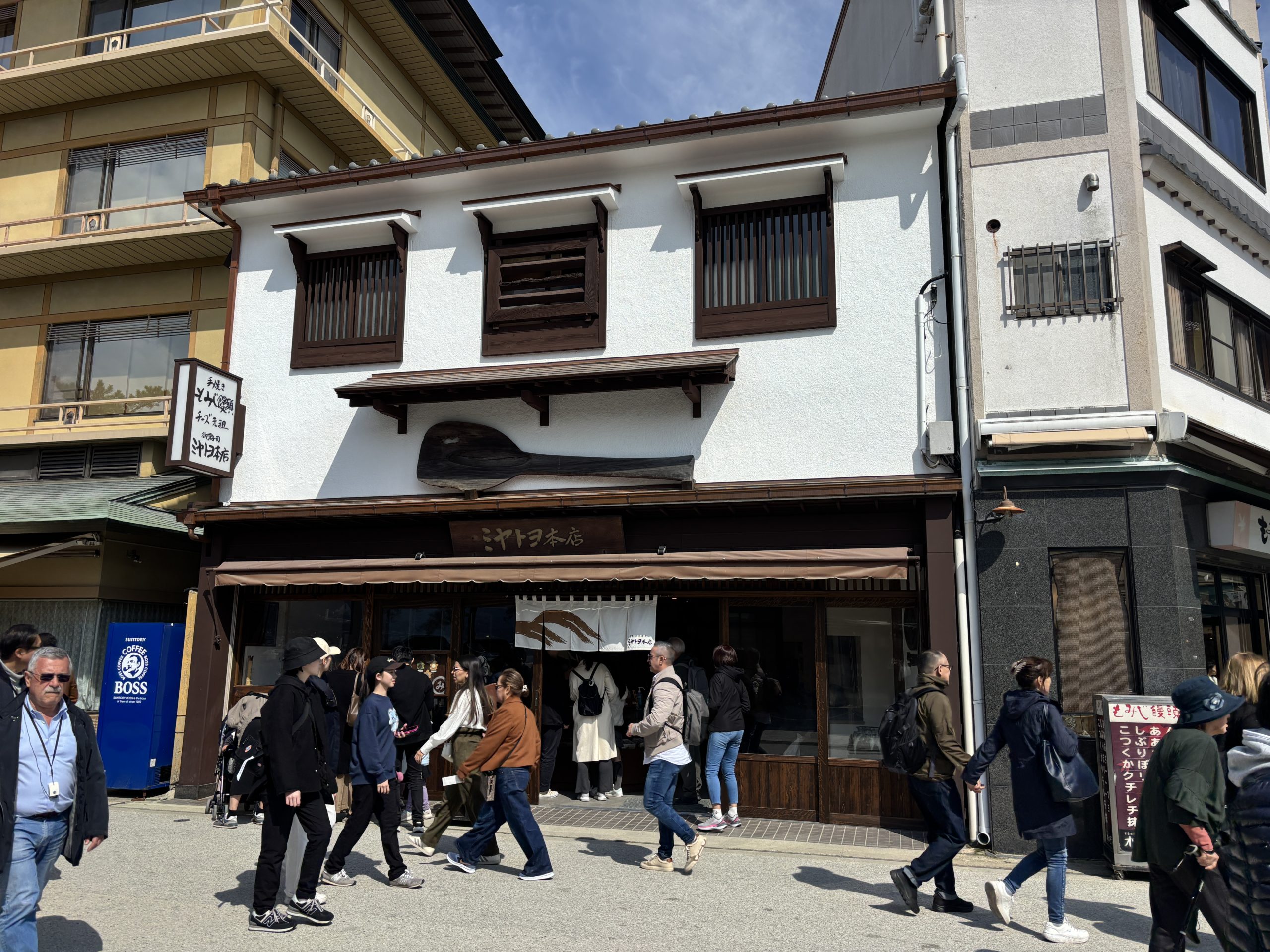
If you’re visiting Miyajima and want to try momiji manju at its most traditional — and most creative — Miyatoya Honten is the place to go. This long-established confectionery shop is the only place on the island still making momiji manju entirely by hand, grilling each maple-leaf cake to order using the same craft technique the shop has practiced since it first opened. The result is a noticeably different texture from the mass-produced versions sold elsewhere: the outside is soft and lightly fragrant, and the inside stays wonderfully moist. My family stops here every single time we visit Miyajima — and my older daughter never lets us leave without the cheese one.
Miyatoya Honten: Miyajima’s Only Hand-Baked Momiji Manju Shop
Miyatoya Honten sits along one of Miyajima’s historic shopping streets, and the hand-baking process still takes place right inside the shop. If your timing is right, you can watch the staff at work and receive your momiji manju still warm from the grill — an experience that is quietly special, even if you’ve eaten momiji manju a dozen times before.
The shop is also historically significant in a very specific way: back in 1984, Miyatoya Honten was the first shop anywhere on Miyajima to put cheese inside a momiji manju. That combination — salty processed cheese wrapped in a lightly sweet, hand-baked cake — sounds unconventional, and it is. That’s exactly why it became a hit, and why the cheese momiji manju has remained the shop’s signature product for over four decades.
Because every piece is made by hand rather than by machine, there is a subtle individuality to each cake — the edges show the faint marks of the grill, the filling sits slightly differently from piece to piece. It’s this handmade quality that keeps people coming back. The shop is the kind of place that reminds you why Miyajima momiji manju became famous in the first place.
Inside, the shop has a warm, wood-accented interior with a calm atmosphere. There is a small eat-in area where self-service tea is available, so you can sit down and enjoy a cake on the spot rather than eating while walking. The space is stroller-friendly and easy to navigate with young children, which makes it a welcome rest stop on rainy-day visits as well. Note that seating capacity may vary by season, so arriving early during peak periods is always a good idea. If you have a nursing infant, the breastfeeding room for Omotesando Shopping Street is located on the second floor of the Miyajima Tourist Information Center nearby.
You can buy momiji manju individually, which is ideal for tasting different flavors before committing to a box. Gift boxes start at eight pieces and can be customized with your choice of flavors — a small box fee applies depending on size (for example, a 10-piece box is around ¥90 extra). The shop also offers nationwide shipping within Japan, so if you fall in love with a flavor and want to send some home after your trip, that option is available. Check with staff for the latest details.
The quietest time to visit tends to be on weekday afternoons between around 2:00 and 4:00 PM, if you want to browse without the crowds.
Miyatoya Honten is located right along Omotesando Shopping Street — one of the most enjoyable stretches for street food and browsing on the island.
Miyajima's main shopping street — known locally as Omotesando — is a l...

The hand-baking method here has been passed down since the shop first opened, and today Miyatoya Honten is the only place on Miyajima where you can taste genuinely hand-baked momiji manju. Alongside preserving that tradition, the shop continues to develop new flavors — the cheese filling introduced in 1984 being the best example of how Miyatoya Honten has balanced heritage with creativity.
Inside the Shop: What to Expect
The interior is bright and welcoming, with wooden fixtures that show off the colorful range of flavors attractively. Near the register, it’s sometimes possible to glimpse the hand-baking station and catch the warm, toasty aroma that tends to slow people down as they pass. The eat-in area offers complimentary self-serve tea, so you can settle in for a moment and enjoy your cakes fresh. Turnover is reasonably quick even when the shop is busy, and the layout is easy to move through with a stroller or a small child in tow.
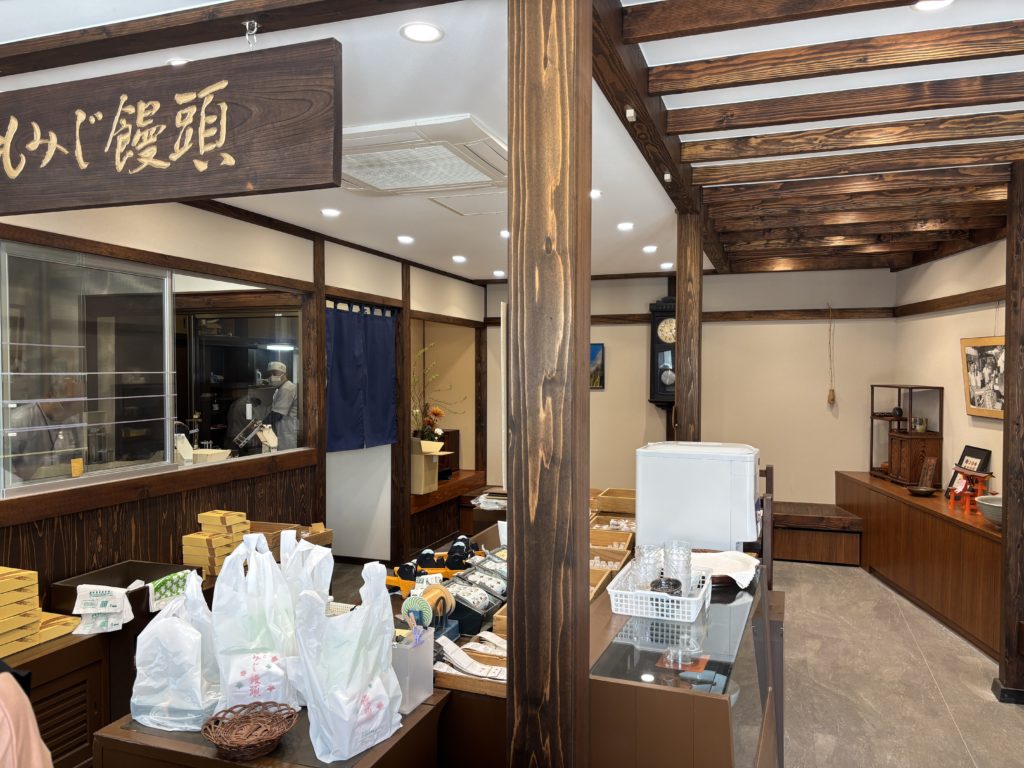
The display case holds a wide range of flavors, and both individual pieces and pre-boxed gifts are available. You can also build a custom box by selecting your own combination of flavors — pre-assembled gift boxes are on display as well. Gift boxes are available from eight pieces upward.
How to Choose Your Flavors: A Buyer’s Guide
Part of the fun at Miyatoya Honten is the range. The hand-baked dough has a particular moistness that works beautifully with both traditional and more adventurous fillings. Here’s a quick guide to help you decide:
Traditional fillings: Smooth red bean paste (koshi-an) and chunky red bean paste (tsubu-an) are the classic choices — understated, refined, and the best way to experience how the hand-baked dough stands on its own.
Signature filling: The cheese momiji manju is what Miyatoya Honten is known for. It uses a firm processed cheese rather than a soft cream cheese, which means the salty contrast against the sweet dough is quite pronounced. First-timers often describe it as surprisingly addictive.
Chocolate options: Both a Belgian chocolate and a Belgian white chocolate version are available. The dark chocolate is slightly bitter and balances the sweet dough nicely; the white chocolate is milky and rich. Either makes a popular souvenir for people who find traditional red bean paste too unfamiliar.
Other flavors: Depending on the season, options such as yuzu, apple, sweet potato, and cream-based fillings may also be available. In summer, look out for a chilled ice cream version that has become a popular street-food option.
A practical approach: buy a few individual pieces first to find your favorites, then pick up a custom gift box of the ones you love most before you leave the island.
Did you know that Yamadaya, another well-known momiji manju maker on Miyajima, also lets visitors watch — and even try — the baking process upstairs? It’s worth knowing about before your visit.

Momiji Manju Making Experience at Yamadaya Miyajima Main Store ...
Tasting the Flavors: An Honest Review
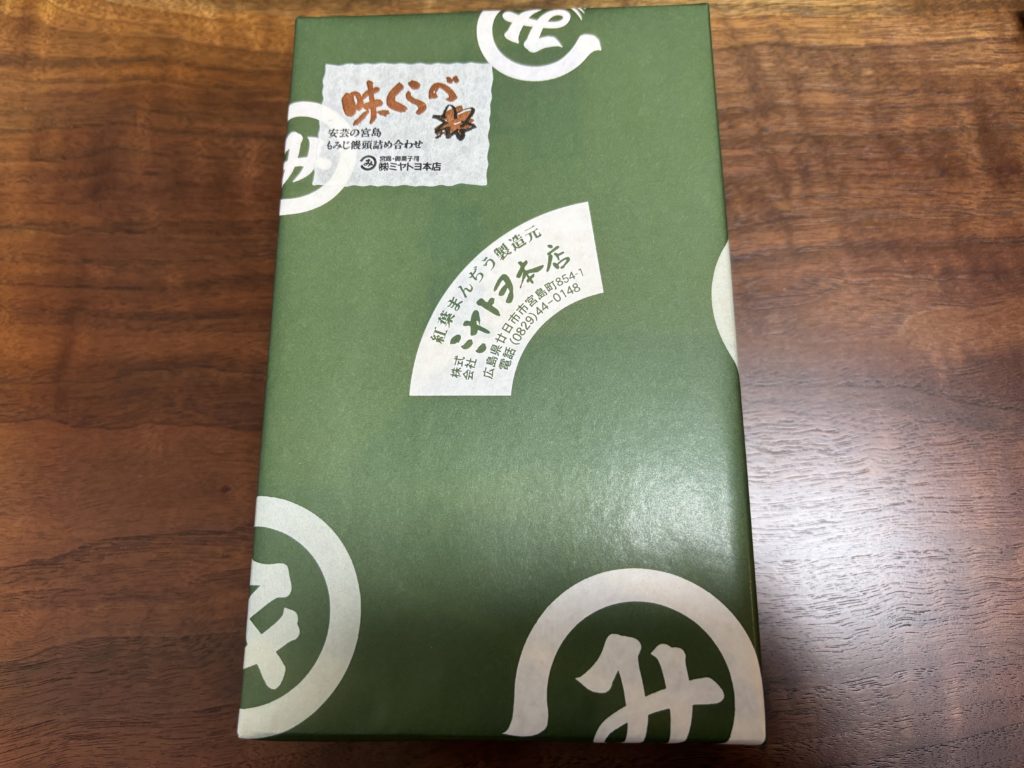
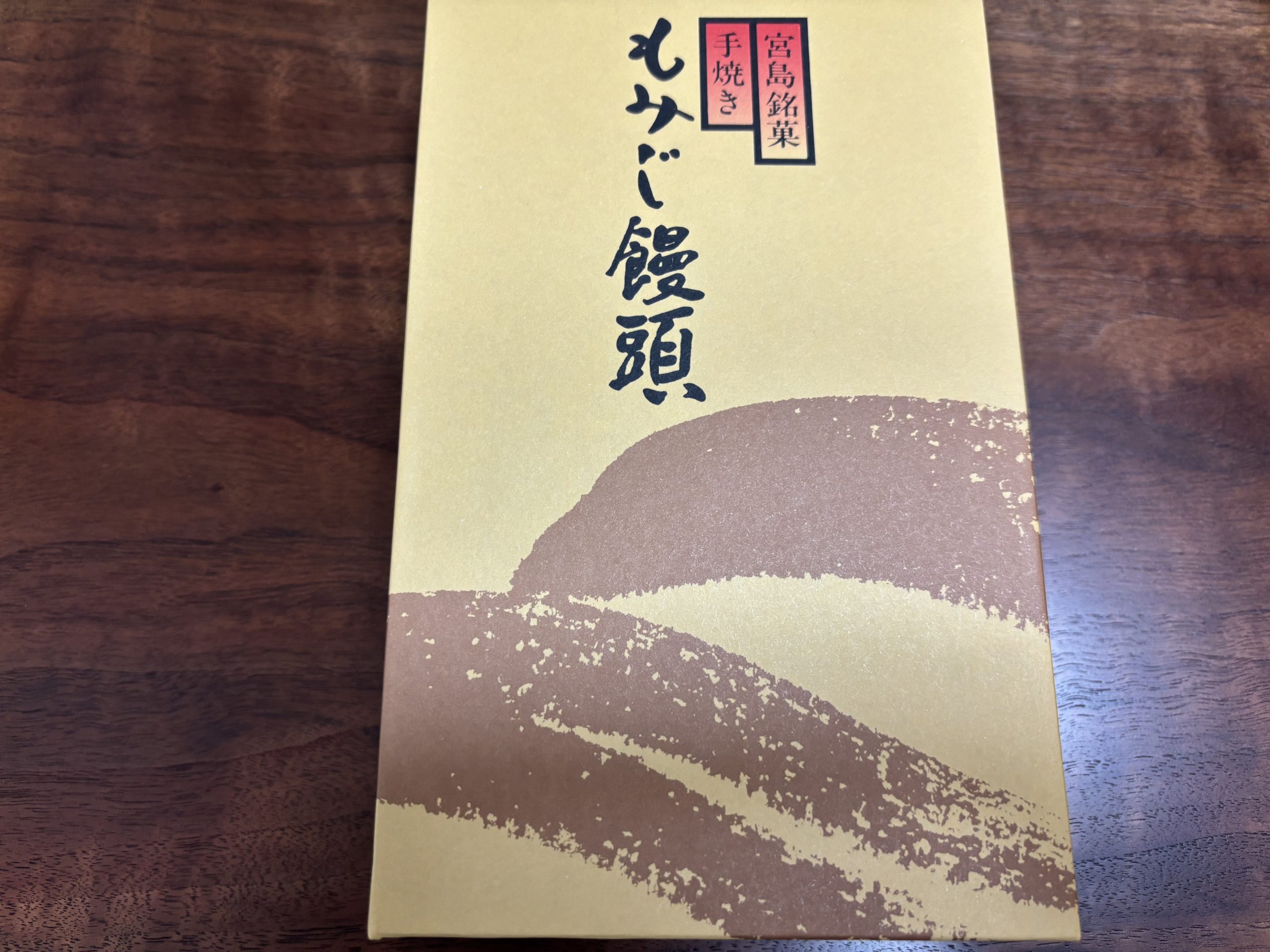
I picked up a selection to take home, and the packaging alone sets the tone — the wrapping paper has a clean, well-designed look that makes it feel like a considered gift even before you open it.
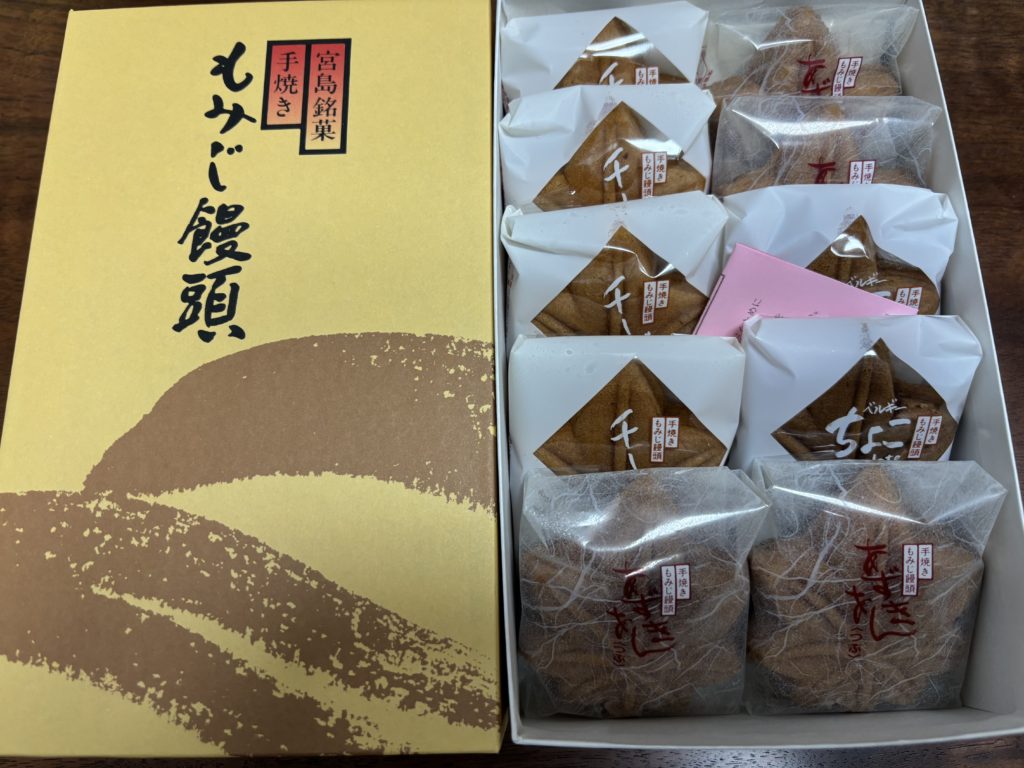
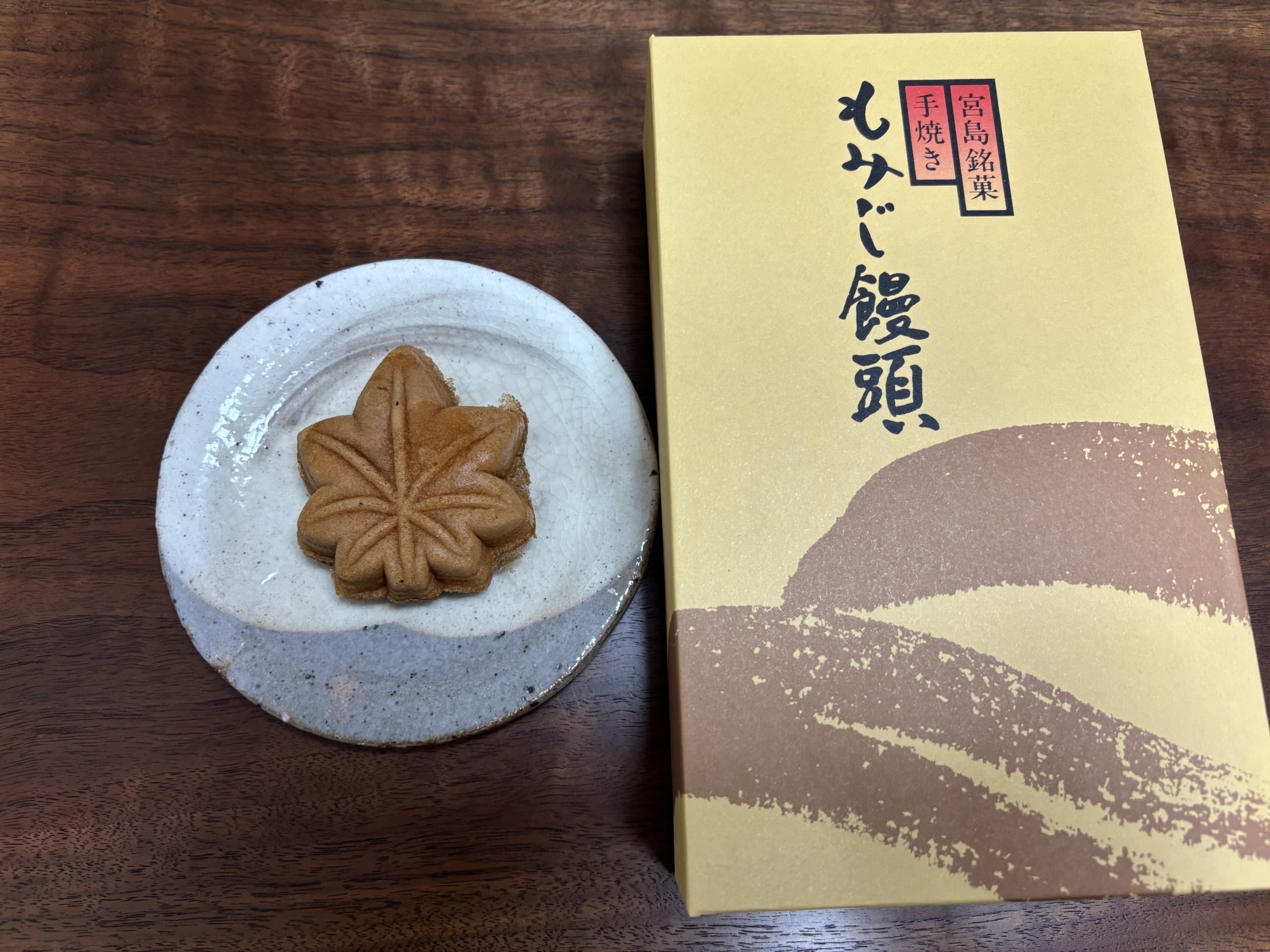
Inside the box, each momiji manju is neatly arranged — it’s the kind of presentation that makes you slow down before eating the first one.
Smooth Red Bean (Koshi-an) — The Classic
The traditional smooth red bean filling is finely textured and packed generously into the dough, dissolving gently with each bite. The sweetness is measured and refined rather than heavy — this is the version that shows off the quality of the hand-baked dough most clearly. If you want to reheat it at home, a brief microwave warm-up followed by a quick pass under the grill or toaster brings out the toasty aroma beautifully. It pairs well with green tea, but also holds up surprisingly well alongside a light-roast coffee.
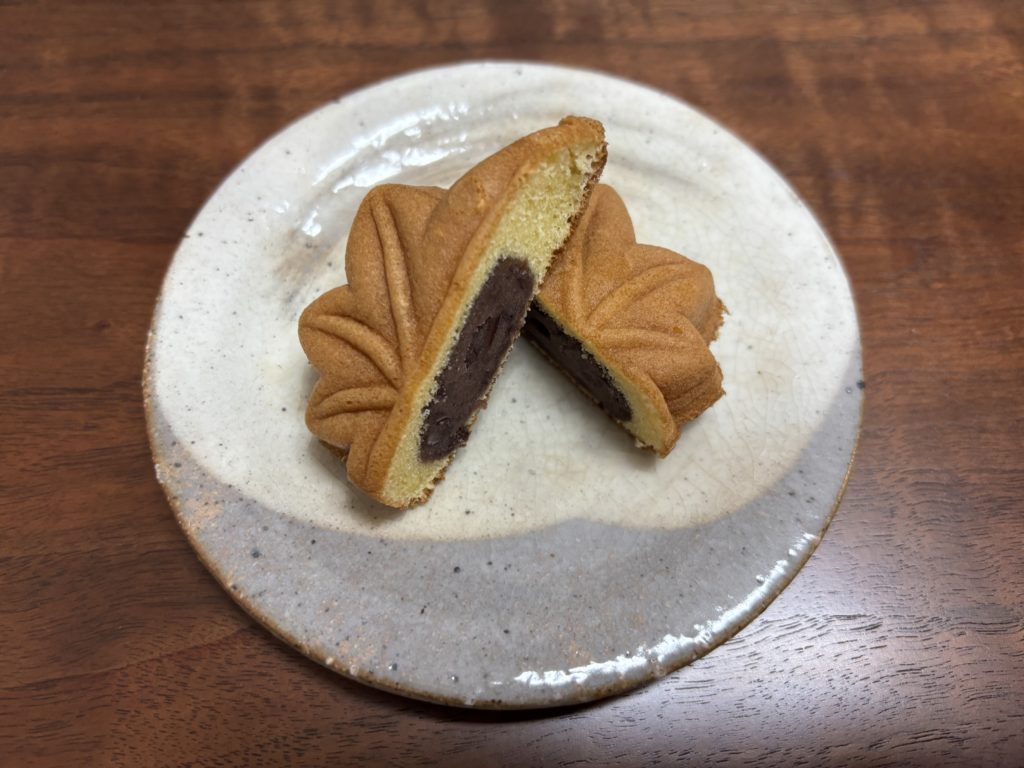
The classic smooth red bean (koshi-an) variety is priced at ¥120 (tax included). The cross-section tells the story clearly: the filling is dense and abundant. You can also see the slight imperfections along the edges of the dough — the small signs of something genuinely made by hand. My husband always says the hand-baked quality is what makes this worth coming back for.
Belgian White Chocolate — Rich and Creamy
The white chocolate filling has a full, milky sweetness that spreads slowly across the palate. The filling is slightly more restrained in quantity than the red bean, which actually works in its favor — the balance between the dough and the chocolate stays harmonious rather than cloying. Pairing it with black coffee or unsweetened tea helps offset the sweetness nicely. My younger daughter has claimed this one as her personal favorite and requests it by name every visit.
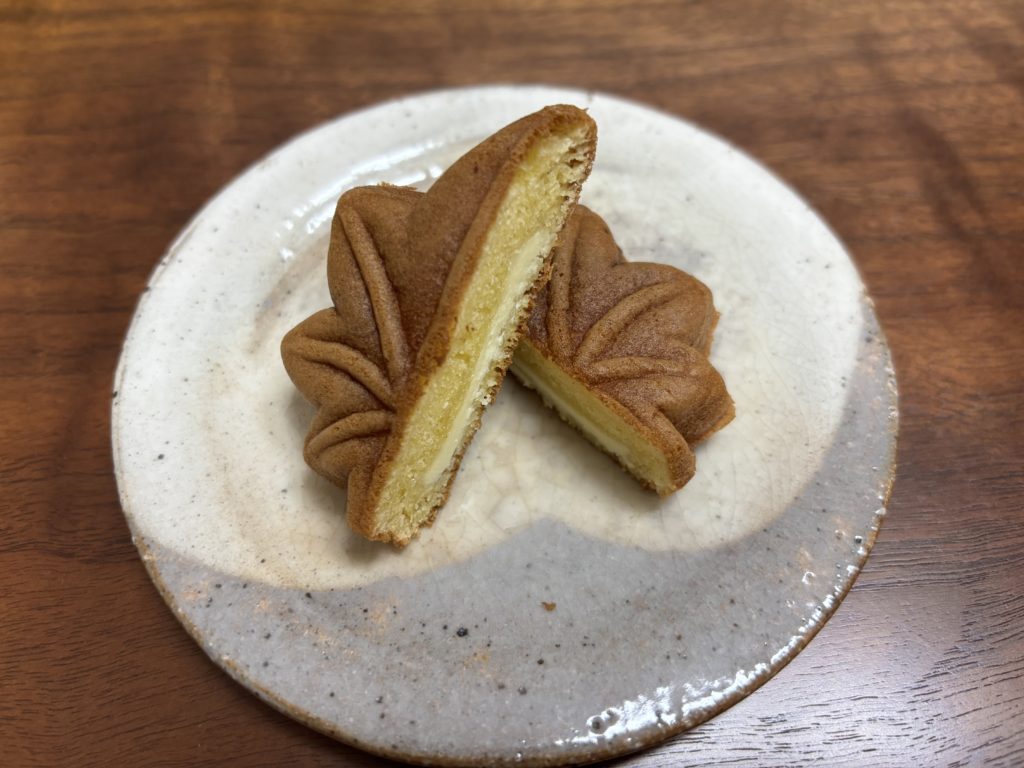
The Belgian white chocolate variety is ¥130 (tax included). The filling is slightly more delicate in volume compared to the red bean, and the milky sweetness of the white chocolate fills the mouth gently. It’s a flavor I’d love to see become a permanent fixture.
Cheese — The Shop’s Most Famous Flavor
This is the one Miyatoya Honten is known for, and it earns the reputation. The cheese used is a firm processed variety — not a melted or spreadable type — so rather than blending into the sweet dough, it holds its own against it. The contrast between the salty, slightly tangy cheese and the soft, sweet exterior is striking in the best possible way. Warming this one up intensifies the cheese aroma noticeably. People who pair it with wine or a strong black tea are onto something. Almost everyone who tries it for the first time says it’s nothing like what they expected — and immediately wants another.

The cheese momiji manju is Miyatoya Honten’s flagship product, and it’s easy to see why. Other shops on Miyajima offer cream cheese versions, but this one uses real processed cheese — a saltier, firmer filling with a savory depth that is genuinely unlike anything else in the momiji manju world. It became my personal favorite on the very first bite.
Belgian Dark Chocolate — Subtle and Satisfying
The dark chocolate filling leans slightly bitter, which pairs naturally with the sweetness of the dough and results in a finish that is lighter than you might expect. This one holds up well chilled, making it a solid choice for warm-weather visits when you want something that travels well. It tends to be a reliable favorite as a souvenir for adult friends and colleagues.
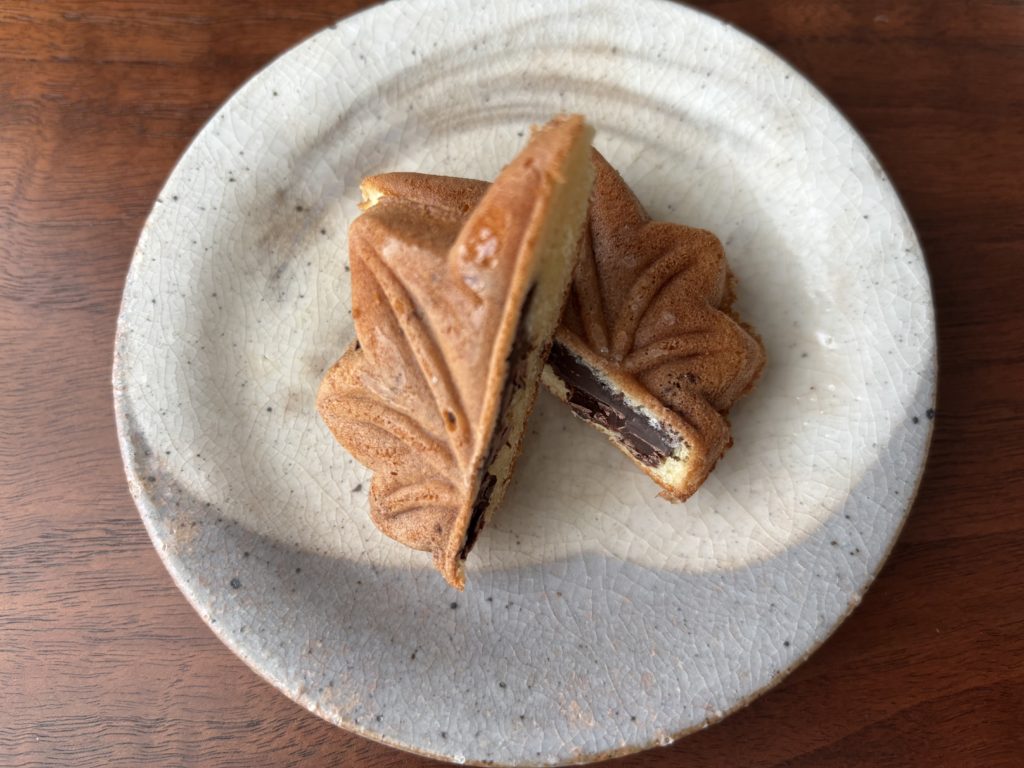
The Belgian dark chocolate filling sits within the moist momiji manju dough in a way that feels measured and harmonious. The slight bitterness of the chocolate melds gently with the sweetness of the cake around it.
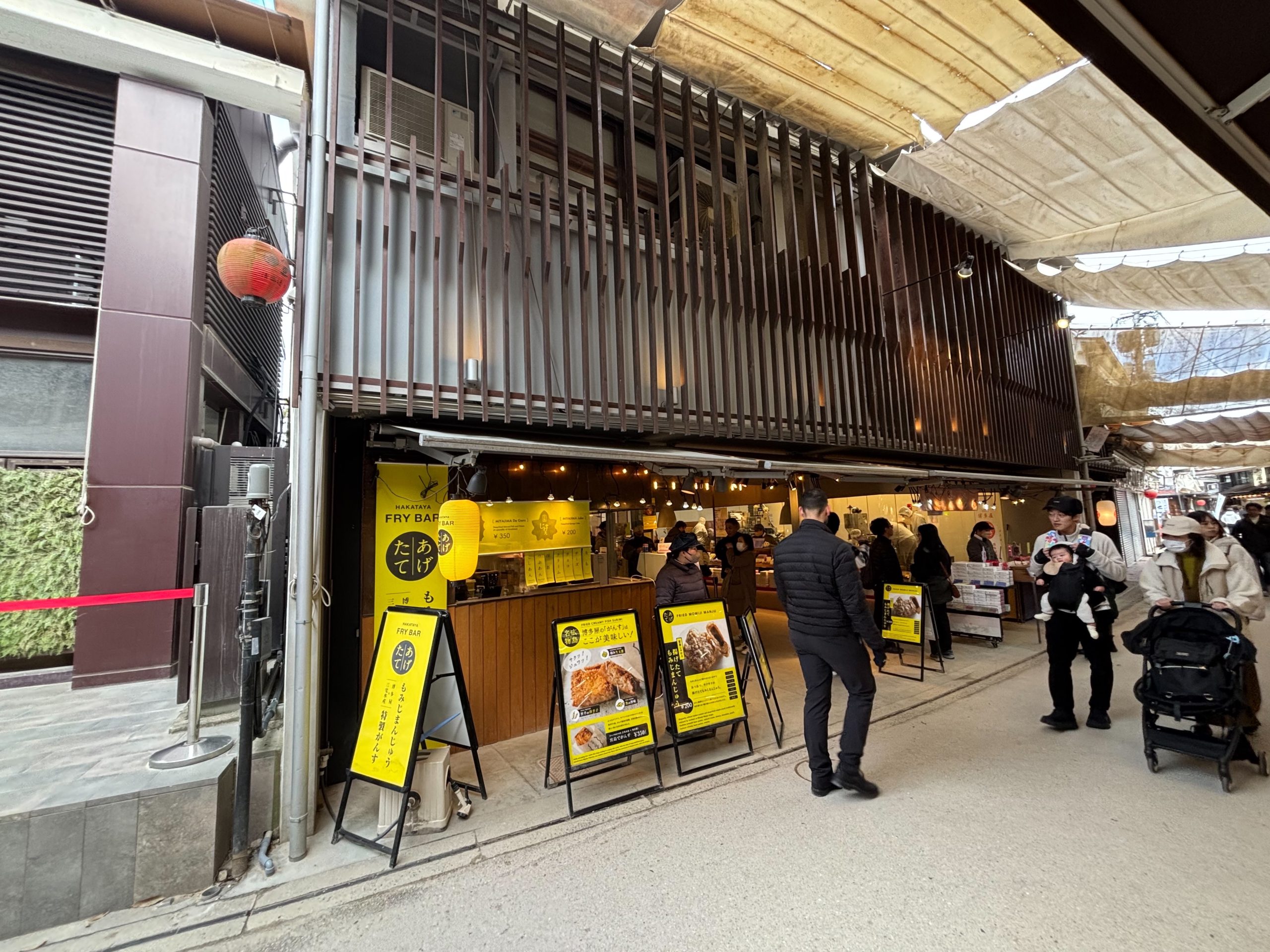
No visit to Miyajima is complete without trying age momiji — deep-fried momiji manju. Head to Koyo-do first thing in the morning for the crispiest version of the day.
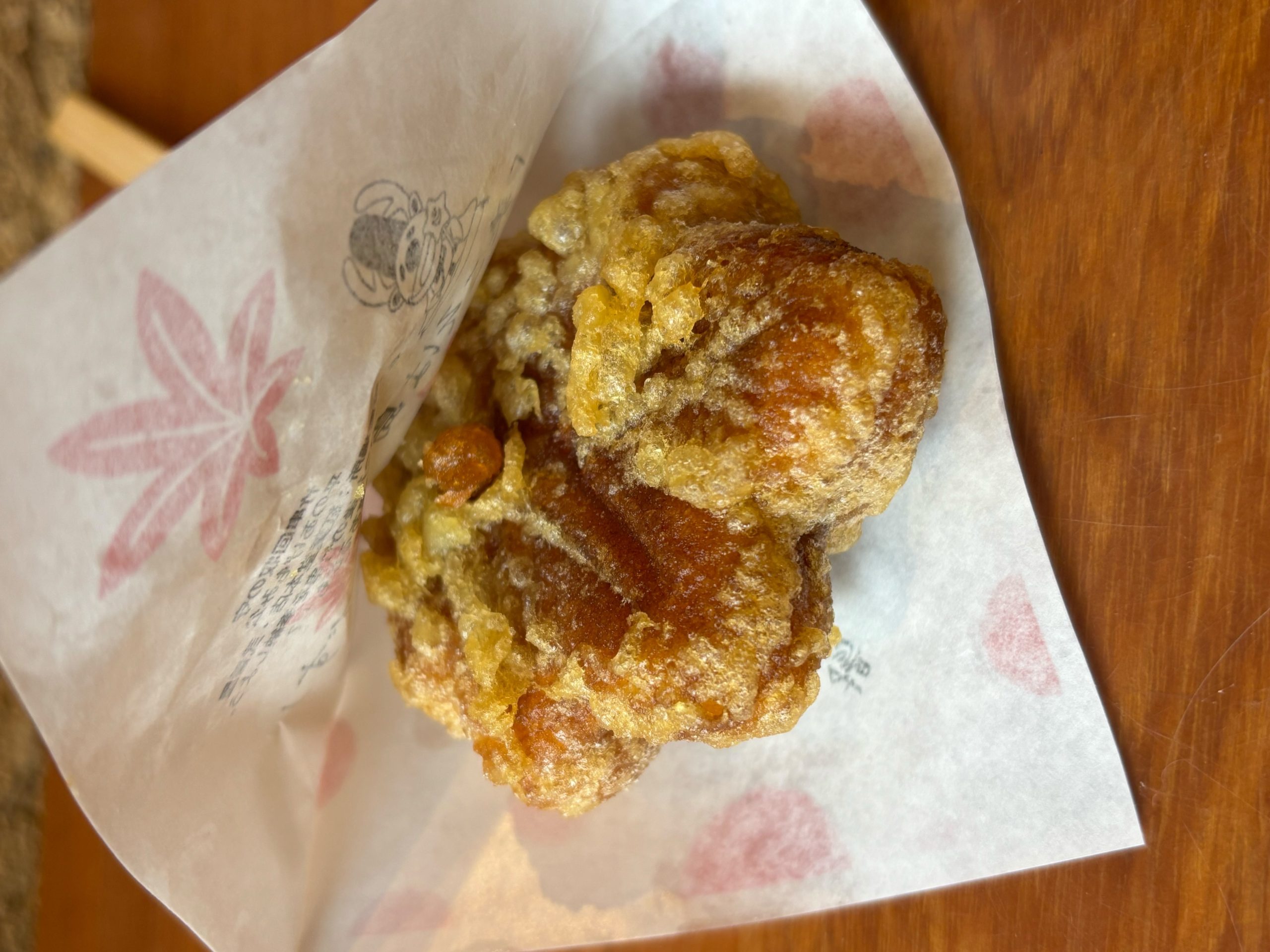
If you're looking for the ultimate Miyajima street food experience, ag...
Getting There, Hours, and How to Buy
Miyatoya Honten is within easy walking distance of the Miyajima ferry pier, and it sits directly along the route toward Itsukushima Shrine — meaning you’re likely to pass it on your way to or from the island’s main attractions. If you’re taking the ferry from Hiroshima and want to maximize the scenery, the JR ferry passes closer to the Great Torii Gate on the outbound journey, which makes it the more scenic option.
Operating hours are approximately 9:00 AM to 5:30 PM, though these can vary by season. The shop is generally open daily with no regular closing day, but it’s worth confirming the latest hours before you visit, especially during busy holiday periods.
Individual pieces start from ¥120, and gift boxes begin at eight pieces. You can select your own combination of flavors when building a custom box, with a small additional charge for the box itself depending on size. Nationwide shipping within Japan is available — ideal if you want to send souvenirs home directly rather than carrying them. Ask staff for details on current shipping options and pricing.
The shelf life of momiji manju is approximately three days, so plan your purchases with that in mind — especially if you’re traveling for several more days after your Miyajima visit.
Visiting Itsukushima Shrine is the natural companion to any stop at Miyatoya Honten — the shrine is just a short walk further along the same route.
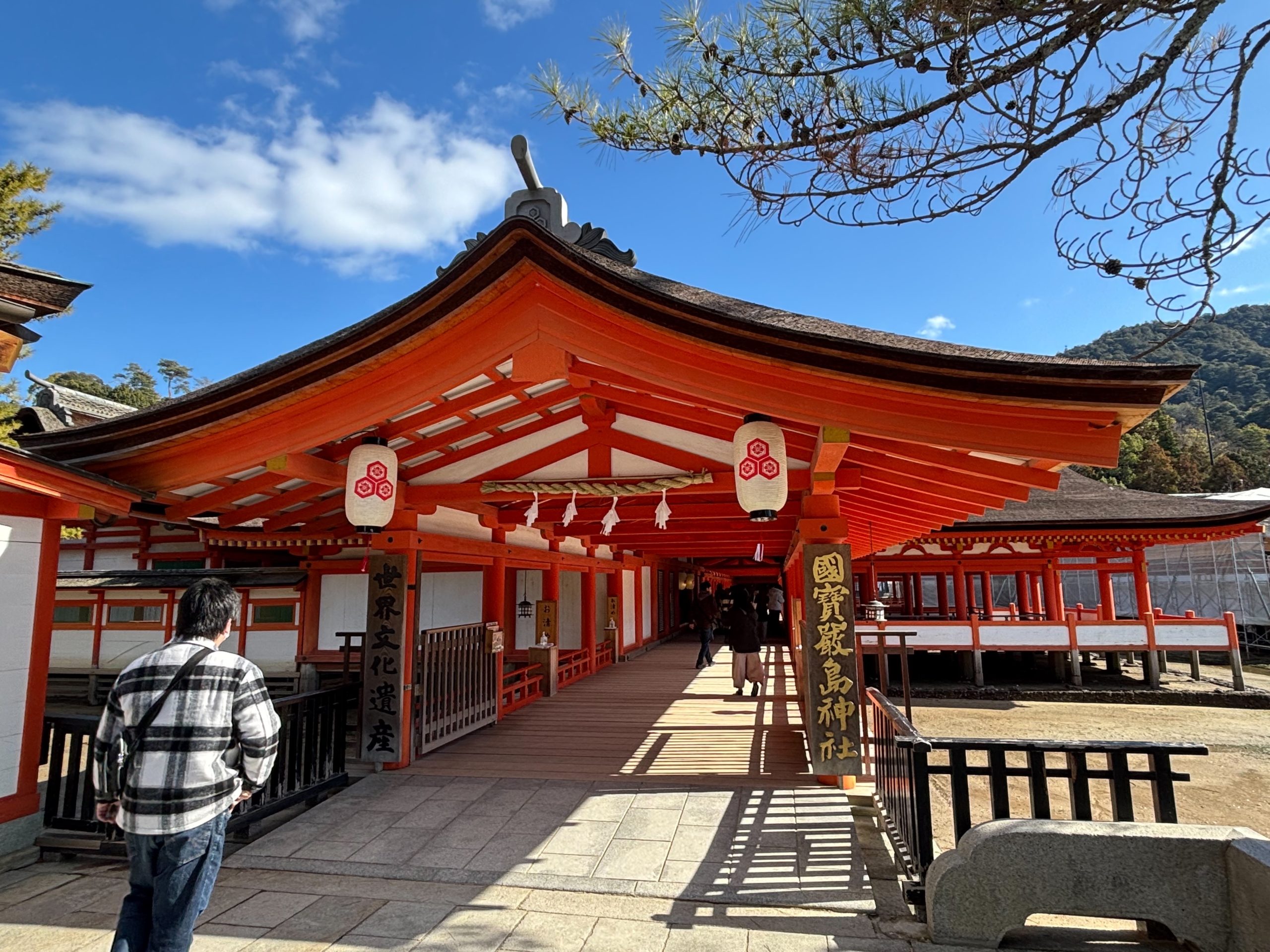
Itsukushima Shrine sits at the edge of the sea on Miyajima Island, jus...
Planning Your Visit: Tips for Getting the Most Out of It
A natural itinerary runs something like this: step off the ferry and head straight to Miyatoya Honten for one or two pieces to eat while walking, then continue to Itsukushima Shrine and the Great Torii Gate, browse Omotesando Shopping Street on the return, and stop back in before the ferry to pick up a gift box. This keeps things efficient and ensures you get the freshest cakes early in the day.
On rainy days, the eat-in area makes the shop a particularly pleasant rest stop — the covered shopping street nearby is easy to explore without getting soaked, and the combination of warm tea and fresh momiji manju is genuinely comforting. If you’re visiting with young children, mornings tend to be less crowded. The shop’s layout is manageable with a stroller, and entering from the shopping street side gives the smoothest access.
One practical note: the island has limited options for charging devices, so it’s worth topping up your phone battery before you board the ferry. For parking, the coin car parks near Miyajimaguchi on the mainland are the standard option — the island itself is explored almost entirely on foot.
FAQ
What is Miyatoya Honten’s most popular flavor?
The cheese-filled momiji manju is the shop’s signature and best-known product. The combination of salty processed cheese inside a sweet hand-baked cake is unique to this shop and has been popular since 1984. If you’re visiting for the first time, pairing it with the classic smooth red bean version makes for a great introduction to what makes the shop special.
What makes the momiji manju at Miyatoya Honten different from other shops?
Miyatoya Honten is the only shop on Miyajima that still hand-bakes every momiji manju individually rather than using machine production. This results in a noticeably softer, more fragrant texture, and each piece has small handmade imperfections that set it apart from factory-made versions.
Can I buy individual pieces, or do I have to buy a full box?
Individual pieces are available for purchase, starting at around ¥120. Gift boxes begin at eight pieces and can be customized with your preferred flavors. A small box fee applies depending on the size you choose.
How long does momiji manju last, and how should I store it?
The shelf life is approximately three days. Keep the cakes out of direct sunlight and away from heat and humidity while traveling, and consume them as soon as possible after returning home. If you’d like to reheat them, a brief microwave followed by a quick blast in a toaster oven restores the fresh-baked aroma nicely.
What’s the best time of day to visit?
Mornings tend to offer the freshest cakes and shorter waits. If you’re hoping to avoid crowds entirely, weekday afternoons between roughly 2:00 and 4:00 PM are usually the quietest window. During peak seasons, some flavors can sell out by midday, so earlier is generally better.
Is the shop easy to visit with a stroller or young children?
Yes — the layout is manageable with a stroller, and the eat-in area with self-service tea makes it a convenient short break with young children. Entering from the Omotesando Shopping Street side is the smoothest approach. A nursing room is available on the second floor of the Miyajima Tourist Information Center nearby.
Does the shop offer shipping?
Nationwide shipping within Japan is available, which is useful if you want to send gifts home rather than carrying them. Payment methods and shipping details may change, so confirming with staff at the time of purchase is recommended.
Fujiya is another beloved Miyajima confectionery with a long history — worth adding to your souvenir itinerary.
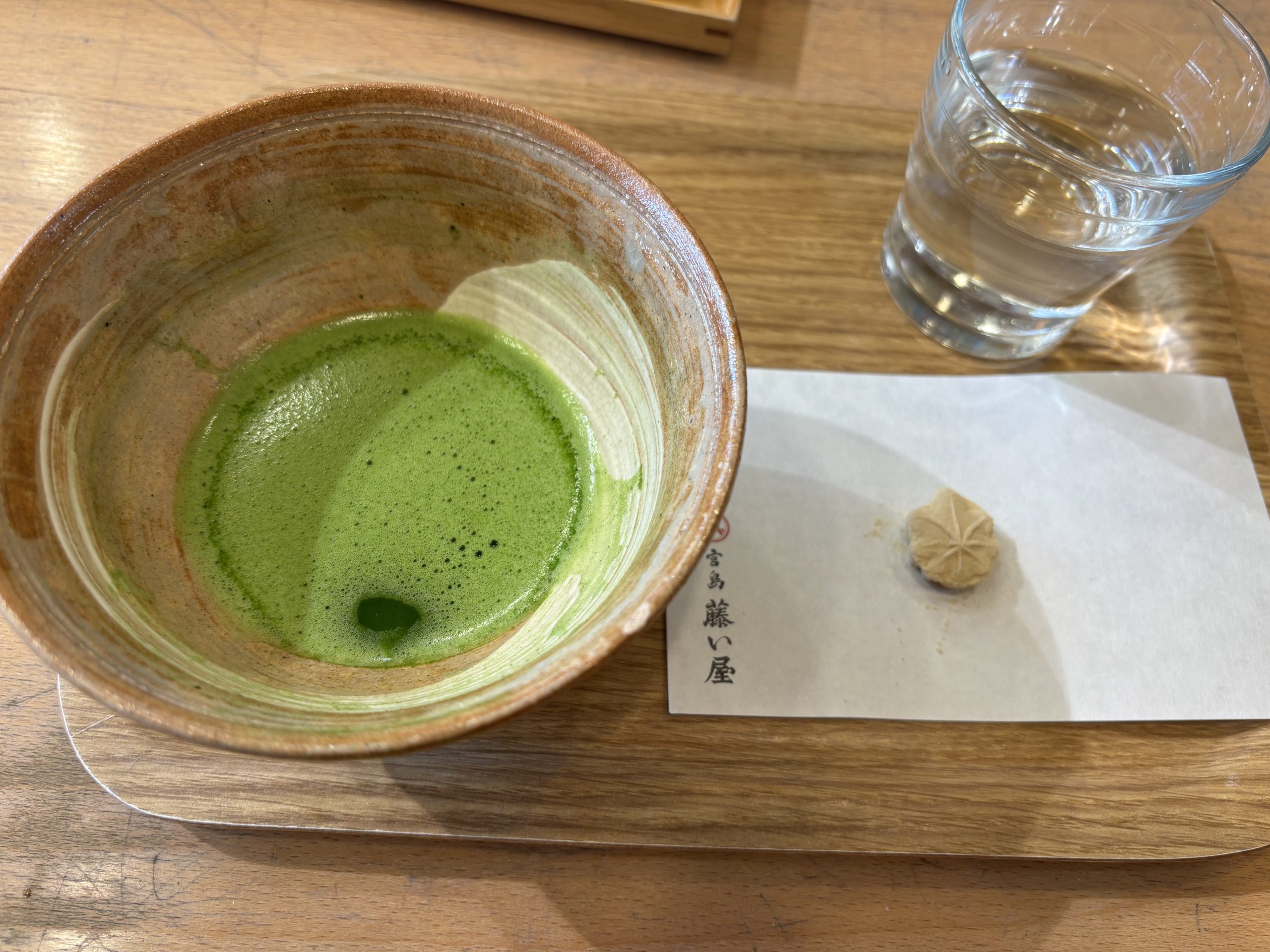
Tucked along the Omotesando shopping street on your walk from the ferr...
Final Thoughts
Miyatoya Honten is the kind of shop that makes a strong case for slowing down during your Miyajima visit. The hand-baked momiji manju here are genuinely different from what you’ll find elsewhere on the island — softer, more fragrant, and made with a level of care that comes through in every piece. The cheese flavor alone is worth the detour. My family has made it a non-negotiable stop on every trip we’ve taken to the island, and it has yet to disappoint. Pick up a few individual pieces to try on the spot, then build a custom box to take home.
One reminder: the shelf life is around three days, so plan accordingly and enjoy them fresh.
Facility details including hours, pricing, and available flavors are subject to change. Please verify the latest information via the shop’s official channels or by contacting them directly before your visit.
Omotesando Shopping Street is also famous for its soft-serve ice cream — and if you visit after 5:00 PM, the lines are usually much shorter.
Miyajima's main shopping street — known locally as Omotesando — is a l...
Miyajima’s other must-eat dish is anago rice — slow-cooked conger eel served over rice, a local specialty that’s been made on the island for generations.
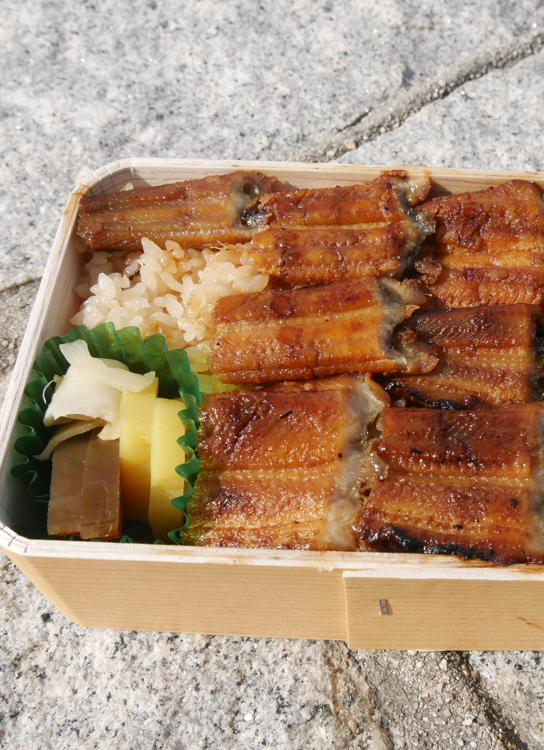
Miyajima Island is famous for its floating torii gate and ancient shri...