
Momiji Manju Making Experience at Yamadaya Miyajima Main Store
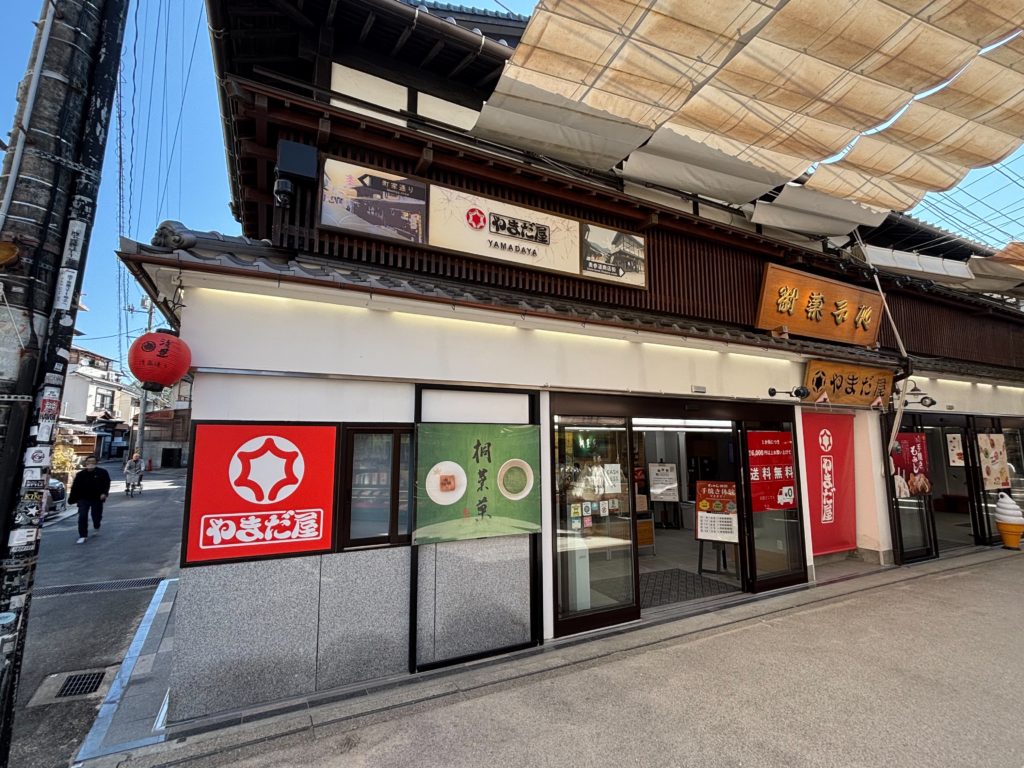
Momiji manju — the iconic maple leaf-shaped sweet cakes filled with smooth red bean paste — are the most beloved souvenir from Miyajima Island, and no maker is more famous for them than Yamadaya. Founded in 1932 and headquartered in Miyajima Town, Hiroshima Prefecture, Yamadaya produces over 20 million momiji manju every year and has become a landmark of Miyajima tourism for both Japanese and international visitors.
What many travelers don’t realize is that Yamadaya’s Miyajima Main Store offers a hands-on momiji manju making experience — and it’s one of the most fun and memorable things you can do on the island. I recently brought my two daughters (ages 8 and 5) for our first time at the workshop, and we had an absolute blast. The kids had been asking for weeks, “What does a momiji manju taste like when YOU made it yourself?” Now we know the answer.
The Miyajima Main Store carries a full selection of traditional Japanese sweets alongside momiji manju, and is open daily from 9:00 AM to 6:00 PM with no closures throughout the year. Here’s a local tip that most tourists miss: the second floor of the store serves freshly baked momiji manju hot off the iron — something you won’t find advertised at the front door.
The store is located at 835-1 Miyajimachō, Hatsukaichi City, Hiroshima. The nearest train station is Hiroden Miyajima-guchi Station. From JR Sanyō Main Line Miyajima-guchi Station, it’s about a 3-minute walk to the ferry pier, where you’ll catch a boat across to the island.
If you’re unsure which ferry to take, the JR Ferry is a great choice — its route passes closer to the famous floating torii gate of Itsukushima Shrine, and my daughters nearly jumped out of their seats when it came into view. “There it is!” is pretty much guaranteed.
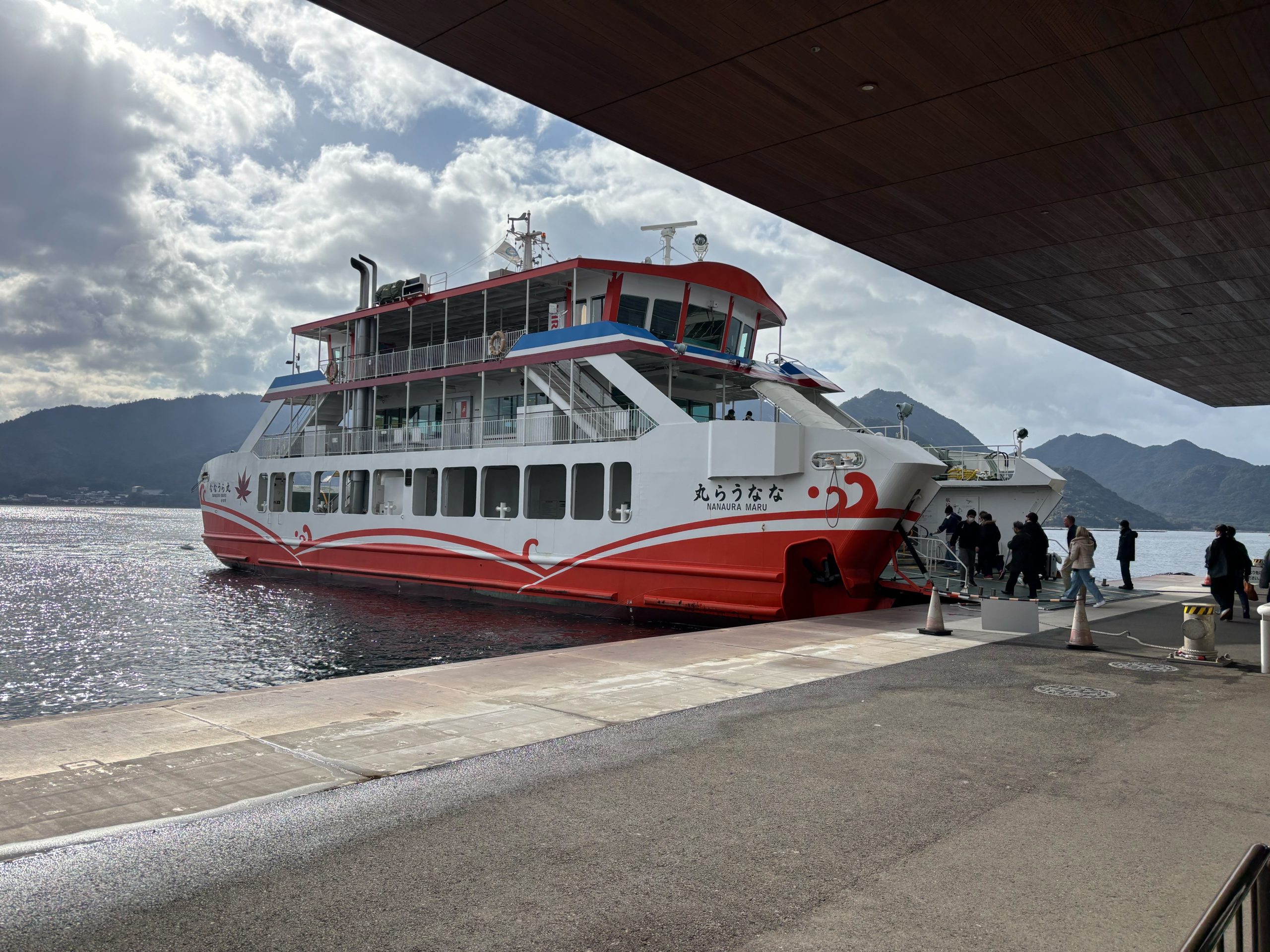
The Miyajima ferry isn't just a way to get to the island — it's the be...
If you’re driving, park near Miyajima-guchi pier and take the ferry over — bringing your car to the island is not recommended. The workshop venue on the second floor is wheelchair accessible, though parts of the island itself involve slopes and uneven steps, so it’s good to plan ahead. Strollers are also manageable on the ferry and inside the store.
The momiji manju made at Yamadaya use a specially crafted smooth red bean paste (koshian) made only from quality azuki beans and coarse sugar — no shortcuts. That dedication to simple, honest ingredients is a big reason why their manju have remained a favorite for nearly a century.
Inside the Workshop — What to Expect on the Second Floor

The workshop takes place in a dedicated space on the second floor of the Miyajima Main Store. Online reservations have been available 24 hours a day since September 2019, and you can also check real-time availability before booking. Walk-ins are accepted when space is available, but the sessions fill up frequently — especially on weekends.
I learned this the hard way. Our first attempt was a walk-in on a Saturday, and we ended up waiting two hours. After that, I always book online in advance. If you’re coming with a large group, group reservations can be made up to one year ahead by downloading a form and submitting it by fax.
The workshop fee is currently 880 yen per person (tax included) — a price that will increase to 1,000 yen from July 1, 2025. Each participant makes two momiji manju: one with classic red bean filling and one with chocolate. A Tōyōka sweet (one of Yamadaya’s other signature confections) is included as a take-home souvenir. Note that the souvenir item may change depending on the season.
Session Schedule and Capacity
Weekdays: 10:30 / 13:00 / 14:15 / 15:30 (4 sessions per day)
Weekends and Public Holidays: 9:45 / 11:00 / 13:00 / 14:15 / 15:30 (5 sessions per day)
Each session lasts approximately 30 minutes with a maximum of 20 participants. Children aged 5 and up may participate. For groups with observers (non-participating family members, for example), only one observer per group is permitted inside the workshop area.
My younger daughter just turned 5 and was a little nervous about whether she could keep up, but the staff are wonderfully patient and walk every child through each step with care. She was so proud of herself by the end.
One seasonal highlight worth knowing about: during the Obon holiday period (August 9–17), the regular workshop is replaced with a special experience using shine muscat grapes and red bean paste. I attended this summer version last year, and the combination of sweet grape and earthy bean filling was genuinely delicious — well worth timing a visit around if you can.
How to Make Momiji Manju — Step by Step
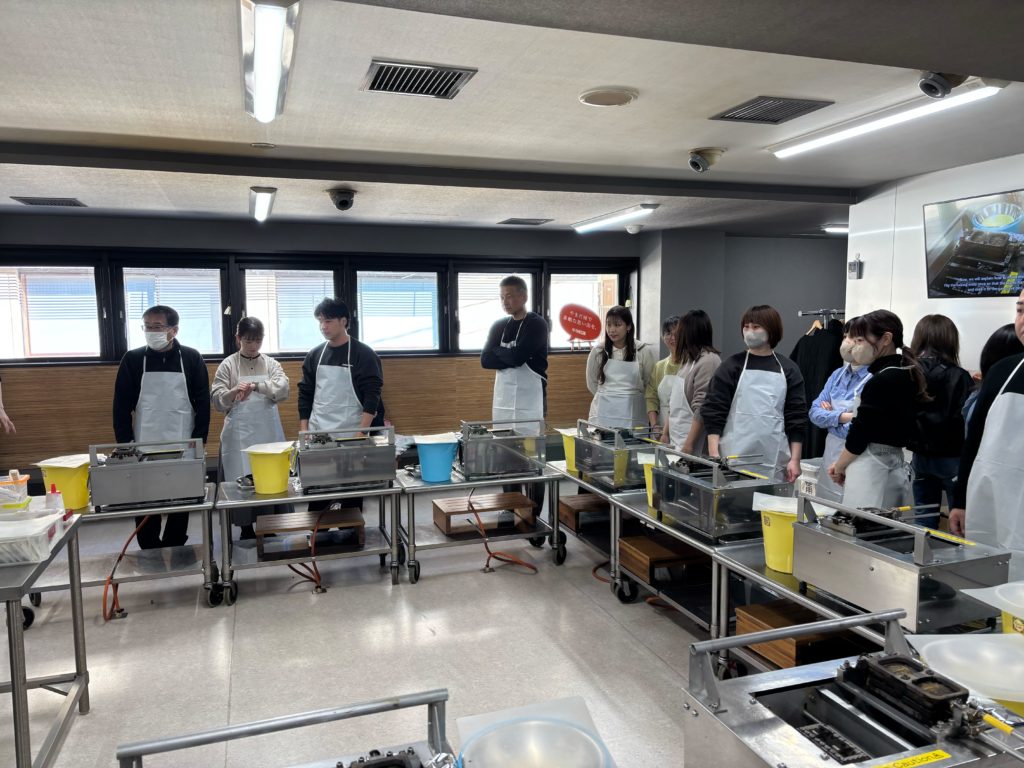
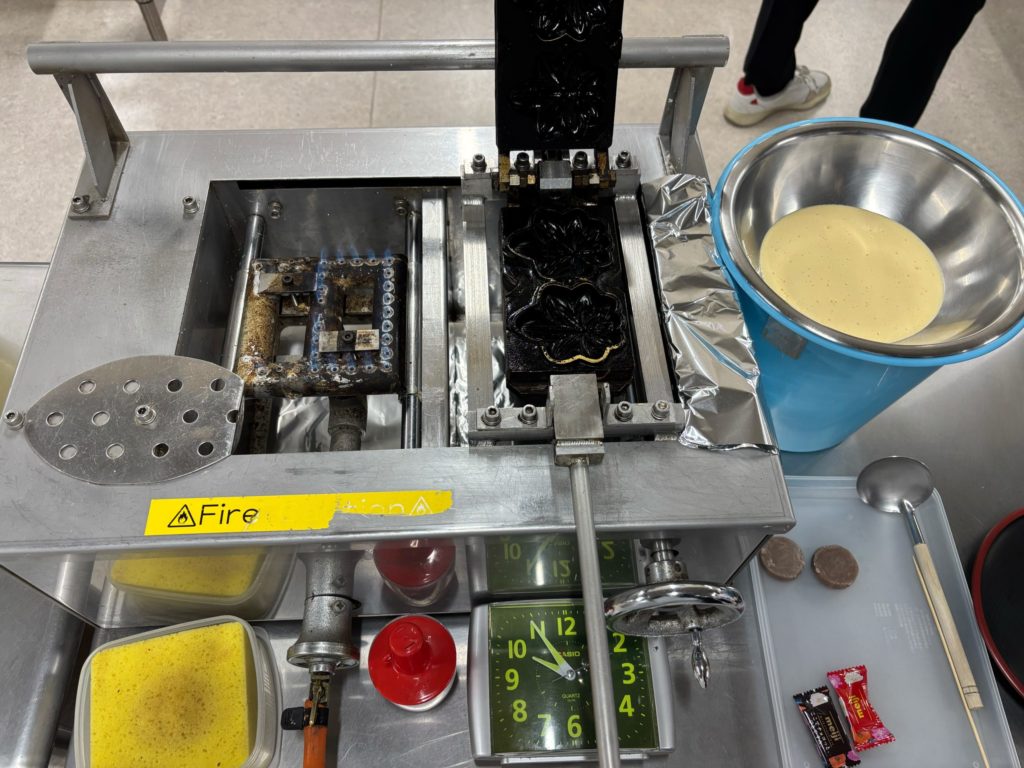
After checking in, you’ll store your bags on a shelf, wash your hands, and put on an apron before heading to your workstation. Each seat comes fully set up: batter, red bean paste, a piece of chocolate, a measuring spoon, an oil brush, and — most excitingly — the iconic maple-leaf-shaped cast iron mold. The staff will remind everyone to handle the mold and open flame carefully.
In our family, my husband took on photography duties while I helped the girls. My older daughter wanted to handle everything independently (classic), and my younger daughter immediately went into “Mama, help me!” mode. Both turned out to be the right approach.
The Steps
① Brush the mold generously with oil
② Light the gas burner and let the mold heat up
③ Pour in the batter, add your red bean filling and chocolate, then cover with more batter
④ Flip the mold every 30 seconds, four times total
⑤ Use a skewer to carefully release the manju from the mold
⑥ Transfer to a plate and remove any excess “wings” of batter — your momiji manju is ready!
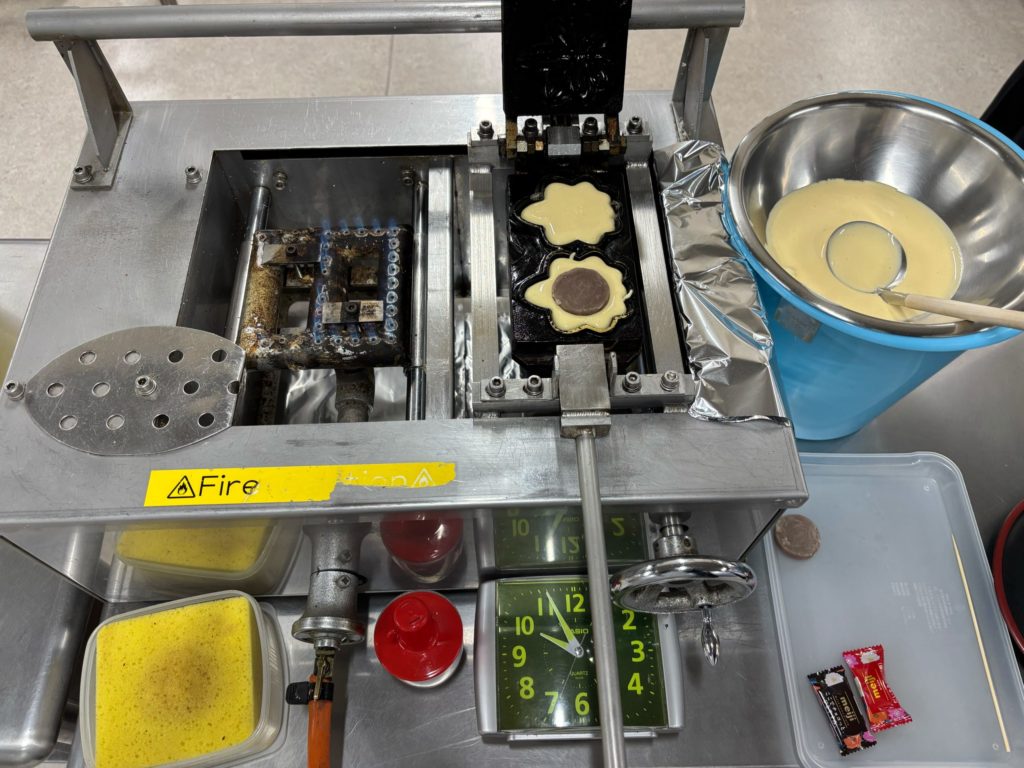
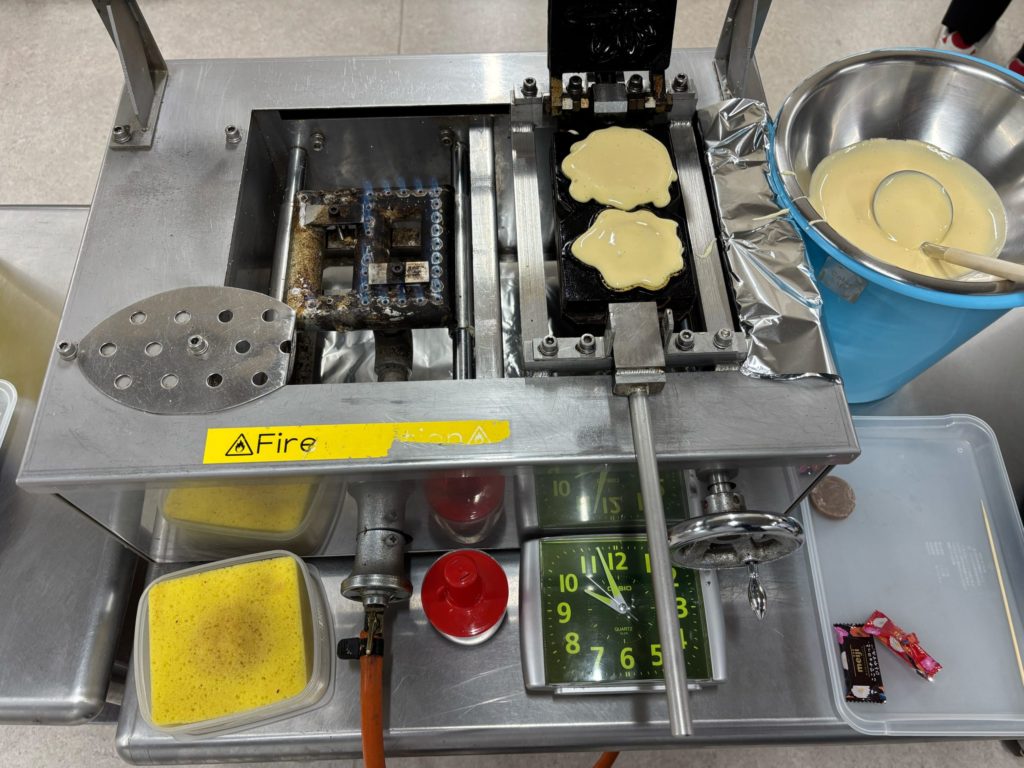
Mine came out a little scorched on one side — and honestly, it made for a great story. The slightly caramelized chocolate filling actually tasted surprisingly good, with a hint of bitterness that worked well with the sweet batter. My younger daughter declared mine “the most delicious one,” which felt like an act of pure mercy and I’ll take it.
Everyone goes home with a souvenir sweet at the end, so even if your manju is a little rough around the edges, you still leave with something to show for it. After the workshop, consider taking a quick look at the in-store factory viewing area — no reservation required, and you can watch the full production process up close. My daughters kept pointing at the machines saying, “That’s what we just did!”
After the workshop, strolling the Omotesandō shopping street is the natural next move — it’s Miyajima’s main covered shopping arcade, lined with food stalls and souvenir shops. One fun thing to do: taste-test momiji manju from a few different shops and see how Yamadaya’s compares. Every maker has their own recipe, and the differences are more noticeable than you’d expect.
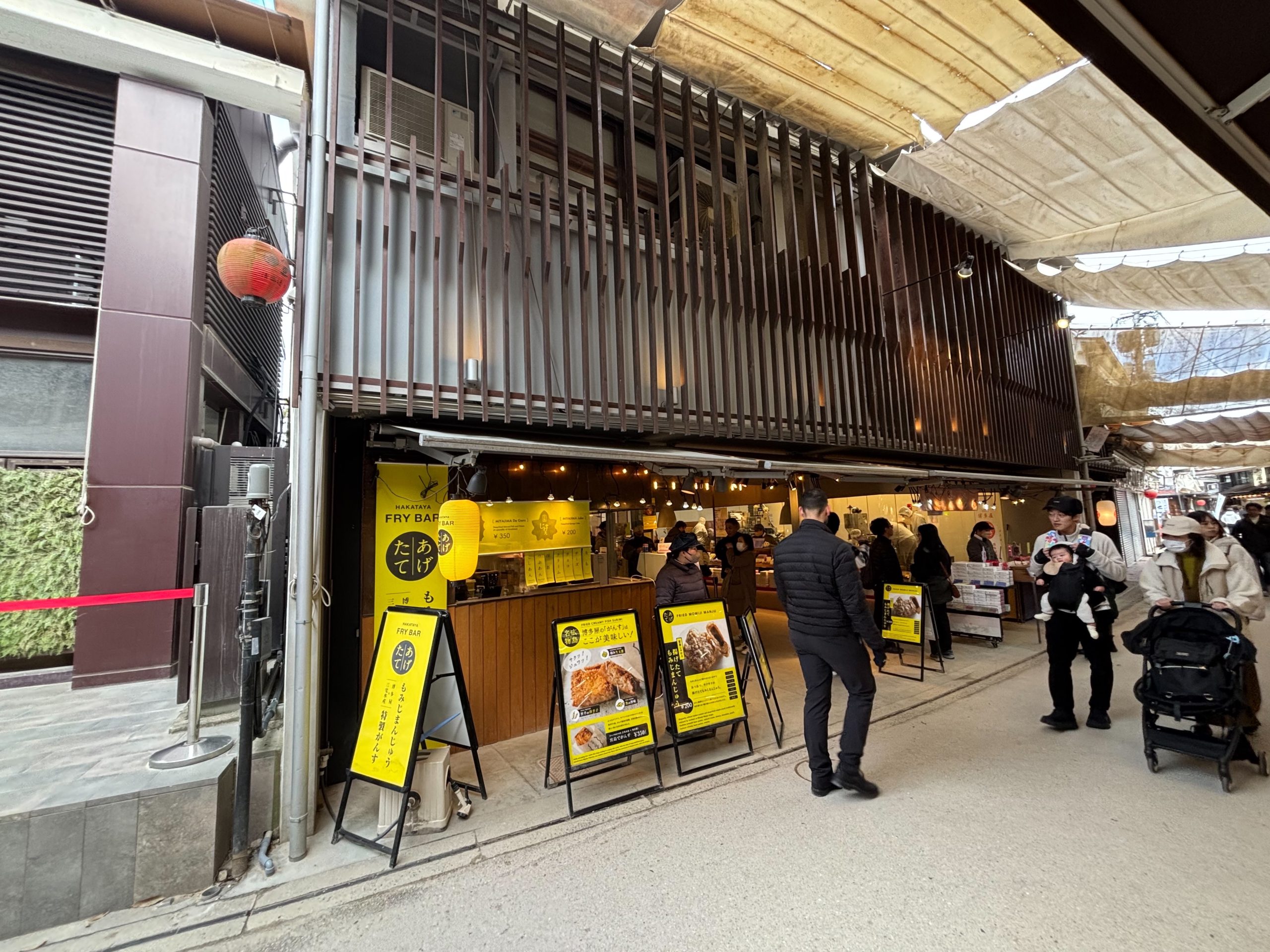
Miyajima's main shopping street — known locally as Omotesando — is a l...
One local tip from a Miyajima regular: the deep-fried momiji manju (age momiji) from Momijido on Omotesandō are crispiest first thing in the morning. If you’re making a full day of it, try to squeeze those in early.
And once you’ve made your momiji manju and had your fill of the shopping street, don’t forget to make time for Itsukushima Shrine itself — a UNESCO World Heritage Site just a short walk away. There’s something special about visiting one of Japan’s most iconic shrines with a sweet you baked yourself still warm in your bag.
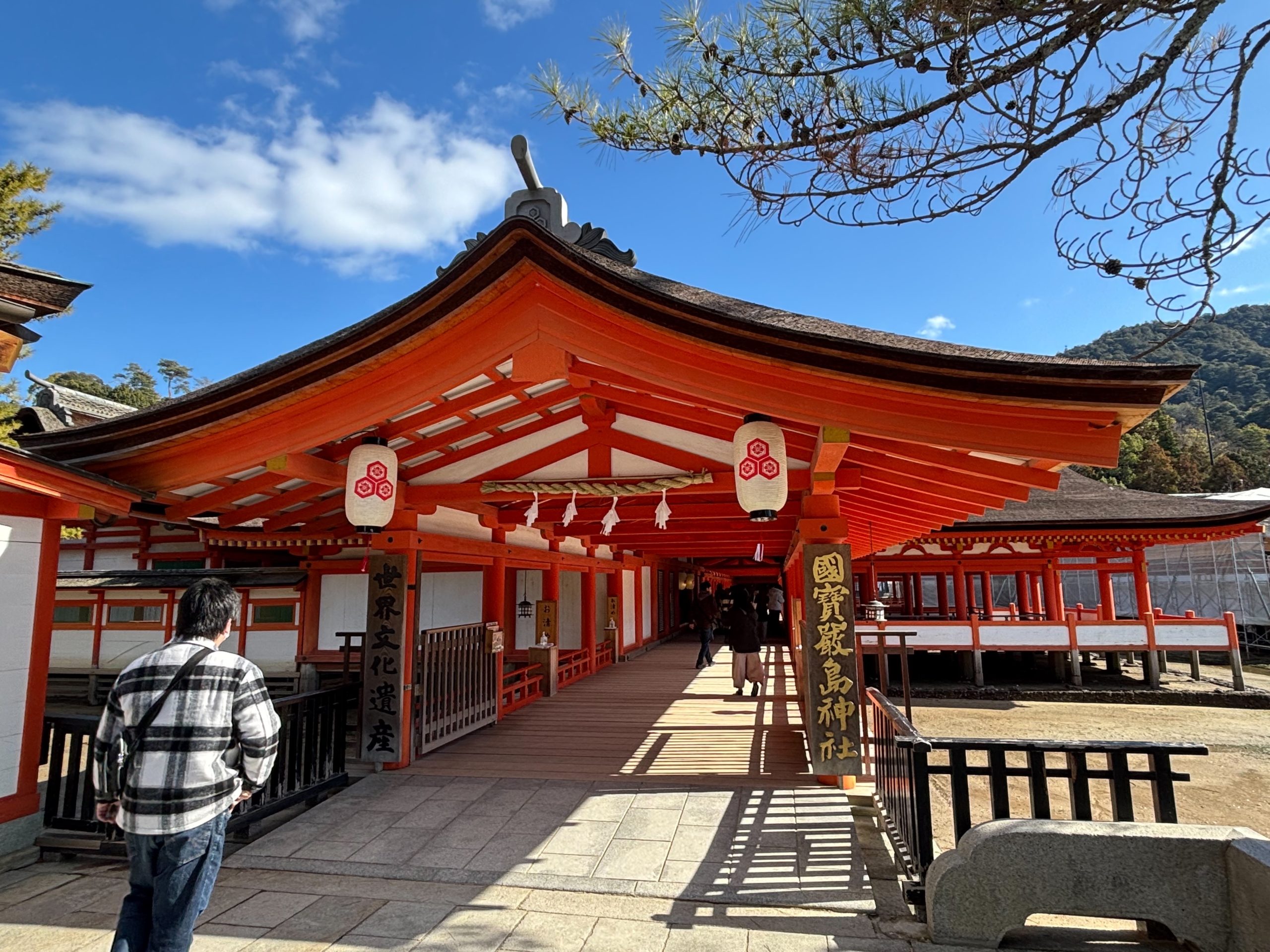
Itsukushima Shrine sits at the edge of the sea on Miyajima Island, jus...
FAQ
Can I join the workshop without a reservation?
Yes — walk-ins are welcome if space is available. However, sessions fill up quickly, particularly on weekends and public holidays. Online reservations are strongly recommended. On a busy Saturday without a booking, we ended up waiting two hours for an open slot.
What is the minimum age to participate?
Children aged 5 and up can participate fully in the workshop. Since the activity involves open flame and hot cast iron molds, younger children need close adult supervision throughout. The staff are helpful and attentive, but having a parent nearby for small kids is important.
How much does the workshop cost?
The current price is 880 yen per person (tax included), which includes making two momiji manju (red bean and chocolate) plus a Tōyōka sweet as a take-home souvenir. From July 1, 2025, the price will increase to 1,000 yen per person. Souvenir items may vary by season.
Is cash the only accepted payment?
Yes, payment is cash only at the workshop reception. Credit cards are not accepted, so make sure to bring yen before you head to the island.
Is the workshop accessible for wheelchair users?
The second-floor workshop space is accessible for wheelchair users, though some areas of Miyajima Island itself involve slopes and steps where assistance may be needed. If you have specific accessibility concerns, it’s a good idea to contact the store directly before your visit.
What’s the best time to visit to avoid crowds?
Weekday sessions between 2:00 PM and 4:00 PM tend to be the least crowded. On the Omotesandō shopping street, foot traffic also thins out noticeably after 5:00 PM, making it a pleasant time to browse at your own pace.
Is there anything else worth eating on Miyajima after the workshop?
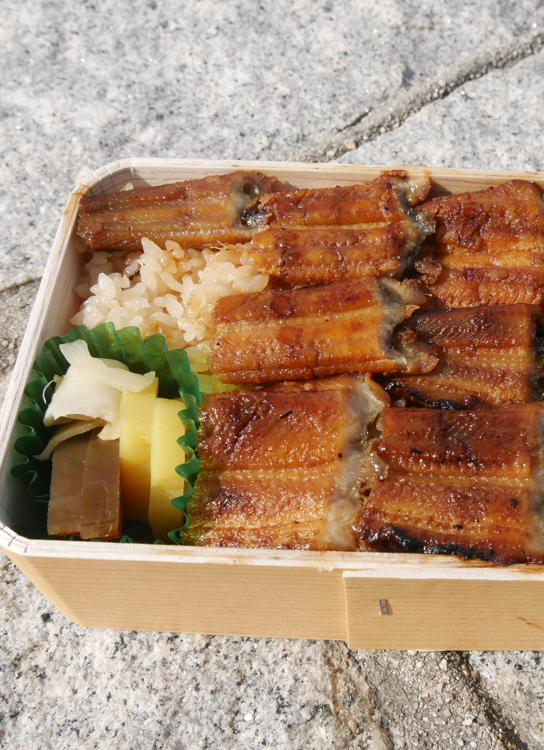
Absolutely — anago (saltwater eel) rice is Miyajima’s other great culinary claim to fame. After satisfying your sweet tooth with homemade momiji manju, a bowl of tender, savory anago meshi makes for a perfect island meal. It’s a flavor combination that Miyajima visitors return for again and again.
Miyajima Island is famous for its floating torii gate and ancient shri...
Wrapping Up
The momiji manju making experience at Yamadaya’s Miyajima Main Store is one of those rare travel activities that’s genuinely enjoyable for every age — whether you’re 5 or 75. You get to make something with your hands, taste it while it’s still warm, and take home a souvenir that means something. It fits easily into a Miyajima day trip and adds a personal memory that no shop purchase can replicate.
For our family, this workshop sparked a whole new interest in cooking. Back home, my daughters have been using a takoyaki pan to make their own version of the manju — even the failed attempts have become part of the fun. That’s the kind of travel experience that lingers long after the trip is over.
If you’re planning a visit to Miyajima and looking for something beyond the standard sightseeing route, put this on your itinerary. Book in advance, bring cash, and get ready to eat something you made yourself in one of Japan’s most beautiful places.
Want to understand the deeper history behind Miyajima’s World Heritage status? The island’s cultural significance goes back over a thousand years — and knowing the story makes every visit richer.
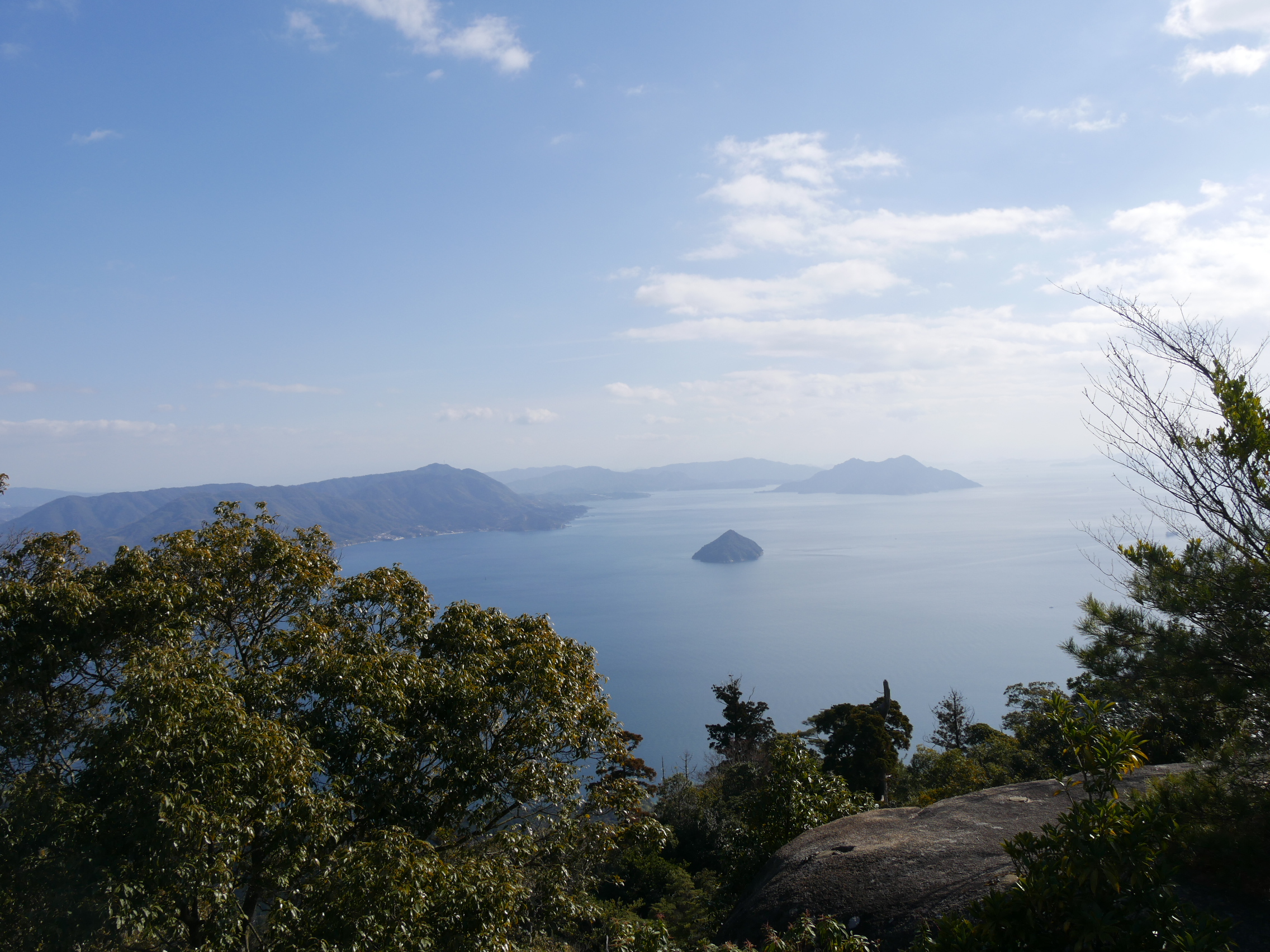
Rising dramatically from the sea off the coast of Hiroshima, Itsukushi...