
Many visitors to Itsukushima Shrine find themselves asking, “Why does the shrine look like it floats on the sea?” The otherworldly scene that appears at high tide is a rare harmony of human ingenuity and nature.
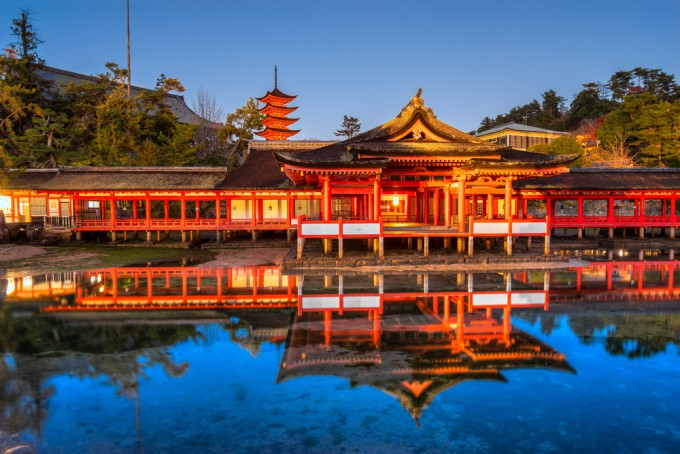
The effect of Itsukushima Shrine appearing to float is a visual illusion created by the precise blend of advanced architectural design and the natural rhythm of the tides. When the water level reaches 250 centimeters or higher, the space beneath the buildings fills with seawater. The vermilion halls then reflect on the surface like a mirror, forming a dreamlike landscape that makes the shrine seem as if it is floating on the Seto Inland Sea.
The Historical Background of Itsukushima Shrine’s Marine Architecture
Marine Architecture to Avoid Damaging the Sacred Island
The core reason Itsukushima Shrine was built over the sea is that Miyajima has been revered as sacred since ancient times. The entire island was honored as a “holy place for purifying and enshrining the gods,” and digging the soil or cutting trees was considered impure and disrespectful to the deity.
Founded in 593 during the reign of Empress Suiko as a simple shrine, it was expanded into a grand maritime complex in 1168 (Ninan 3) with the patronage of Taira no Kiyomori. The chief priest Saeki Kagehiro realized both religious devotion and practical construction by placing the shrine over the water, thus protecting the sanctity of the island itself.
Applying Shinden-zukuri Techniques to Maritime Architecture
The main sections of the present-day shrine date to a reconstruction in 1241. Its design adapts the Heian-period “Shinden-zukuri” (palatial aristocratic style) to a unique over-water setting.
The asymmetrical layout and corridors linking multiple halls—hallmarks of shinden-zukuri—are exceptionally rare in shrine architecture. Set above the sea, the connected buildings create a one-of-a-kind panorama that balances elegance with solemnity, a signature view of Miyajima for travelers from around the world.
Technical Details of the Floating Shrine Structure and Its Buoyancy
Support Structure Using 108 Pillars
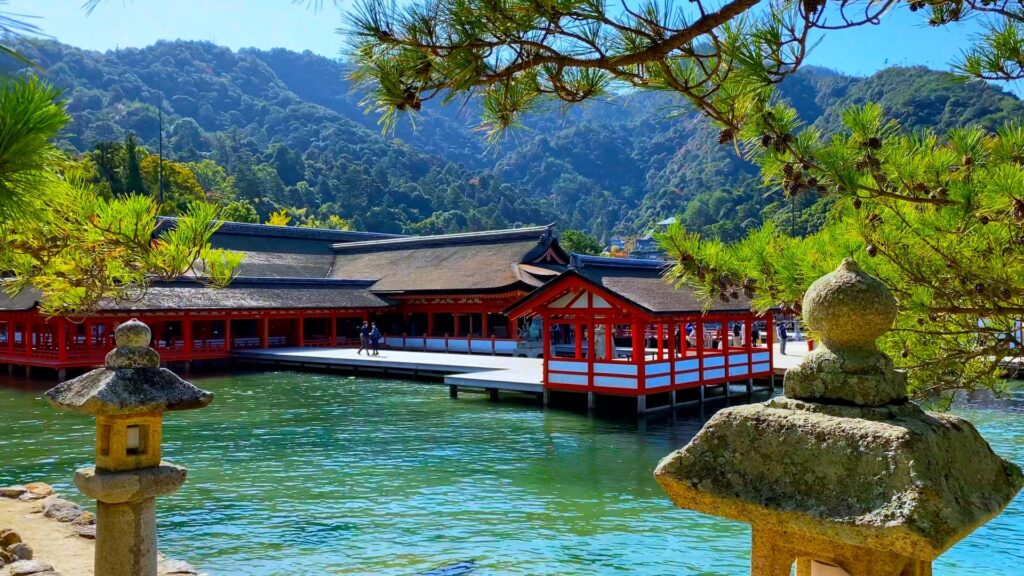
The reason Itsukushima Shrine does not sink is its sophisticated structural system. The entire complex is supported by 108 pillars that sit on foundation stones placed on bedrock beneath the seabed. These pillars are not buried; their stability is ensured by their mass and precise joinery. Architectural research suggests the site stands on exposed bedrock because the shore was originally modified to create the marine setting, providing the durable base that has supported the buildings for centuries.
Pressure Dispersal System via Floorboard Gaps
The flat platforms and east/west corridors that connect the shrine buildings include intentional gaps in the floorboards known as “mesu-oshi.” Far from decorative, these openings release the force of seawater during typhoons and high waves.
Without them, the corridors and halls would face a serious risk of damage from direct wave impact. By letting pressure escape, the over-water complex has endured for more than 800 years—a design solution that modern engineers regard as remarkably rational.
The Scientific Principles of Tidal Phenomena and Visual Effects
The 250-Centimeter Tide Level Creating a Floating Sensation
The moment when Itsukushima Shrine “appears to float” occurs when the tide reaches 250 centimeters or higher. At this level, seawater completely fills the space beneath the floors, hiding the base of the buildings below the waterline and creating the illusion that the halls sit directly on the sea. This height is typically reached on about 10 days each month, especially around spring tides—prime time for seeing the famous floating shrine effect in Miyajima.
Mystery Created by Reflections on the Water’s Surface
High tide looks particularly enchanting because the vermilion halls are reflected on calm water. This mirror effect creates striking symmetry, blending the real buildings with their reflections into a single image.
On still mornings and evenings, the surface becomes glassy, capturing crisp details of the shrine. The fusion of natural conditions and careful design is what gives Itsukushima Shrine its uniquely mystical atmosphere—and why it is a must-see on any Hiroshima or Miyajima itinerary.
Cultural Significance Born from the Fusion of Architecture and Natural Phenomena
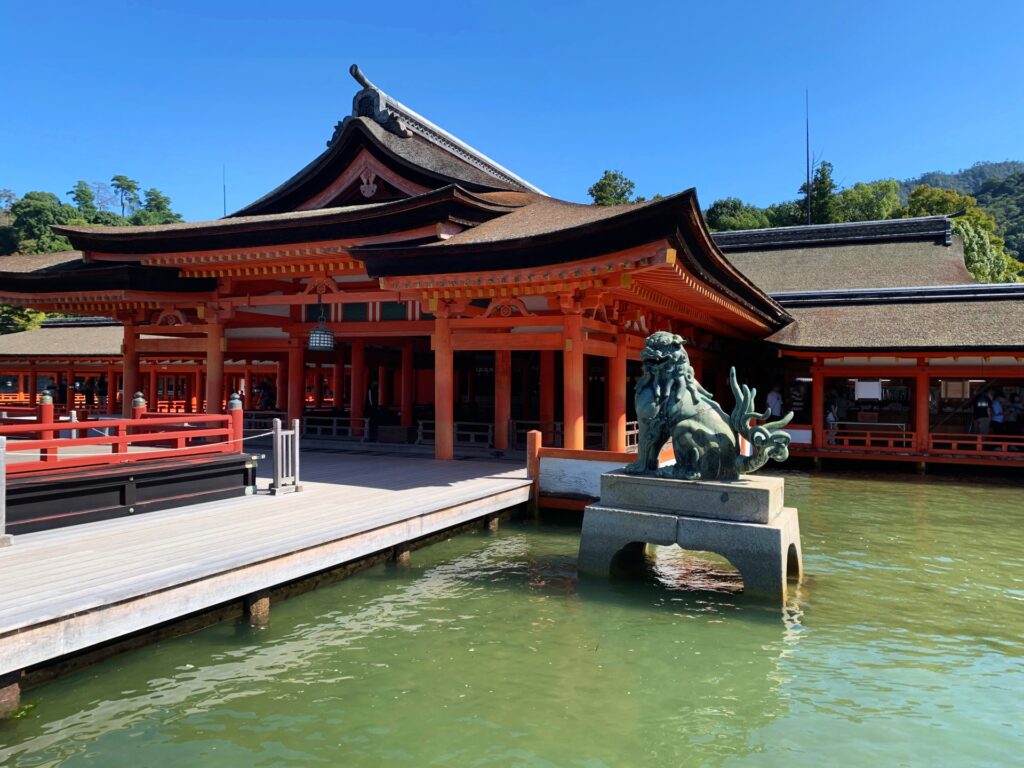
The floating appearance of Itsukushima Shrine is more than a visual trick; it symbolizes the Japanese ideal of harmony between nature and architecture. Heian-era builders learned to redirect and coexist with powerful natural forces—wisdom that continues to guide preservation today.
When registered as a UNESCO World Cultural Heritage site in 1996, this maritime landscape was praised as a “masterpiece of human creative genius.” The seamless unity of built structures and natural scenery was recognized as a cultural vision found nowhere else.
The Value of Maritime Architecture Passed Down to the Present Day
The mechanism behind the shrine’s “floating” effect offers insights for modern architecture and environmental engineering. Its core philosophy—working with natural forces rather than resisting them—stands as an early model of sustainable design.
Equally important are the long-standing maintenance practices that have kept this wooden complex in good condition for over 800 years. Traditional methods to protect timber from saltwater and weathering continue to inform research in coastal architecture and cultural heritage conservation.
Frequently Asked Questions
Why doesn’t Itsukushima Shrine collapse even when submerged in seawater?
Because 108 pillars rest on foundation stones set on bedrock beneath the sea, and gaps called “mesu-oshi” in the floorboards release wave pressure and prevent uneven settlement. The main halls are also sited and elevated to avoid inundation even during a once-in-200-years storm surge.
When can you see it floating on the sea?
When the tide is 250 centimeters or higher. Check the Miyajima Tourism Association’s tide table; this level is reached about 10 days per month. Spring tides are especially recommended, often giving two daily chances—morning and evening—for the best reflections and photos.
Why was the shrine built over the sea?
Because the entire island of Miyajima was revered as sacred, builders avoided disturbing the land. Since the island itself was the object of worship, devotion was shown by constructing over the water rather than cutting trees or digging into the soil.
What is the structure under the floor like?
At high tide, the space below the floors fills with seawater. At low tide, you can see the foundation stones and the bases of the pillars on the seabed. Seawater flows in and out through the floorboard gaps, reducing water pressure on the structure and contributing to its remarkable longevity.
Why does the vermilion shrine reflect on the water’s surface?
When the tide is high and the wind is calm, the water surface becomes mirror-like, clearly reflecting the vermilion halls. This reflection effect blends architecture and image into a striking, symmetrical scene that enhances the feeling of floating.
What happens during typhoons?
The main shrine buildings (Honden, Haiden, etc.) have never been submerged since the era of Taira no Kiyomori. Only later-added auxiliary structures are more vulnerable. While areas like the Noh stage or music rooms may suffer damage, the principal halls are designed to withstand a once-in-200-years storm surge.
Which is more impressive to see, low tide or high tide?
Each has its charm. At high tide (over 250 cm), you can enjoy the mesmerizing floating effect. At low tide (under 100 cm), you can approach the Grand Torii and observe the shrine’s engineering up close. If possible, plan your Miyajima visit to experience both in one day.
Summary
The illusion of Itsukushima Shrine floating on the sea comes from the refined interplay of design and nature. The 108-pillar support system, the floorboard gaps that disperse pressure, and the mirror-like reflections when tides exceed 250 centimeters together create a scene unlike anywhere else. The “floating shrine” that appears at high tide is a testament to human creativity and a perfect expression of harmony with the natural world—one of the most unforgettable sights in Japan.
References & Sources
- Agency for Cultural Affairs, Cultural Heritage Online: Itsukushima Shrine
- Miyajima Tourism Association: Tide Explanation
- Miyajima Tourism Association: How to Read the Annual Tide Table
- Itsukushima Shrine – Wikipedia (Detailed Architectural Structure)
- Itsukushima Shrine Official Site: Cultural Properties & Structures
- Masayuki Miura, Architectural History Research on Itsukushima Shrine (The Architectural History Society, 2005)
- Fukuyama Toshio, The Architecture of Itsukushima Shrine, Chuo Koron Bijutsu Shuppan, 1988
- UNESCO World Heritage Centre: Itsukushima Shinto Shrine