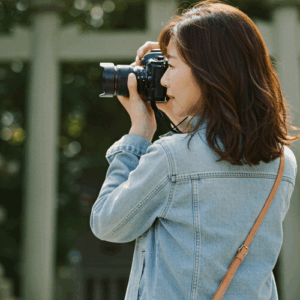
Rising above the rooftops of Miyajima Island, the vermilion Five-Story Pagoda is one of the most recognizable landmarks in the entire Hiroshima region. Standing on a wooded hilltop known as Tō-no-Oka, this striking tower has watched over the island since 1407 — and up close, its layered eaves, lacquered columns, and centuries of quiet craftsmanship make it impossible not to stop and stare. Whether you’re visiting Itsukushima Shrine or simply wandering the island’s back lanes, the Miyajima Five-Story Pagoda is one of those places that rewards a closer look.
Designated as a National Important Cultural Property of Japan, the pagoda blends two classical architectural styles and conceals an engineering secret that surprises nearly every visitor who hears about it. Add in stunning seasonal scenery, easy access from the main shopping street, and a hilltop spot that works beautifully for family photos — and you have one of Miyajima’s most rewarding stops.
A National Treasure Built in 1407

The Five-Story Pagoda was completed in 1407 during the Muromachi period, and it has stood on Miyajima’s forested hill ever since. Its roof is clad in traditional cypress bark shingles (檜皮葺, or hiwadabuki), while the columns and bracket sets are painted in a deep, warm vermilion that catches the light beautifully at any time of day. What makes the design particularly interesting to architecture lovers is the fusion of two distinct Japanese building traditions: the gentle, classical Wayō style and the more disciplined, angular Zenshūyō style that arrived from China via Zen Buddhism. The result is something that feels both graceful and precise — the curving eaves carry a softness, while the proportions of every bracket and beam feel deliberately measured.
The pagoda underwent restoration work during the Shōwa era, when its exterior vermilion was carefully renewed. Today it continues to greet visitors in vivid color. Though the interior is not open to the public, the walls inside are known to contain a remarkable collection of paintings: lotus pond scenes, a White-Robed Kannon figure, eight views of Xiaoxiang (a classic Chinese landscape theme), and portraits of the Eight Patriarchs of Shingon Buddhism. Inscriptions of donor names also survive inside, a reminder of how many individuals — generations of them — contributed to this structure’s survival. The pagoda belongs to Itsukushima Shrine and sits within the broader sacred landscape of the island.
At sunset, the tower glows a deep orange-red against the darkening sky. It’s the kind of sight that makes you reach for your camera instinctively — and the kind that stays with you long after you’ve left the island.
The Engineering Secret Inside: A Pillar That Only Reaches the Second Floor
Here’s something that surprises almost everyone: in most Japanese five-story pagodas, the central pillar — called the shinbashira — runs continuously from the foundation all the way to the top floor. It acts as a stabilizing spine for the entire structure. The Miyajima Five-Story Pagoda is built differently. Its central pillar extends only as far as the second story and does not reach the ground.
This is not a flaw — it’s a deliberate piece of engineering wisdom. By allowing the upper floors to move independently of the lower structure, the pagoda can sway gently with the force of wind or an earthquake rather than resist it rigidly. Think of a willow branch in a storm: it bends without breaking. Miyajima sits in the Seto Inland Sea, a region that sees powerful typhoons every year, and this “flexible spine” design is one of the reasons the pagoda has survived more than six centuries of weather and seismic activity. Modern engineers studying traditional Japanese architecture have found that this kind of pendulum-like flexibility distributes impact forces far more effectively than a fixed rigid core.
It’s one of those details that transforms a beautiful old building into something genuinely fascinating — and it’s a wonderful thing to explain to kids while you’re standing at the base looking up.
One more historical note worth knowing: the pagoda’s original Buddhist statues — a Shakyamuni Buddha flanked by Fugen Bodhisattva and Monju Bodhisattva — were moved to the nearby Daigan-ji Temple after the Meiji government’s separation of Buddhism and Shinto in the late 19th century. The hill itself, Tō-no-Oka, has its own historical significance: it is connected to the 1555 Battle of Itsukushima, one of the most dramatic military engagements of Japan’s Warring States period. History lovers will find the entire hilltop layered with meaning.
The stone steps leading up to the pagoda are fairly steep in places, so take your time and hold hands with small children on the way up.
If you’re heading up to the pagoda from the ferry terminal, you’ll pass right by Senjokaku — the massive open-hall pavilion that Toyotomi Hideyoshi began building in 1587 and never finished. It’s right next door to the pagoda and absolutely worth a stop.
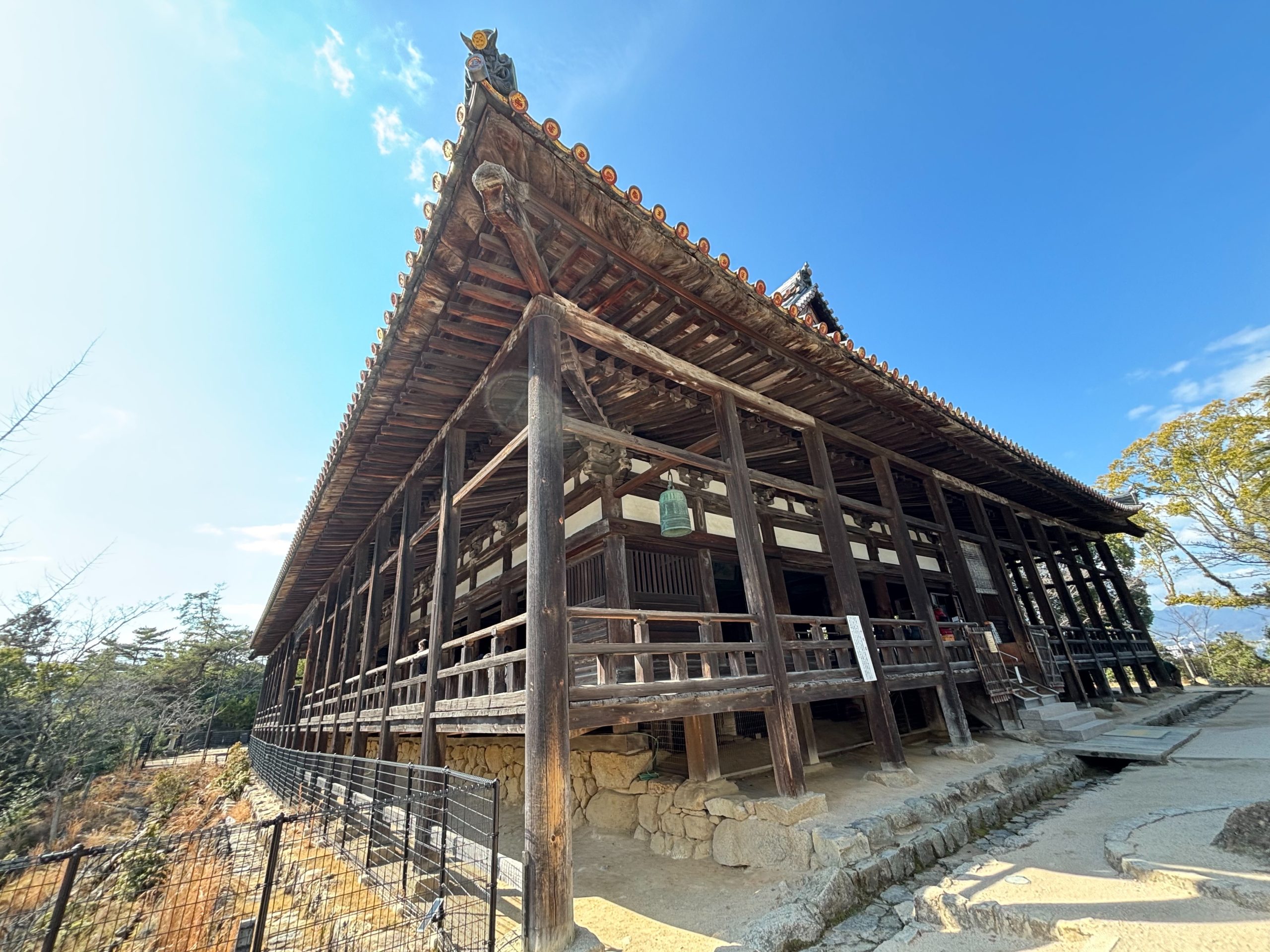
Senjokaku: Miyajima's Hauntingly Beautiful Unfinished Hall Perched on...
Currently Under Renovation: What to Expect Until 2027

If you’re visiting Miyajima before late 2027, it’s important to know upfront: the Five-Story Pagoda is currently undergoing full preservation and restoration work. The tower is completely enclosed in scaffolding and protective covering, which means you won’t be able to see the pagoda itself during your visit. According to Itsukushima Shrine, the restoration runs from January 20, 2025 to November 20, 2027.
This kind of work — carefully repairing centuries of weathering to ensure the structure survives for future generations — is an enormous undertaking. It’s actually a rare chance to witness Japanese cultural heritage preservation in action, even if the aesthetic experience is different from usual. Please respect the restoration fencing and avoid touching or leaning on the temporary enclosure.
The good news is that the surrounding hilltop remains fully accessible, and the neighboring attractions — Senjokaku, Daigan-ji Temple, and the Tahoto Pagoda — are all open and well worth your time. The views from the hill and the pleasant wooded walk are lovely in every season. Many visitors find it worthwhile to still make the short climb, especially when combining it with a visit to Senjokaku next door.
When the restoration wraps up in 2027, the pagoda will be revealed in fully renewed condition — that’s a visit to look forward to planning.
No visit to Miyajima is complete without spending time at Itsukushima Shrine, just a short walk from the pagoda. The tidal changes completely transform the scenery — the famous floating torii gate looks entirely different at high tide versus low tide.
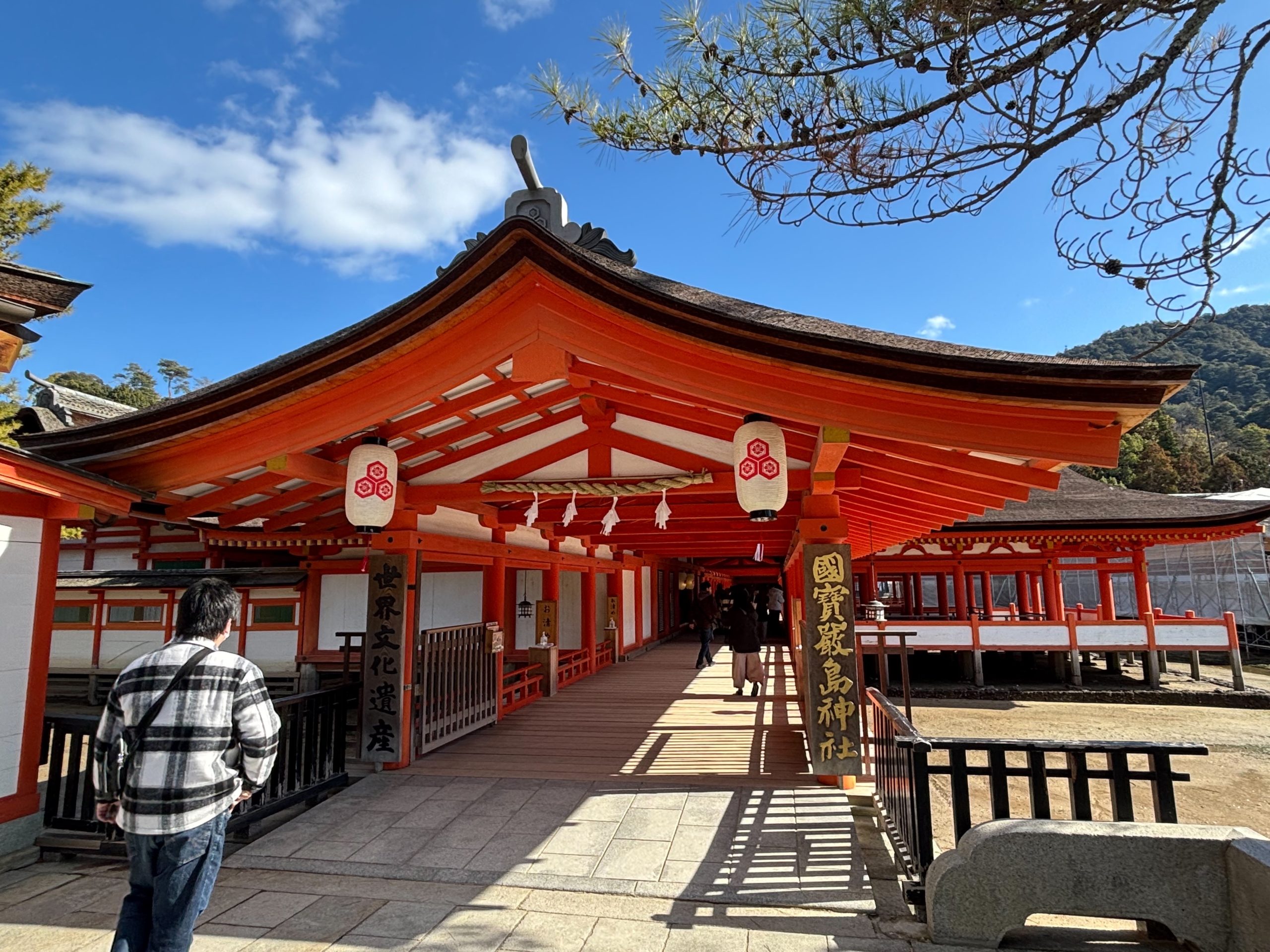
Itsukushima Shrine (Itsukushima-jinja, 厳島神社) is a Shinto shrine built ...
Getting There: Access and How to Walk the Hill
Getting to Miyajima Island is straightforward. From JR Miyajima-guchi Station near Hiroshima, the ferry crossing takes about 10 minutes. Two ferry operators run the route, and if you’re interested in getting a close-up view of the famous floating torii gate during the crossing, the JR ferry passes nearer to it on the outbound journey — a small but memorable detail.
From the ferry terminal, follow the main Omotesando shopping street inland for about 10 to 15 minutes. At the end of the street, follow the signs toward Senjokaku and the hilltop. The path up to Tō-no-Oka (the hill where the pagoda stands) involves a gentle slope and some stone steps. It’s a pleasant walk, but the final stretch of steps is fairly steep.
If you’re traveling with a stroller, the practical approach is to park it in the open space near the Senjokaku pavilion and switch to a baby carrier for the steeper section around the pagoda. The Senjokaku hall itself has a wide, shaded veranda that makes a great rest stop. For families with young children, bring water and plan a break at one of the shaded spots — the eaves of Senjokaku or the grounds of Daigan-ji Temple work well. A nursing room is available on the second floor of the Miyajima tourist information office near Omotesando.
Parking near Miyajima-guchi is limited, especially on weekends and during peak seasons. Arriving before 8:00 AM gives you a significantly better chance of finding a space in the lots near the ferry terminal.
Morning light (before noon) gives clean, bright colors on the pagoda’s vermilion, while late afternoon light adds depth and warmth. The least crowded windows tend to be early morning and the hour before sunset. On weekdays, the 2:00–4:00 PM window is typically the quietest part of the day.
Walking the Omotesando shopping street on your way to the pagoda is a treat in itself — pick up fresh-baked momiji manju (maple-leaf cakes) for the walk. Did you know you can try them hot off the grill at the Yamadaya shop on the second floor?
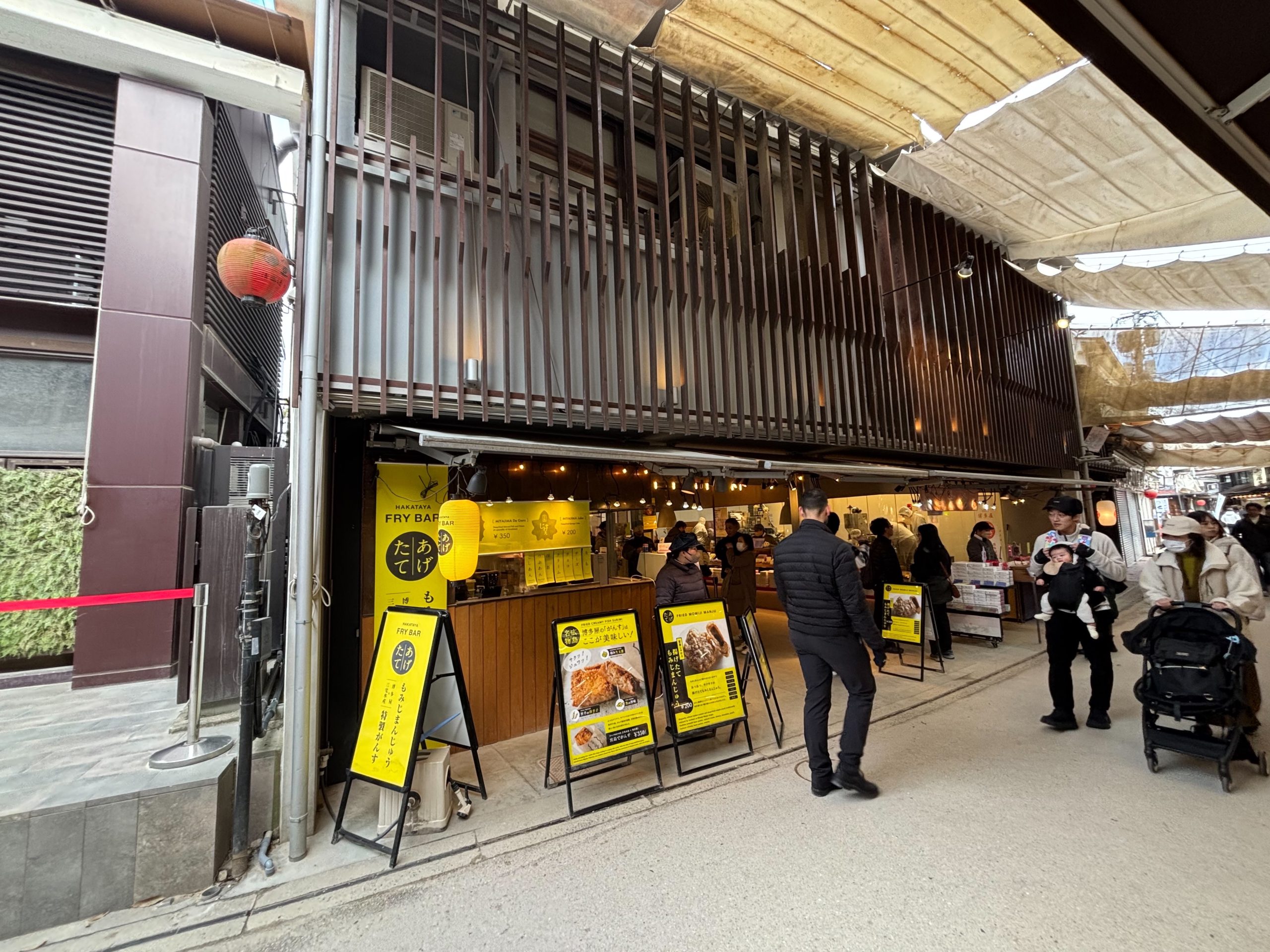
Miyajima's main shopping street — known locally as Omotesando — is a l...
Nearby Highlights: Senjokaku, Daigan-ji, and Tahoto Pagoda
The hilltop around the Five-Story Pagoda is remarkably rich in history, and combining all three nearby landmarks makes for a deeply satisfying half-day on the island.
Immediately next to the pagoda is Senjokaku (also known as Hokoku Shrine), the enormous open wooden hall that Toyotomi Hideyoshi — Japan’s great 16th-century unifier — ordered to be built as a sutra reading hall. It was never completed before his death in 1598, but what stands today is extraordinary: a vast open space equivalent to the area of 857 tatami mats, with no walls, completely open to the breeze. Antique votive plaques and historical materials line the interior, and children tend to love the freedom of the space. The open veranda on the sea-facing side offers a panoramic view over the island rooftops.
A short walk downhill toward the shrine brings you to Daigan-ji Temple, one of Miyajima’s oldest religious sites, dedicated to Benzaiten, the goddess of fortune, music, and water. This is where the original Buddhist statues from the Five-Story Pagoda now reside, following the Meiji-era separation of Shinto and Buddhist worship. If you’re interested in the island’s layered religious history — the way Buddhism and Shinto coexisted for centuries before being officially separated in the 19th century — Daigan-ji is a quietly moving place to visit.
A little further along the hillside path is the Tahoto Pagoda, a two-story structure of a different style that becomes especially photogenic in cherry blossom season and during the autumn leaf-viewing period. Local Miyajima residents know it as one of the island’s quieter hanami (flower viewing) spots in spring — less crowded than the main approaches to the shrine.
Taken together, this hilltop cluster — Five-Story Pagoda, Senjokaku, Daigan-ji, and Tahoto — gives you a vivid, walkable introduction to how faith, architecture, and history have shaped Miyajima over the centuries.
Daigan-ji Temple is actually older than Itsukushima Shrine itself and is well known as a power spot on the island. It also houses the Buddhist statues that were originally enshrined in the Five-Story Pagoda — a fascinating thread of history connecting the two sites.

Tucked into the forested hillside at the foot of Mount Misen, Daishoin...
Photography Tips and Seasonal Beauty
The Miyajima Five-Story Pagoda offers a remarkable range of photographic perspectives depending on where you stand and what season you visit. Each has its own character.
From the open veranda of Senjokaku, you can look down at an angle toward the pagoda with the sea and the island’s rooftops in the background — a composition that many photographers consider the best on the hilltop. From the main approach through the Omotesando shopping street, the pagoda peeks above the traditional townhouse rooflines in a way that feels distinctly Japanese. From the waterfront promenade near Itsukushima Shrine, you can photograph the pagoda as part of the island’s wider skyline, with the tower rising among the trees against the hills of western Japan.
Seasonally, spring brings the contrast of pale cherry blossoms against the deep vermilion — the Tahoto Pagoda area is a local favorite for cherry blossom views. Summer offers a vivid blue sky backdrop. Autumn turns the surrounding maples orange and red, deepening the richness of the entire hillside. Winter brings crisp, clear air and dramatic raking light that brings out the pagoda’s surface texture beautifully.
After sunset, the pagoda is illuminated, and viewing it from a safe distance along the lit pathways or from the waterfront creates a completely different, more atmospheric experience. If you’re visiting with young children, heading up to the hill before dusk lets you take photos in natural light while the hill is still uncrowded, then enjoy the illumination from the lower paths on your way back.
A practical note: November mid-season autumn foliage brings the heaviest crowds of the year to Miyajima. If you’re visiting then, aim for early morning or late afternoon to get the hilltop with breathing room. On rainy days, the Miyajima Aquarium is a popular indoor alternative.
The ropeway up to Mount Misen gives you a sweeping aerial view of the entire island — including the Five-Story Pagoda below — plus the chance to see the legendary flame that has reportedly burned continuously for 1,200 years.
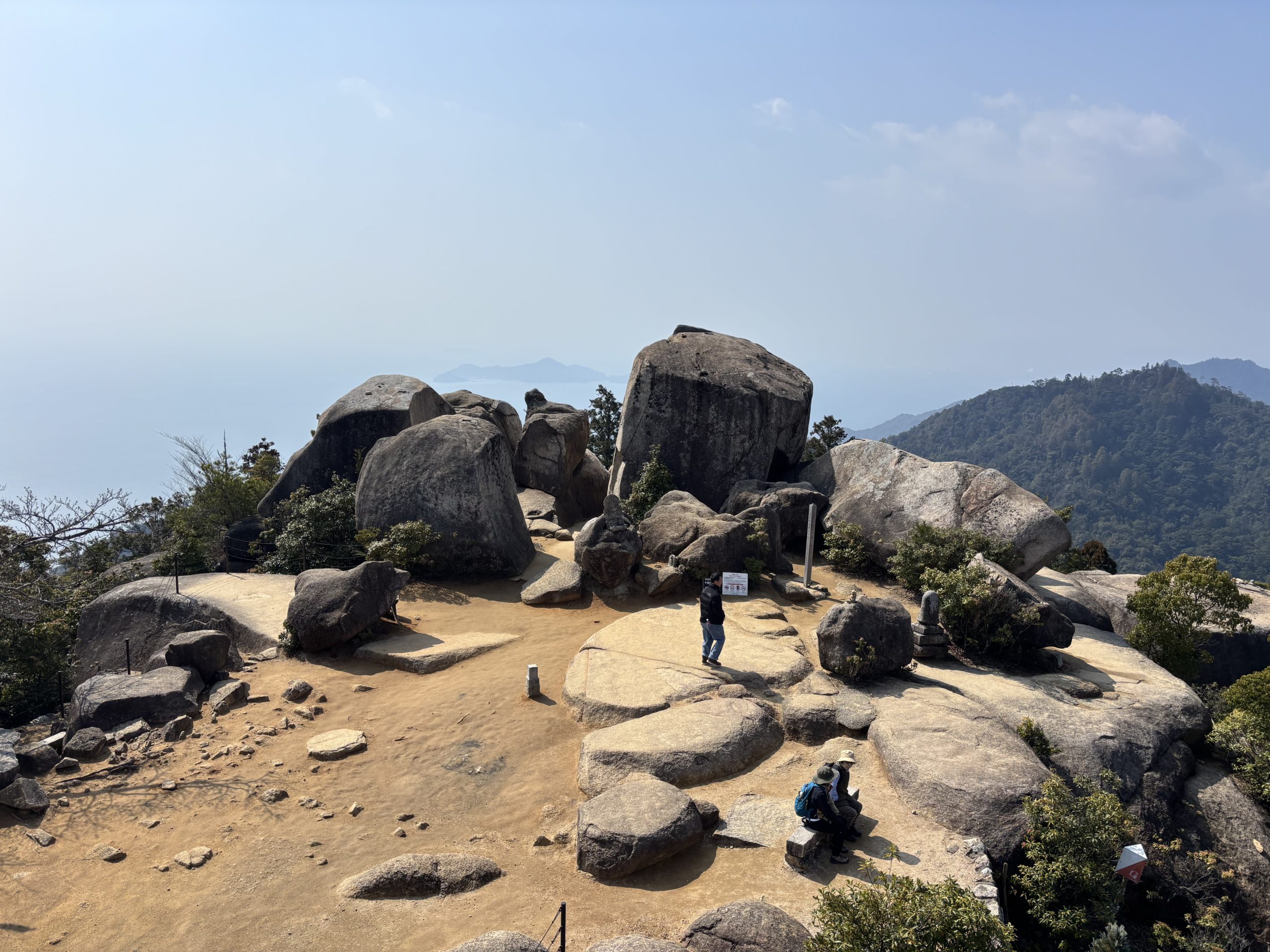
Rising 535 meters above Miyajima Island, Mount Misen is the sacred pea...
FAQ
Can you go inside the Five-Story Pagoda?
The interior is not open to the general public. The pagoda can only be appreciated from the outside, though the surrounding hilltop environment and the architectural detail of the exterior are worth spending time with. Interior openings are extremely rare and are typically held just a few days per year with priority given to local residents.
Is the pagoda visible right now, or is it under renovation?
Until November 20, 2027, the Five-Story Pagoda is fully enclosed in scaffolding and protective covering for preservation restoration work. The pagoda itself is not visible from the outside. Restoration is scheduled to finish on November 20, 2027. The surrounding hilltop, Senjokaku, Daigan-ji, and the Tahoto Pagoda all remain open and accessible.
Is it worth visiting the hilltop even during the renovation?
Yes. While the pagoda itself is covered, the neighboring Senjokaku hall is a remarkable historical attraction in its own right, the hilltop views are lovely, and Daigan-ji Temple and the Tahoto Pagoda are well worth seeing. Most visitors find the overall hilltop experience rewarding even without a view of the pagoda.
Is it suitable for families with young children or strollers?
Families are very welcome, but the stone steps up to the pagoda area are fairly steep. The practical approach is to leave your stroller at the spacious Senjokaku veranda and use a baby carrier for the steeper section. There is a nursing room on the second floor of the Miyajima tourist information office near the Omotesando shopping street. The Miyajima Aquarium also offers free stroller rental if needed.
What is the best time of day to visit for photos?
Morning (before noon) provides clean, bright front-lit color on the vermilion. Late afternoon gives warmer, more dimensional light. The least crowded times are early morning and the hour before sunset. On weekdays, 2:00–4:00 PM is generally the quietest window of the day.
How long should I budget to visit the pagoda and hilltop area?
Allow about 30 to 45 minutes for the hilltop itself if you’re just visiting the pagoda area and Senjokaku. If you’re also combining a visit to Daigan-ji Temple and the Tahoto Pagoda, budget a full hour. Most visitors combine this hilltop loop with Itsukushima Shrine and the Omotesando shopping street as part of a comfortable half-day on the island.
Can I combine the pagoda visit with Itsukushima Shrine on the same day?
Absolutely — this is the standard route for most visitors. The typical flow is: ferry terminal → Omotesando shopping street → Itsukushima Shrine → Senjokaku and the pagoda hilltop, then back through town. A relaxed half-day is enough to cover all of these comfortably, with time for food and photos along the way.
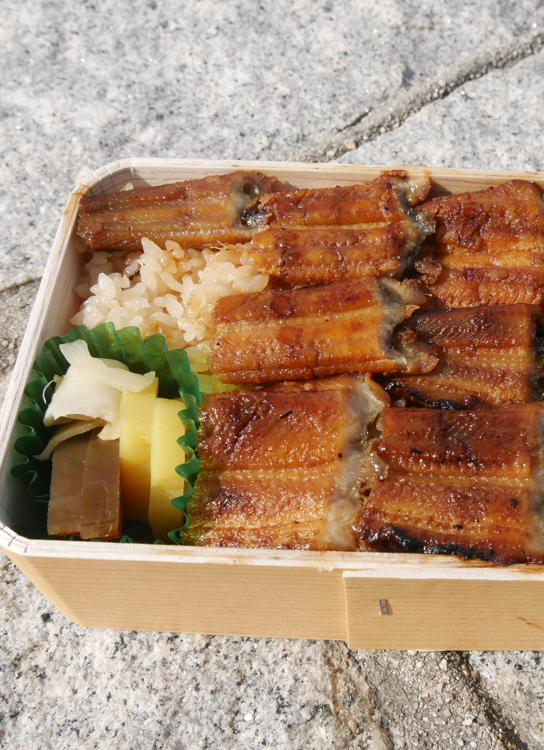
After a morning on the hilltop, refuel with Miyajima’s most celebrated local dish: anago meshi, or grilled conger eel over rice. Locals tend to favor Ueno restaurant, and there are several family-friendly options along the main street.
Miyajima Island is famous for its floating torii gate and ancient shri...
Final Thoughts
The Miyajima Five-Story Pagoda has stood on its hilltop for more than six hundred years — through typhoons, earthquakes, wars, and the slow, sweeping changes of Japanese history. The secret to its survival isn’t just the engineering cleverness of its flexible central pillar. It’s also the generations of people who cared enough to maintain it, restore it, and pass it forward.
Right now, that preservation work is actively underway. The pagoda is wrapped up and quietly being renewed, scheduled to re-emerge in 2027 looking as vivid and dignified as ever. In the meantime, the hilltop remains a beautiful place to spend an hour — surrounded by the atmosphere of old Miyajima, with the sea visible through the trees and the sound of the island carrying up from below.
If you’re visiting before 2027, come for Senjokaku, for the views, for the history of the whole hilltop cluster. And mark your calendar for when the scaffolding comes down. Seeing the pagoda fully revealed again, in fresh vermilion against Miyajima’s green hills, will be worth the wait.
If the weather turns rainy, the Miyajima Aquarium is a great indoor option for families — the finless porpoise shows and sea lion performances are genuinely fun, and it’s a short walk from the ferry terminal.
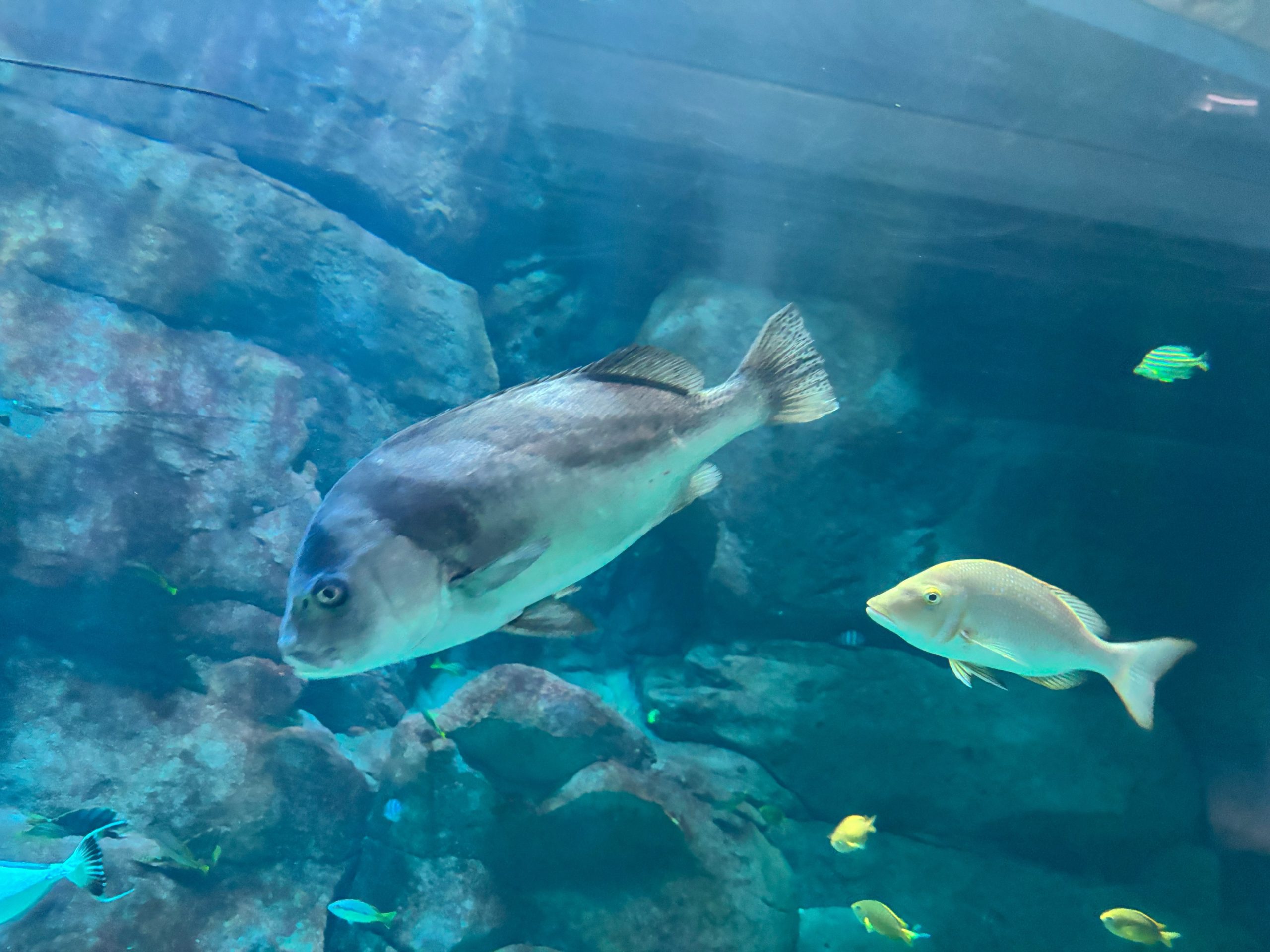
Miyajima Aquarium — officially known as Miyajima Marine, or Miyaji Mar...