
The Miyajima ferry crosses from Miyajimaguchi pier to Miyajima in about 10 minutes, with boats every 15 minutes through the day. Two companies sail the same crossing from neighboring piers: JR West Miyajima Ferry and Miyajima Matsudai Kisen. The fare is the same on both: ¥200 one way for adults, plus Miyajima’s ¥100 visitor tax, which is collected with your ticket on the way to the island. The Japan Rail Pass covers the JR ferry only. No reservation is needed; pay with an IC card (Suica, ICOCA, PASMO) or cash at the pier.
Take the JR ferry on the way over if you want the Great Torii Route (daitorii-bin): departures from Miyajimaguchi between 9:10 and 16:10 swing close to the floating torii gate before docking. Matsudai Kisen takes the direct line and sells a combo ticket with the Mount Misen ropeway. A third operator, Aquanet Hiroshima, runs a 5-minute high-speed boat from Miyajimaguchi and the direct World Heritage Sea Route from Peace Memorial Park in Hiroshima. This page covers fares and ticket prices, the schedule (first and last boats), the Japan Rail Pass, how to reach the ferry terminal at Miyajimaguchi, and which boat to pick.
| JR West Miyajima Ferry | Miyajima Matsudai Kisen | |
|---|---|---|
| Crossing | About 10 min. Great Torii Route on departures 9:10–16:10 from Miyajimaguchi | About 10 min, direct |
| Fare (one way) | ¥200 adult / ¥100 child (6–12), + ¥100 visitor tax to the island | ¥200 adult / ¥100 child (elementary school), + ¥100 visitor tax to the island |
| Japan Rail Pass | Valid (JR-WEST Rail Pass too). Visitor tax paid separately | Not valid |
| First / last boat from Miyajimaguchi | 6:25 / 22:42 | 7:15 / 20:35 |
| First / last boat from Miyajima | 5:45 / 22:14 | 7:00 / 20:15 |
| Payment | IC card, cash | IC card, cash |
| Combo ticket | — | Enjoy Ticket: round-trip ferry + Miyajima Ropeway, ¥2,100 adult / ¥1,100 child (visitor tax included) |
Regular timetables as of October 2026. Both companies add boats on busy days; check the official timetables before an early or late crossing.
Which ferry should I take? JR West, Matsudai Kisen or Aquanet
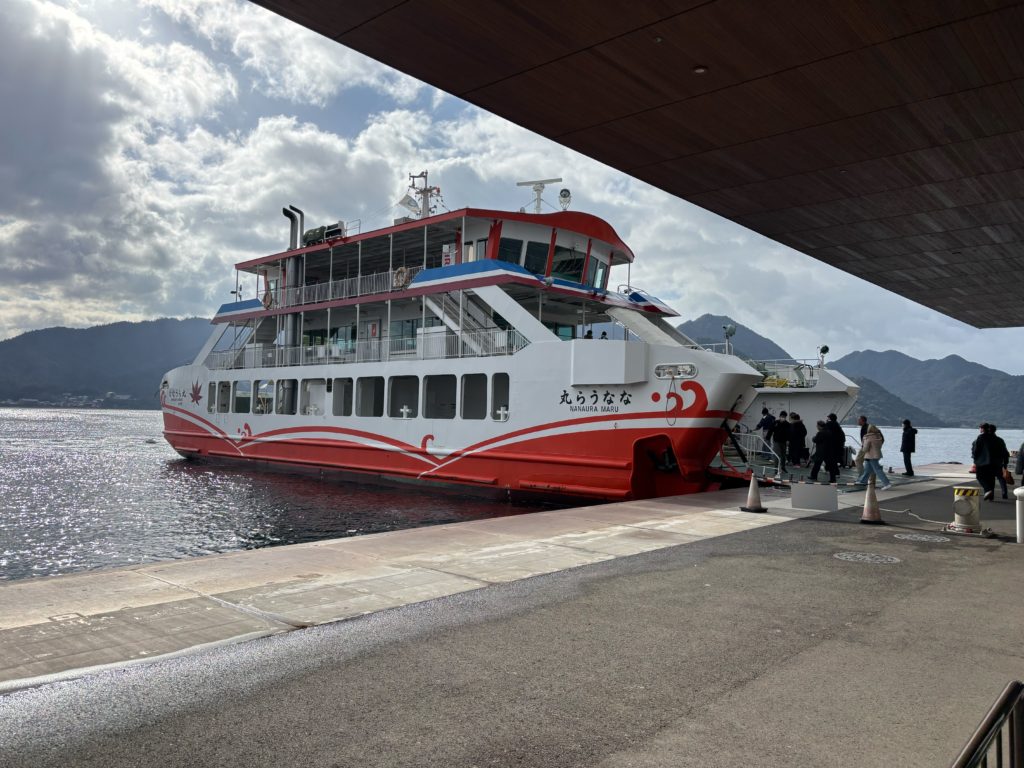
Any of them gets you to the same pier on Miyajima in minutes, so the choice comes down to the view, your rail pass and your plans on the island. A common plan is the JR Great Torii Route on the way over and whichever boat has the shorter queue on the way back.
JR West Miyajima Ferry: the Great Torii Route (9:10–16:10)
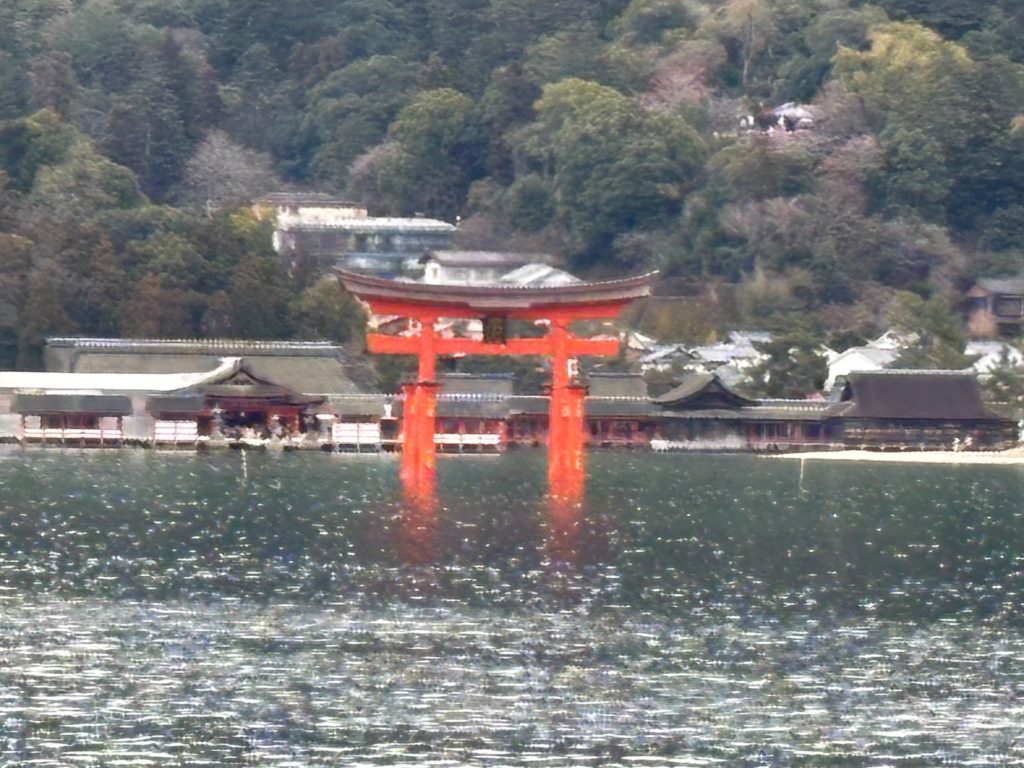
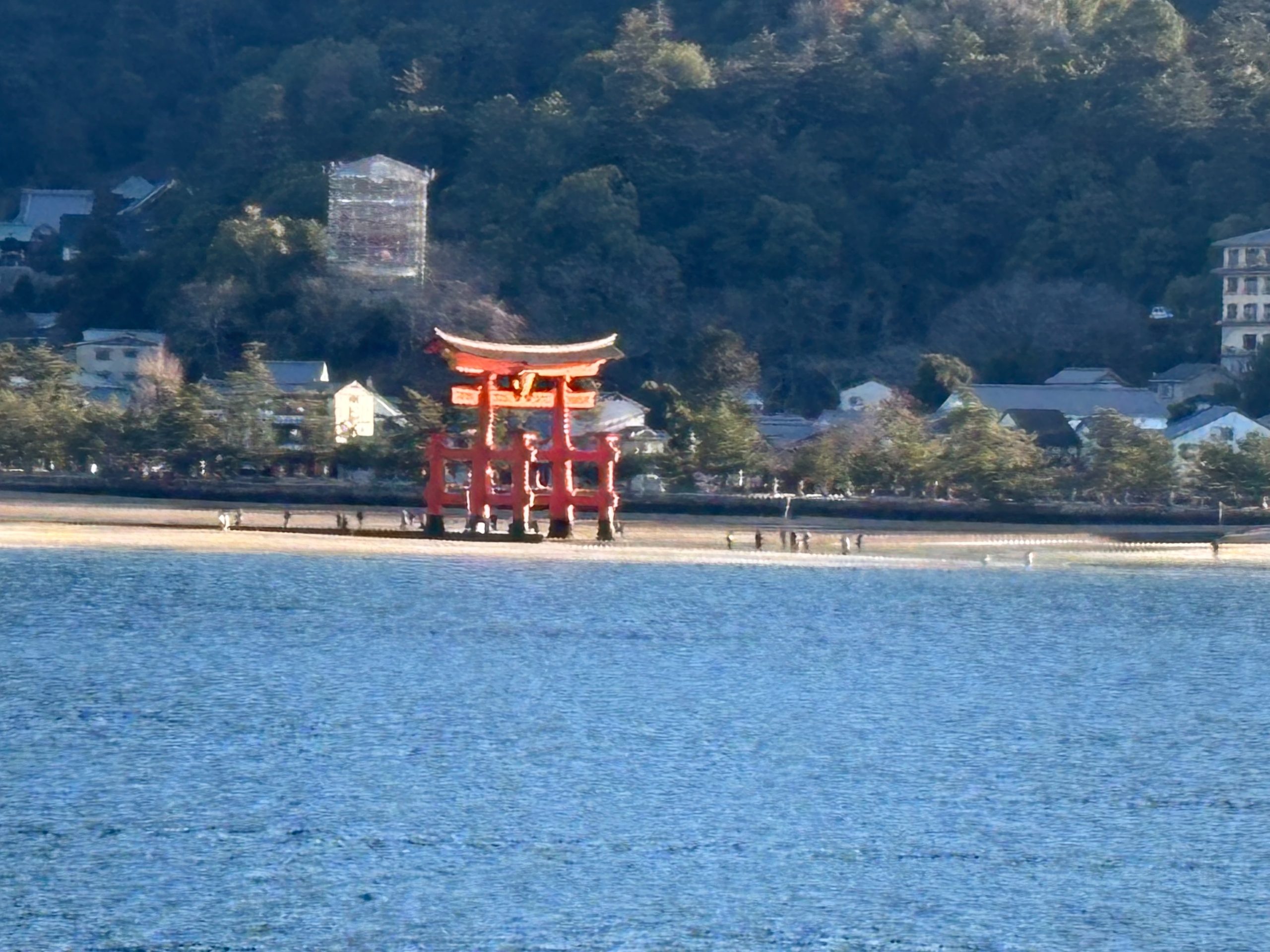
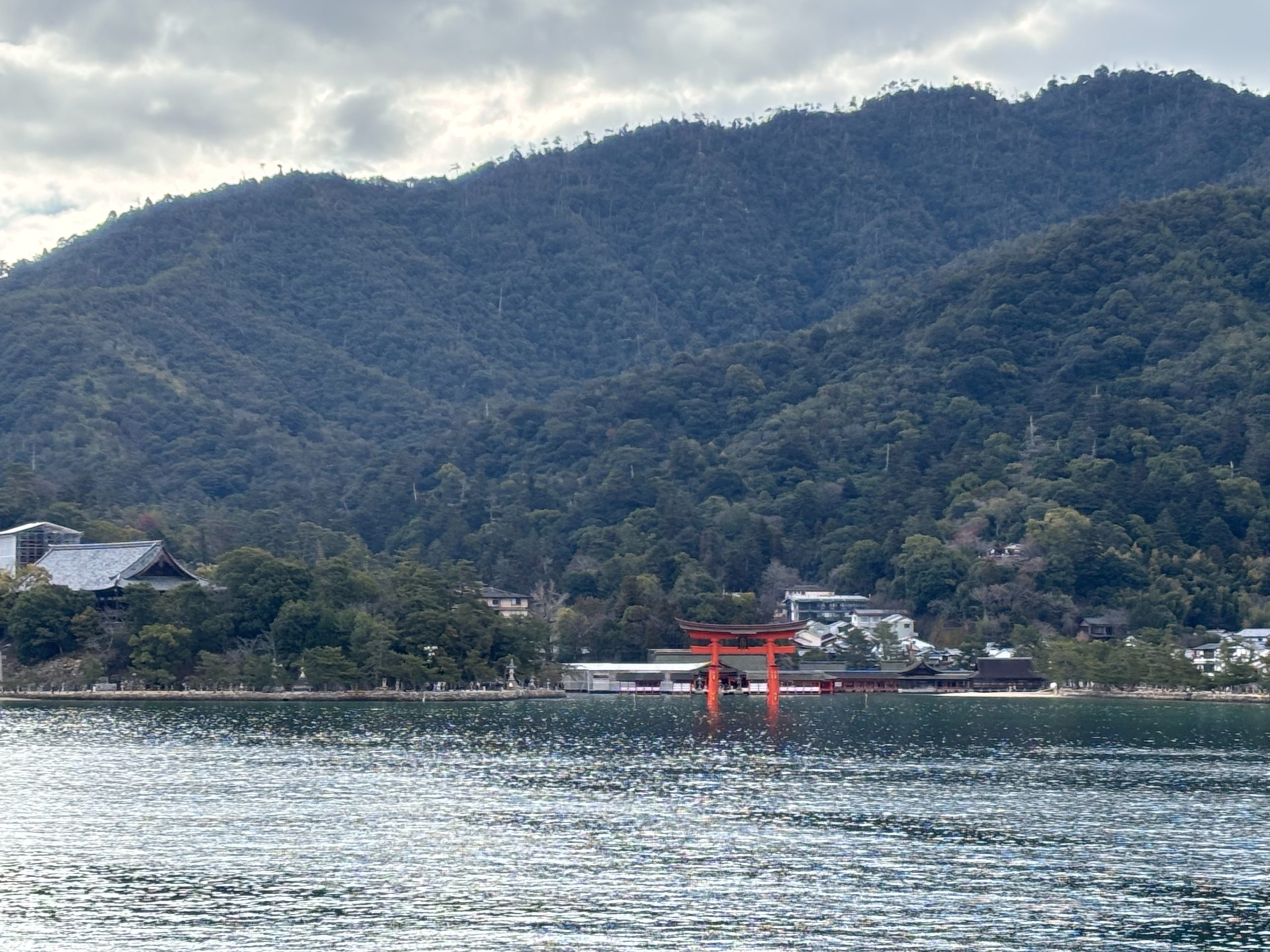
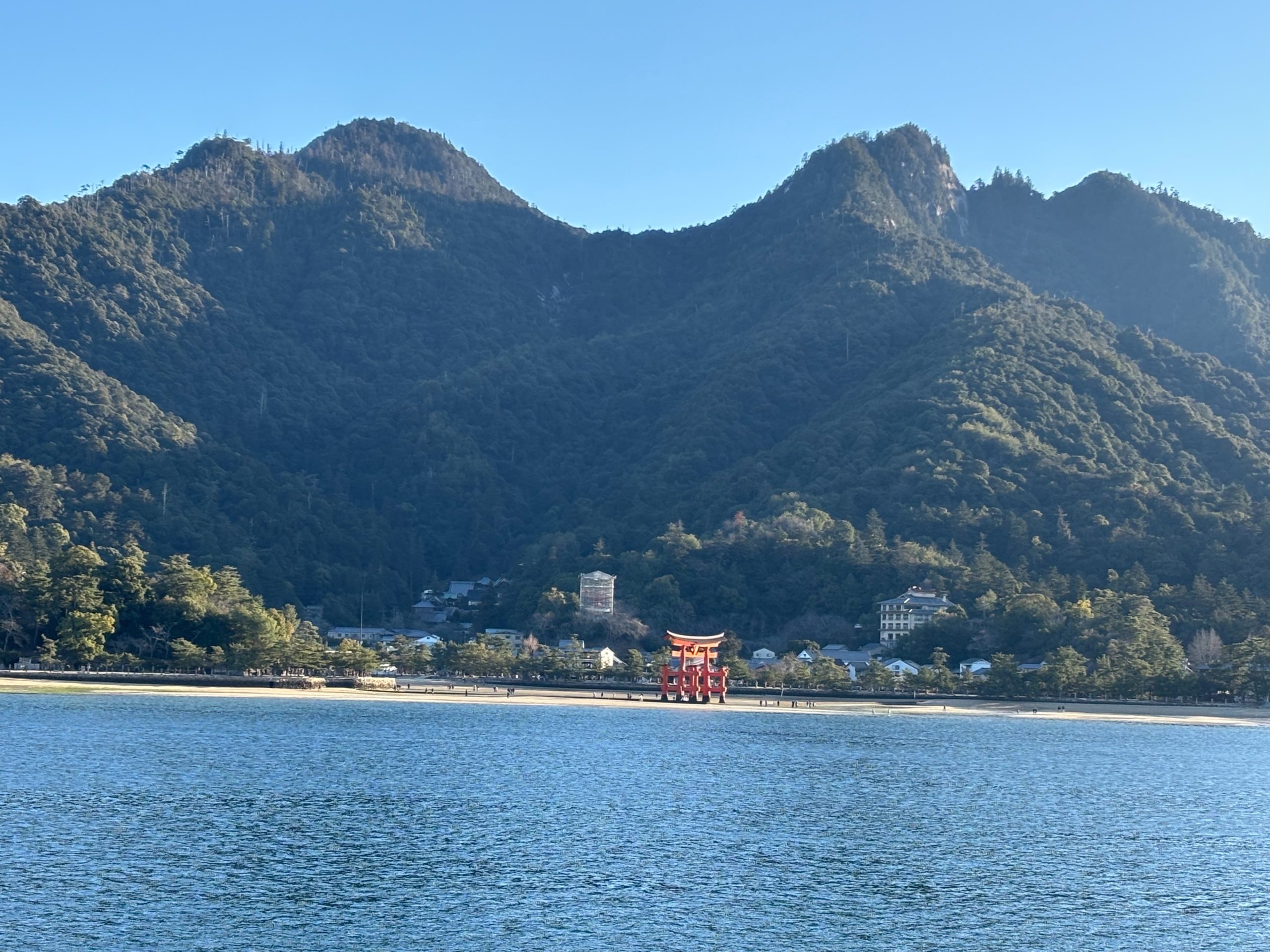
On departures from Miyajimaguchi between 9:10 and 16:10, the JR ferry runs the Great Torii Route: it turns close to the floating torii so that the gate stands in front of the shrine’s main hall. The crossing time is the same as a regular boat. Stand on the right (starboard) side, facing forward, for the best view and photos. Tide and weather can change the route on the day, so check the announcements at the pier if you want the close approach. This is also the only ferry the Japan Rail Pass covers.
Miyajima Matsudai Kisen: direct crossing and combo tickets
Matsudai Kisen sails straight across. Its Enjoy Ticket bundles a round-trip ferry (visitor tax included) with a round-trip ride on the Miyajima Ropeway up Mount Misen for ¥2,100 per adult and ¥1,100 per child, about ¥400 and ¥200 less than buying them separately. The Miyajima Otoku ja Ken pairs a round-trip ferry with a coupon for island sweets such as fried momiji manju. The vessel Aki has wheelchair spaces, an accessible restroom and counter seats with power outlets on the second deck.
Aquanet Hiroshima: the 5-minute boat, and the boat from Peace Memorial Park
Aquanet Hiroshima runs a high-speed boat from Miyajimaguchi to Miyajima in about 5 minutes (¥400 one way for adults, roughly every 20 minutes from mid-morning to early evening). Its World Heritage Sea Route sails directly between Peace Memorial Park, near the Atomic Bomb Dome, and Miyajima in about 45 minutes, with no transfer; the adult fare from Miyajima to Peace Park is ¥2,400. These boats can be booked online, and the Japan Rail Pass does not cover them.
Fares, ticket prices and the Japan Rail Pass
- JR West and Matsudai Kisen: ¥200 one way / ¥400 round trip for adults, ¥100 / ¥200 for children.
- Miyajima visitor tax: ¥100 per person (pre-school children exempt), charged on the way to the island in addition to the fare. It is already included in Matsudai Kisen’s combo tickets.
- Japan Rail Pass / JR-WEST Rail Pass: valid on the JR ferry only. Pay the visitor tax separately.
- Payment: both companies accept Suica, ICOCA, PASMO and other national IC cards, and cash at the ticket machines and counters.
Timetable and schedule: first and last boats
During the day, JR West and Matsudai Kisen each sail about every 15 minutes, so you rarely wait long. The times that matter are at either end of the day. JR runs the longest hours: from Miyajimaguchi 6:25 to 22:42, and from Miyajima 5:45 to 22:14. Matsudai Kisen runs from 7:15 to 20:35 from Miyajimaguchi, and from 7:00 to 20:15 from Miyajima. If you stay for the evening illumination of the shrine, the JR ferry is your boat back.
On New Year’s Day, during the Kangensai festival and on other busy days, both companies switch to special timetables with extra boats. Check the official timetables before planning an early or late crossing.
Getting to the Miyajimaguchi ferry terminal
The JR West and Matsudai Kisen ferry terminals stand side by side on the Miyajimaguchi waterfront. From JR Miyajimaguchi Station, the terminal is about a 5-minute walk on a flat, step-free route. Turn right out of the ticket gates, take the ramp down to the underpass, then the elevator back up; one pedestrian crossing brings you to the piers. Signs with a ferry symbol mark the way, and much of the route is covered.
From Hiroshima Station, take the JR Sanyo Line to Miyajimaguchi, or the slower Hiroden streetcar (line 2), whose last stop is beside the piers. Coming from farther away? Our Osaka, Kyoto and Tokyo to Miyajima guide covers the shinkansen legs, and our Miyajimaguchi guide covers the area around the terminal. Parking near the pier fills up quickly on weekends and holidays.
On board and at Miyajima pier
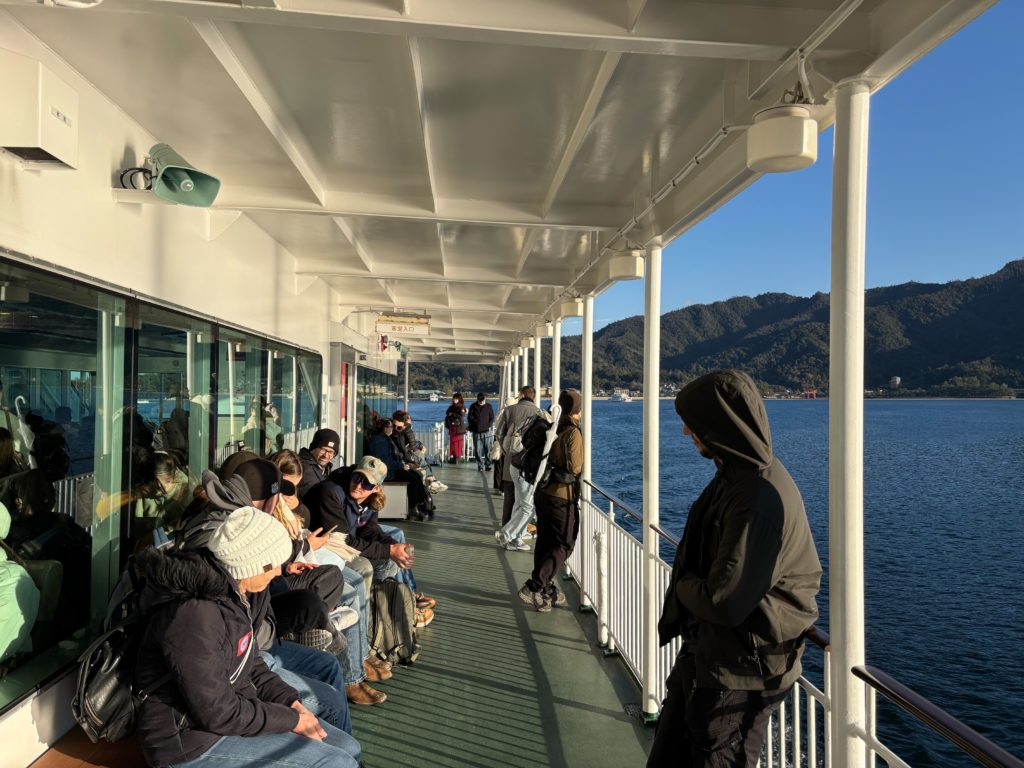
The Seto Inland Sea is usually calm, so the crossing is comfortable even for people prone to seasickness. Most passengers head for the open deck to watch the torii approach; bring a layer on windy days.
The ferries and both piers are barrier-free. JR’s first-floor cabin has wheelchair spaces, handrails and an accessible restroom, and staff help with the boarding ramp for wheelchairs and strollers. All vessels are non-smoking.
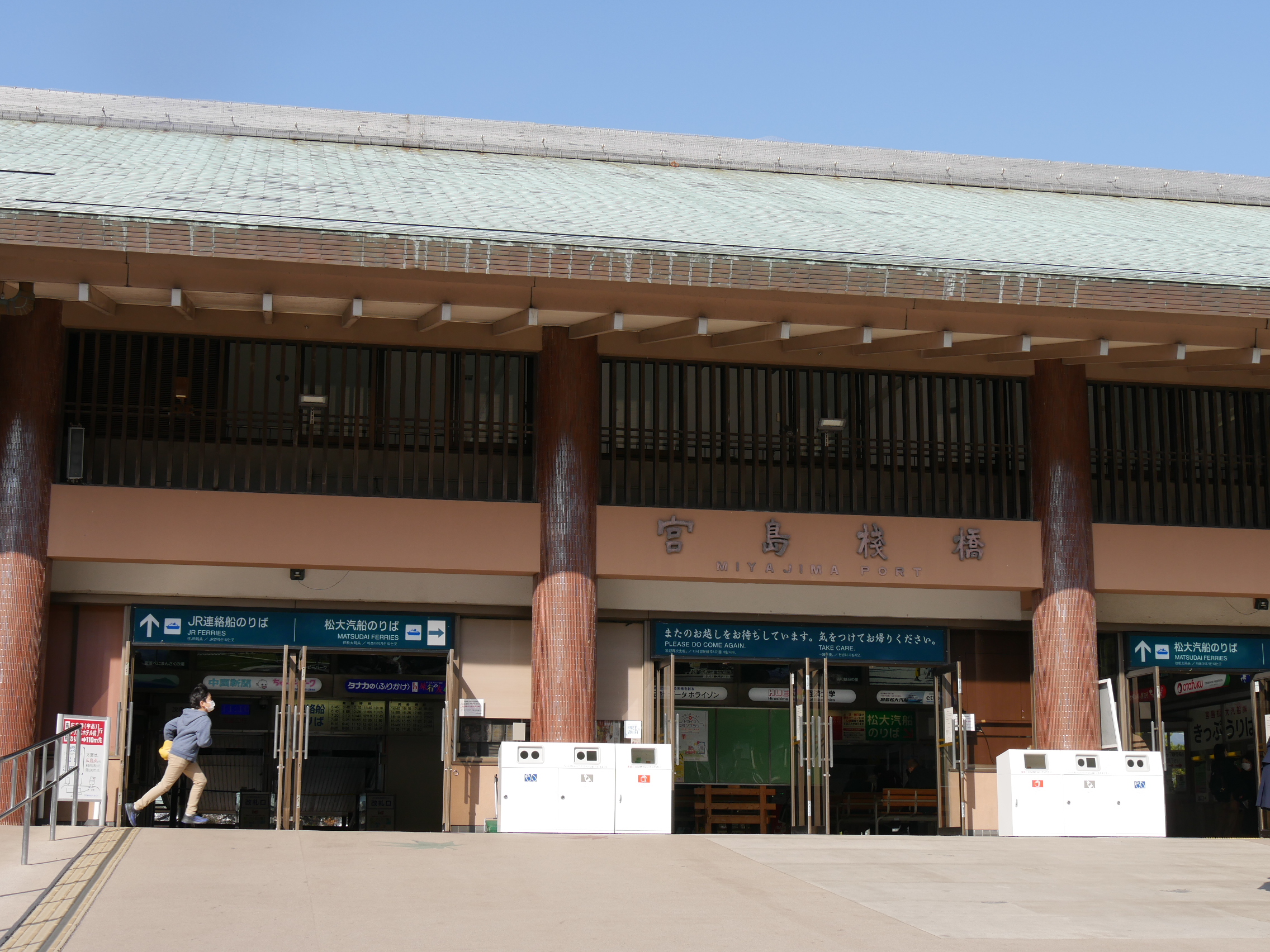
Miyajima pier has a tourist information center, restrooms, shops and wheelchair rental. From the pier, Omotesando shopping street leads to Itsukushima Shrine in 10–15 minutes on foot, and the bus stop for Momijidani Park and the ropeway is a short walk away.
FAQ
Do I need to book or reserve Miyajima ferry tickets in advance?
No. JR West and Matsudai Kisen do not take reservations for the regular crossing; buy a ticket at the pier or tap an IC card and board the next boat. Only Aquanet Hiroshima’s high-speed boats, including the route from Peace Memorial Park, can be booked online.
What time does the Miyajima ferry start and finish?
The JR ferry’s first boat leaves Miyajimaguchi at 6:25 and the last at 22:42 (regular schedule); from Miyajima the first is 5:45 and the last 22:14. Matsudai Kisen runs 7:15–20:35 from Miyajimaguchi and 7:00–20:15 from Miyajima.
How long does the Miyajima ferry take?
About 10 minutes on JR West or Matsudai Kisen, and about 5 minutes on Aquanet’s high-speed boat. The direct boat from Peace Memorial Park in Hiroshima takes about 45 minutes.
Is the Japan Rail Pass valid on the Miyajima ferry?
Yes, on the JR West Miyajima Ferry, and the JR-WEST Rail Pass is accepted too. The ¥100 visitor tax is not included and is paid separately. The pass is not valid on Matsudai Kisen or Aquanet.
Can I take a boat directly from Hiroshima?
Yes. Aquanet Hiroshima’s World Heritage Sea Route sails from Peace Memorial Park to Miyajima in about 45 minutes, with no transfer. It costs more than the train and ferry (¥2,400 for adults from Miyajima to Peace Park) and is not covered by the Japan Rail Pass.
How much does the Miyajima ferry cost?
¥200 one way and ¥400 round trip for adults, ¥100 and ¥200 for children, on both JR West and Matsudai Kisen. Add the ¥100 Miyajima visitor tax per person on the way to the island.
What is the Great Torii Route, and when does it run?
It is the JR ferry’s route that passes close to the floating torii gate before docking. It runs on departures from Miyajimaguchi between 9:10 and 16:10 and takes the same time as a regular boat. Stand on the right side for the view.
Can I pay with Suica or ICOCA?
Yes. Both JR West and Matsudai Kisen accept Suica, ICOCA, PASMO and the other national transit IC cards, as well as cash.
Is the ferry accessible for wheelchairs and strollers?
Yes. The piers and ferries are barrier-free, with wheelchair spaces and accessible restrooms on board, and staff help with the boarding ramp.
When is the ferry least crowded?
Weekday afternoons between about 14:00 and 16:00. Weekend and holiday mornings, cherry blossom season and November’s autumn leaves are the busiest, but boats run every few minutes between the two companies, so queues move.
Nearby: where to go after you land
- Itsukushima Shrine: hours, admission and tides — 10–15 minutes on foot from the pier.
- Omotesando shopping street — the food and souvenir street between the pier and the shrine.
- Mount Misen — the ropeway and hiking trails to the island’s summit.
- Daishoin Temple — the island’s oldest temple, on the hillside behind the shrine.
- Anago meshi (conger eel rice) — Miyajima’s signature lunch.
Fares, timetables and routes are from the official websites of JR West Miyajima Ferry, Miyajima Matsudai Kisen and Aquanet Hiroshima (checked October 2026) and may change.