Senjokaku: Miyajima’s Hauntingly Beautiful Unfinished Hall
Perched on a hill above Itsukushima Shrine, Senjokaku — officially known as Toyokuni Shrine — is one of Miyajima’s most rewarding and overlooked attractions. This vast wooden hall, large enough to lay out 857 tatami mats, was commissioned by the great warlord Toyotomi Hideyoshi in 1587 but was never completed after his sudden death in 1598. The result is a structure unlike anything else in Japan: a soaring, open-sided pavilion where sea breezes flow freely through ancient timber frames, and panoramic views of the Seto Inland Sea stretch out in every direction. Best of all, entry costs just ¥100.
A Hall Left Unfinished — and All the Better for It
Toyokuni Shrine enshrines Toyotomi Hideyoshi, the legendary general and statesman who rose from humble origins to unify Japan in the late sixteenth century. He is traditionally associated with blessings of career advancement and good fortune — making this shrine a popular stop for those with ambitions to fulfill.
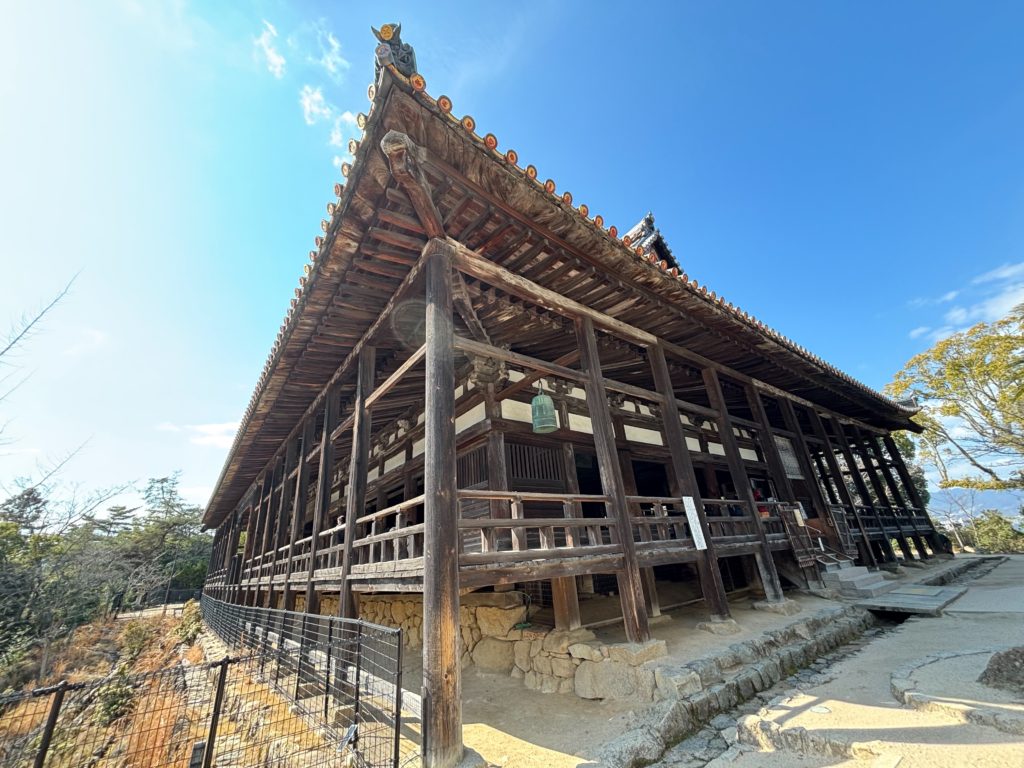
In 1587, Hideyoshi ordered the construction of a grand memorial hall on Miyajima, intending it to serve as a place where Buddhist sutras would be read for fallen soldiers. Construction began under the supervision of Buddhist monk Ankokuji Ekei, but when Hideyoshi died unexpectedly in 1598, work stopped abruptly. The ceiling boards were never installed, and the exterior walls were never enclosed. What remains is a building frozen mid-construction — and that incompleteness has become its most distinctive feature.
The name “Senjokaku” literally means “pavilion of a thousand tatami mats,” a poetic reference to its enormous floor space. The hall doesn’t actually contain tatami — the floor is polished wood planking — but the name captures the sense of almost improbable scale. When I visited last autumn with my family, my older daughter immediately looked up and asked, “Why is there no ceiling?” It’s the question every first-time visitor asks, and the honest answer is: because history got in the way. But as my husband pointed out, it’s precisely because the building was never finished that it feels so wonderfully open and alive.
The roof tiles carry the character 王 (meaning “king”), and the outermost tiles are gilded — a deliberate display of Hideyoshi’s supreme authority. The hall occupies the highest ground in this part of the island, with Itsukushima Shrine visible far below. It’s hard not to sense the political calculation behind the site choice: this was a man who wanted his legacy to be seen.
If you’re planning to visit Itsukushima Shrine, Senjokaku pairs perfectly with it — the shrine below and the hall above offer two very different perspectives on the same sacred island.
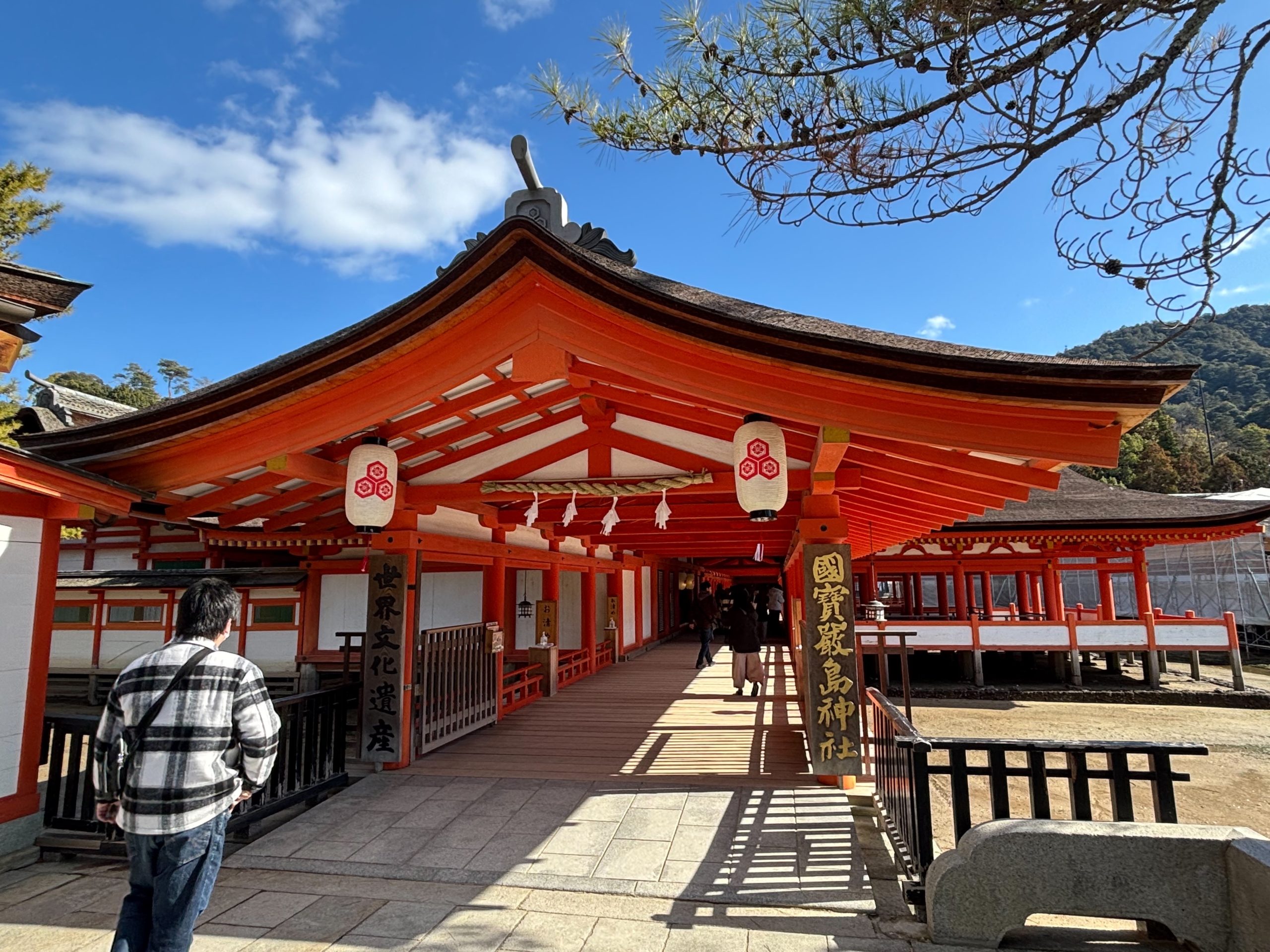
Itsukushima Shrine sits at the edge of the sea on Miyajima Island, jus...
What to Look for Inside Senjokaku
Once you step inside — removing your shoes at the entrance and carrying them in the provided plastic bags — the interior reveals far more than the bare bones of the structure might suggest. Here are the highlights to look out for:
- A measuring staff (shakuzue) used during the reconstruction of Itsukushima Shrine’s famous Great Torii Gate — a fascinating piece of living history
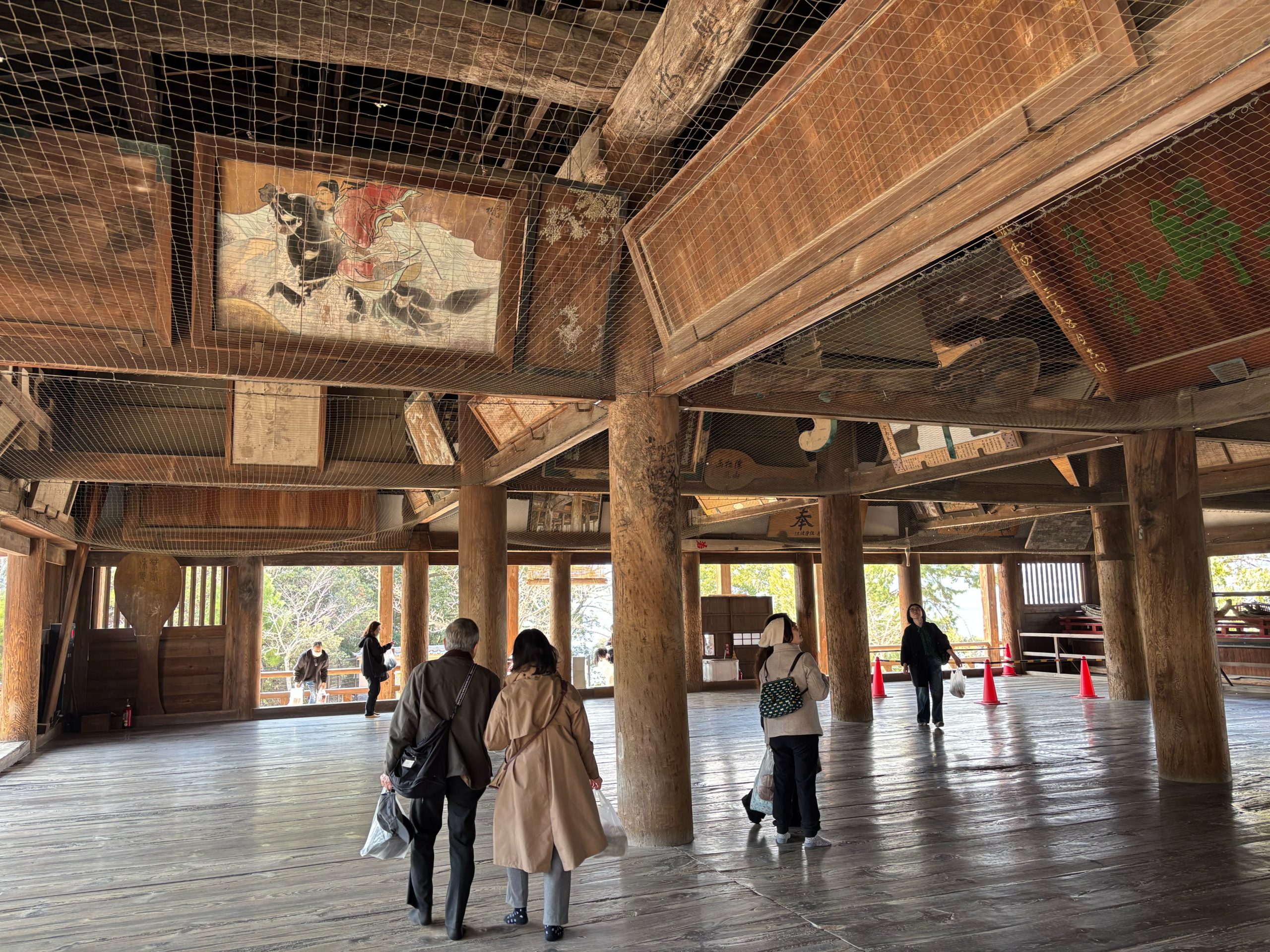
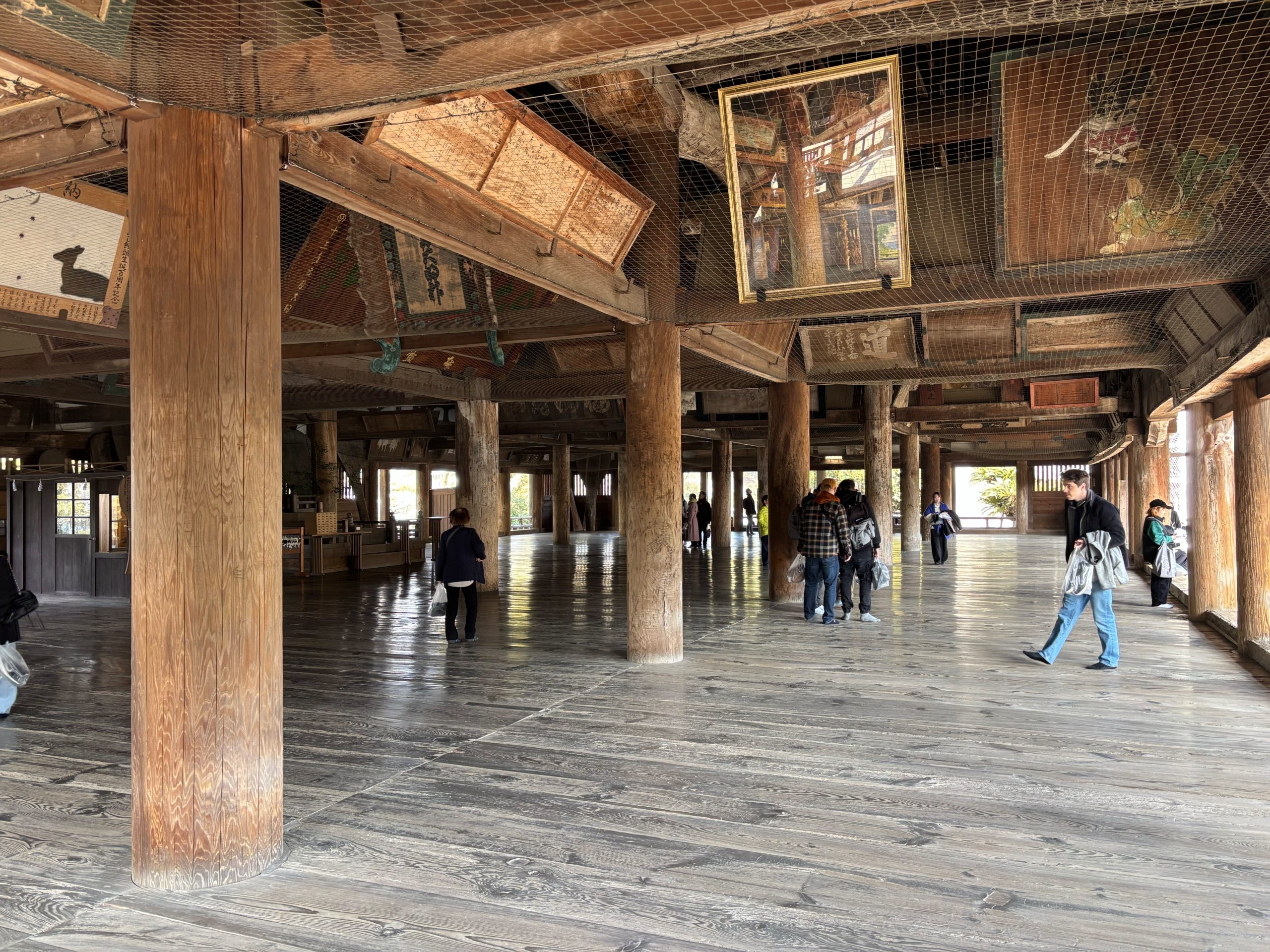
- Large votive paintings (ōema) donated during the Edo period, many of which were originally displayed in the corridors of Itsukushima Shrine before being moved here during the Meiji era
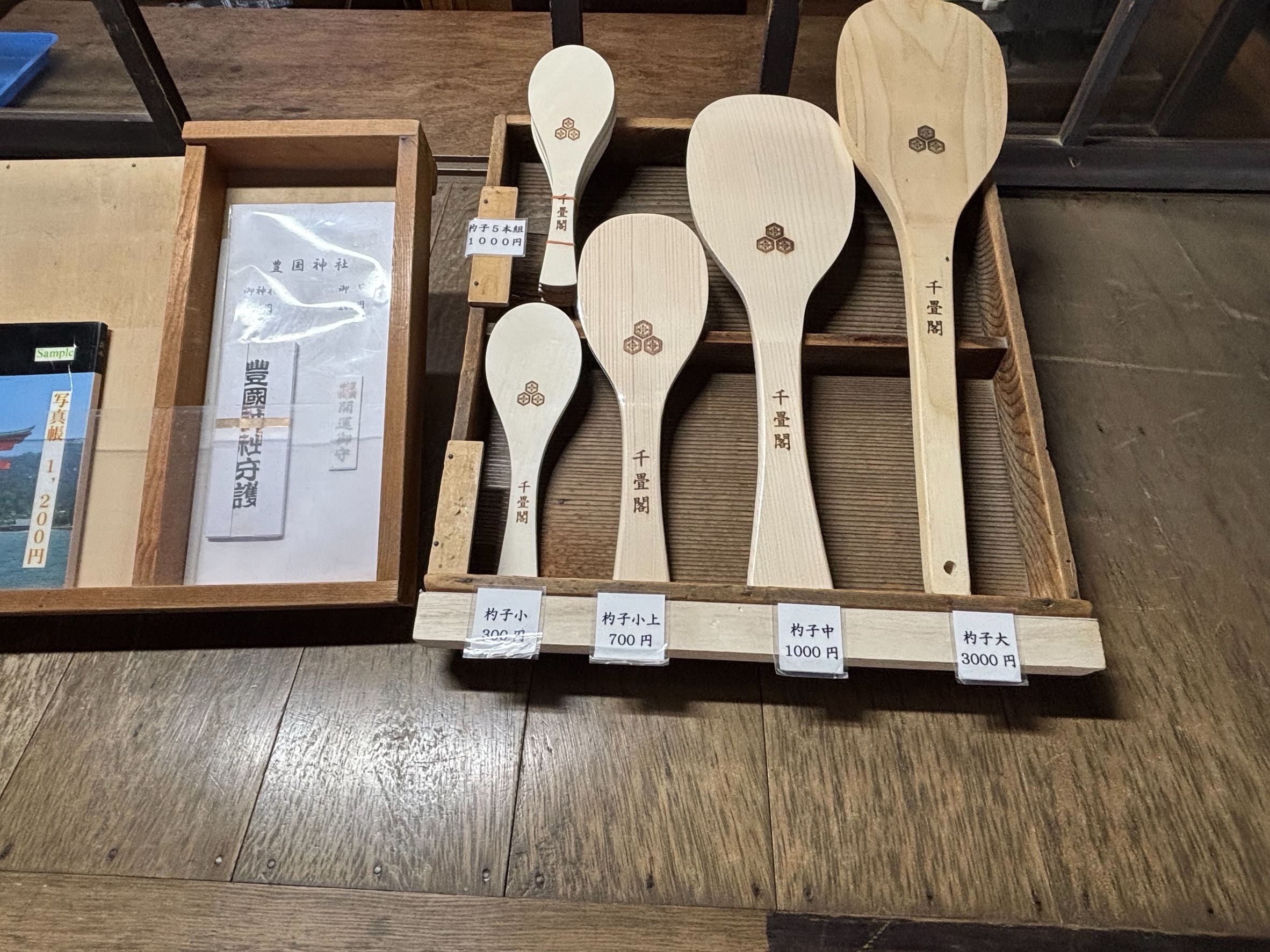
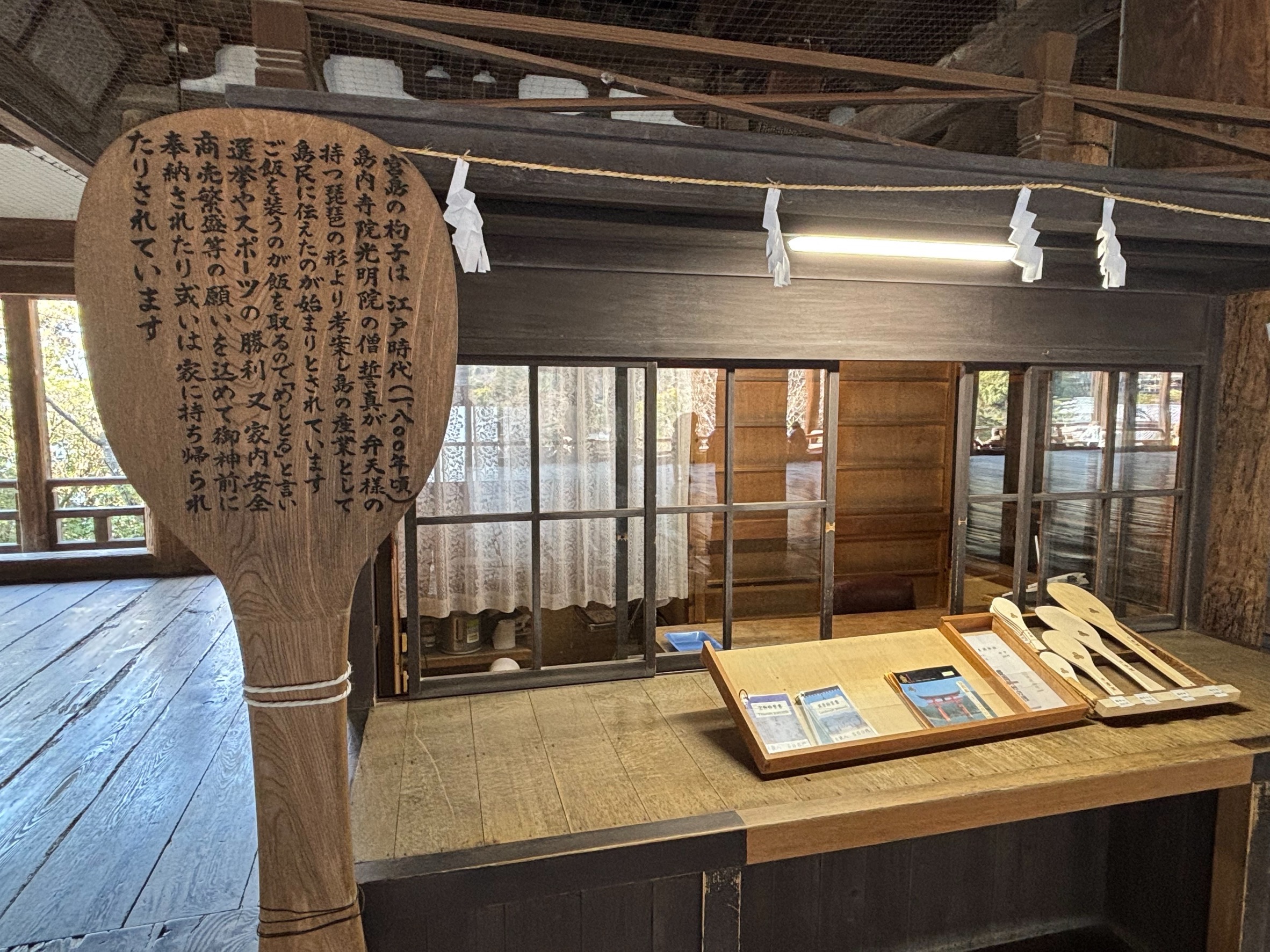
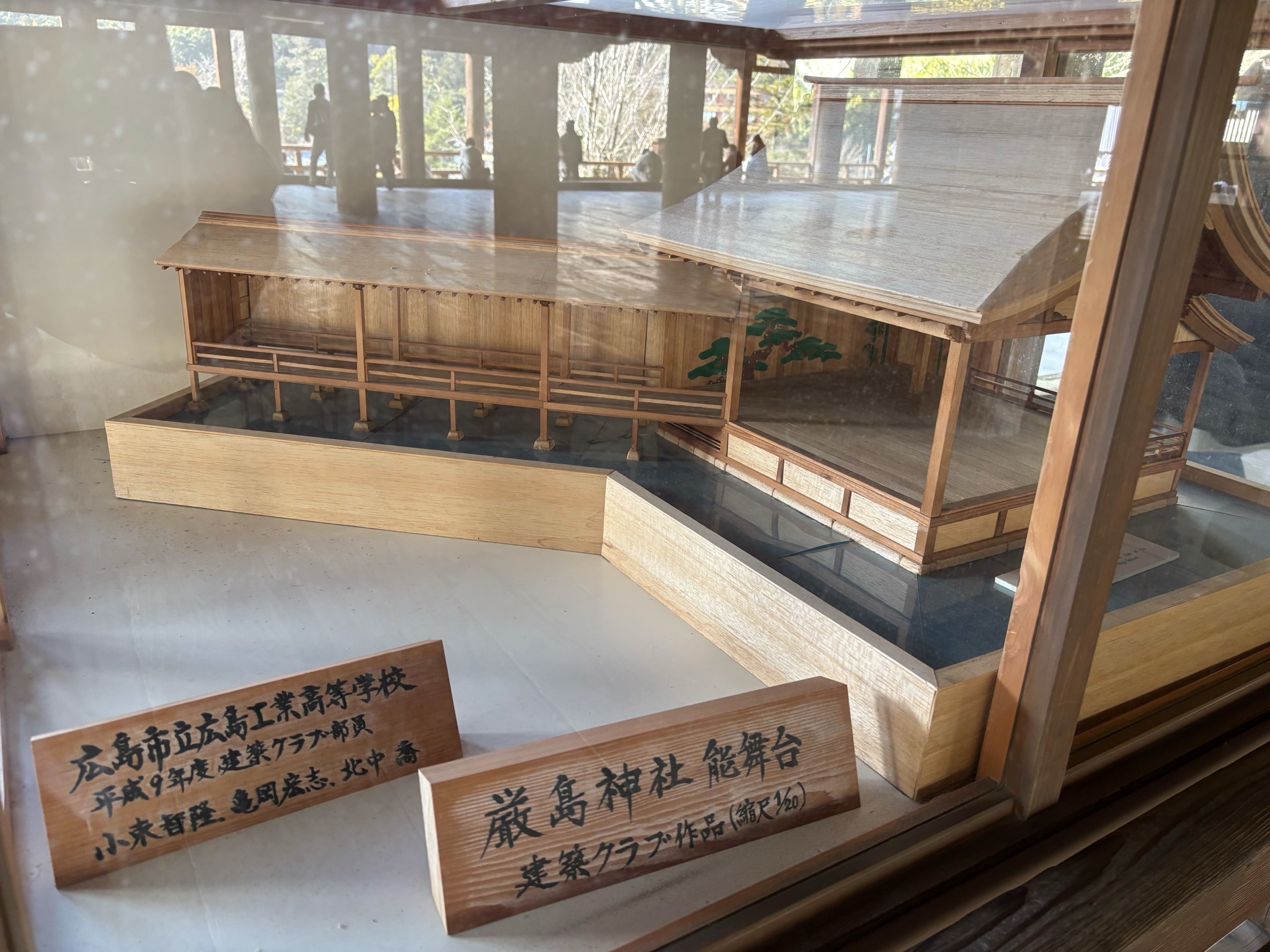
- An enormous ceremonial rice paddle (shamoji), along with a dragon-painted shamoji and scale models of traditional ships
- A compass dial engraved with the twelve zodiac signs
The votive paintings are particularly striking. My older daughter spotted them immediately and was transfixed — the colors have held up remarkably well over the centuries, and the scenes are rich with detail. Senjokaku is actually recognized as one of Japan’s three great sites for dedicated ema collections, so if you have any interest in historical Japanese folk art, this is genuinely worth your time.
Because the walls are almost entirely absent, cool breezes pass freely through the hall even in summer. Many visitors — locals and tourists alike — end up sitting down on the wooden floor to rest and take in the views. My younger daughter planted herself cross-legged and announced that the wind felt wonderful. She wasn’t wrong. If you prefer a quieter visit with room to wander and look closely at the ema, weekday afternoons between 2 p.m. and 4 p.m. tend to be the least crowded.
The openness of the structure also has historical significance. Because of the unobstructed sightlines across the surrounding hillside, this elevated spot — once known as Tō-no-Oka, or “Tower Hill” — served as the command post for the Mōri forces during the famous Battle of Itsukushima in 1555, one of Japan’s most celebrated naval engagements.
The Views from Senjokaku Are Not to Be Missed
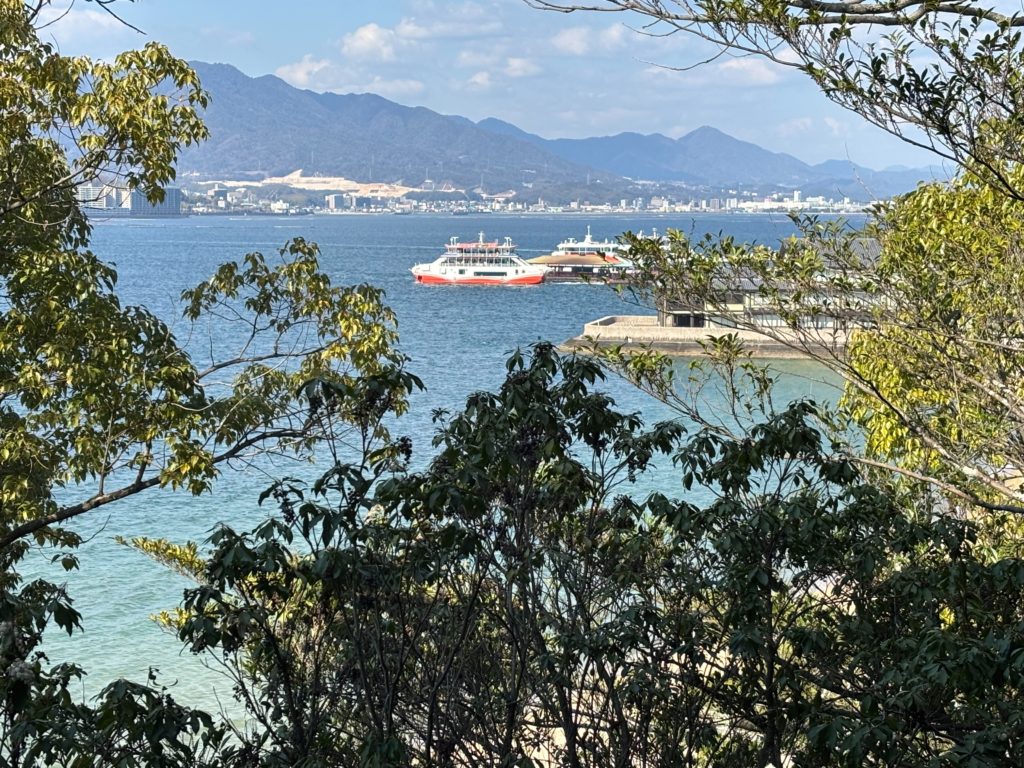
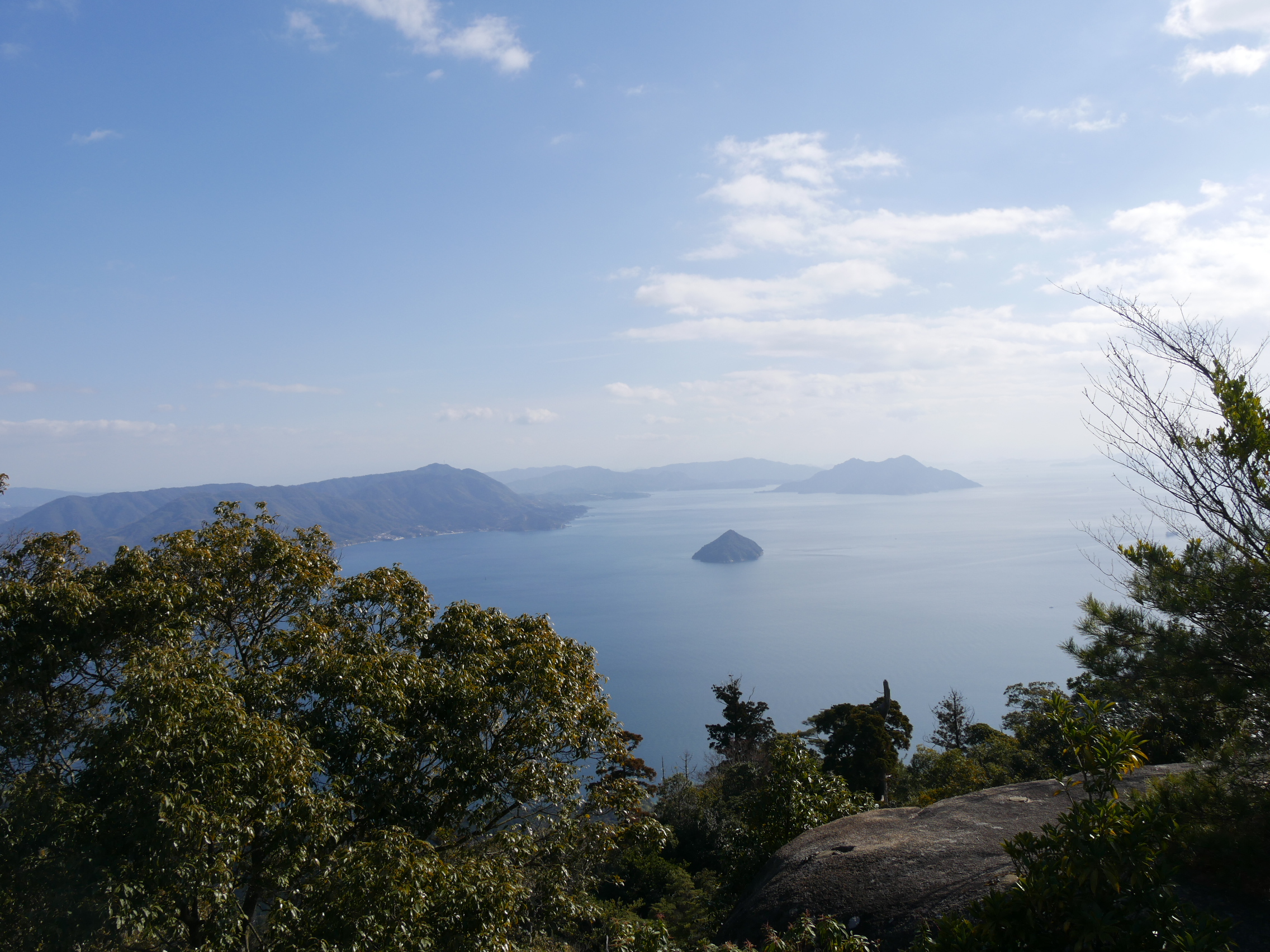
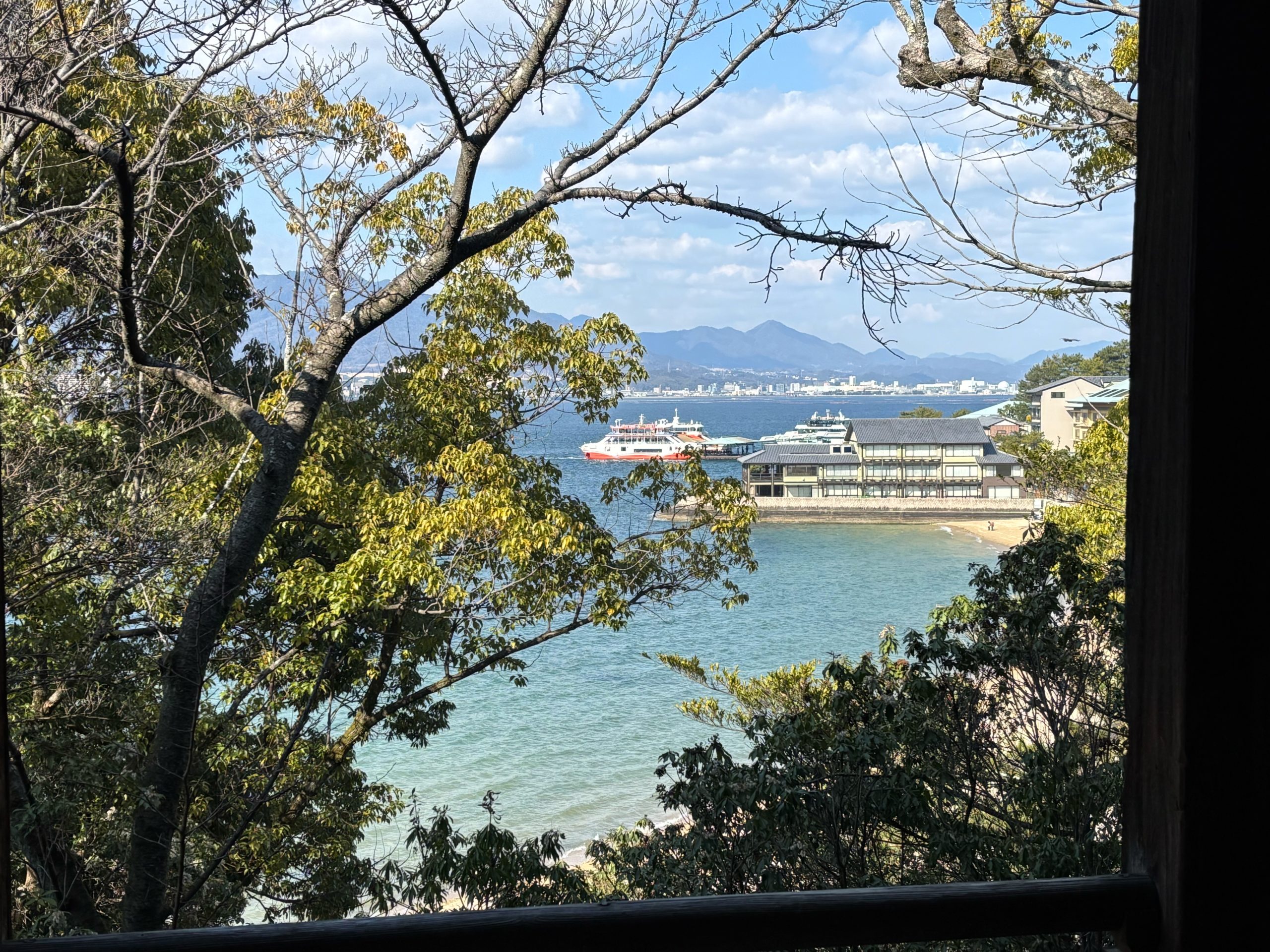
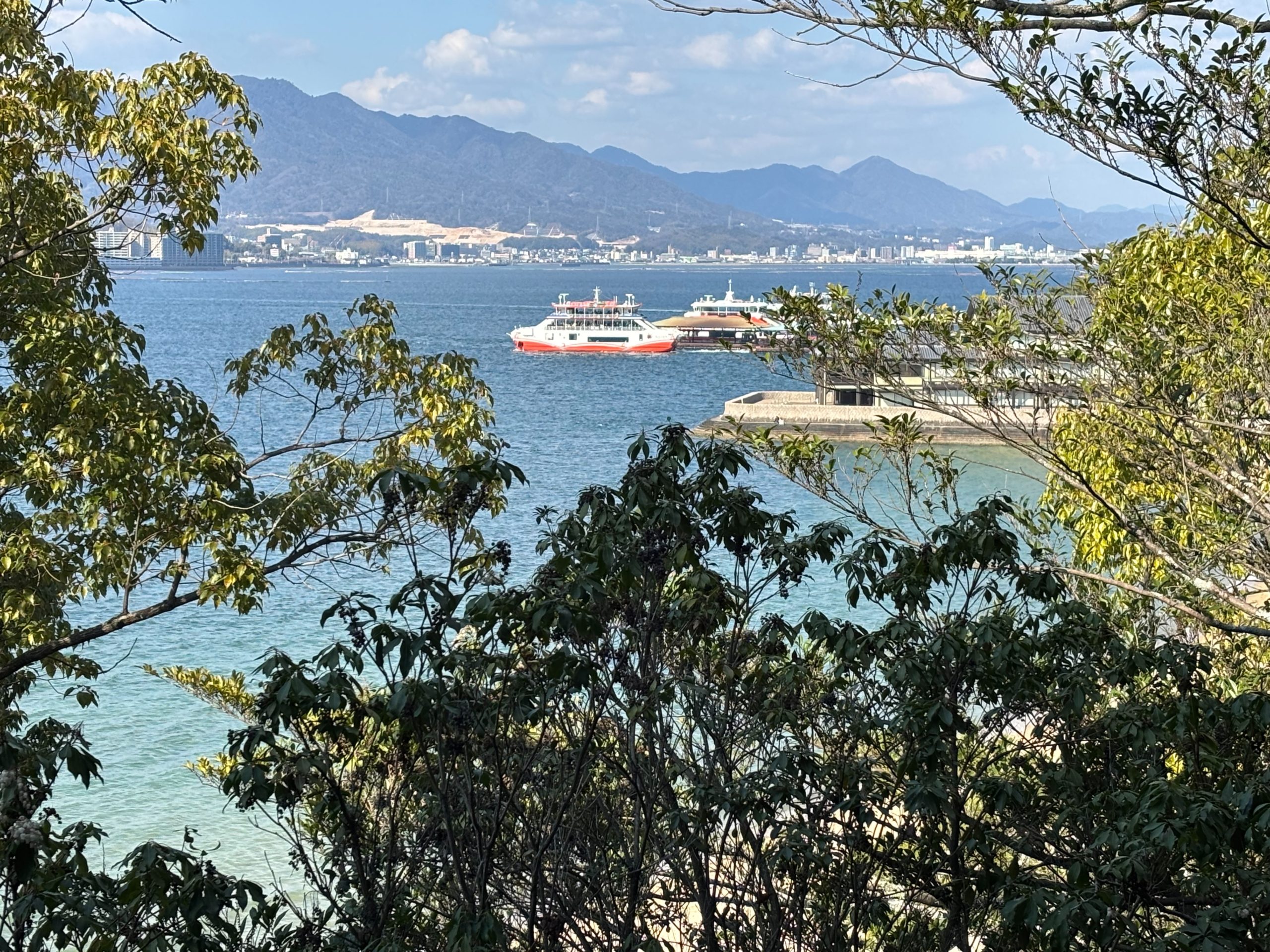
From the open sides of the hall, you can look directly down over Itsukushima Shrine and the shimmering waters of the Seto Inland Sea. On a clear day the view is breathtaking, and it changes character throughout the day: the sea glitters in the morning light, and by late afternoon the silhouette of the Great Torii Gate rises dramatically against the western sky. Our family makes the trip to Senjokaku two or three times a year, and it genuinely looks different every season.
The hillside just below the hall is also a local secret worth knowing: the area around the nearby Tahoto Pagoda is one of the best cherry blossom spots on the island, popular with residents precisely because most tourists don’t know to look for it.
Senjokaku is also part of Miyajima’s UNESCO World Heritage Site designation, which encompasses Itsukushima Shrine and the island’s surrounding primeval forests on Mount Misen. Understanding the full scope of that heritage can make a visit here feel even more meaningful.
Rising dramatically from the sea off the coast of Hiroshima, Itsukushi...
Architectural Details Worth Noticing
The Roof Tiles
Look closely at the round end-tiles along the eaves: each one is stamped with the character 王, and the outermost tiles are finished with gold leaf. This gleaming ornamentation is characteristic of the Momoyama period architectural style — flamboyant, confident, and unmistakably associated with Hideyoshi’s era of power. Standing beneath the roof and spotting that gilded edge is one of those small details that makes the building feel genuinely personal to its patron.
The Open Roof Structure
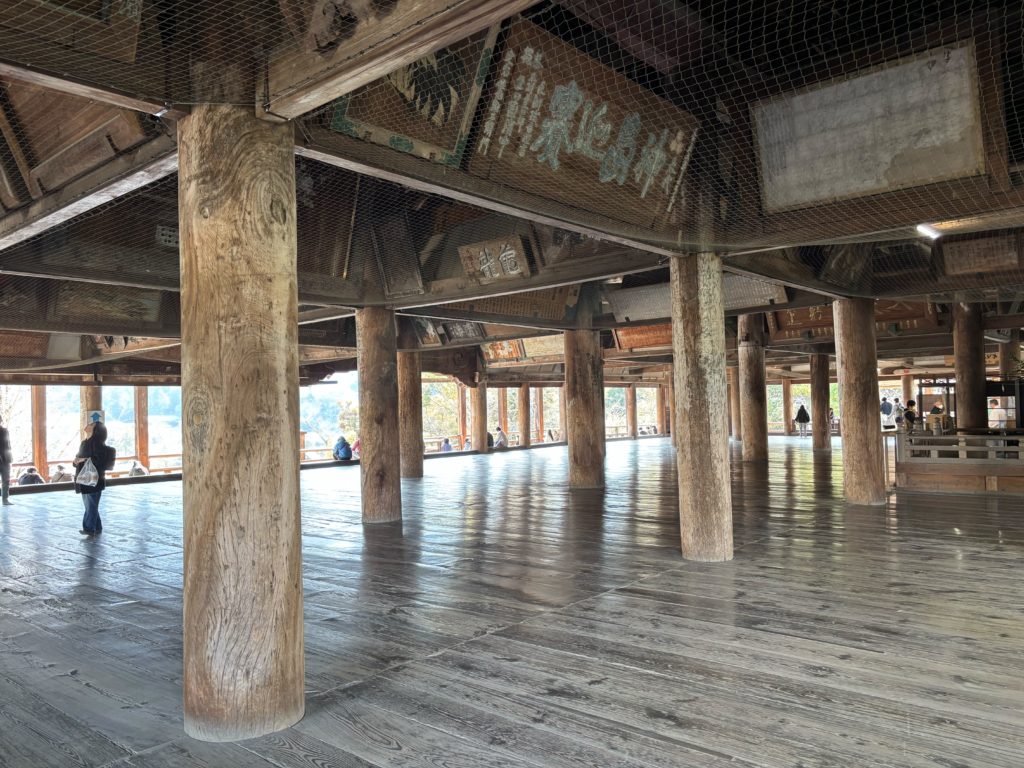
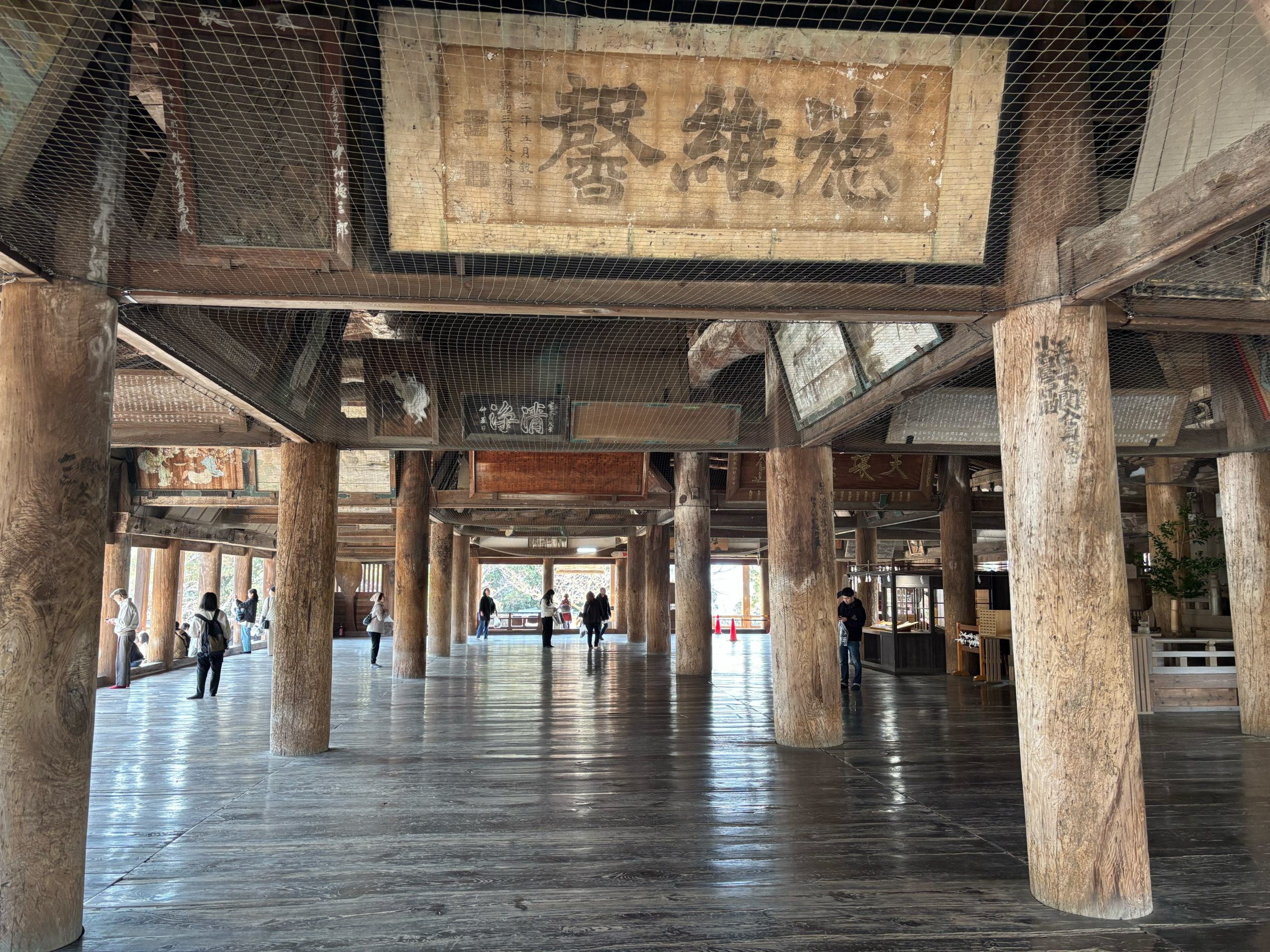
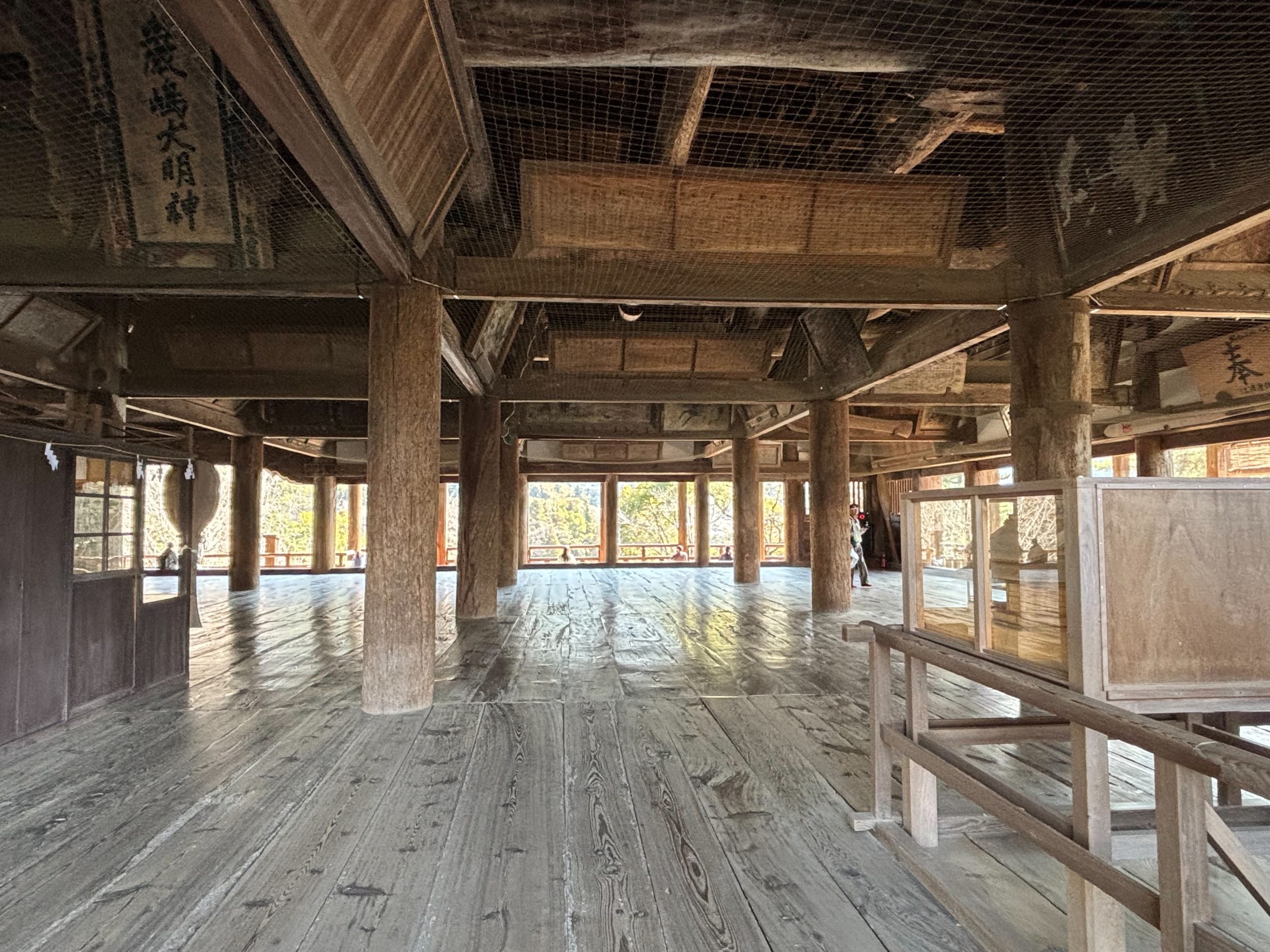
Because the ceiling boards were never installed, you can look straight up into the roof framework — an unusually intimate view of how a major Japanese timber structure is actually put together. The forest of supporting columns creates the hall’s characteristic openness while still carrying the weight of the roof above. This construction approach, with its emphasis on structural transparency, appears in several buildings associated with Hideyoshi and reflects his reputation as a master builder of castles and grand monuments.
My younger daughter summed it up well: “You can see the sky!” That’s exactly right, and it’s an experience you simply don’t get inside a conventional Japanese shrine or temple hall.
Senjokaku is the largest wooden structure on Miyajima, and this “beauty of incompletion” — the raw timbers, the open sky, the wind moving through — is what makes it unlike anywhere else on the island.
The Floorboards
The wooden floor is built in a double-layer construction roughly 10 centimeters thick — an engineering response to the salt winds that roll in off the Seto Inland Sea and can wear down exposed timber over time. Walking across it barefoot (shoes off is required inside), you feel the substantial solidity underfoot. It’s a floor that has been walked on for over four centuries, and it shows no signs of giving.
The Votive Paintings (Ema)
Senjokaku is considered one of Japan’s three great repositories of large-scale votive paintings. Ema are wooden plaques on which worshippers paint or write prayers and wishes; the ones here date largely from the Edo period and range from scenes of Itsukushima Shrine to vivid figurative paintings. Many were originally hung in the corridors of Itsukushima Shrine itself and were relocated here during the Meiji era. Beyond the paintings, the hall also contains the measuring staff from the Great Torii restoration, ship models, and the zodiac compass — there’s enough to keep curious visitors occupied for a while.
The Giant Shamoji (Rice Paddle)
Miyajima is the birthplace of the traditional Japanese wooden rice paddle, an industry said to have been established by a monk named Seishin who was inspired by the shape of the goddess Benzaiten’s lute. Rice paddles from Miyajima became a symbol of scooping up good fortune and victory, and large ceremonial shamoji were donated to shrines as prayers for success in battle. The oversized shamoji displayed inside Senjokaku is one of the island’s most distinctive objects — my younger daughter pointed at it in disbelief. It really is that big.
Daisho-in Temple — one of Miyajima’s most atmospheric spiritual sites and actually older than Itsukushima Shrine — is another worthwhile stop to pair with Senjokaku.

Discover Daishoin Temple, Miyajima's oldest and most sacred Buddhist site. History, highlights, seasonal events, and practical visitor tips.
Blessings of Career Success
Toyokuni Shrine enshrines Toyotomi Hideyoshi, who is traditionally associated with career advancement and upward mobility — hardly surprising for a man who rose from peasant origins to become the ruler of all Japan. The shrine is said to offer blessings for professional success, improved personal relationships, good luck, and auspicious encounters. My husband always makes a point of stopping to pray here. I found myself hoping for good fortune for our children’s futures. Whatever you’re working toward, Hideyoshi feels like an appropriate patron saint.
The Sixteen-Sided Pillars Beneath the Floor
If you have the chance to look at the understructure of the hall, pay attention to the supporting columns. Rather than simple square timbers or the octagonal columns typical of many Japanese structures, Senjokaku’s pillars are cut into sixteen-sided forms. This was a deliberate technique to prevent cracking: by cutting the timber from a point slightly off-center and shaping it into a multifaceted column, the wood resists splitting as it ages and moves. It’s a small but telling detail about the level of craftsmanship Hideyoshi demanded — even in a building that was never finished.
Admission, Hours, and Goshuin
- Admission: ¥100 for adults and high school students / ¥50 for elementary and middle school students
- Opening hours: 8:30 a.m. – 4:30 p.m. (goshuin stamp available until 4:00 p.m.)
- Suggested visit time: 20–40 minutes inside the hall, plus another 10–20 minutes to take in the views
The admission price is genuinely remarkable. One hundred yen for this much history, architecture, and scenery — Senjokaku is easily one of the best-value stops on Miyajima. That said, admission details can change, so it’s worth checking current information before your visit. Goshuin (temple or shrine seal stamps, collected by many Japanese travelers) are available during visiting hours for those interested.
How to Get to Senjokaku
- Getting to Miyajima: Take the JR San’yo Line to Miyajimaguchi Station, or the Hiroden streetcar to Hiroden-Miyajimaguchi Station. From either station, the ferry terminal is a short walk. The ferry crossing to Miyajima takes approximately 10 minutes.
- Parking: There is very limited vehicle access on the island during the day. The most reliable approach is to park near Miyajimaguchi (options include the Momiji Honjin parking lot and the Miyajimaguchi parking area) and take the ferry across.
- From the ferry terminal to Senjokaku: Walk straight along the main path from the Miyajima ferry pier — it takes about 10 minutes on foot. Follow the route past Itsukushima Shrine’s corridor and then climb the stone steps up to Tō-no-Oka hill, where the hall stands.
- Suggested itinerary: Itsukushima Shrine → Senjokaku → Five-Story Pagoda → Omotesando Shopping Street. This sequence takes advantage of the natural elevation change and flows well on foot.
If you have flexibility in your schedule, the breezy mid-afternoon hours at Senjokaku — or the late afternoon when the light turns golden over the sea — make for particularly atmospheric visits. Local tip: if you’re driving, the parking area behind Momiji Honpo tends to have space before 8 a.m.
For more on planning your trip across from the mainland, our guide to the Miyajima ferry covers both the JR and Matsudai lines, ticketing, and IC card options.
Miyajima's main shopping street — known locally as Omotesando — is a l...
Photography, Etiquette, and Avoiding the Crowds
- Photography: Photography is welcome throughout the hall. The wide-open space means other visitors tend to wander into the frame, so a little patience goes a long way. Tripods are fine as long as they don’t block foot traffic.
- Shoes: You must remove your shoes at the entrance. Plastic bags are provided to carry them inside.
- Quietest times: Early morning tends to be noticeably less busy. Weekday afternoons between 2 p.m. and 4 p.m. are also generally calm.
Taking your shoes off might sound like extra effort, but walking barefoot across those old wooden planks — feeling the grain and the slight warmth of the boards — is actually one of the small pleasures of visiting. My kids were delighted by it. It’s a tactile connection to a building that has been welcoming visitors for over four hundred years.
Visiting with Children and Accessibility
- Stone steps: There are stone steps leading up to Senjokaku. The hall itself is not accessible by wheelchair, and strollers are best folded and carried up with a second adult.
- On the island generally: The ferry and pier have some accessible facilities depending on the vessel. Itsukushima Shrine’s corridor is relatively flat and manageable. Accessible restrooms are available near the ferry terminal and around the shrine area.
- Distances: The island involves more walking than many visitors expect, so building in regular rest stops is a good idea — especially with young children or elderly travelers.
For families with babies or toddlers, a front carrier is far more practical than a stroller once you get beyond the flat stretch near the ferry. The hall itself is wonderfully airy and cool in summer, so it actually makes a very good rest stop — spread out on the wooden floor, let the kids run around in the breeze, and take your time. And if you need stroller support on the island, Miyajima Aquarium offers free stroller rentals — a tip that tends to be known mainly by locals.
What Else to Explore Nearby
- Five-Story Pagoda: Just a short walk from Senjokaku, this is one of Miyajima’s most photogenic structures. Its design blends Japanese wayō and Chinese karayō architectural styles, and the interior is painted in vivid colors. Note that periods of exterior restoration work may limit the view from close range.
- Tahoto Pagoda: Nearby and less visited, this smaller pagoda integrates multiple Japanese architectural traditions. The surrounding hillside is a favorite local spot for cherry blossoms in spring.
- Daisho-in Temple: A short walk south toward the shore, this richly atmospheric temple complex predates Itsukushima Shrine and offers a fascinating window into the island’s Buddhist heritage — particularly the history of how deities and Buddha figures were separated during the Meiji era.
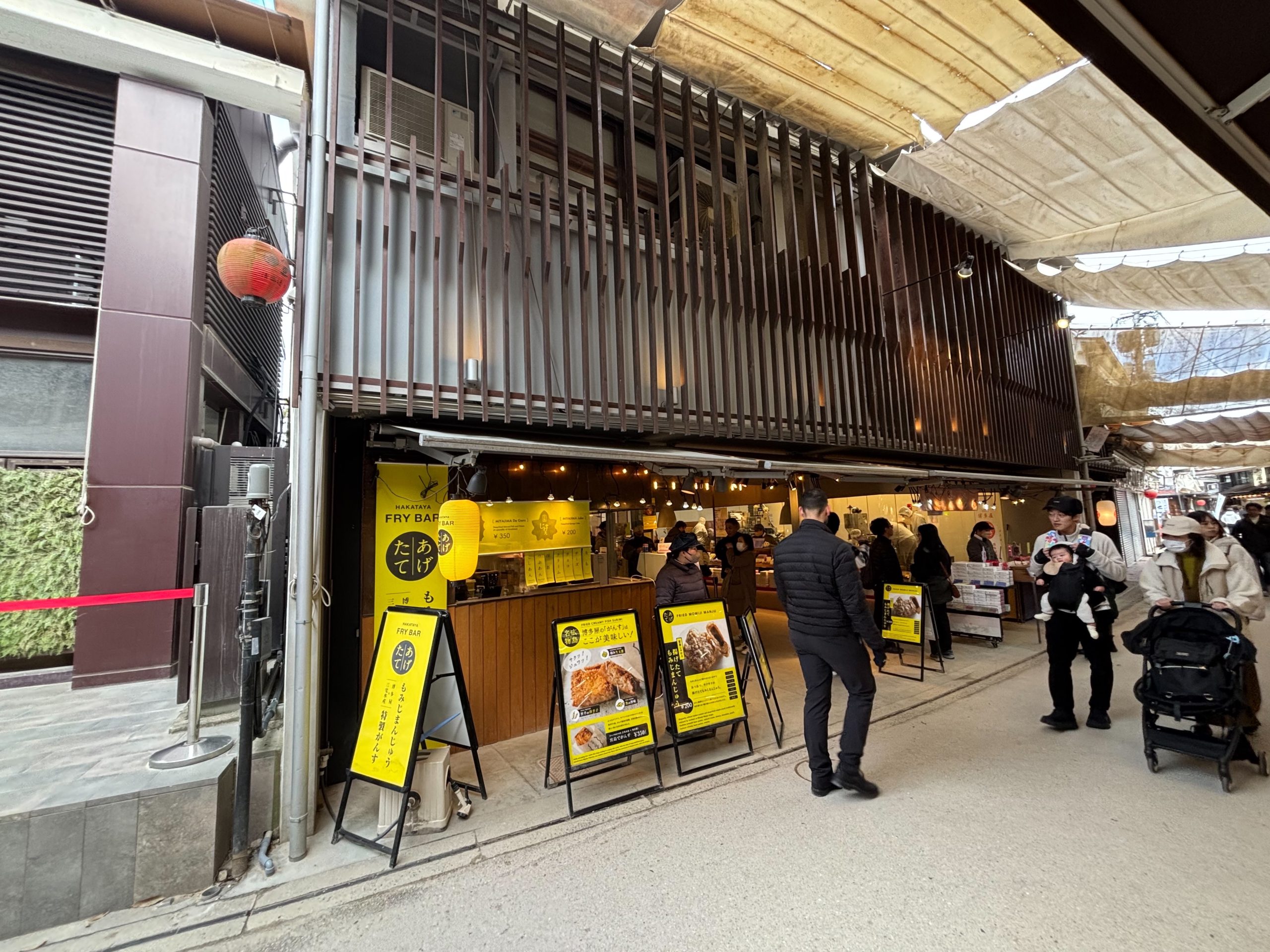
- Omotesando Shopping Street: The island’s main covered shopping street is perfect for snacks, souvenirs, and a rest stop after the uphill climb. Momiji manju, age momiji (deep-fried maple leaf cakes), and oysters are all within easy reach.
- Natural details: Before you leave the Senjokaku area, look for the large cycad palm (sōtetsu) growing just in front of the hall — a striking subtropical plant that adds to the tropical feel of the hillside in warmer months.
Our family’s go-to route is Itsukushima Shrine → Senjokaku → Five-Story Pagoda → Omotesando for snacks and souvenirs. It flows naturally, takes in the main sights, and keeps kids engaged from start to finish.
FAQ
How long should I spend at Senjokaku?
Plan on 20 to 40 minutes to explore the interior — the ema paintings, the shamoji, the structural details — and another 10 to 20 minutes to take in the views from the open sides of the hall. With children, you’ll likely want a little extra time, but the breezy space makes it easy to linger without anyone getting restless.
Can I get a goshuin (shrine stamp) here?
Yes. Goshuin are available during visiting hours, with the stamp office closing at 4:00 p.m. — thirty minutes before the hall itself closes. If collecting goshuin is part of your visit, make sure to arrive with enough time before 4 p.m.
Is photography allowed inside?
Yes, photography is permitted throughout the hall. The open structure offers beautiful framing opportunities, and the views toward Itsukushima Shrine and the sea are excellent for photos. Be considerate of other visitors when positioning yourself, and keep tripods out of the main thoroughfares.
Is Senjokaku suitable for young children?
Very much so. The hall is spacious, airy, and fascinating to kids who aren’t sure what to make of a building with no ceiling and no walls. The wide wooden floor gives children room to move around. The main consideration is the stone staircase on the approach — it’s manageable but requires some care with small children. A front carrier is recommended over a stroller.
Is Senjokaku accessible for wheelchair users or stroller users?
The stone steps make the hall itself inaccessible by wheelchair, and strollers will need to be folded and carried up. The ferry terminal and areas around Itsukushima Shrine are better equipped for accessibility. It’s worth checking current conditions with the ferry operator or the island’s tourist information before visiting.
What is the best time of year to visit?
Senjokaku is worth visiting in any season. Summer brings cool breezes through the open structure when the rest of the island can feel hot. Spring offers cherry blossoms on the surrounding hillside — the area near the Tahoto Pagoda is a local favorite. Autumn brings brilliant foliage across the mountain behind the hall. Even in winter, clear days offer spectacular views over the sea.
Are there places to eat near Senjokaku?
Omotesando Shopping Street, a short walk downhill toward the ferry terminal, has a wide range of snack stalls and restaurants. After a visit to Senjokaku, it’s an easy and enjoyable next stop for age momiji (deep-fried maple leaf cakes), oysters, and local sweets.
Wrapping Up
Senjokaku is the kind of place that quietly becomes a highlight of a Miyajima trip — not because it advertises itself loudly, but because it offers something genuinely rare: a vast, wind-swept wooden hall with four centuries of history, spectacular views over one of Japan’s most iconic shrines, and the peculiar beauty of a great ambition left unfinished. At ¥100 entry, it’s also extraordinary value. Pair it with Itsukushima Shrine and the Five-Story Pagoda for a morning or afternoon that will stay with you long after you’ve taken the ferry back to the mainland.
Our family comes back every year — sometimes more than once — and it never gets old. Whether it’s the wind through the rafters, the color of the old ema paintings, or simply the feeling of sitting on a 400-year-old wooden floor with the sea stretching out below, Senjokaku always delivers. We hope it does the same for you.
Admission fees, opening hours, and other practical details are subject to change. Please verify the latest information via official sources before your visit.
You Might Also Enjoy
After Senjokaku, head down to Omotesando Shopping Street for age momiji — Miyajima’s beloved deep-fried maple leaf snack, perfect for eating as you walk.
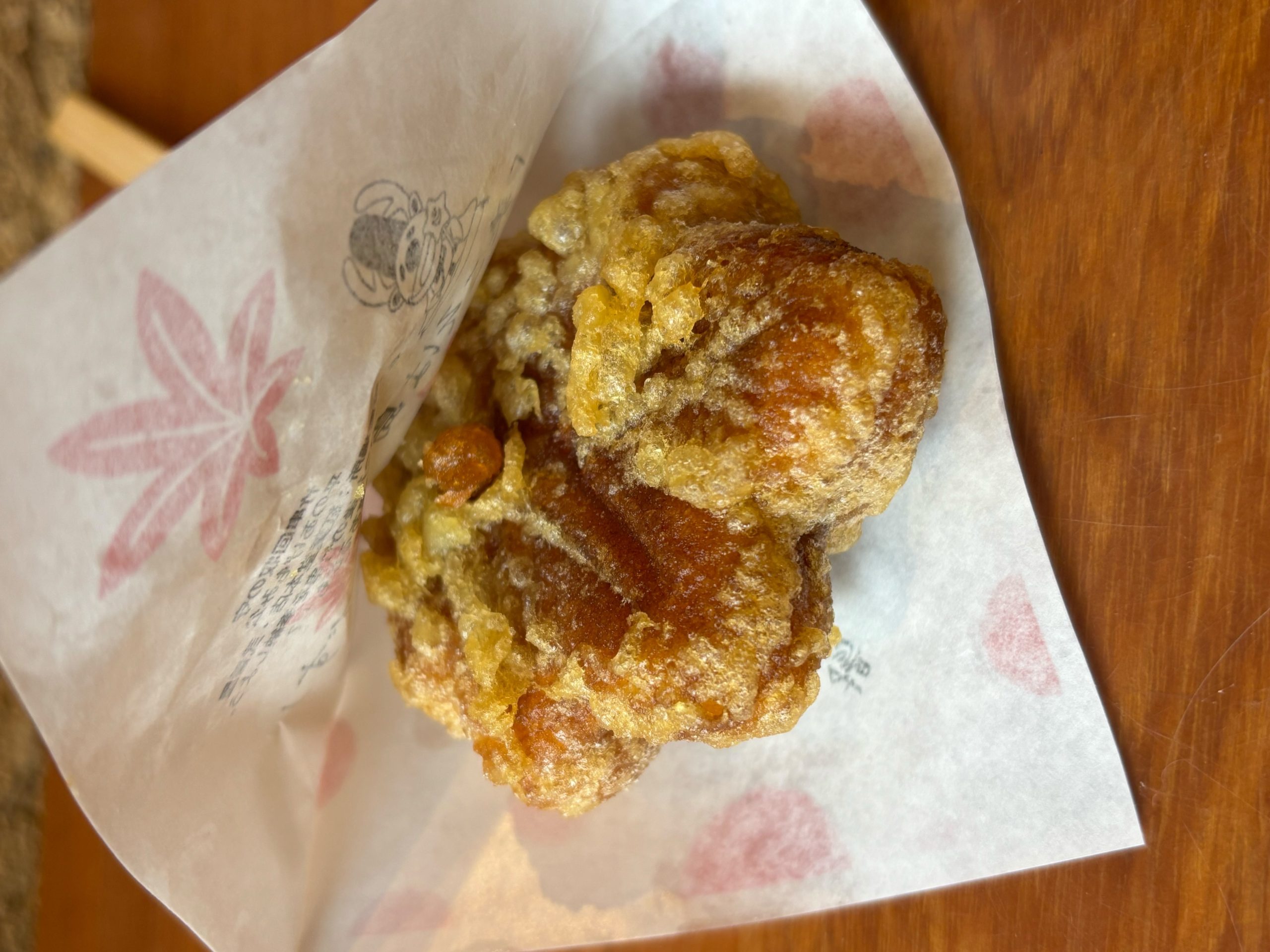
If you're looking for the ultimate Miyajima street food experience, ag...
For a sit-down meal after your sightseeing, Miyatoyo Honten is one of the island’s best spots for fresh Hiroshima oysters.
Discover Miyatoya Honten, Miyajima's only hand-baked momiji manju shop. Try the famous cheese filling and Belgian chocolate flavors fresh off the grill.
If you’re looking for a great breakfast on Miyajima, Shimaumai Pan at Miyajima Bessō is a popular island bakery worth knowing about.
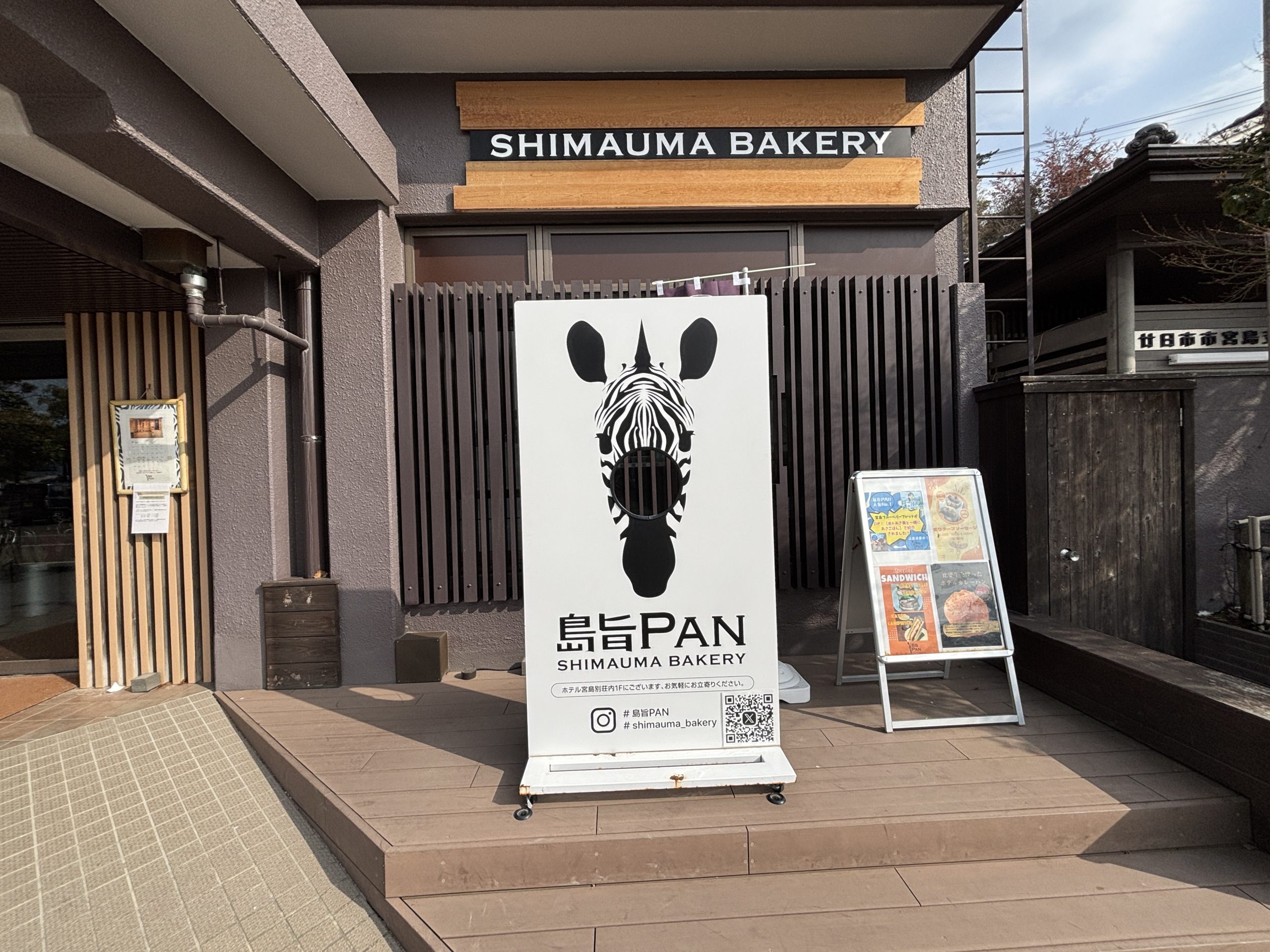
Just one minute on foot from the Miyajima ferry pier, Shima Uma Pan ...