Tucked into the sacred mountain of Misen on Miyajima Island, the Lovers’ Sanctuary is one of the most quietly romantic spots in all of Japan. Centered on a flame that has burned without interruption for over 1,200 years, this cluster of sites — including the Eternal Flame Hall (霊火堂, Reika-do) near the Misen main hall and the couples’ monument at Shishiiwa Ropeway Station — offers something that goes beyond ordinary sightseeing. It’s a place where ancient spiritual history and modern romance genuinely meet, and it’s one of those spots that stays with you long after the ferry ride home.
Update (October 2026): The Reikado Hall burned down in a fire on the morning of 20 May 2026. Daisho-in reports that the eternal flame itself was carried to safety and is still kept alight, and the temple plans to rebuild the hall on the same site by November 2027. Until then, do not expect to see the flame or to be served the hot water at the summit; ask at Daisho-in on the day. What happened, and what to expect on Mount Misen now.
Last summer, my husband and I came here for a rare grown-up date, and I left feeling genuinely moved. Whether you’re planning a romantic trip to Miyajima or simply want to understand what makes this mountain so special, this guide covers everything you need to know.
The Lovers’ Sanctuary on Mount Misen
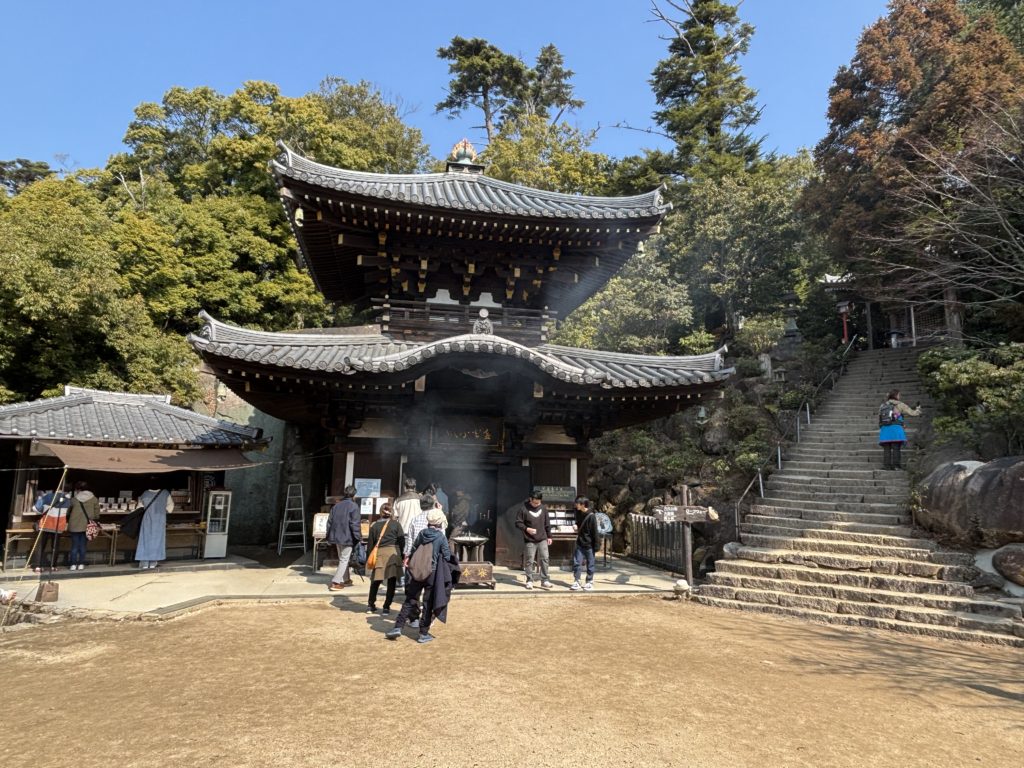
The Lovers’ Sanctuary on Mount Misen is located just beside the Misen Main Hall, about a 20-minute walk from Shishiiwa Station at the top of the ropeway. Its designation as one of Japan’s most romantic pilgrimage spots stems from an extraordinary piece of history: the fire that the Buddhist monk Kobo Daishi (Kukai) first lit here in 806 CE during a period of prayer and ascetic training has never once gone out. That flame — known as the Kiezu no Hi, or “Undying Fire” — has been tended and kept alive for over twelve centuries.
What makes this place especially resonant for many visitors is that the very same flame served as one of the source fires for the Flame of Peace at Hiroshima Peace Memorial Park. This single fire carries both a prayer for love and a prayer for peace — two things that, in this place, don’t feel at all separate.
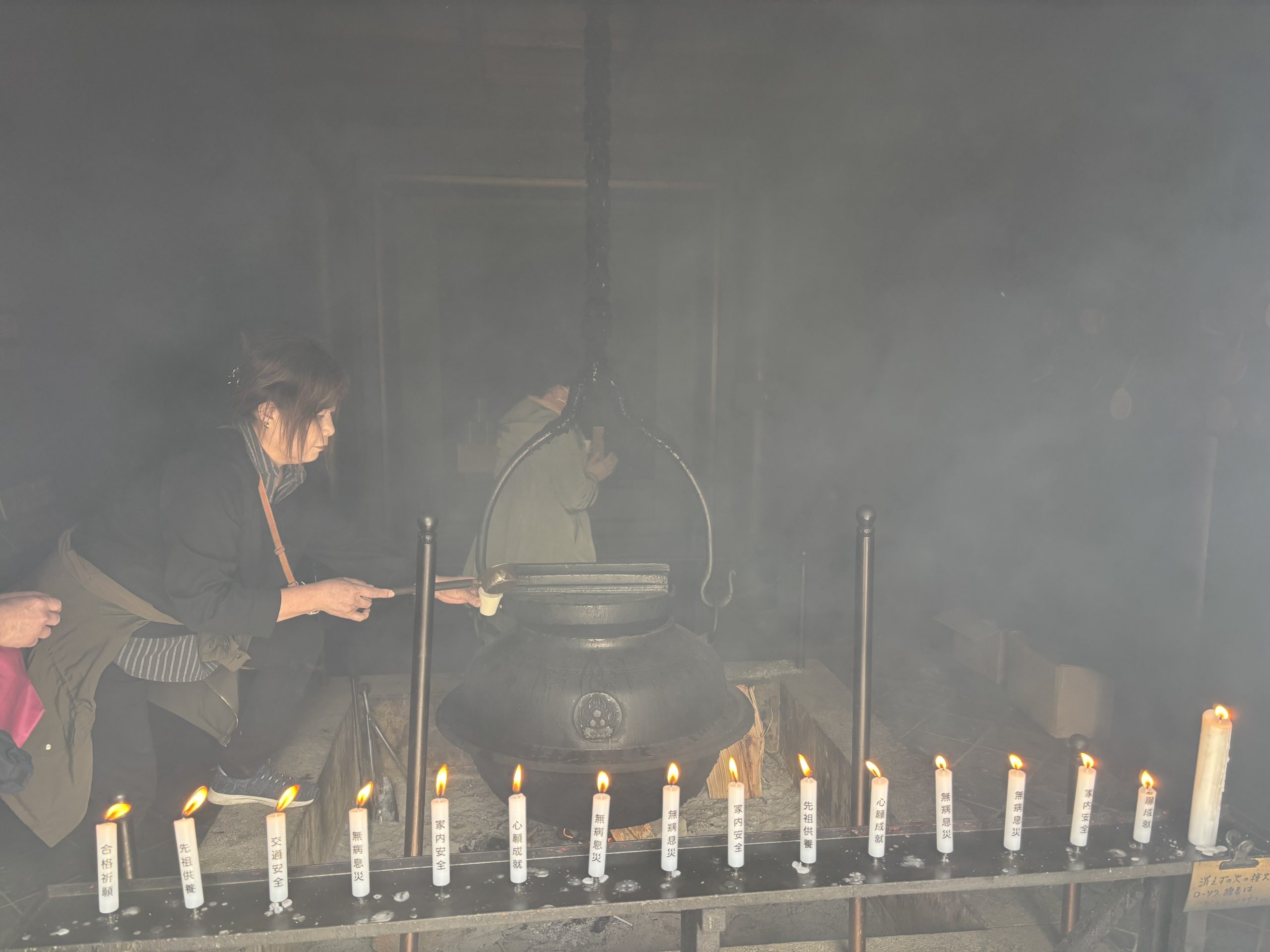
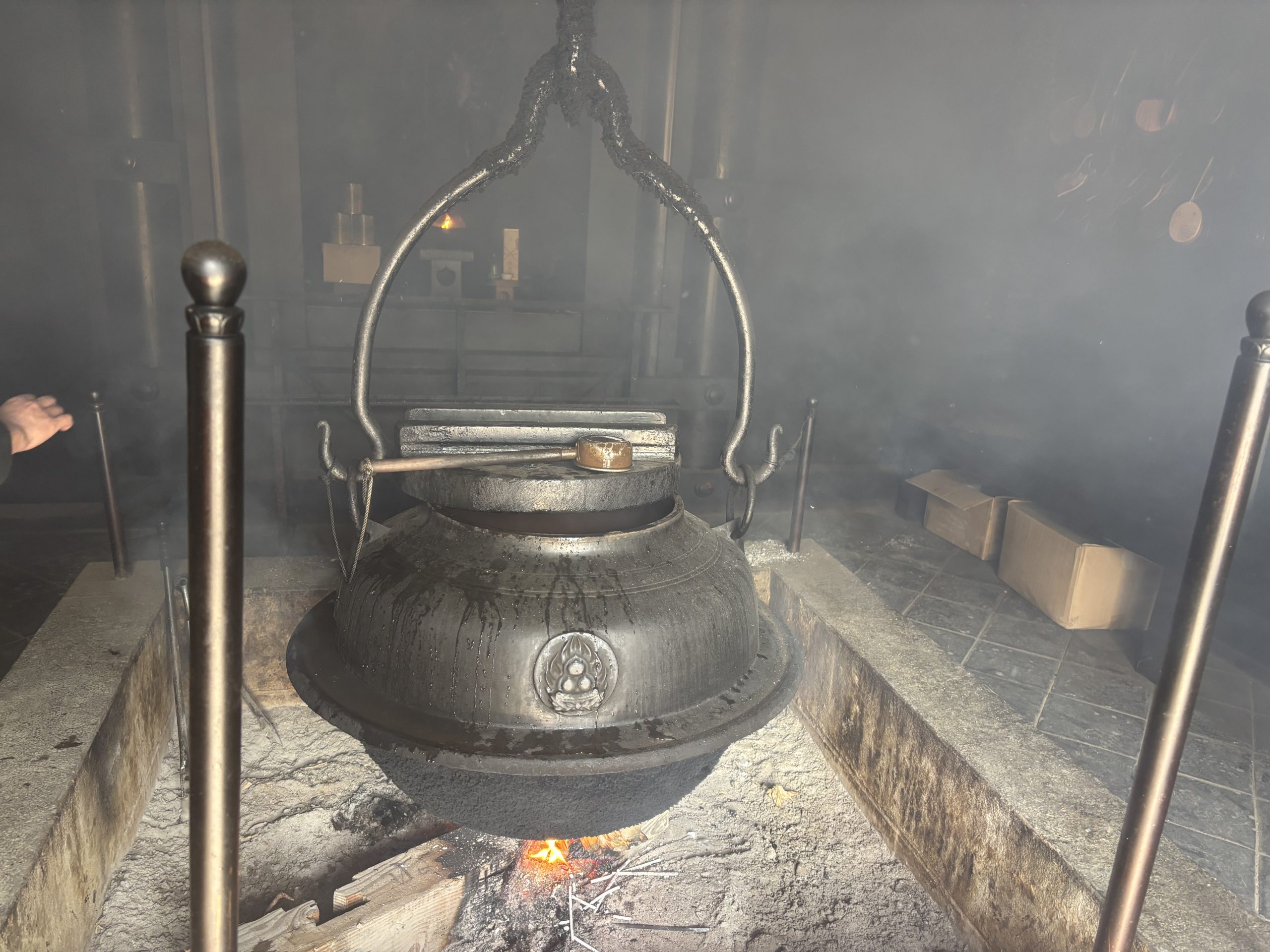
Inside the Eternal Flame Hall, the undying fire heated a large iron kettle of water at all times, until the hall burned down on 20 May 2026. This water — known as reisui, or sacred holy water — is believed to cure illness and bring good fortune, and before the fire visitors could drink it free of charge from paper cups provided at the hall. It sometimes appears brownish due to its natural iron content, which is completely normal. A local legend says that couples who drink it together will be bound to one another — something I may have quietly believed in while standing there with my husband.
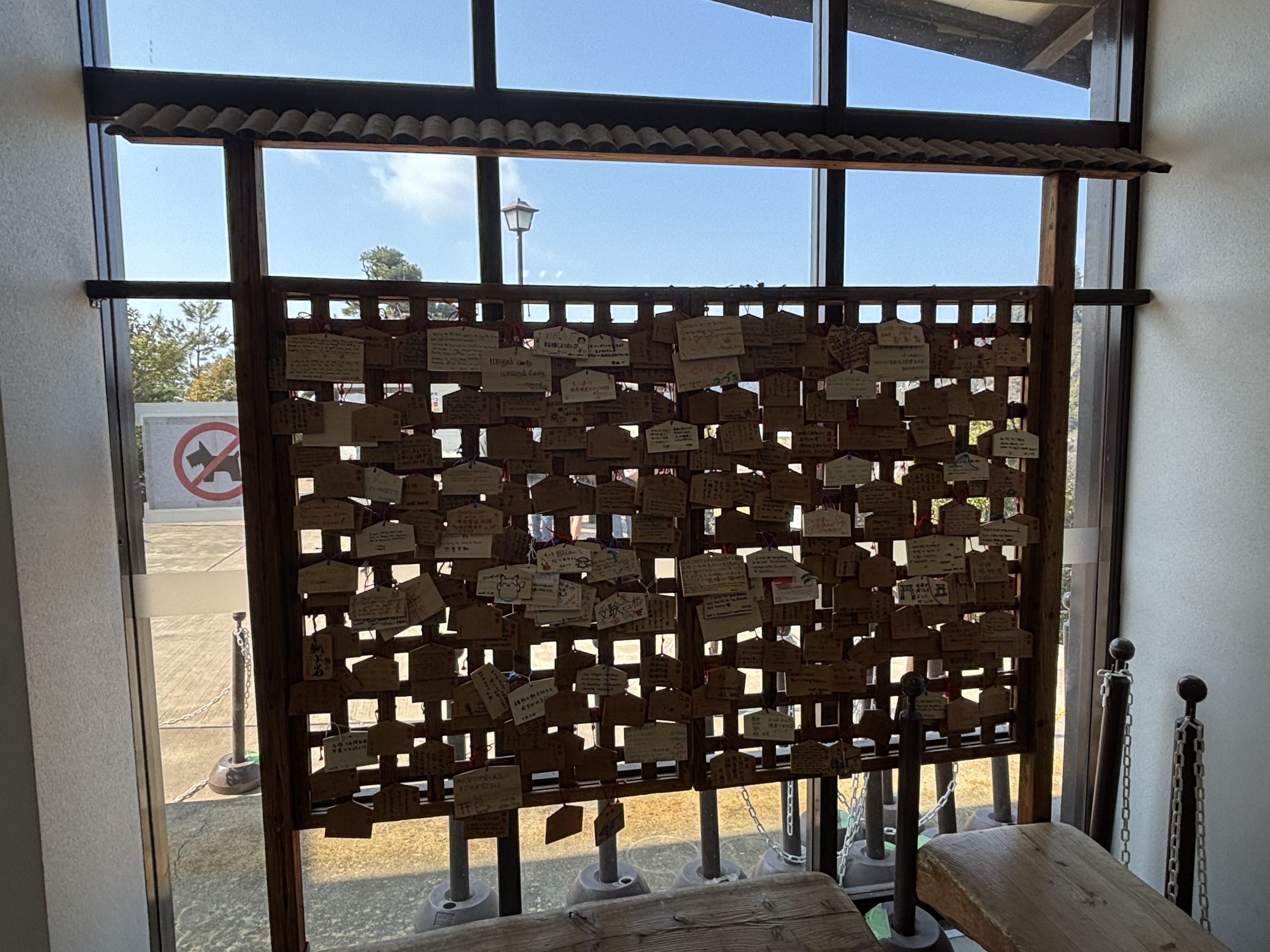
The grounds also have ema (wooden wishing plaques) available for purchase, including heart-shaped ones specifically for love and good relationships. Writing your wish together and hanging it before you leave makes for a genuinely meaningful moment.
One small practical note: the smoke from the incense and sacred fire does tend to cling to clothing. My older daughter greeted me at the door when we got home with, “Mom, you smell like a temple!” — which I took as a compliment. If you’re wearing something delicate, a light outer layer is worth considering.
To learn more about Mount Misen and its UNESCO World Heritage status — the Lovers’ Sanctuary is part of the same protected site — our full guide to Miyajima’s World Heritage designation is a great starting point.
Rising dramatically from the sea off the coast of Hiroshima, Itsukushi...
The Lovers’ Sanctuary designation comes from the fact that the Undying Fire of Reika-do has burned for over 1,200 years without interruption, which is seen as a symbol of undying love and connection. This combination of spiritual history and romantic symbolism is exactly what earned Misen its place on Japan’s official Lovers’ Sanctuary list.
There’s also a warm local tradition around the sacred water: even if you’re visiting alone or with family rather than a romantic partner, drinking the reisui is considered a blessing for health and happiness. The kettle is always on, the cups are always there, and it’s one of those small rituals that’s completely free and genuinely memorable.
Reika-do: The Eternal Flame Hall
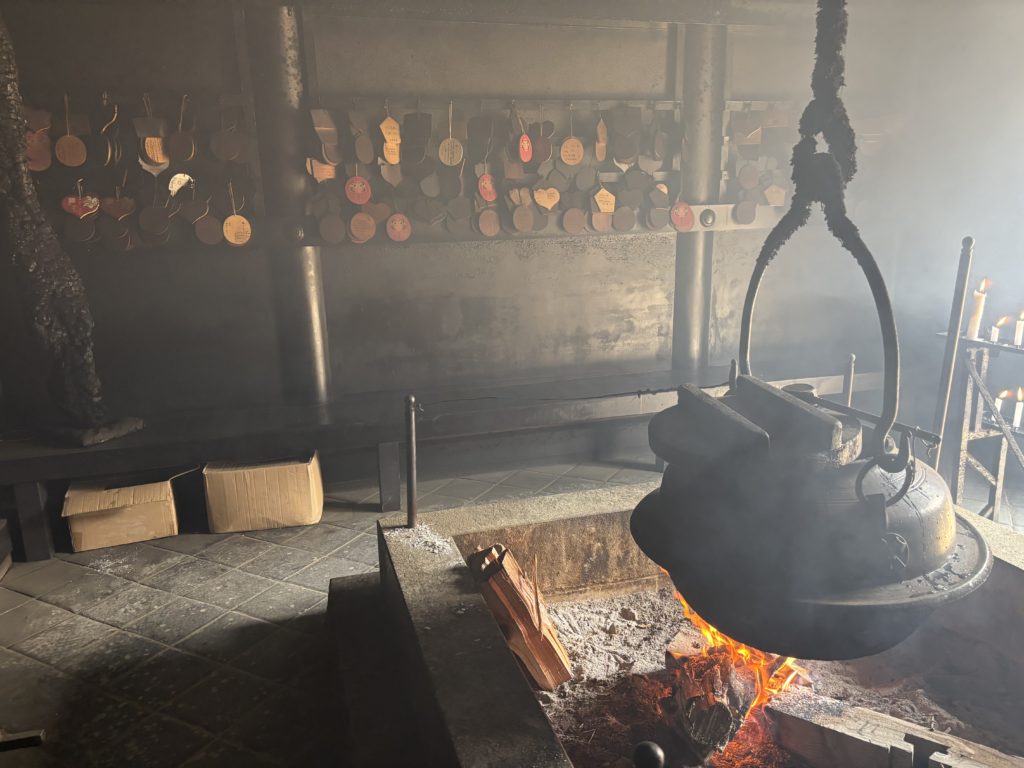
The Reika-do itself is a modest wooden hall whose exterior has been gradually blackened by centuries of smoke — a visual record of its unbroken history that gives the building an unmistakable presence. Step close and you can feel the warmth from the flame inside and catch the deep, earthy scent that permeates the whole area.
The hall’s sacred fire is also used each year as the source flame for local New Year’s fire ceremonies (tondo-yaki) held throughout the Hiroshima region — a tradition in which communities gather to safely burn the previous year’s good luck charms and decorations. The fact that this same fire connects a medieval monk’s mountain retreat, a peace memorial in a city rebuilt from devastation, and neighborhood winter festivals across the region is something worth sitting with for a moment.
For couples, the Reika-do offers ema plaques for love and relationship wishes, and hanging one together near the end of your visit is a lovely way to close out the experience. The hall can draw queues during peak seasons, so visiting early in the morning — or on a weekday between around 2 PM and 4 PM, which tends to be the quietest window — makes for a more peaceful atmosphere.
I visited here once with my husband and once with the whole family including our younger daughter, and both times felt genuinely special in different ways. My daughter looked around and said, “It feels holy in here” — and honestly, she wasn’t wrong.

What Is the Lovers’ Sanctuary Designation?
The Lovers’ Sanctuary (恋人の聖地, Koibito no Seichi) is a nationwide Japanese program that selects 100 especially romantic locations across the country as official “places worthy of a proposal.” The initiative was launched in April 2006 with the dual goals of celebrating romance and supporting local tourism and regional vitality. Sites are chosen through a careful selection process, and earning the designation is considered a meaningful mark of distinction.
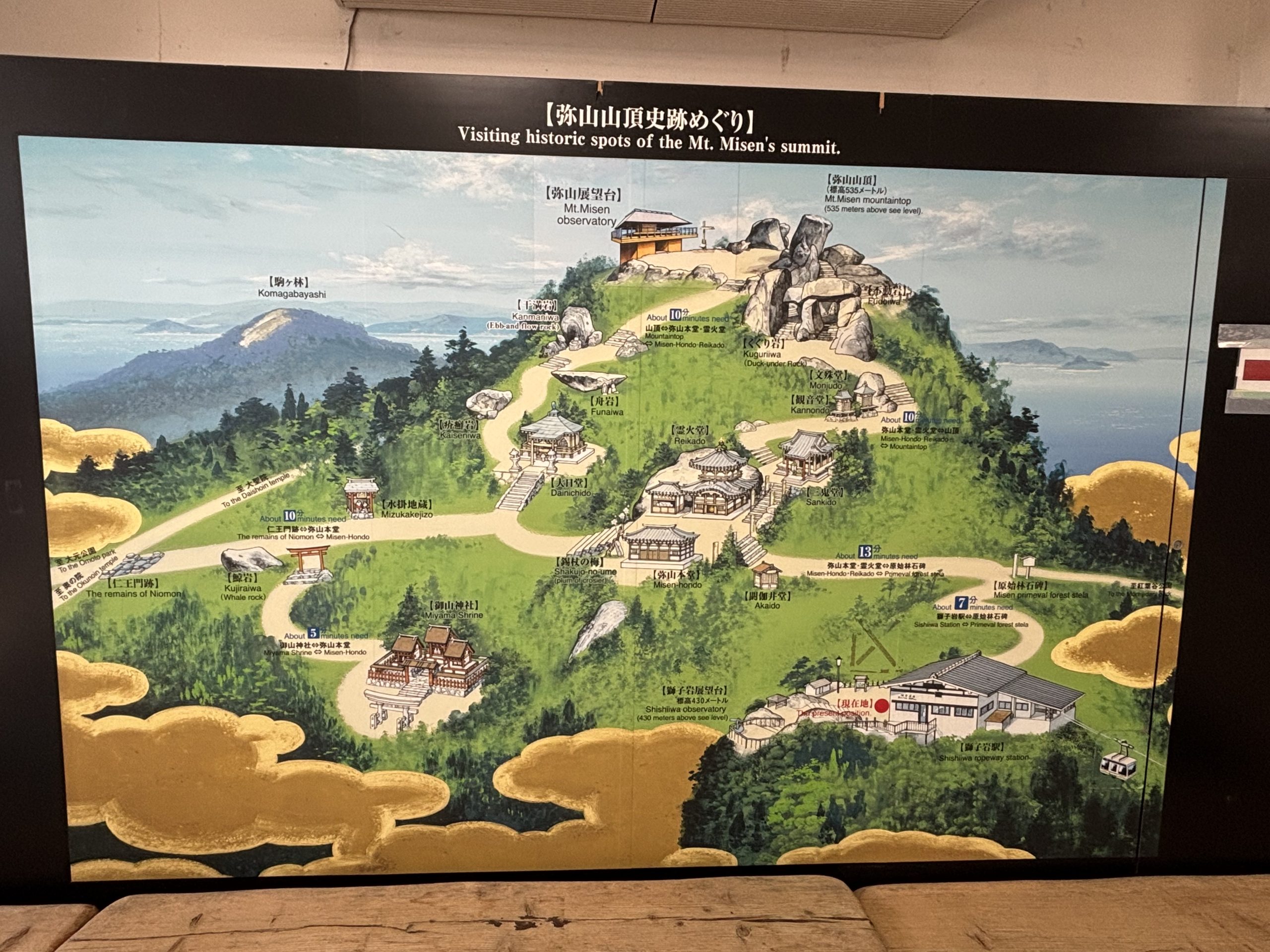
On Miyajima, the program covers two related spots: the Reika-do and its surroundings near the Misen Main Hall, and the Shishiiwa Station area at the top of the ropeway, which holds the status of a Lovers’ Sanctuary Satellite site. Together they create a natural progression for a romantic visit — ride the ropeway up, experience the monument at Shishiiwa, then walk through the mountain scenery to reach the Eternal Flame Hall.
The recommended flow — arrival by ropeway → monument experience at Shishiiwa → walk to Misen Main Hall → sacred water at Reika-do → ema wishes → views from the summit — takes a few hours and covers all the main highlights. The light over the Seto Inland Sea changes significantly by time of day, so if photography matters to you, the lighting in the late morning is especially beautiful. If you’re visiting during the November three-day holiday weekends when autumn foliage is at its peak, expect significant crowds — weekday visits are far more relaxed for couples.
Daisho-in Temple at the foot of Mount Misen is actually older than Itsukushima Shrine and is considered one of Miyajima’s most powerful spiritual sites — well worth combining with a visit to the Lovers’ Sanctuary.

Tucked into the forested hillside at the foot of Mount Misen, Daishoin...
The Flame of Vow Monument at Shishiiwa Station
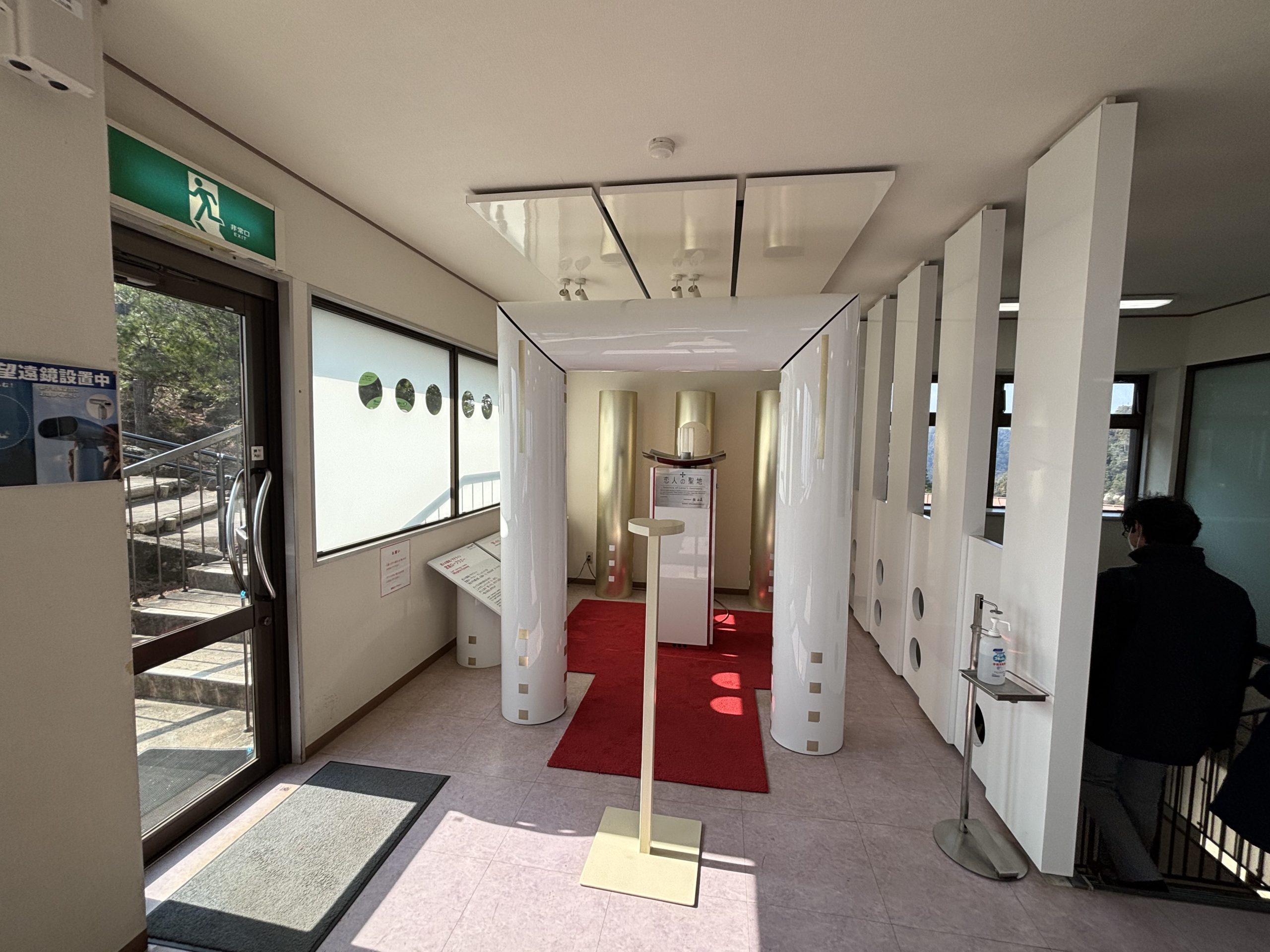
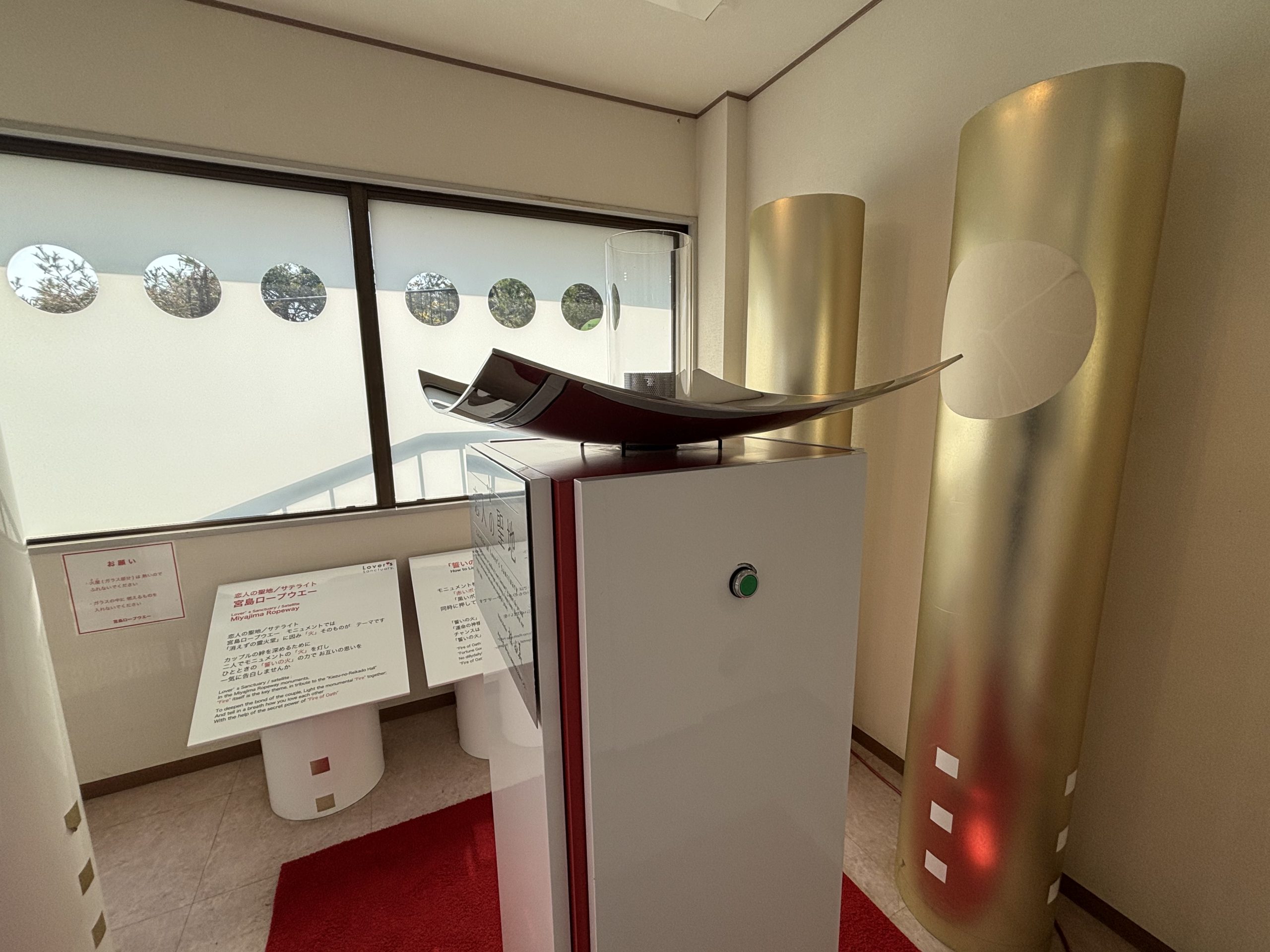
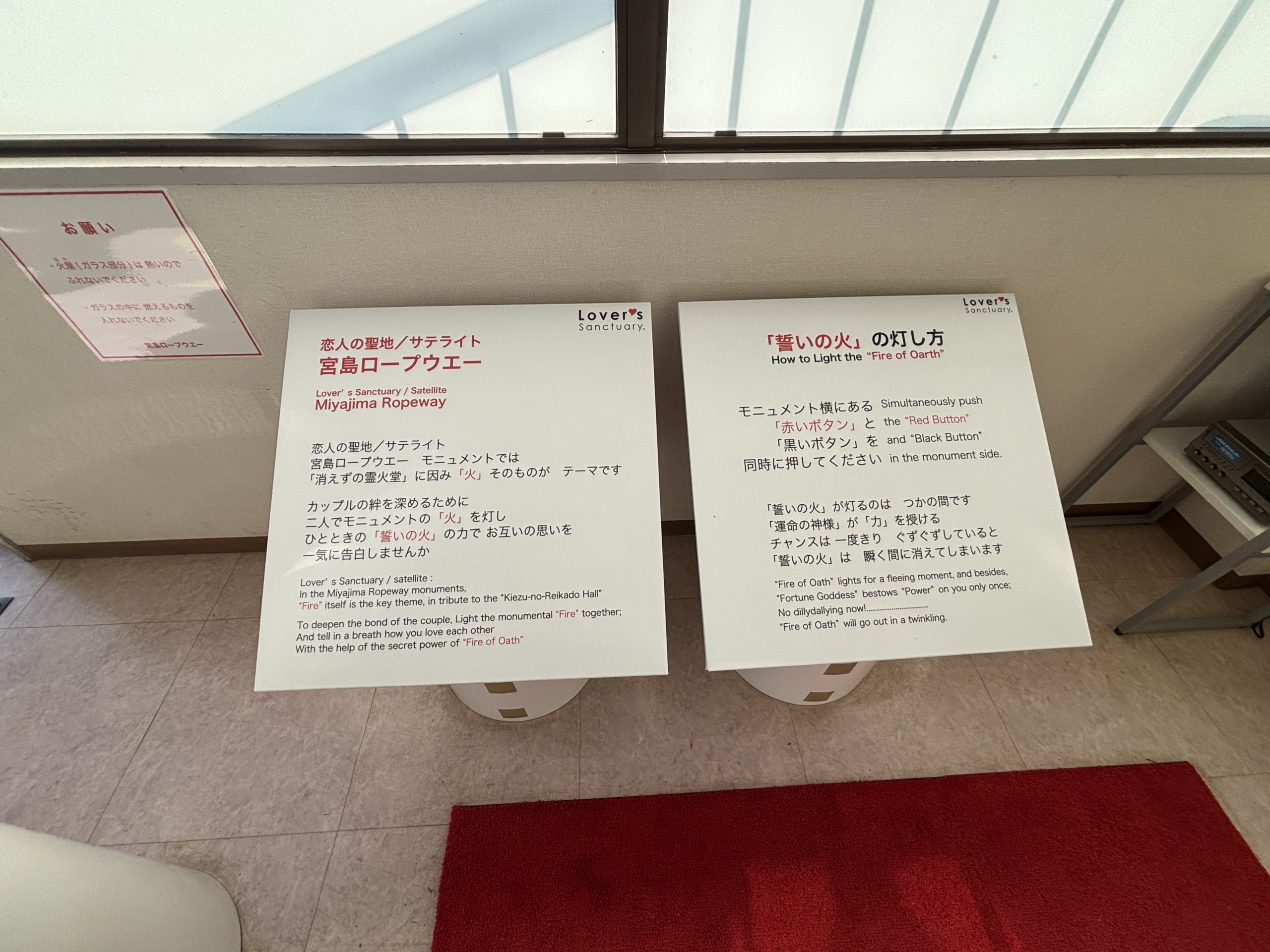
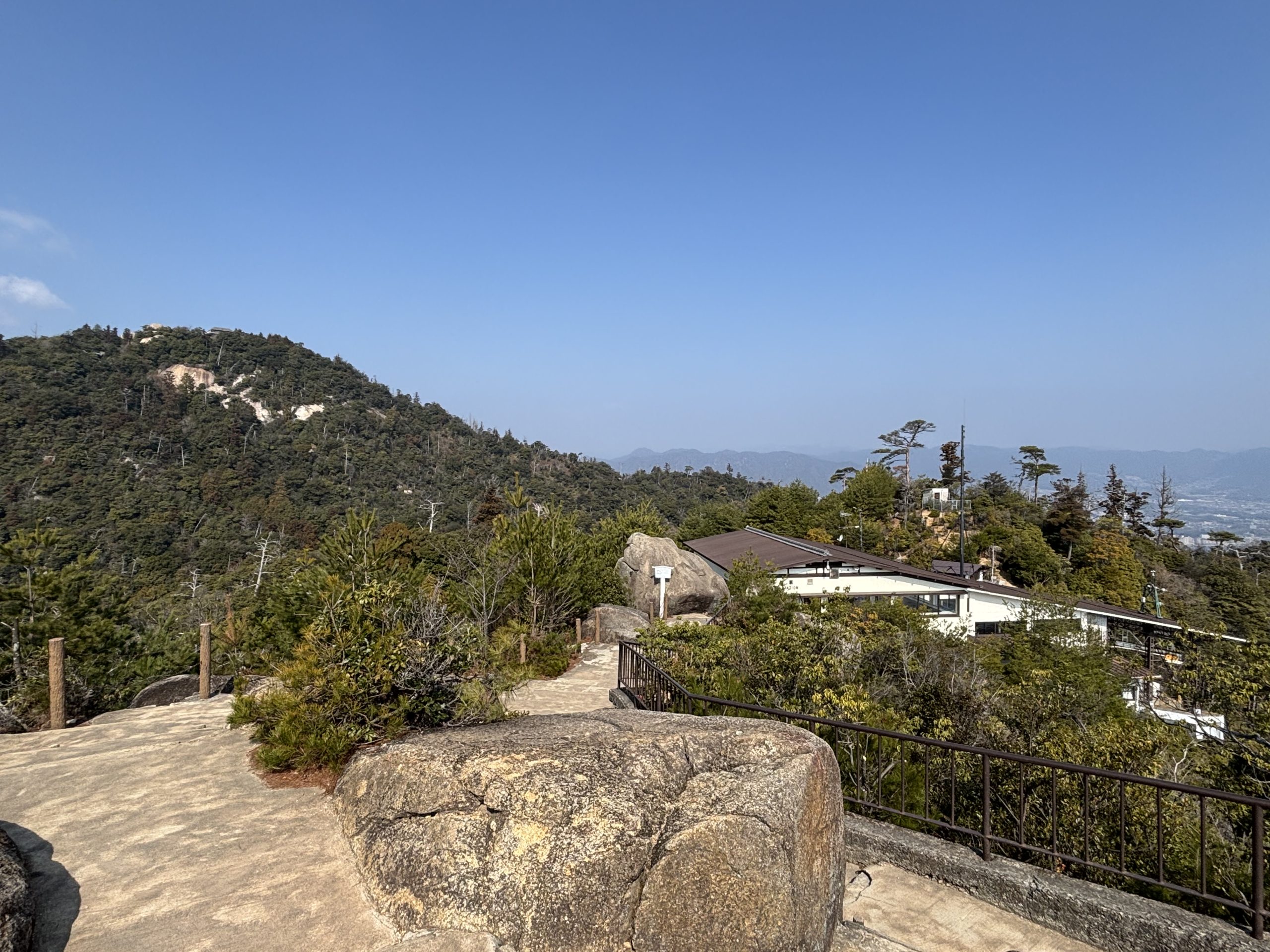
When your ropeway gondola arrives at Shishiiwa Station, one of the first things you’ll notice is a striking white-and-red monument near the platform: the “Flame of Vow” installation, part of the Lovers’ Sanctuary Satellite designation for this station.
The way it works is simple and genuinely fun: two people stand facing each other on opposite sides of the monument. The woman presses the red button; the man presses the black button. When you press simultaneously, a flame lights up in the center between you. Getting the timing right takes a moment of focus and coordination — which, depending on your relationship, is either charming or hilarious. My husband and I took a few tries, which ended up being the most fun part.
The monument’s design — bold white and red — has an almost ceremonial feeling, a bit like a small wedding chapel dropped unexpectedly onto a mountain. It’s a bit theatrical, and that’s exactly what makes it memorable.
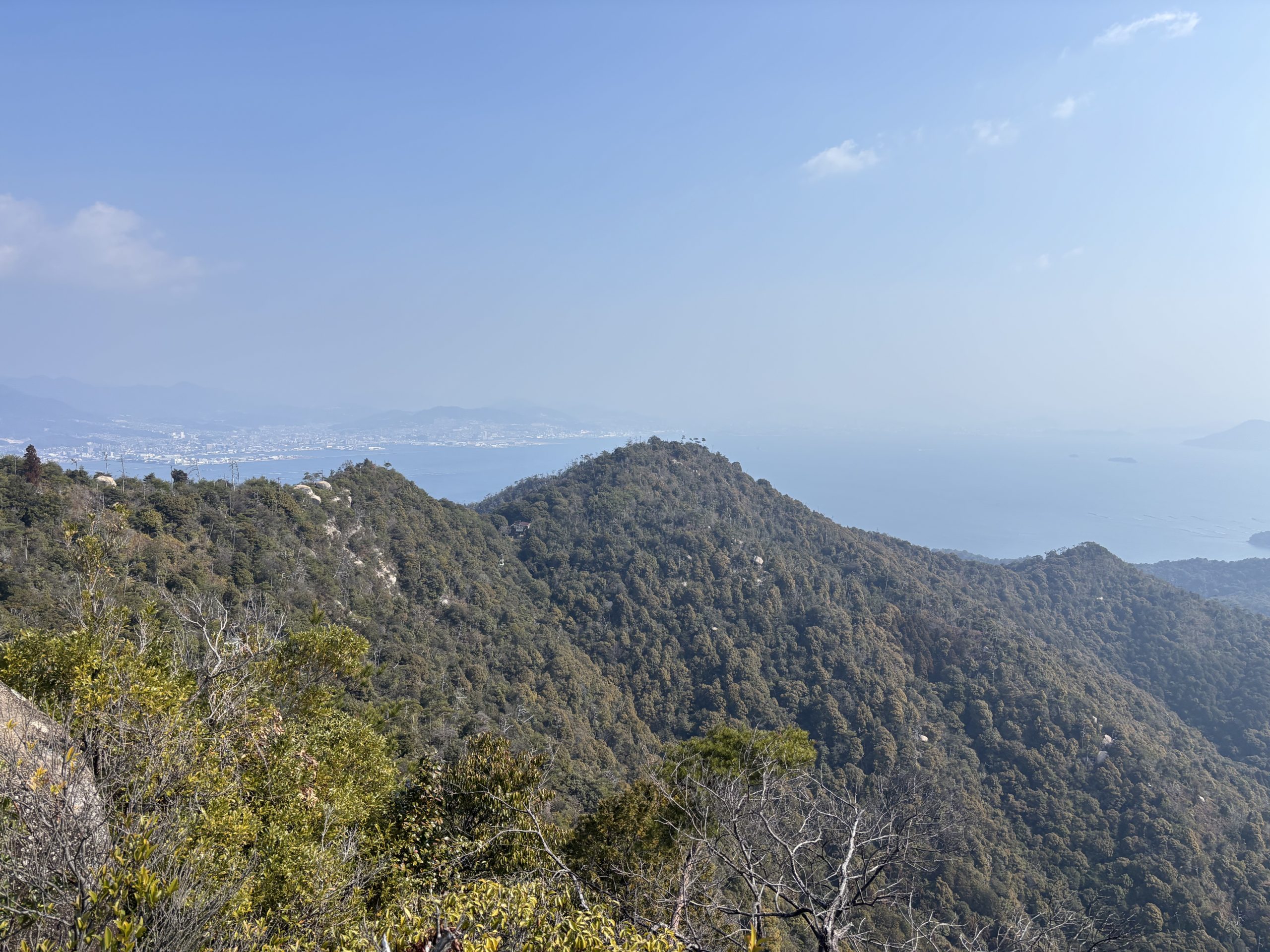
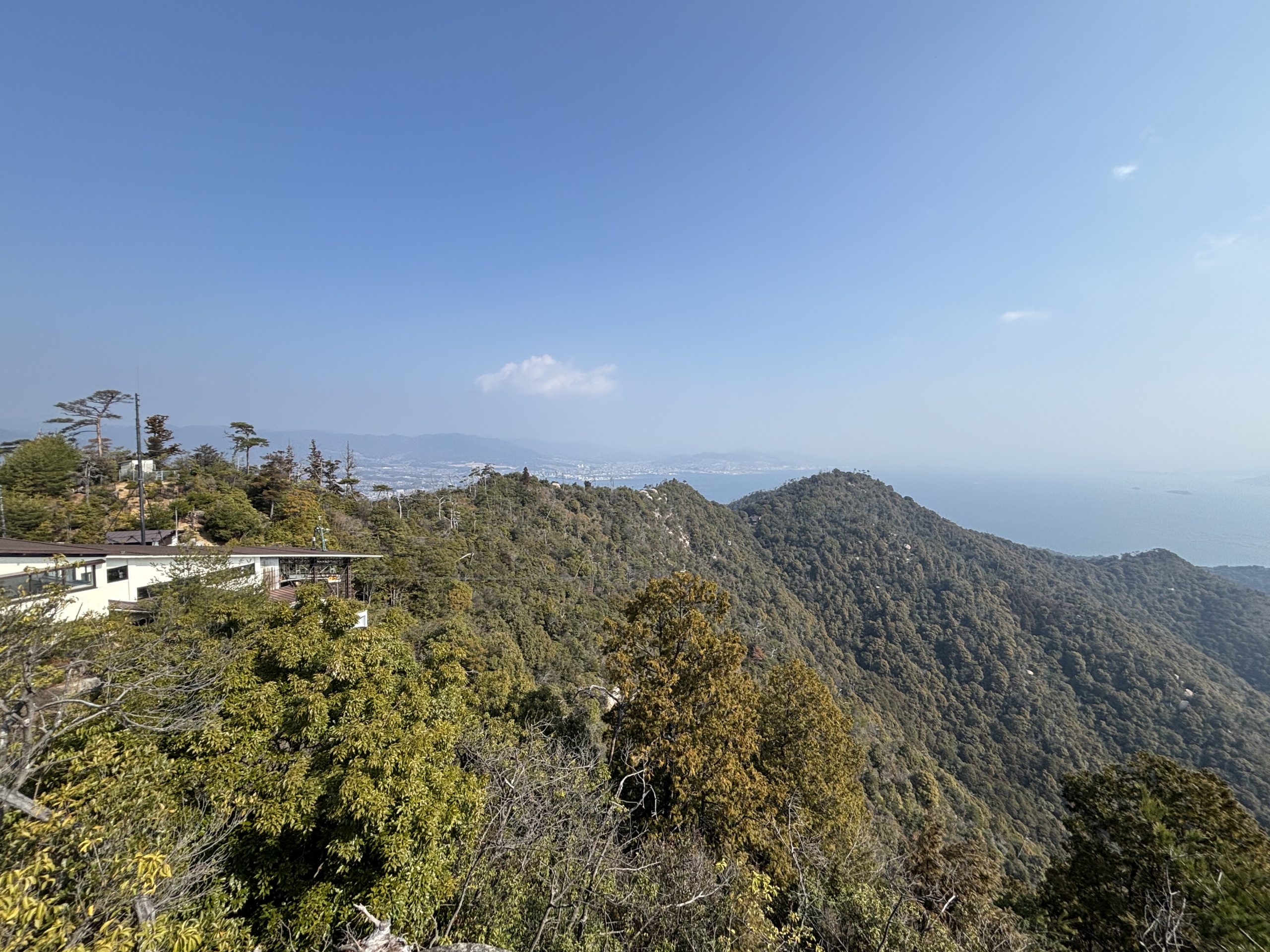
A few practical tips for Shishiiwa Station: the viewing platforms around the station offer sweeping views of the Seto Inland Sea, but wind can be strong on exposed days, so a hair tie and a light jacket are worth having. For the best sea views on the ropeway ride itself, aim for a window seat on the left side in the direction of travel — the panorama of the island-dotted sea from that angle is stunning, and couples who care about photos will want to plan for it.
One more thing: rainy days on Miyajima can actually be wonderfully atmospheric. The mountain empties out considerably, and there’s something genuinely romantic about having the summit nearly to yourselves in the mist. Don’t automatically write off a cloudy forecast.
Getting to Miyajima and Reaching Mount Misen
Miyajima Island is accessible only by ferry — no bridges, no roads from the mainland. Two ferry companies operate the crossing from Miyajimaguchi: JR West Miyajima Ferry and Miyajima Matsudai Kisen. Both charge approximately ¥180 for a one-way adult fare, and both offer frequent departures throughout the day. A key difference for first-time visitors: certain JR Ferry departures follow a route that passes very close to the Great Torii Gate on the outward leg. If you want that iconic up-close view of the gate from the water — and on a date, you really do — the JR Ferry is the one to take.
Once on the island, head to the Momijidani (Maple Valley) area, where a free shuttle bus connects to Momijidani Ropeway Station. From there, the Miyajima Ropeway travels in two stages: a gondola (8-person capacity) followed by a larger aerial tramway (30-person capacity), with a brief transfer at the midpoint station. Total ropeway ride time is about 14 minutes, and the views across the Seto Inland Sea become more spectacular with every meter of altitude.
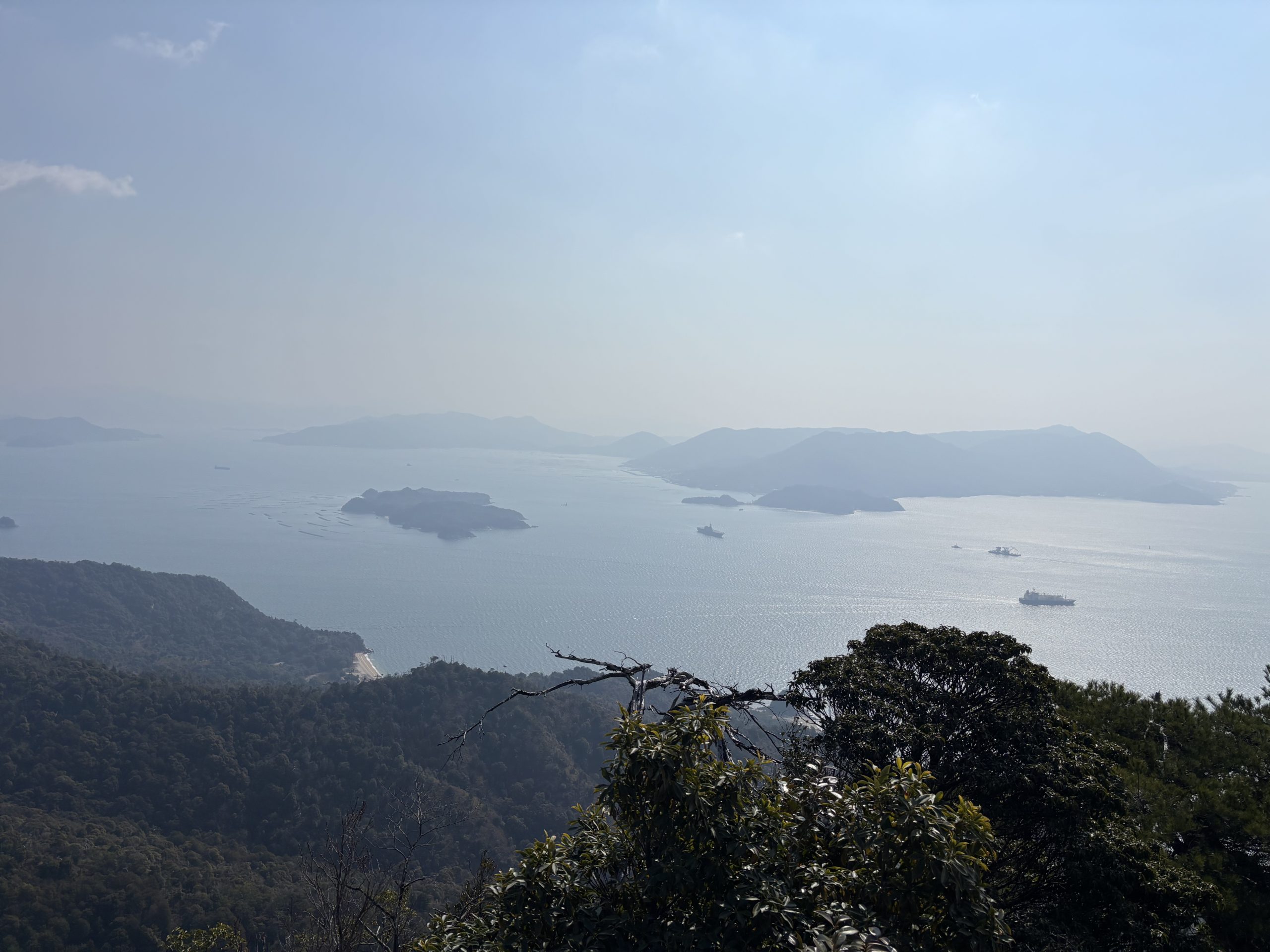
From Shishiiwa Station at the top, it’s about a 20-minute walk along a maintained mountain path to the Misen Main Hall and Reika-do. Allow an additional 30 minutes if you want to continue to the summit, which rewards the extra effort with a full 360-degree panorama of the Seto Inland Sea and its countless islands.
Comfortable walking shoes and a water bottle are essential — the path involves some uneven terrain and stone steps. The ropeway requires its own ticket purchased separately from the ferry.
Itsukushima Shrine is the other essential stop on any Miyajima visit — most couples combine the shrine and the Lovers’ Sanctuary on the same day. Our guide to Itsukushima Shrine covers everything from the history to the tidal flooding effect.
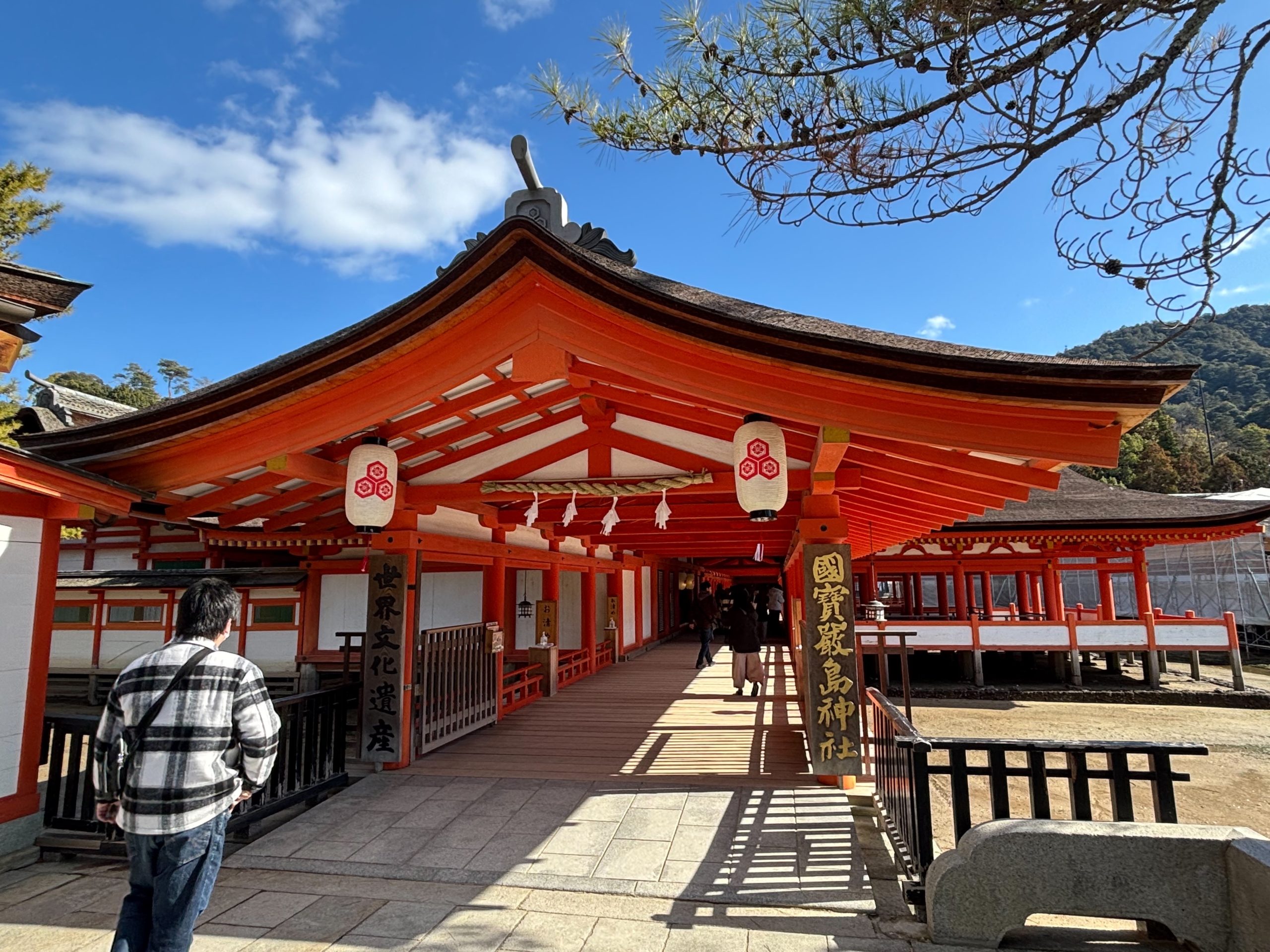
Itsukushima Shrine (Itsukushima-jinja, 厳島神社) is a Shinto shrine built ...
Beating the Crowds: Best Times to Visit
Miyajima is popular year-round, but certain periods are significantly more crowded than others. The autumn foliage season (mid to late November), Golden Week (late April to early May), Obon (mid-August), and the New Year period are the busiest times of year. The ropeway in particular tends to build long queues for the descent in the afternoon — arriving at the ropeway station between 8:30 and 10:00 AM gives you the most comfortable experience and the best chance of beating the lines.
Ferry terminals and parking at Miyajimaguchi fill up quickly during peak periods; using public transportation or arriving at least an hour before your intended departure time is strongly recommended. Around May 5th, traffic on surrounding roads can be heavy due to regional events — direct ferry services from Hiroshima city or Kure are worth considering as an alternative on those days.
Spring break (late March to early April) is statistically the busiest stretch of the year, so if you want a relaxed, unhurried romantic visit, that window is best avoided. The sweet spot for couples is weekdays in early spring (before the cherry blossom rush), early summer, or early autumn — the island is beautiful and crowds are manageable.
Local tip: parking near Miyajimaguchi tends to open up behind the “Momiji Honpo” shop before 8:00 AM. An early-morning date is sometimes the most memorable kind.
Pets and Accessibility on Miyajima
Traveling with a pet or with limited mobility? Here’s what to know. Leashed dogs and other pets are welcome in most outdoor areas of Miyajima, but inside Itsukushima Shrine’s covered corridors, animals must be carried or kept in a carrier — walking pets through the shrine precinct is not permitted. Miyajima is also home to a large population of wild deer, so keeping your dog on a short leash near deer areas is important for everyone’s safety, including in autumn when deer can be more territorial.
Also worth noting: Miyajima’s deer-flavored crackers (shika senbei) were discontinued in 2007 for the deer’s health — visitors are asked not to feed the deer anything.
For visitors using strollers or wheelchairs, the Miyajima Ropeway is not accessible, and strollers should be left at Momijidani Station. The island’s flat areas near the shrine and shopping street are navigable, but the mountain paths are steep and uneven. Plan your route accordingly, and don’t be afraid to prioritize the parts of the visit that work best for your group.
One family trick I picked up locally: small pinwheels from 100-yen shops are surprisingly effective at keeping the deer at a distance from small children. My kids swear by them.
Tips for Enjoying the Hike and Views
While the ropeway is the most popular way to access the upper mountain, Mount Misen actually has several hiking trails that approach from different directions — Momijidani, Daisho-in, Omoto, and Yuhi Kannon among them. Each varies in difficulty and estimated time. If you’re not confident in your fitness level, the most forgiving approach for most visitors is to take the ropeway up, walk from Shishiiwa Station to the main hall and Reika-do, and then continue to the summit if energy allows — descending by ropeway. This gives you the full romantic experience without overextending.
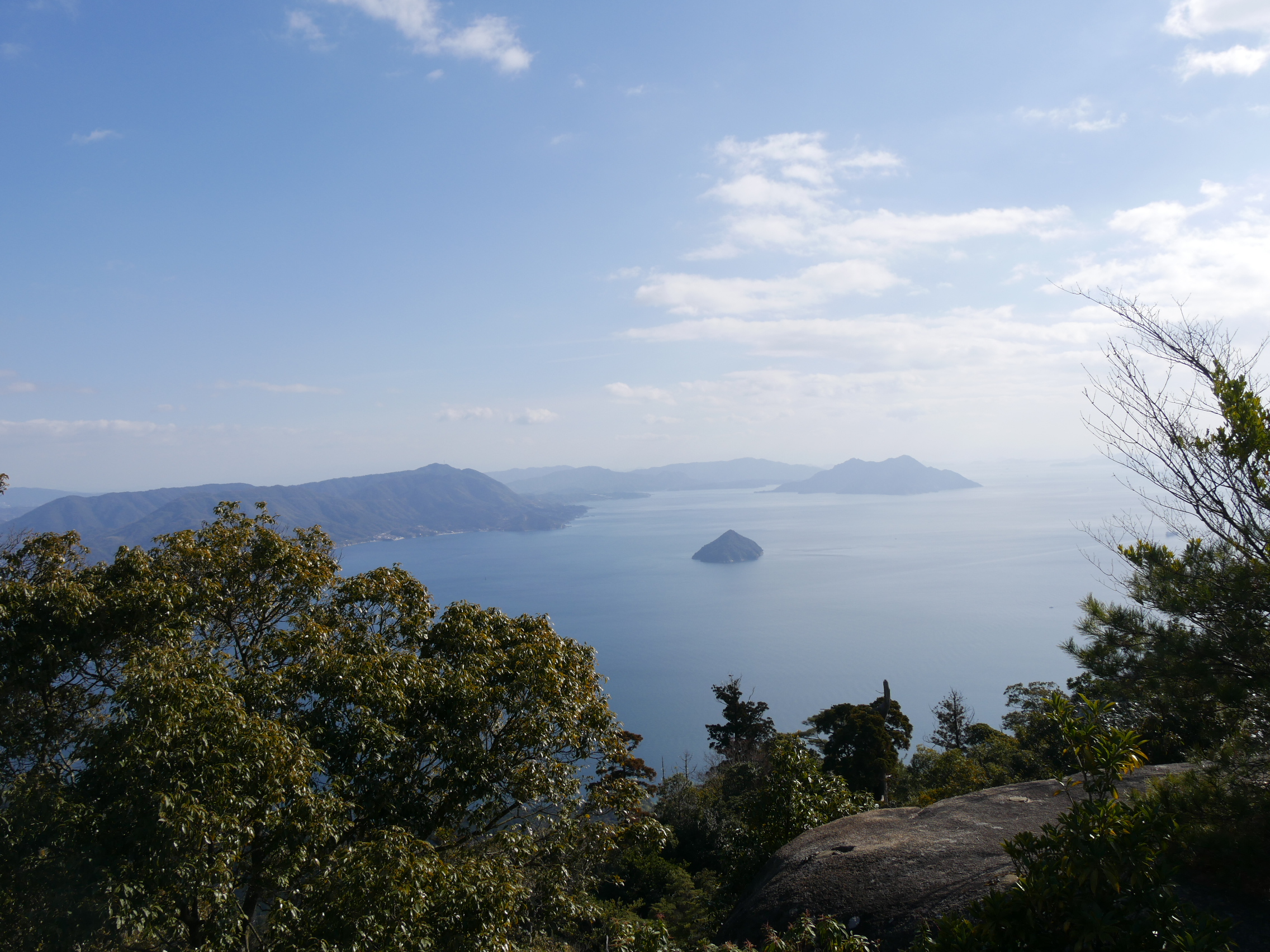
The view from the summit on a clear day is genuinely breathtaking: a 360-degree panorama of the Seto Inland Sea, with dozens of islands stretching in every direction. It’s the kind of view that makes you understand why this mountain has been considered sacred for over a thousand years — and why Ito Hirobumi, Japan’s first prime minister, reportedly declared it one of the finest views in the country.
For cherry blossom season, a local tip worth knowing: the area around the Tahoto Pagoda on the lower slopes is considered a local secret for spring blossoms, away from the main crowds. Worth exploring if you’re visiting in late March or early April.
After your visit to the mountain, Omotesando Shopping Street is the perfect place to wind down with some food and souvenirs — the street runs right through the heart of Miyajima’s shopping and eating scene.
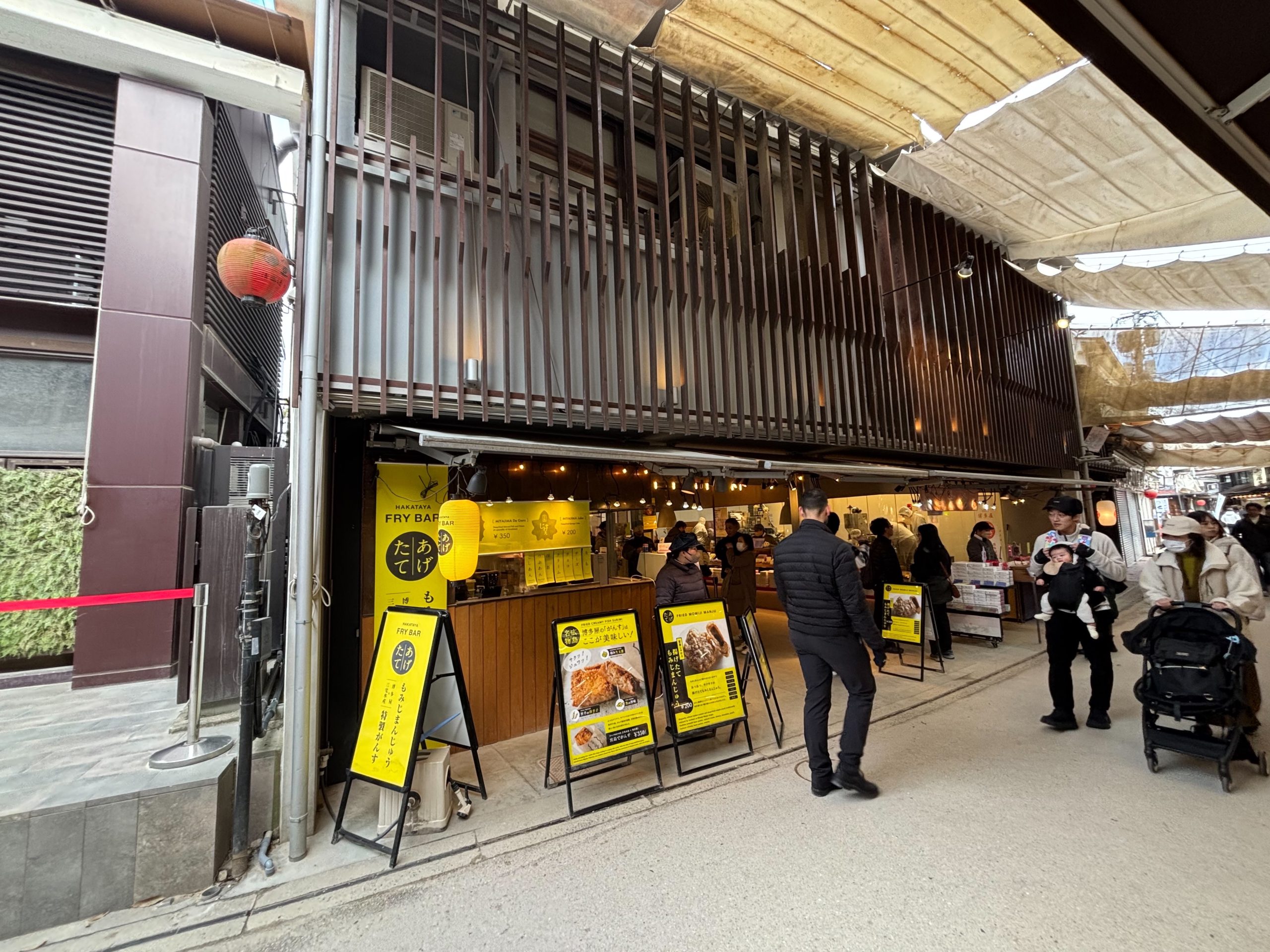
Miyajima's main shopping street — known locally as Omotesando — is a l...
FAQ
Can anyone drink the sacred water at Reika-do?
Not at the moment. The Reika-do hall burned down on 20 May 2026 and is being rebuilt on the same site, with completion planned for November 2027. Before the fire, paper cups were provided and the sacred water (reisui) was free for all visitors, drawn from a large iron kettle kept continuously heated by the Undying Fire. The water sometimes appears brownish due to its natural iron content, which is completely harmless. A local legend holds that couples who drink it together will be united.
How does the Flame of Vow monument at Shishiiwa Station work?
Stand facing each other on opposite sides of the monument: one person presses the red button, the other presses the black button, and if you press at the same time, a flame lights up in the center. The timing takes a bit of coordination, which tends to make it more fun. The monument is indoors near the station platform.
Which side of the ropeway gondola has the best views?
Sit on the left side in the direction of travel for the widest views of the Seto Inland Sea and its islands. The scenery on that side is significantly more dramatic, especially as you gain altitude toward Shishiiwa Station.
How difficult is the walk from Shishiiwa Station to the summit?
From Shishiiwa Station it’s about 20 minutes to the Misen Main Hall and Reika-do, and roughly another 30 minutes to the summit from there. The final stretch to the summit involves some steep, uneven stone paths. Comfortable, supportive shoes and a water bottle are strongly recommended. The walk is manageable for most reasonably fit visitors, but it’s not a casual stroll.
What are the best times to visit to avoid crowds?
Weekday mornings — especially arriving at the ropeway before 10:00 AM — are consistently the most comfortable. Avoid November three-day holiday weekends (peak autumn foliage), Golden Week, Obon (around August 14-16), and spring break (late March to early April). Early summer and early autumn weekdays are ideal for a relaxed, romantic visit.
Which ferry should we take to Miyajima for a romantic trip?
Both JR West Miyajima Ferry and Miyajima Matsudai Kisen serve the crossing at roughly the same fare (approximately ¥180 one-way per adult). JR Ferry operates select departures that pass close to the Great Torii Gate, giving you a spectacular up-close view from the water on the outbound journey — highly recommended for first-time visitors and especially for couples.
Are pets allowed at the Lovers’ Sanctuary and on Mount Misen?
Pets are welcome in outdoor areas but must be carried or kept in a carrier inside Itsukushima Shrine’s covered corridors. The ropeway is not accessible for strollers or wheelchairs, and strollers should be checked at Momijidani Station. Keep dogs on short leashes near Miyajima’s wild deer population, particularly in autumn.
A Final Word
The Lovers’ Sanctuary on Mount Misen is one of those rare places that earns its reputation completely honestly. The Eternal Flame has been burning since 806 CE — long before anyone thought to call this place romantic — and the mountain’s spiritual atmosphere is real and unhurried. The couple-oriented experiences layered on top of that history, from the interactive monument at Shishiiwa Station to the ema plaques and sacred water at Reika-do, feel like natural additions rather than tourist gimmicks.
Plan for comfortable shoes, give yourself more time than you think you’ll need, and check ropeway and ferry schedules before you set out. My husband and I left saying we’d come back — and honestly, that’s the best review any place can get.
Facilities, hours, and fares are subject to change. Please verify current details directly with the relevant operators before your visit.
You Might Also Enjoy
Miyajima’s deep-fried momiji manju (age momiji) are the perfect street food for a walk after visiting the mountain — crispy outside, soft and sweet inside.
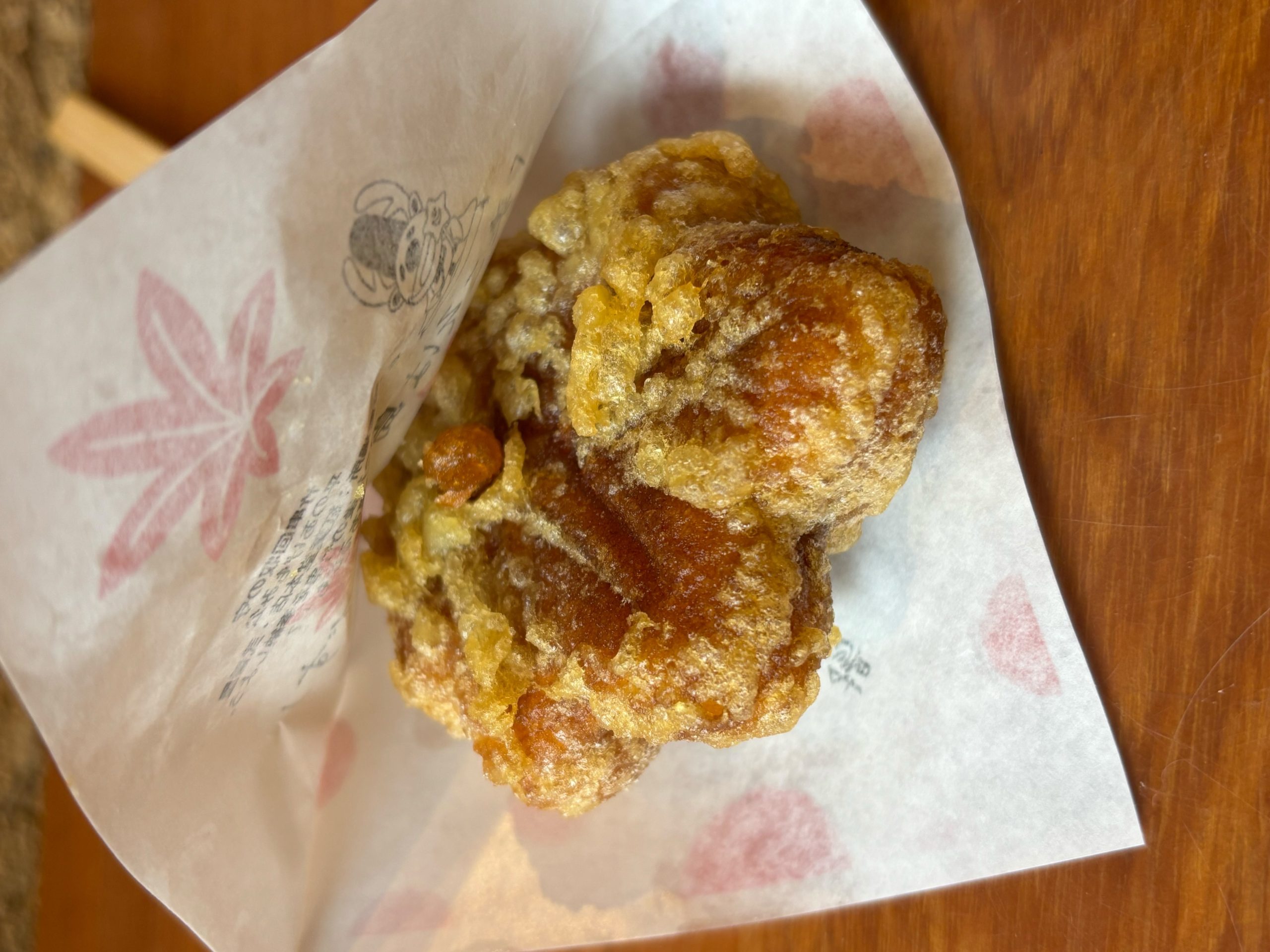
Momiji manju (もみじ饅頭) is a small sponge cake shaped like a Japanese map...
Fujiiya is one of Miyajima’s most beloved momiji manju shops, and freshly baked ones straight from the oven are an experience in themselves. (Most visitors don’t know you can get them hot off the iron at Yamaday’s second floor.)
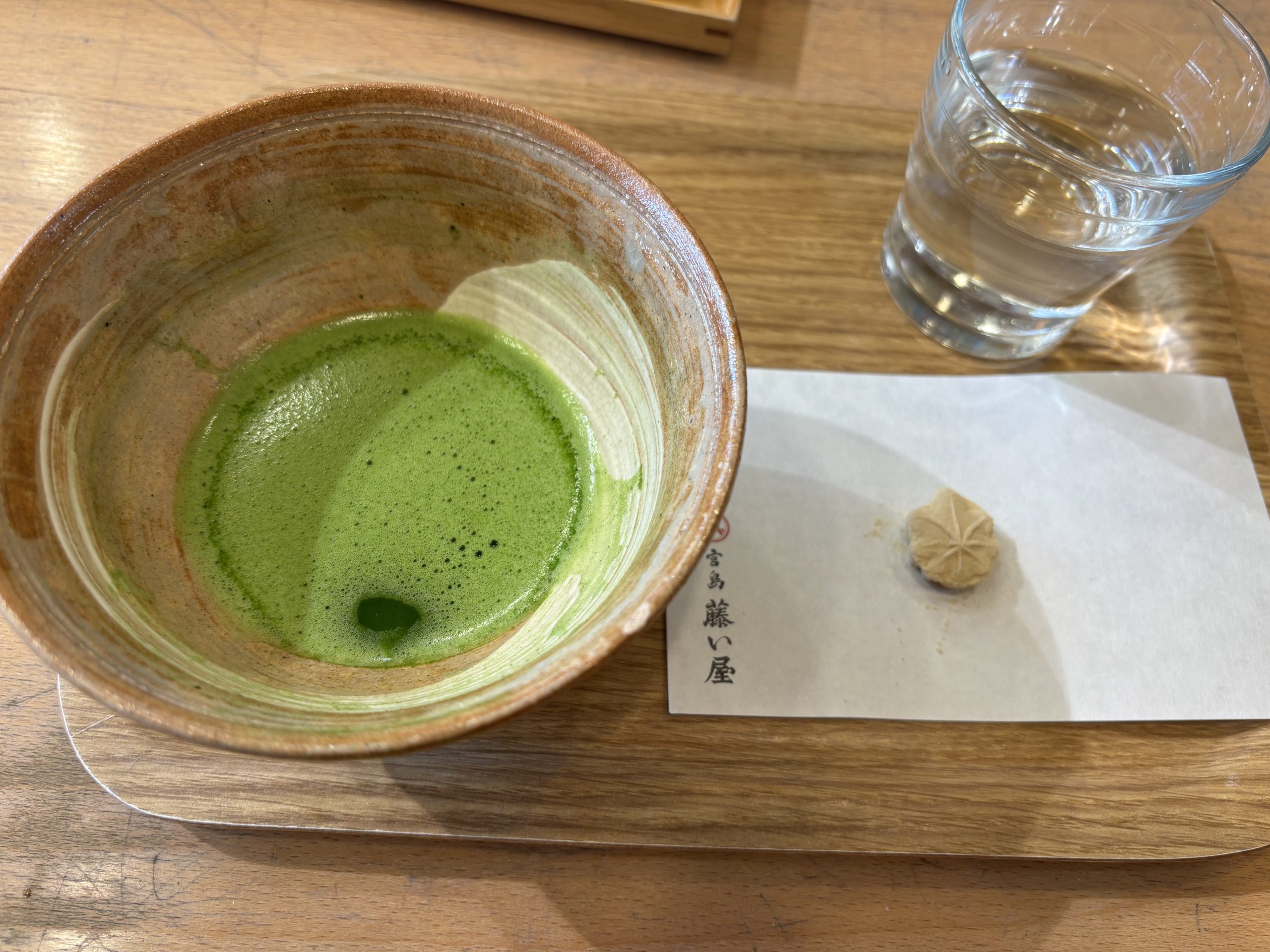
Tucked along the Omotesando shopping street on your walk from the ferr...
For a special dinner on Miyajima, Miyatoyo is renowned for its grilled oysters — a perfect way to end a romantic day on the island.
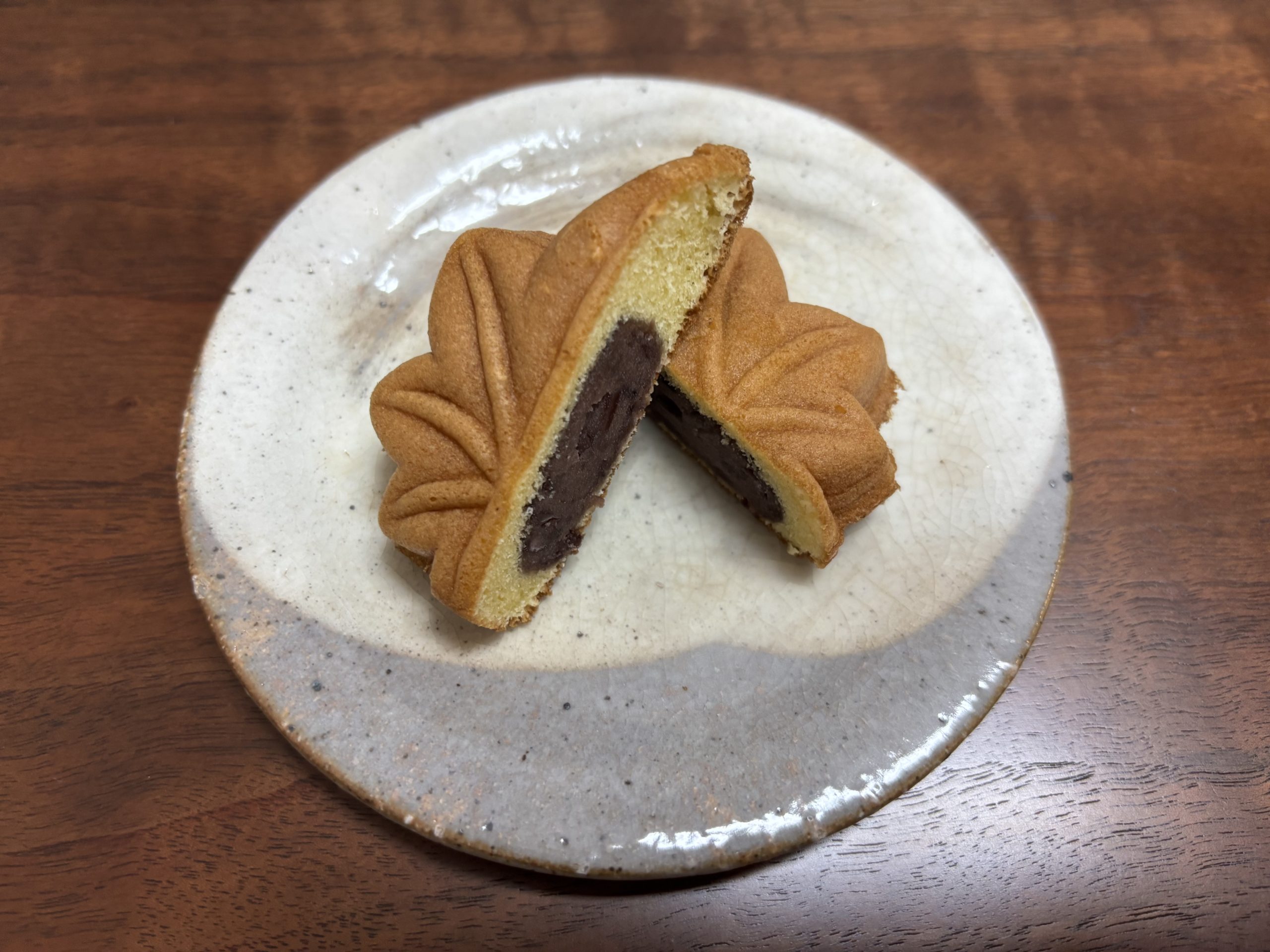
If you're visiting Miyajima and want to try momiji manju at its most t...