
If you’re looking for a warm, crispy, utterly satisfying snack while exploring Miyajima Island, the Hiroshima Curry Bread Research Institute (廣島咖麵麭研究所) should be at the top of your food list. This specialty curry bread shop on Miyajima serves some of the most creative Miyajima curry bread you’ll find anywhere in Japan — think wagyu beef, fresh local oysters, and stretchy mozzarella cheese, all tucked inside perfectly fried dough. Located just a 7-minute walk from the ferry terminal, it’s one of the easiest and most rewarding street food stops on the island.
What Is Hiroshima Curry Bread Research Institute?
Curry bread — known in Japanese as kare-pan — is a beloved Japanese snack: a deep-fried bread roll filled with spiced curry. It’s been a staple at Japanese bakeries for decades, but the Hiroshima Curry Bread Research Institute takes the concept to a whole new level. Rather than offering a single standard filling, the shop treats each variety as its own culinary experiment, matching specific doughs and spice profiles to each ingredient.
The shop is part of a small Hiroshima-based chain with locations including a city-center store in Noboricho, a production facility in Takayo (where their award-winning recipes are developed), and the flagship Miyajima store. The Miyajima location is takeout-focused, which makes it a perfect fit for the island’s vibrant street food culture.
With a history of over 40 years in bread-making, the team behind the shop brings serious craft to what might sound like a simple snack. Their motto — curry bread unlike anything you’ve ever tasted — is backed up by real innovation: five different dough types (standard curry bread dough, shokupan dough, tomato dough, black dough, and spicy ichimi dough) are used depending on which filling they’ll carry. On a busy day, they sell up to 2,500 pieces.
Award-Winning Curry Bread Made in Hiroshima
The shop’s reputation isn’t just local word-of-mouth. Their Luxurious 5-Cheese Tomato Cheese Curry, produced at the Takayo factory, won the Gold Prize at the 2024 Curry Bread Grand Prix in the Q.B.B. Award category — a sponsored prize recognizing the best use of Rokko Butter’s cheeses for outstanding quality and flavor. That’s a national-level recognition in a category that takes curry bread very seriously.
The shop has also gained a strong following on YouTube, where its charismatic staff have become something of local celebrities. If you happen to spot a familiar face behind the counter, don’t be shy — they’re friendly, and kids absolutely love the interaction.
Behind the recognition is a genuine research approach: the shop collaborates with culinary professionals specializing in Japanese cuisine, Western cuisine, and spices to develop each new product. Even after a recipe launches, the team continues fine-tuning details like oil viscosity, spice finish, and texture — all in pursuit of bread that tastes just as good once it cools down.

The aroma alone is enough to stop passersby in their tracks — you’ll see locals and visitors alike pausing to take a curious look at what’s fresh out of the fryer.
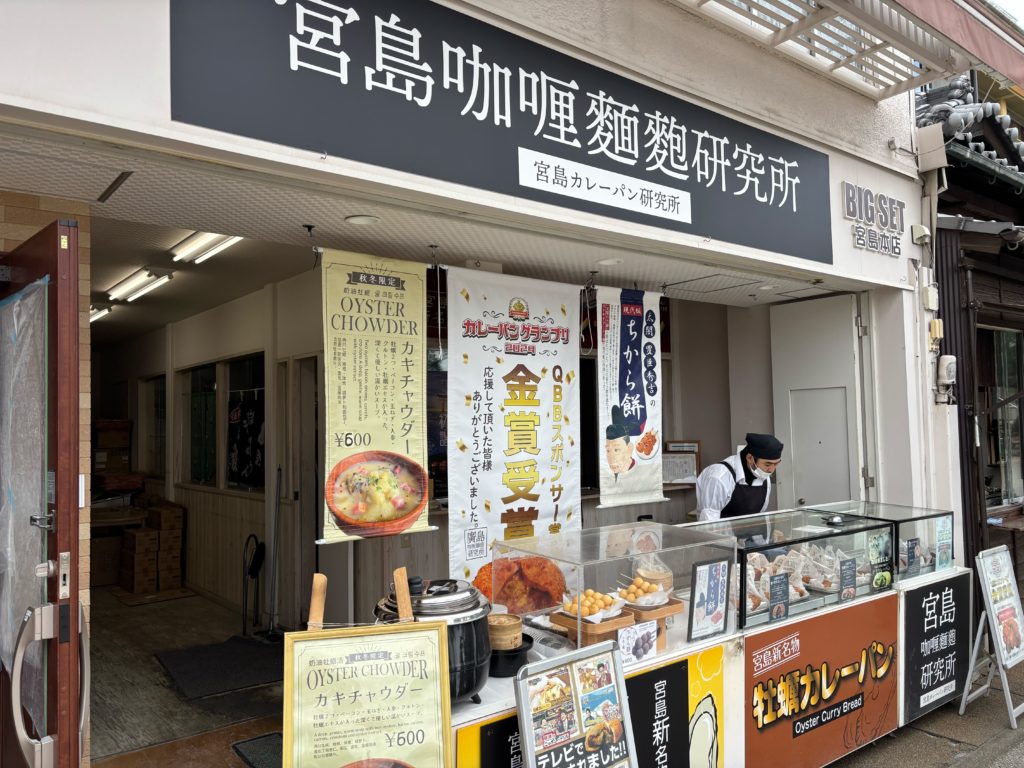
The shop displays its Curry Bread Grand Prix recognition proudly, and its YouTube fame has made it one of the more talked-about food stops in the Hiroshima region.
Menu Highlights: What to Order
The lineup rotates and evolves, but several standout varieties have become fan favorites at the Miyajima store.
Wagyu Beef Curry Bread — 600 yen
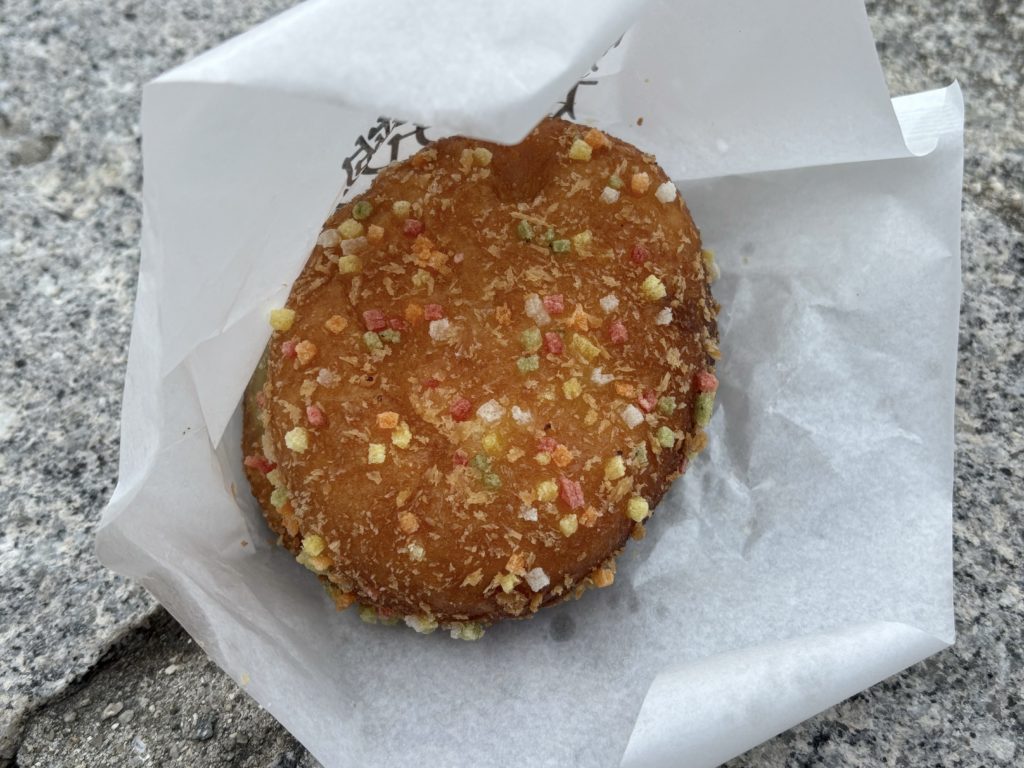
This is the indulgent pick — a rich, deeply savory wagyu beef filling wrapped in a generous piece of fried dough, finished with a coating of colorful arare (tiny crispy rice crackers) that makes it instantly recognizable. The flavor leans mild-sweet rather than spicy, making it approachable for most palates. It’s substantial in size, and eating it fresh off the fryer on a cool day is hard to beat.
Our rating:
Taste: ★★★★★
Visual impact: ★★★★☆
Addictiveness: ★★★★☆
Soft-Boiled Egg Curry Bread — 600 yen
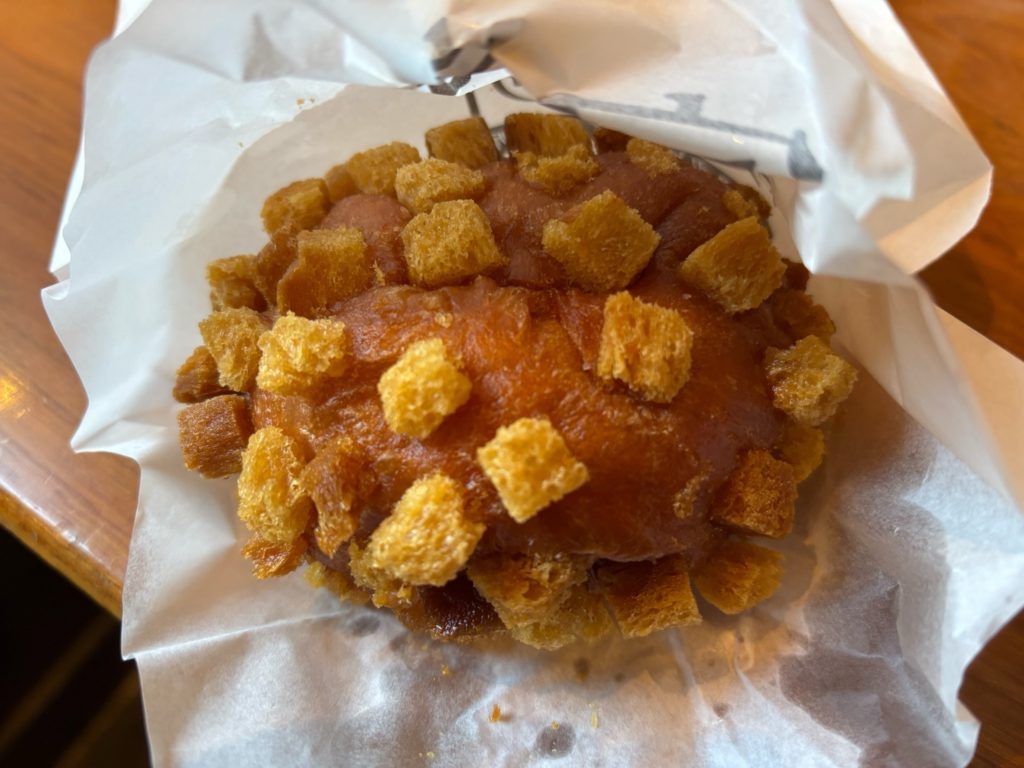
One of the most popular items on the menu, this variety features a tomato-based curry filling with a whole soft-boiled egg nestled inside, wrapped in dough coated with chunky croutons for an extra-satisfying crunch. The tomato base gives it a slightly lighter, more rounded flavor compared to traditional spiced curry, and the runny yolk adds a wonderfully creamy texture. It’s mild enough for children and anyone who finds standard curry too intense. Because each piece is quite large, it makes a great snack even when you’re not especially hungry.
Our rating:
Taste: ★★★★☆
Visual impact: ★★★★☆
Addictiveness: ★★★★☆
Miyajima Oyster Curry Bread
This is the signature Miyajima-exclusive variety, and it’s a must-try if you want the full local experience. Two whole Hiroshima-prefecture oysters are packed inside, and the spice blend is carefully calibrated to mellow out the briny edge that sometimes puts people off oysters. Even guests who are usually hesitant about oysters often find this one surprisingly easy to enjoy. It’s a genuinely creative combination, and the Hiroshima connection makes it feel like a proper local souvenir you can eat on the spot.
Cheese Varieties
For families with children, the cheese-forward options tend to be the biggest hit. The stretchy mozzarella version delivers that satisfying pull with every bite, while the 5-cheese tomato variety — the award-winning recipe — layers rich, complex cheese flavor into a tomato-curry base. Both are milder in spice and almost universally loved by kids. If you’re visiting with young children and want a safe bet, go cheese.
Meat-Forward Picks
For heartier appetites, the Miyabi Wagyu, Gyusuji Kuro (black beef tendon), and Whey Pork Kakuni (braised pork belly) varieties deliver serious richness. These tend to use the more specialized dough types and lean toward mildly sweet flavor profiles that work well for casual snacking while walking.
A fun tip for groups: pick two or three different varieties, find a bench near the waterfront, and cut each piece in half to share and compare. It’s become a go-to move for families who want to try more without overcommitting.
If you enjoy exploring Miyajima’s food scene beyond curry bread, the Omotesando Shopping Street is just a short walk away and packed with other local treats.
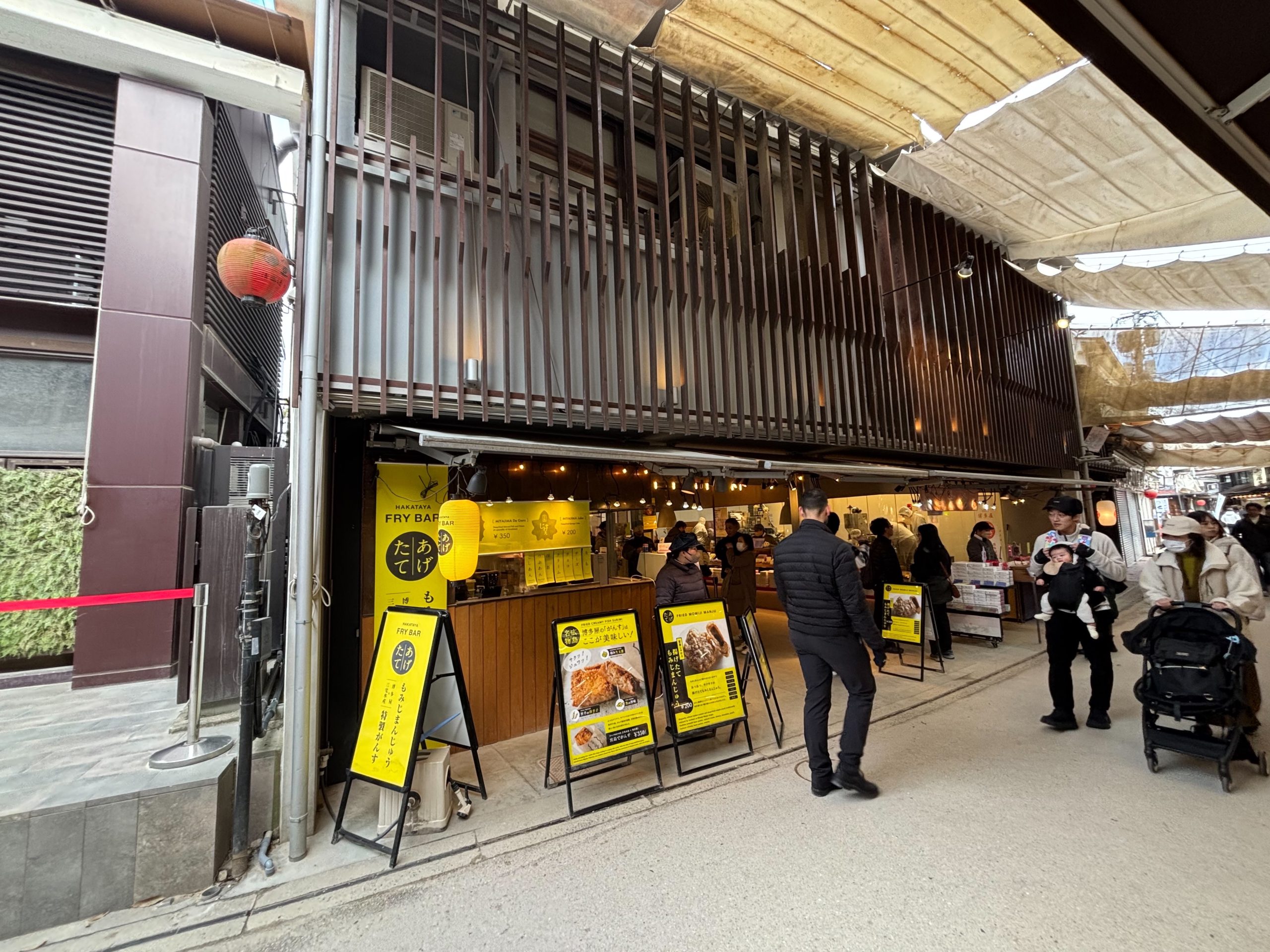
Miyajima's main shopping street — known locally as Omotesando — is a l...
Practical Tips: Lines, Timing, and Families
The Miyajima store is consistently busy on weekends and holidays, but the line moves quickly — the shop is well-practiced at handling crowds. A few strategies can make your visit even smoother:
Best time to visit: On weekdays, the quietest window is roughly 2:00–4:00 PM, according to locals who visit regularly. On weekends and holiday periods, arriving right when the shop opens or before noon gives you the best chance of getting your first-choice varieties before they sell out. Popular flavors — especially the oyster and wagyu — can sell out by early afternoon on busy days.
Payment: The Miyajima store currently operates on a cash-only basis and does not accept credit cards, IC cards, or QR code payments. Bring small bills and coins to keep the transaction quick.
Families with young children: The route from the ferry landing to the shop is flat and stroller-friendly. Most of the menu is mild to medium in spice, so children generally do well here. That said, freshly fried curry bread comes out very hot — give it a minute or two to cool, and tear off a small piece to test the temperature before handing it to young kids.
Eating on the go: Ask for extra napkins when you order. If you’re sharing among a group, slightly opening the top of the paper bag helps release steam and makes handling easier. Island etiquette matters here — enjoy your food at a bench or designated eating area rather than while walking through the shrine precincts, and be mindful of the deer that roam freely on Miyajima (they are bold and very interested in food).
Planning to buy more before your ferry: If you think you’ll want a second round on the way back to the terminal, buy your extra pieces early while popular flavors are still available. Don’t count on them being in stock later in the day.
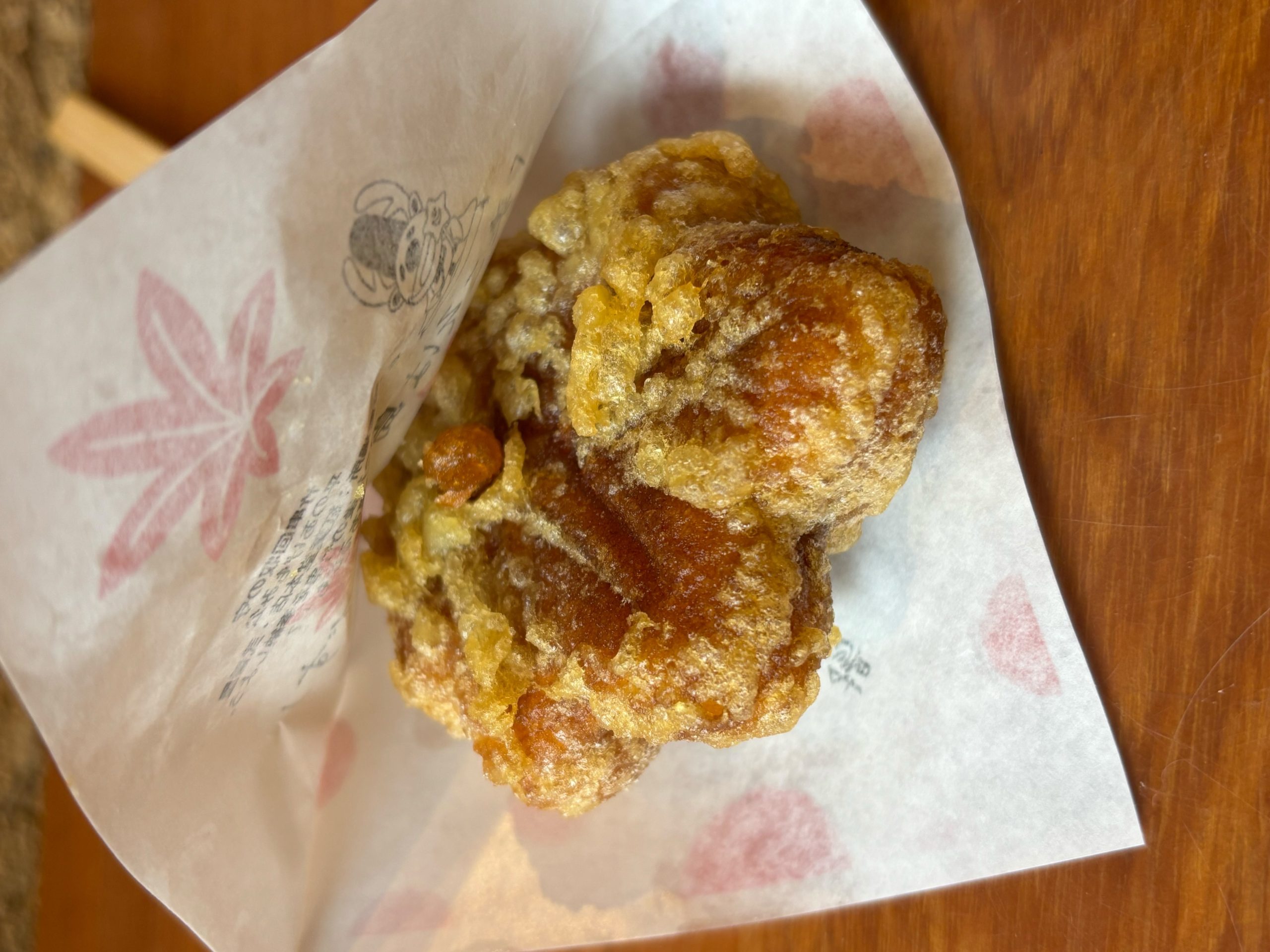
Another beloved Miyajima street food option is the deep-fried momiji manju — try to go in the morning when it’s freshest and crispiest.
If you're looking for the ultimate Miyajima street food experience, ag...
The Research Institute Philosophy
What separates the Hiroshima Curry Bread Research Institute from an ordinary bakery is its genuinely experimental approach to a humble food. The “research institute” concept isn’t just branding — the team actively develops new recipes by working alongside professionals from Japanese cooking, Western cooking, and spice-focused culinary traditions. Each filling is matched to a dough type that best complements its texture and flavor profile, choosing from five distinct formulas.
The goal behind every product is bread that remains delicious even after it cools down. In practice, that means obsessing over how oil absorbs into the dough, how spices evolve after frying, and how different fillings hold their moisture over time. Backed by more than 40 years of bread-making knowledge, the shop has built its reputation on careful incremental improvement rather than chasing trends.
If you’re drawn to the artisan side of Miyajima’s food scene, the island’s beloved local bread shop Shimauma Pan is another spot worth seeking out.
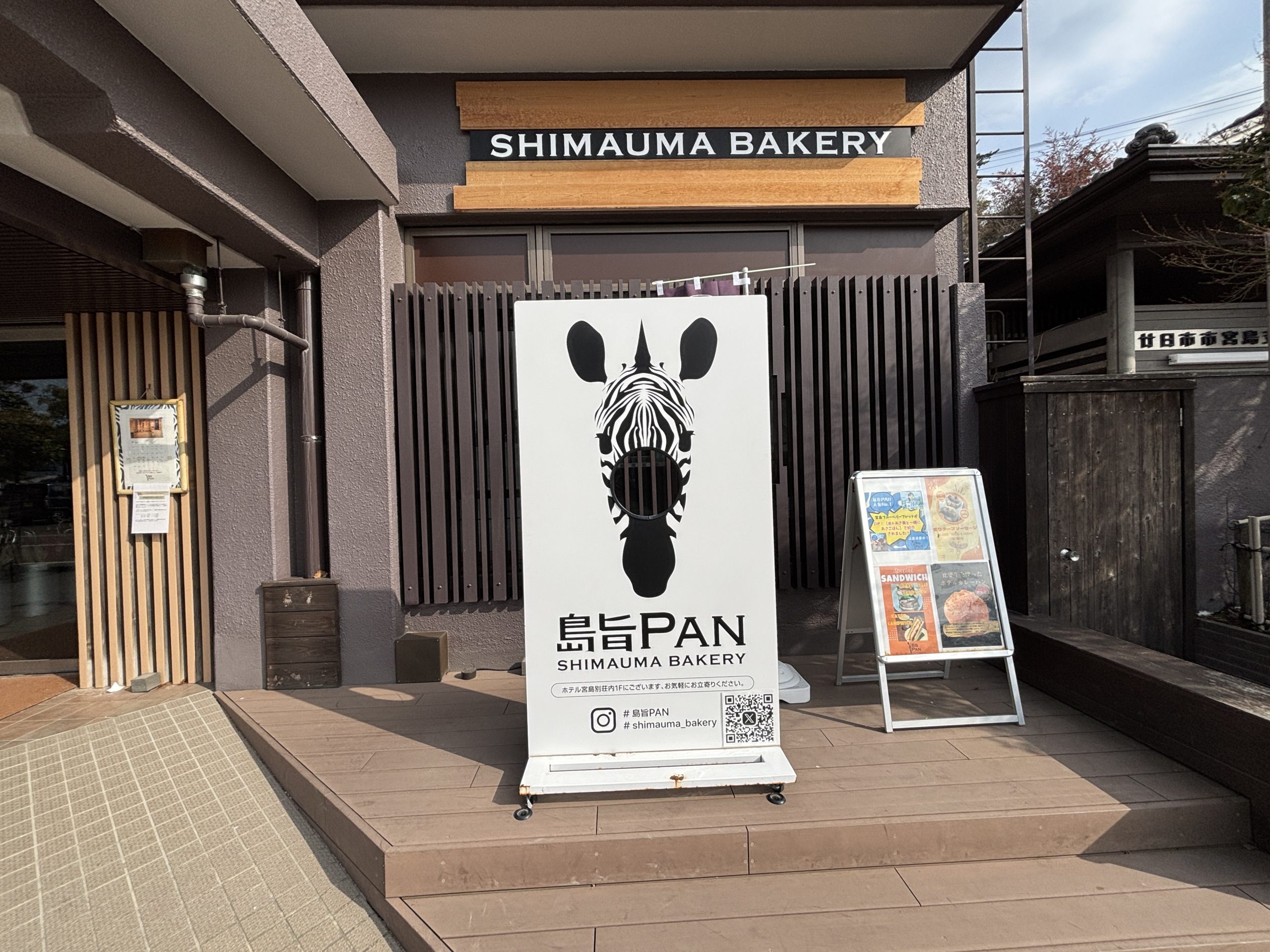
Just one minute on foot from the Miyajima ferry pier, Shima Uma Pan ...
What to Do After Curry Bread: Nearby Spots Worth Visiting
Once you’ve got curry bread in hand, Miyajima offers plenty of ways to keep the day going. The island’s centerpiece is Itsukushima Shrine, the famous World Heritage Site with its iconic torii gate rising from the sea. The shrine looks completely different at high tide versus low tide, so if you have time, visiting twice at different tidal moments is genuinely worthwhile.
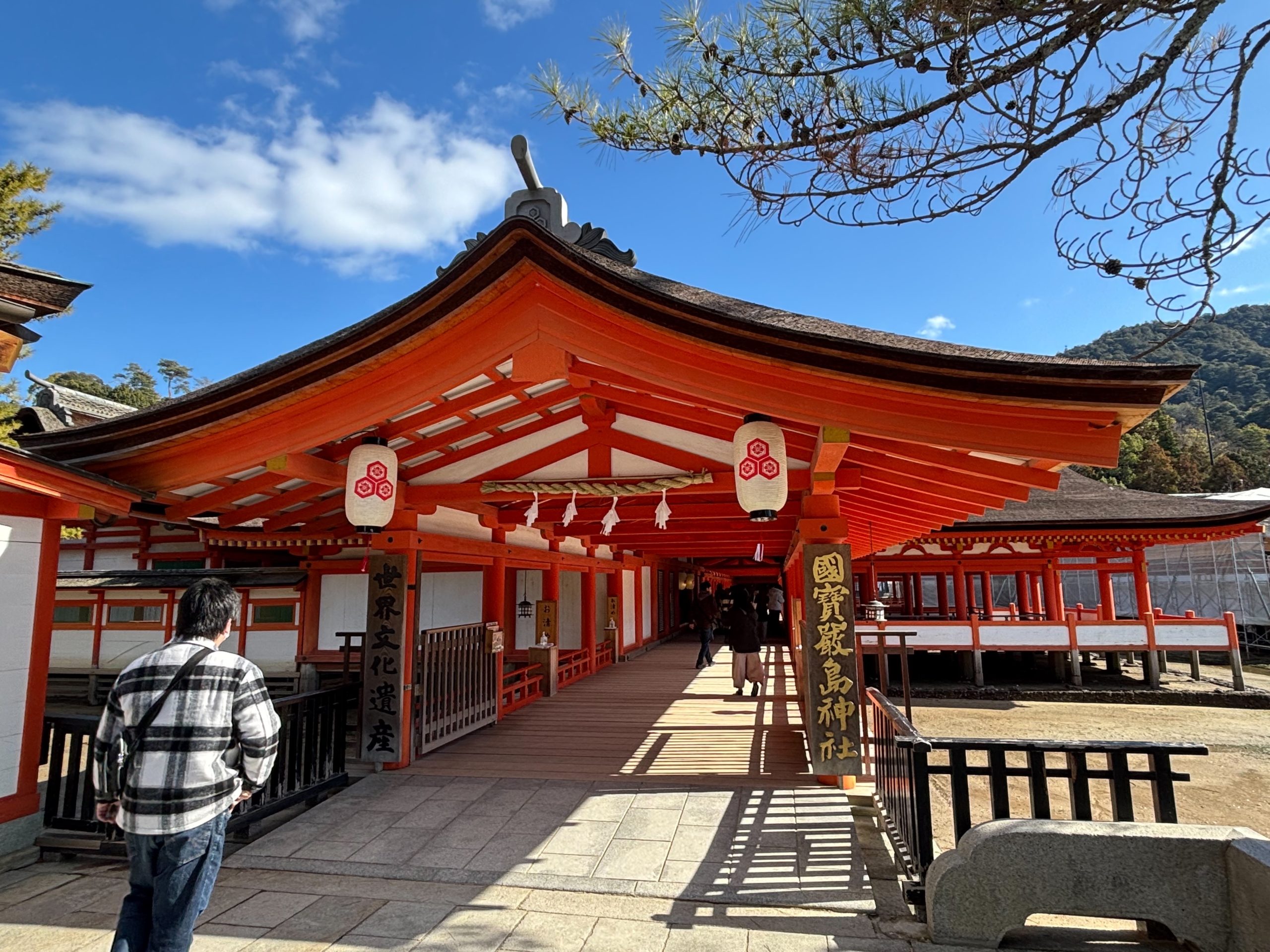
Itsukushima Shrine sits at the edge of the sea on Miyajima Island, jus...
Families with kids will also love the momiji manju making experience at Yamadaya, where children can press and bake their own maple-leaf-shaped cakes and eat them fresh — it’s hands-on, delicious, and a reliable crowd-pleaser.

Momiji Manju Making Experience at Yamadaya Miyajima Main Store ...
For a sit-down meal, Miyatoyo Honten is a locally cherished spot for anago meshi — Miyajima’s other signature dish, a grilled conger eel rice bowl that even after a round of curry bread somehow feels completely irresistible.

Discover Miyatoya Honten, Miyajima's only hand-baked momiji manju shop. Try the famous cheese filling and Belgian chocolate flavors fresh off the grill.
Store information is subject to change. Please confirm the latest hours, prices, and payment options via the shop’s official channels before your visit.
FAQ
Where is the Miyajima store located, and how do I get there?
The Miyajima store is approximately a 7-minute walk from the ferry landing. It sits along one of the island’s main visitor routes, making it an easy stop to work into any sightseeing itinerary. The path from the ferry is flat and accessible with strollers.
Does the shop accept credit cards or electronic payment?
Currently, the Miyajima store operates on a cash-only basis. Credit cards, IC transit cards, and QR code payment apps are not accepted. Bring small bills and coins to keep things moving quickly at the counter.
When is the best time to visit to avoid long waits?
On weekdays, the 2:00–4:00 PM window tends to be the quietest. On weekends and public holidays, arriving right at opening or before noon gives you the best selection and shortest wait. Popular varieties can sell out by early afternoon on busy days, so earlier is generally better.
Is the curry bread suitable for children? How spicy is it?
Most of the menu is mild to medium in spice level, and several varieties — particularly the cheese and soft-boiled egg options — are very mild and widely enjoyed by children. Be cautious about temperature: freshly fried curry bread is very hot inside, so let it cool for a moment and test the heat before giving it to young kids.
Which varieties are most popular or most likely to sell out?
The Miyajima oyster curry bread (with two whole oysters), the wagyu beef, and the cheese varieties are consistently the fastest-moving items. If you have specific ones on your list, aim to arrive early in the day.
Has the shop won any awards?
Yes — the Luxurious 5-Cheese Tomato Cheese Curry, produced at their Takayo factory, won the Gold Prize in the Q.B.B. Award category at the 2024 Curry Bread Grand Prix. This national competition recognizes outstanding curry bread made with Rokko Butter’s cheese products.
Can I take the curry bread home or on the ferry as a souvenir?
The curry bread is designed to taste good even after cooling, so it travels reasonably well for a few hours. It’s not vacuum-sealed or packaged for extended storage, so it’s best enjoyed the same day — ideally while still warm. If you want to bring some back on the ferry, buying just before you head to the terminal works well.