Tucked into the hillside at the base of sacred Mount Misen, Daisho-in Temple is Miyajima’s oldest and most spiritually rich temple—a place where over 1,200 years of Buddhist tradition come alive through hands-on experiences you won’t find anywhere else in Japan. From walking barefoot across glowing embers during the fire-walking ceremony to navigating a pitch-black corridor in complete darkness, Daisho-in Temple Miyajima offers a fascinating blend of ancient ritual and interactive spiritual practices that captivate visitors of all ages. As the head temple of the Shingon sect’s Omuro school and the historic guardian of Itsukushima Shrine’s sacred rituals, this remarkable site weaves together imperial history, mountain mysticism, and surprisingly playful touches—like Jizo statues dressed as Anpanman characters—into an unforgettable temple experience.
Whether you’re drawn by the eternal flame that’s burned continuously since 806 CE (and now illuminates Hiroshima’s Peace Memorial Park), the chance to try esoteric Buddhist practices like sand-stepping pilgrimages, or simply the serene beauty of halls nestled in primeval forest, Daisho-in rewards every visitor with layers of discovery. This guide covers everything you need to know: the temple’s deep imperial connections, seasonal events including the beloved Flower Festival, practical access tips for families and wheelchair users, and how to make the most of your visit through the changing seasons.
Daisho-in Temple: Sacred Guardian at the Foot of Mount Misen

About a 30-minute walk from Miyajima Pier, Daisho-in Temple sits quietly on a hillside where the sounds of the forest blend with the distant echo of temple bells. As Miyajima’s oldest temple, it holds a unique position in Japanese religious history—for centuries, this Shingon Buddhist temple actually managed the Shinto priests at nearby Itsukushima Shrine, a remarkable example of the syncretism between Buddhism and Shintoism that once characterized Japanese spirituality.
The temple’s founding story is impressive in itself. In 806, Kukai (also known as Kobo Daishi), the legendary monk who established Shingon Buddhism in Japan, chose this mountain slope to create a center of esoteric Buddhist practice. His choice wasn’t random—Mount Misen’s primeval forest and dramatic peaks had long been considered sacred ground, home to the mountain deity Sanki Daigongen, who remains one of Daisho-in’s principal objects of worship to this day.
Throughout the centuries that followed, Daisho-in’s importance only grew. Emperor Toba designated it as an imperial prayer site in the 12th century. When Emperor Meiji visited Miyajima during the Meiji era, he stayed at Daisho-in—a testament to the temple’s continued imperial connections. History buffs will be fascinated to learn that the powerful warlord Toyotomi Hideyoshi held a famous tea ceremony here before heading into battle, praying to Namikiri Fudo Myoo (the sword-bearing protector deity) for victory.
At its peak, Daisho-in oversaw twelve sub-temples and held complete authority over Itsukushima Shrine’s religious ceremonies—a responsibility it maintained until the Meiji Restoration forcibly separated Buddhism and Shintoism in the 1870s. Today, the temple complex at Mount Misen’s base preserves numerous historic halls, including the Reikido (Spirit Hall) and Mikido, all wrapped in an atmosphere of calm contemplation. The Inori Fudo Hall, reconstructed by Toyotomi Hideyoshi himself, still houses that same fierce image of Namikiri Fudo Myoo that warlords once prayed to before battle.
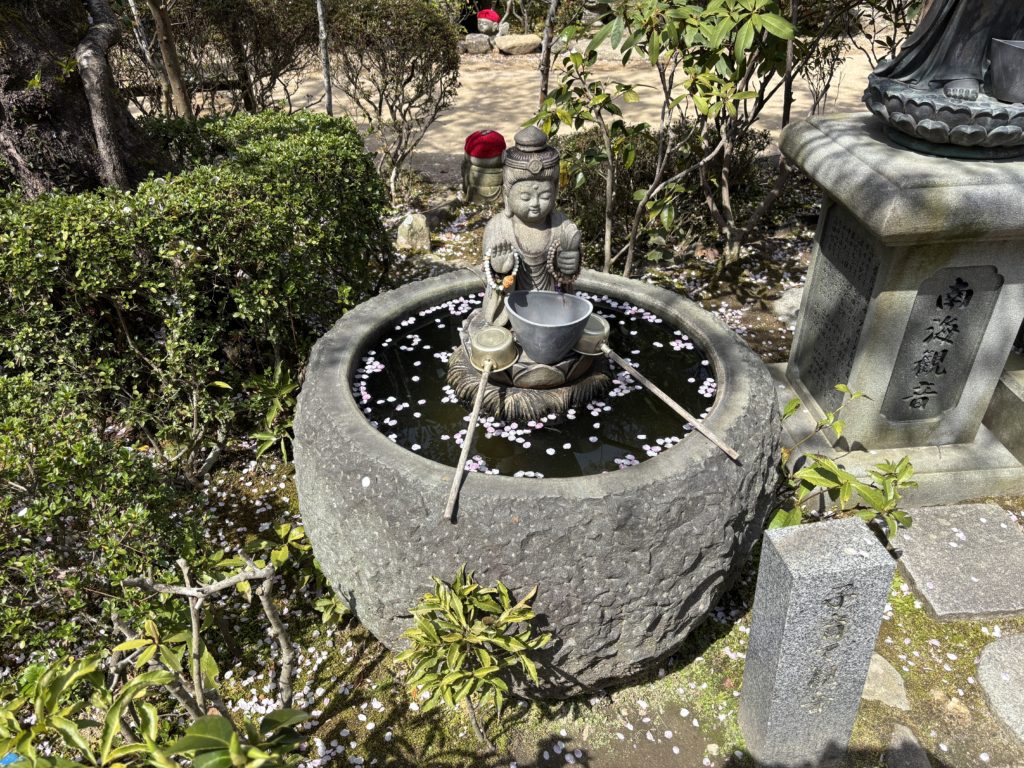
What makes Daisho-in truly special for modern visitors is how it brings centuries-old traditions to life through participatory experiences. The tradition holds that Kukai himself kindled the eternal flame in 806, which mountain monks have tended without interruption for over twelve centuries. That same sacred fire became the source for the Flame of Peace burning at Hiroshima Peace Memorial Park—a powerful symbol of how prayers offered at this mountain temple have literally illuminated paths to peace across generations. As you explore the grounds, you’ll encounter an endearing mix of solemn tradition and unexpected whimsy: alongside ancient Buddhist statues stand playful Jizo figures dressed up as beloved characters like Anpanman and even the alien Baltan from Ultraman, delighting children while maintaining the temple’s welcoming spirit.
The Temple’s Imperial Origins and Connections
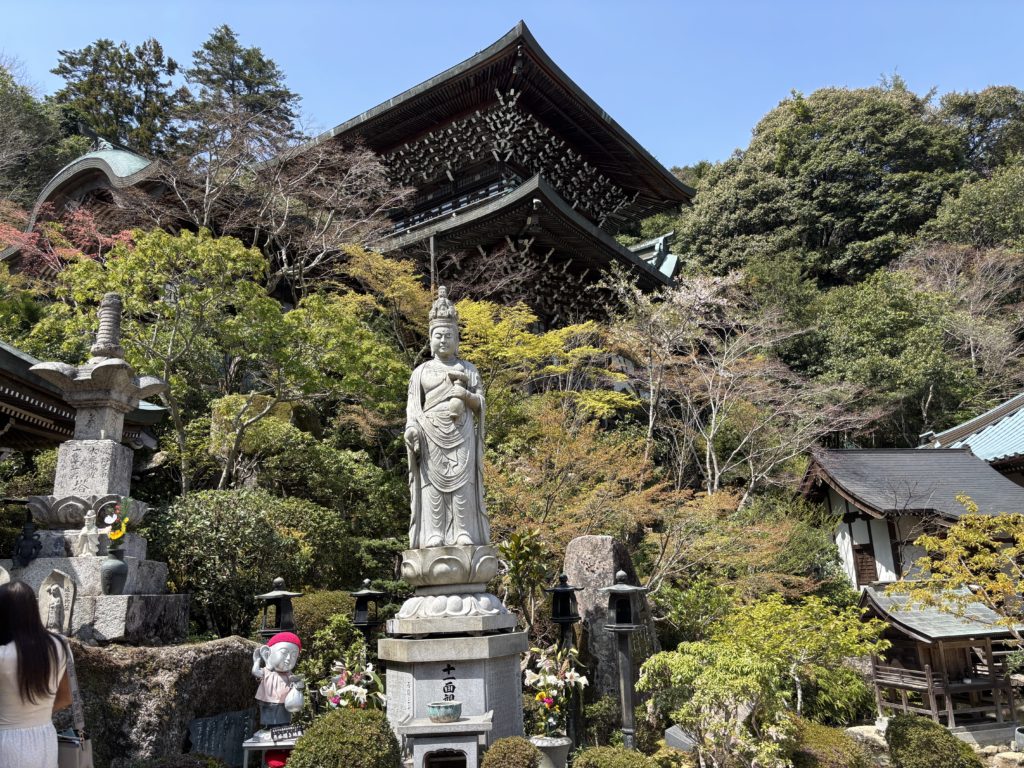
As the head temple of the Omuro school of Shingon Buddhism, Daisho-in maintained extraordinarily close ties with both imperial power and Japan’s most prestigious temples. The connection to Emperor Toba, who designated it as a place of imperial prayer, established a tradition that continued for centuries. When Emperor Meiji toured western Japan in the early Meiji era, Daisho-in served as his temporary residence on Miyajima—an honor that underscores the temple’s significance.
The temple’s relationship with Ninnaji Temple in Kyoto runs especially deep. Between the 12th and 15th centuries, four consecutive abbots served dual roles as both Daisho-in’s leader and chief priest of Ninnaji, one of Kyoto’s most important temples. Even more remarkably, the 20th abbot, Prince Ninsuke of the imperial family, is recorded to have resided at Daisho-in during his time on Itsukushima.
During its years of authority over Itsukushima Shrine, Daisho-in managed twelve sub-temples and orchestrated all the shrine’s Buddhist-influenced ceremonies. This syncretic culture—where Shinto and Buddhist practices intertwined—lives on today through special events like the Tamatori Ennen Festival and the Fire Prevention Festival. The more you learn about these layered histories, the more you appreciate how Daisho-in served as a spiritual crossroads where mountain asceticism, imperial patronage, esoteric Buddhism, and Shinto reverence for nature all converged.
The Miraculous Blessings and Spiritual Powers
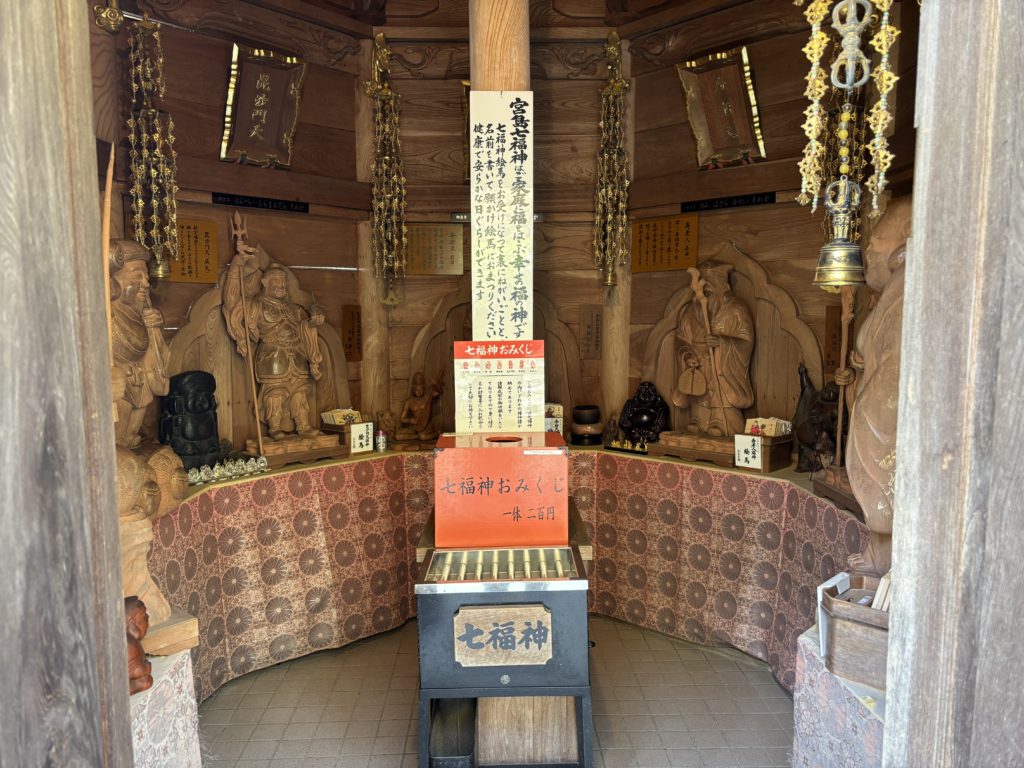
Daisho-in’s spiritual power comes from the remarkable collection of deities enshrined here. Beyond Kobo Daishi himself, you’ll find Sanki Daigongen (the fierce mountain guardian), Namikiri Fudo Myoo (the sword-wielding protector), Juichimen Kannon Bosatsu (the Eleven-faced Goddess of Mercy), and even all Seven Lucky Gods gathered in one octagonal hall. This concentration of sacred presences has earned Daisho-in recognition as one of Japan’s premier temples for yakuyoke (warding off misfortune) and kaiun (inviting good fortune into your life).
What sets Daisho-in apart from many temples is the chance to actively participate in spiritual practices rather than just observing. The “Gosuna-fumi Dojo” (sand-stepping hall) offers a compact version of two of Japan’s most famous pilgrimages: you walk across sand collected from all 88 temples of the Shikoku pilgrimage and the 33 Kannon temples of western Japan. Pilgrims spend weeks or months visiting these hundreds of sites; here, you can symbolically complete both journeys in minutes, accumulating the same spiritual merit.
Then there’s the Kaidan Meguri—a walk through absolute darkness that ranks among the most intense spiritual experiences available to temple visitors in Japan. Descending into the pitch-black corridor beneath Kannon Hall, you inch forward with hands outstretched, unable to see anything at all. The complete sensory deprivation is intentional: Buddhist philosophy teaches that walking through this darkness while focusing your mind purifies both body and spirit, symbolically moving from ignorance toward enlightenment. The moment you finally spot the faint light of the exit and emerge back into the world feels genuinely transformative, like a rebirth.
The Eternal Flame: 1,200 Years of Unbroken Devotion
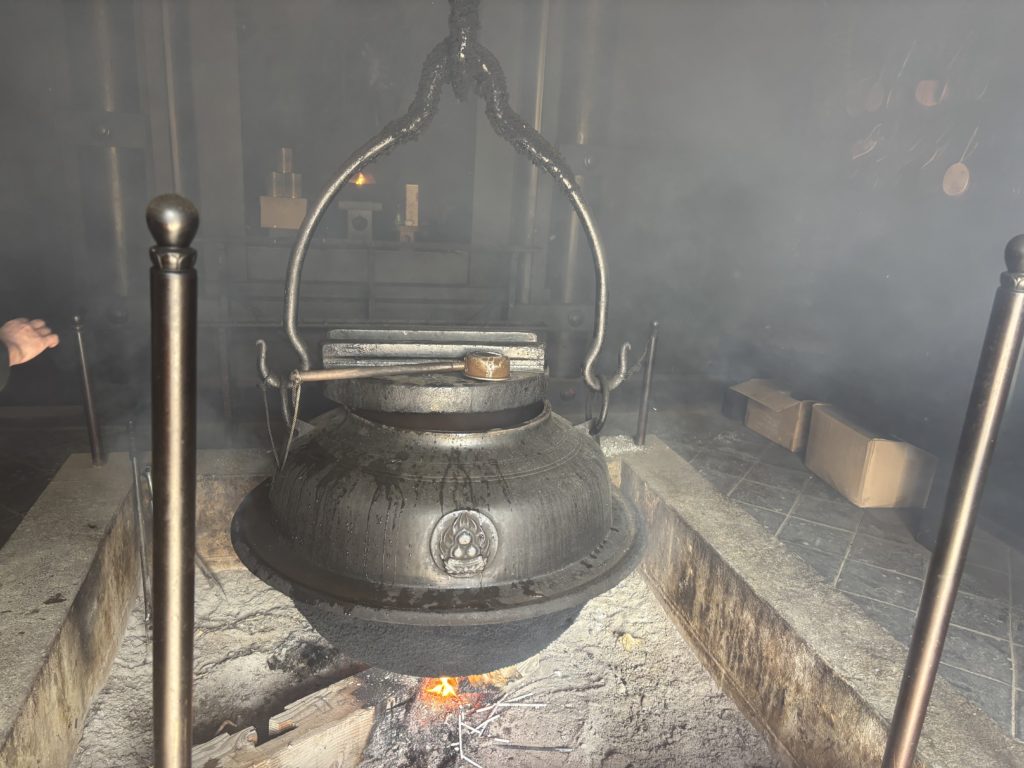
High up Mount Misen, in a simple hall called Reikido (Spirit Hall), burns a fire that has never been extinguished since the year 806—over twelve centuries of continuous flame. Daisho-in’s mountain monks have tended this fire through wars, natural disasters, and the sweeping changes of Japanese history, maintaining an unbroken chain of devotion that stretches back to Kukai himself.
This isn’t just a historical curiosity—the eternal flame carries profound meaning for visitors today. After World War II, when Hiroshima sought a flame to symbolize the hope for lasting peace, they chose fire carried down from this very mountain. The Flame of Peace that burns in Hiroshima Peace Memorial Park, visited by millions seeking to honor victims and pray for a world without nuclear weapons, originated from the spiritual fire that Kukai lit on Mount Misen. Standing before the eternal flame, watching it flicker just as it did in the year 806, creates a tangible connection to both ancient spiritual practice and modern prayers for peace.
The hall also features a large tea kettle constantly heated by the flame, from which holy water bubbles forth. This sacred water is believed to aid in recovery from illness—you’ll often see visitors carefully collecting small amounts in bottles to take home to sick family members. The experience of being in Reikido’s small, smoky space, listening to the fire crackle while contemplating over a millennium of continuous burning, transcends ordinary sightseeing and touches something deeper.
Reaching the eternal flame is an adventure in itself. Most visitors take the Mount Misen Ropeway, which whisks you up in about 15 minutes with spectacular views of the Seto Inland Sea. For the more adventurous, a hiking trail begins directly behind Daisho-in—the Daisho-in Course takes about 90 minutes to reach the summit, passing through primeval forest and additional small temples along the way. Combining the eternal flame visit with the summit’s breathtaking 360-degree views creates one of Miyajima’s most memorable experiences.
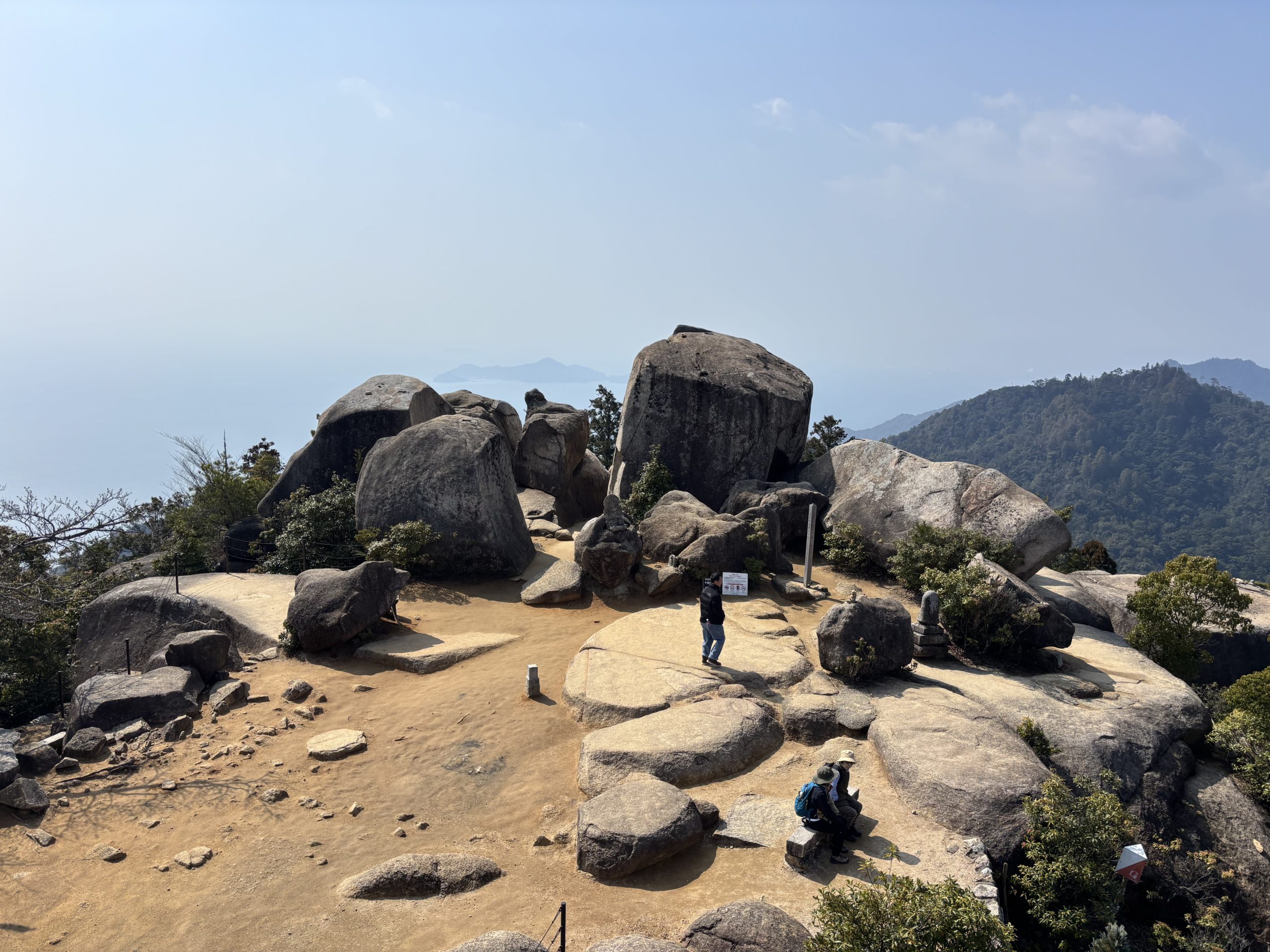
Rising 535 meters above Miyajima Island, Mount Misen Miyajima offers o...
Approaching the Temple: The Niomon Gate and Sacred Stairs
Your first encounter with Daisho-in’s unique character comes at the Niomon Gate, where fierce guardian statues from the Muromachi period (14th-16th centuries) stand watch. Look up as you pass through—the gate’s ceiling features an magnificent carved dragon, scales and claws rendered in dynamic motion that seems to bring the mythical creature to life. This dragon isn’t just decorative; in Buddhist cosmology, dragons control water and weather, protecting the temple from fire.
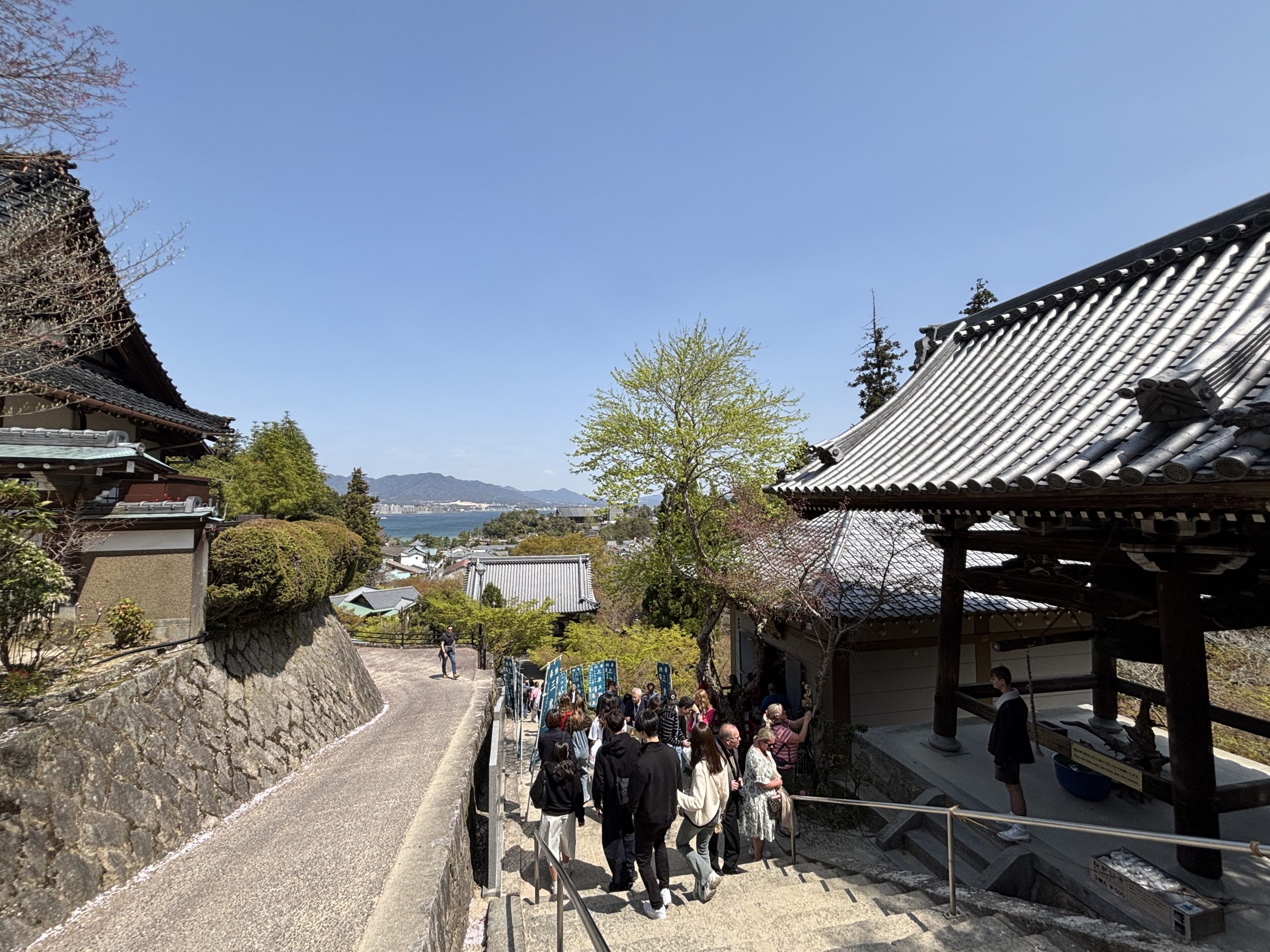
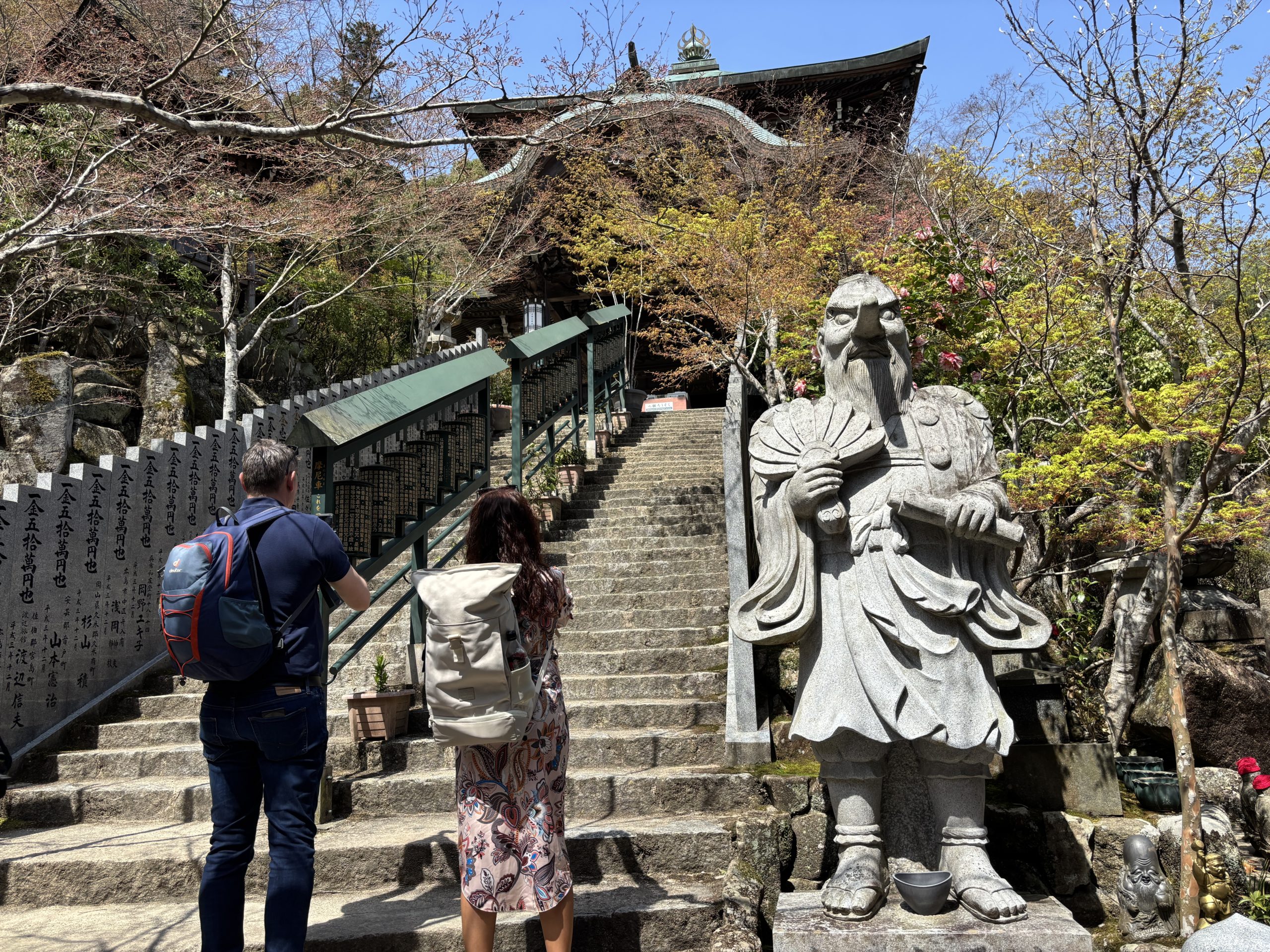
Beyond the gate, about 200 stone steps climb toward the main temple buildings. Before you start groaning, know that Daisho-in has made this ascent into a spiritual practice itself. Cylindrical prayer wheels called mani wheels are built right into the stone handrails. As you climb, spin each wheel—tradition holds that turning all the wheels equals reciting the entire Dai-Hannya Sutra (a massive Buddhist scripture) once through. It’s a brilliant way to accumulate merit while getting a modest workout. The steps themselves hold a surprise: “wish balls” (negai-dama) are set into certain steps. Drop a coin into one while making a wish, and locals believe your prayer has a better chance of being answered. These “stone steps where wishes come true” have become quite popular on social media, so you’ll often see visitors pausing to participate.
Don’t rush the climb. Benches are thoughtfully placed every 30 or 40 steps, and the seasonal flowers and greenery along the way make pleasant rest stops. In spring, cherry blossoms frame the entire approach in soft pink petals. If you’re visiting with a stroller or wheelchair, ask at the reception desk when you arrive—staff will direct you to an alternative ramped route that accesses the main halls from the back, ensuring everyone can experience the temple regardless of mobility.

When cherry blossoms bloom each spring, the temple entrance transforms into a tunnel of pale pink and white petals. The contrast between the vermillion gate, the gray stone steps, and the delicate blossoms creates one of Miyajima’s loveliest seasonal scenes—arrive early in the morning for photos without crowds.
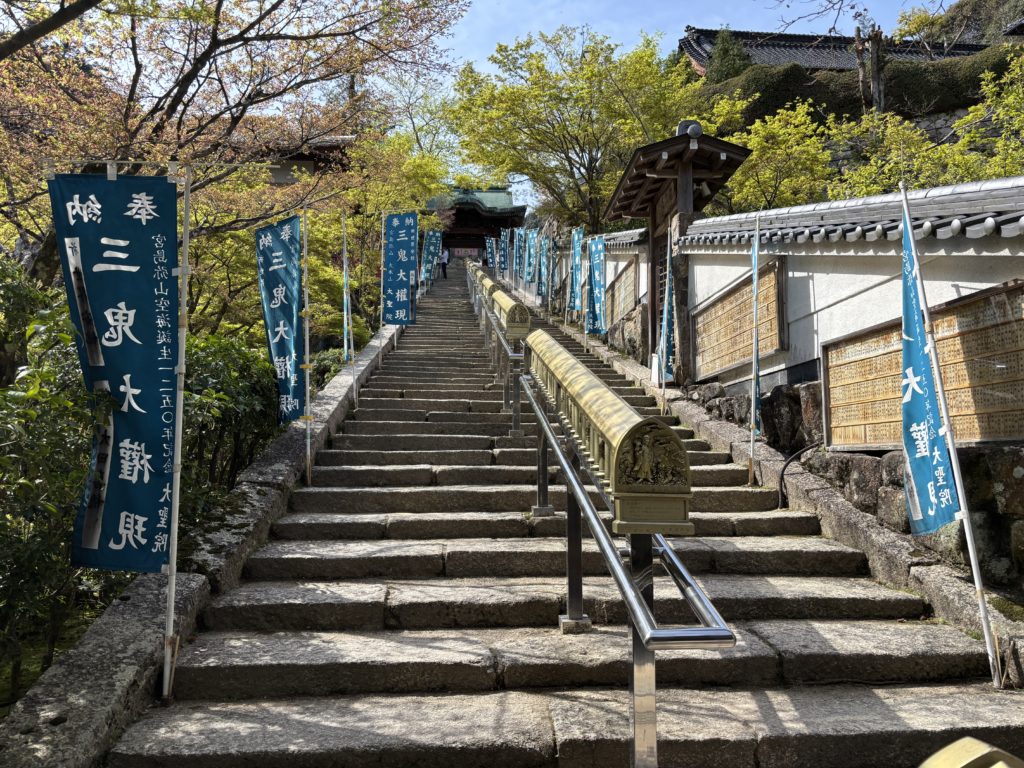
Yes, the stairs feel steep at times, but you’re nearly there—just a bit more climbing brings you to Kannon Hall. Remember to spin those prayer wheels as you go. Each rotation represents another recitation of sacred text, and the meditative motion of climbing and spinning helps quiet your mind for the temple visit ahead.
Celebrating Buddha’s Birthday on April 8th

Every April 8th, temples throughout Japan celebrate Hana Matsuri (the Flower Festival), commemorating the birth of the historical Buddha, Shakyamuni. At Daisho-in, this beloved spring festival centers on a charming ritual: a statue of the infant Buddha seated on a white elephant is brought out, and visitors pour sweet tea over the statue to symbolize the sweet rain that legend says fell when Buddha was born.
The ceremony officially begins at 11:00 a.m. in the courtyard in front of the main hall, but anyone is welcome to participate—no special knowledge or preparation required. The timing couldn’t be better: early April typically coincides with peak cherry blossom season on Miyajima, so you experience the double blessing of Buddha’s birthday celebration surrounded by clouds of pink petals. It’s one of the most photogenic and joyful festivals of the year, especially popular with families introducing children to Japanese Buddhist traditions.
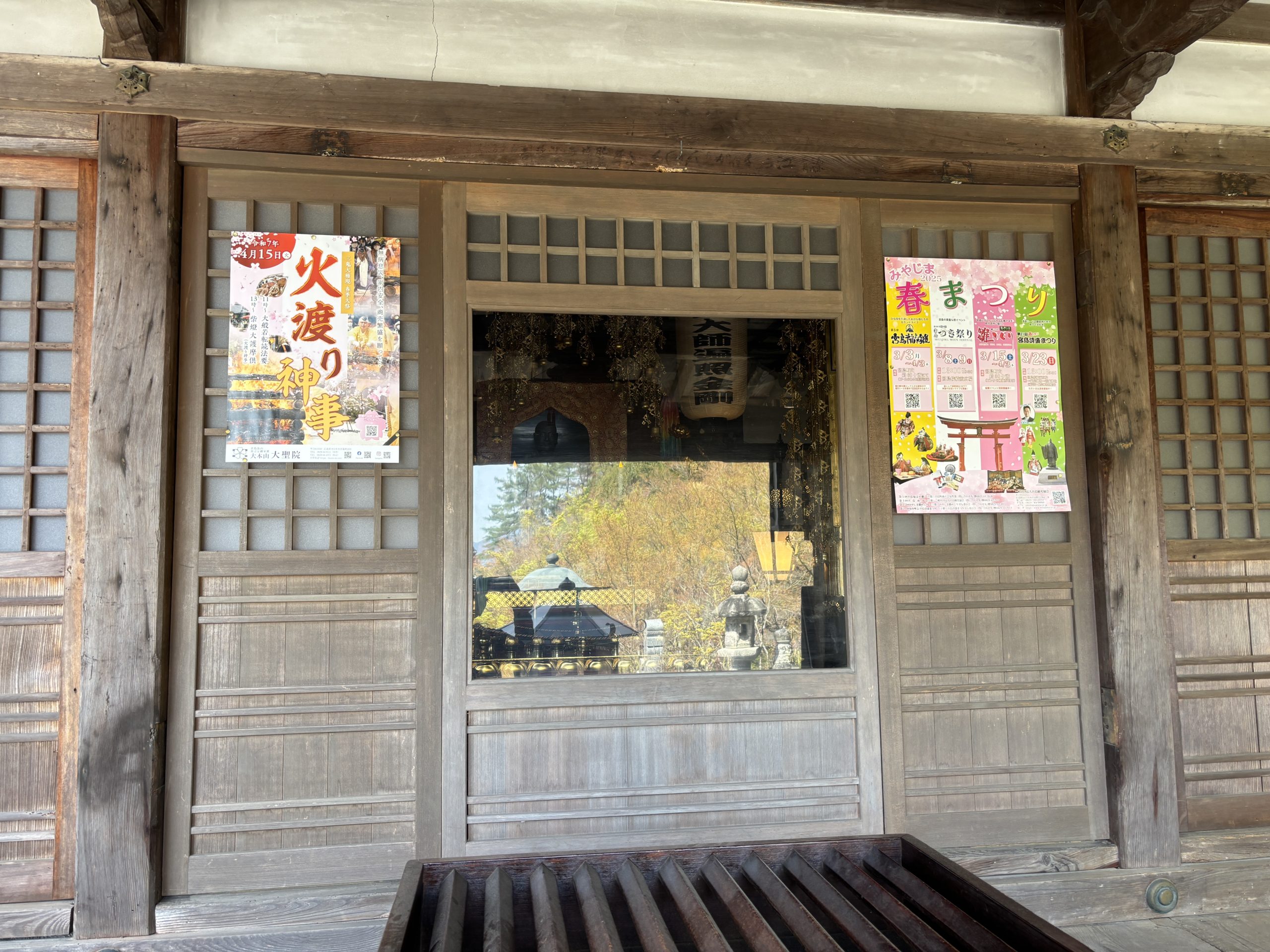
Just one week after the Flower Festival, on April 15th, Daisho-in hosts one of its most dramatic events: the Hiwatari (Fire-Walking Ceremony). This is no casual spring festival—it’s a genuine esoteric Buddhist rite dating back centuries. Monks build a large bed of burning embers in the temple courtyard, then chant powerful sutras while gradually walking barefoot across the glowing coals. The ceremony originated with the legendary monk Ryogen, who performed sacred fire rituals on Mount Daigo (one of Japan’s seven sacred mountains) to drive away poisonous serpents threatening pilgrims.
After the head priest and senior monks complete their crossing, ordinary worshippers are invited to follow. Walking barefoot across hot embers while focusing your prayers is believed to burn away misfortune and grant wishes for health, safety, and prosperity. You’ll need to pick up a participation ticket at the special reception desk by noon on the day of the ceremony and sign an agreement form (staff will help if you need translation assistance). The sensation of heat underfoot, the chanting echoing around you, the smoke rising—it’s an unforgettable immersion in living esoteric Buddhist practice.
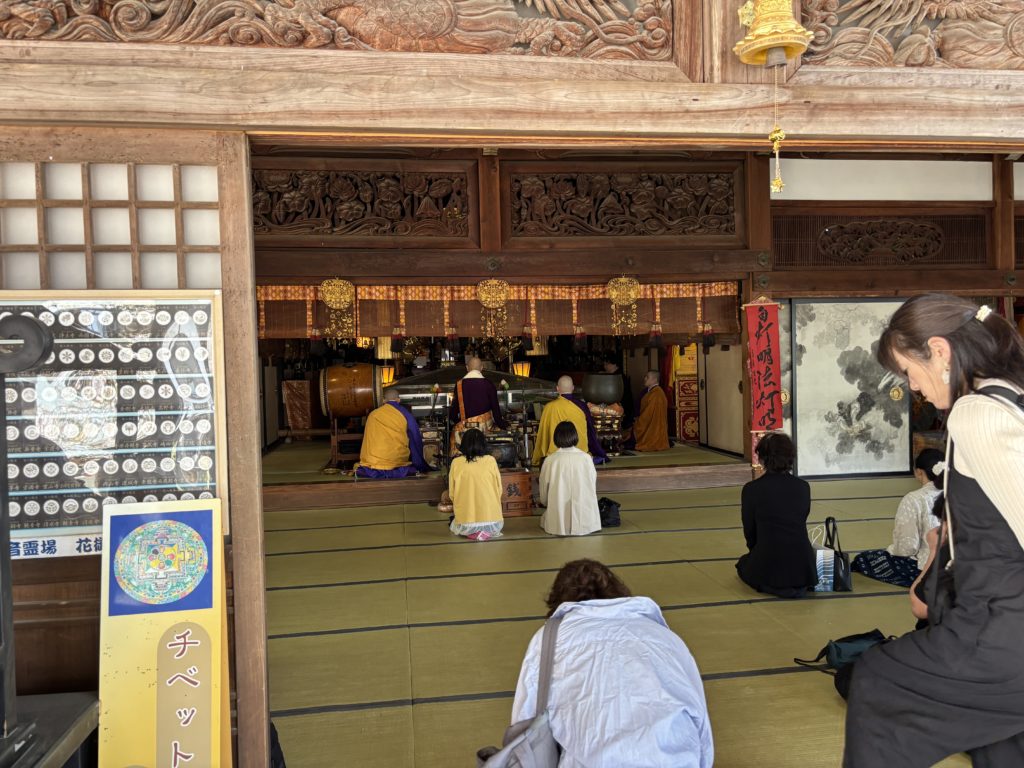
During major festivals and ceremonies, the doors of Kannon Hall open to visitors who wish to participate in the formal service. You can sit with the monks and chant the Heart Sutra (Hannya Shingyo), one of Buddhism’s most beloved texts. Don’t worry if you’ve never chanted before—simple guides explaining the pronunciation and rhythm are provided, and the experience of joining your voice with others in that ancient hall creates a profound sense of connection across time and culture.
Exploring the Temple Grounds: A Journey Through Sacred Spaces
Daisho-in’s temple grounds spread across the hillside in a complex network of halls, prayer spaces, statues, and hidden corners that reward slow, curious exploration. Unlike some temples organized along a single axis, Daisho-in feels almost like a sacred village, with distinctive buildings clustered at different levels of the slope—Chokugendo, Maniden, Kannon Hall, Daishi Hall, and the octagonal Manpuku Hall each offering their own blessings and atmospheres.
Maniden Hall holds a unique distinction: it’s the only place in all of Japan where you can worship the fierce mountain deity Sanki Daigongen using Shinto-style ritual rather than Buddhist practice. Stand before the hall and perform the traditional “two bows, two claps, one bow” greeting used at Shinto shrines—a vivid example of how Buddhism and Shintoism coexisted on Miyajima for centuries. The deity is considered especially powerful for protecting travelers and those facing dangerous journeys.
Beneath Kannon Hall, descend into the Kaidan Meguri experience mentioned earlier—that pitch-dark corridor where you navigate by touch alone through absolute blackness. The psychological journey from anxiety in the darkness to relief at seeing the exit light offers a surprisingly powerful metaphor for spiritual transformation. It’s become one of the temple’s signature experiences, attracting both devout Buddhists seeking enlightenment and curious travelers looking for something beyond ordinary sightseeing.
If time allows, make your way to the Henjo-kaku hall beneath Daishi Hall. This smaller space houses sand collected from all 88 temples of the Shikoku Pilgrimage, one of Japan’s most demanding spiritual journeys. Walking across this sand while focusing your prayers gives you the merit of completing the entire multi-week pilgrimage in miniature—a “compact pilgrimage” that makes the spiritual benefits accessible to visitors with limited time.
As you wander between the various halls, you’ll encounter an unexpected delight: 500 Arhat statues scattered throughout the grounds. Arhats (enlightened disciples of Buddha) are traditionally depicted with highly individualized, expressive faces—some laughing, some stern, some serene. Here at Daisho-in, many wear little knitted caps gifted by devoted worshippers, creating an endearing touch of folk piety. Children love spotting the different expressions and headwear, making the Arhats excellent subjects for family photos.
In front of Kannon Hall, seek out the “Kujo Bells”—a set of bells corresponding to the twelve animals of the Asian zodiac. Ring the bell for your birth year and listen carefully to its tone, said to carry special blessings for those born under that sign. Near Daishi Hall, you’ll find the “Guchi-kiki Jizo”—a complaint-listening Jizo statue. Write down your grievances or frustrations on small slips of paper and symbolically “feed” them into the statue’s offering box, releasing your burdens to be purified. These interactive elements scattered throughout the grounds transform your visit from passive observation into active spiritual participation.
Before leaving, stop by the small shop near Kannon Hall to browse unique Daisho-in souvenirs. The “Orizuru Lamp” is particularly meaningful—it’s glazed with ash from folded-paper cranes collected at Hiroshima Peace Memorial Park, connecting the temple’s eternal flame to Hiroshima’s prayers for peace in a tangible, beautiful way. These lamps make thoughtful gifts that carry genuine local and spiritual significance.
When I visited Daisho-in on a perfect spring morning, I took my time wandering between the various halls and discovered countless beautiful corners worth photographing and contemplating. Here’s a closer look at the main areas you won’t want to miss.
Onarimon Gate: The Emperor’s Entrance
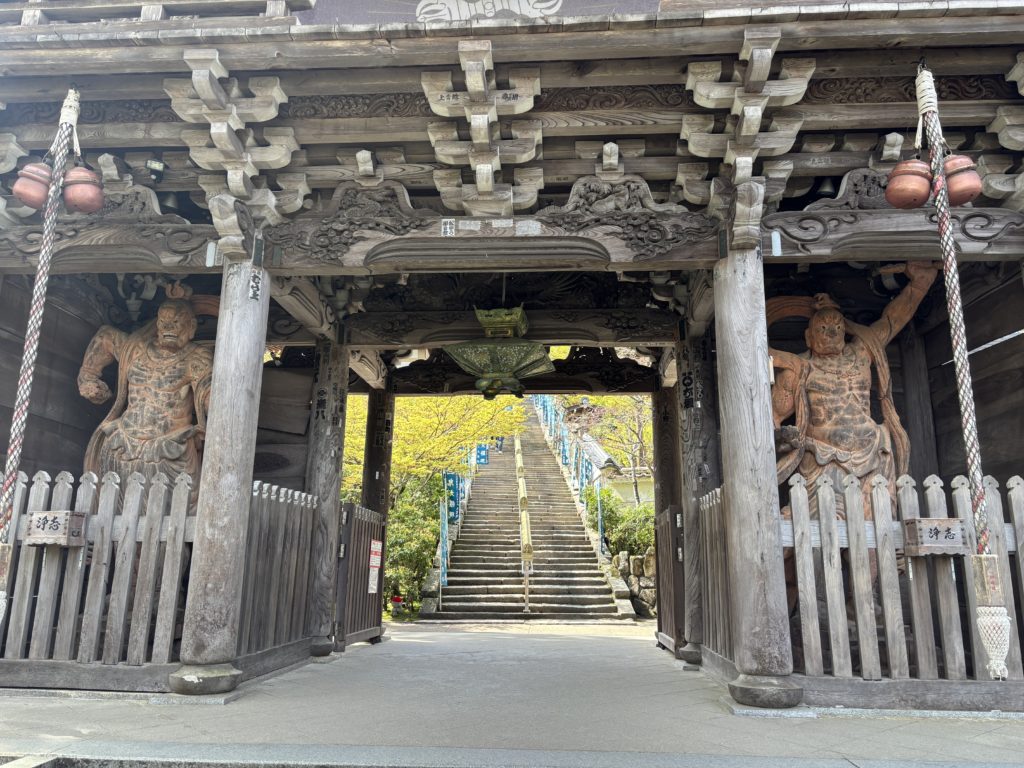
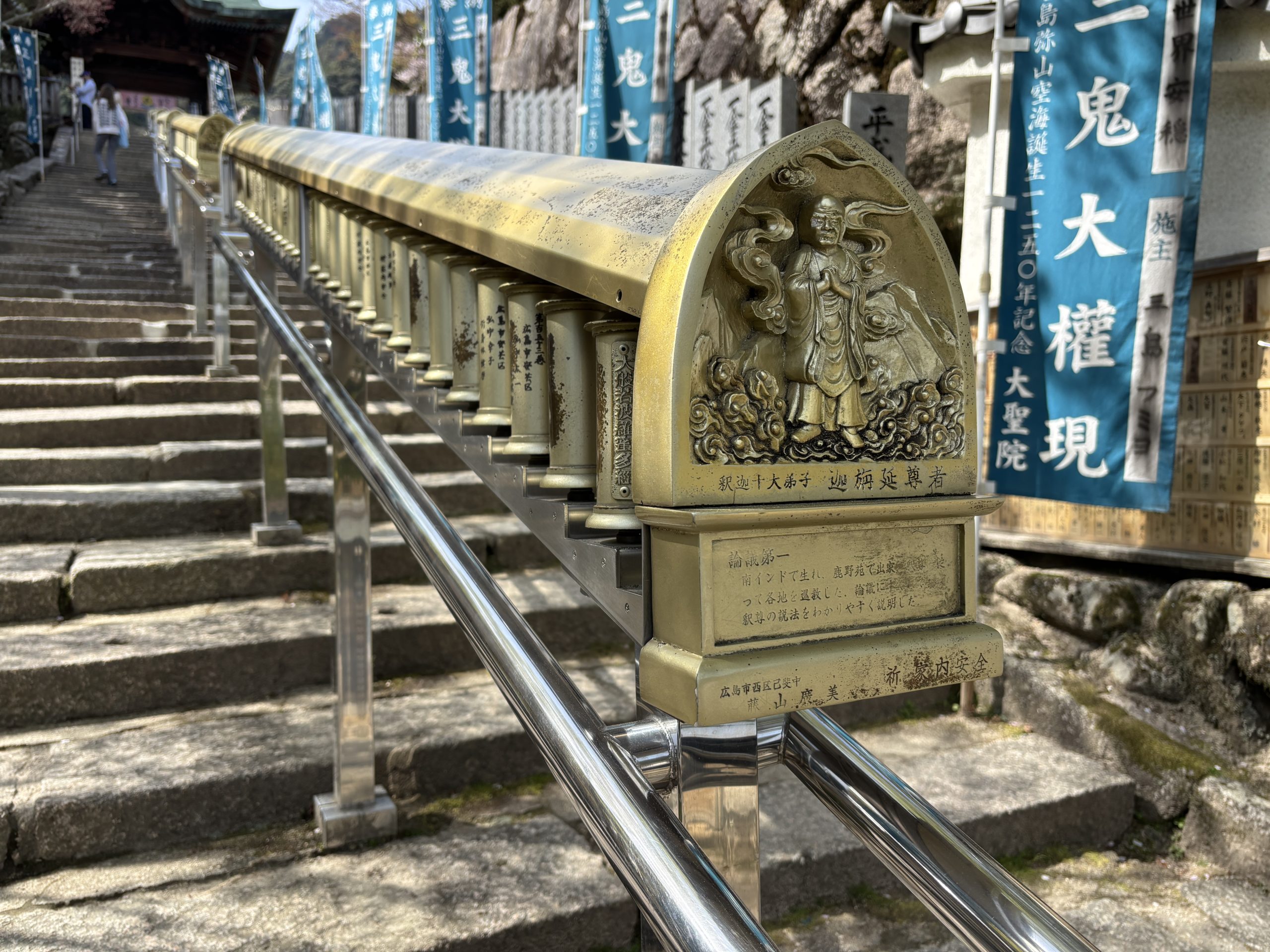
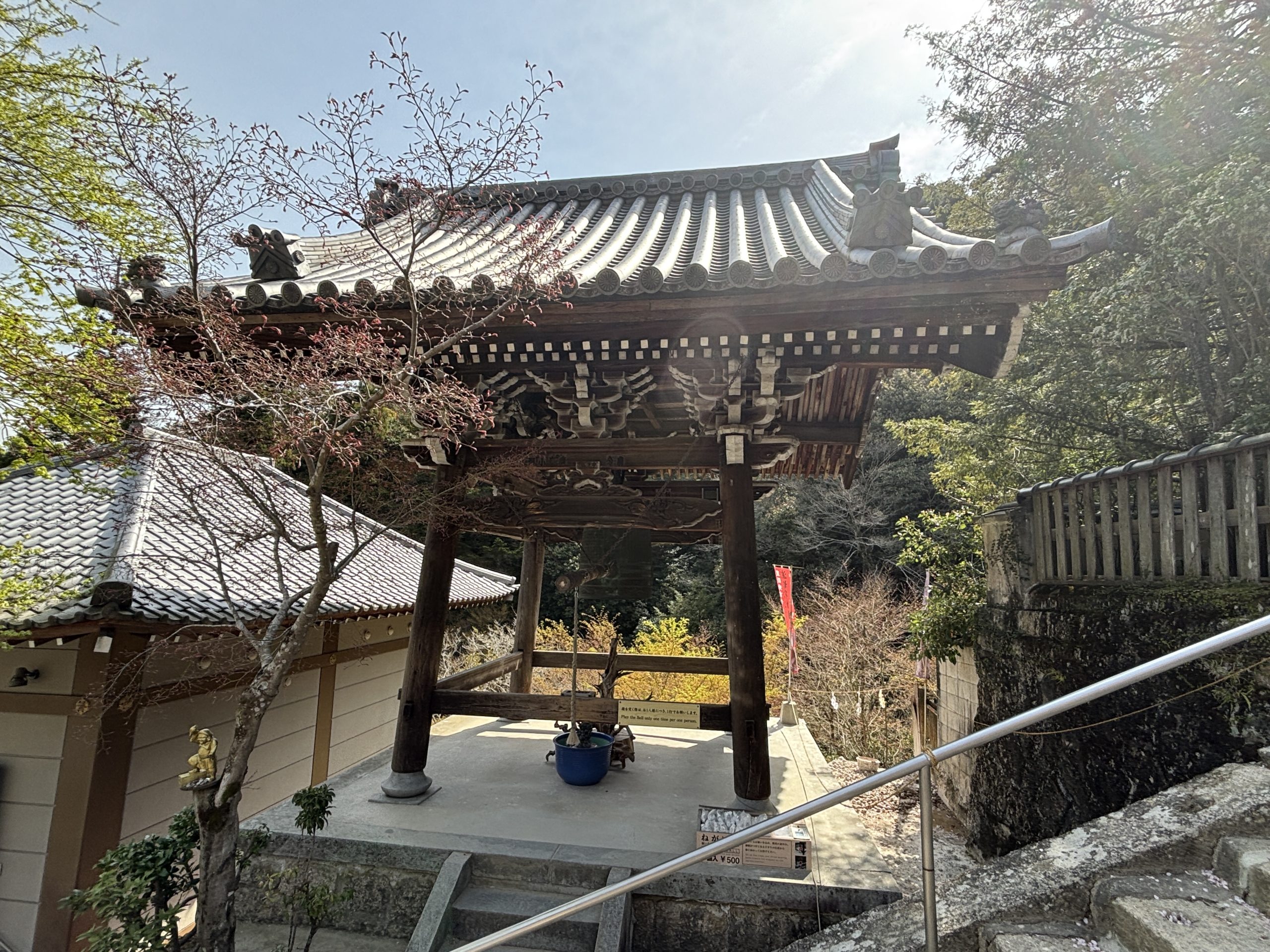
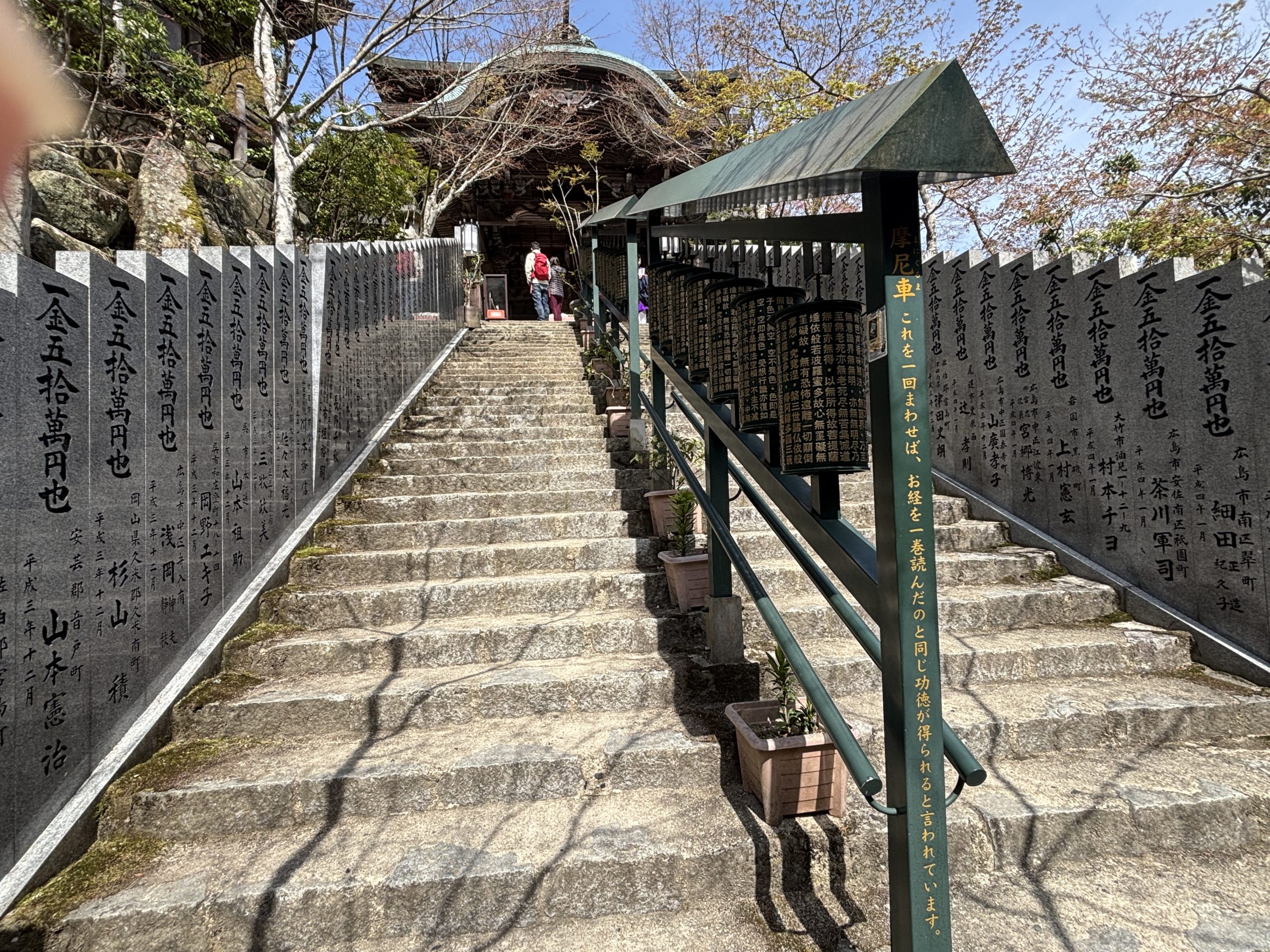
The Onarimon Gate originally served as a private entrance reserved exclusively for shoguns, emperors, and the highest-ranking nobility—common people would never have dared pass through these gates in centuries past. Today, democracy has opened this imperial path to everyone, and walking through feels like a small act of claiming your own dignity and worth. The stone stairway beyond the gate is quite steep (more so than the main approach), but the surrounding forest creates a wonderfully refreshing atmosphere. Sunlight filters through the canopy, birds sing overhead, and the path feels almost secret, like you’ve discovered a hidden corner of the temple that most visitors miss.
Maniden Hall: Guardian of the Sacred Mountain
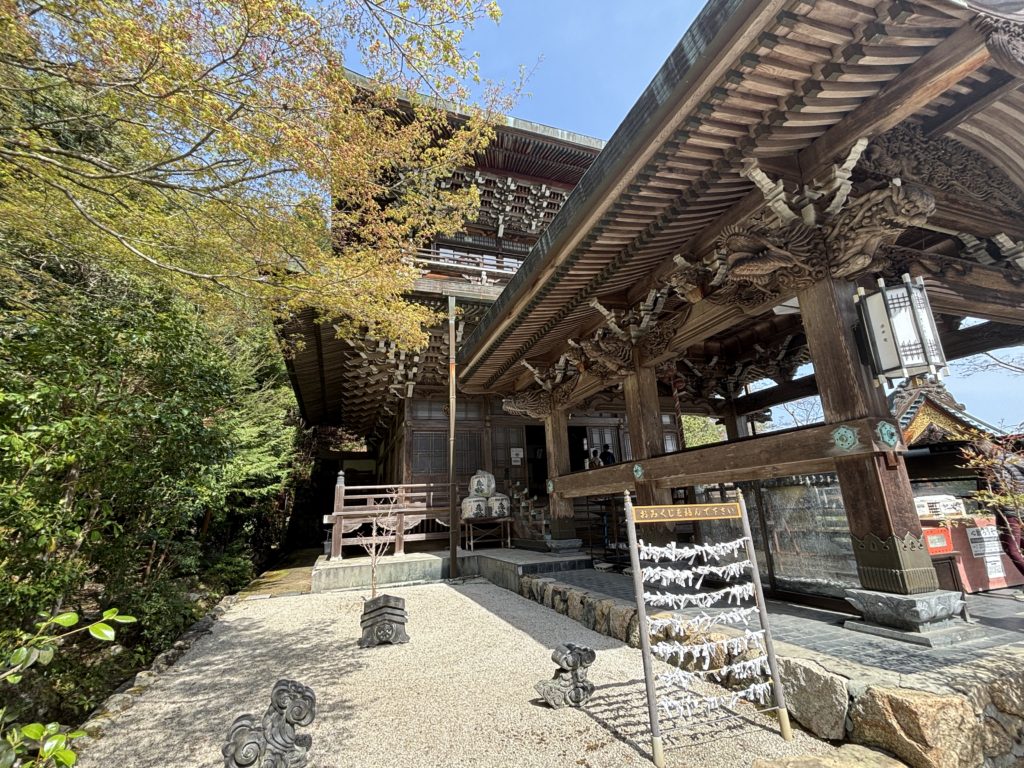
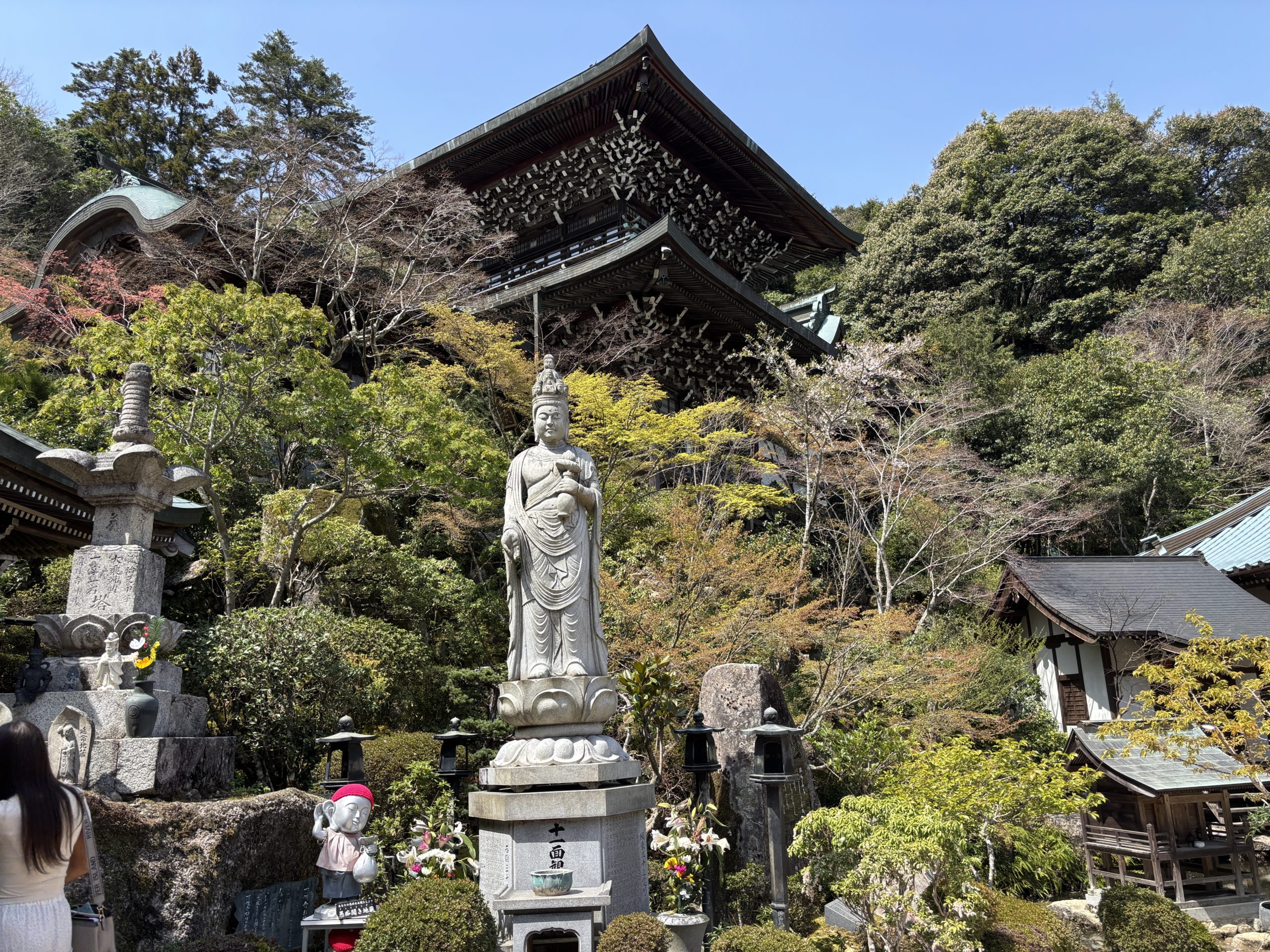
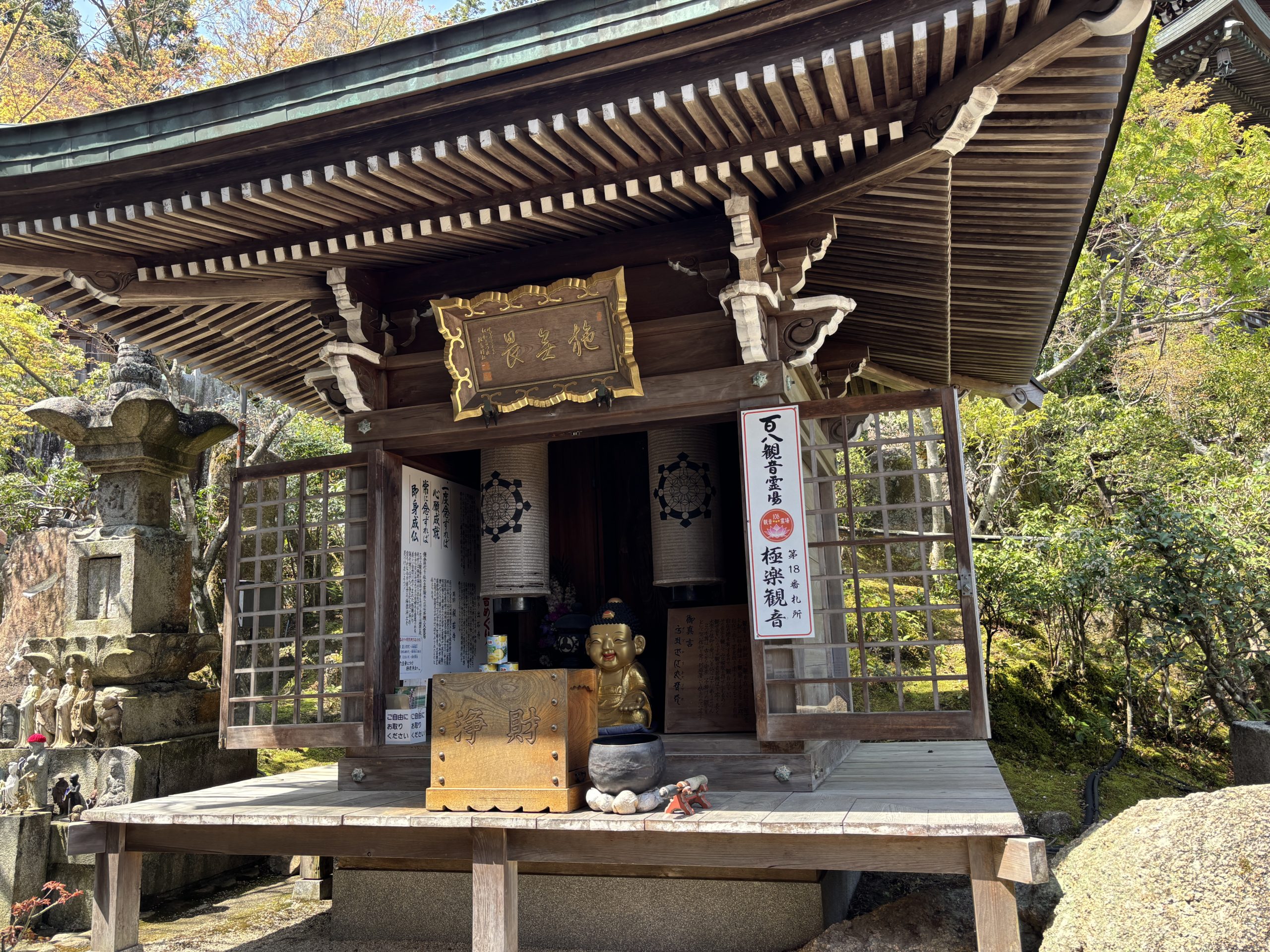
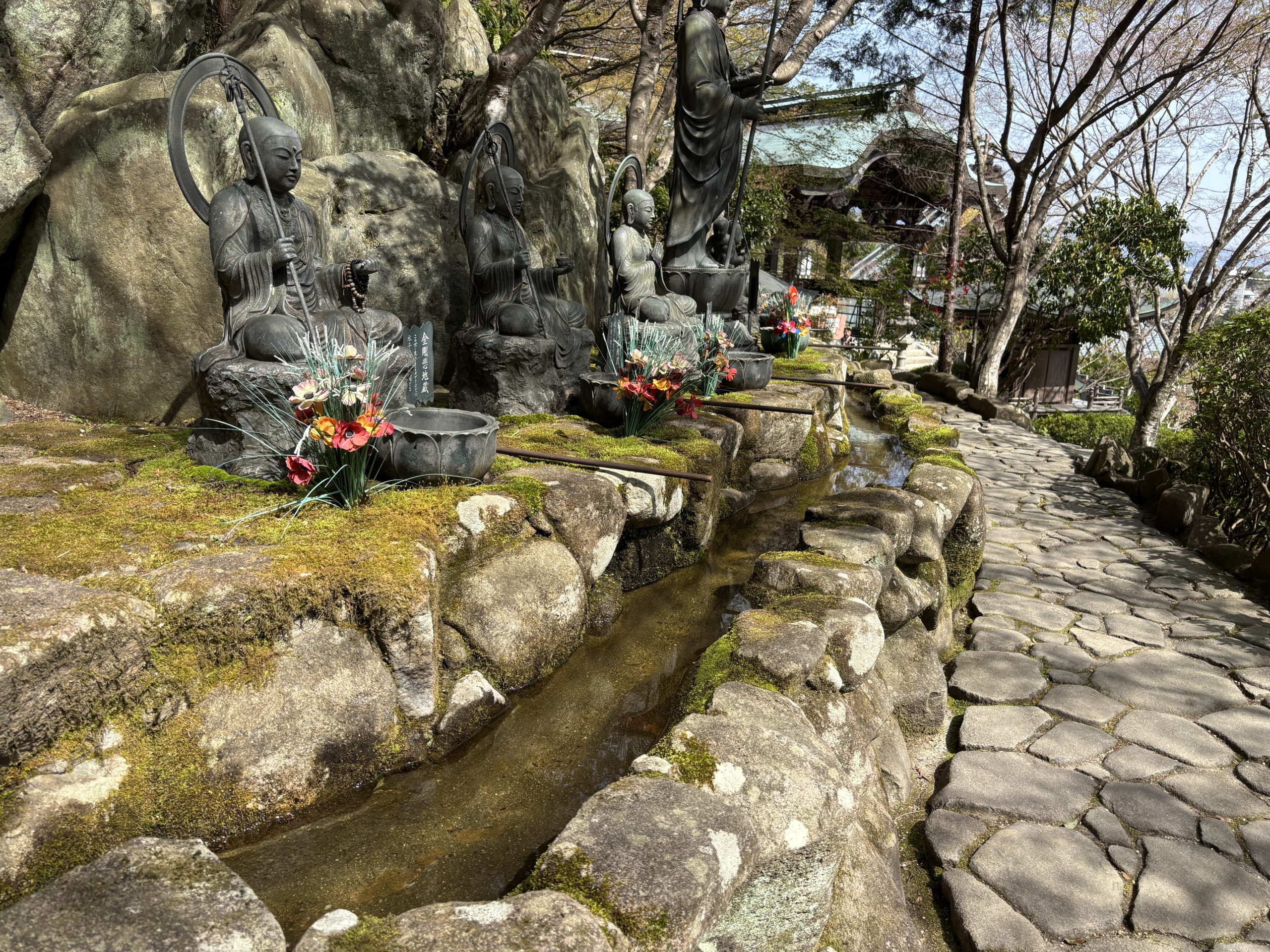
Maniden Hall occupies the geographical and spiritual center of Daisho-in’s layout. This is where Sanki Daigongen—the fierce protective deity of Mount Misen—resides, watching over pilgrims and hikers who venture onto the sacred mountain. On clear days, the area around Maniden offers some of the most photogenic views in the temple complex, with traditional architecture framed by forest and mountain. The hall’s vermillion pillars and dark roof tiles create beautiful contrasts with the natural greens and blues surrounding them. Take a few moments here to simply sit and observe—you’ll often see devout worshippers performing the Shinto-style two-bow, two-clap, one-bow greeting, a ritual you’re welcome to try yourself.
Octagonal Manpuku Hall: The Seven Lucky Gods
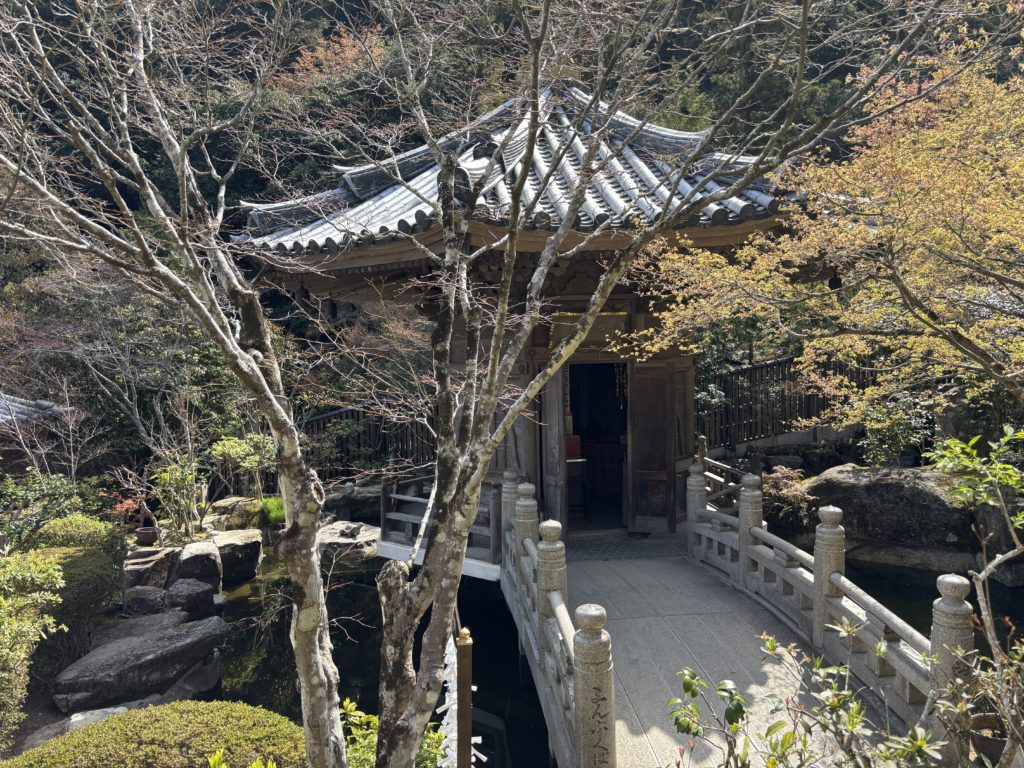
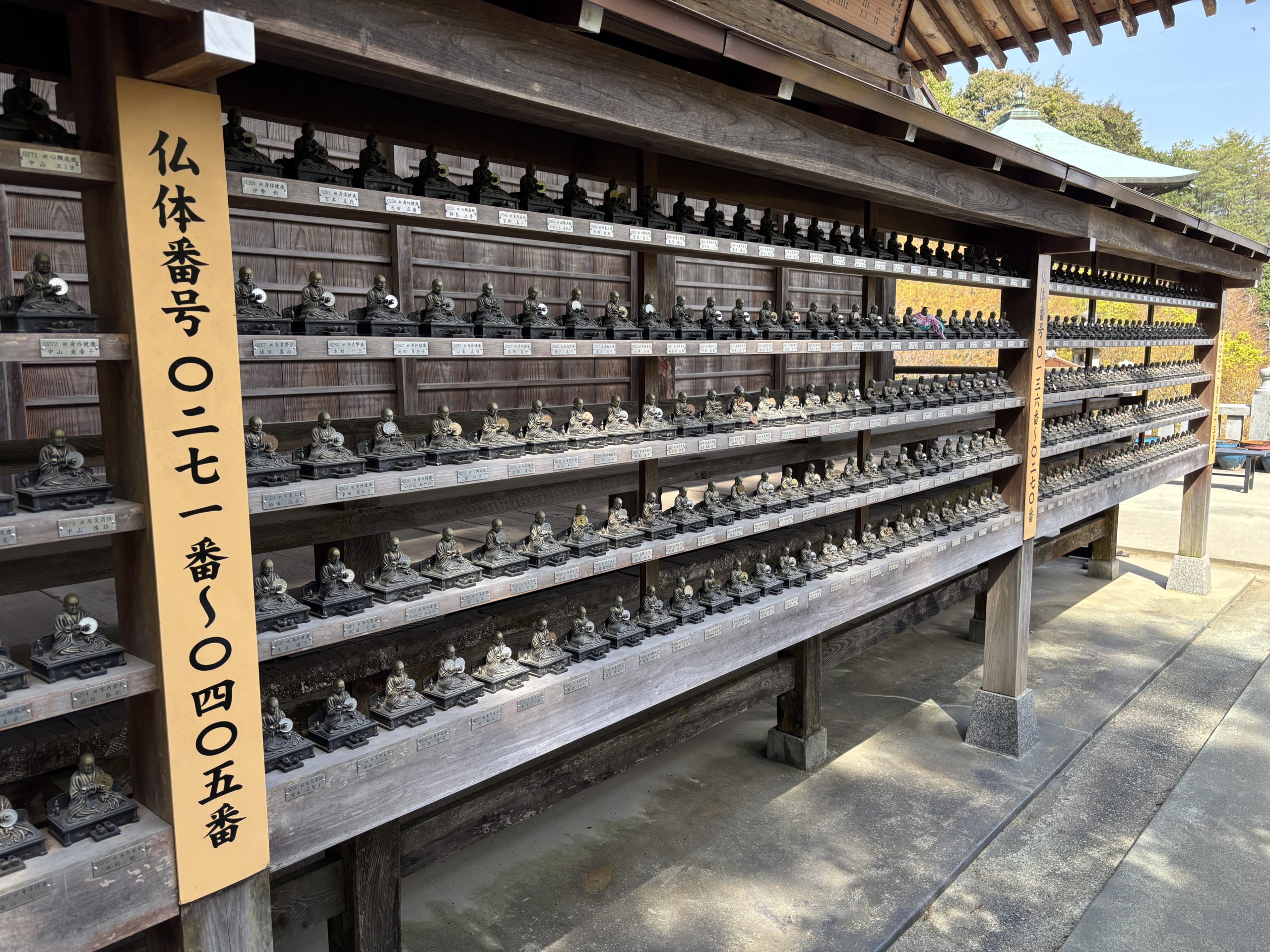
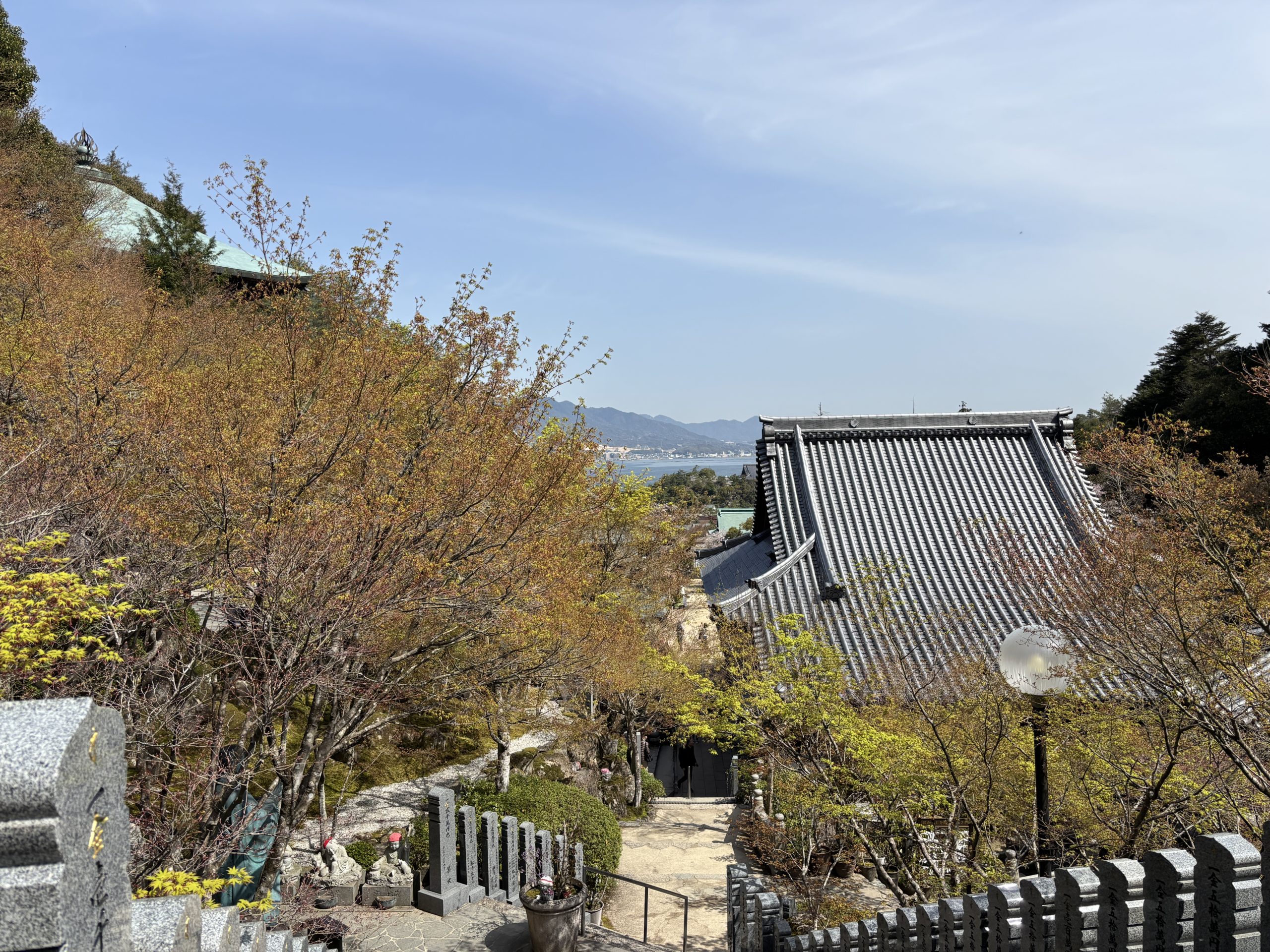
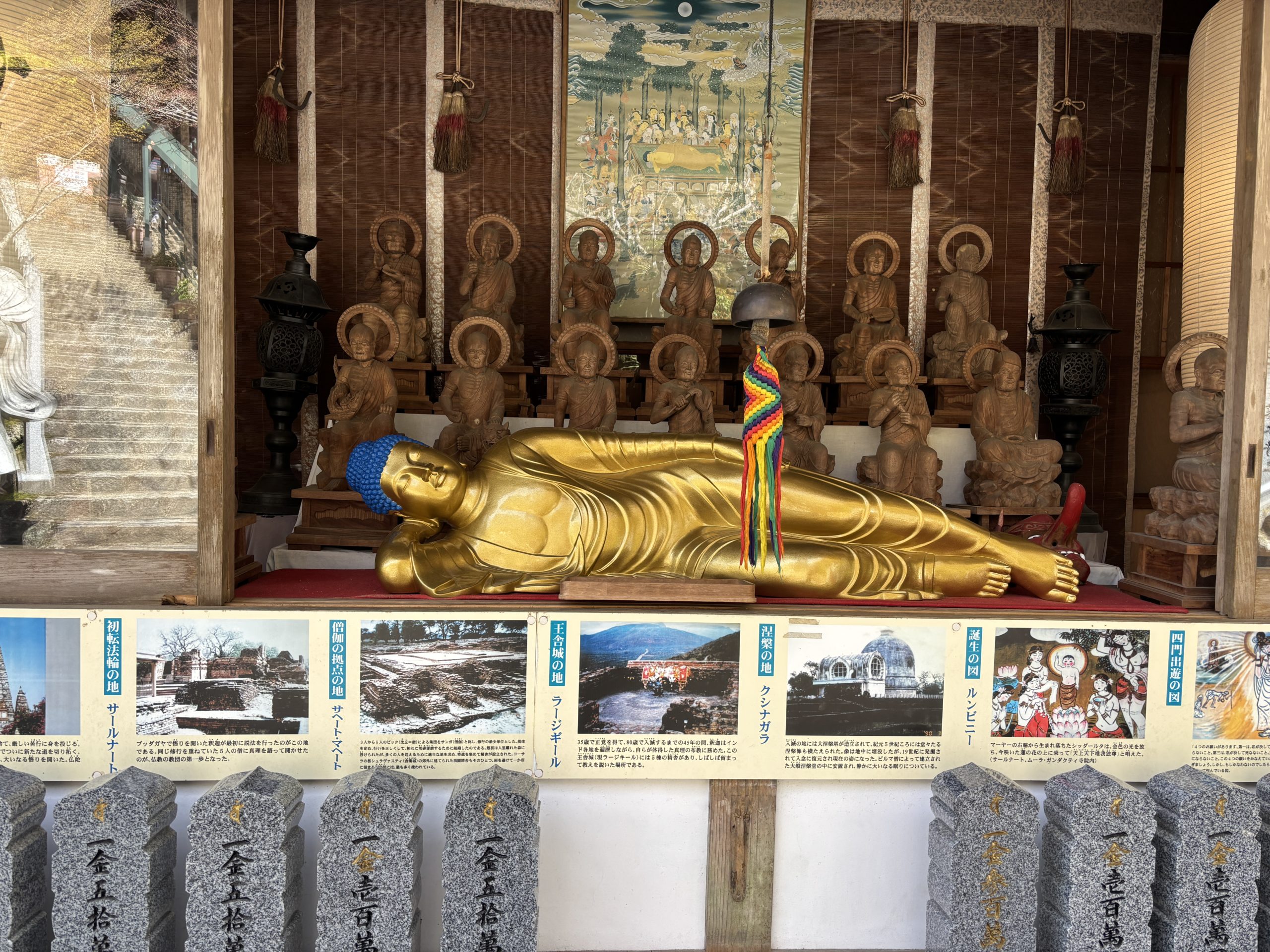
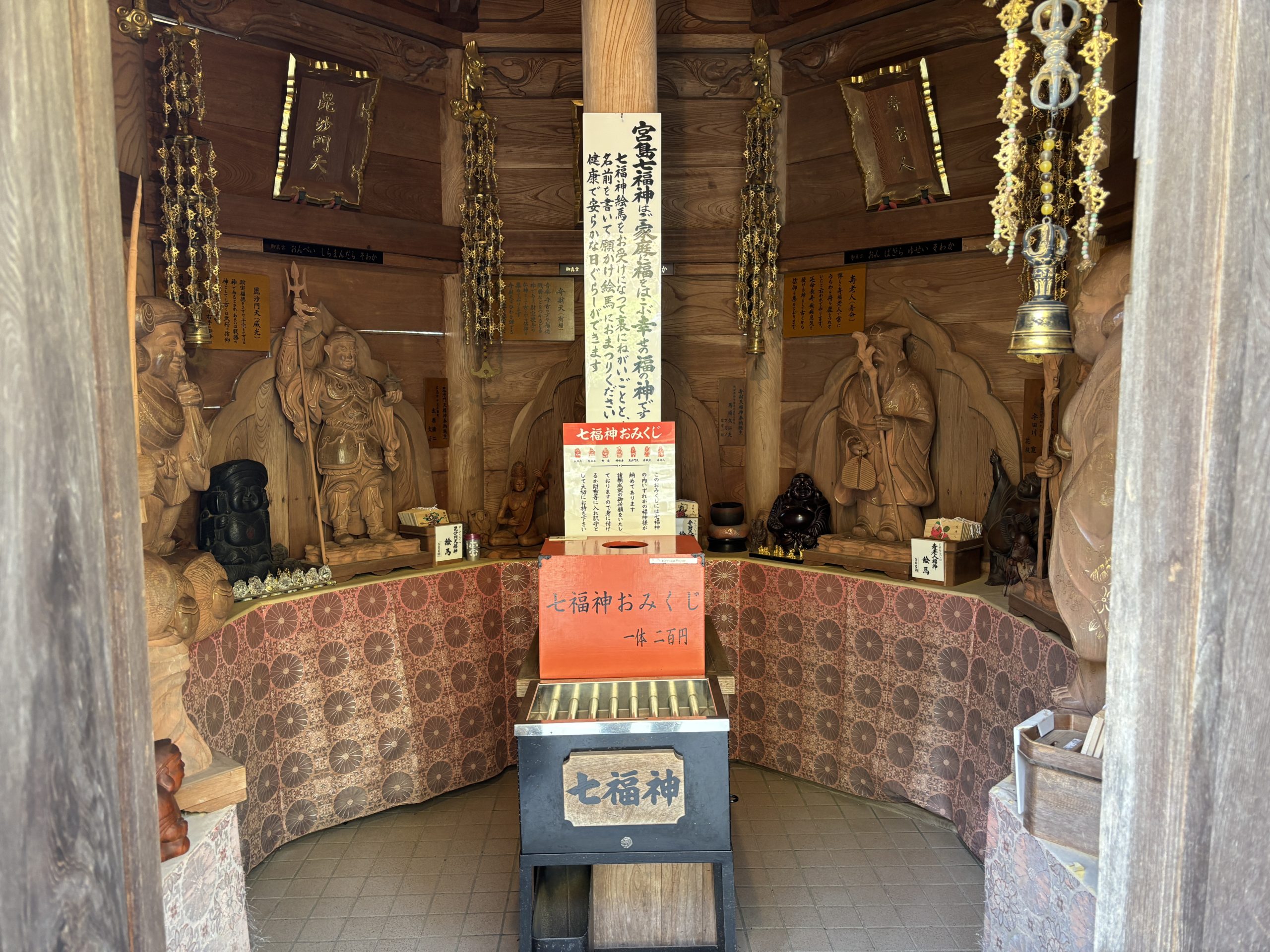
Behind Chokugendo Hall stands this distinctive eight-sided building, easily recognizable by its unique architecture. Inside, all Seven Lucky Gods of Japanese folklore gather together: Daikokuten (wealth and prosperity), Bishamonten (warriors and defenders), Ebisu (fishermen and commerce), Jurojin (longevity), Fukurokuju (wisdom and fortune), Benzaiten (arts and knowledge), and Hotei (contentment and abundance). Having all seven deities in one place is considered extremely auspicious—many Japanese visitors come specifically to pray here for household safety, business success, and general good fortune. The hall’s octagonal shape itself carries symbolic meaning in Buddhist cosmology, representing the Noble Eightfold Path to enlightenment.
Daishi Hall: Honoring the Founder
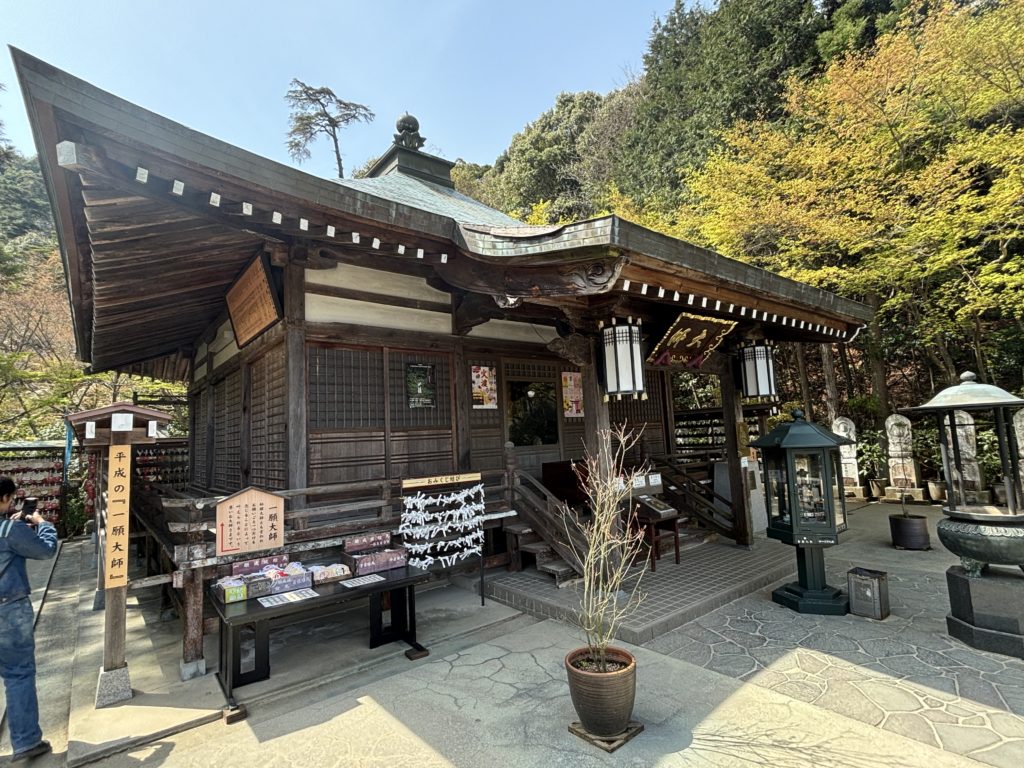
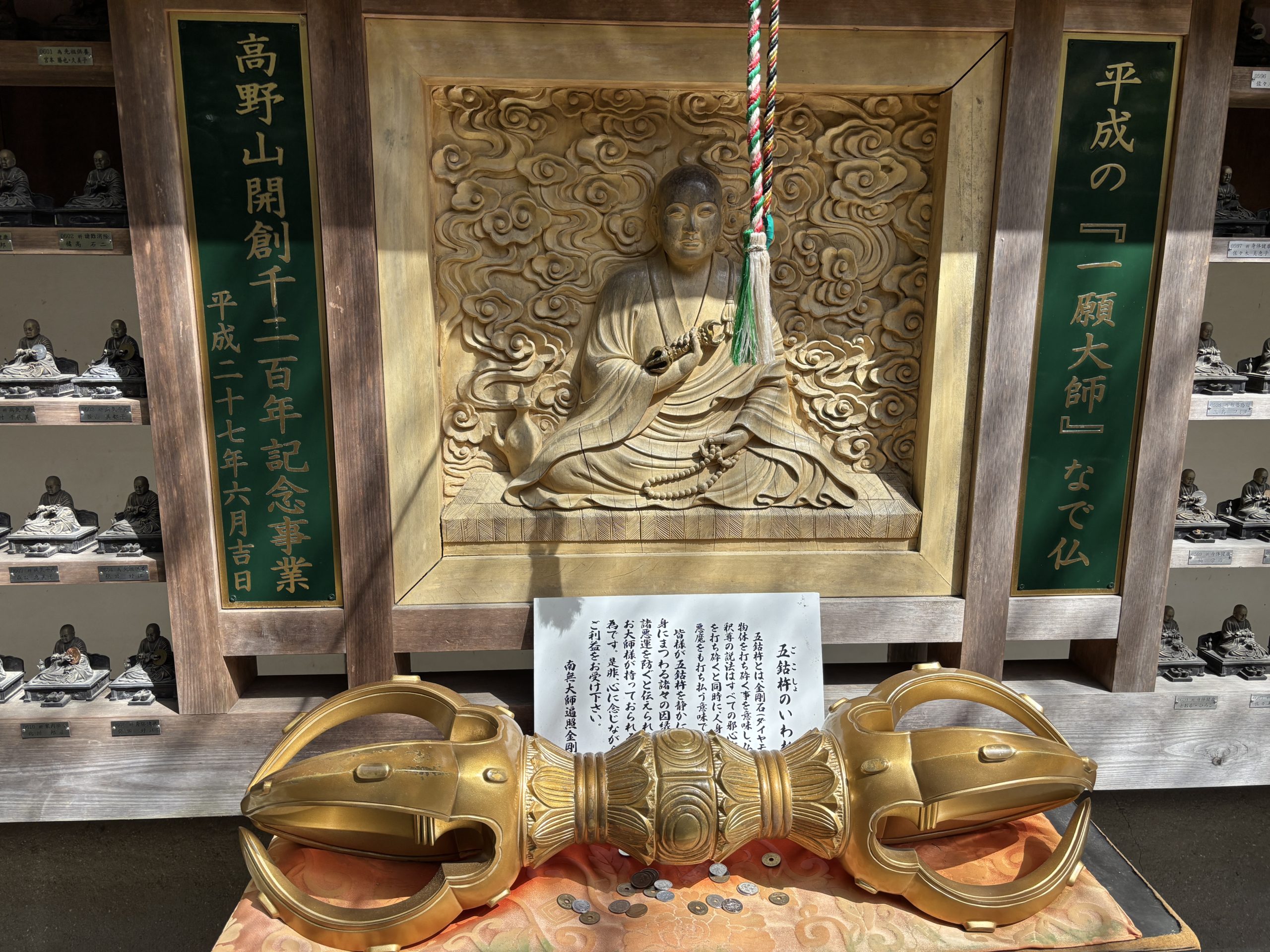
Daishi Hall ranks as the oldest building still standing at Daisho-in, a structure that has witnessed centuries of prayers and pilgrims. It enshrines Kukai (Kobo Daishi), the monk who founded both the temple and the entire Shingon sect of Buddhism in Japan. Behind the main hall, you’ll find a statue called “Ikko Daishi”—the “One-Wish Daishi.” As the name suggests, this image of Kukai is believed to grant a single heartfelt wish if you pray with complete sincerity. The ema (wooden prayer plaques) sold here feature unique designs you won’t find at other temples, making them special souvenirs even if you don’t write a wish. If you carry a hope close to your heart—for health, love, career success, or family harmony—this is the place to offer it up with focused intention.

Kannon Hall: The Goddess of Mercy
After climbing the steep main approach, the large impressive building on your right is Kannon Hall. This hall was established by the great monk Gyoki Bosatsu and once housed the Eleven-faced Kannon Bodhisattva that originally served as the principal deity of Itsukushima Shrine—a fascinating connection between temple and shrine that illustrates their intertwined history. Kannon, the Bodhisattva of Compassion, is one of Buddhism’s most beloved figures, particularly popular among women and families seeking protection for children. During the Flower Festival each April, worshippers gather here to receive cups of sweet tea as part of the Buddha’s birthday celebration. The hall’s basement houses the Kaidan Meguri dark corridor experience—prepare yourself for a genuinely intense spiritual encounter if you descend into that absolute darkness.


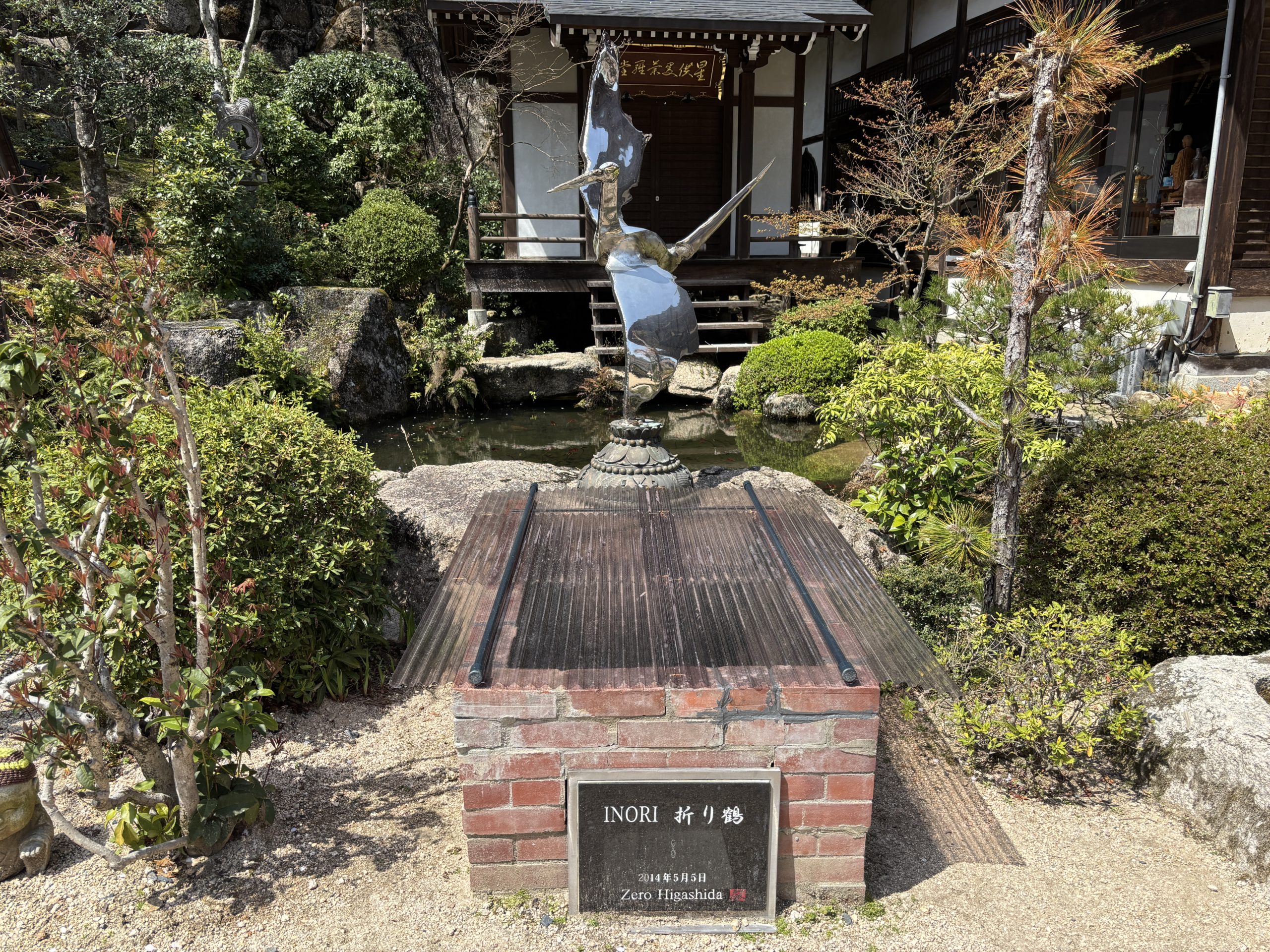
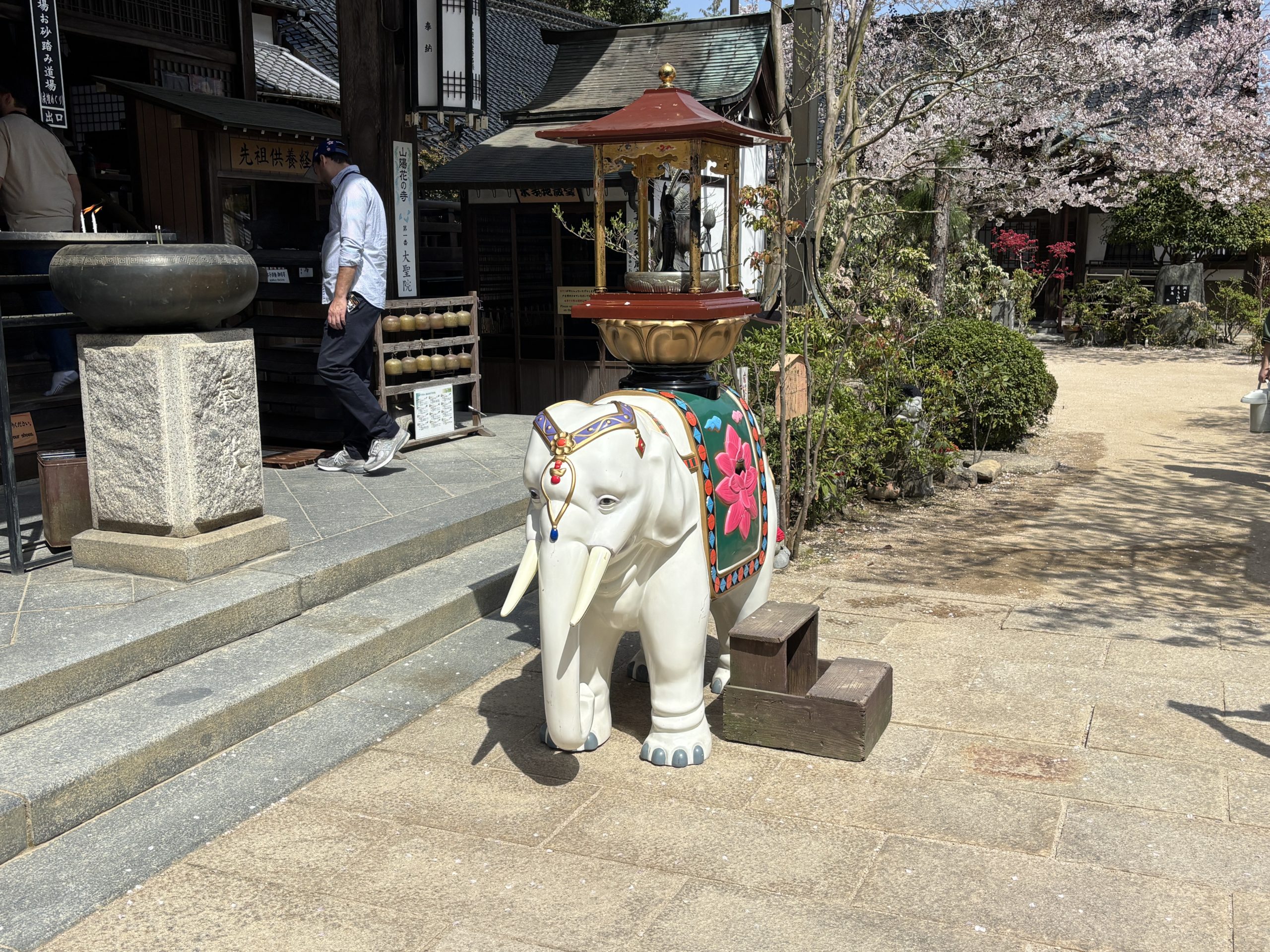

Temple Stamps and Souvenirs
For collectors of goshuin (temple stamps), Daisho-in offers three to four different designs year-round, each handwritten with beautiful calligraphy by the temple’s monks. The standard stamp features Namikiri Fudo Myoo, the sword-wielding protector deity, but the real treasures are the seasonal kirie goshuin—intricate paper-cut designs featuring cherry blossoms in spring and fiery autumn leaves in fall. These limited-edition stamps have become quite sought-after among Japanese temple stamp enthusiasts.
Be aware that special collaborative goshuin—created in partnership with JR West railway or local tourism boards—often require advance online reservations and can sell out by noon on weekends and holidays. If collecting stamps is important to you, arriving in the morning significantly improves your chances of getting the limited editions.
The temple shop carries unique protective amulets you won’t find at other temples. “Mamori-suna” (protective sand) for safe travels comes in small cloth pouches blessed by the monks. The “Hiwatari Mamori” (fire-walking charm) is believed to protect against accidents and misfortune. For a more playful souvenir, try the adorable cloth “Miki Mikuji” fortune pouches—these make perfect gifts for friends back home, combining spiritual meaning with kawaii Japanese design sensibility.
Hands-On Experience Programs and Annual Events
If you want to move beyond sightseeing into genuine spiritual practice, Daisho-in offers several programs that let you experience esoteric Buddhism firsthand. The most popular is the small-group “Deep Miyajima” tour—a 90-minute guided experience led by an actual monk who explains the temple’s history, rituals, and spiritual significance in detail. This requires advance reservation (available through the temple’s official website) and typically books up several weeks ahead during peak seasons.
For those staying on Miyajima or visiting very early, zazen (seated meditation) and esoteric Buddhist meditation sessions happen every Saturday morning at 7:00 a.m. These hour-long sessions introduce basic meditation techniques—proper posture, breathing, and mental focus—in the authentic setting of a working Buddhist temple. A donation is requested rather than a fixed fee; most participants contribute ¥1,000 to ¥2,000.
Daily programs (9:00 a.m. to 3:00 p.m.) include shakyo (sutra copying) and shabutsu (tracing images of Buddha), both classic Buddhist practices for calming the mind and accumulating merit. Using traditional brush and ink, you carefully copy sacred texts or trace Buddhist images while focusing your concentration. The deliberate, meditative pace makes these activities surprisingly relaxing even for people who don’t read Japanese—it’s about the mindful process more than understanding every character. Both cost ¥1,000 and take about 45 minutes to an hour depending on your pace.
On Saturdays, Sundays, and holidays, you can make your own juzu (Buddhist prayer beads) for ¥1,500. Staff guide you through selecting stones and beads, then assembling them into a bracelet you can wear or use for meditation. It’s a wonderful hands-on activity, especially for families with older children or teenagers who want to create something meaningful to take home.
All these programs have limited capacity, so making reservations through the application form on Daisho-in’s official website is strongly recommended, especially during cherry blossom season (late March to early April) and autumn foliage season (mid-November).
The April 8th Flower Festival remains one of the most accessible and family-friendly events—simply arrive before 11:00 a.m. to watch the ceremony of pouring sweet tea over the infant Buddha statue, praying for peace and health in the coming year. The cherry blossoms blooming all around create an almost magical setting.
The April 15th Fire-Walking Ceremony offers that rare chance to participate in genuine esoteric Buddhist ritual by walking barefoot over hot embers while chanting prayers for health and wish fulfillment. It’s intense, slightly scary, and absolutely unforgettable—the kind of experience you’ll be describing to friends for years afterward.
Summer brings opportunities for longer sutra copying sessions and prayer bead making workshops when the weather is warm and the temple grounds are lush and green. Autumn features special nighttime illuminations that transform the temple into a dreamlike landscape of light and shadow—the autumn leaves reflecting in Maniden’s polished corridor floors create scenes straight out of a Miyazaki film. Winter sometimes offers “starry sky meditation” sessions on clear nights when Mount Misen’s elevation and distance from light pollution reveal truly spectacular views of the Milky Way.
The temple’s official website maintains an updated event calendar in Japanese (staff at Miyajima’s tourist information center can help translate if needed), so check before your visit to see what special programs might be happening during your stay.
After exploring Daisho-in, nearby Senjokaku Pavilion makes an excellent next stop. This massive hall commissioned by Toyotomi Hideyoshi holds a fascinating secret that locals love to share: beneath the wide wooden floorboards, graffiti carved by Edo-period visitors has been preserved for centuries—a glimpse into how ordinary Japanese people have enjoyed Miyajima for generations.
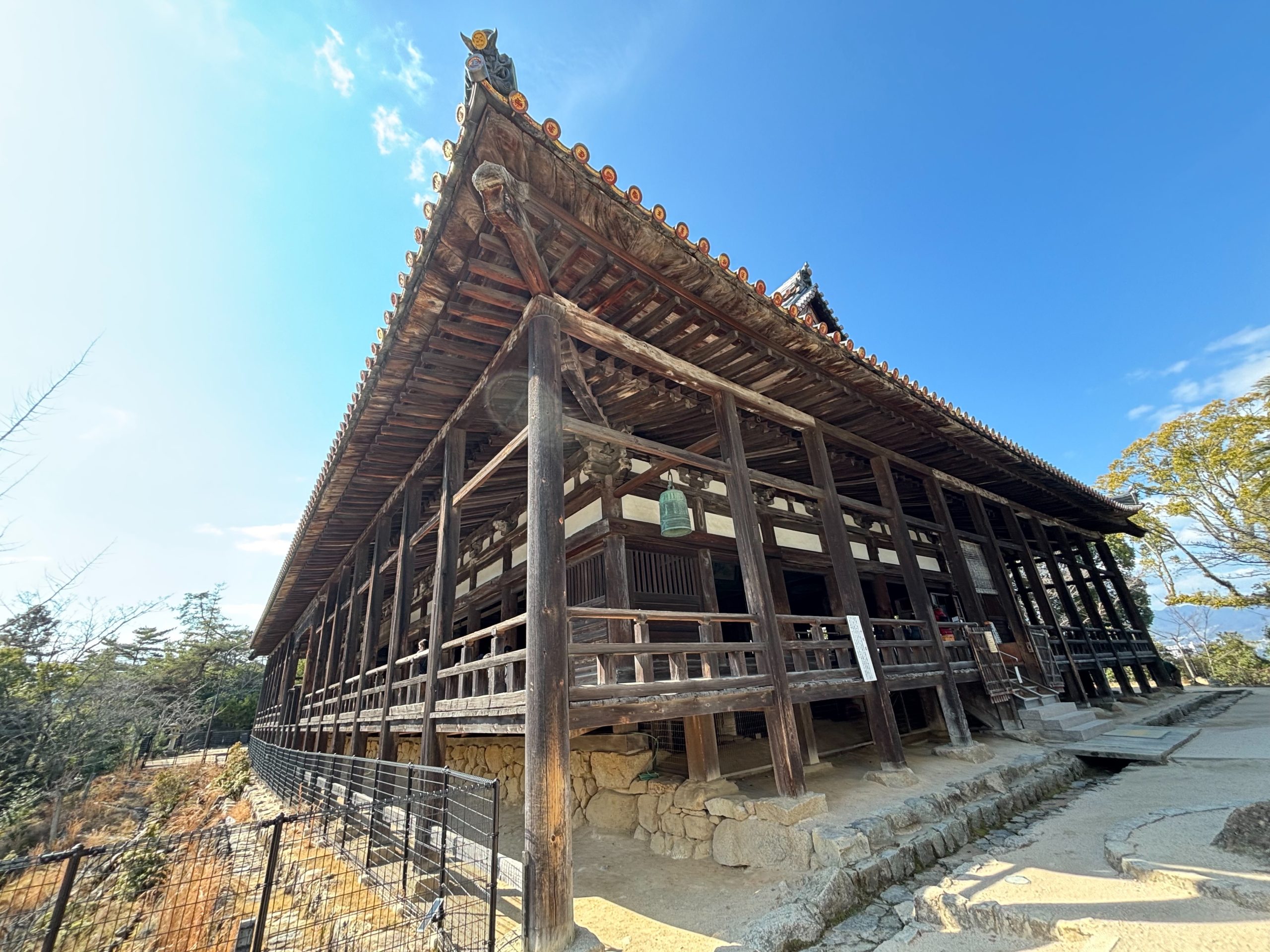
Discover Senjokaku: Miyajima's Magnificent Unfinished Temple Perche...
Getting There: Access and Suggested Itineraries
Avoiding the Crowds: Miyajima gets genuinely packed after 11:00 a.m., especially during autumn foliage season (mid to late November) and major Japanese holidays like Golden Week and Obon. If you want to experience Daisho-in without fighting through crowds, timing makes all the difference. Catch a ferry from Miyajimaguchi that departs by 8:30 a.m. at the latest. Eat an early lunch around 10:30 a.m. before restaurants fill up. Then plan your return ferry for after 5:00 p.m. when the day-tripper exodus has begun. This schedule lets you enjoy the temples, shrines, and shopping street in relative peace while others are still commuting or already heading home.
Suggested Sightseeing Strategy: Most visitors can comfortably see both Itsukushima Shrine and Daisho-in Temple in about 2 to 3 hours total if you move at a moderate pace. A popular full-day itinerary starts with the shrine and temple in the morning, then takes the Mount Misen Ropeway up the mountain in the afternoon to catch sunset from the summit. The views of islands scattered across the Seto Inland Sea with the sun sinking toward the horizon rank among Japan’s most photographed landscapes. Note for pet owners: small dogs and cats in carriers are permitted on all ropeway sections, so your furry companions can join the mountain adventure.
The walk from Miyajima Pier to Daisho-in takes about 25 minutes through Omotesando Shopping Street—the main pedestrian boulevard lined with souvenir shops and restaurants. It’s shorter than it sounds because you’ll naturally pause to browse the maple leaf-shaped manju cakes, grilled oysters, and other Miyajima specialties. From Itsukushima Shrine’s exit, Daisho-in is just a 5 to 10 minute walk, making the two sites very easy to combine.
Planning to hike Mount Misen? The Daisho-in Course (also called the Daishoin Route) begins directly behind the temple—look for trail markers near Daishi Hall. This hiking path takes about 90 minutes of steady climbing to reach the summit, passing through primeval forest that’s been protected for over a thousand years. Along the way, you’ll encounter the Eternal Flame Hall (Reikido) and the Hall of Three Demons, both worth stopping at for a few minutes. The forest itself is magical—massive trees draped in moss, rocks carved with centuries-old Buddhist inscriptions, the calls of wild birds echoing through the canopy.
If you’re exploring just the main temple buildings and courtyards at a relaxed pace, budget about 40 minutes. To really experience everything—the Kaidan Meguri dark corridor, the sand-stepping pilgrimage, exploring all the various halls, sitting quietly in meditation for a few minutes—plan for 1.5 to 2 hours. The temple rewards slow, contemplative visiting rather than rushing through snapping photos.
For those driving to Miyajima, you’ll need to park on the mainland at Miyajimaguchi and take the ferry across (no cars allowed on the island itself). The nearest parking is the municipal lot, which has 260 spaces and charges ¥300 per hour. It’s about a 2-minute walk from the lot to the ferry terminal. During peak seasons, this lot fills by 9:00 a.m., so arriving early or using public transportation is advisable.
The classic Miyajima sightseeing route begins with Itsukushima Shrine, the UNESCO World Heritage site famous for its “floating” torii gate that appears to stand in the sea at high tide. The shrine reveals completely different personalities depending on whether you visit at high or low tide—many people actually return twice in one day to experience both moods. At high tide, the shrine buildings seem to float on water; at low tide, you can walk right up to the massive torii gate’s base and touch its ancient pillars.
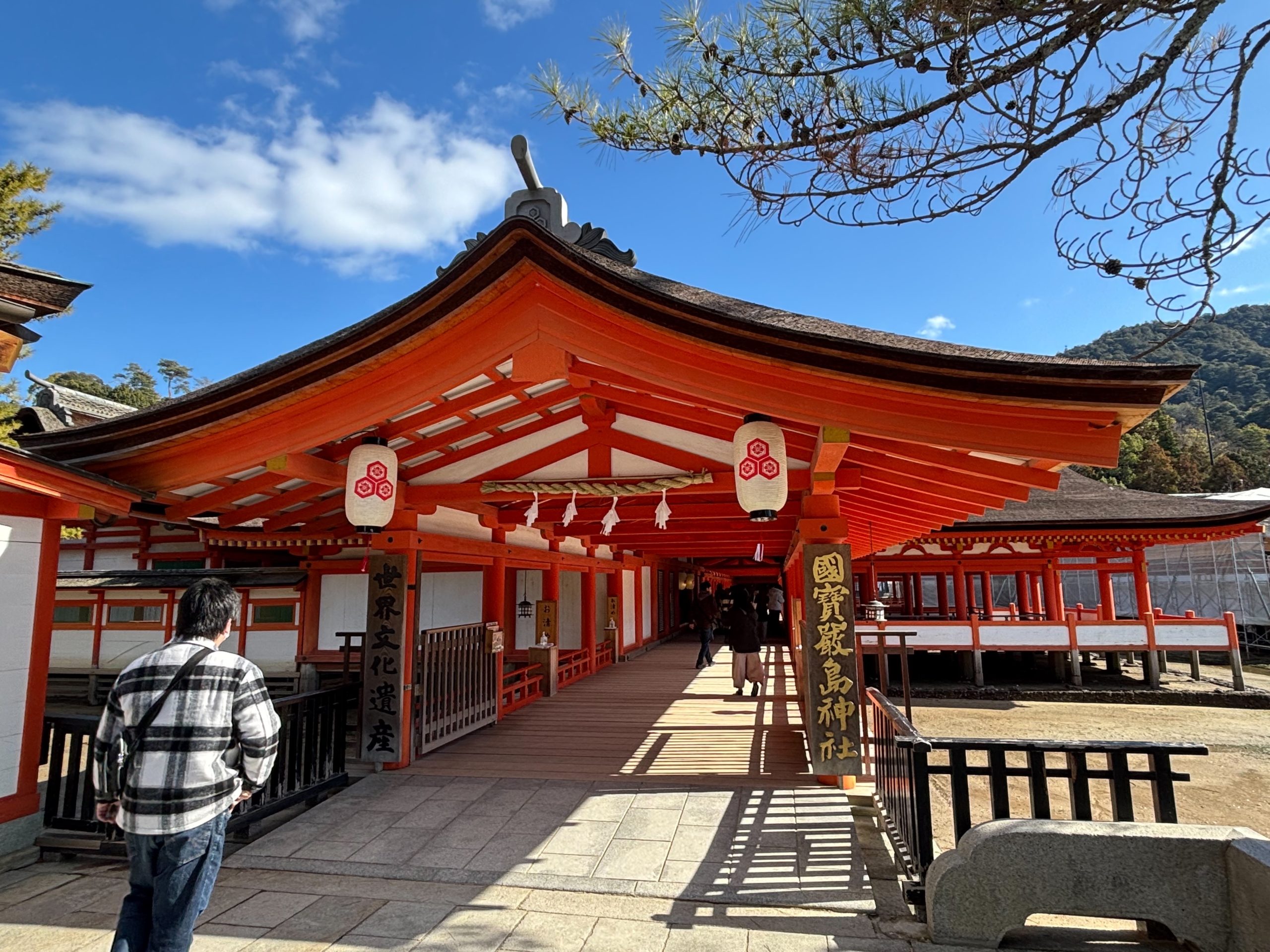
When you think of Miyajima, the first image that comes to mind is Itsu...
Accessibility for Wheelchairs and Families with Young Children
While Daisho-in’s hillside location naturally means stairs throughout the precincts, the temple has made genuine efforts to ensure accessibility. Wheelchair-accessible ramps connect the main halls—Daishi Hall, Maniden, and Chokugendo are all reachable without climbing steps if you enter via the back route. Staff at the reception area (located near the temple’s main entrance) will provide directions to the ramped path and can even accompany wheelchair users or families with strollers if you arrive during less busy periods.
A multipurpose restroom with nursing facilities and diaper-changing tables is located next to Chokugendo Hall. The restroom is clean, well-maintained, and spacious enough for a parent and child or a wheelchair user with an assistant.
Free wheelchair rentals are available on a first-come, first-served basis at the Miyajima Pier Terminal (not at the temple itself), making the entire island more accessible for seniors and travelers with mobility limitations. We recommend securing a wheelchair at the pier before beginning your sightseeing rather than trying to find one mid-visit.
Families with young children will find Daisho-in surprisingly child-friendly for a sacred temple. Kids love the playful Jizo statues dressed as cartoon characters, the Guchi-kiki Jizo where they can “complain” and have their frustrations symbolically eaten, and the wish-ball toss on the stone steps. The Kaidan Meguri dark corridor is thrilling for older kids (maybe age 8+) who enjoy slightly spooky adventures, though very young children might find the complete darkness frightening—parents know their own kids best on this one. The 500 Arhat statues with their varied expressions and knitted caps create a fun “treasure hunt” atmosphere as children try to find the funniest or cutest faces.
Best Times to Visit: Seasonal Highlights
Cherry blossoms typically peak in early April on Miyajima, about a week later than Hiroshima city due to the island’s slightly cooler maritime climate. The temple’s entrance gate and stone approach become tunnels of pale pink blossoms, with petals drifting down like snow when the breeze picks up. This coincides perfectly with the April 8th Flower Festival, creating one of the year’s most photogenic visits.
From mid to late November, the temple hosts special nighttime illuminations (usually 5:30 p.m. to 8:00 p.m., but confirm dates on the official website). Maple trees throughout the grounds turn brilliant shades of red, orange, and gold, and strategically placed lights transform the evening temple into something from a dream. The illuminated autumn leaves reflecting in Maniden Hall’s polished wooden corridor floor create mirror images so perfect they look photoshopped—but they’re entirely real. This is Miyajima’s most popular season, so expect significant crowds, especially on weekends.
May brings the fresh green leaves of spring—the primeval forest on Mount Misen explodes with vivid new growth that seems to glow against the sky. The air smells of growing things, birds are nesting and calling, and the temple feels renewed and alive.
Winter visits have their own austere beauty. When snow dusts the temple roofs and stone lanterns, Daisho-in takes on a solemn, contemplative atmosphere. The crowds thin dramatically (most Japanese tourists avoid winter travel to Miyajima), giving you a rare chance to experience the temple in near-solitude. On clear winter days, the air is crisp and transparent, making Mount Misen’s summit views even more spectacular than usual.
While exploring this area of Miyajima, don’t miss the Five-Storied Pagoda, one of the island’s most iconic landmarks. Standing 27 meters tall with brilliant vermillion lacquer that glows in the sunlight, this elegant structure dates to 1407 and perfectly embodies the aesthetic principles of Japanese Buddhist architecture. It’s one of the most photographed spots on the island, especially beautiful when framed by cherry blossoms in spring or autumn leaves in fall.

The Miyajima five-story pagoda rises majestically on a hilltop, its br...
Frequently Asked Questions About Visiting Daisho-in
Is there an admission fee for Daisho-in Temple?
No, admission to the temple grounds is completely free. You can explore all the halls, courtyards, and shrines without paying anything. Fees only apply if you choose to participate in experience programs—sutra copying costs ¥1,000, prayer bead making is ¥1,500, and so on. The freedom to simply wander and discover at no cost makes Daisho-in accessible to all visitors regardless of budget.
When can I receive a goshuin temple stamp?
The goshuin desk is generally staffed from 8:30 a.m. to 4:30 p.m. daily. However, the popular limited-edition kirie (paper-cut) goshuin sell out quickly, sometimes by early afternoon on weekends and holidays. If collecting a special seasonal goshuin is important to you, arriving in the morning—ideally before 10:00 a.m.—significantly improves your chances. Each goshuin is hand-calligraphed to order, so expect to wait a few minutes (5-10 minutes is typical) while the monk completes your stamp.
How can I participate in the fire-walking ceremony?
On April 15th each year, anyone can join the fire-walking ritual. Pick up a participation ticket at the special reception desk set up within the temple grounds—you must get your ticket by 12:00 noon on the day of the ceremony. You’ll also need to sign an agreement form (available in Japanese; ask staff for assistance if needed). The actual fire-walking begins around 1:00 p.m. after monks complete preliminary rites. Wear clothes you don’t mind getting smoky, and prepare yourself mentally for the intense experience of walking barefoot across hot embers. It’s perfectly safe when done with proper focus and following the monks’ instructions, but it requires calm courage.
How long does it take to visit both the ropeway and Daisho-in Temple?
Plan on about 4 hours total if you want to ride the ropeway to Mount Misen’s summit, explore the mountaintop (Eternal Flame Hall, Three Demons Hall, and the observation platforms), and visit Daisho-in’s main precincts. This breaks down roughly as: 30 minutes round-trip ropeway rides, 90 minutes on the summit, 1 hour at Daisho-in, plus transition time between locations. If you’re hiking up or down instead of using the ropeway, add another 90 minutes to 2 hours to this estimate.
Can I visit with a stroller?
A baby carrier is definitely more practical for the main stone stairway with its 200 steps. However, if you must use a stroller, ask at the reception desk for directions to the back ramped route, which accesses the main halls without stairs. Once you’re in the upper temple area, the paths between major buildings are relatively level and manageable with a stroller, though some smaller side paths and certain halls remain stairs-only. Many visiting families choose to park their stroller at the reception area and use a baby carrier for exploring, then switch back to the stroller when leaving.
Is parking available?
Daisho-in Temple itself has no dedicated parking lot. All visitors must park on the mainland at Miyajimaguchi and take the ferry to the island. The nearest parking to the ferry terminal is the Miyajimaguchi Municipal Parking Area, which has 260 spaces and charges ¥300 per hour. During peak seasons (autumn foliage, cherry blossoms, major holidays), this lot fills early—by 8:30 or 9:00 a.m. on busy weekends. Additional coin-operated private lots are scattered around Miyajimaguchi Station, though they tend to charge slightly more (¥400-500 per hour).
Is Daisho-in worth visiting on rainy days?
Absolutely. The temple buildings are relatively close together, making it easy to move between them with just an umbrella—you’re never exposed to rain for more than a minute or two at a time. More importantly, several of the temple’s signature experiences are indoors: the Kaidan Meguri dark corridor beneath Kannon Hall, the Henjo Cave sand-stepping pilgrimage under Daishi Hall, and browsing the Seven Lucky Gods in the octagonal Manpuku Hall all happen under roof. Rain actually creates a beautiful atmosphere at Japanese temples—the sound of drops on tile roofs, the smell of wet stone and forest, the way moss and greenery seem to glow when saturated. Some visitors prefer rainy days for the added serenity and smaller crowds.
Can I bring my pet?
Small dogs are permitted within the temple grounds if you carry them in your arms or in a pet carrier—they cannot walk freely on the ground. Cats in carriers are also generally accepted. This policy respects the sacred nature of the space while acknowledging that many Japanese families travel with small pets. Larger dogs that cannot be easily carried are not allowed in the temple precincts.
If you’re visiting with children, add Miyajima Public Aquarium to your itinerary for a perfect family day. The aquarium features engaging sea lion and penguin shows, touch pools where kids can interact with sea creatures, and excellent exhibits on Seto Inland Sea marine life. It’s about a 15-minute walk from Daisho-in along the waterfront, making it easy to combine cultural temple exploration in the morning with interactive aquarium fun in the afternoon.

Located at the gateway to the World Heritage island of Miyajima, the M...
Final Thoughts on Visiting Daisho-in
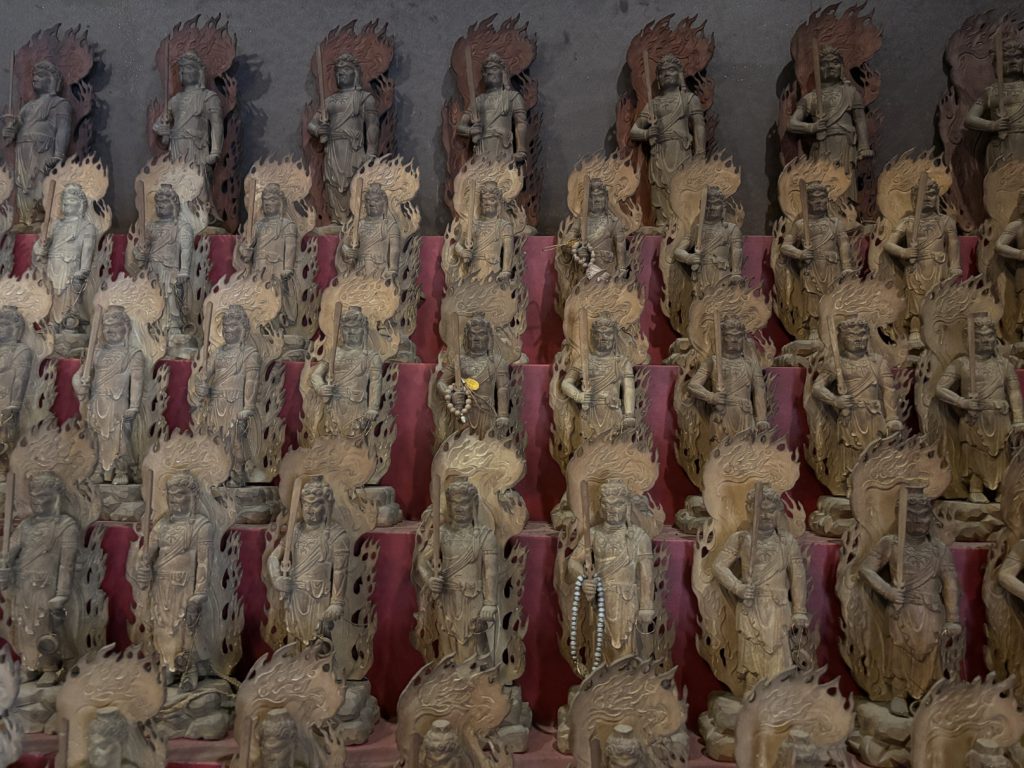
When I visited Daisho-in on that beautiful spring morning, I was struck by how much there was to discover—every turn revealed another hall, another statue, another sacred corner worth pausing at. While Miyajima rightfully celebrates Itsukushima Shrine as its crown jewel and UNESCO World Heritage site, Daisho-in Temple offers something equally valuable: a chance to move beyond spectator tourism into genuine spiritual participation. Whether you’re walking barefoot across fire, groping through absolute darkness in the Kaidan Meguri, or simply spinning prayer wheels as you climb stone steps, you’re engaging with living Buddhist practices that have helped people find meaning for over 1,200 years.
This is a place that rewards slowing down. Let yourself breathe. Sit quietly in front of Maniden for five minutes just watching the play of light and shadow. Ring the zodiac bells and listen carefully to your birth year’s tone. Spend time looking at individual Arhat faces until you find one that seems to meet your gaze with understanding. Daisho-in isn’t a place to rush through with camera raised—it’s a place to actually experience.
The annual Flower Festival on April 8th and Fire-Walking Ceremony on April 15th offer particularly powerful ways to connect with the temple’s living traditions. Participating in these centuries-old rituals, surrounded by both devout Japanese Buddhists and curious international visitors, creates memories that transcend ordinary sightseeing.
After immersing yourself in Daisho-in’s spiritual atmosphere, walking down to Omotesando Shopping Street provides a perfect transition back to everyday pleasures. Browse for momiji manju (maple leaf-shaped cakes filled with sweet bean paste), try grilled oysters fresh from Hiroshima Bay, and pick up beautifully packaged Japanese sweets to bring home. The contrast between sacred temple spaces and lively commercial streets captures the full richness of Miyajima’s appeal—a place where spiritual depth and simple human enjoyments coexist naturally.
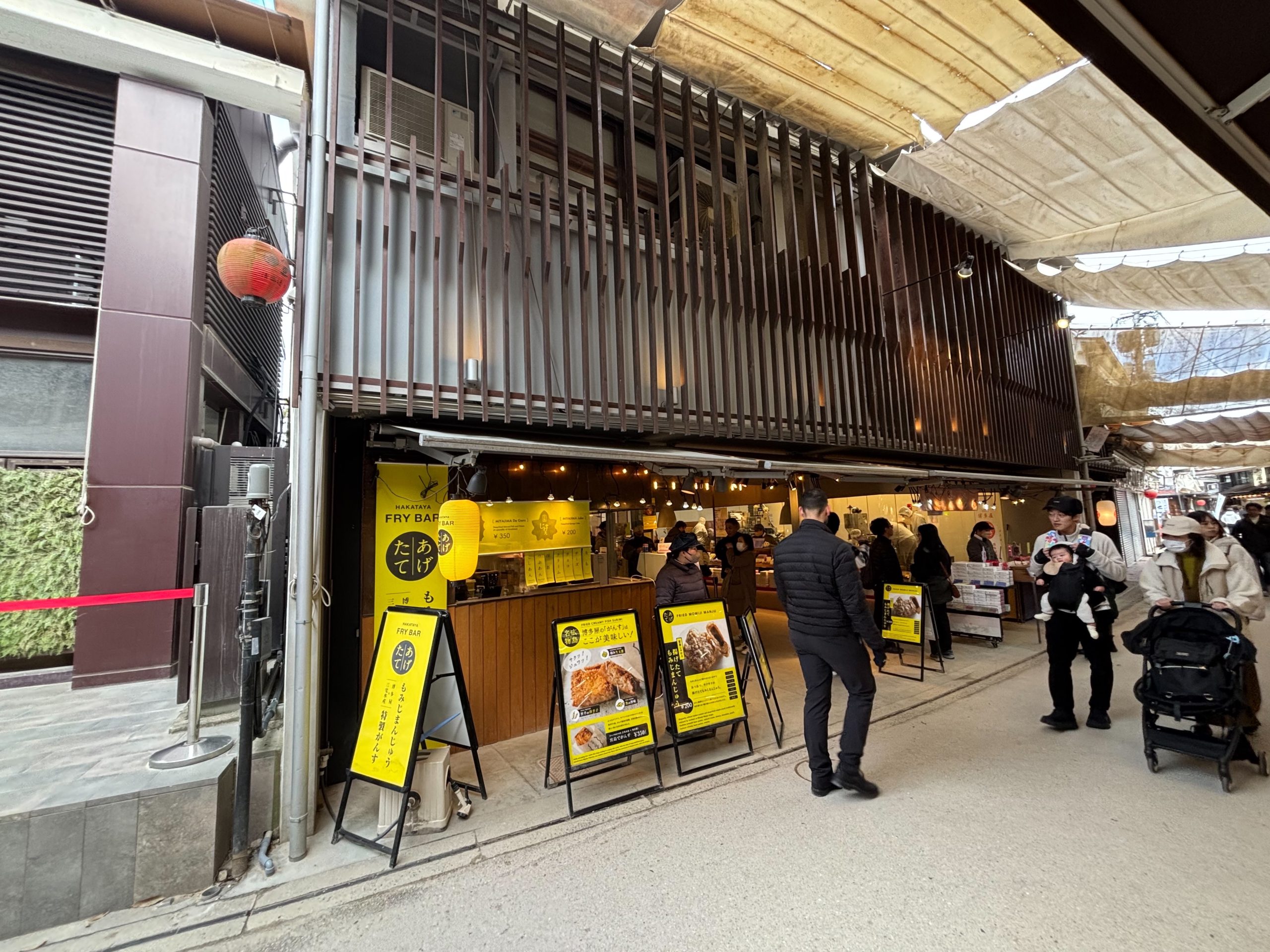
Wondering what to eat in Miyajima? The answer lies along Omotesando Sh...
Before visiting, always check Daisho-in’s official website for the latest information on opening hours, special events, and any temporary closures for ceremonies or maintenance. Temple schedules can shift slightly with the seasons and for major Buddhist observances.