The Miyajima ferry is more than just a way to reach the island—it’s a scenic 10-minute cruise across the calm Seto Inland Sea that sets the stage for your entire Miyajima experience. From Miyajimaguchi, you’ll glide past seabirds, watch the forested ridgeline of Mount Misen grow closer, and if you choose the JR “Great Torii Route,” face the iconic vermilion Great Torii Gate head-on from the water. Last month when we took the JR West Miyajima Ferry’s Great Torii Route with our family, our youngest squealed, “The boat is saying hello to the torii!” That breathtaking view of the Great Torii and shrine hall rising from the sea never fails to move us, no matter how many times we make the crossing. Whether you’re traveling with kids, as a couple, or solo, this complete guide covers everything you need to know about Miyajima ferry options, fares, schedules, onboard facilities, and discount tickets so first-time visitors can ride with confidence.
Why You Must Take the Ferry to Miyajima
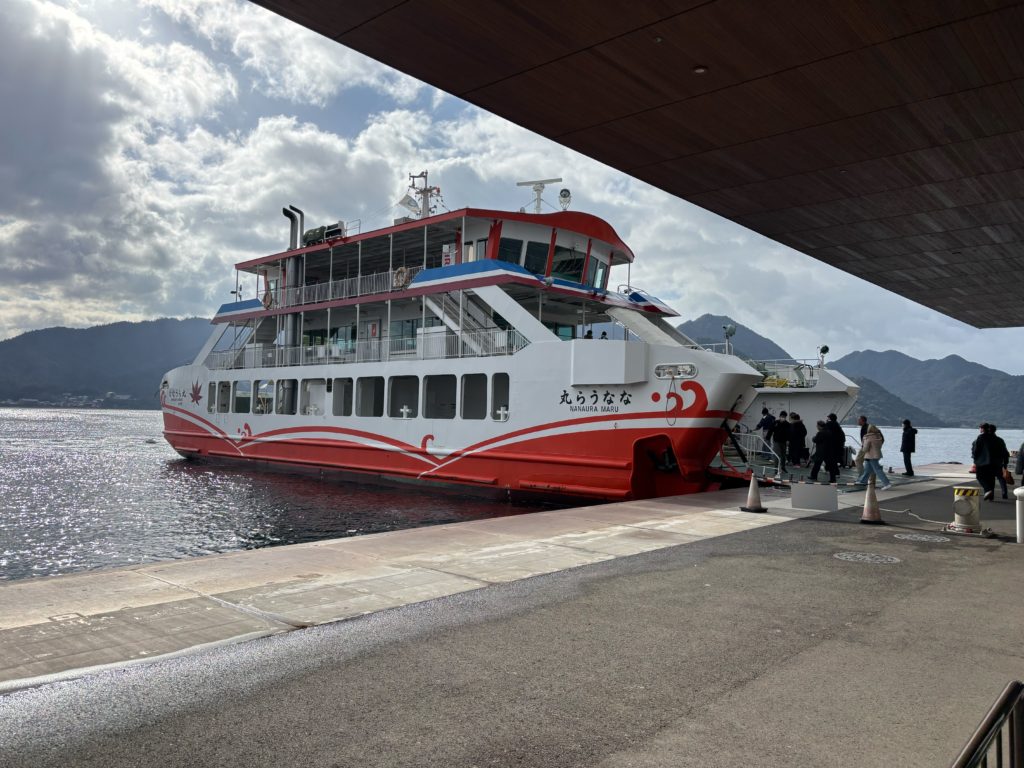
Every trip to Miyajima begins with a ferry ride—there’s simply no other way to reach the island. The crossing takes only about 10 minutes, but it immediately immerses you in the island’s magic with sea breeze, panoramic views, and that unmistakable “I’m finally going to Miyajima” feeling of anticipation. Two ferry operators run regular service from Miyajimaguchi: JR West Miyajima Ferry and Miyajima Matsudai Kisen (also called Miyajima Matsudai Steamship).
For first-time visitors, understanding the key differences between these two operators makes choosing the right ferry simple. Locals will tell you the main distinction: JR West operates a special “Great Torii Route” on select departures that brings you remarkably close to the Great Torii Gate with Itsukushima Shrine perfectly aligned behind it—a view you can only experience from the water. For the best photos, sit or stand on the right (starboard) side of the boat as you head toward Miyajima. Meanwhile, Miyajima Matsudai Kisen focuses on the most direct route for minimal waiting and the fastest arrival time. They also sell convenient combination tickets that bundle the ferry with the ropeway or local sweets vouchers—perfect for streamlining your day of sightseeing. During busy holiday seasons, many savvy travelers ride the JR Great Torii Route outbound for that iconic photo opportunity and return via the direct Matsudai route for speed and convenience.
JR West Miyajima Ferry
JR West’s signature offering is the “Great Torii Route,” which brings you remarkably close to the iconic vermilion gate with Itsukushima Shrine perfectly framed behind it—an unforgettable perspective you can only capture from the water. JR also runs the earliest morning and latest night departures, which is particularly handy for local commuters, and all JR ferries accept transportation IC cards for seamless boarding.
The Great Torii Route typically operates on daytime departures from Miyajimaguchi between 9:10 AM and 4:10 PM. When tides and weather conditions permit, the captain may even add a dramatic close pass and gentle turn near the gate for maximum photo opportunities. For the absolute best shots, position yourself on the starboard deck (the right side in the direction of travel) and have your camera ready. Routes may occasionally change for safety reasons such as unusually high tides or strong winds, so it’s wise to check the day’s announcements at the terminal or ask staff. JR’s modern vessels like the electric-powered “Miyajima Maru” and “Misen Maru” run whisper-quiet with expansive windows, transforming the short crossing into a peaceful mini-cruise experience.
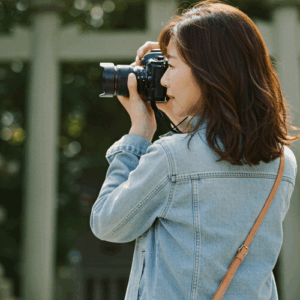
Our family photographer—my husband—always shares his shooting tips for the Great Torii Route with fellow travelers: get into position on the starboard deck early, and the moment the Great Torii Gate first appears on the horizon, that’s your prime shutter moment. Our eldest daughter inevitably ends up with over 100 photos by the time we dock!
Miyajima Matsudai Steamship Co.
Miyajima Matsudai Kisen prioritizes the fastest, most direct route across the strait. Where they really shine is in their great-value sightseeing packages, such as combo tickets that pair the ferry with the Miyajima Ropeway, or round-trip ferry tickets bundled with vouchers for popular Miyajima sweets. Like JR, they accept all major transportation IC cards for quick payment.
The Matsudai ships are thoughtfully designed for comfort and accessibility. Their vessel “Aki,” for example, features dedicated wheelchair-priority spaces and barrier-free restrooms, plus upstairs counter seating equipped with power outlets for charging devices. Their product bundles are built around making your island day as smooth as possible: the “Enjoy Ticket” combines round-trip ferry plus round-trip ropeway access, while the “Miyajima Value Ticket” pairs the round-trip ferry with a sweets exchange voucher and a ¥200 shopping coupon. For the best views, head out to the open deck; during colder months, you can enjoy the scenic crossing from warm, comfortable window seats inside the cabin.
Our Family’s Experience on the JR West Miyajima Ferry
Between 9:10 AM and 4:10 PM, select JR departures operate as the special “Great Torii Ferry,” taking a scenic route that approaches the famous gate. During these hours, boats depart roughly every 15 minutes, so even if you just miss one departure, another follows shortly.
What we loved most was being able to frame Itsukushima Shrine directly behind the Great Torii Gate for that postcard-perfect composition—a shot that’s only possible from this unique vantage point on the water. Honestly, the torii view from the Miyajima ferry alone makes the entire trip worthwhile.
After arriving on Miyajima’s shores, head straight to the World Heritage-listed Itsukushima Shrine. The kids always burst out with spontaneous “Wow!” exclamations when they first see just how beautiful the vermilion shrine buildings are against the sea.
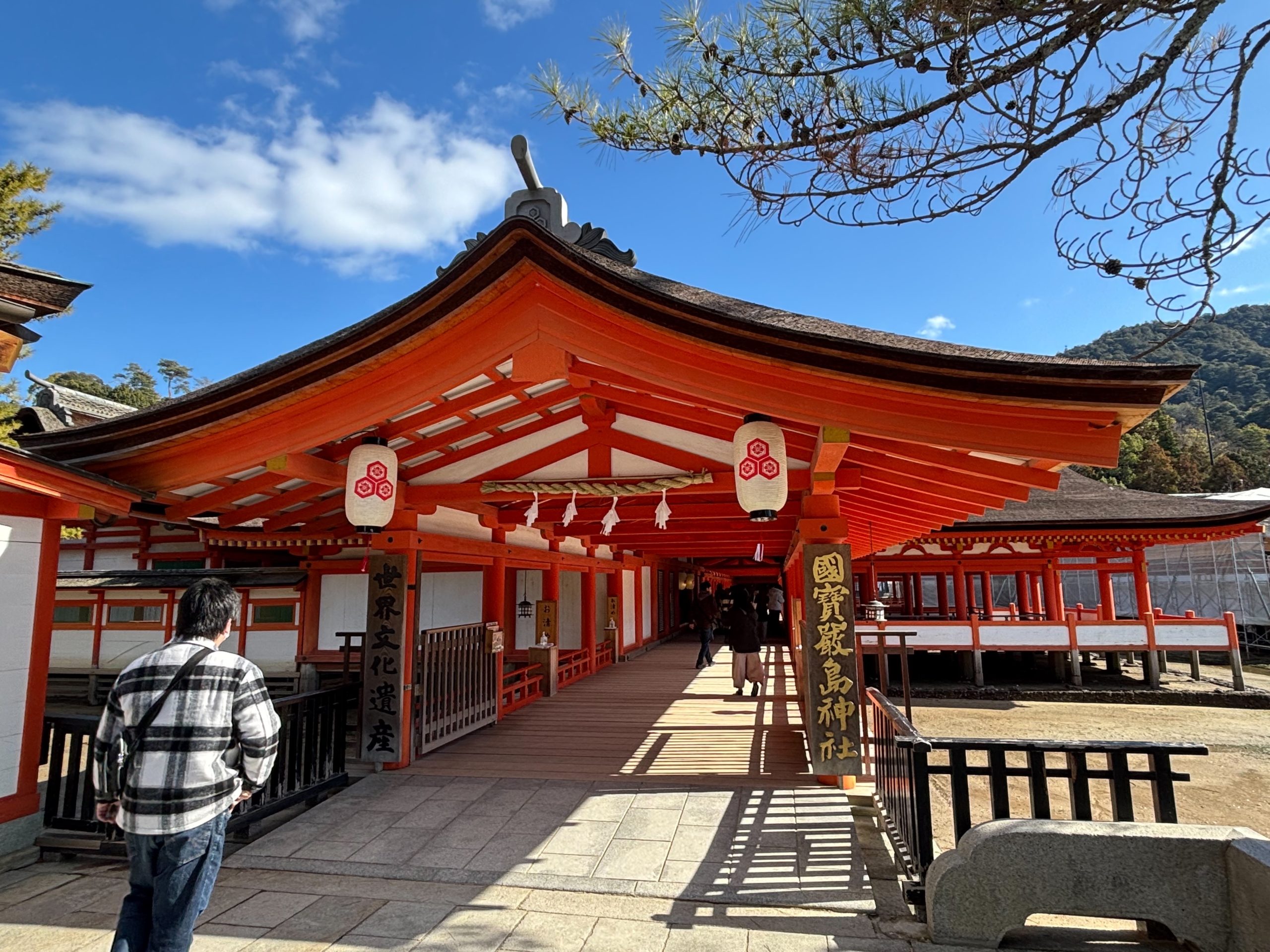
When you think of Miyajima, the first image that comes to mind is Itsu...
Getting to Miyajimaguchi Ferry Terminal
A completely step-free, barrier-free route connects JR Miyajimaguchi Station directly to the ferry terminal, making access smooth for wheelchairs, strollers, and travelers with large luggage. Exit the station ticket gates, turn right, and take the gentle ramp down into the underpass. Ride the elevator back up to street level, then use the pedestrian crossing to reach Miyajimaguchi Pier safely. The crosswalk can get quite busy during peak tourist hours, so watch the signal carefully and check for vehicles. Total walking time from the station is approximately 5 minutes. If you’re ever unsure of the route, simply follow the clear “Ferry” directional signs posted throughout the station. On rainy days, covered arcades and building overhangs shelter much of the walking route, making it relatively easy to stay dry.
Local tip from a Hiroshima resident: the parking lot behind Momiji Honpo shop at Miyajimaguchi often still has available spaces if you arrive before 8:00 AM—good insider knowledge if you’re planning to drive to the ferry terminal.
Inside the Miyajima Ferry
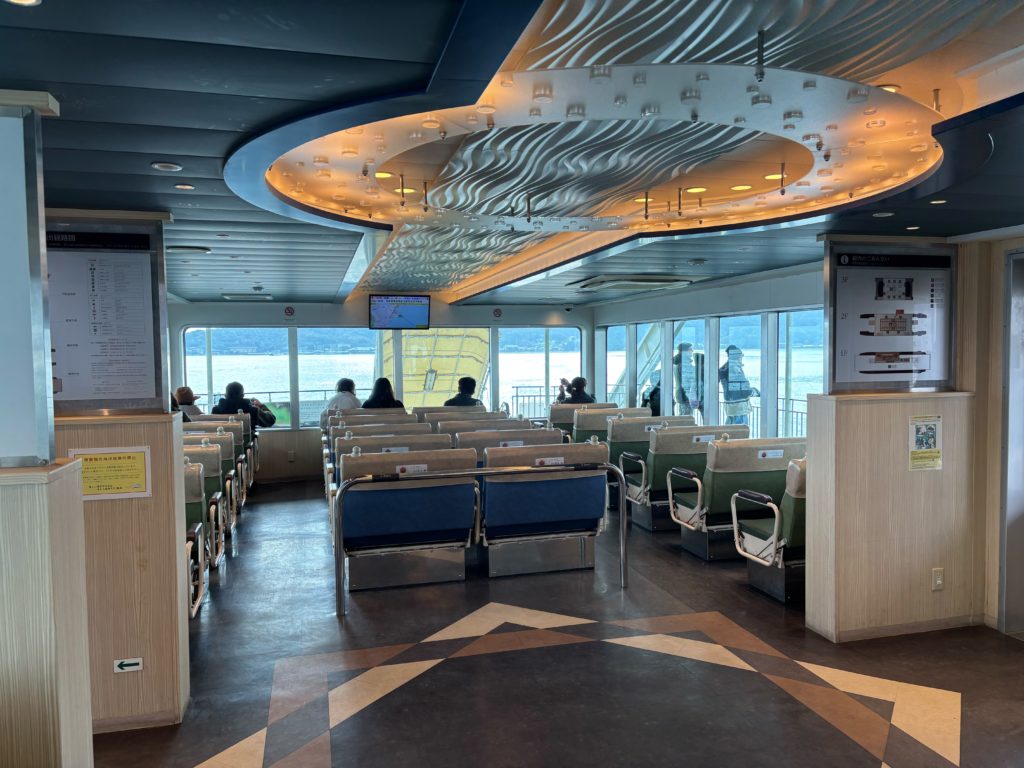
The interior cabins are surprisingly spacious, and even for someone prone to seasickness like me, the gentle motion was quite mild and manageable. It’s a comfortable, peaceful 10-minute cruise from Miyajimaguchi Passenger Terminal to Miyajima Pier. On our last crossing, our youngest pointed excitedly at the circling gulls and declared with a laugh, “Look! The fish are watching us from the sky!” (We gently corrected that they were birds, not fish.)
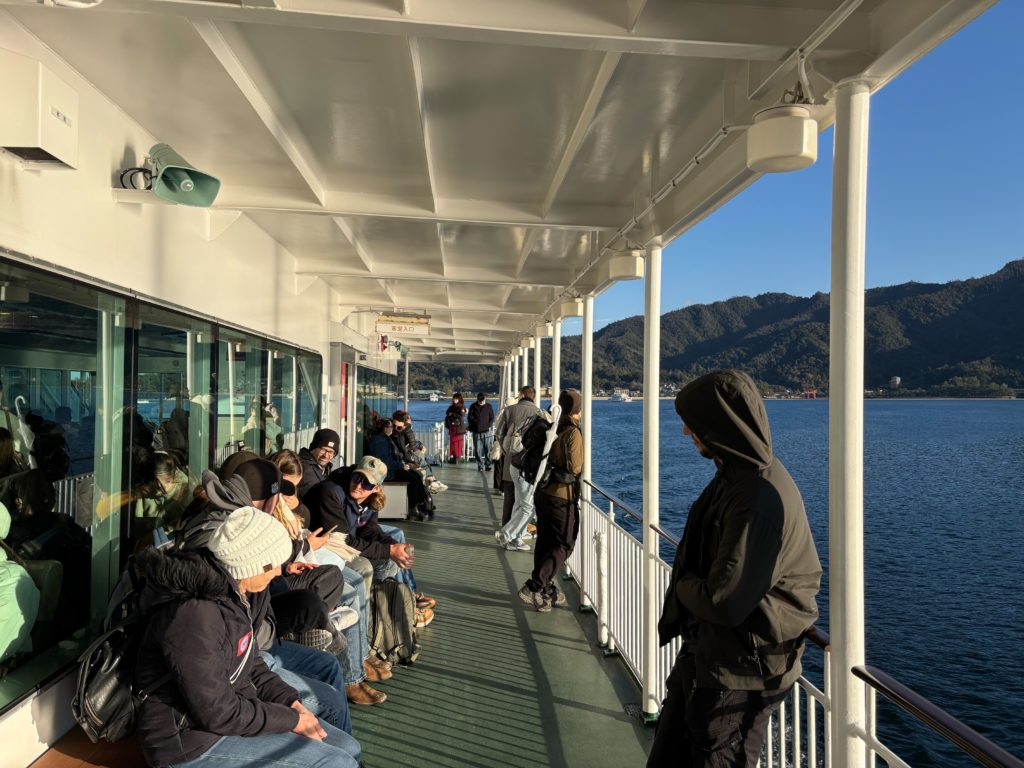
Many passengers choose to stand outside on the open deck to fully soak up the island views and refreshing sea breeze. Even on chilly days, the outdoor decks remain popular because the scenery is simply that spectacular and worth experiencing in person.
The first floor of JR West Miyajima Ferry vessels is completely barrier-free, featuring a dedicated wheelchair seating area, sturdy handrails throughout, and spacious multi-purpose restrooms. You can purchase tickets while remaining in your wheelchair, and attentive ferry staff will assist with boarding ramps for getting on and off the vessel safely. Through the large panoramic windows, the scenic island-dotted landscape of the Seto Inland Sea gradually unfolds; step out onto the open deck and you’ll feel the Great Torii drawing steadily nearer on the salt-scented wind. On Miyajima Matsudai Kisen’s modern “Aki” vessel, you’ll find convenient power outlets at the second-floor counter seating—perfect for charging your smartphone or organizing your photos during the crossing. All ships maintain non-smoking policies throughout, and many are equipped with AED emergency devices and complimentary Wi-Fi service (availability varies by specific vessel and time of day). For maximum comfort, choose your seating location according to the season: cozy heated cabins during winter months, breezy open decks during pleasant spring and fall weather.
Miyajima Ferry Fares and Tickets
Adult: One-way ¥200 (Round-trip ¥400)
Child: One-way ¥100 (Round-trip ¥200)
Important note: Since 2023, Miyajima Island has implemented a ¥100 visitor tax per person. For an adult visitor, this means ¥400 for the round-trip ferry fare plus ¥100 visitor tax equals ¥500 total for your round-trip journey.
Payment can be made with cash at ticket machines or ticket counters, and all nationwide transportation IC cards (ICOCA, Suica, PASMO, and others) are accepted for smooth, contactless boarding. If you want to save money on combined transportation and attractions, Miyajima Matsudai Kisen’s “Enjoy Ticket” package offers excellent value: round-trip ferry including the visitor tax plus round-trip ropeway access costs adults ¥2,100 (saving approximately ¥400) and children ¥1,100 (saving about ¥200). The “Miyajima Value Ticket” bundles round-trip ferry with an exchange voucher for popular Miyajima sweets like fried momiji manjū or momiji croissants, plus a ¥200 shopping coupon—perfect for travelers who want to combine sightseeing with local food experiences.
If you’re planning to ride the ropeway up Mount Misen, the combo ticket represents by far the best value for your money! The kids will absolutely be thrilled by the breathtaking panoramic views from the mountaintop observation deck.
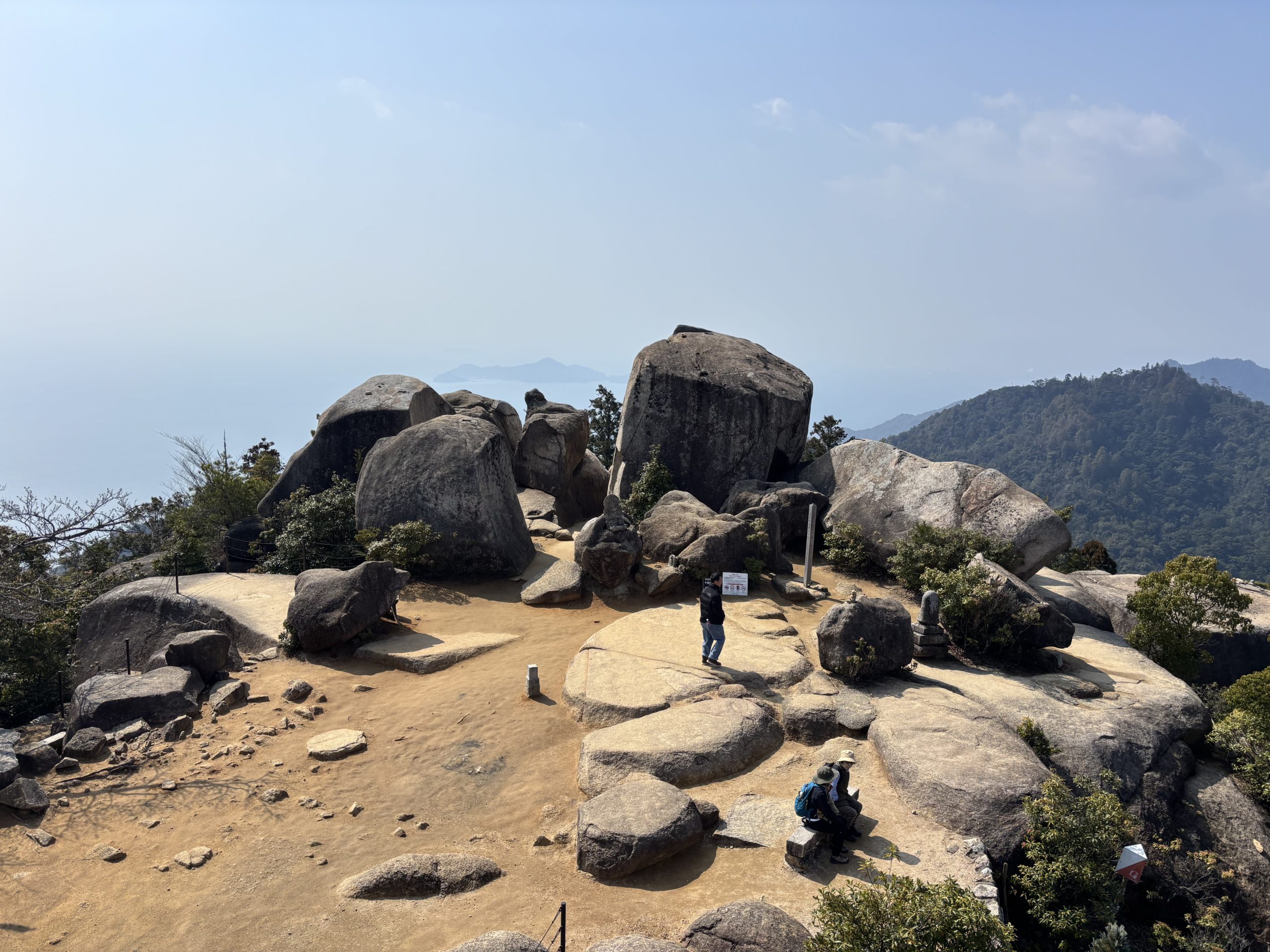
The definitive one-day guide to "Mt. Misen sightseeing." Rising behind...
Arriving at Miyajima Pier
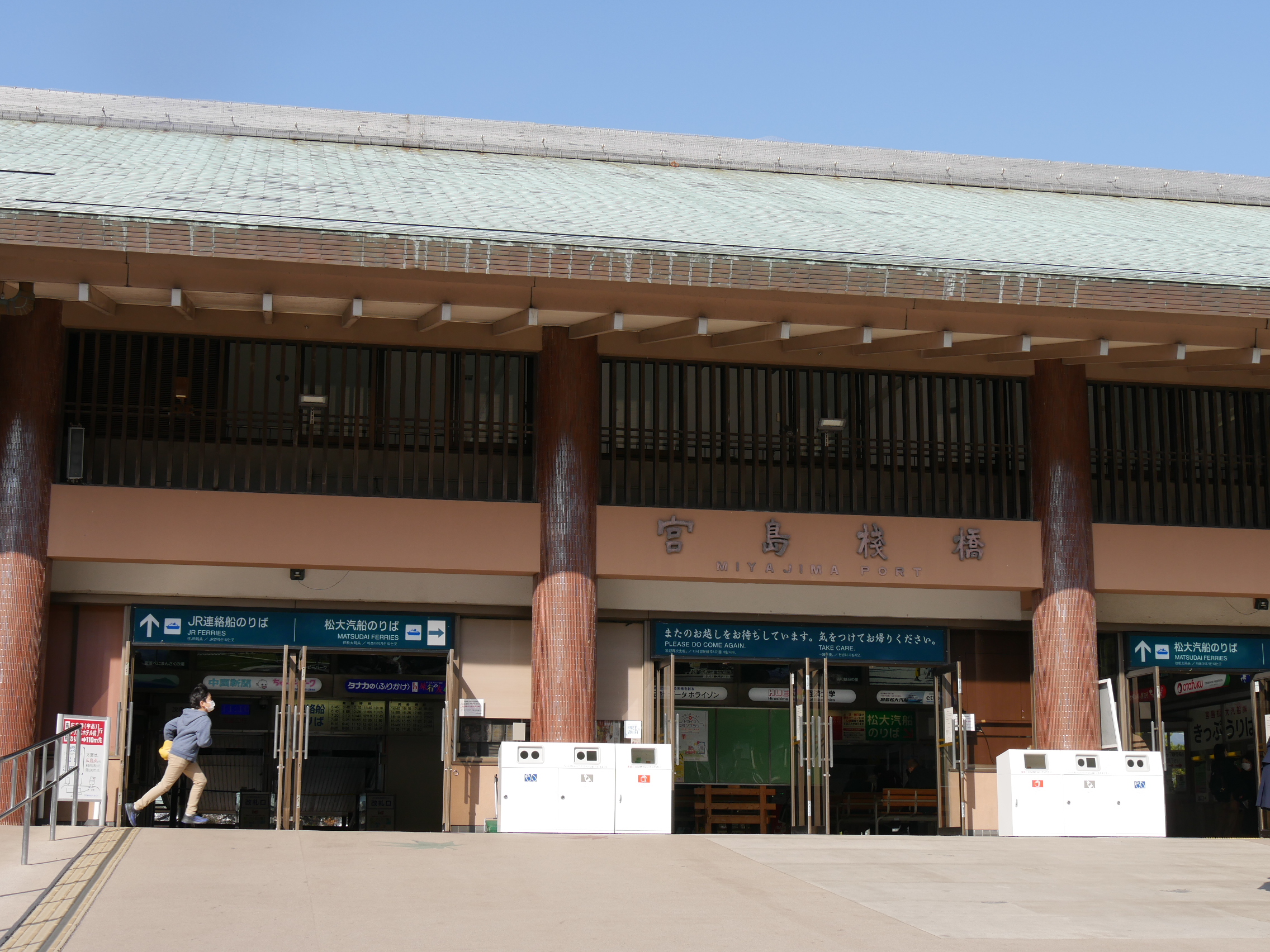
Upon your arrival at Miyajima Island, the ferry terminal building welcomes you with a helpful tourist information center, souvenir shops, clean public restrooms, and comfortable rest areas with seating. The shop operated by the Miyajima Tourist Association sells exclusive island-themed souvenirs and also offers wheelchair rentals for visitors who need mobility assistance.
The pier facilities are well-designed and easy to navigate, with ample barrier-free restroom facilities and plenty of benches for resting. If you’re traveling with a stroller or young children, it’s easier to organize your bags and belongings near the ticket gate area before heading out to explore. From the pier, you can walk straight ahead to reach Omotesando Shopping Street, the main pedestrian arcade that leads directly to Itsukushima Shrine. If you have extra time before your planned activities, pause for a moment by the scenic waterfront area near the pier—at high tide the water comes right up to the edge, and you’re quite likely to spot some of Miyajima’s famously friendly (and photogenic) deer wandering nearby. Bus stops for both the ropeway and Momijidani Park are conveniently located close to the terminal, which is especially handy if you’re carrying lots of luggage or visiting on particularly hot or rainy days.
Once you’ve arrived on Miyajima, we highly recommend starting with a delicious food crawl along Omotesando Shopping Street—it’s an adventure that’s genuinely great fun even with kids in tow!
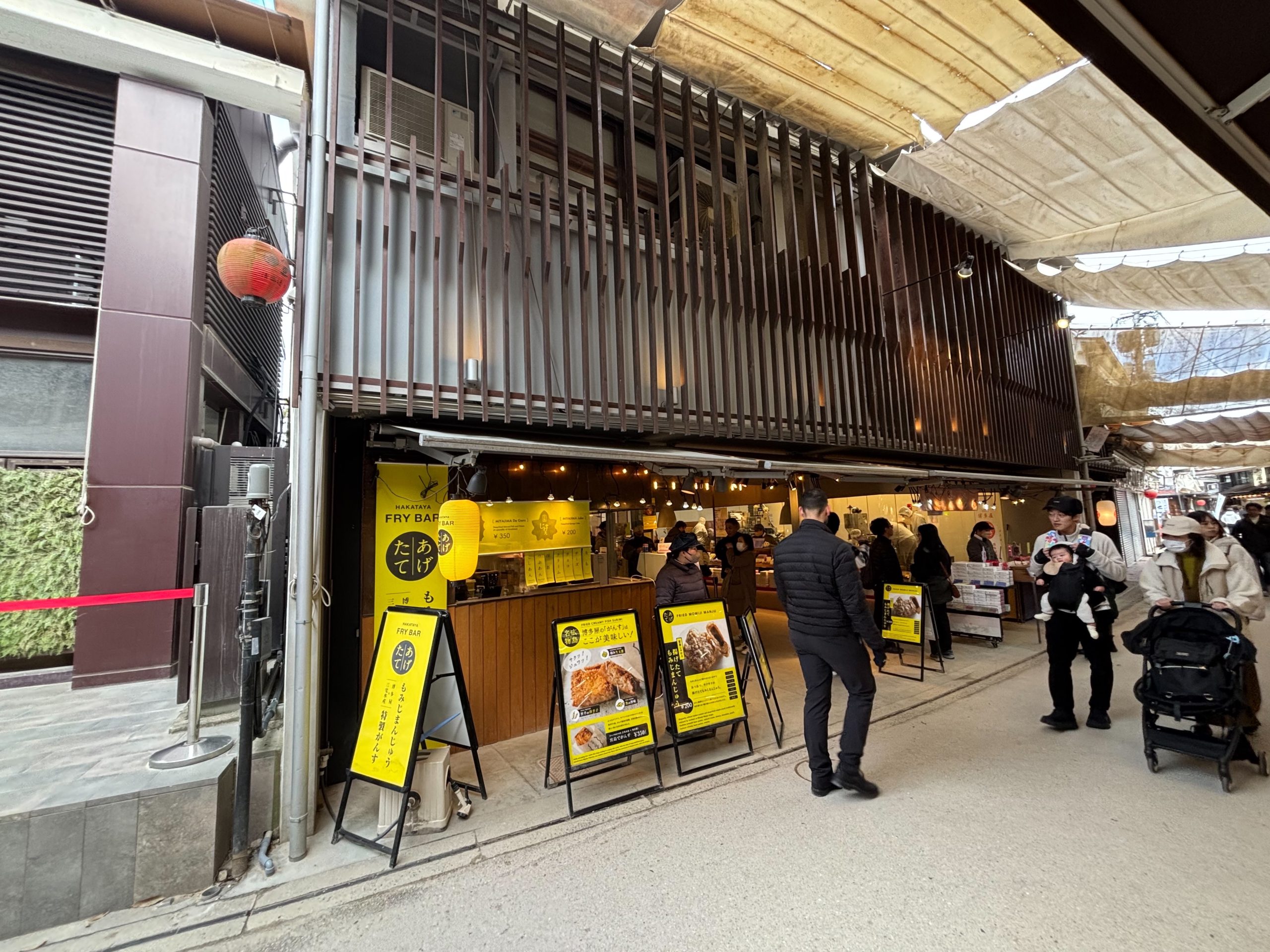
Wondering what to eat in Miyajima? The answer lies along Omotesando Sh...
The Ferry Ride is a Highlight of Miyajima Sightseeing!
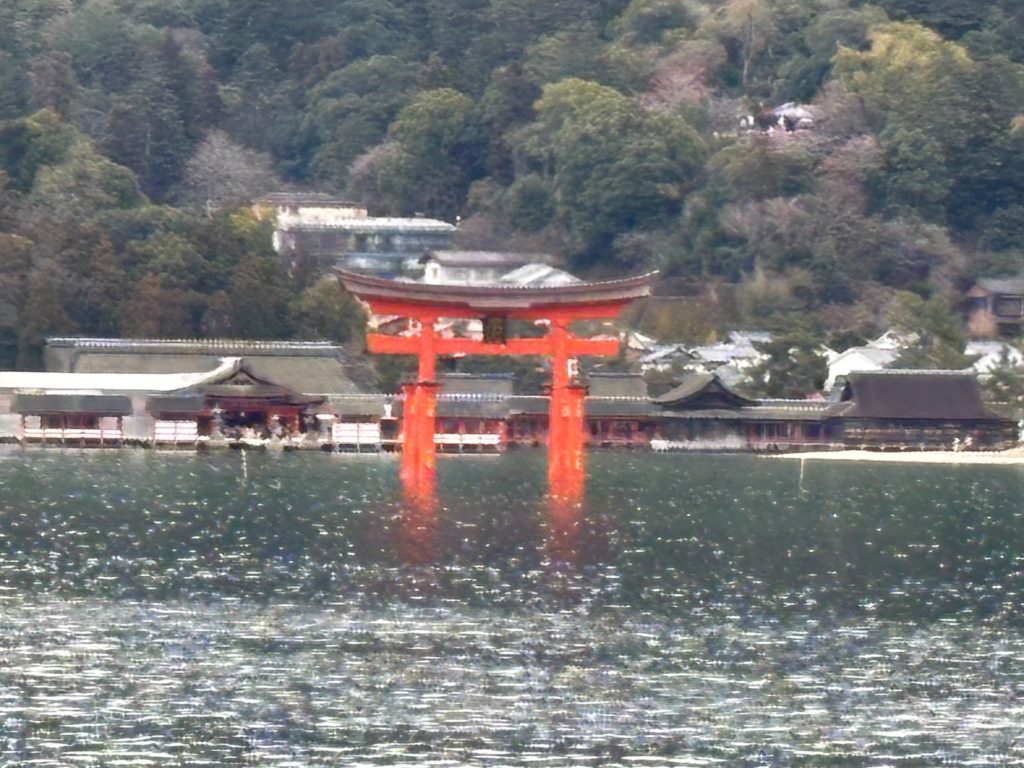
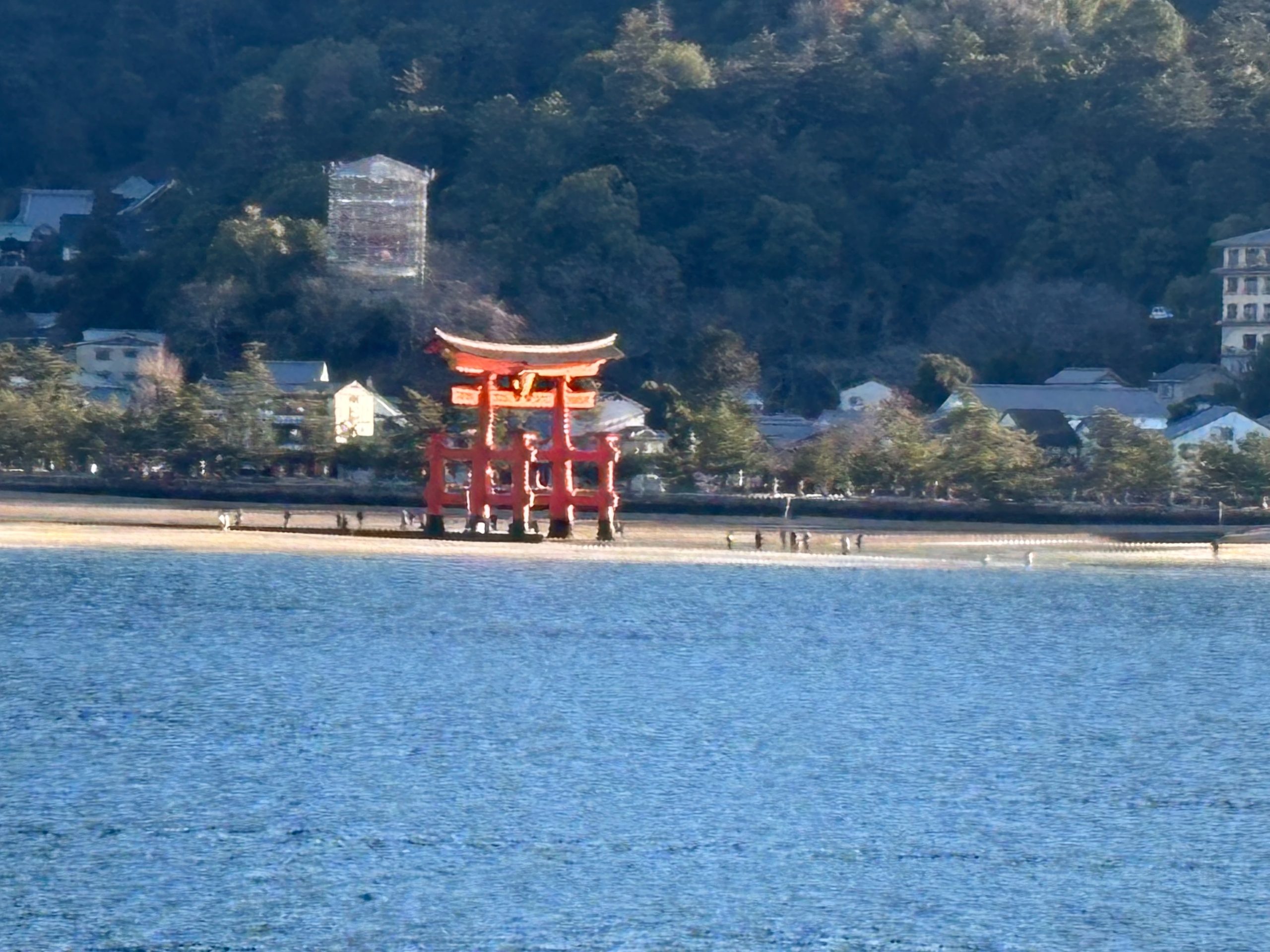
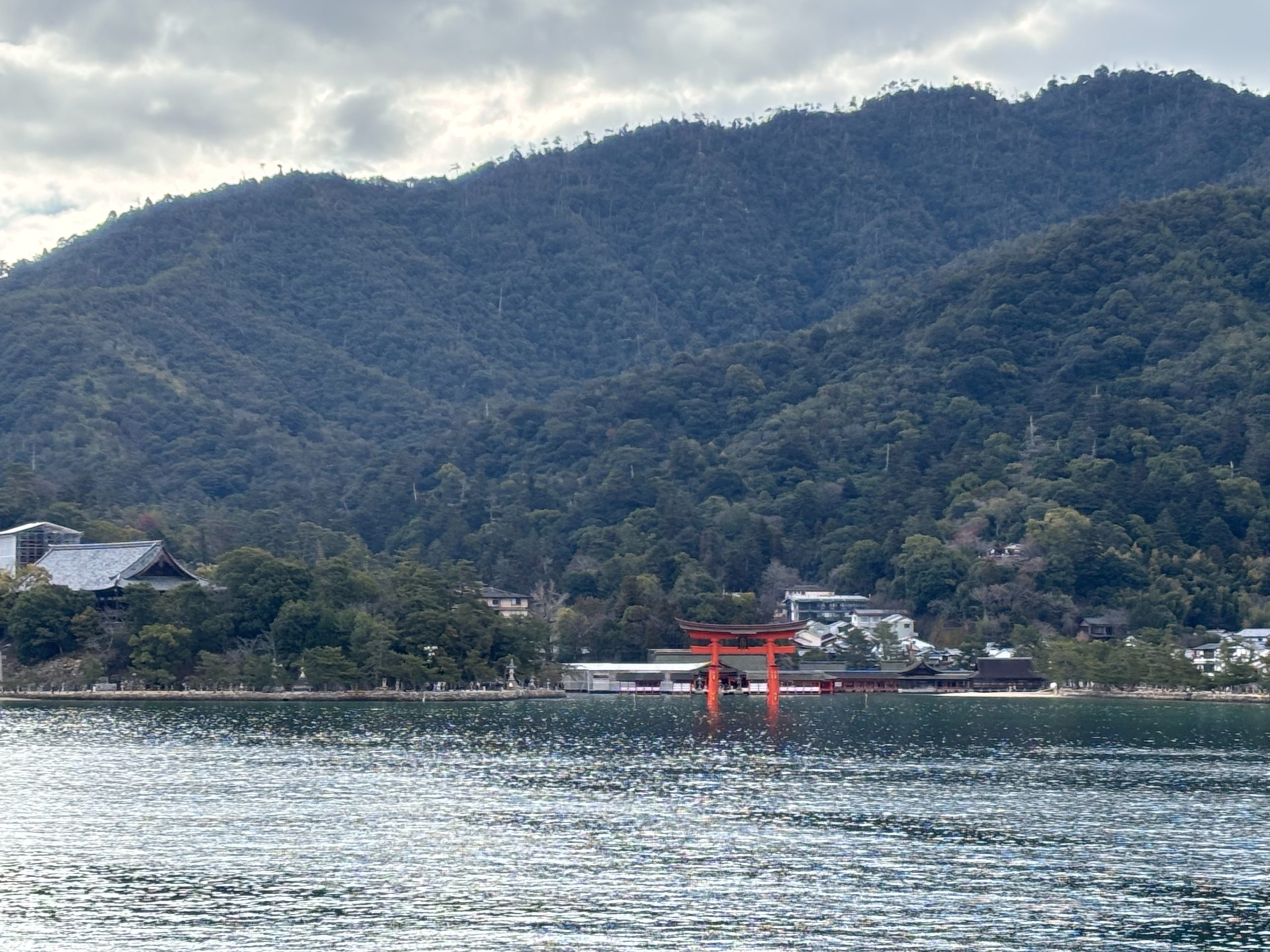
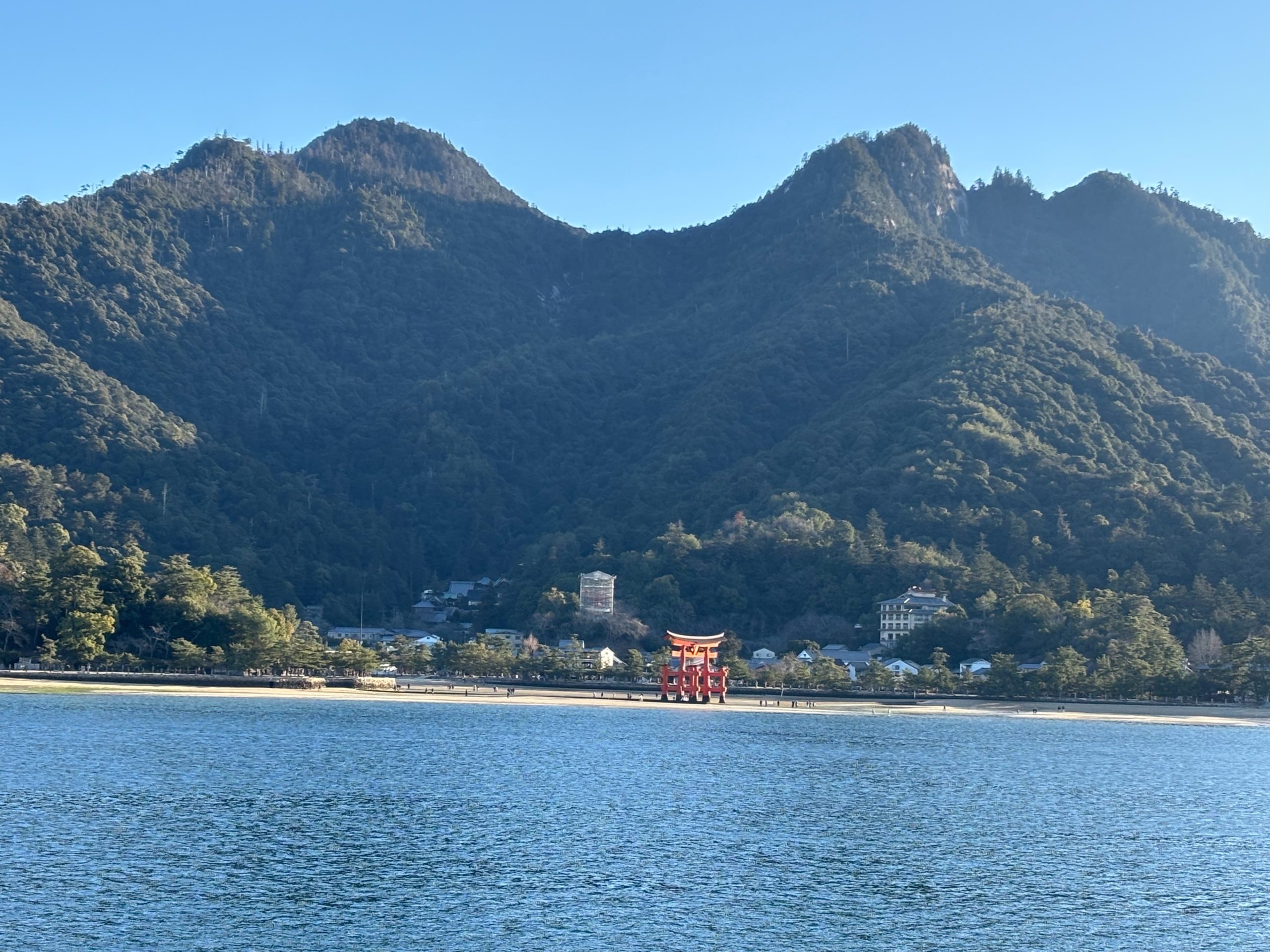
The JR Great Torii Route brings you remarkably close to the iconic gate for that perfect composed shot of Itsukushima Shrine and the Great Torii together—your quintessential Miyajima postcard moment captured from the unique perspective of the water.
For optimal photography, board a daytime Great Torii (Otorii) Route service and position yourself on the starboard side of the vessel. In bright midday sunshine, the shrine’s distinctive vermilion color absolutely pops against the blue sea; on calm days with minimal wind you can even capture the torii’s perfect mirror reflection on the glassy water surface. When it’s windy, the open deck can feel noticeably colder, so dress in warm layers; during summer months, bring a wide-brimmed hat and sun protection since there’s limited shade. The interior cabins are quiet and comfortable enough for easy conversation, and even passengers with sensitive stomachs usually find the gentle 10-minute crossing manageable while focusing on the stunning scenery passing by. Consider timing your return journey for golden hour in late afternoon to catch the romantic warm glow as the twinkling lights of Miyajimaguchi begin to appear across the darkening water—this sea-level perspective bathed in sunset colors is a uniquely special “Miyajima ferry” experience you won’t find anywhere else.
If you want to avoid the heaviest crowds and enjoy a more relaxed crossing, weekdays between 2:00 PM and 4:00 PM tend to be the quietest times for ferry traffic.
Speaking of essential Miyajima specialties, you absolutely must try the local anago (conger eel) rice during your visit! We’ve put together a comprehensive guide to the best family-friendly anago restaurants on the island.
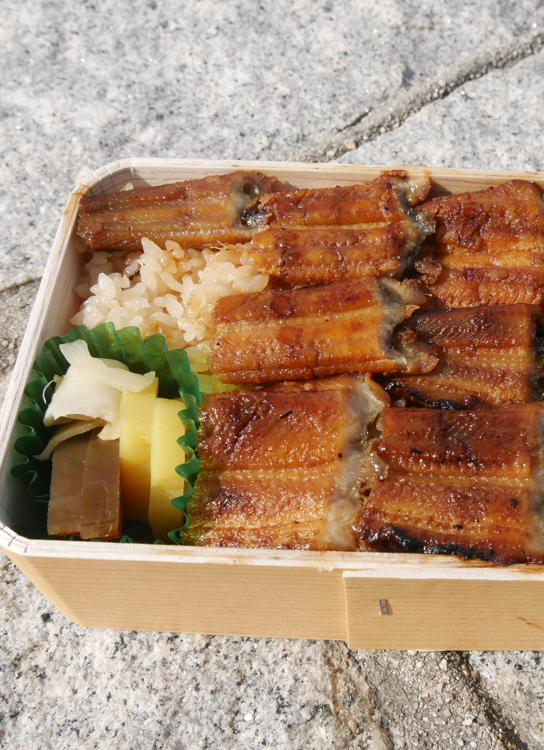
When you visit Hiroshima's enchanting island of Miyajima, one dish sta...
The Miyajima Aquarium (Miyajimarin) is an excellent backup plan for rainy days and consistently proves to be a huge hit with children of all ages.
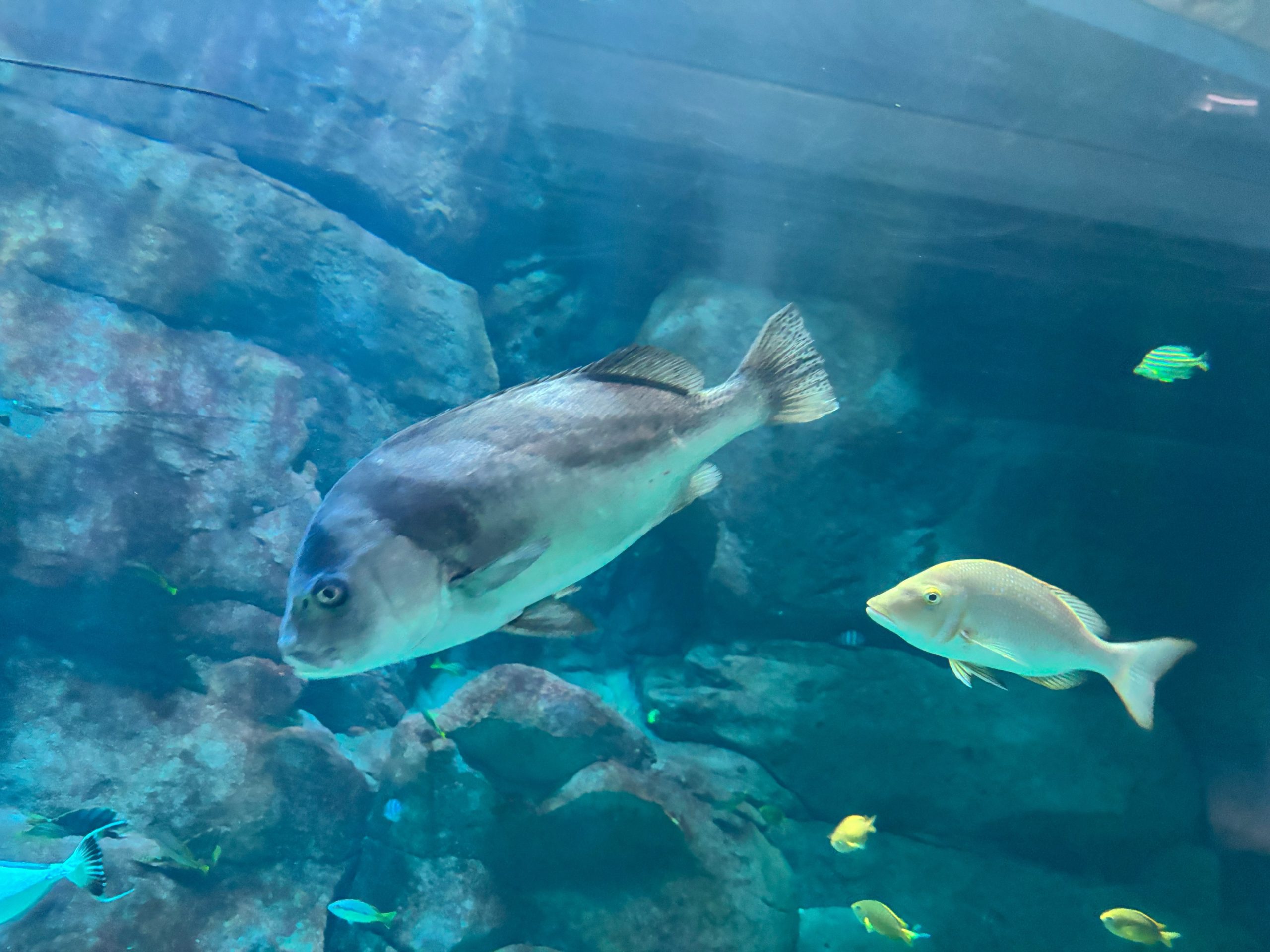
Located at the gateway to the World Heritage island of Miyajima, the M...
Daisho-in Temple actually predates even the famous Itsukushima Shrine and is well-known among local residents as a remarkably powerful spiritual spot with deep historical significance.

Your complete guide to Daishō-in Temple on Miyajima: history, what to do, spiritual experiences (sand stepping, fire walking, Kaidan Meguri), annual events, access, barrier-free info, and how to get a goshuin (temple stamp).
Senjokaku Hall is a wonderful hidden gem where kids can safely run around and explore freely. It’s a local secret, but there’s actually fascinating old graffiti preserved under the historic floorboards!
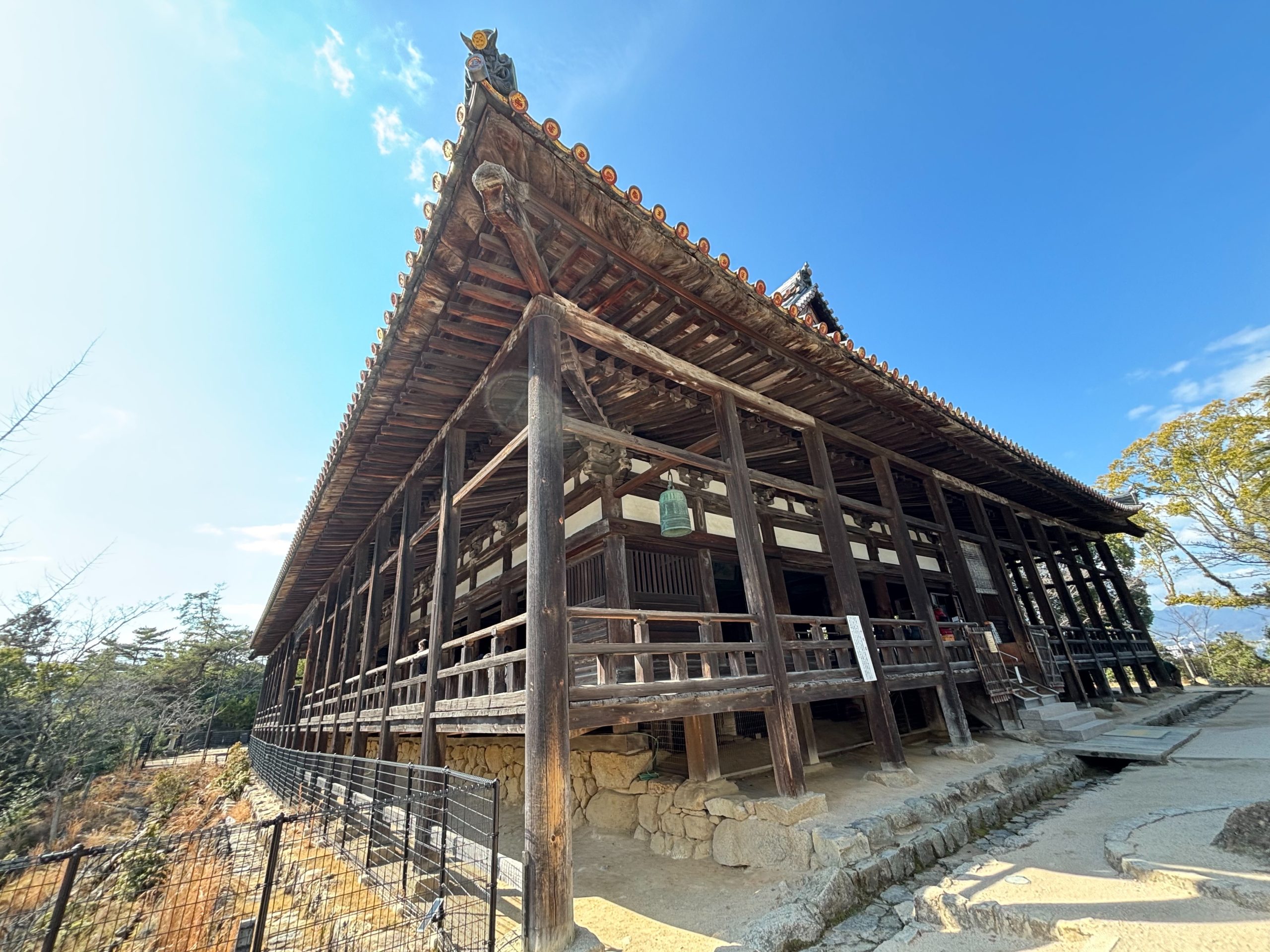
Highlights and Views at Miyajima's Hōkoku Shrine (Senjōkaku) Perched ...
Frequently Asked Questions About the Miyajima Ferry
Q. How long does the Miyajima ferry take? Does the crossing time change during peak tourist seasons?
A. The actual sailing time is approximately 10 minutes one way, regardless of the season. During major holidays and peak tourist periods, you may experience longer waiting times to board the ferry, but the crossing itself remains nearly the same duration. To minimize your waiting time, stay flexible and simply choose whichever ferry operator has the next available departure—both reach the same Miyajima Pier.
Q. When is the best time to board the “Great Torii Gate Ferry” for the perfect photo opportunity?
A. JR West’s special Great Torii Route typically operates on departures from Miyajimaguchi between 9:10 AM and 4:10 PM throughout the day. Position yourself standing or seated on the right (starboard) side of the vessel for the optimal viewing angle. Please note that routes may occasionally change due to tidal conditions or safety considerations, so it’s always best to check the day’s announcements posted at the terminal or ask ferry staff directly. For the most accurate and up-to-date tide timing information, the official Miyajima Tourism Association website is your most reliable resource (that’s a tip straight from local fishermen!).
Q. Can I board the ferry safely with a baby stroller or wheelchair?
A. Absolutely yes. Both the boarding areas and ferry vessel interiors are fully barrier-free and accessible. JR West’s first deck includes dedicated wheelchair seating spaces and spacious multi-purpose restrooms, and attentive ferry staff will carefully assist passengers with boarding ramps for getting on and off the vessel safely and comfortably.
Q. What payment methods are accepted on the Miyajima ferry? Can I use IC transportation cards?
A. Both ferry operators accept all major nationwide transportation IC cards including ICOCA, Suica, and PASMO for seamless contactless payment. You can also pay with cash at the ticket vending machines or staffed ticket counters if you prefer.
Q. Are there any discount tickets available? I want to combine the ferry with the ropeway.
A. Yes! Miyajima Matsudai Kisen offers an excellent “Enjoy Ticket” package that bundles the round-trip ferry (including the mandatory Miyajima Visitor Tax) together with round-trip ropeway access, saving approximately ¥400 for adults and about ¥200 for children compared to purchasing separately. Food lovers will particularly enjoy their “Miyajima Value Ticket,” which adds a voucher exchangeable for popular local sweets to your ferry ticket.
Q. Can I bring my pet on the Miyajima ferry?
A. Pets are generally permitted on the ferries under each company’s specific regulations—typically requiring that animals be kept in an appropriate carrier or on a leash, and limiting their access to outdoor deck areas only (not inside enclosed passenger cabins). Be sure to check the most current pet policies and requirements with your chosen ferry operator before your departure date.
Q. What’s the best recommended route and order for visiting Mount Misen?
A. After arriving on Miyajima by ferry, take the ropeway up to Shishiiwa Station near the summit. From there, follow the popular classic hiking route that leads to Mount Misen’s Main Hall, the Eternal Flame Hall (Reikado) where a sacred fire has burned for centuries, and the Three Demons Hall (Sangido). Don’t miss the mountaintop observation deck, which offers absolutely sweeping panoramic views across the island-studded Seto Inland Sea.
Q. Are group tours or private chartered ferry cruises possible?
A. Yes, JR West Miyajima Ferry accepts inquiries and reservations for private chartered cruises around Miyajima Island or to nearby destinations like Kure and Etajima—these are ideal options for special events, corporate groups, or customized group travel experiences. For real-time updates on high tide timing at Itsukushima Shrine (crucial for planning your visit), check the official ferry company Twitter account, which posts current conditions regularly throughout the day.