Miyajima’s Hina Doll Festival: A Charming Spring Walking Event
The Miyajima Hina Meguri is one of the island’s most beloved spring events — a self-guided walking festival where historic shops, inns, and cultural venues display exquisite hina dolls that have been passed down through local families for generations. Running from mid-March through early April each year, the event perfectly coincides with cherry blossom season, making it one of the most rewarding times to visit Miyajima Island. The 26th festival in 2026 ran from Saturday, March 14 through Friday, April 3 (the 25th, in 2025, ran from March 15 to April 3).
I attended last year with my two daughters, and what struck me most was how naturally the event weaves into the fabric of the island itself. As you stroll the stone-paved lanes, the scent of fresh grilled snacks drifts from the shopping arcade, deer wander nearby, and sea breezes carry the soft salt of Hiroshima Bay — and tucked into nearly every window and doorway, delicate hina dolls from the Edo, Meiji, Taisho, and Showa eras catch the spring light. My eldest stopped in her tracks the moment she spotted the first display. “They’re so beautiful,” she whispered.
With around 30 to 60 participating venues across the island, the festival turns an ordinary walk through Miyajima’s historic streets into something genuinely special. Look for the pink banner flags (nobori-hata) posted outside each participating location — they’re easy to spot, and even young children can join the fun of hunting them down as you explore.
Most venues are clustered along the Omotesando Shopping Street, making it easy to combine doll-viewing with street food and browsing local shops.
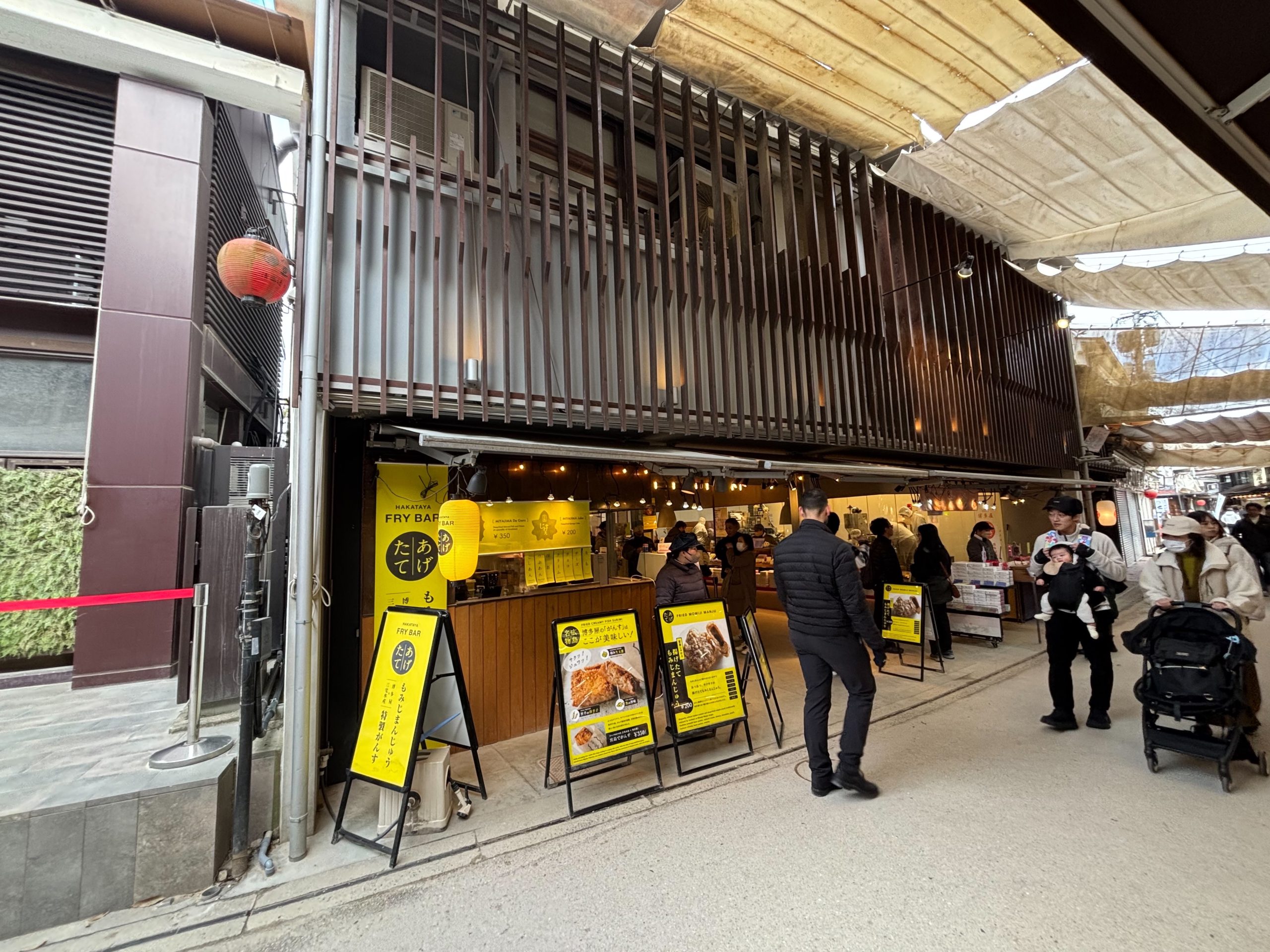
Miyajima's main shopping street — known locally as Omotesando — is a l...
What Is the Miyajima Hina Doll Festival?
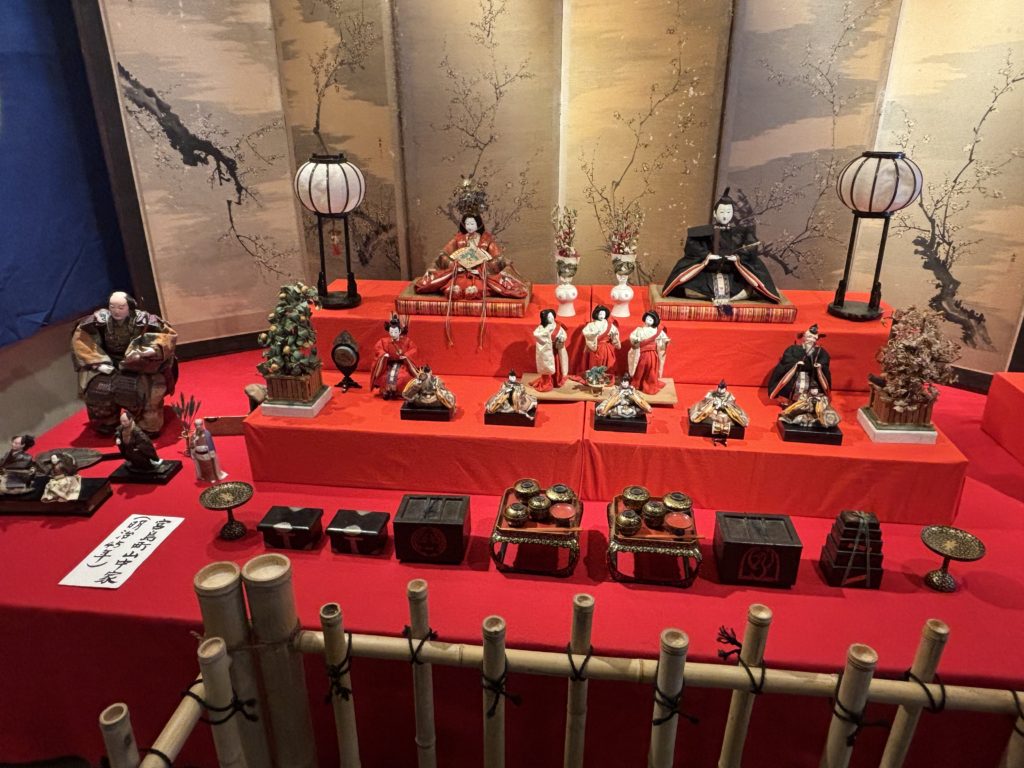
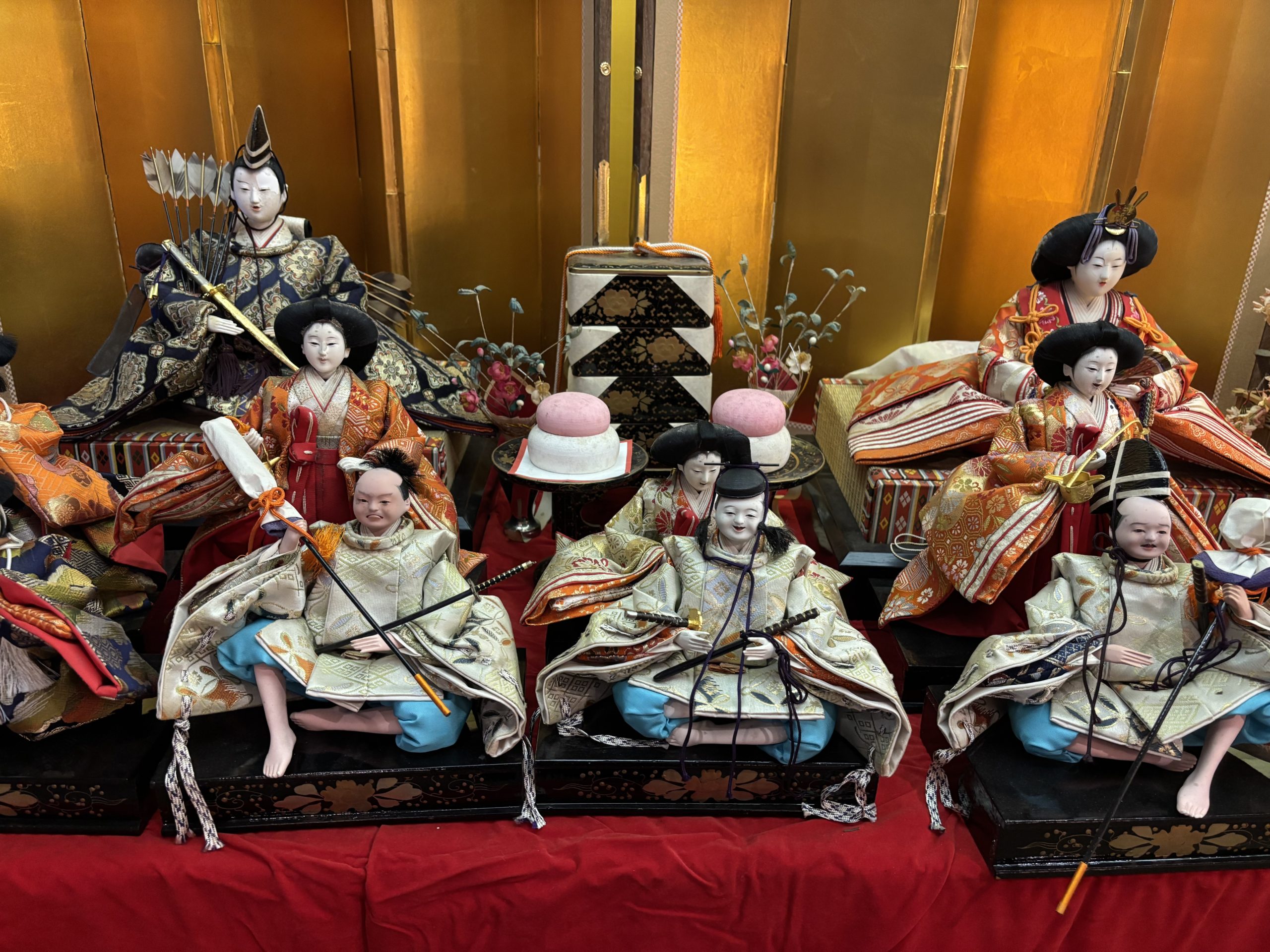
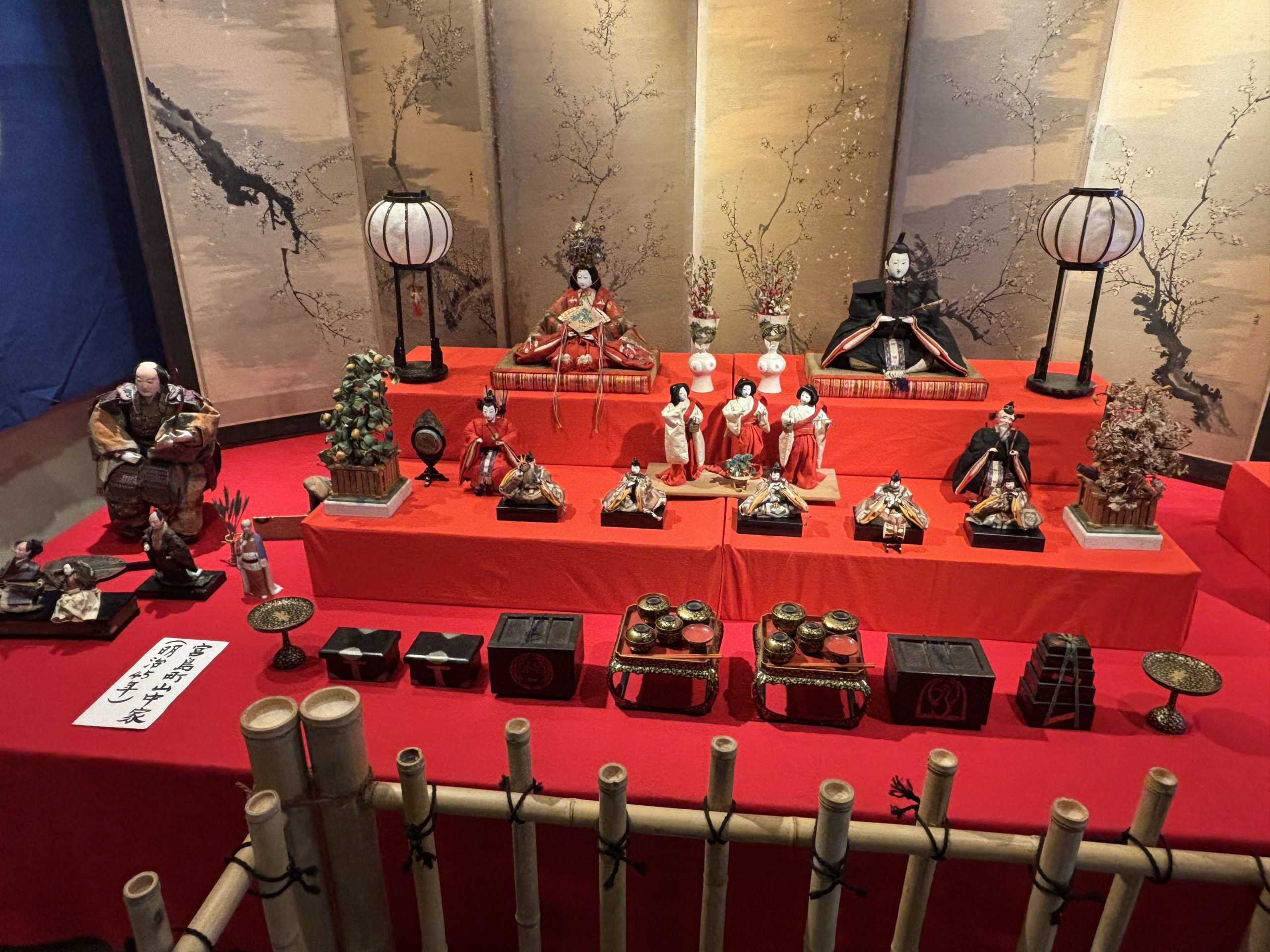
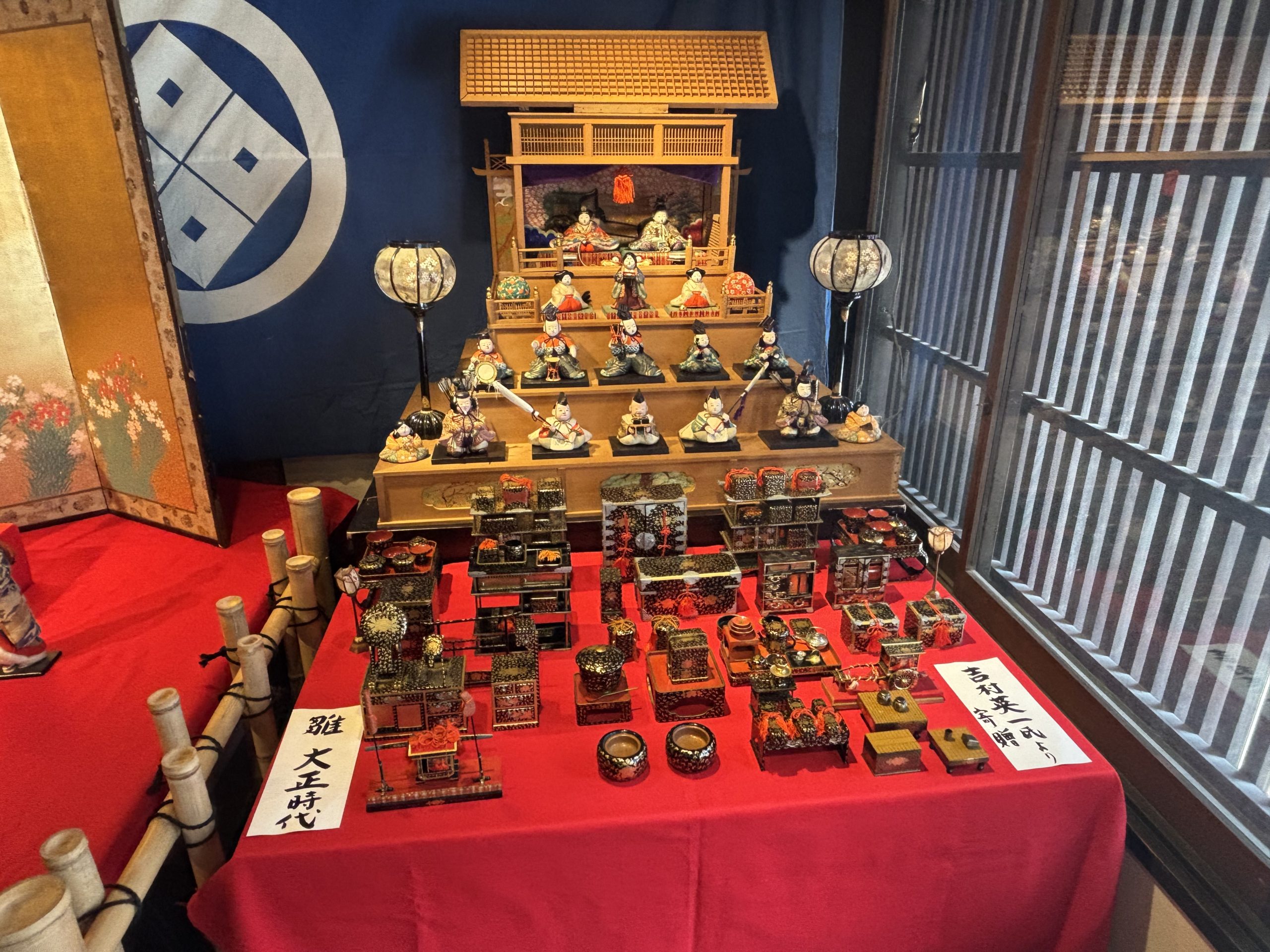
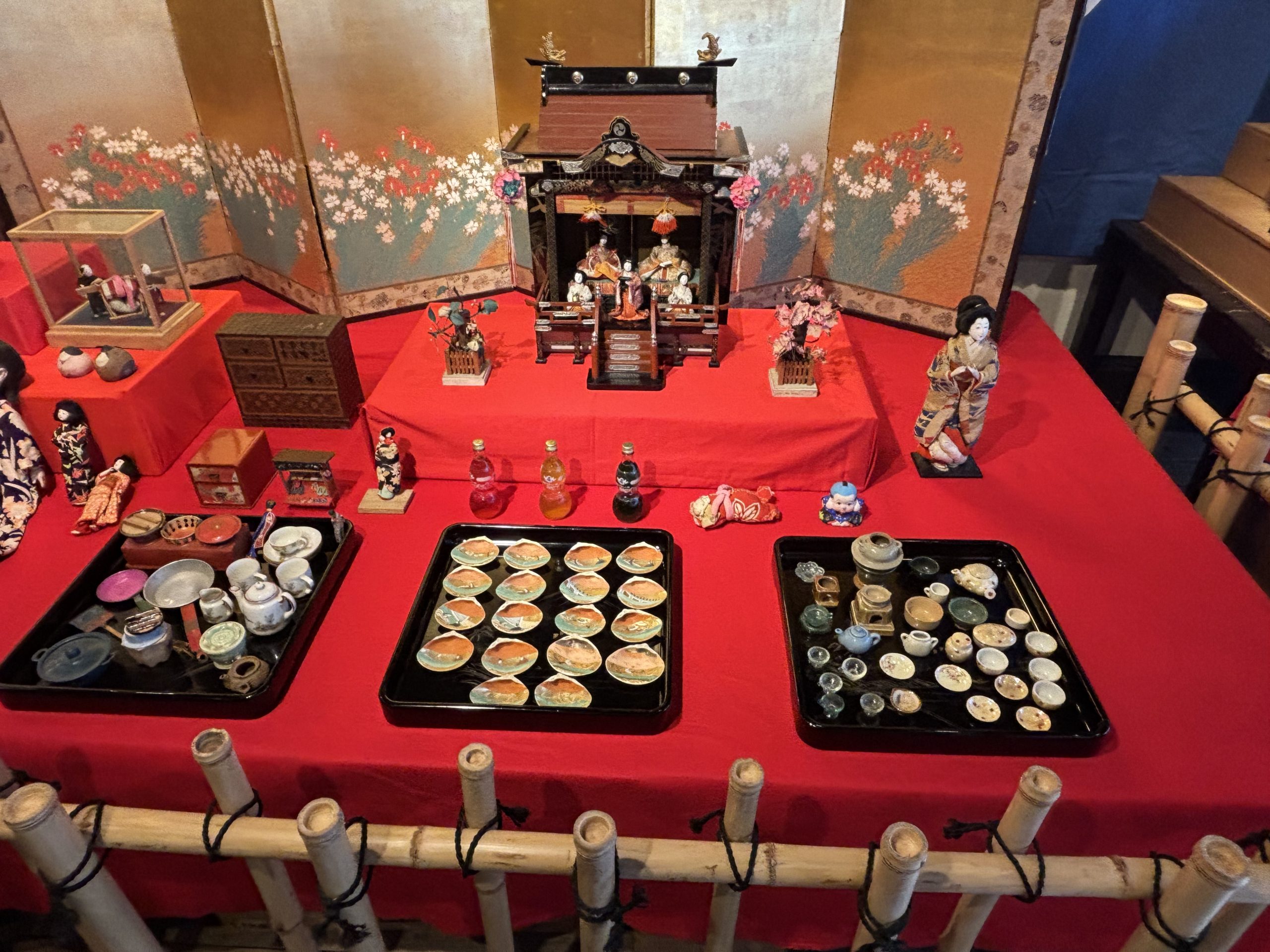
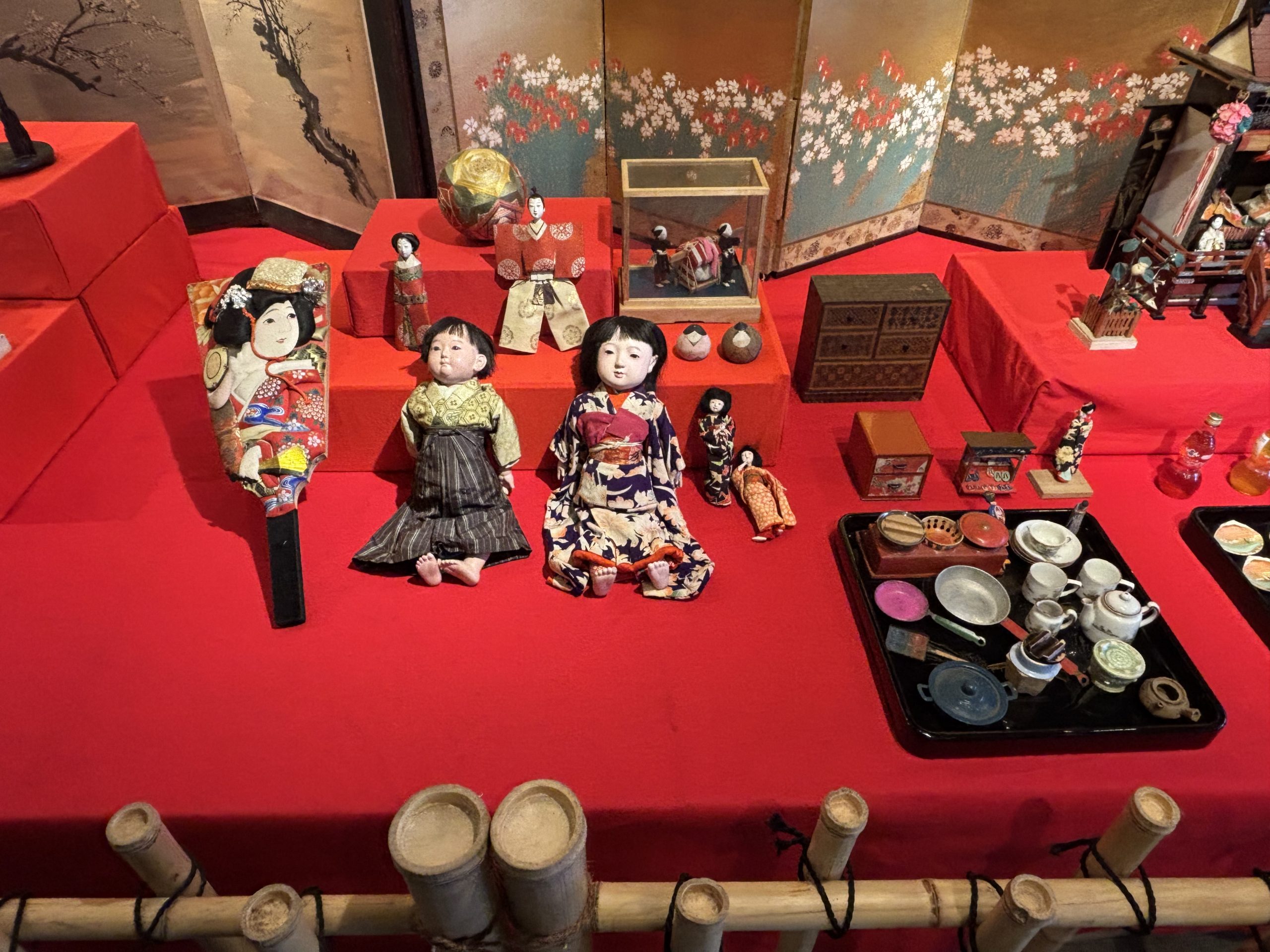
Hina dolls — known in Japanese as o-hina-sama — are elaborately crafted court figurines traditionally displayed in Japanese homes during Hinamatsuri (Girls’ Day, celebrated on March 3). Dressed in layered imperial robes and arranged in precise ceremonial order, these dolls represent the Emperor, Empress, and their court attendants. They are treasured heirlooms, often passed down through families for a century or more.
Miyajima has a particularly rich tradition of hina doll culture. For generations, local families — shopkeepers, inn owners, and craftspeople — have carefully preserved dolls that witnessed the island’s history across multiple eras. The Miyajima Hina Meguri brings these private treasures out of storage and into public view, allowing visitors to appreciate dolls spanning from the refined aesthetic of the Edo period all the way through the mid-20th century Showa era.
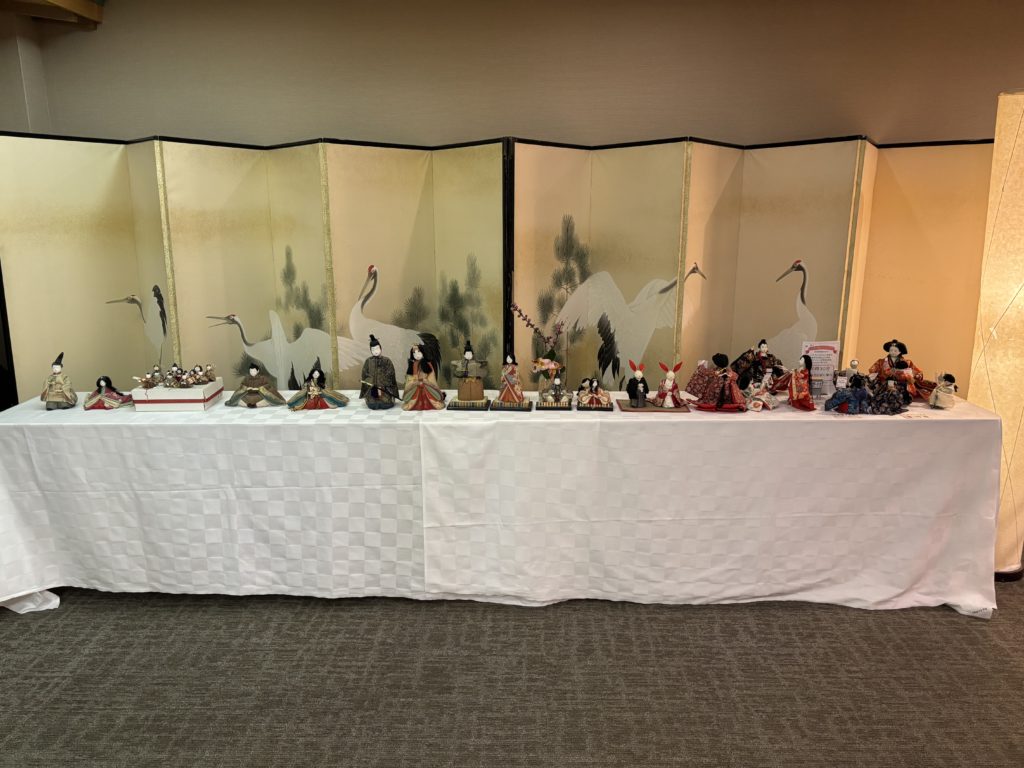
What makes the festival charming for international travelers is that you don’t need any prior knowledge of hina dolls to enjoy it. Each display has its own personality — some breathtakingly formal, some playful and contemporary, some comical and witty. The variety keeps the walk genuinely engaging from start to finish.
Alongside the main doll displays, the festival also features Miyajima Fukuyose Hina — a special simultaneous exhibition where dolls that are no longer displayed in private homes are given a second life through creative, imaginative installations. It’s a touching concept: instead of being forgotten, these dolls are reinvented and celebrated once more.
Companion events during the festival period may include Heian court costume experiences, tea ceremony sessions, and live concerts, so there’s more to explore beyond simply viewing the dolls.
No visit to Miyajima is complete without Itsukushima Shrine — and many families combine the shrine visit with a Hina Meguri walk on the same day.
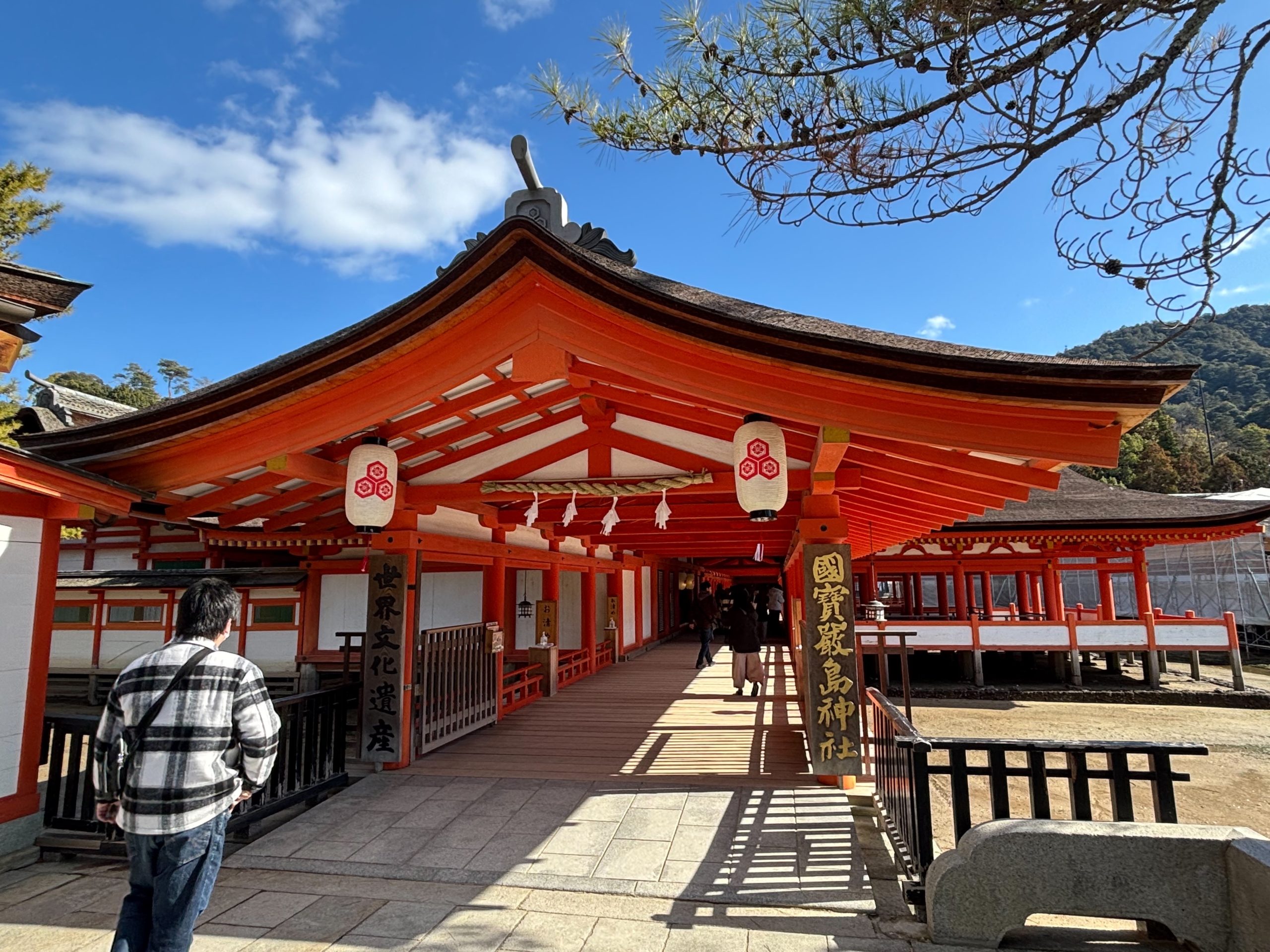
Itsukushima Shrine (Itsukushima-jinja, 厳島神社) is a Shinto shrine built ...
Venue Highlights: What to Expect at Each Stop
One of the joys of the Hina Meguri is that every venue offers something different. Here are some standout stops from my own walk through the festival.
Miyajima Grand Hotel
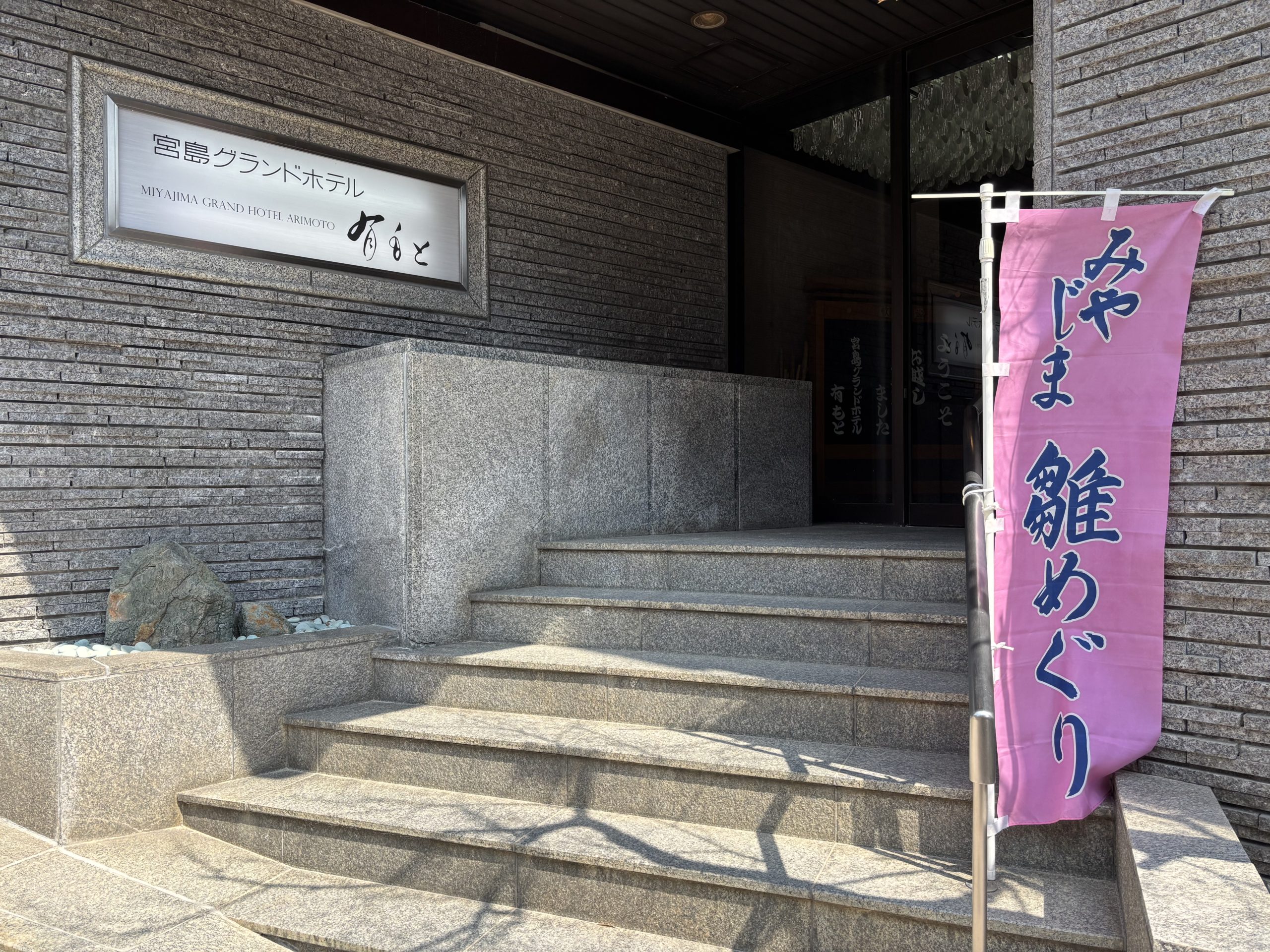
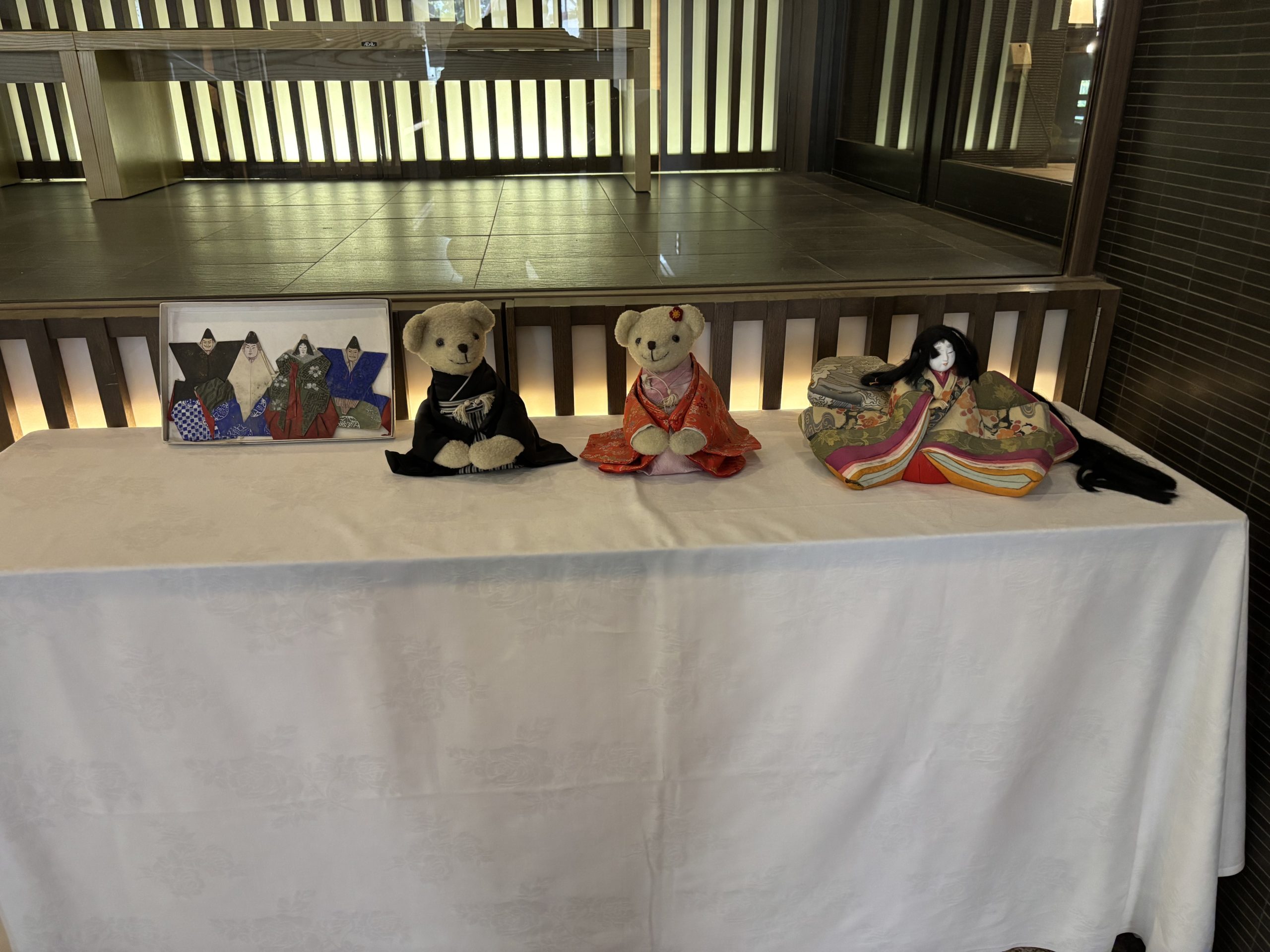
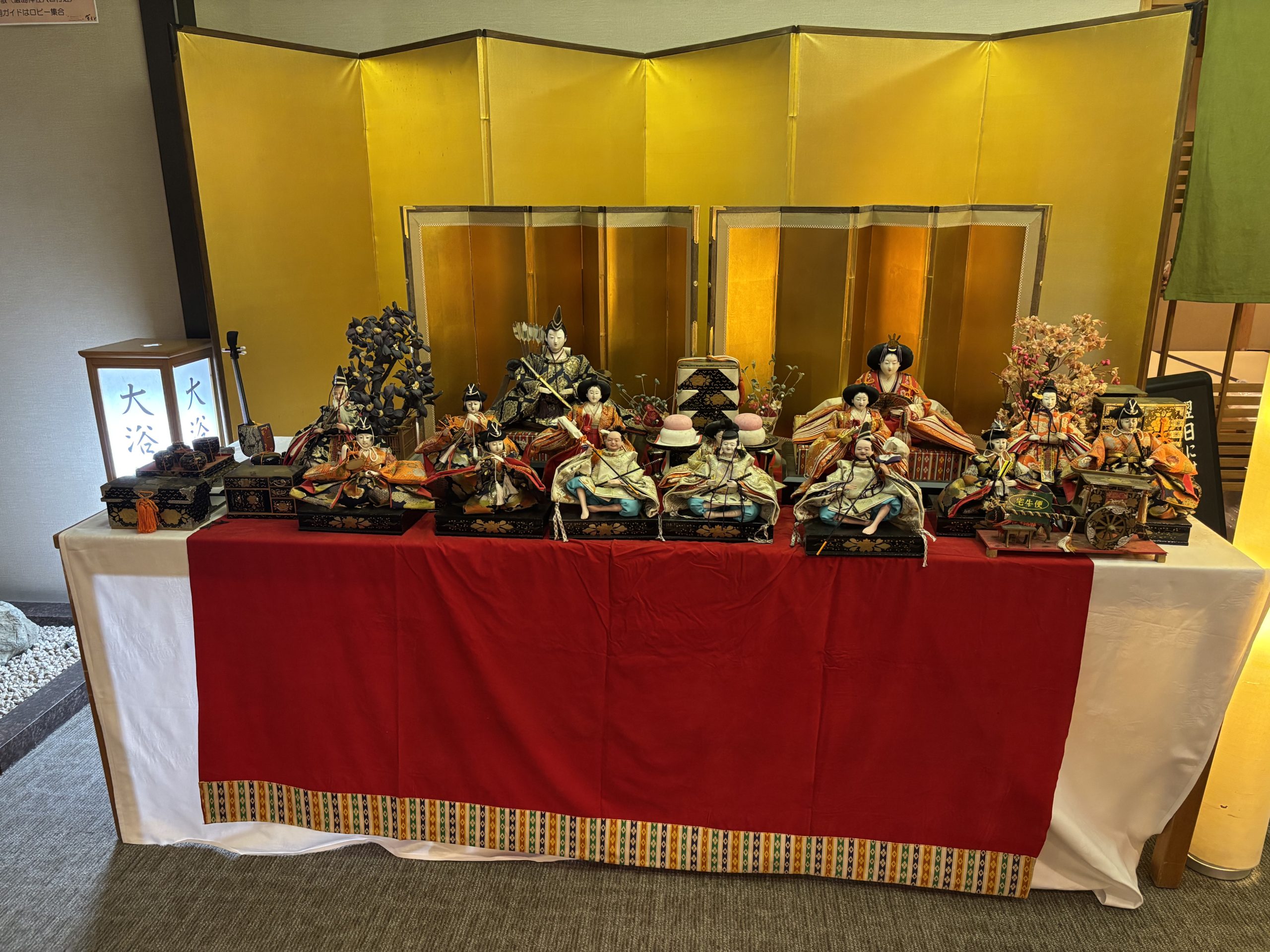
The Grand Hotel’s display was one of the most memorable stops on the whole route — and not for the reason you might expect. Nestled among the traditional dolls in the softly lit lobby was a set of teddy bear hina dolls: fully dressed in miniature imperial court robes, but with unmistakably bear-shaped faces. My younger daughter burst out laughing: “Bear-san is a princess!” The embroidery details and tiny accessories were surprisingly refined, and the contrast between the hotel’s elegant atmosphere and this playful display was genuinely delightful. It’s a perfect example of how the festival balances reverence for tradition with a sense of humor.
Sakamoto Kashiho (Sakamoto Confectionery)
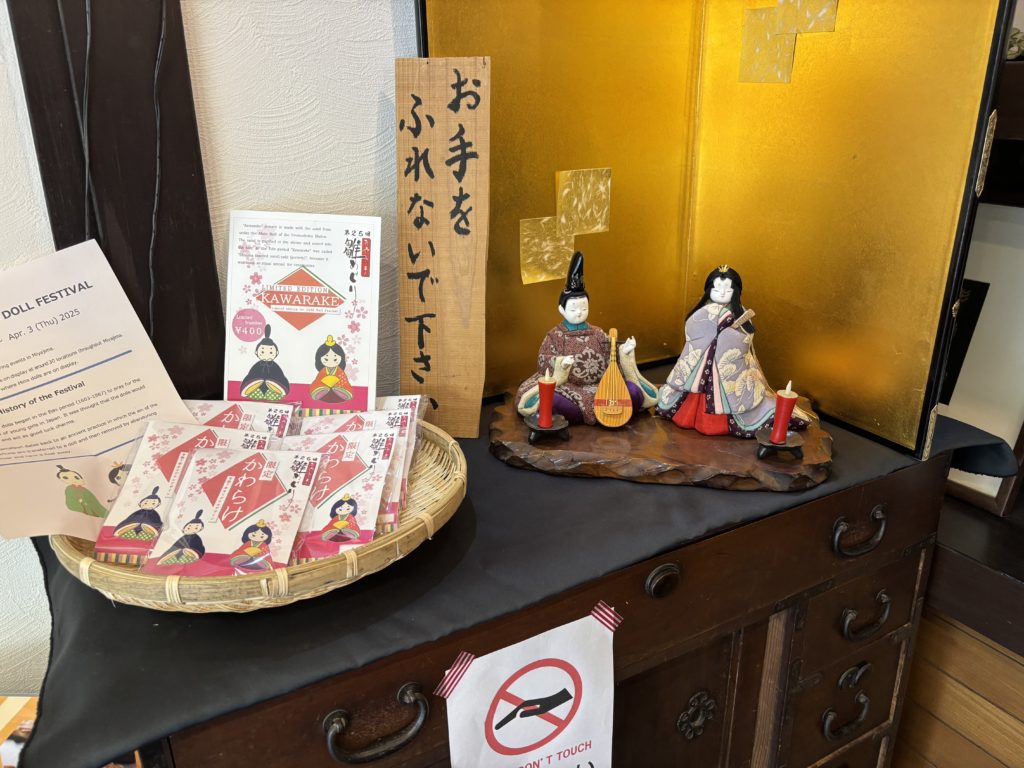
Stepping into this sweets shop during Hina Meguri feels like walking into a spring garden in miniature. The colors of the hina dolls and the traditional Japanese confections (wagashi) on display echo and complement each other perfectly, filling the shop with a warm, festive energy.
In honor of the festival, the shop offers a limited-edition kawarake souvenir dish (¥400 including tax) — a small, lightweight ceramic plate decorated with a seasonal hina design. I was so busy taking photos that I completely forgot to buy one, which I still regret. My husband pointed out that collecting one each year would make a lovely annual tradition. They reportedly sell one every spring, so it’s worth planning ahead if you’d like to bring one home as a memento.

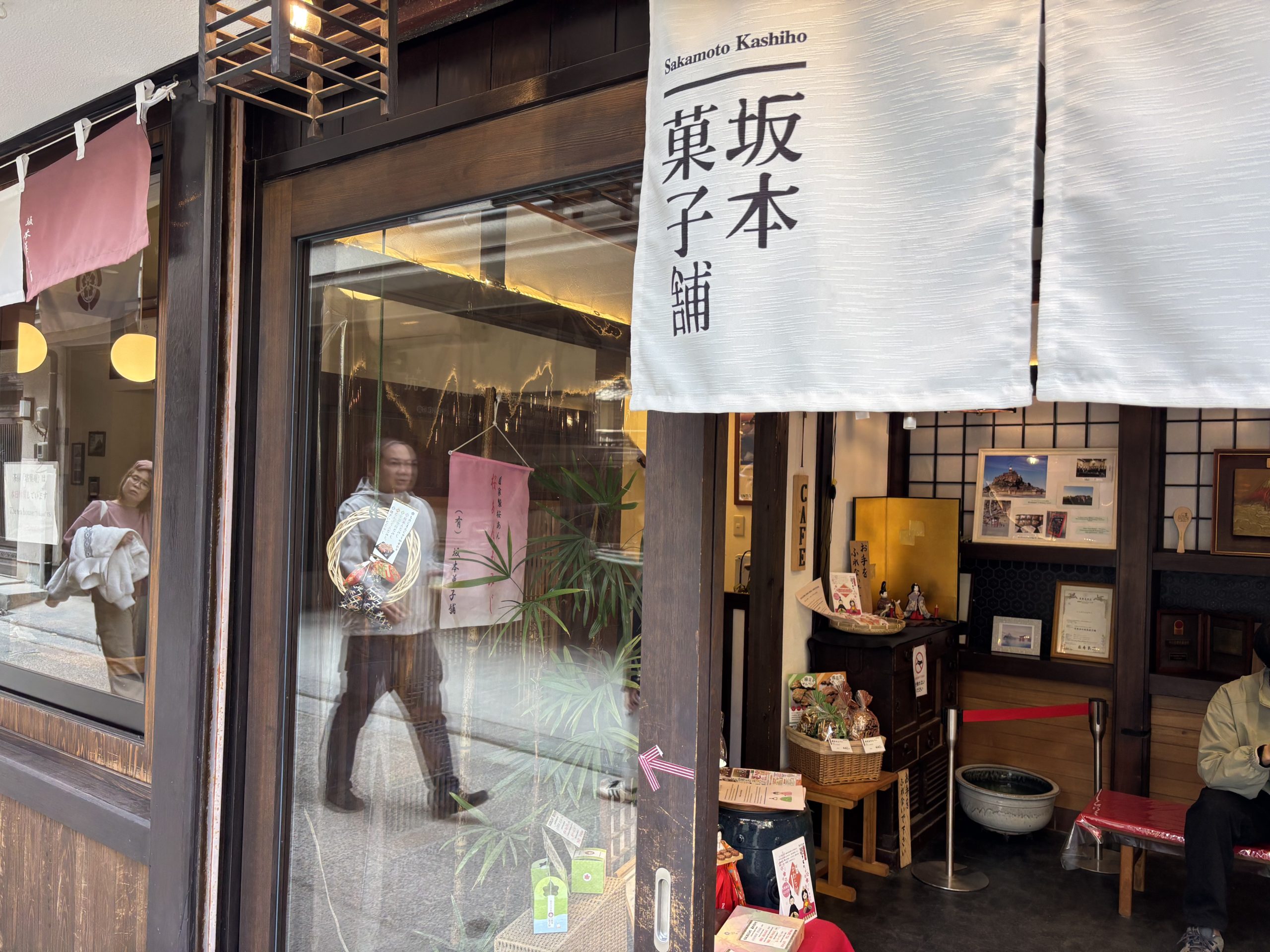
Gyararii Miyago (Miyago Gallery)
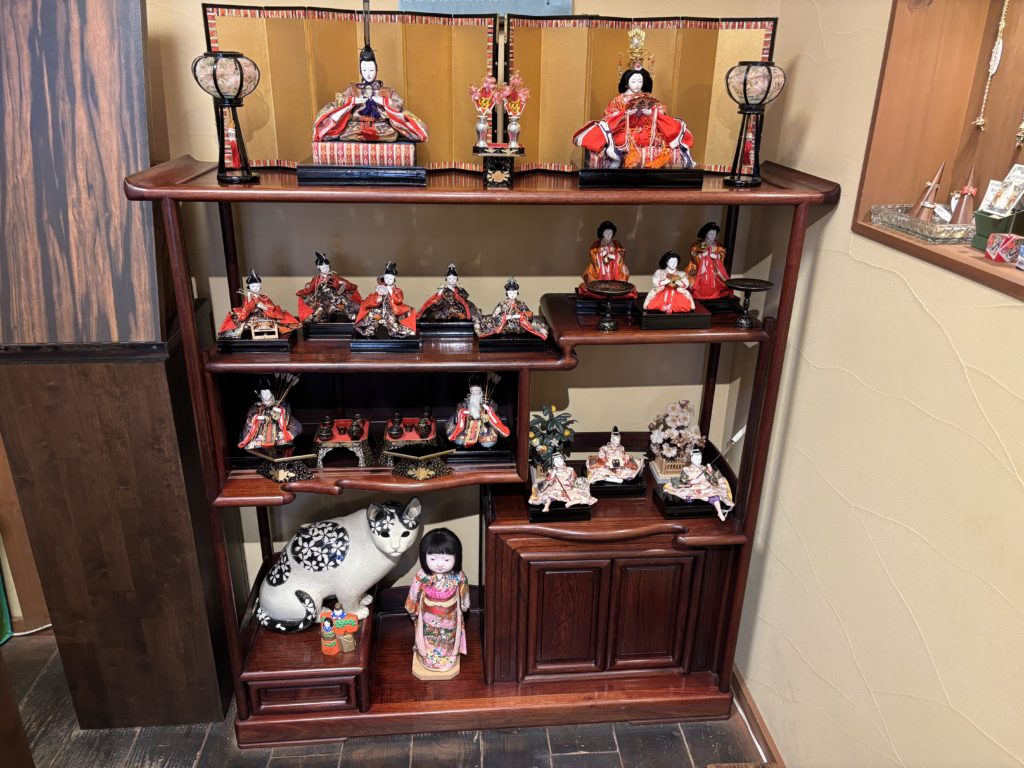
This small gallery brings its own artistic sensibility to the festival. The display combined antique hina dolls with retro frames and a charming ceramic cat figurine positioned as if watching over the scene — adding a quiet wit to the whole arrangement. The space has a still, contemplative quality that’s quite different from the livelier shop displays. My eldest daughter spotted the ceramic cat immediately: “The cat is watching the dolls!” She wasn’t wrong.
Mikuriya

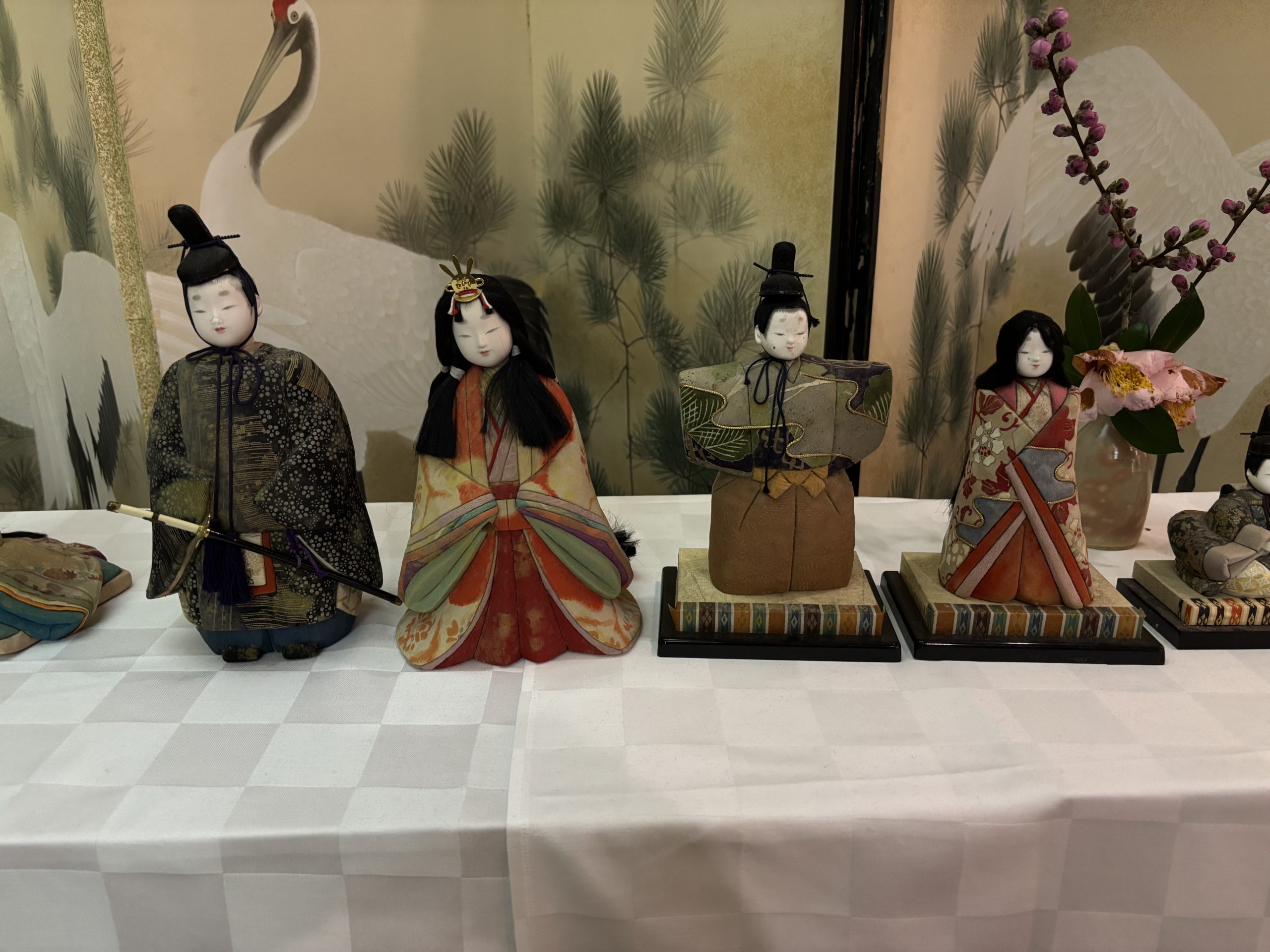
For visitors who appreciate fine craftsmanship, this stop is not to be missed. The dolls here have a real sense of age and refinement — careful brushwork on the faces, layered fabric robes with subtle texture, and delicate accessories that reward close inspection. The shop has incorporated the seasonal display thoughtfully into a limited space, and the overall effect is quietly beautiful. My younger daughter stood in silence for a moment before saying: “The old dolls are so pretty.” That reaction said everything.
Yamadaya
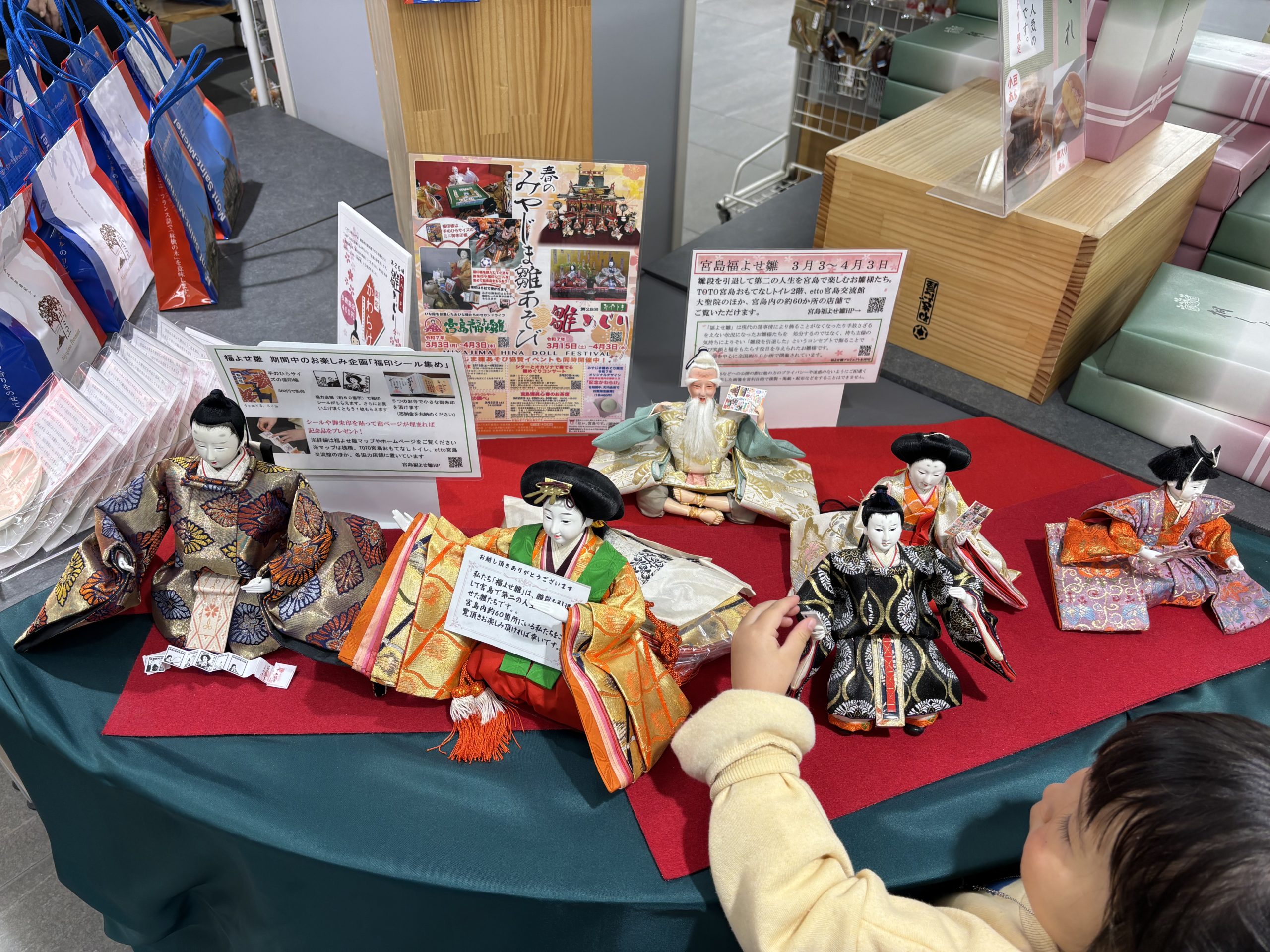

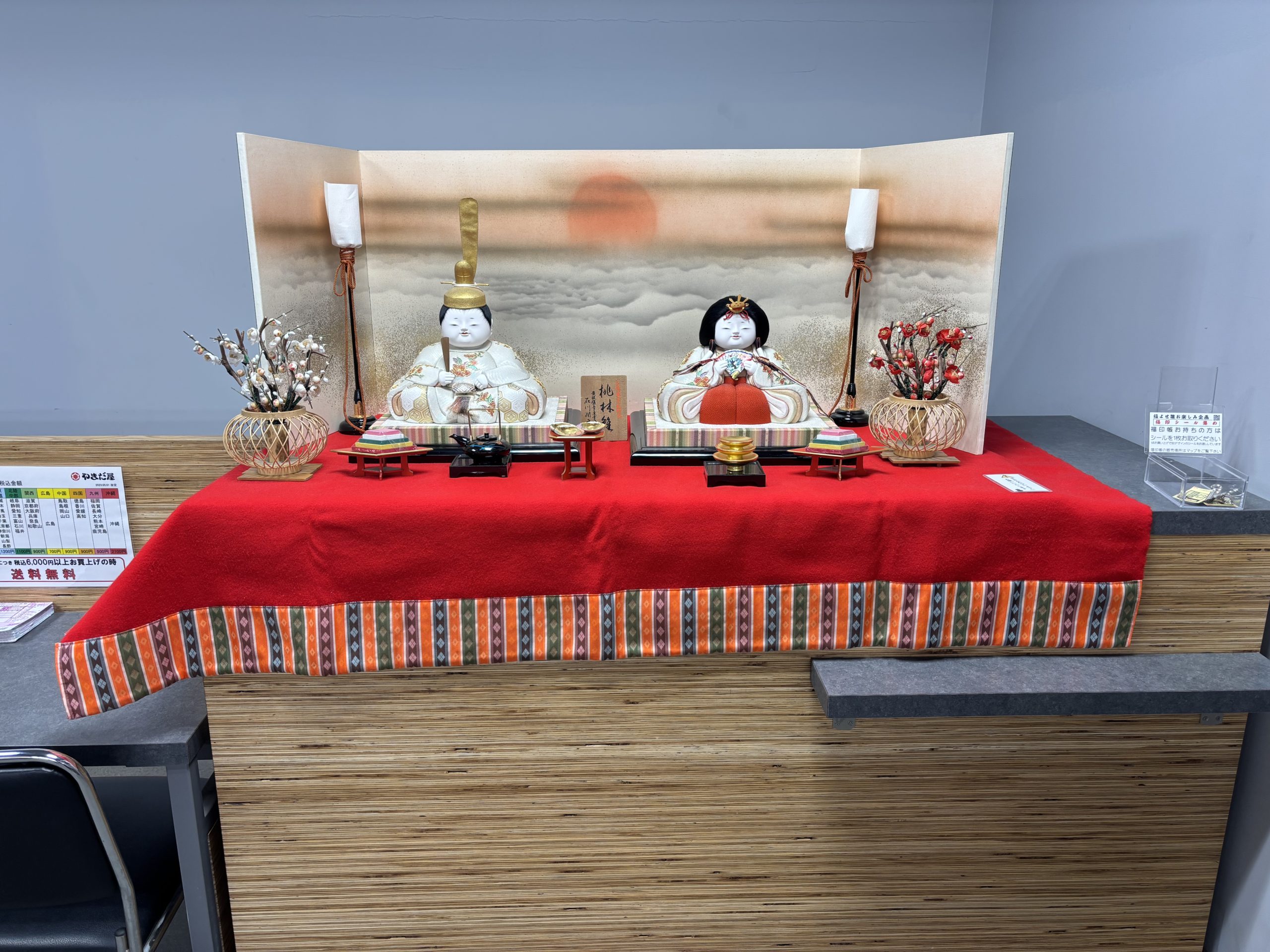
A completely different energy here — bright, bold, and instantly welcoming. The display at Yamadaya has a playful, pop-art quality that makes even first-time visitors smile the moment they walk in. It’s an upbeat stop on the route, and the friendly atmosphere of the shop makes it easy to linger and chat. The staff are happy to share stories about the dolls if you’re curious.
Miyajima Traditional Industry Hall (Miyajima Dentou Sangyo Kaikan)

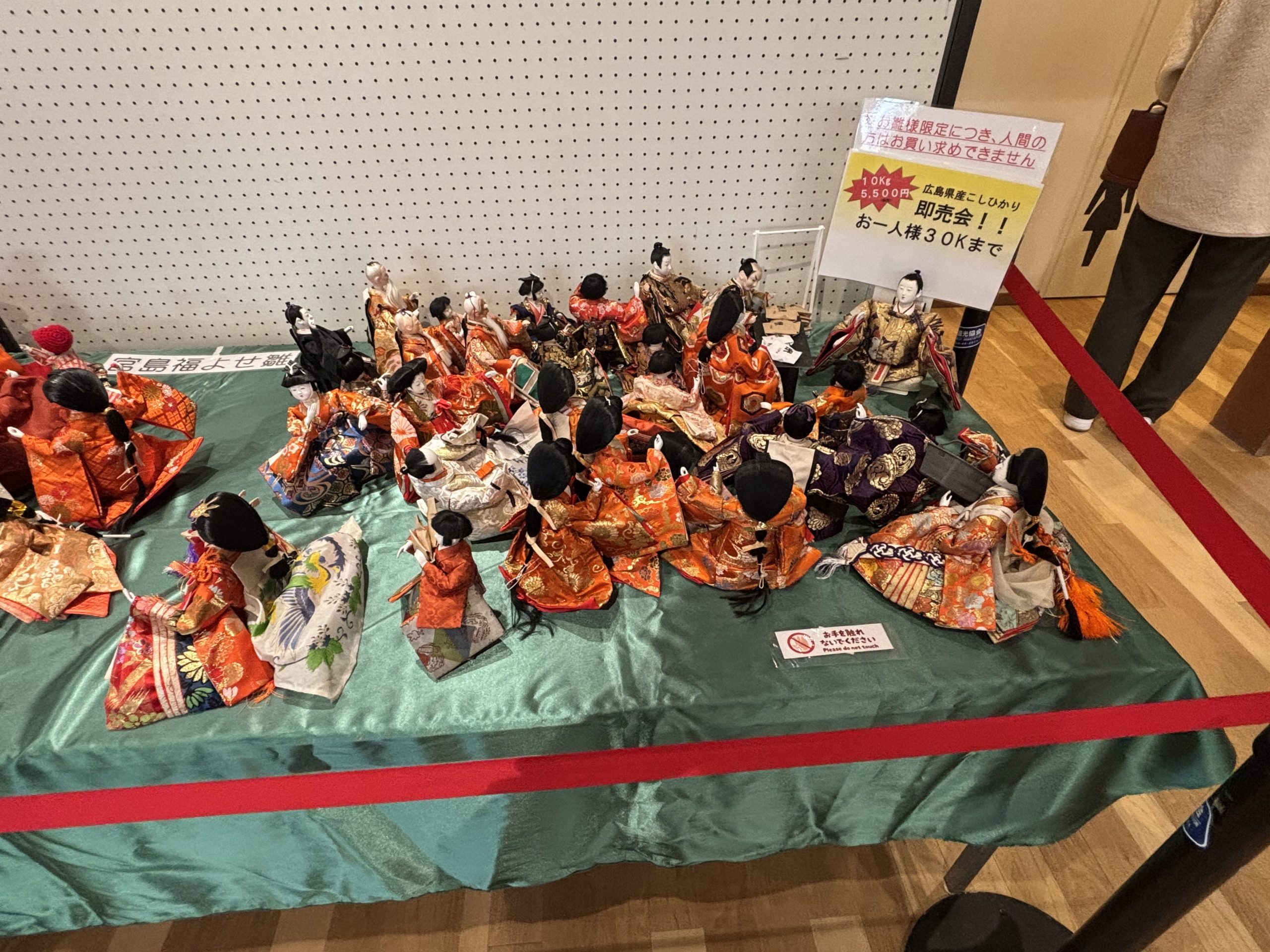

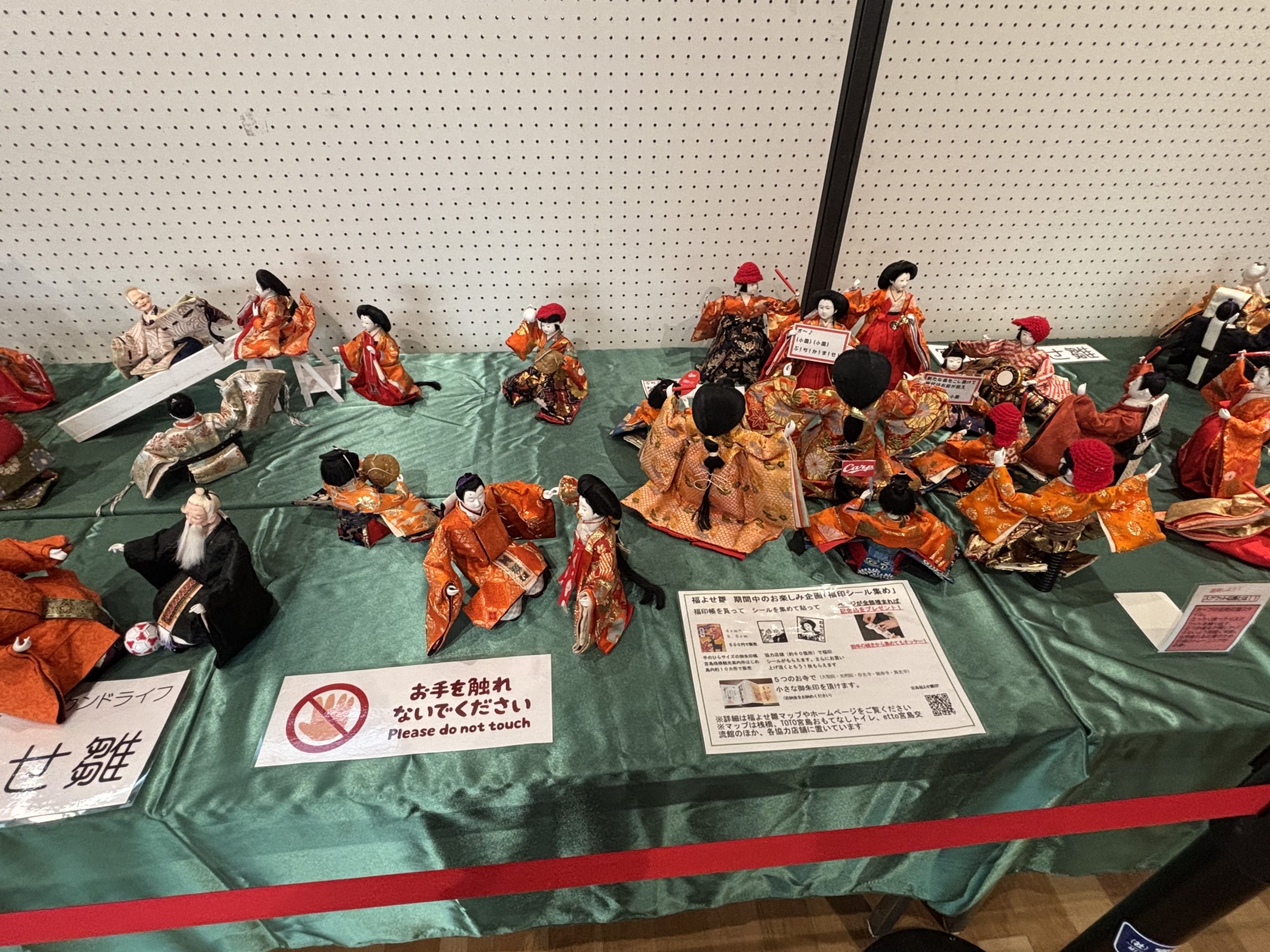

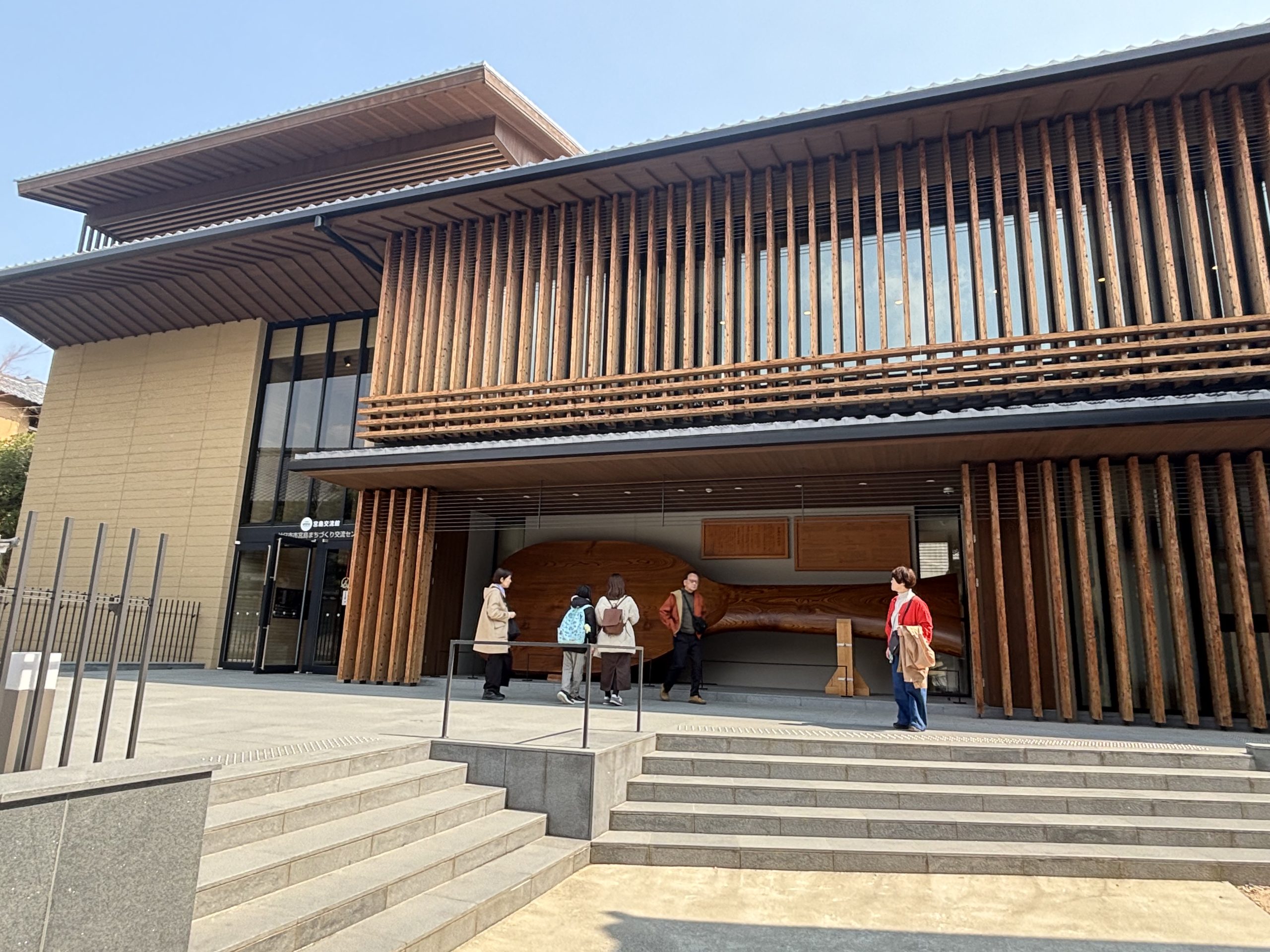
This was one of the most unexpected and entertaining stops on the entire walk. The Traditional Industry Hall is known for its displays of Miyajima’s craft heritage, but during Hina Meguri it presents a wonderfully witty collection of creative hina dolls — figures reimagined with contemporary and topical themes, incorporating humor and commentary on current events. The result is a display that’s genuinely funny while still honoring the artistry of traditional doll-making. My elder daughter was laughing out loud: “There are so many funny ones!” It’s a great reminder that tradition in Japan doesn’t have to mean rigidity.
Did you know Daisho-in Temple is actually older than Itsukushima Shrine? It’s a wonderful spiritual complement to the Hina Meguri walk.

Tucked into the forested hillside at the foot of Mount Misen, Daishoin...
Furai-do
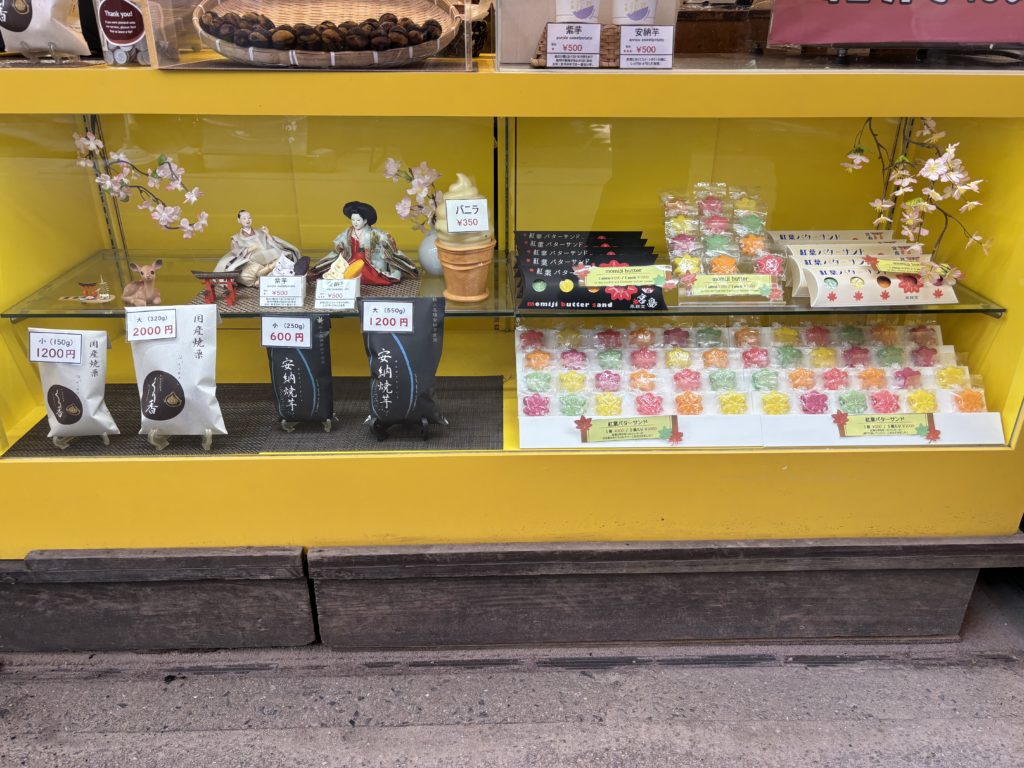
Furai-do is known for its momiji butter sand cookies — one of Miyajima’s newer sweets hits — and during the festival, a hina doll display takes up residence right in the shop’s front window. The effect is charming: the late afternoon light coming in from the shopping street creates a beautiful glow around the figures, and the combination of the island’s most photogenic sweets and the delicate dolls makes this one of the best spots for a keepsake photo. Try positioning the momiji butter sand in the foreground for a shot that captures the full spirit of spring in Miyajima.
Heading to Furai-do? You might also want to pick up some freshly baked momiji manju from Fujiiya — one of Miyajima’s most celebrated traditional sweet shops.
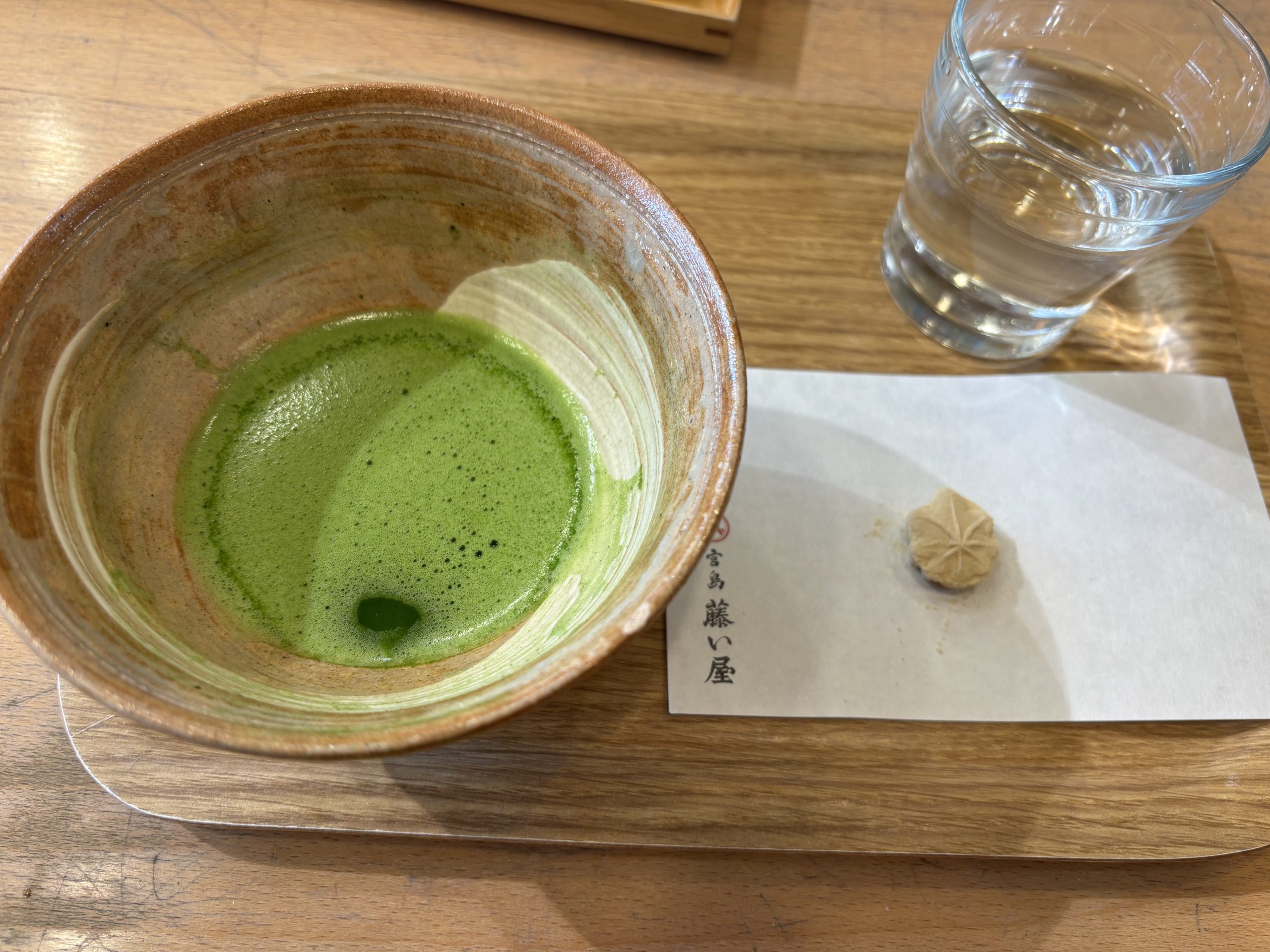
Tucked along the Omotesando shopping street on your walk from the ferr...
Fujiiya


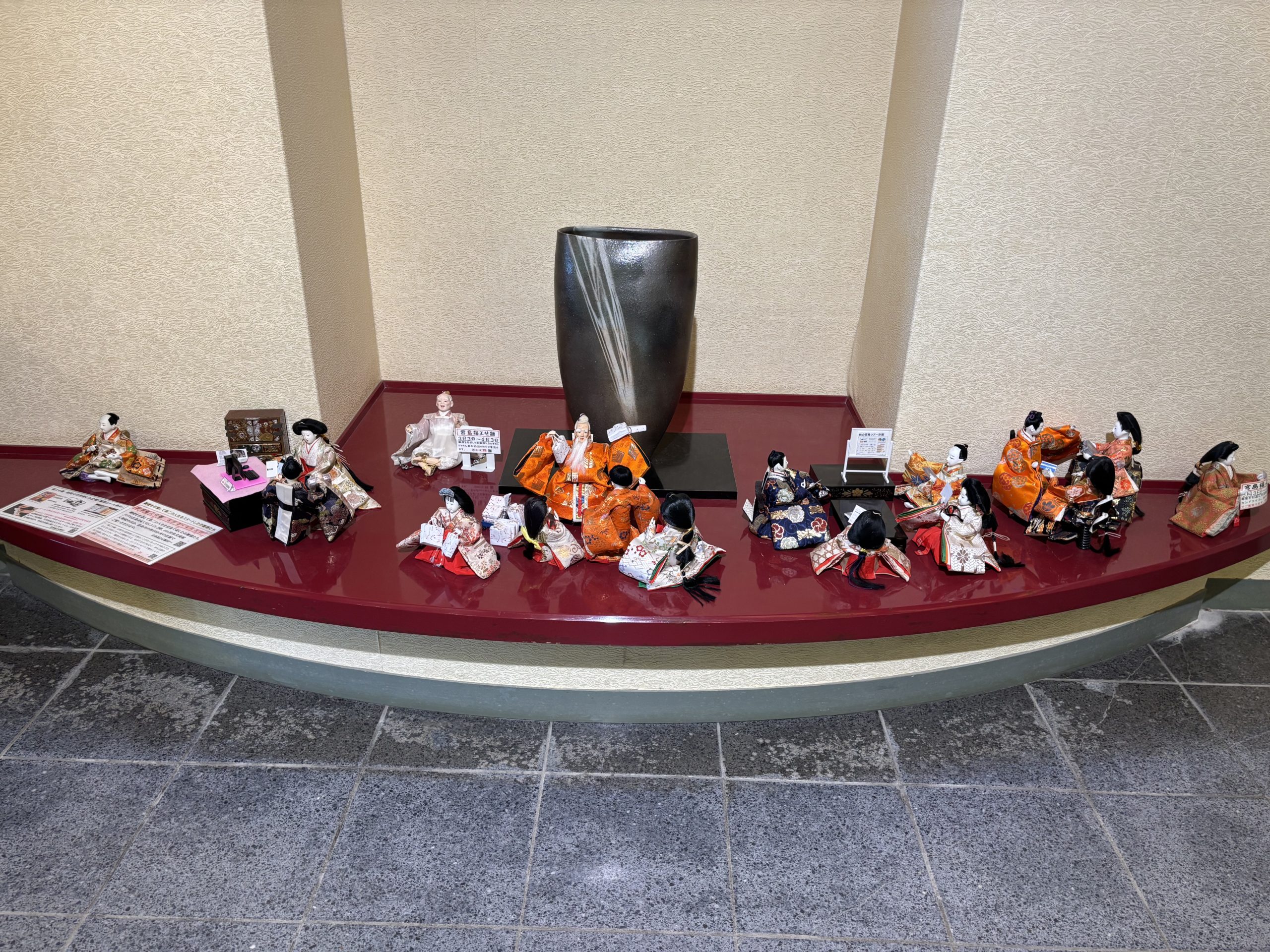

Fujiiya is one of Miyajima’s most iconic sweets shops, famous for its freshly baked momiji manju — the maple-leaf-shaped cakes that are the island’s signature souvenir. During Hina Meguri, the shop’s display is elegantly understated: a compact, refined arrangement of classic hina dolls whose golden brocade robes complement the warm tones of the freshly baked cakes on the counter. The combined fragrance of sweet bean paste and spring flowers drifting through the shop is a sensory memory that stays with you long after the trip. Finishing the Hina Meguri walk here — with a warm momiji manju in hand — makes for a very satisfying end to the route.
Local tip: Yamadaya’s second floor is one of the best-kept secrets on the island for eating freshly baked momiji manju on the spot. If you need a quiet moment to rest your feet mid-walk, it’s a wonderful little stop.
Cherry Blossoms and the Hina Meguri: A Perfect Spring Combination
The timing of the Miyajima Hina Doll Festival is no coincidence. Running from mid-March through early April, the event overlaps with the cherry blossom season in Hiroshima — and Miyajima Island is no exception when it comes to spectacular spring blooms.
A local resident shared a tip with me that I’m happy to pass along: the area around the Tahoto Pagoda (a graceful two-story pagoda near Itsukushima Shrine) is one of the island’s best-kept cherry blossom viewing spots, popular with locals but not always on the tourist radar. If you time your visit to the Hina Meguri well, you may be able to enjoy the doll displays and a quiet hanami (flower-viewing) moment in the same afternoon.
Practical Information
Dates: mid-March to early April each year (2026: Saturday, March 14 – Friday, April 3)
How to find participating venues: Look for the pink nobori-hata banner flags outside shops, inns, and cultural facilities. They are easy to spot from the street.
Opening hours: Vary by venue; most displays are open from approximately 10:00 AM to 5:00 PM.
Admission: Entry to most displays is free, though some venues may be ticketed for specific events.
Number of venues: Approximately 30–60 participating locations across the island.
Strollers: Be aware that some venues involve steps or narrow historic interiors. A baby carrier is more practical than a stroller for this event. Note that Miyajima Aquarium offers free stroller rental if you need one for other parts of your visit to the island.
Footwear: The island has cobblestone paths and gentle slopes throughout — comfortable walking shoes are strongly recommended. A light rain jacket is useful for early spring weather.
Photography: Personal photography for blogs and social media is generally welcome, but be mindful of other visitors in crowded venues.
FAQ
When is the Miyajima Hina Doll Festival held?
It is held from mid-March to early April every year. The 2026 festival (the 26th) ran from Saturday, March 14 through Friday, April 3; check the Miyajima Tourist Association for the next dates. The timing overlaps with cherry blossom season, making it one of the most scenic periods to visit Miyajima Island.
How do I find the participating venues?
Look for the pink banner flags (nobori-hata) posted outside each participating shop, inn, or facility. They are clearly visible from the street and easy for both adults and children to spot as you walk.
Is the Miyajima Hina Doll Festival free to attend?
Most of the doll displays are free to view. Some companion events during the festival period, such as tea ceremony sessions or Heian costume experiences, may have a small fee.
How long does it take to walk the Hina Meguri route?
If you focus on the main venues, plan for around 2–3 hours. If you take your time photographing each display and browsing the shops, a half-day is more comfortable. Families with young children may want to budget a little extra time.
When is the least crowded time to visit?
Weekday mornings and late afternoons tend to be quieter. The island’s compact size makes it easy to spread your visit across different areas, which naturally helps avoid congestion at any single venue. Roughly 2:00–4:00 PM on weekdays is reportedly one of the calmest windows.
Is the Hina Doll Festival suitable for families with young children?
Absolutely. Because most of the displays are indoors, the festival is not heavily dependent on good weather, which makes it a reliable family activity in early spring. Children tend to be delighted by the variety of dolls — from traditional court figures to whimsical teddy bear versions. The walking distances between venues are manageable for older children.
Is a stroller practical for this event?
Some venues involve steps or narrow interior spaces, so a baby carrier is generally more practical than a stroller during the Hina Meguri walk. If you need a stroller for other parts of your Miyajima visit, the Miyajima Aquarium offers free stroller rental.
You May Also Enjoy
Miyajima is a UNESCO World Heritage Site — and there’s more to the designation than just Itsukushima Shrine. Learning about the full scope of the World Heritage area will deepen your appreciation of everything you see during the Hina Meguri.
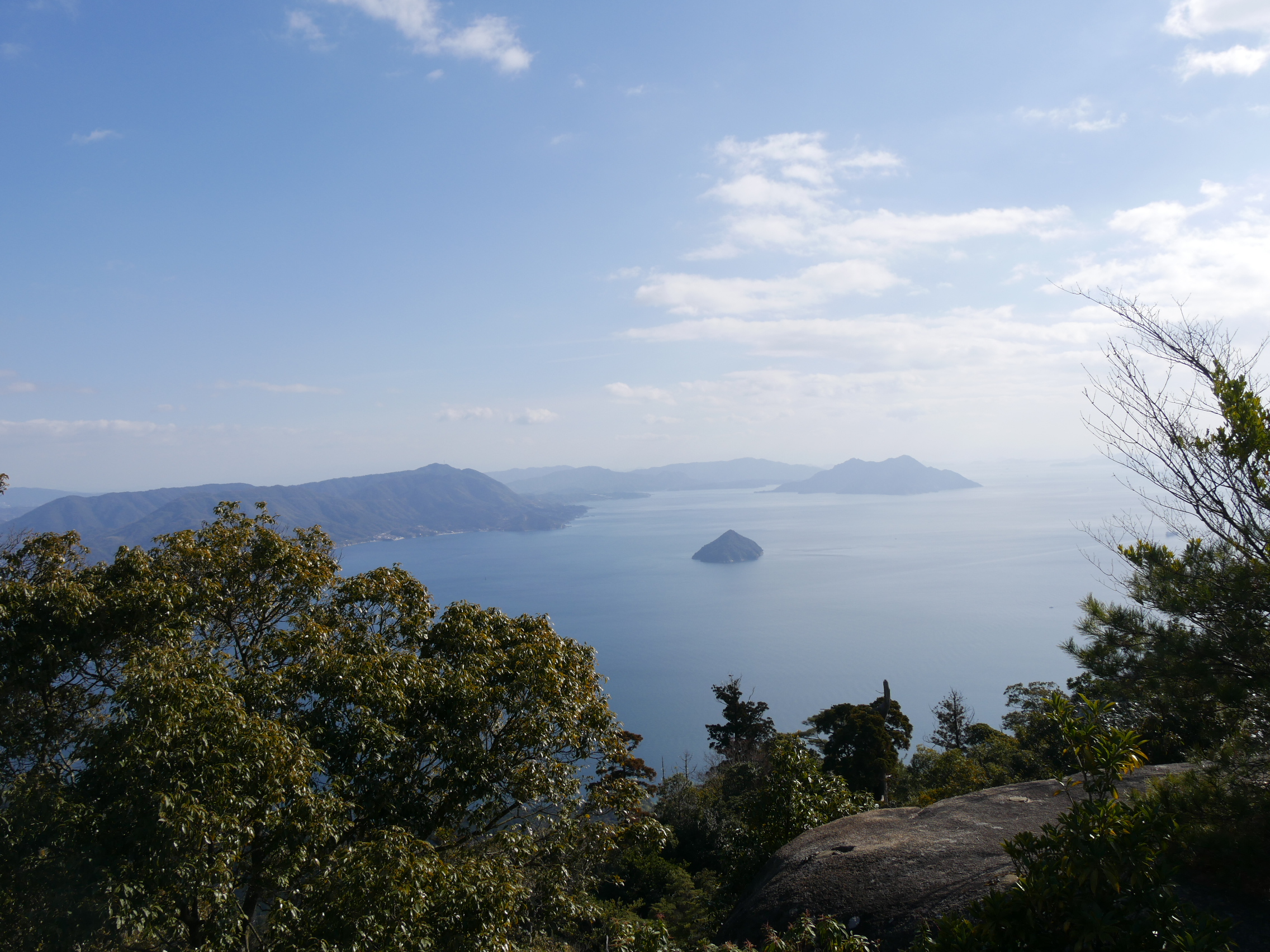
Rising dramatically from the sea off the coast of Hiroshima, Itsukushi...
Age momiji — a deep-fried version of Miyajima’s most famous sweet — is one of the best street food snacks to enjoy while walking the Hina Meguri route.
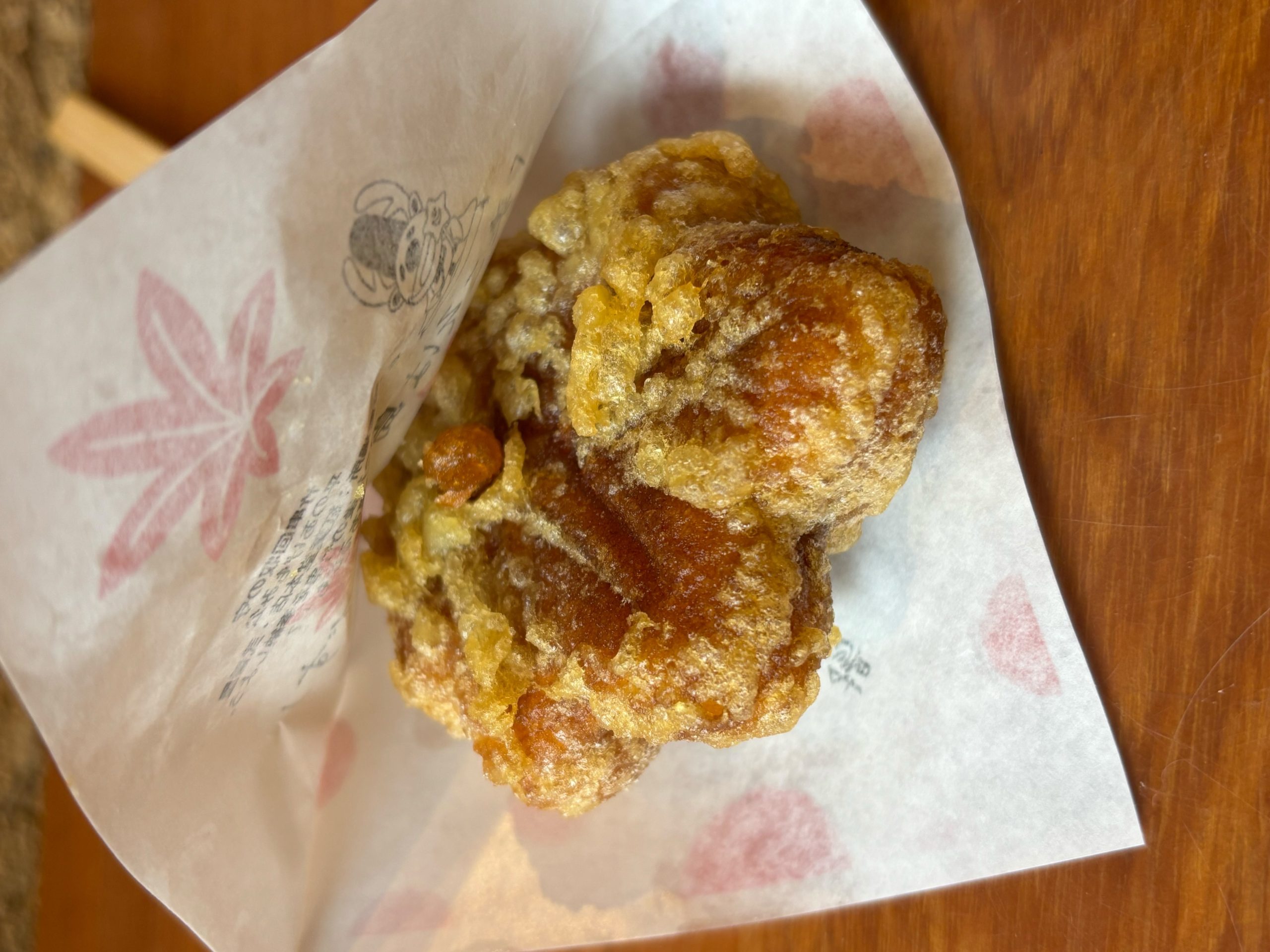
Momiji manju (もみじ饅頭) is a small sponge cake shaped like a Japanese map...
If you’re planning dinner after the festival walk, Miyatoy Honten is widely regarded as one of the best places on Miyajima Island to enjoy fresh Hiroshima oysters.
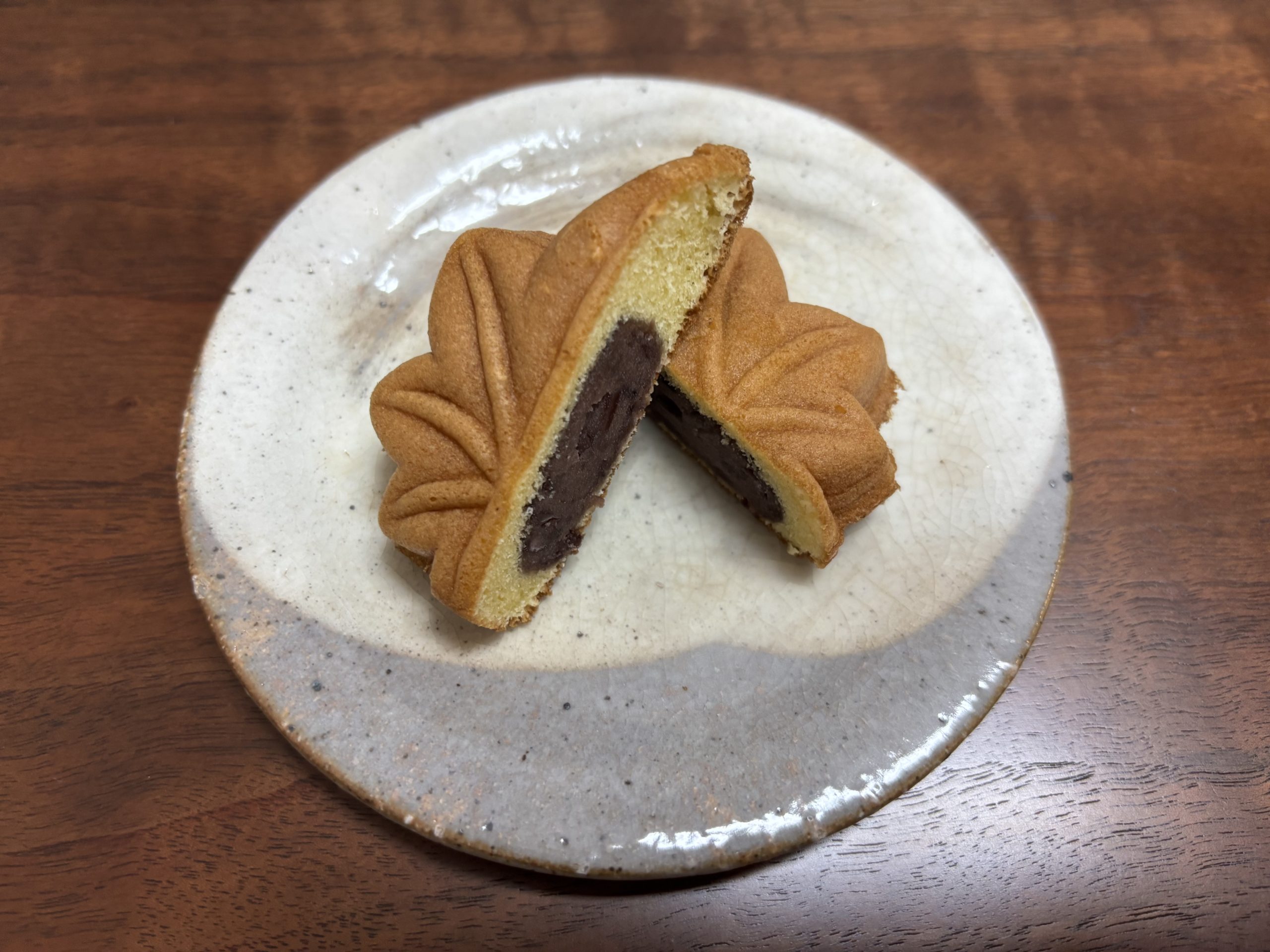
If you're visiting Miyajima and want to try momiji manju at its most t...
Please note that event dates, participating venues, and event details may change from year to year. We recommend confirming the latest information through the official Miyajima tourism channels before your visit.