
Want to make momiji manju in Miyajima with your own hands? At Yamada-ya Miyajima Main Store, you can bake the island’s signature maple-leaf cakes fresh on a traditional griddle. Sessions run about 30 minutes, cost just ¥1,000 (tax included), and include a small souvenir to take home. It’s quick, hands-on, and perfect for families—easy to fit between your visit to Itsukushima Shrine and a stroll through Omotesando Shopping Street.
Our Family’s First Time Making Momiji Manju
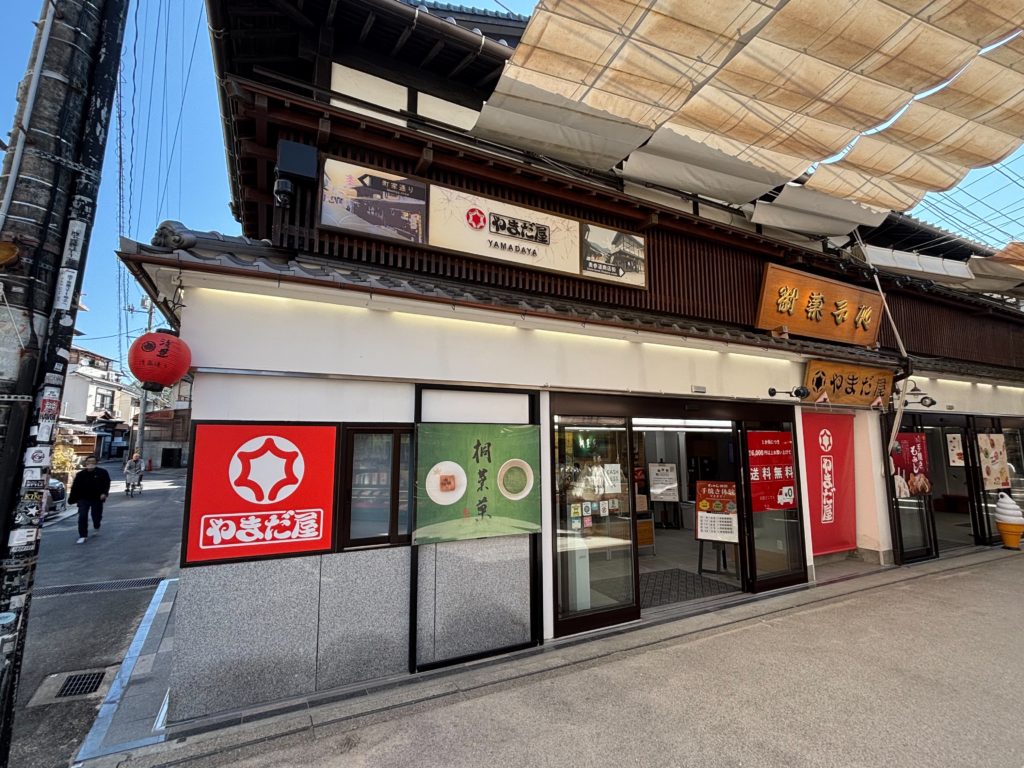
Yamada-ya is one of Miyajima’s oldest confectionery makers, founded way back in 1932. They’re famous not only for momiji manju but also for their elegant Touyouka confection. With over 20 million momiji manju produced every year, Yamada-ya has become a beloved name among both Japanese visitors and international travelers exploring this UNESCO World Heritage island.
Last month, I brought my two daughters—one in third grade, the other in kindergarten—to try the handmade momiji manju experience for the very first time. They couldn’t stop asking, “What will the ones we make ourselves taste like?” The excitement was contagious, and honestly, I was just as curious.
The Miyajima Main Store is open daily from 9:00 to 18:00, year-round. You’ll find it at 835-1 Miyajima-cho, Hatsukaichi, Hiroshima. What surprised me—even as a local—is that not everyone knows you can enjoy freshly baked momiji manju right on the shop’s 2nd floor. It’s a hidden gem tucked above the busy storefront.
Getting there is straightforward: from JR Miyajimaguchi Station, it’s about a 3-minute walk to the ferry terminal. Once you’re on Miyajima, the shop is just a short stroll from Itsukushima Shrine. If you’re driving, we always recommend parking near the Miyajimaguchi pier and taking the ferry over—parking on the island itself is extremely limited. The shop is accessible with strollers and wheelchairs, though you’ll want to watch for steps and slopes around certain parts of the island.
Quick ferry tip: if you’re choosing between the two ferry companies, I always go with the JR Ferry. It takes a route closer to the great torii gate, and my kids absolutely lose it when they spot the iconic red gate rising out of the water. “Look! I can see the big torii!” echoes through the boat every single time.

The Miyajima ferry is more than just a way to reach the island—it's a ...
The momiji manju making experience takes place in a dedicated workshop on the store’s 2nd floor. Since September 2019, Yamada-ya has offered online reservations 24/7, and you can check real-time availability. Walk-ins are sometimes possible on the same day, but sessions fill up fast—especially on weekends—so booking ahead online is strongly recommended.
I learned this the hard way. The first time we tried to visit without a reservation, we ended up waiting nearly two hours. Families pour in on Saturdays and Sundays, and the shop can only accommodate so many people per session. Ever since that experience, we always book in advance. For larger groups or tour agencies, you can even reserve up to one year ahead using their application form or fax system. Each session accommodates up to 20 participants, and everyone must be at least 5 years old. If you have a younger child who can’t participate, one non-participating adult observer per group is allowed to watch.
Session Times & What You’ll Pay
- Weekdays: 10:30 / 13:00 / 14:15 / 15:30
- Saturdays, Sundays & Holidays: 9:45 / 11:00 / 13:00 / 14:15 / 15:30
- Duration: approximately 30 minutes
- Cost: ¥1,000 per person (tax included, includes a small souvenir)
- What you’ll bake: 1 momiji manju with smooth red bean paste + 1 with chocolate filling
- Payment: cash only at reception on the day of your session
Our youngest daughter started participating the moment she turned 5. She kept asking nervously, “Can I really make it as good as big sister?” But the staff were so patient and encouraging that she ended up doing beautifully. Watching her little hands carefully pour batter into the maple-leaf mold was one of those parenting moments you don’t forget.
Seasonal note: Yamada-ya occasionally offers special seasonal fillings in addition to the standard red bean and chocolate. For example, last August they featured Shine Muscat grape filling from August 9-17. We participated during that limited run, and the combination of fresh grape sweetness with delicate red bean paste was absolutely exquisite. Keep an eye out for these seasonal variations—availability and souvenir options may change depending on the time of year.
How the Baking Process Works (Step-by-Step)
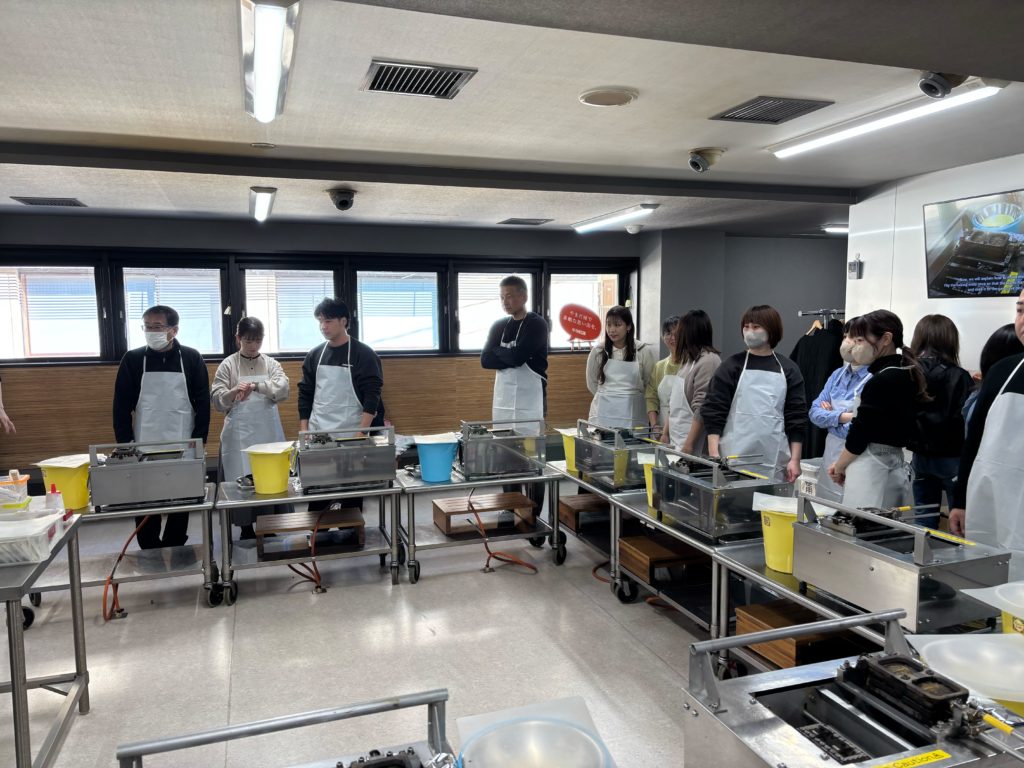
After you check in at reception, you’ll store your bags on a designated shelf, wash your hands thoroughly, and slip on a provided apron before heading to your workspace. Each station is equipped with everything you need: pre-measured batter, red bean paste, chocolate chips, measuring spoons, an oil dispenser, and the iconic maple-leaf-shaped molds. You’ll be working with open flames and hot metal, so the staff emphasize safety right from the start—especially for families with young children.
In our family, we’ve developed a little system: my husband acts as the official photographer (he takes this role very seriously), while I provide backup support for the kids. Our eldest has reached the age where she wants to do absolutely everything herself, so I mostly hover nearby and watch. Our youngest, on the other hand, goes straight into “Mommy, help me!” mode the second things get tricky.
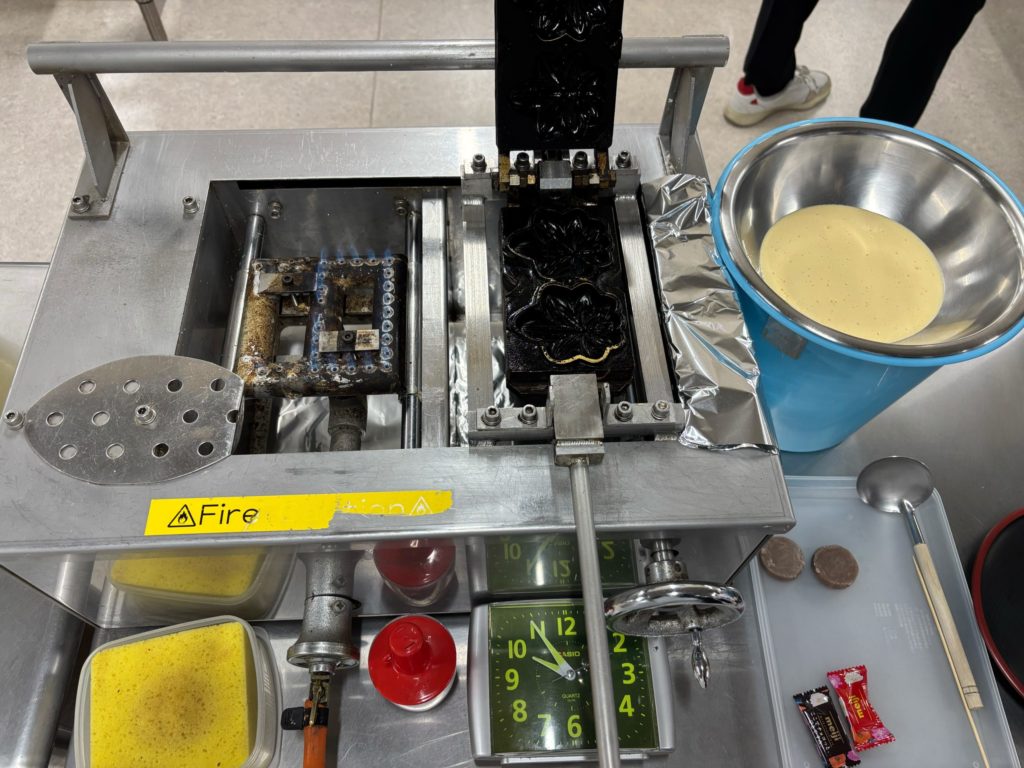
- Start by lightly oiling the inside of both halves of the maple-leaf mold. Make sure you coat every nook and cranny, then preheat the mold over the burner until it’s nice and hot.
- Pour a small amount of batter into the mold first, then carefully add your filling—either red bean paste or chocolate. Cover the filling with another layer of batter, leaving just a bit of space at the edges.
- Close the mold and place it over the flame. Flip the mold every 30 seconds or so, rotating about 4 times total, to ensure even browning on both sides. You’ll start to smell that wonderful, toasty sweetness.
- When the cake is golden brown, use a wooden skewer to gently release it from the mold. Trim off the thin, crispy “wings” that form around the edges—these are totally edible and make a great little snack for impatient kids.
- Let your momiji manju rest for just a moment, then dig in while it’s still warm. The texture is incredible: crispy on the outside, soft and tender inside, with the filling still slightly melty.
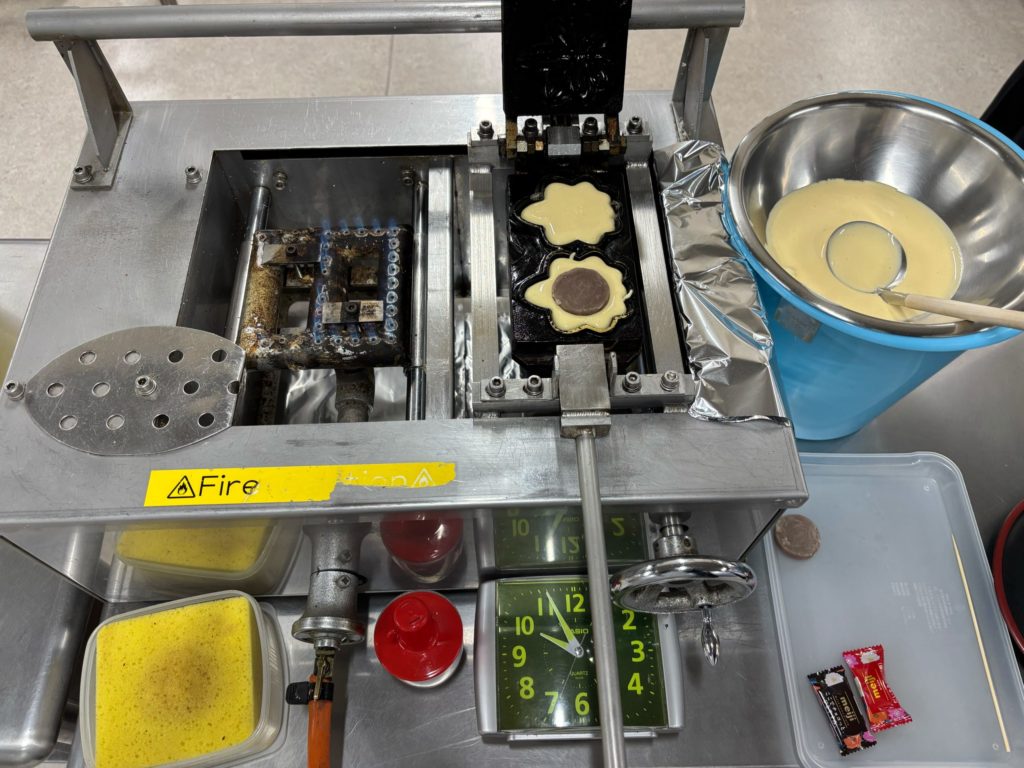
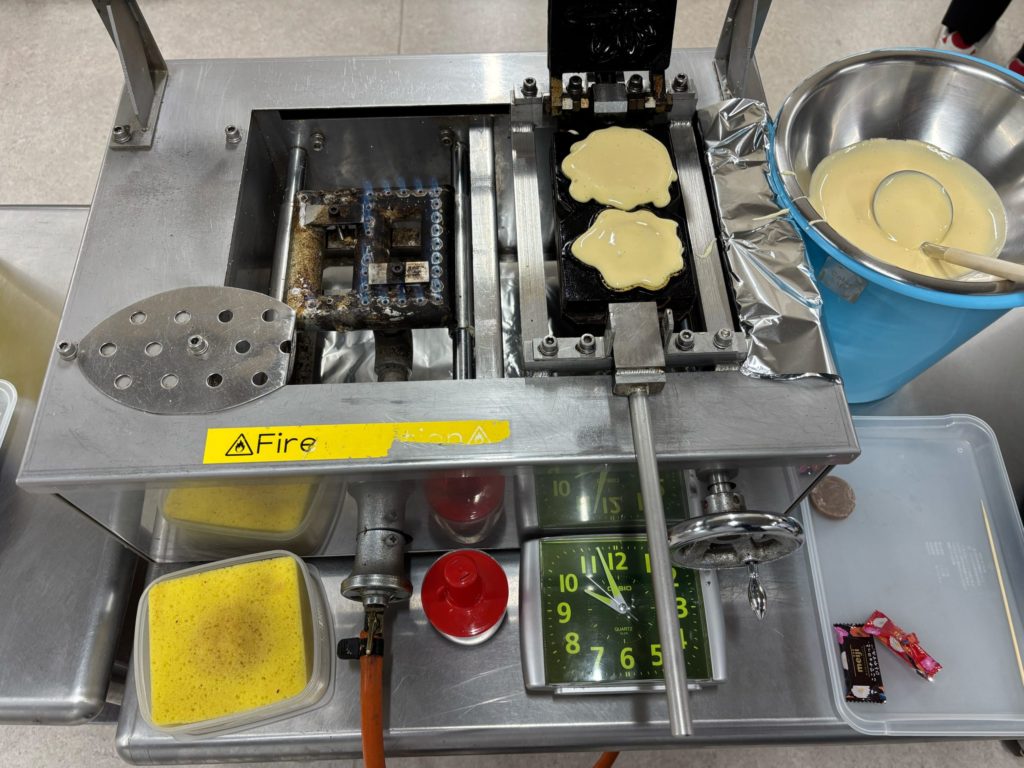
I’ll admit—I burned mine just a little bit on one side. But you know what? That became part of the memory. The slight bitterness from the crispy edge actually paired surprisingly well with the chocolate filling. And when our youngest declared, “Mommy’s tastes the best!” with chocolate smeared across her cheek, I felt like I’d won a Michelin star. Between the baking, the eating, and the little souvenir package they give you at the end, it’s the kind of sweet memory that stays with you long after you’ve left the island.
After your baking session, I highly recommend taking the factory tour that’s also available at Yamada-ya Main Store. No reservation is needed, and you can watch the professional momiji manju production line in action. The kids were absolutely fascinated, pointing and exclaiming, “It’s just like what we made!” Seeing the scale of the operation—thousands of cakes being shaped, filled, and packaged—gives you a whole new appreciation for the ones you just crafted by hand.
Before or after your momiji manju experience, a stroll through Omotesando Shopping Street is practically mandatory. It’s the main pedestrian avenue leading from the ferry terminal to Itsukushima Shrine, lined with shops, restaurants, and more momiji manju vendors than you can count. After making your own at Yamada-ya, it’s actually really fun to do a little comparison tasting at other shops along the street. Each shop has its own subtle variations in batter sweetness, filling texture, and cooking technique.
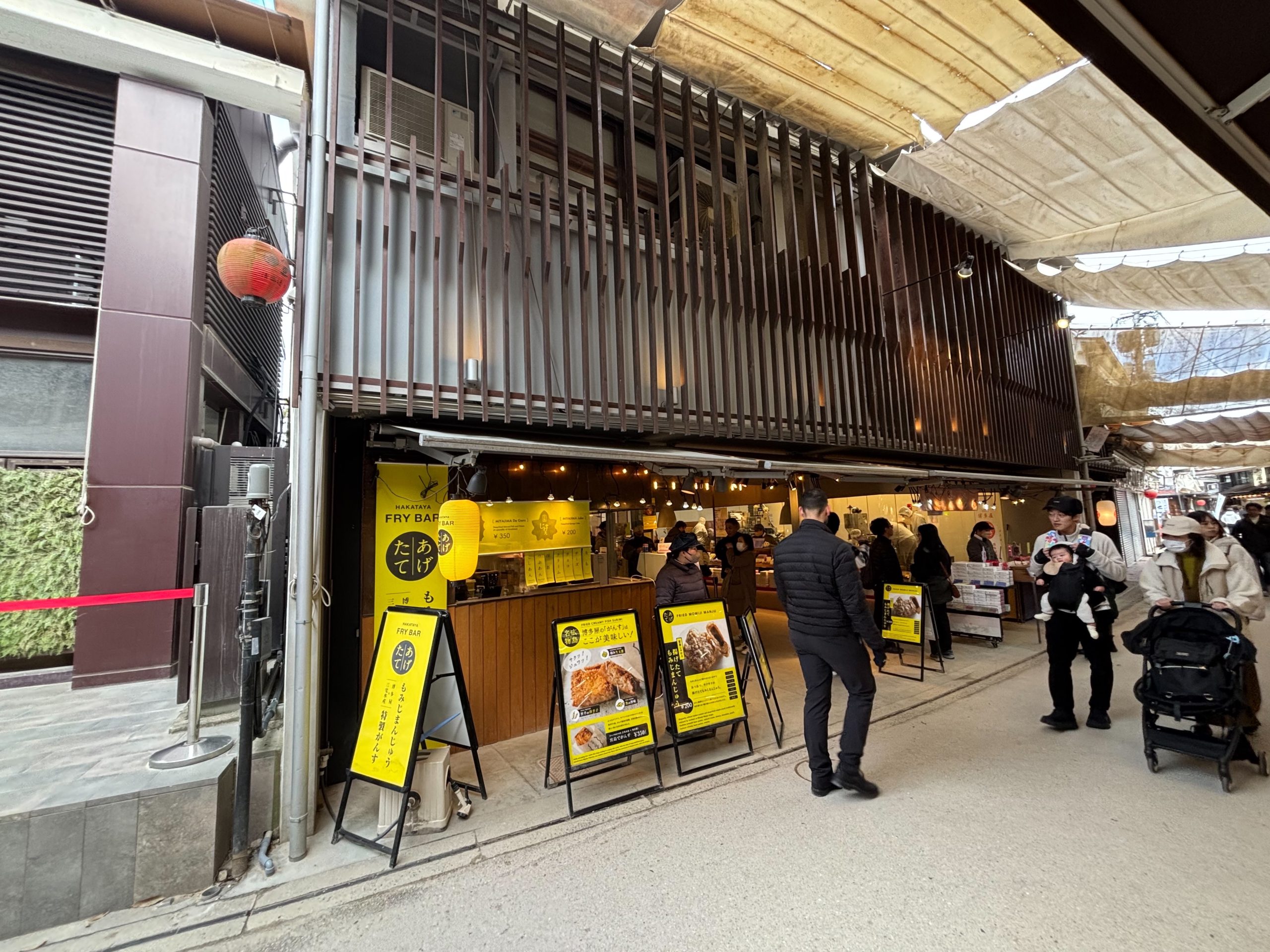
Wondering what to eat in Miyajima? The answer lies along Omotesando Sh...
Here’s a local tip: if you’re hunting for the famous deep-fried momiji manju, head to Momijido early in the morning. Locals swear that the fried momiji are at their absolute crispiest first thing when the oil is fresh. If you have time in your itinerary, it’s definitely worth the stop.
After you’ve finished making and eating momiji manju, don’t miss the main event: Itsukushima Shrine itself. Take those memories—and maybe a few photos of your handmade treats—with you as you explore this breathtaking World Heritage site. The shrine’s vermillion buildings floating over the water at high tide are truly unforgettable, and somehow they feel even more special when you’ve just experienced a piece of Miyajima’s culinary culture firsthand.
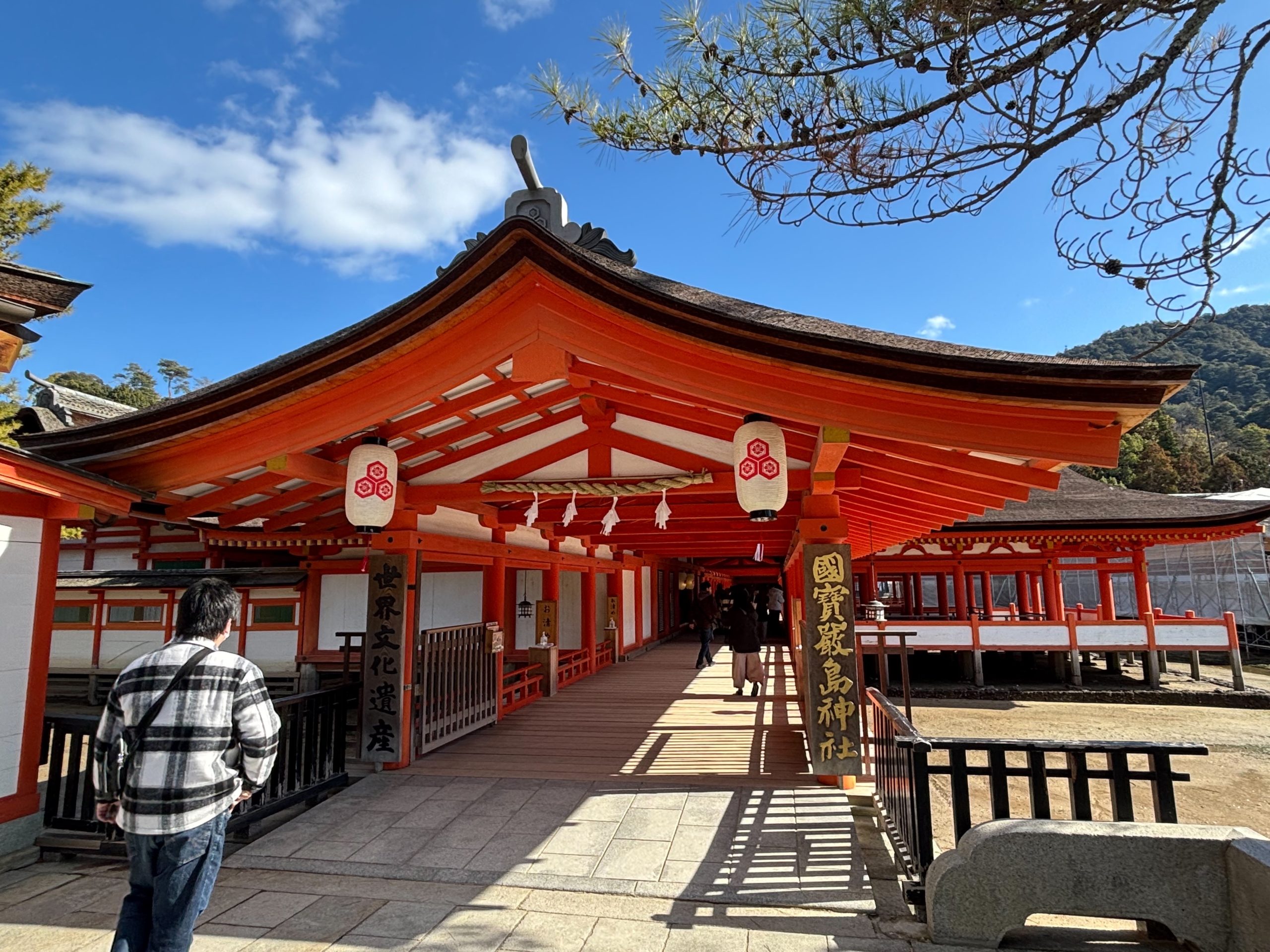
When you think of Miyajima, the first image that comes to mind is Itsu...
Reservations, What to Bring, and Accessibility Info
- Reservations: Online booking is available 24/7 through Yamada-ya’s website. For larger groups or tour operators, contact them via their application form or fax. Same-day walk-ins are possible if space is available, but don’t count on it during busy periods.
- What to bring: Technically, nothing—they provide everything you need, including aprons. That said, I recommend wearing clothes you don’t mind getting a little flour or oil on, just in case. For families with small children, bringing a spare shirt can be reassuring. Kids have a way of getting batter everywhere.
- Payment: Cash only at reception. They do not accept credit cards or electronic payment, so make sure you have yen on hand. There’s an ATM near the ferry terminal if you need to withdraw cash before heading over.
- Children: Participants must be 5 years old or older. Since the activity involves open flames and hot molds, parents need to supervise young children closely. The staff provide stools for smaller kids who can’t quite reach the work surface comfortably.
- Strollers & Wheelchairs: The workshop space is located on the 2nd floor and is accessed via stairs. You’ll need to leave strollers on the first floor, and staff are generally happy to help with accommodations. If you have specific accessibility needs, I recommend calling the store ahead of time to discuss options and ensure they can support your visit.
Frequently Asked Questions
Q. Can I just show up without a reservation?
A. Technically yes, if there happens to be space available in an upcoming session. But slots fill quickly, especially on weekends and holidays when families descend on the island. Booking ahead online is your safest bet—and honestly, it takes just a few minutes and saves you from potentially waiting hours or missing out entirely.
Q. What’s the minimum age to participate?
A. Children must be at least 5 years old to participate in the baking. Younger siblings can tag along as observers with an adult.
Q. How do I pay for the experience?
A. Cash only at the reception desk on the day of your session. No credit cards, no electronic payment options.
Q. Is the workshop wheelchair-accessible?
A. The workshop is located on the 2nd floor and requires climbing stairs. If you need wheelchair access or other accommodations, please contact Yamada-ya staff directly before your visit so they can discuss what assistance might be possible.
Q. Any tips for avoiding the biggest crowds?
A. Weekday afternoons between 2:00 and 4:00 PM tend to be quieter, as most day-trippers have already finished their island visits by then. Also, if you’re planning to explore Omotesando Shopping Street, the crowds thin out significantly after 5:00 PM, so timing your stroll for early evening can make for a much more relaxed experience.
Q. What if I want to try other Miyajima specialties too?
A. Absolutely do it! Conger eel rice (anago-meshi) is Miyajima’s other must-try specialty. Many visitors plan their day around sweets first—making momiji manju at Yamada-ya—followed by a proper meal of savory conger eel rice. The flavors complement each other beautifully, and it’s a great way to experience the full spectrum of Miyajima cuisine.
Speaking of which, if you haven’t tried authentic Miyajima conger eel rice yet, it’s an absolute must. The eel is grilled with a sweet-savory glaze and served over rice in a traditional wooden box. Most restaurants prepare it in a way that’s approachable even for kids, so it’s very family-friendly. Consider making it your lunch or early dinner after the momiji manju workshop.
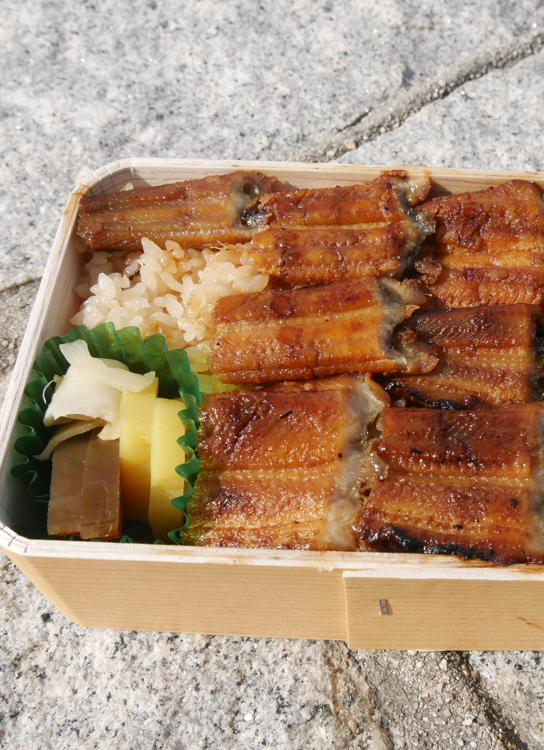
When you visit Hiroshima's enchanting island of Miyajima, one dish sta...
Final Thoughts: A Sweet, Simple Slice of Miyajima Culture
Short, sweet, and authentically Miyajima—Yamada-ya’s momiji manju workshop is the perfect add-on to your shrine visit. Book a 30-minute session, bake two different flavors with your own hands, and walk away with a freshly made treat and a memory that feels uniquely yours. Whether you’re traveling with family, friends, or solo, there’s something genuinely special about creating your own version of this iconic island souvenir.
In our case, this experience actually sparked both of our daughters’ interest in cooking. Now, back home, we even use our electric takoyaki maker to attempt momiji manju-style treats (with varying degrees of success). The burnt edges, the lopsided shapes, the chocolate that leaked out—all of it has become part of our family’s story. That’s what made it perfect.
If you’re still mapping out your Miyajima itinerary and wondering what to fit in, definitely carve out 30 minutes for the momiji manju handmaking experience. It’s engaging for everyone from kindergarteners to grandparents, it’s affordable, and it gives you something tangible to take away beyond photos and memories. Plus, you’ll have one of the best souvenirs possible: a story about the time you made Miyajima’s signature treat yourself.
For those who want to dive deeper into Miyajima’s history and cultural significance, I recommend exploring the broader context of the entire World Heritage site. Understanding why this small island holds such importance in Japanese culture—and why it attracts millions of visitors every year—adds another layer of meaning to experiences like making momiji manju. These traditions didn’t appear out of nowhere; they’re part of centuries of pilgrimage, craftsmanship, and connection to this sacred place.

Miyajima is one of those rare places where Japan's ancient history and...