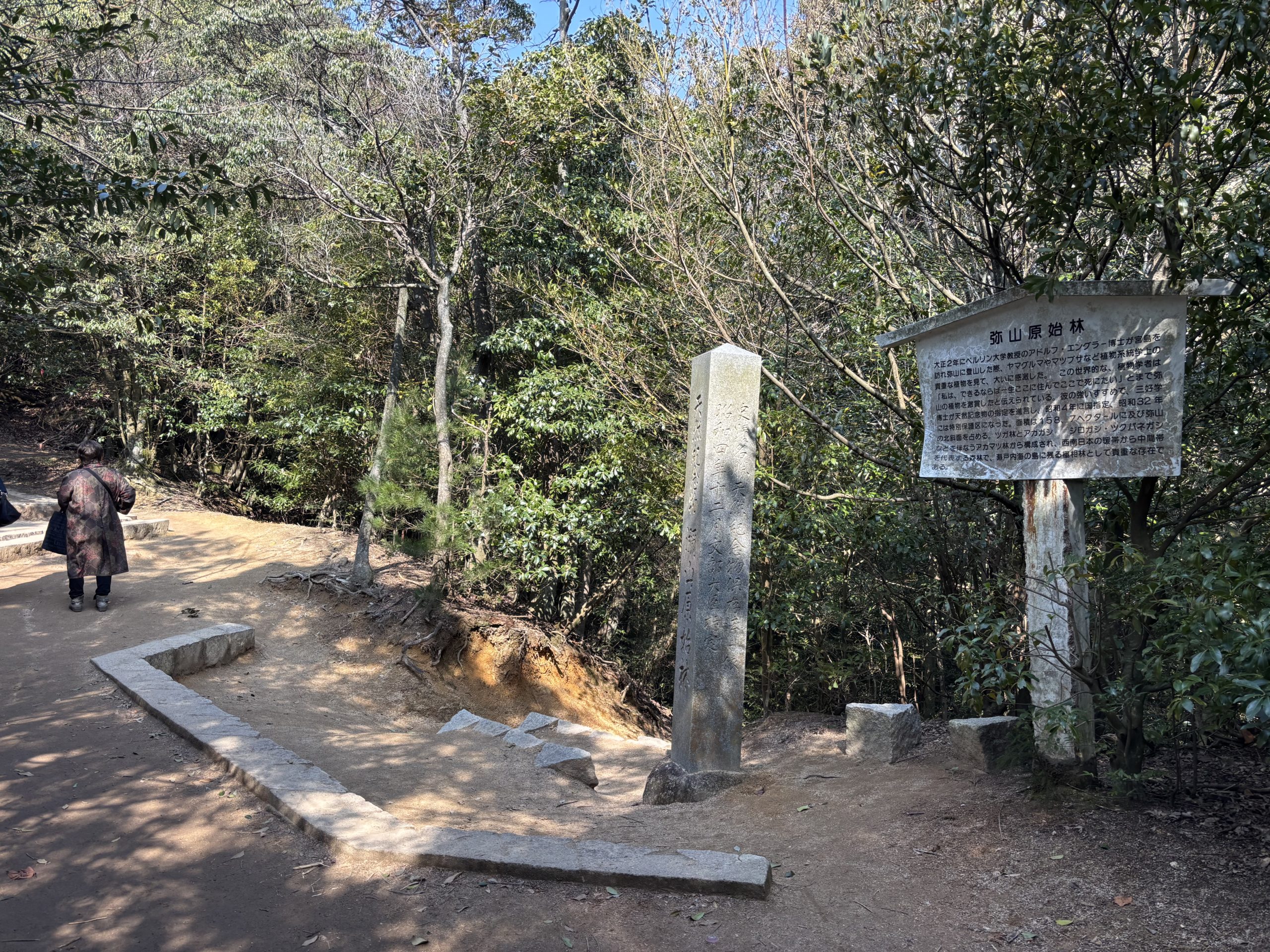
Rising 535 meters above Miyajima Island, Mount Misen is the sacred peak that forms the breathtaking backdrop of Itsukushima Shrine. Together with the shrine’s buildings, the surrounding sea, and the ancient primeval forest blanketing Misen’s slopes, this mountain forms the heart of Miyajima’s UNESCO World Heritage designation. Whether you ride the ropeway or hike up through the old-growth trees, a visit to Mount Misen rewards you with age-old temples, mysterious rock formations, a flame that has burned continuously for 1,200 years, and what many consider one of the finest panoramic views in all of Japan.
I’ve climbed Misen with my family more times than I can count — and every single visit turns up something new. When my younger daughter first spotted the shrine halls scattered among the trees near the summit, she gasped: “There are temples all the way up the mountain!” She wasn’t wrong, and that sense of wonder never really fades.
Why Mount Misen Is Worth the Climb
Mount Misen is far more than a scenic hike. The mountain is steeped in over 1,200 years of spiritual history, and walking its trails feels genuinely different from ordinary sightseeing. The primeval forest — a rare and protected ecosystem where subtropical, temperate, and ancient plant species all coexist — gives the mountain an otherworldly atmosphere. Local visitors often say the air up here simply feels different. My kids always notice it the moment we step off the ropeway.
The UNESCO World Heritage area covering Miyajima encompasses 431.2 hectares, including Itsukushima Shrine, the sea in front of it, and the ancient forest of Mount Misen. It is this combination — sacred architecture, tidal waters, and primeval woodland — that makes Miyajima so extraordinary. Misen is an essential part of that story, not an afterthought.
One small local fact worth knowing: the stone steps on Mount Misen total exactly 504. Locals have a nickname for them — go-re-shi-san — and climbing all of them is something of an unofficial rite of passage for Hiroshima residents.
For more on why Miyajima’s World Heritage status goes well beyond Itsukushima Shrine itself, take a look at our full overview of the island’s UNESCO designation:
Rising dramatically from the sea off the coast of Hiroshima, Itsukushi...
A Sacred Mountain Founded by Kobo Daishi
Mount Misen was established as a place of worship by the monk Kobo Daishi (also known as Kukai) in the early ninth century, shortly after he returned from religious study in Tang Dynasty China. According to tradition, he looked at the mountain’s distinctive silhouette and was reminded of Mount Sumeru — the sacred cosmic mountain described in ancient Indian cosmology — and named the peak accordingly. He then undertook a grueling 100-day esoteric meditation practice here called gukumoji-ho, cementing Misen’s reputation as one of western Japan’s most spiritually charged mountains.
The mountain attracted devotion from some of the most powerful figures in Japanese history. Taira no Kiyomori, Ashikaga Yoshihisa, and Fukushima Masanori were all said to have revered this peak. Even Japan’s first prime minister, Ito Hirobumi, loved Misen so deeply that he personally donated funds to help build and maintain the summit’s hiking trails. A stone monument commemorating his contributions still stands in the grounds of Daisho-in Temple at the mountain’s base.
When I explain to my children that some of the most influential people in Japanese history stood on exactly the same ground we’re walking, they always perk up. History lands differently at 535 meters.
Daisho-in Temple at the base of Mount Misen is itself a fascinating destination — and it actually predates Itsukushima Shrine. If you have time, it’s well worth exploring before or after your Misen hike:

Discover Daishoin Temple, Miyajima's oldest and most sacred Buddhist site. History, highlights, seasonal events, and practical visitor tips.
The Summit View: One of Japan’s Great Panoramas
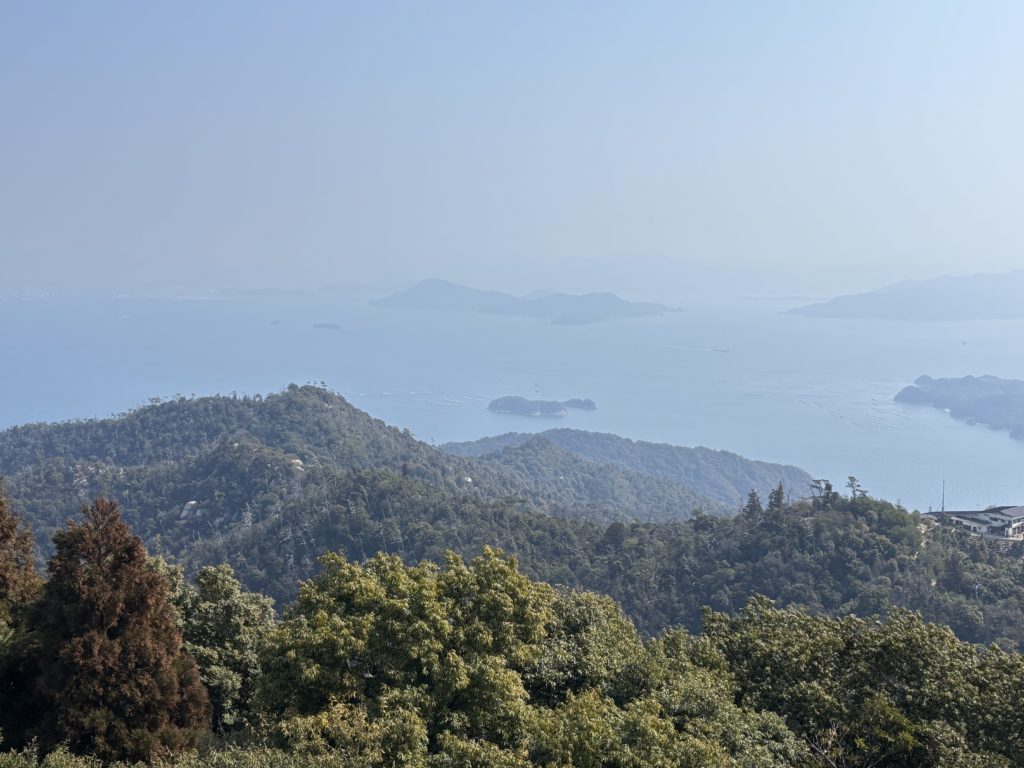
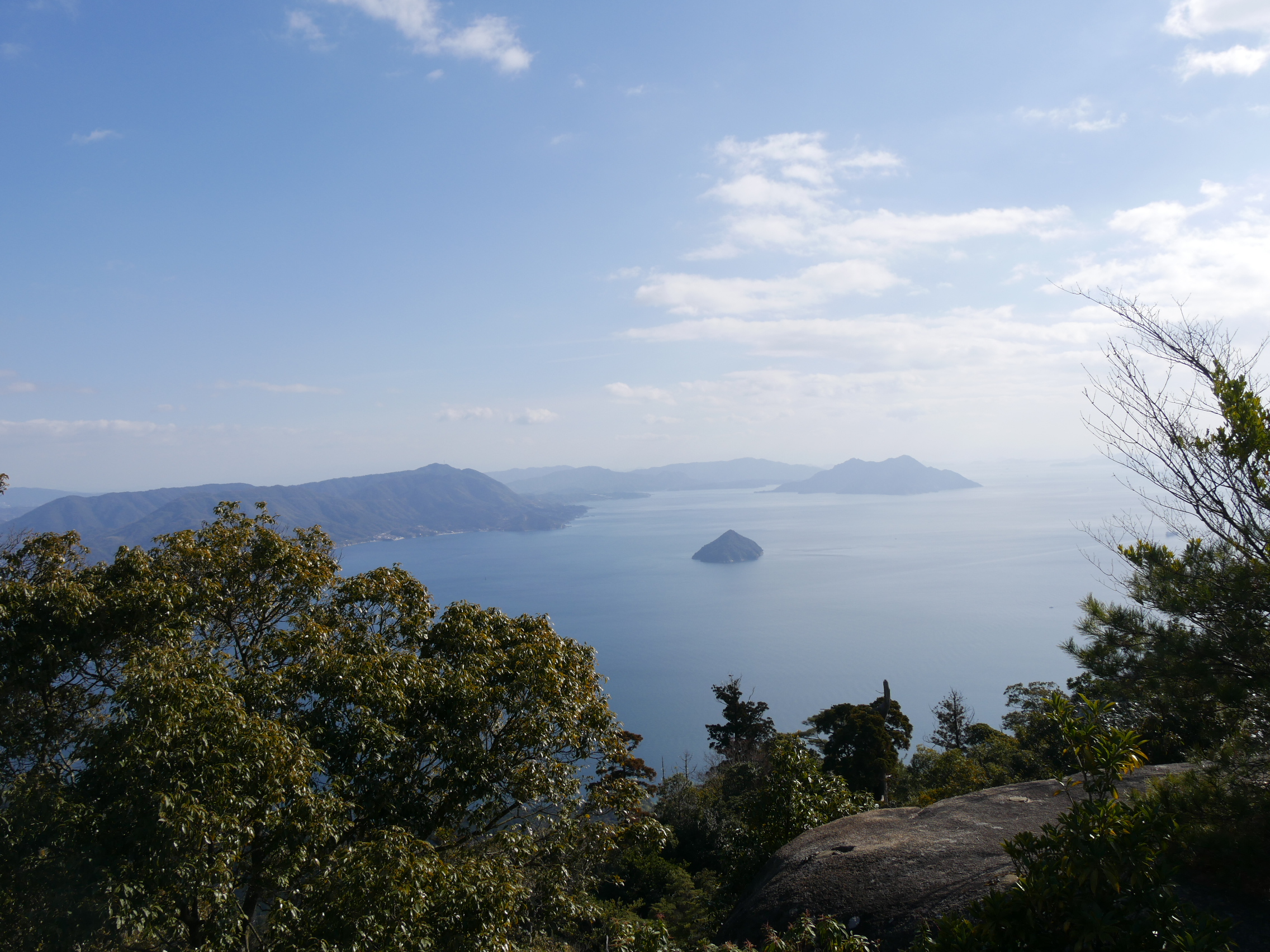
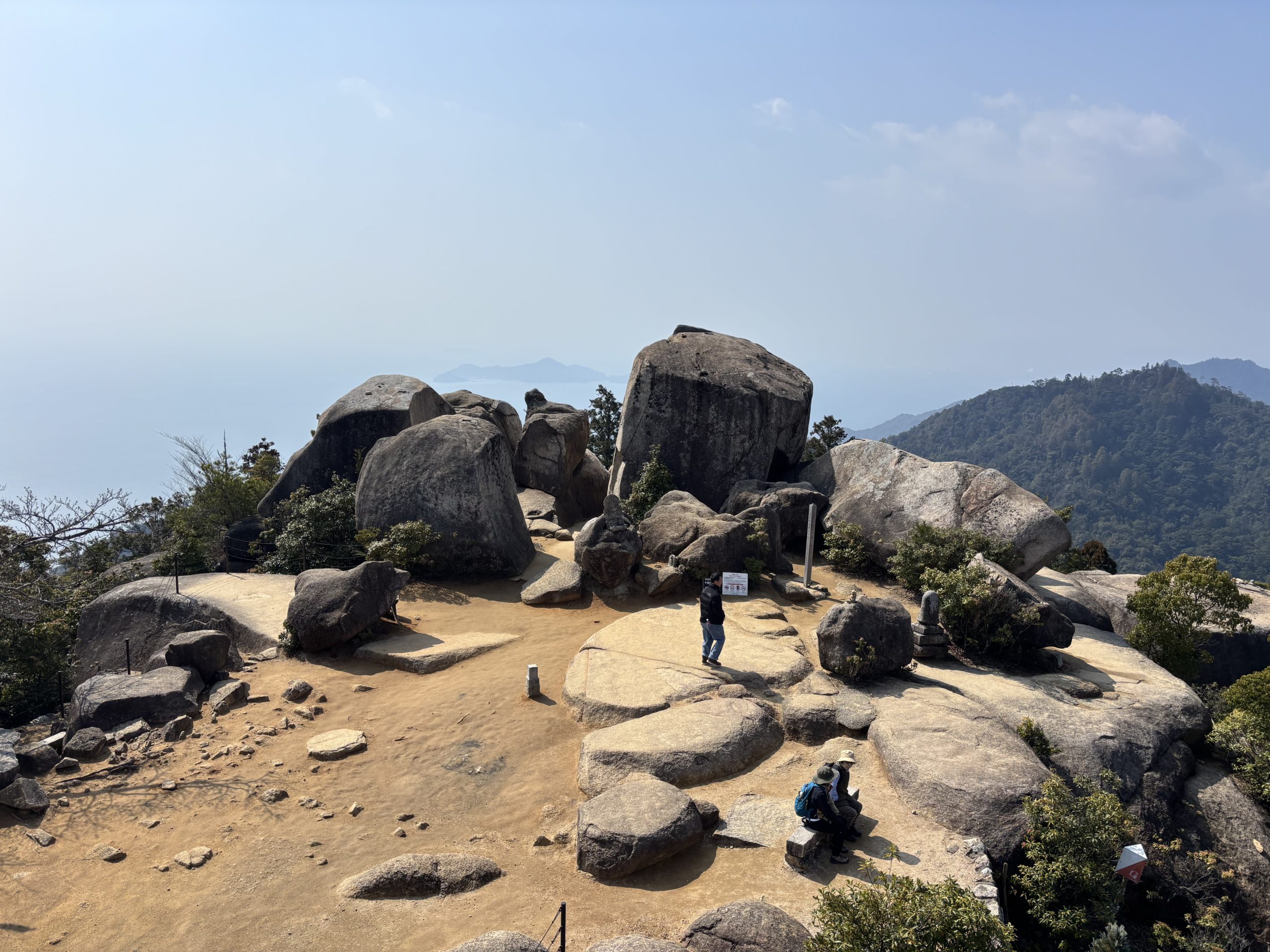
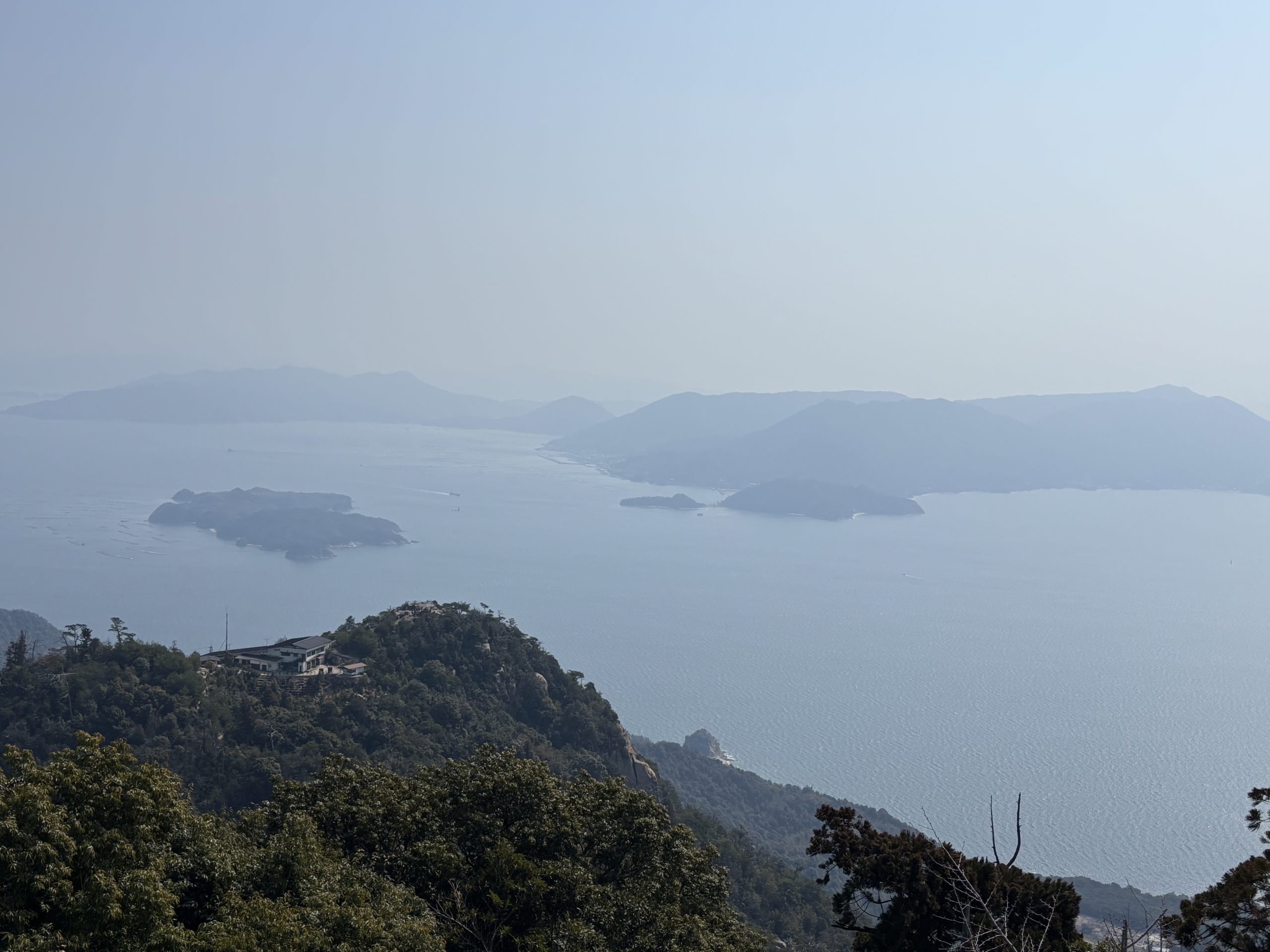
The view from the top of Mount Misen is genuinely difficult to put into words. On a clear day, the Seto Inland Sea stretches out in every direction, dotted with hundreds of small islands. You can see Itsukushima Shrine’s famous floating torii gate far below, ferries threading between the island and the mainland, and — on particularly clear mornings — the distant ridgeline of the mountains of Shikoku across the water.
The first time we stood at the summit as a family, everyone went completely quiet. My husband, who is usually the one taking photos while I chase the kids, just stood and stared. That kind of silence says everything.
A word of warning: late March during spring school break is extremely busy at the summit. It is absolutely worth dealing with the crowds — but plan accordingly and go early.
Mount Misen Observation Deck: What to Expect
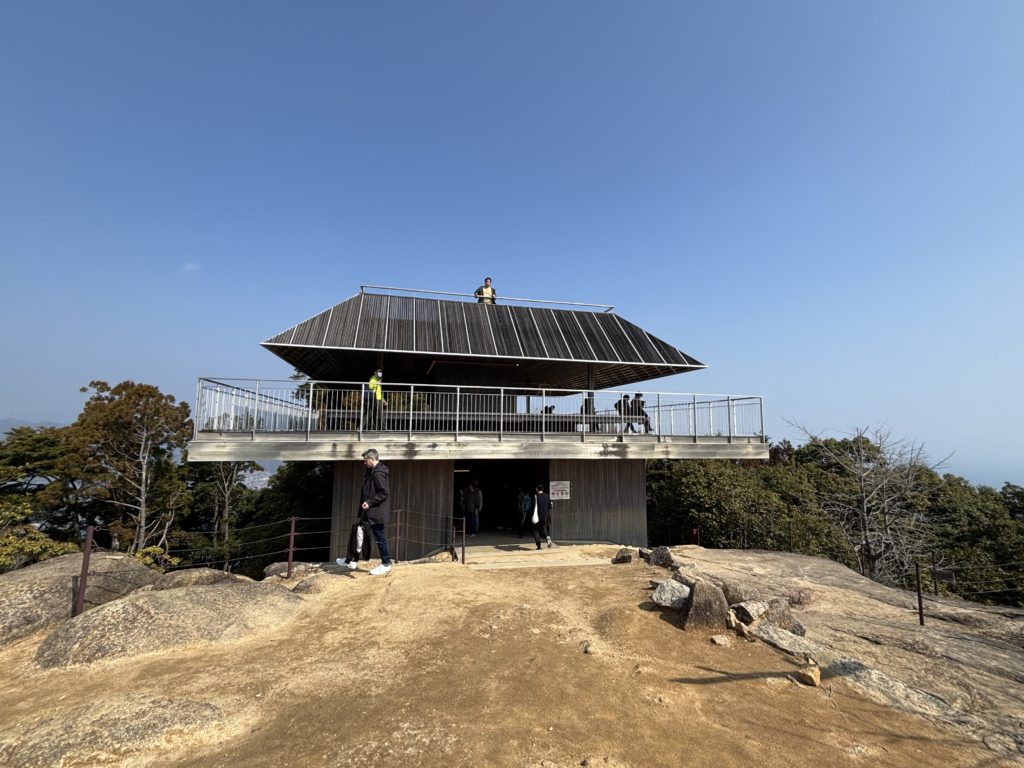
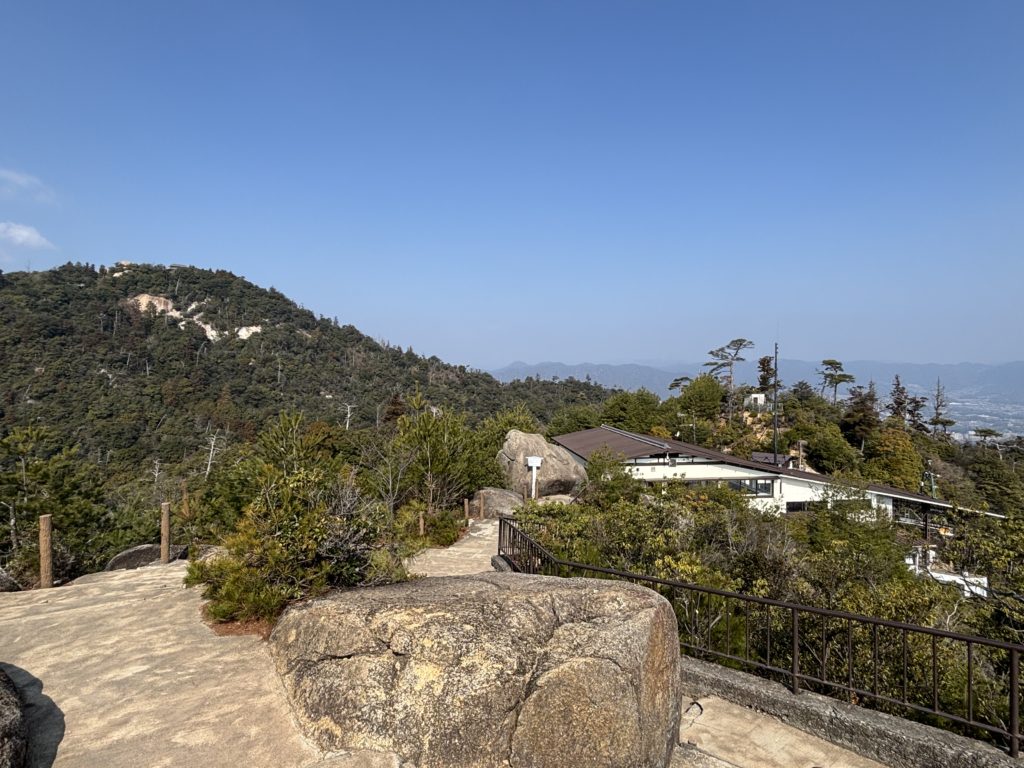
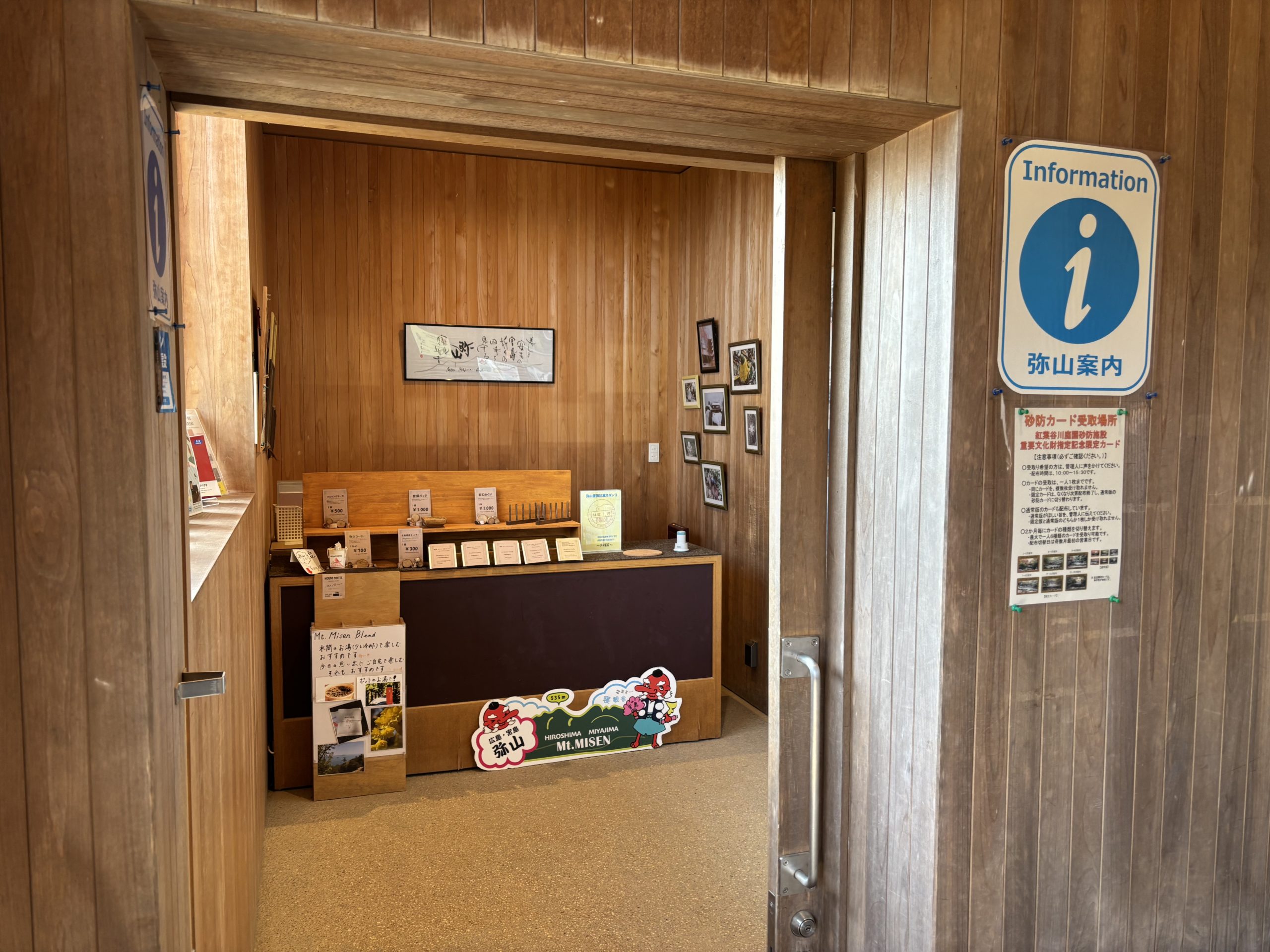
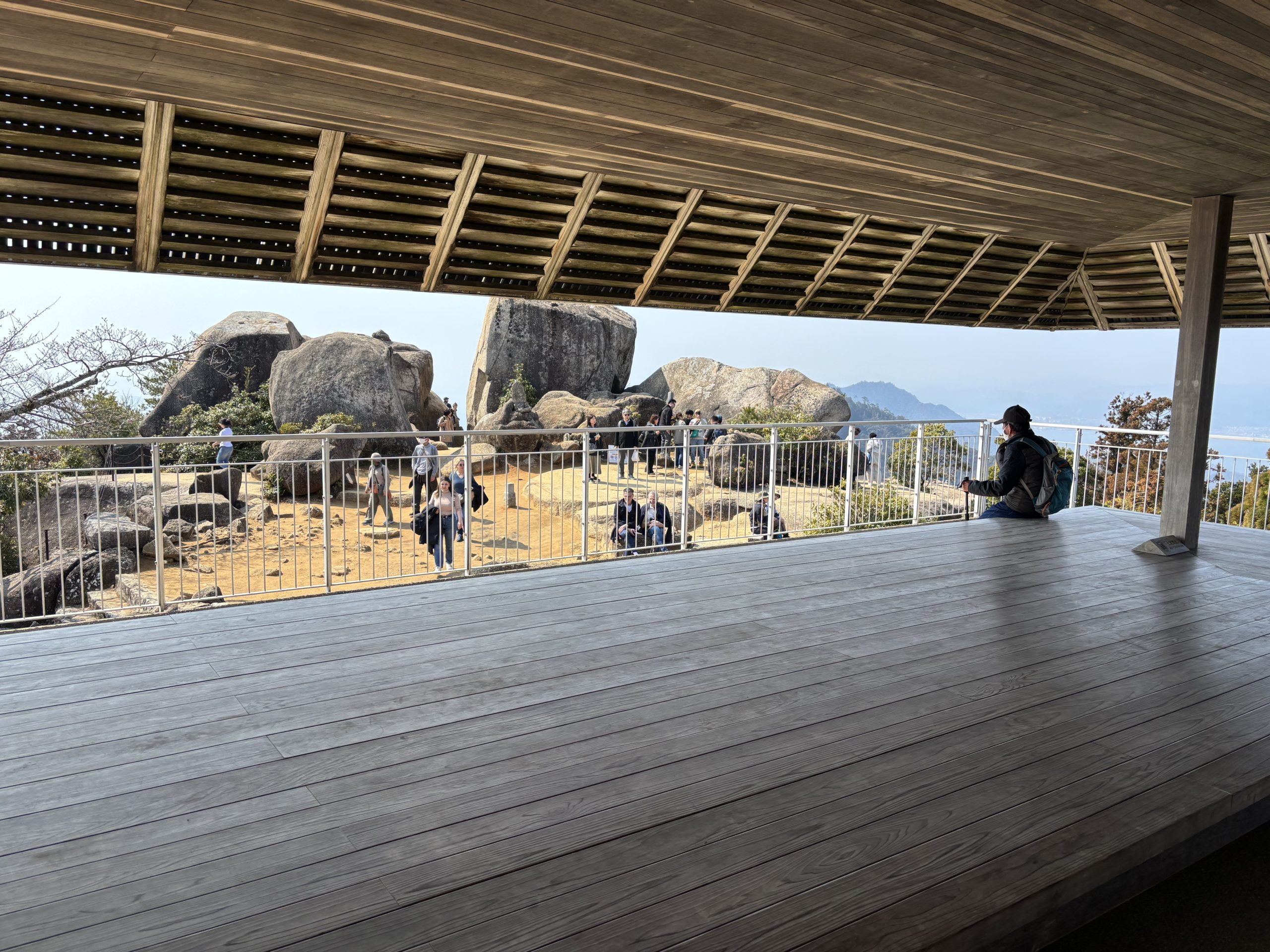
The summit observation deck is a thoughtfully designed three-level structure that does far more than just offer a view. The ground floor has clean public restrooms and a tourist information area — both genuinely welcome after a steep hike. The second floor is a spacious rest area with beautiful flooring made from Hiroshima-grown cypress (hinoki), where you can slip off your shoes, spread out, eat a packed lunch, and decompress while surrounded by the mountain scenery.
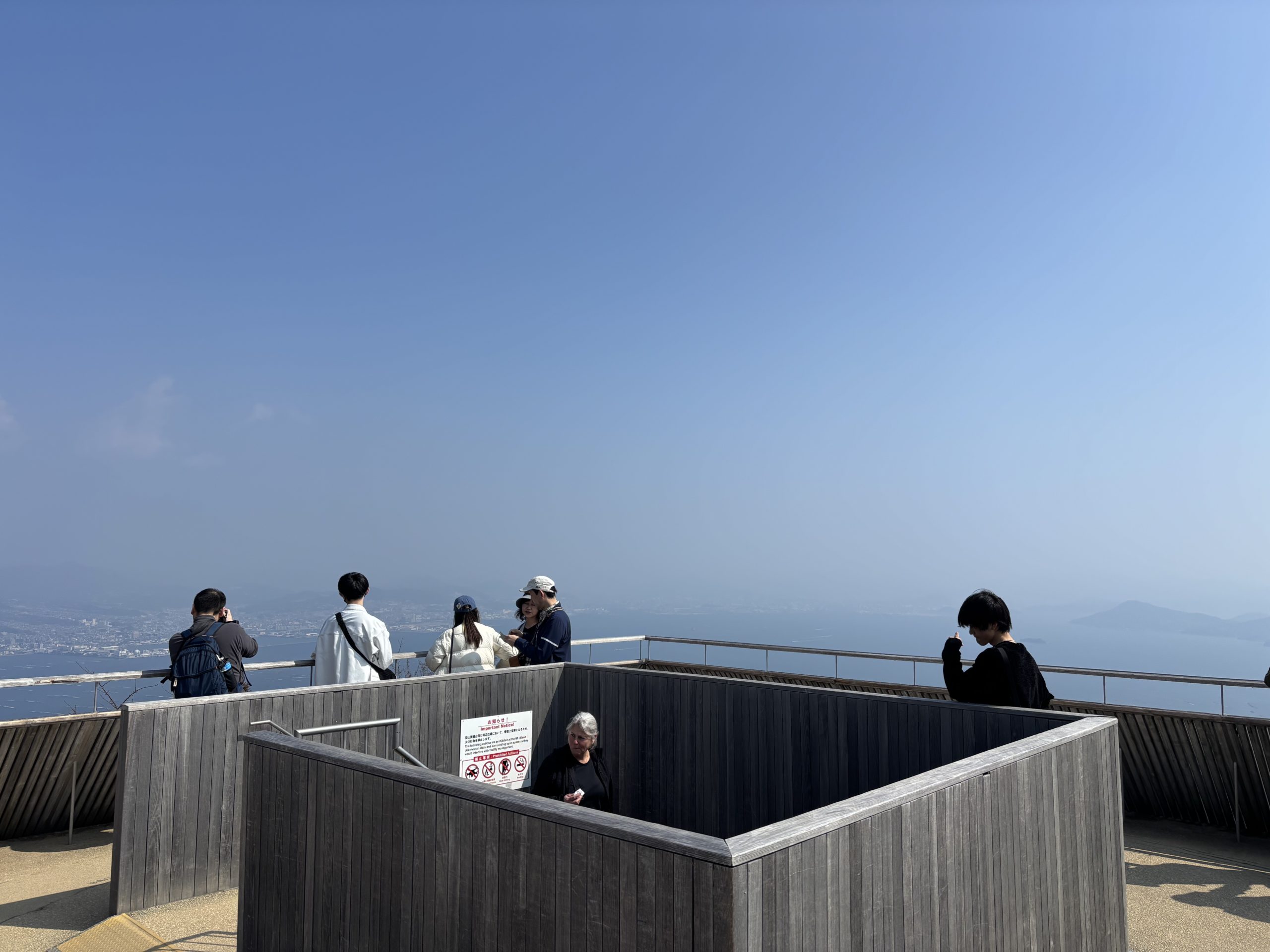
Climb the stairs from the second floor and you reach the rooftop observation deck — a completely unobstructed 360-degree panorama at 535 meters. There is nothing blocking your view in any direction. The islands of the Seto Inland Sea, the Great Torii Gate, and on clear days the mountains of Shikoku all come into full view from up here.
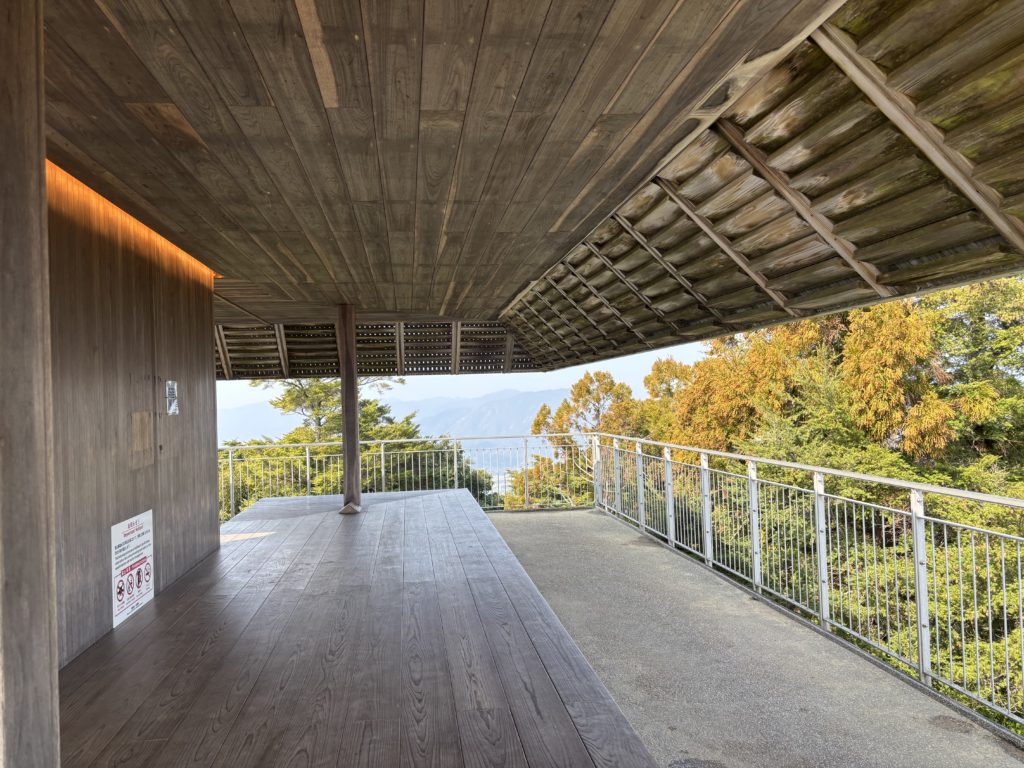
The second-floor rest space is genuinely one of the most peaceful spots on the mountain. The cypress flooring has a warm, calming quality — you can hear birdsong drifting through the windows while the mountain spreads out around you. My younger daughter once said she wanted to take a nap there, and honestly, I understood completely.
If you’re visiting with young children or a baby, the second floor is an excellent place to rest, feed little ones, and take stock before the descent. The building closes and is locked in the evening, so if you’re aiming for a late afternoon visit, make sure you leave enough time before dusk.
For a crowd-avoidance tip: weekday afternoons between around 2:00 and 4:00 PM tend to be the quietest time at the summit. The morning rush has cleared and the late afternoon arrivals haven’t yet peaked.
Souvenir items including commemorative badges are sometimes available at the observation deck — a nice memento to pick up before heading back down.
The Temples and Sacred Sites of Mount Misen
Sankido: Japan’s Only Oni Deity Shrine
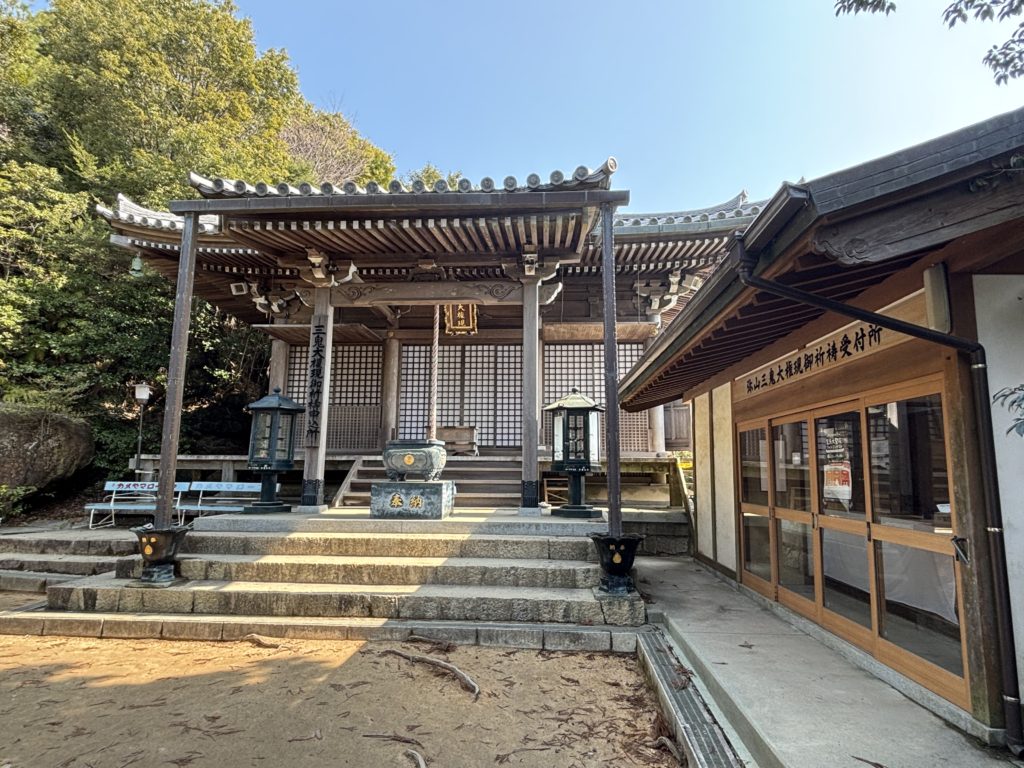
One of the most unusual and compelling stops on the mountain is Sankido — a temple hall that enshrines three oni, or demon-deities, known collectively as Sanki Daigongen. This makes Sankido genuinely unique: it is considered the only shrine in Japan dedicated to oni as protective, benevolent deities rather than fearsome monsters. The three deities are associated with blessings for household safety and business prosperity.
The hall has a heavy, dignified atmosphere, and the name placard hanging above the entrance was written in the hand of Ito Hirobumi himself — Japan’s first prime minister, who held a particular devotion to this spot. Local merchants and business owners in the Miyajima area are said to make at least one visit per year to offer prayers here.
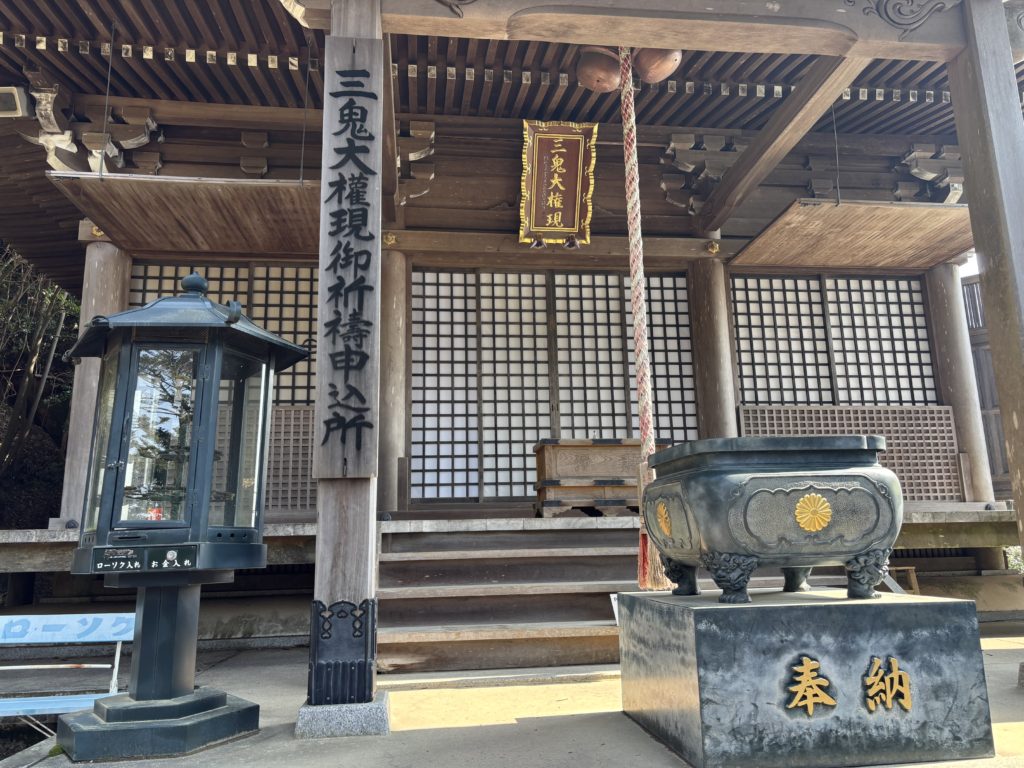
When I first told my children that this hall was home to demon-gods, they looked a little nervous. But once I explained that these oni were here to protect families and bring good fortune, they were immediately on board. Now it’s one of their favorite stops on the mountain.
Reikado: The Eternal Flame
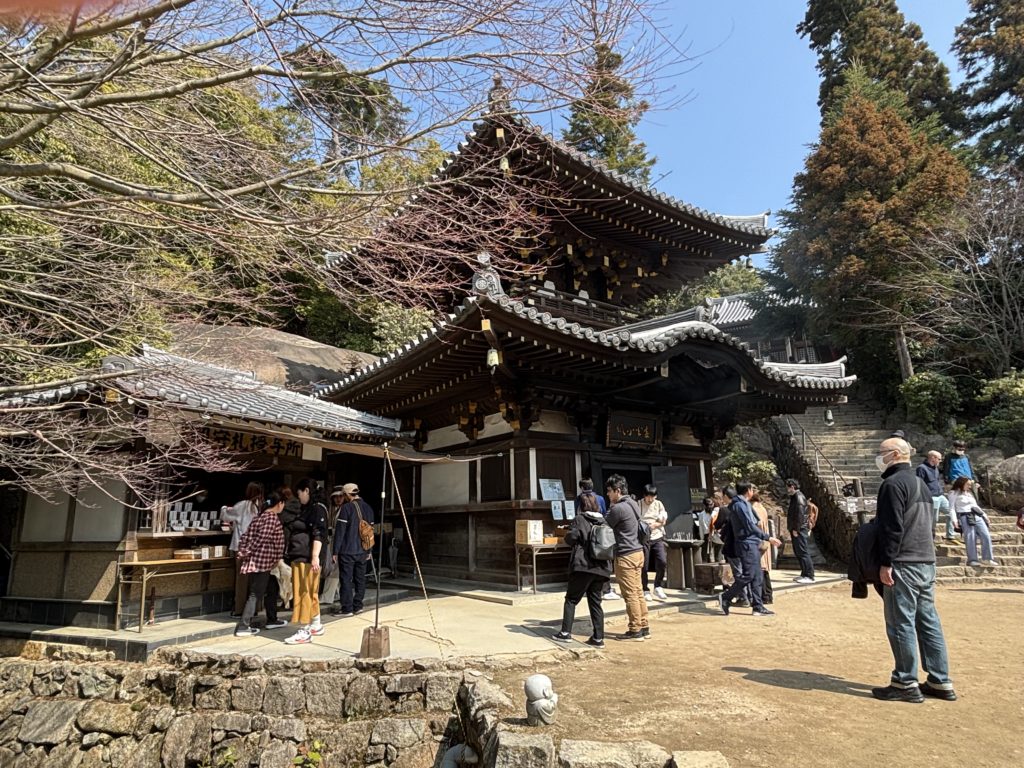
Reikado is a small but deeply significant hall near the main temple complex at the summit. Inside burns a flame that, according to tradition, has never been extinguished since Kobo Daishi lit it during his 100-day meditation practice here more than 1,200 years ago. This fire — known simply as the kiezu no hi, the “Never-Extinguishing Flame” — is one of the most sacred elements on the entire island. Visitors will recognize it as the original source of the Flame of Peace in Hiroshima’s Peace Memorial Park.
A large iron cauldron inside Reikado holds water heated over this eternal flame, and the water is believed to have healing properties — a remedy for all ailments, according to local tradition. Paper cups are provided so visitors can drink the hot water freely. It is a simple, quiet ritual, but a strangely moving one.
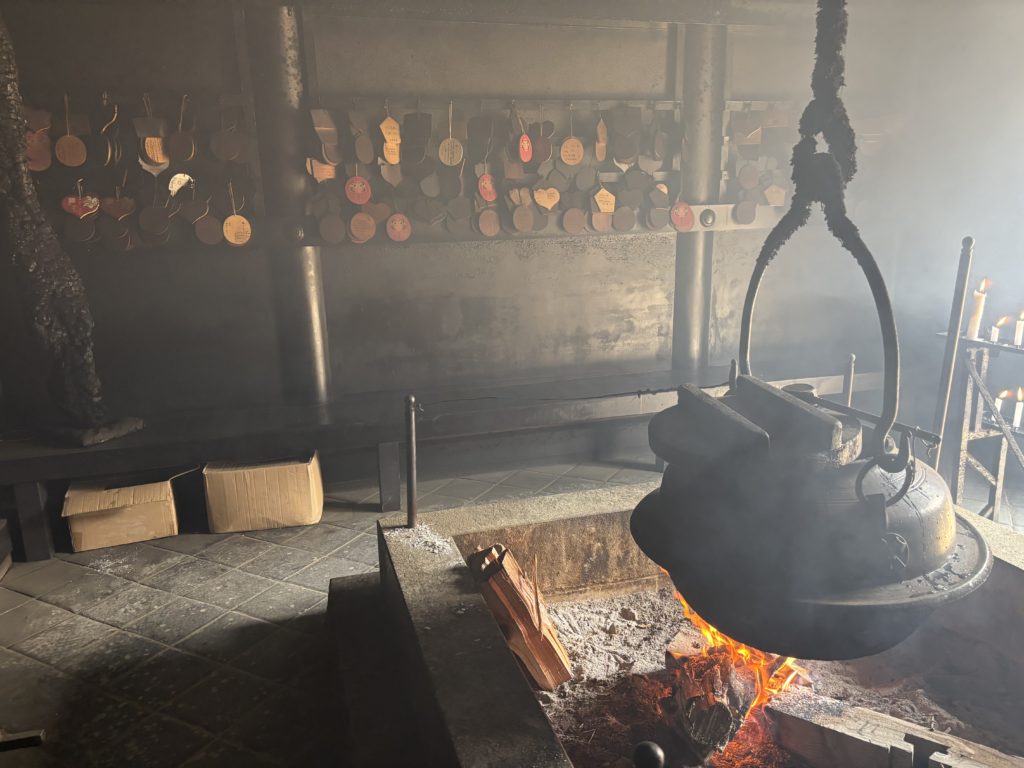
Reikado has also been designated as a “Lovers’ Sanctuary” by a Japanese romantic heritage organization, making it quietly popular with couples as well as pilgrims. The sound of the flame crackling inside the hall, the warm glow of the cauldron, and the mountain stillness around it create a genuinely special atmosphere.
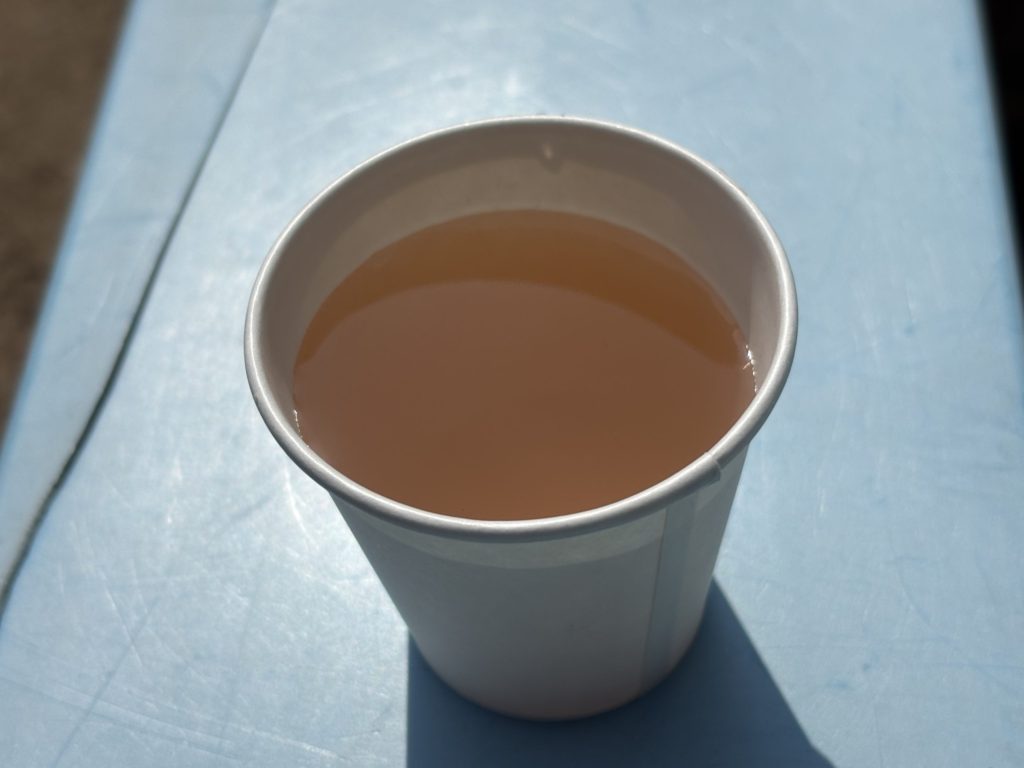
I have to admit: I’m a complete sucker for legends and sacred lore, and drinking the water here is something I look forward to every visit. It has a soft, rounded taste — perhaps helped along by the rather extraordinary knowledge that the flame keeping it hot has been burning continuously for over a millennium. My younger daughter, eyes wide, called it “magic water.” I didn’t correct her.
Misen Hondo: The Main Hall
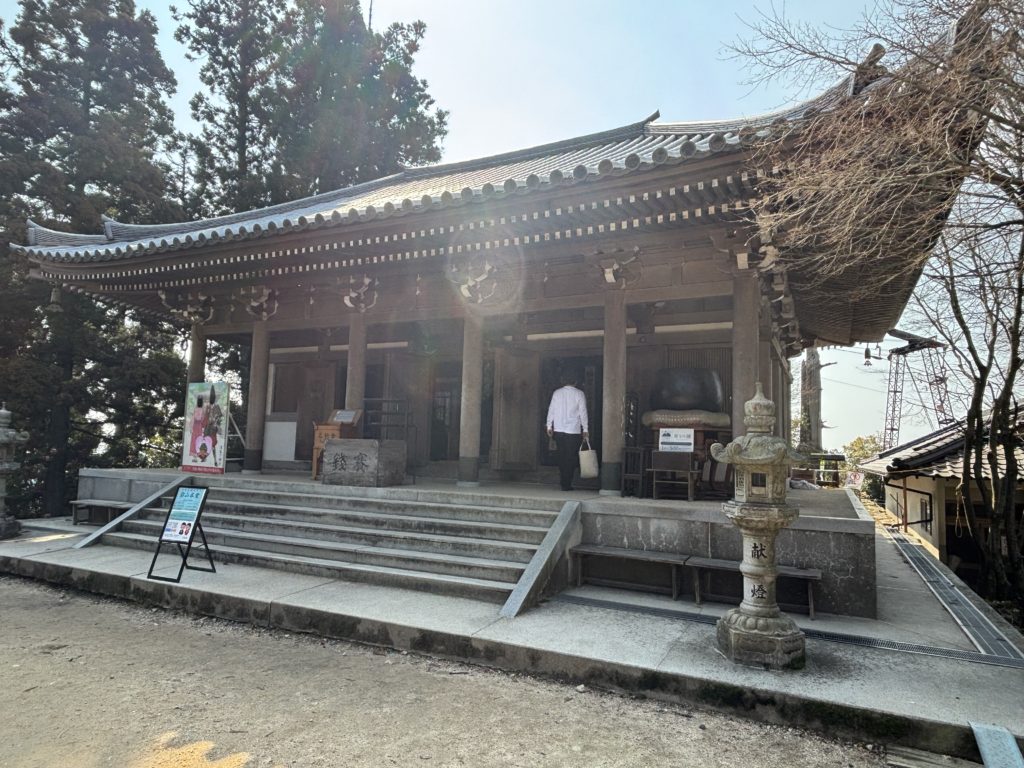
The main hall of Mount Misen — Misen Hondo — is directly connected to Kobo Daishi’s founding of the mountain. It was established when the monk returned from China and chose this peak as a site for serious religious practice, likening the mountain’s form to the legendary Mount Sumeru of ancient Indian cosmology (known in Japanese as Shumisen), and naming it accordingly. Over the centuries that followed, some of the most powerful names in Japanese history — including Taira no Kiyomori and the warlord Fukushima Masanori — offered their devotion here.
Walking around the main hall complex, it is easy to feel the weight of all that history. I often point this out to my children: the same prayers, the same stone steps, the same mountain air — shared across more than a thousand years of visitors.
Dainichido: The Oldest Building on the Mountain
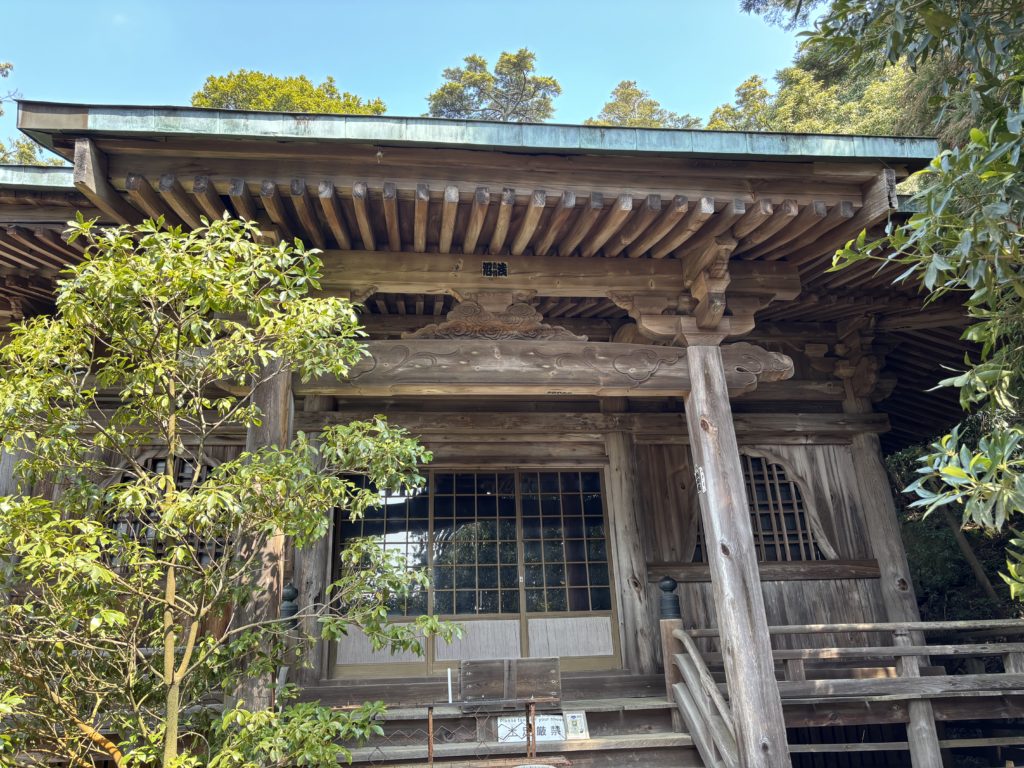
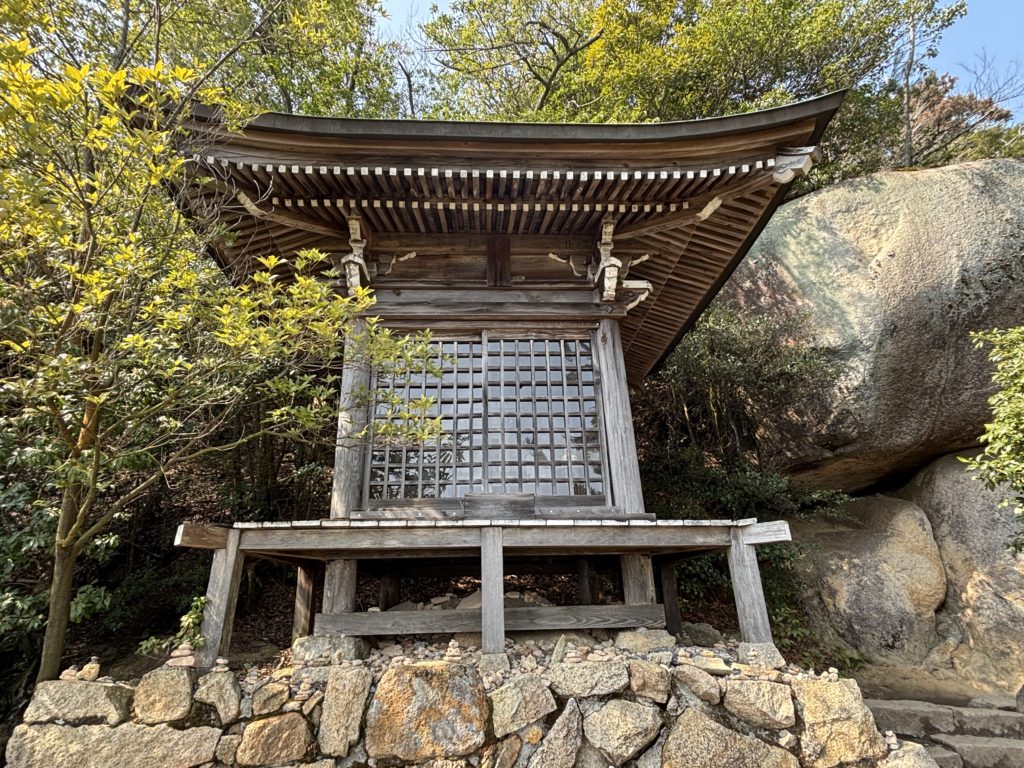
Dainichido is the oldest surviving structure on Mount Misen. While the exact founding date is not precisely recorded, it is believed to date to the early Heian period, when Kobo Daishi established it as a practice hall for esoteric Buddhist meditation. The hall enshrines two forms of Dainichi Nyorai, the cosmic buddha at the center of Shingon Buddhist thought.
A statue of Fudo Myoo that was once housed here was designated an Important Cultural Property in 1993 and has since been moved to the main temple’s sacred treasury for safekeeping. The building itself — dark, weathered, and tucked among old trees — radiates age and quiet authority. My younger daughter once stopped and said it looked like a place where forest spirits might live. She wasn’t entirely wrong.
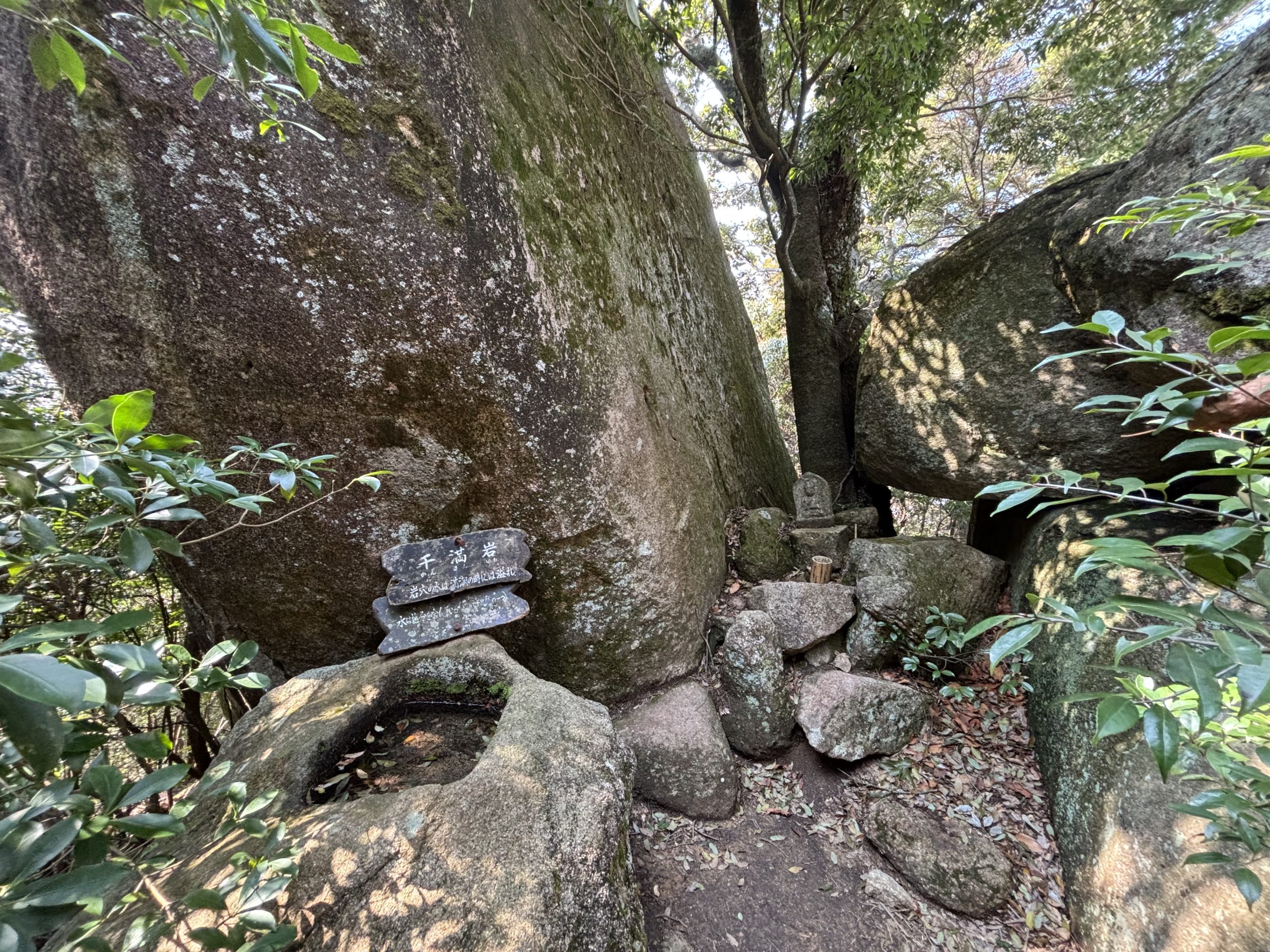
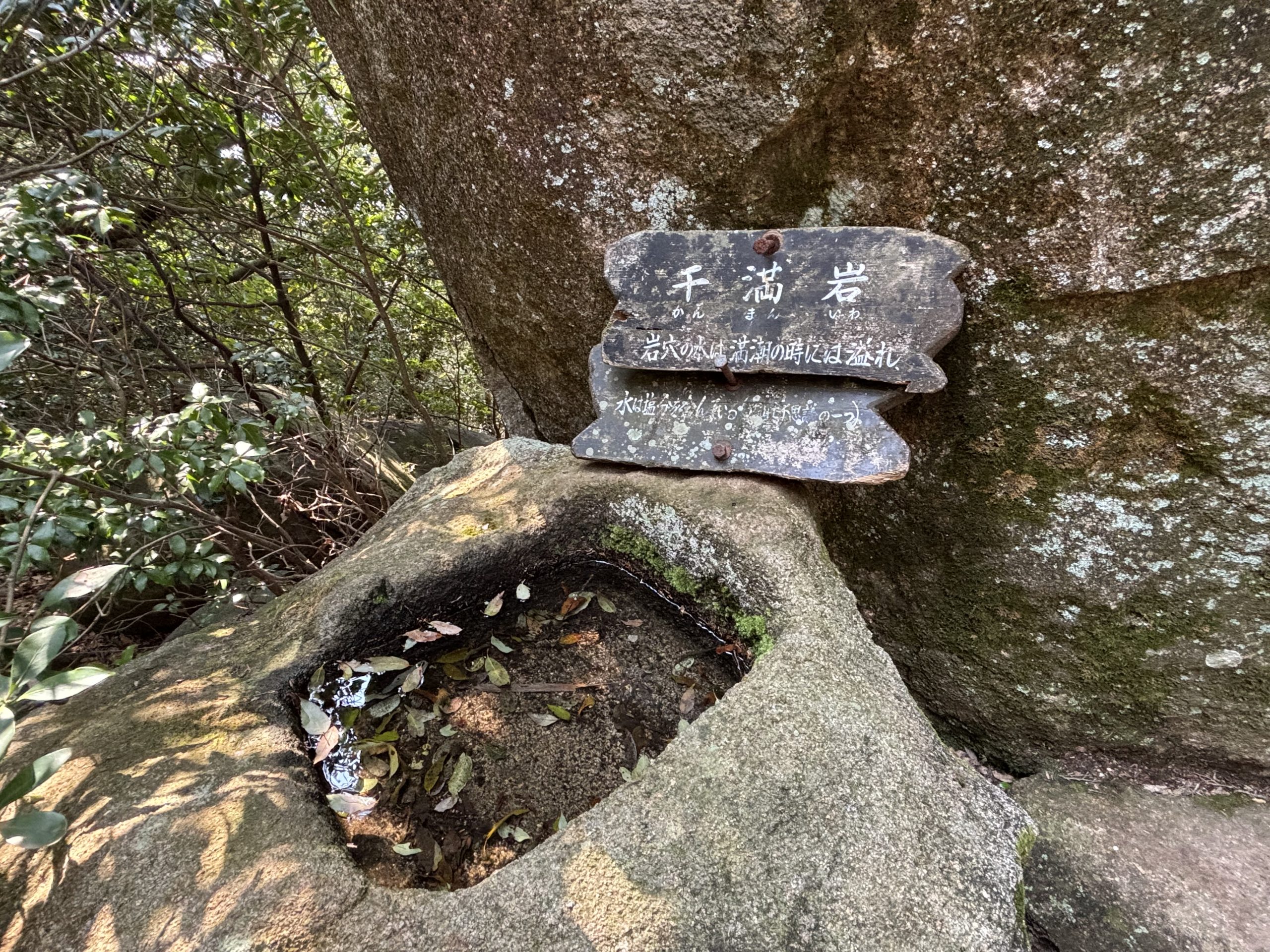
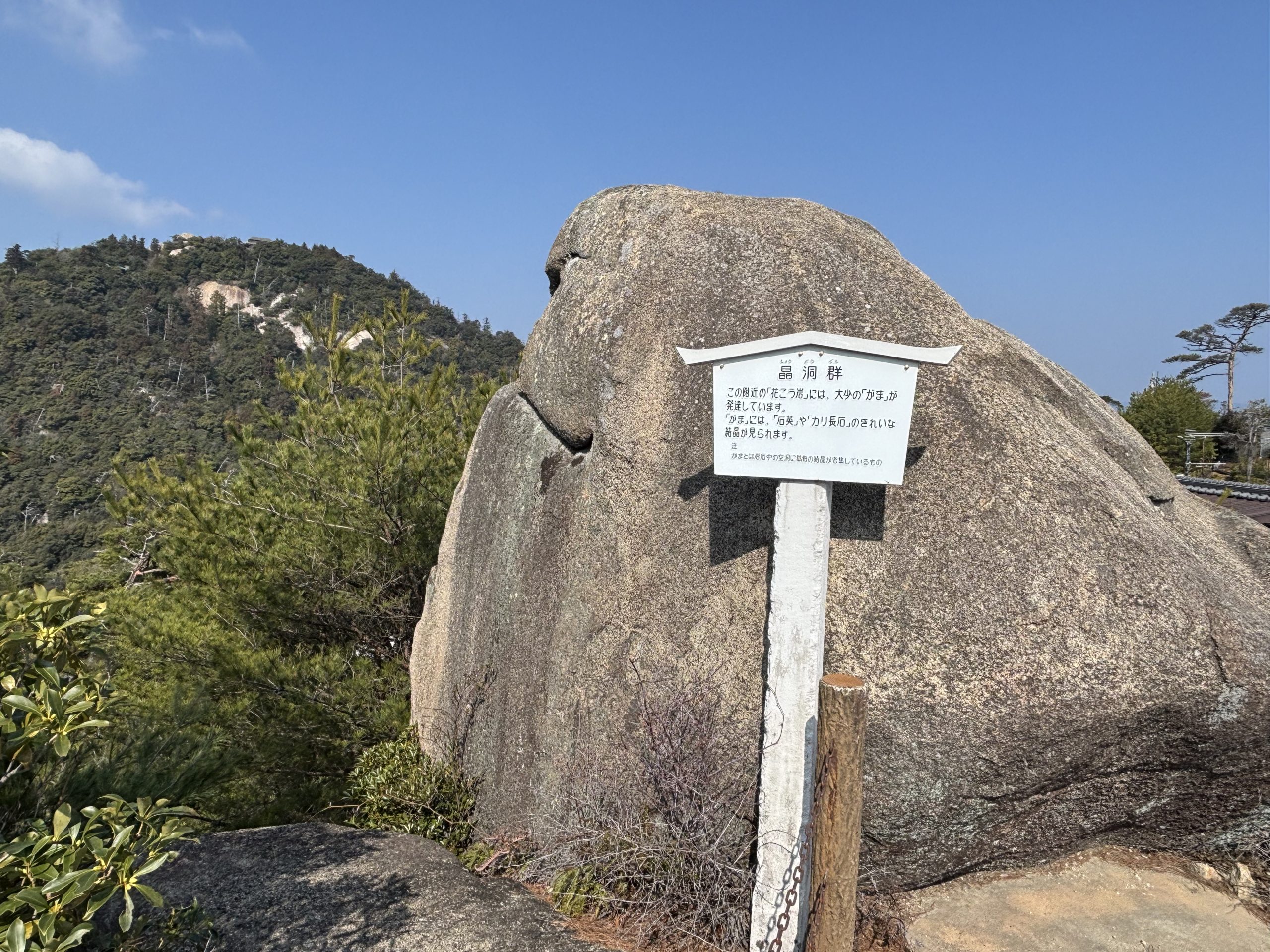
Near Dainichido, look out for Kanman-iwa, one of Misen’s celebrated “Seven Mysteries.” This rock has a small pool in it that is said to fill and drain in sync with the tides of the sea far below — and the water in the pool is noticeably salty. Whether you believe the legend or not, it makes for a fascinating stop, and children in particular find the idea wonderfully baffling.

Shishiiwa Station Viewpoint
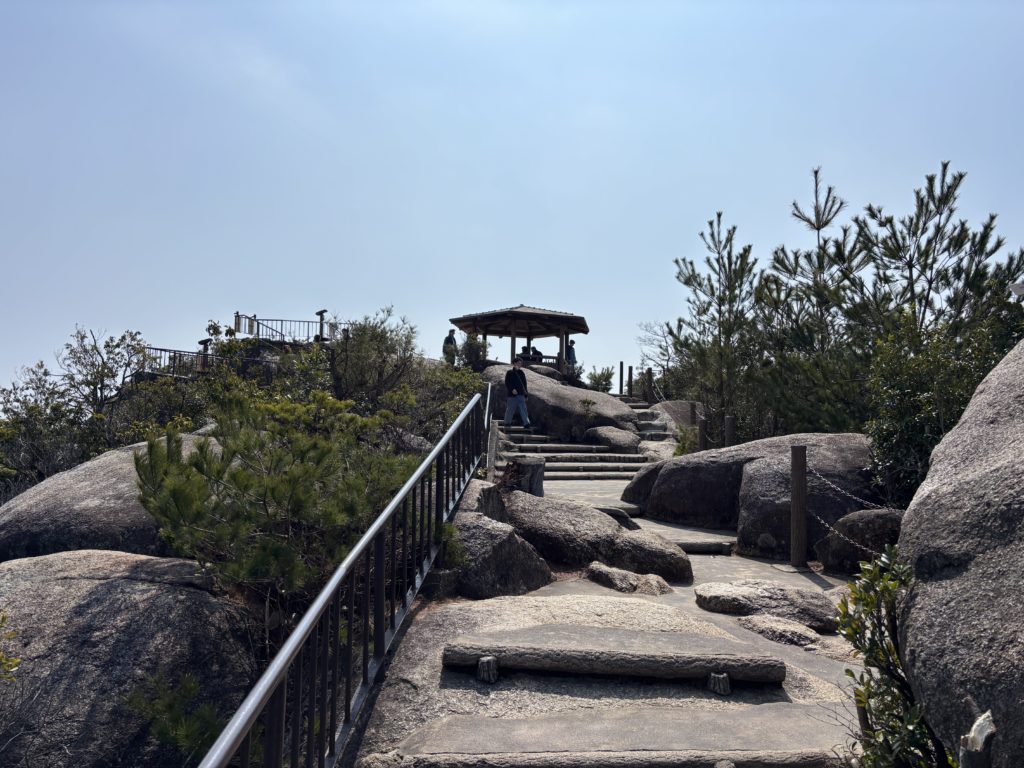
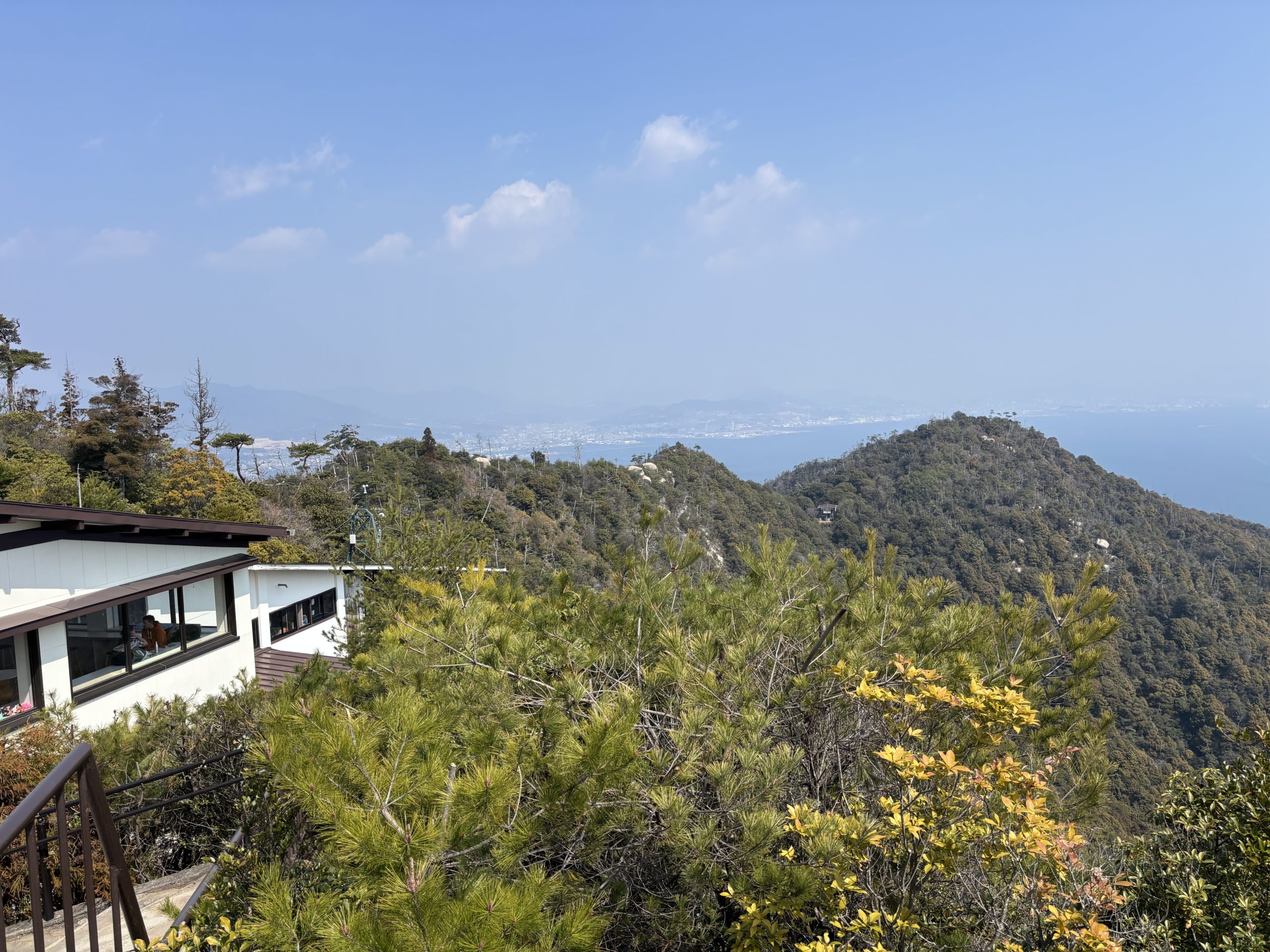
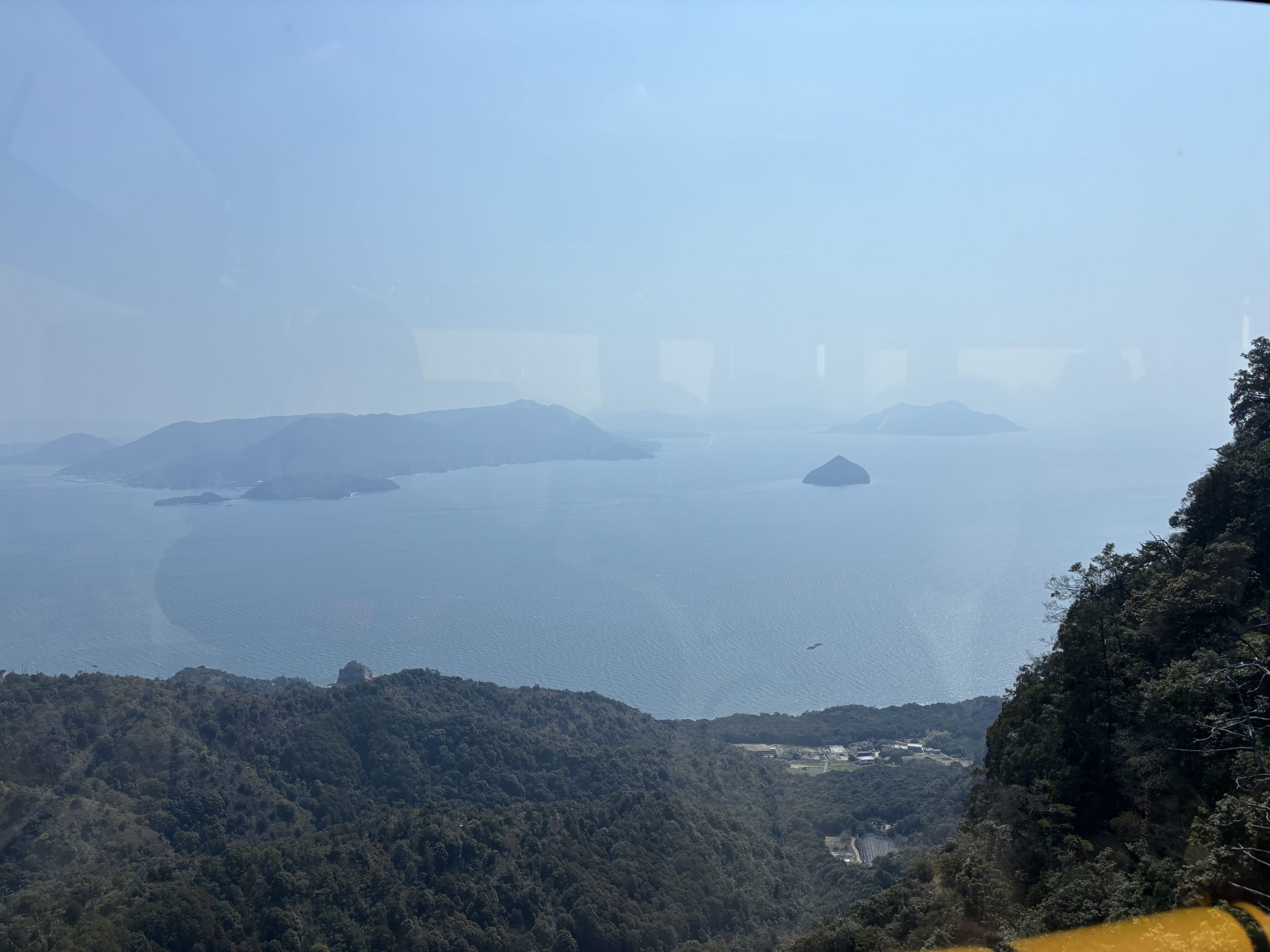
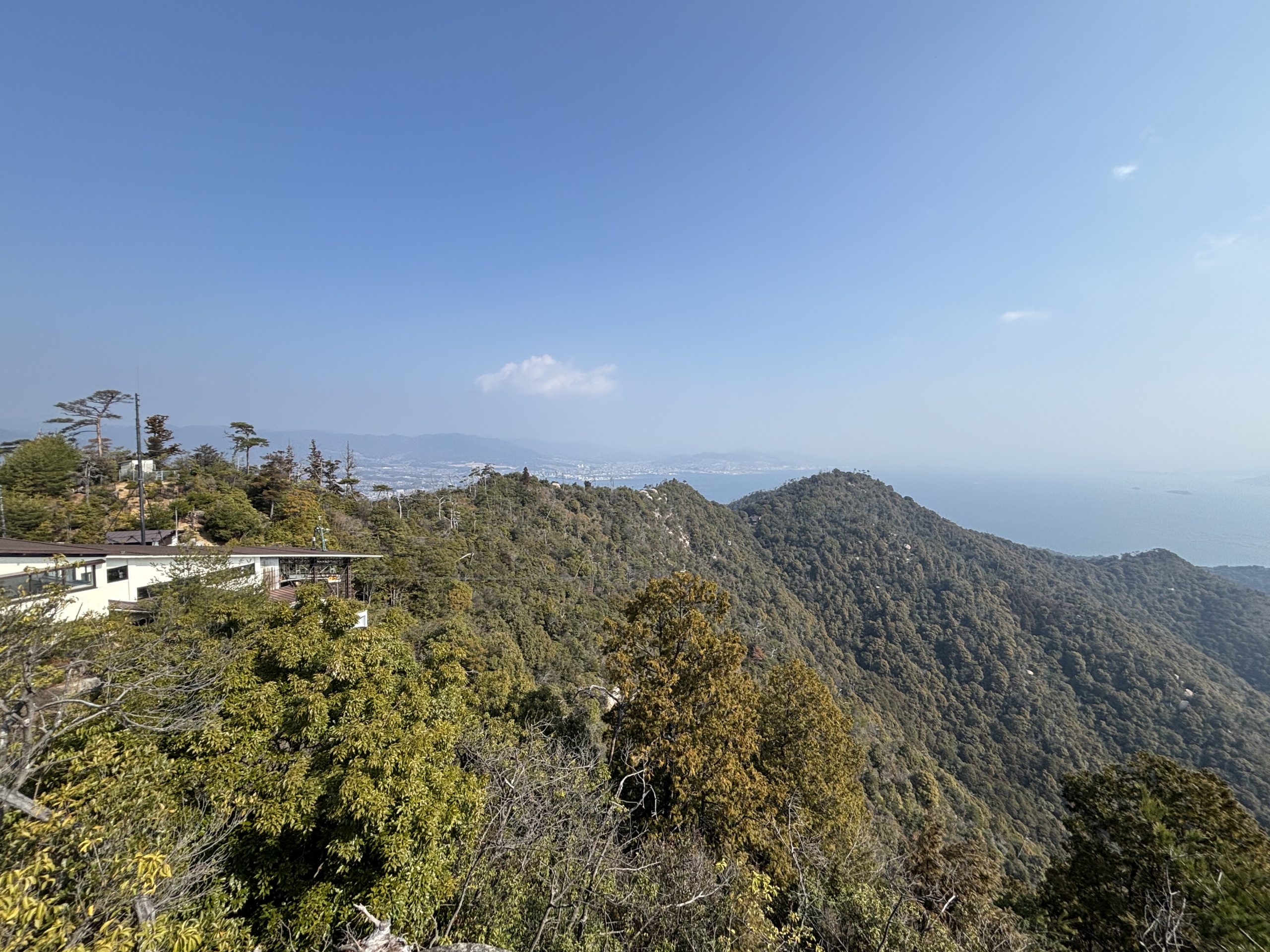
Before you make the final push to the summit, it is worth pausing at the viewpoint near Shishiiwa Station — the upper terminal of the Miyajima Ropeway. The platform here offers a wide-angle view across the Seto Inland Sea’s island-dotted landscape, and on clear days the scenery is genuinely stunning.
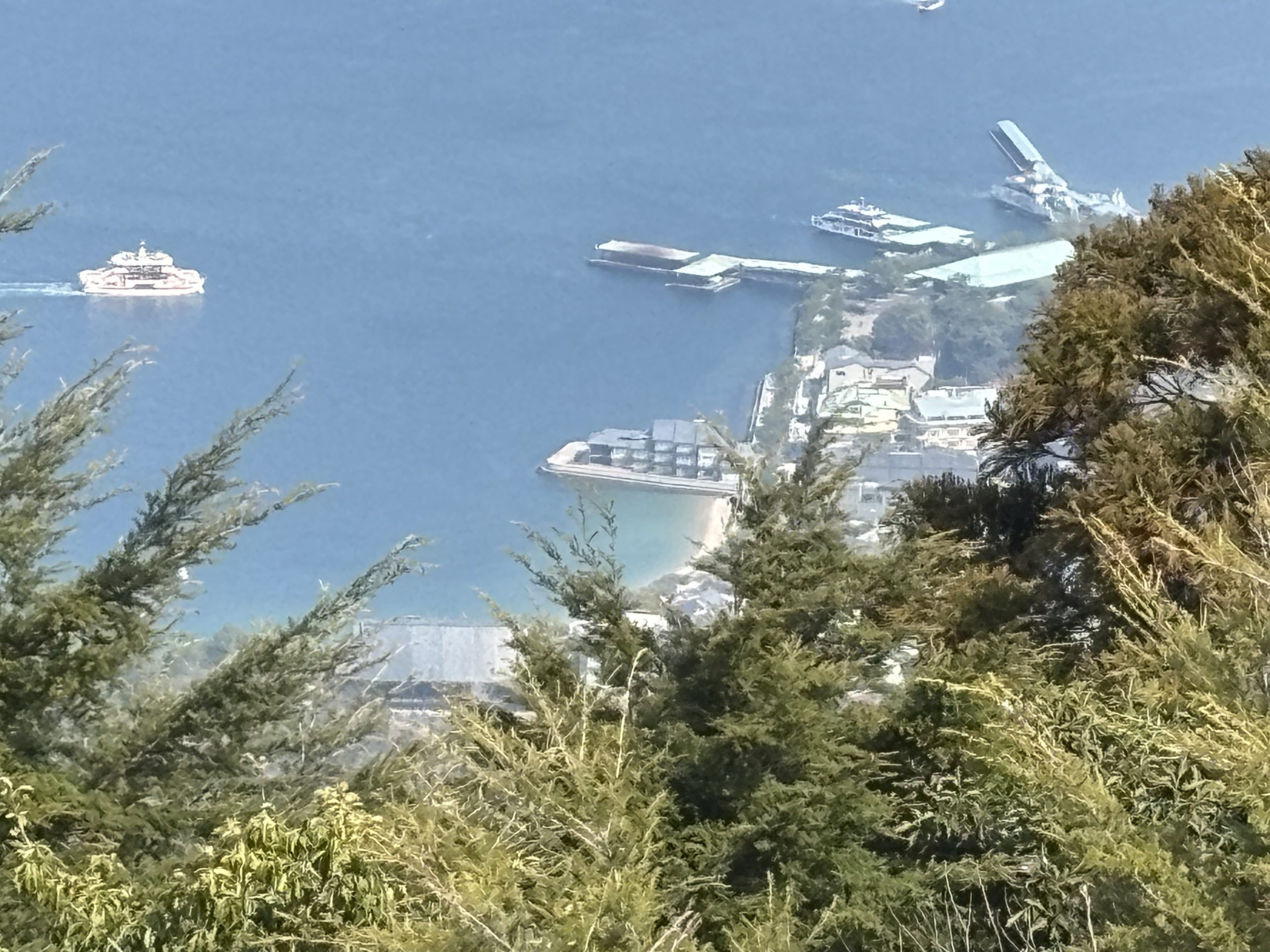
The day we visited, a light haze was sitting over the water and softened everything into shades of blue and grey. It was a little less dramatic than a perfectly clear day, but had its own quiet beauty. And as my kids pointed out — the boats in the water far below looked like bath toys. That observation never gets old.
How to Get to Mount Misen: Ropeway and Hiking
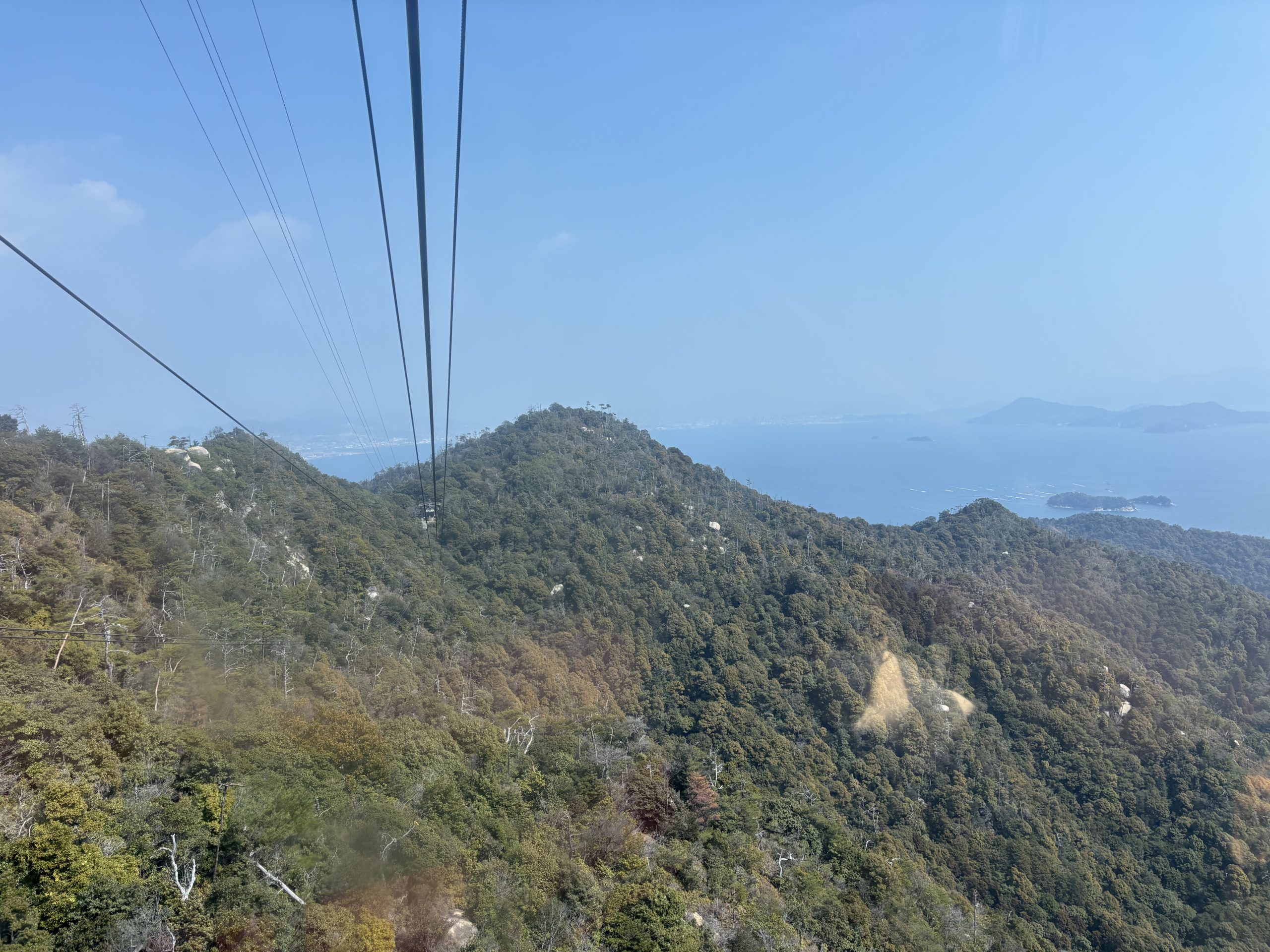
The most popular and practical way to reach Mount Misen is via the Miyajima Ropeway. The ropeway operates in two stages, taking you from the base near Momijidani Park up to Shishiiwa Station partway up the mountain. From there, it is a 25 to 30-minute walk along a well-maintained path to the summit. The round-trip ropeway ticket is valid for your return journey on the same day — a practical detail worth remembering.
Ropeway operating hours, fares, and reservation requirements can change by season and may be affected by maintenance closures or high-demand periods. Always check the latest information on the official Miyajima Ropeway website before your visit, especially during peak travel seasons.
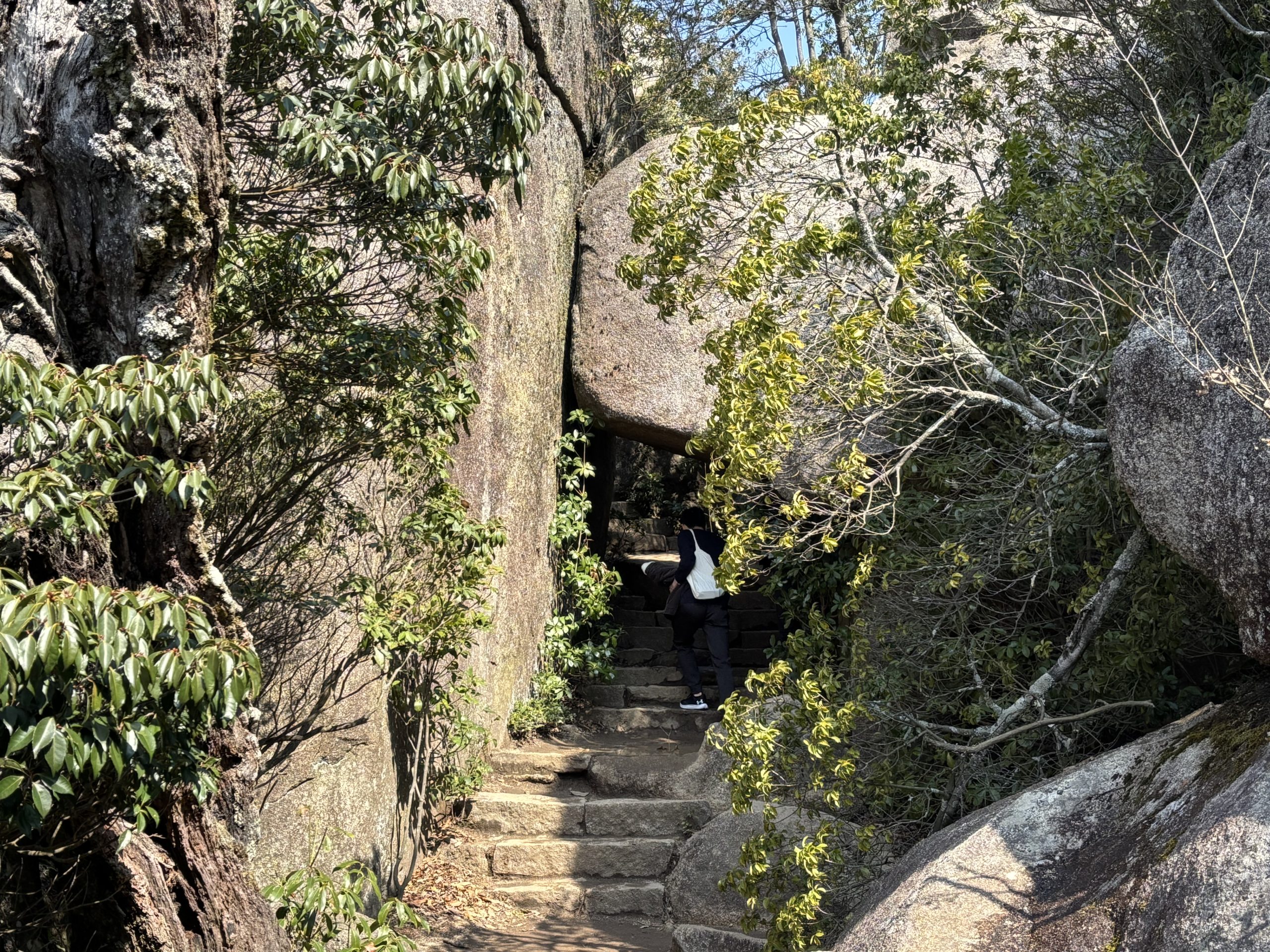
The walking section between Shishiiwa Station and the summit involves stone steps and some uneven terrain. It is manageable for most visitors, but the gradient is real — wear comfortable walking shoes with good grip and take your time. For families with strollers, the mountain trail section is not stroller-accessible; a baby carrier is the practical choice here.
For those who prefer to hike the full mountain, there are three established trails from the base:
- Daisho-in Course — The most popular trail, starting from Daisho-in Temple. Generally considered the most accessible for beginners.
- Momijidani Course — Starts from Momijidani (Maple Valley) Park, particularly beautiful during autumn foliage season.
- Omoto Course — A quieter, less-trafficked route that offers a more solitary hiking experience.
Regardless of which trail you take, wear proper footwear — the paths are rocky in places — and bring water, especially in summer. A rough time budget for the ropeway-and-summit route: allow approximately two hours including photos and temple stops. If you plan to visit multiple halls and explore thoroughly, budget three hours to be comfortable.
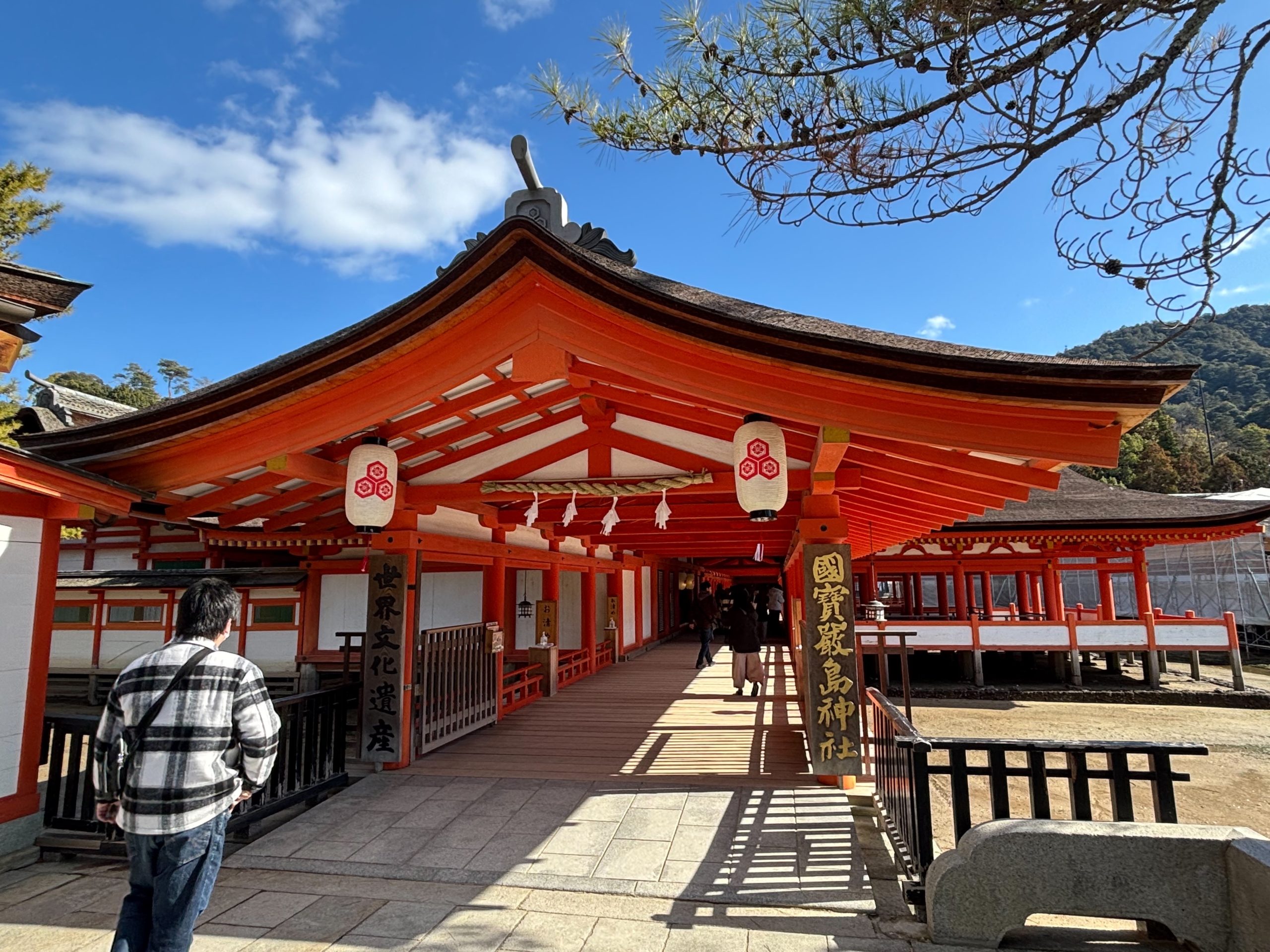
One honest mistake I once made: I forgot to check the tide schedule and missed the iconic floating torii gate view entirely. Misen planning and Itsukushima Shrine timing work best together — check our Itsukushima Shrine guide for the details:
Itsukushima Shrine sits at the edge of the sea on Miyajima Island, jus...
Best Time to Visit and Crowd Avoidance Tips
Mount Misen draws visitors year-round, but the busiest periods are spring (March through May) and autumn (October through November). Autumn foliage season — particularly the November holiday weekends — brings the largest crowds of the year. The combination of fall color, clear skies, and cooler temperatures is genuinely spectacular, but you will be sharing the experience with a lot of people.
The busiest time of day on the mountain is generally between 11:00 AM and 2:00 PM, when the ropeway queues are longest and the summit is most crowded. The single most effective strategy: arrive early. Taking the first or second ropeway of the morning gets you to the summit before the main wave of day-trippers arrives, giving you the panorama nearly to yourself. On weekdays, the window between roughly 2:00 and 4:00 PM is also notably quieter.
On days when all three factors align — a holiday weekend, clear weather, and peak foliage — expect long waits at the ropeway. One useful tactic for these days: take the ropeway up, and descend via one of the hiking trails instead. This avoids the return ropeway queue entirely and spreads out the foot traffic in a more manageable way.
A note for summer visitors: August 14th, the night of Miyajima’s famous fireworks festival, brings extraordinary crowds to the entire island. Even many local residents avoid Miyajima on that specific date. The rest of summer, however, is often less crowded than you might expect — particularly early in the morning.
Visitor Tips and Things to Know Before You Go
A few practical reminders that will help your visit go smoothly:
Dress for the mountain: Even in spring and autumn, the summit can be significantly cooler and windier than the town below. A light layer is worth carrying even on warm days. In summer, sun protection and extra water are essential — the humidity and heat on the trail can be draining.
Wear the right shoes: Flip-flops and dress shoes are not suitable for the trail between Shishiiwa Station and the summit. Sneakers or light hiking shoes with grip are the minimum. The stone steps are irregular and can be slippery after rain.
Respect the forest: Mount Misen’s primeval forest is a protected UNESCO natural area. Do not pick plants, disturb wildlife, or leave any litter. All waste must be carried out.
The deer situation: Miyajima’s famous wild deer roam freely across the island, including on the paths leading to the ropeway. They can be surprisingly bold around food. Keep your snacks and bags secure. Note that deer crackers (shika senbei) have not been sold on the island since 2019 out of concern for the animals’ health — please do not feed the deer anything. A local tip for keeping deer away from small children: a simple pinwheel toy, available at souvenir shops, tends to deter them effectively.
Visitor tax: Since October 2023, a ¥100 visitor tax applies to all arrivals on Miyajima Island. This is collected at the ferry terminal.
Check before you go: Ropeway operating hours, trail conditions, and summit observation deck access can all change seasonally or due to weather and maintenance. Always verify the current status via official channels before setting out.

FAQ
How long does it take to visit Mount Misen?
Plan for around two hours if you are using the ropeway and making a straightforward summit visit with photos and a look at the observation deck. If you want to visit multiple temple halls, explore the rock formations, and take your time at the summit, three hours is a more comfortable estimate. Hiking the full trail from the base adds significant additional time depending on your route and pace.
Do I need to book the Miyajima Ropeway in advance?
Advance reservations are not always required, but during peak periods — spring, autumn foliage season, and holiday weekends — the ropeway can have very long queues. Check the official Miyajima Ropeway website ahead of your visit for the latest ticketing and reservation information. Arriving at opening time is the most reliable way to avoid a long wait.
What is the Eternal Flame at Reikado, and can I experience it?
The Eternal Flame (kiezu no hi) inside Reikado temple hall is said to have burned continuously since Kobo Daishi lit it over 1,200 years ago. Water heated over this flame is made available for visitors to drink free of charge using paper cups provided inside the hall. It is a simple and quiet experience, but genuinely memorable. The same flame is also the origin of the Flame of Peace in Hiroshima’s Peace Memorial Park.
Is Mount Misen accessible for families with young children or babies?
Yes, but preparation matters. The trail section between Shishiiwa Ropeway Station and the summit is not stroller-accessible — a baby carrier is strongly recommended. The summit observation deck’s second-floor rest area is a genuinely welcoming space for families, with comfortable flooring where children can rest and eat. Build in extra time for breaks and start early to avoid the busiest crowds.
What are the hiking trail options on Mount Misen?
There are three main hiking routes from the base of the mountain: the Daisho-in Course (the most popular and generally recommended for first-timers), the Momijidani Course (especially scenic during autumn foliage), and the Omoto Course (quieter and less traveled). All routes require proper footwear and a reasonable level of fitness. Avoid lightweight sandals or dress shoes — the paths have rocky sections and can be slippery in wet conditions.
What is the best season to visit Mount Misen?
Mount Misen is rewarding year-round. Spring brings fresh greenery and cherry blossoms on the lower slopes; autumn delivers stunning foliage around the mountain. Summer mornings offer clear views and fewer crowds than you might expect. Winter visits are quieter and can be magical on crisp, clear days, though some services may have reduced hours. For the best combination of scenery and manageable crowds, a weekday visit in early November or mid-April tends to be ideal.
What should I wear and bring to Mount Misen?
Wear comfortable, flexible clothing and walking shoes with good grip — no sandals or heels. Even on warm days, bring a light layer for the summit, where wind can make it noticeably cooler. Carry plenty of water (especially in summer), sun protection, and any snacks you will need, as food options on the mountain itself are limited. A small daypack is helpful. If visiting with a baby, a carrier is essential for the trail section.
More to Explore on Miyajima
After descending from Mount Misen, Miyajima’s famous covered shopping street is a great place to explore local food and souvenirs — including soft-serve ice cream, which tends to have shorter lines after 5:00 PM:
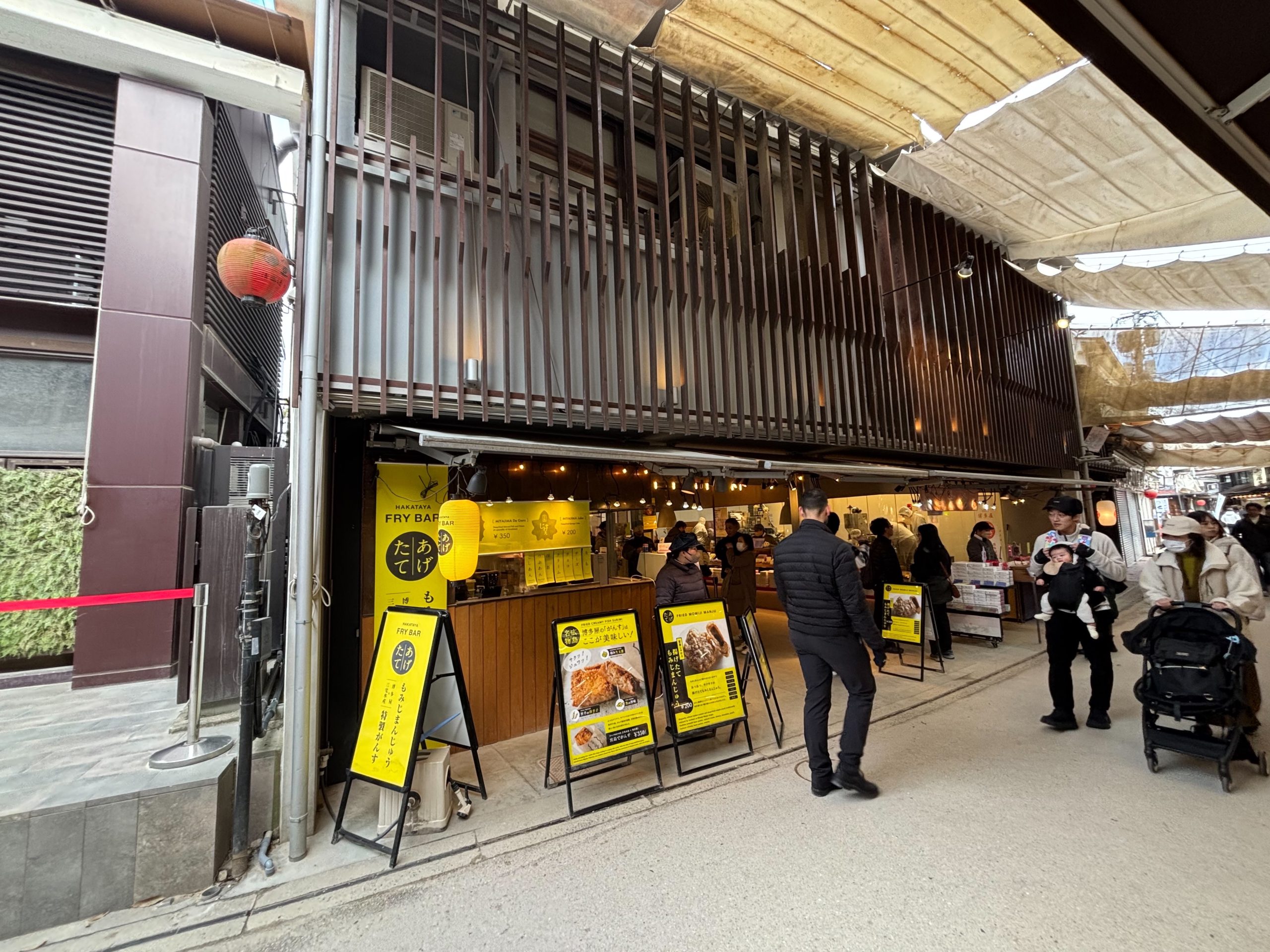
Miyajima's main shopping street — known locally as Omotesando — is a l...
If you’re hungry after the hike, age momiji — deep-fried maple leaf cakes — are one of Miyajima’s most beloved street snacks. For the crispiest result, the first batch of the morning at Momijido is hard to beat:
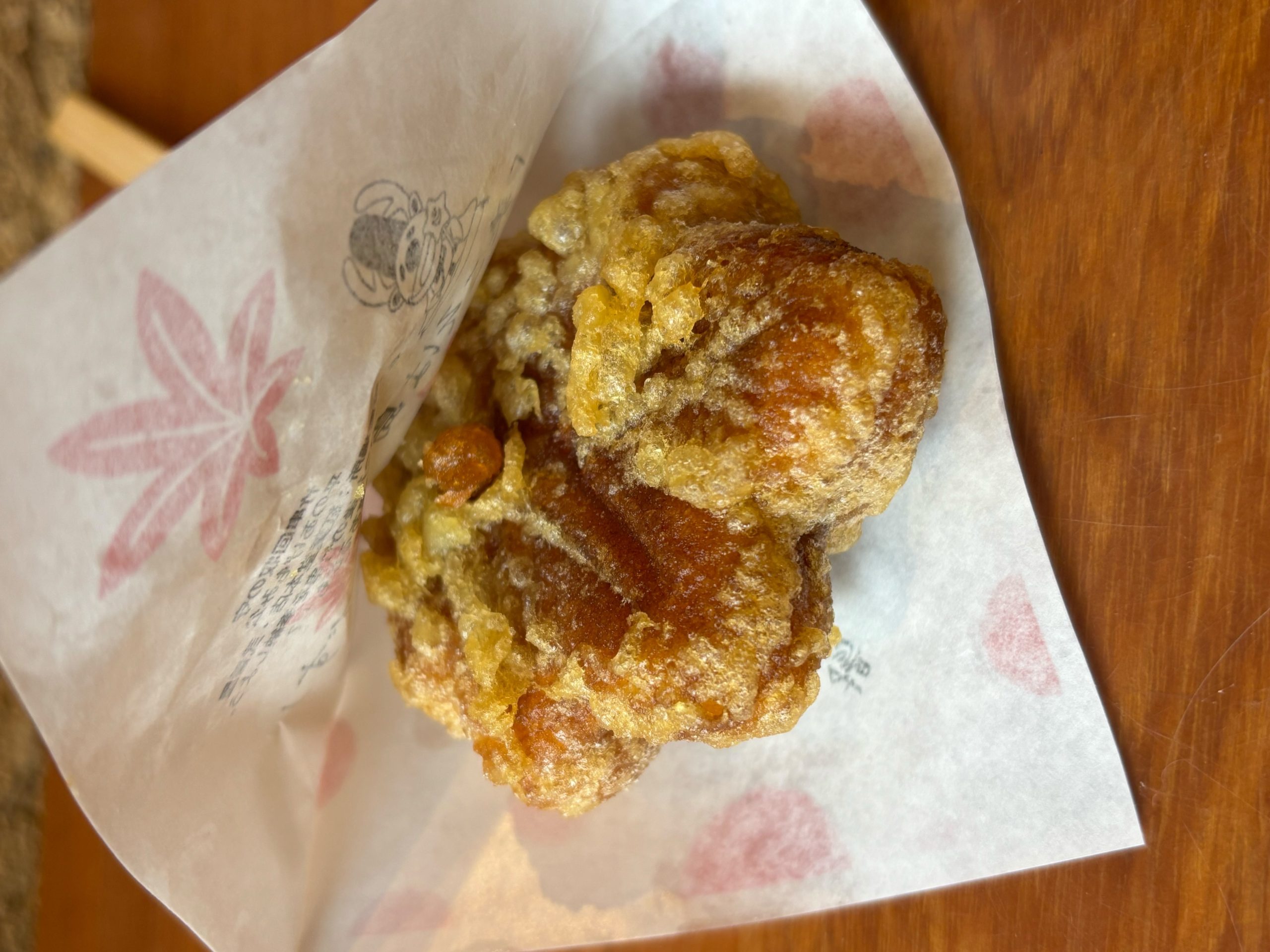
If you're looking for the ultimate Miyajima street food experience, ag...
Miyajima’s most iconic souvenir sweet is the momiji manju maple leaf cake. For a classic version, the long-established Fujiiya shop is a perennial favorite — and freshly baked ones straight from the oven are a completely different experience from pre-packaged versions:
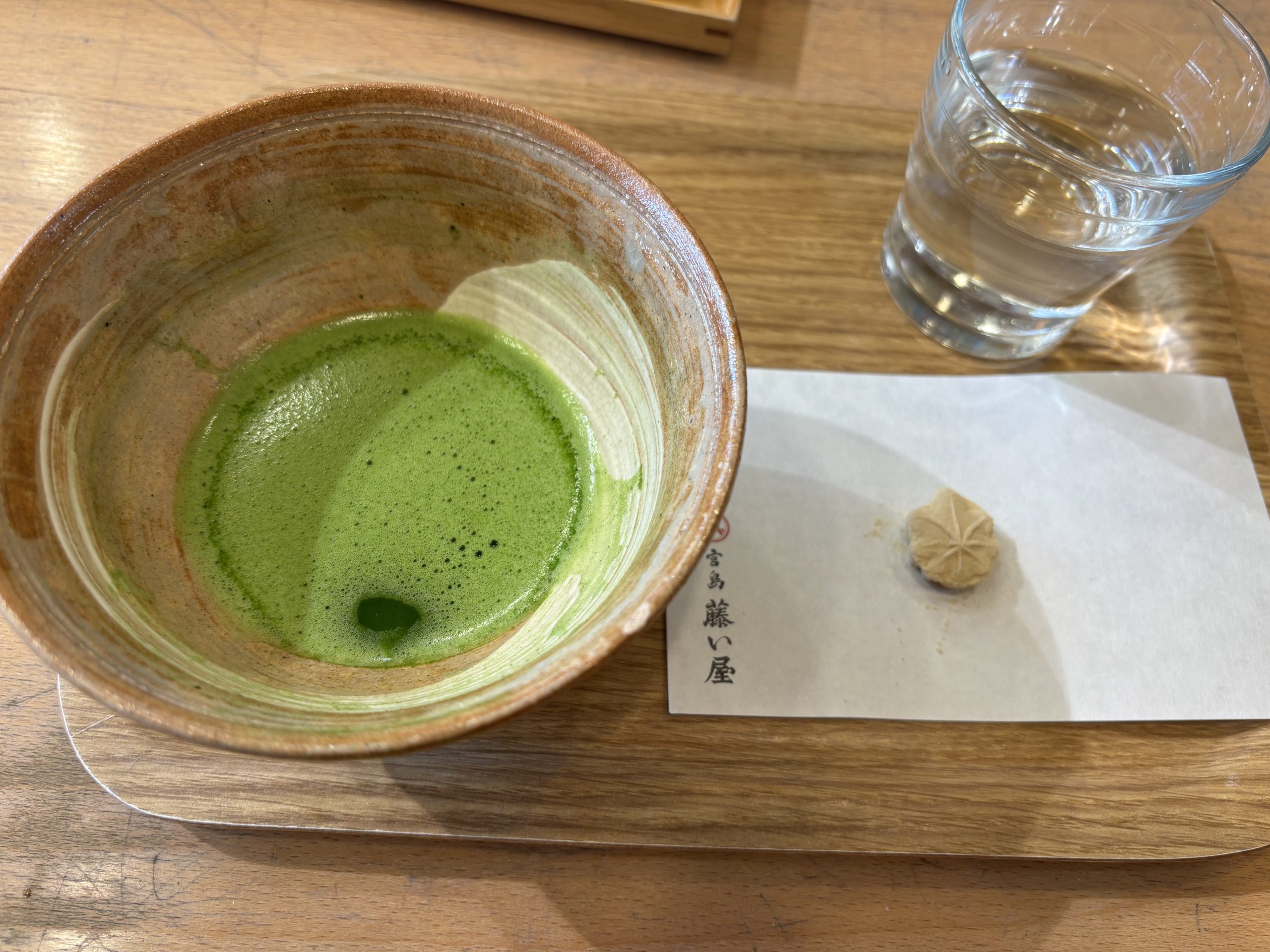
Tucked along the Omotesando shopping street on your walk from the ferr...
If fresh oysters are on your list — and they absolutely should be — Miyatoyo Honten is a local institution serving outstanding grilled oysters. It is well worth the trip:
Discover Miyatoya Honten, Miyajima's only hand-baked momiji manju shop. Try the famous cheese filling and Belgian chocolate flavors fresh off the grill.
For an early start on your Miyajima day, the freshly baked island breads at Miyajima Bessou are a lovely way to begin — worth setting the alarm for:
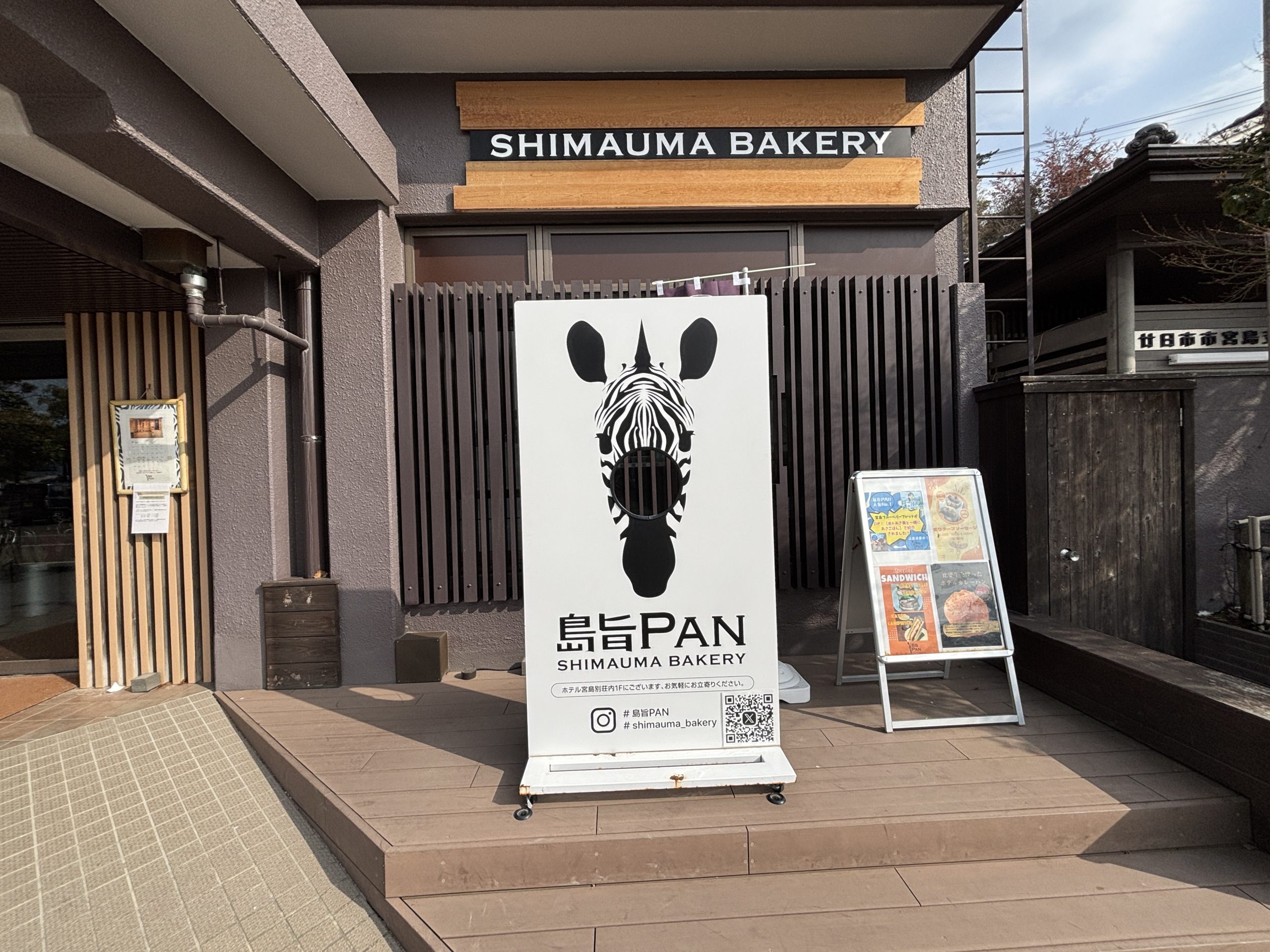
Just one minute on foot from the Miyajima ferry pier, Shima Uma Pan ...
Please note that facility hours, ropeway schedules, and access conditions on Mount Misen are subject to change. We recommend verifying the latest information through official sources before your visit.